
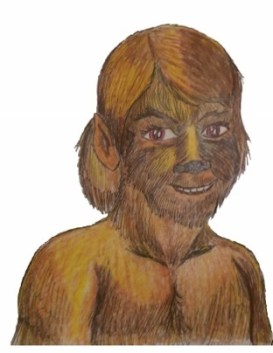
I have been working on my novel The Baby Werewolf, and I am now in the final phase, working on the climax and crisis point. And I surprised myself. The killer monologues to the main characters who have now become his intended next victims. I have played this out over and over in the twenty-two years I have been writing this book. Last night, for the first time ever, the hero character laughs in this scene instead of the cringing fear that had always been there before.
How is such a thing possible? What changed? I have been writing and rewriting this story since 1996. But it goes much deeper and darker than that. This story went on my have-to-write list in 1966 when an older, stronger boy who lived near my home trapped me in a place out-of-sight of others and stripped me, gaining some horrible kind of pleasure by inflicting pain on my private parts. Recovery from that has taken half a century. The recovery itself probably explains why I struggled so long to pull this story together in a finished form.
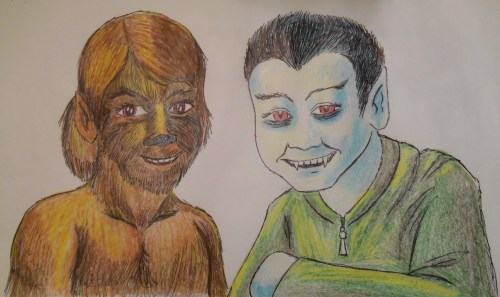
There are things about my writing life that are undeniable. First of all, I have to write. There is really no other choice for me. My mind will never know rest or peace without being able to spin out the paragraphs and essays and stories that make it possible to know those things. Nothing is real if I can’t write it out. Secondly, I am a humorist. If I can never be funny at all, can never write a joke, then I will descend into madness. My sense of humor not only shields me and serves as my suit of armor, it heals me when I suffer psychic wounds. This book is a horror story, but like many of the best horror stories, it relies on humor to drive every scene and knit the plot together. And it was a breakthrough for me to have the hero character laugh instead of cringe in the critical scene. It allows me to live again. And love again. And the real monster that caused this book to be, is now forgiven. The world continues to turn. The picture is now complete. And soon, the novel will be too.
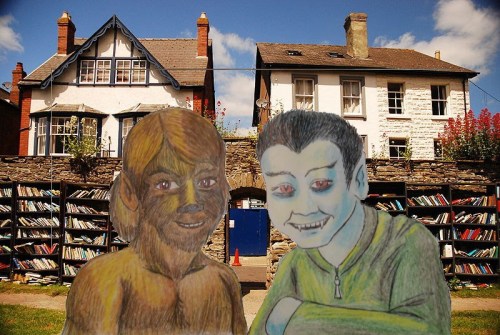
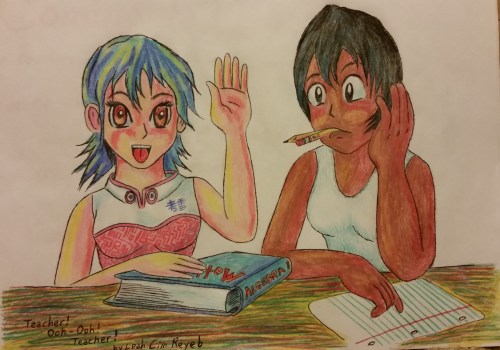








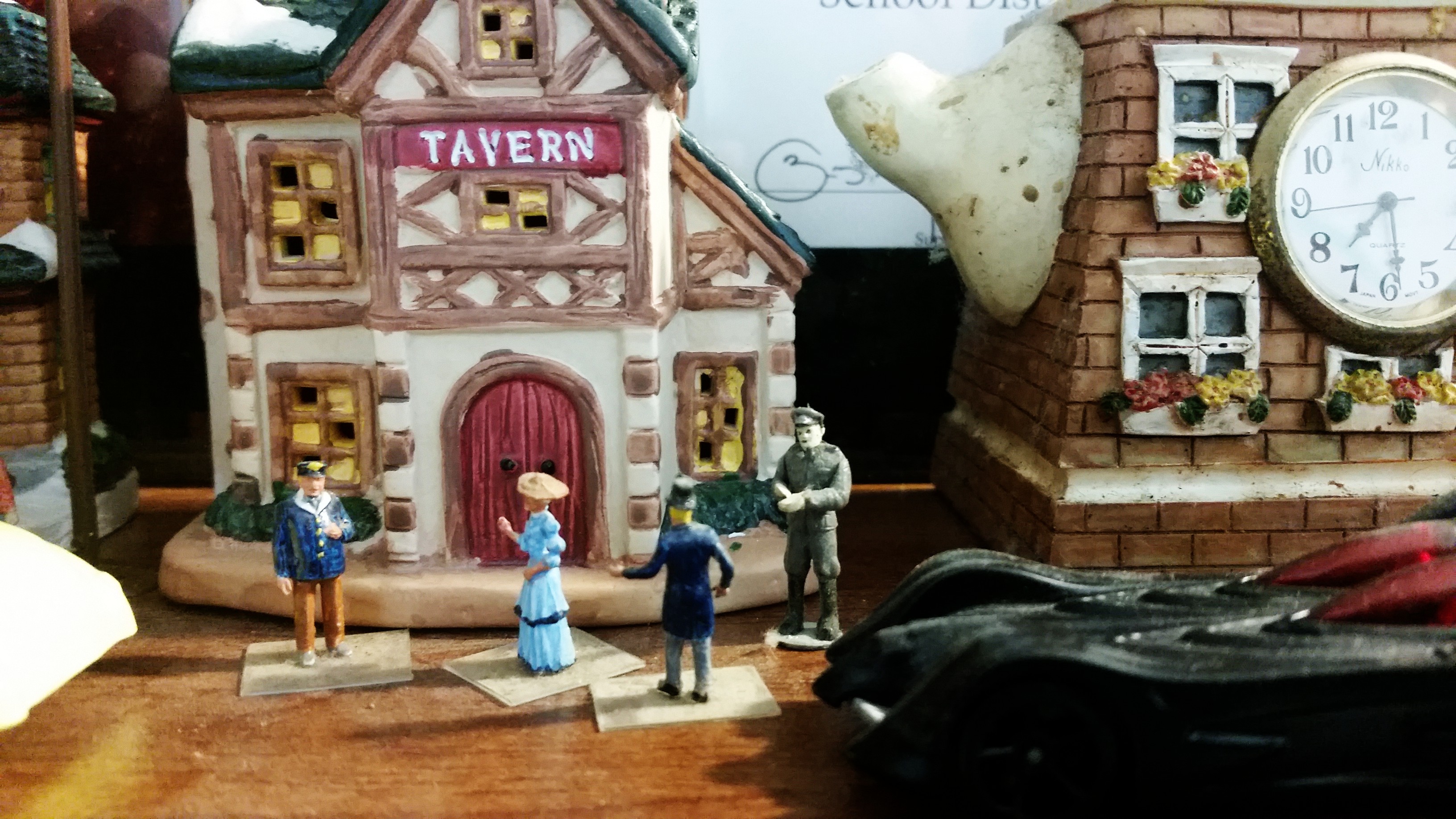

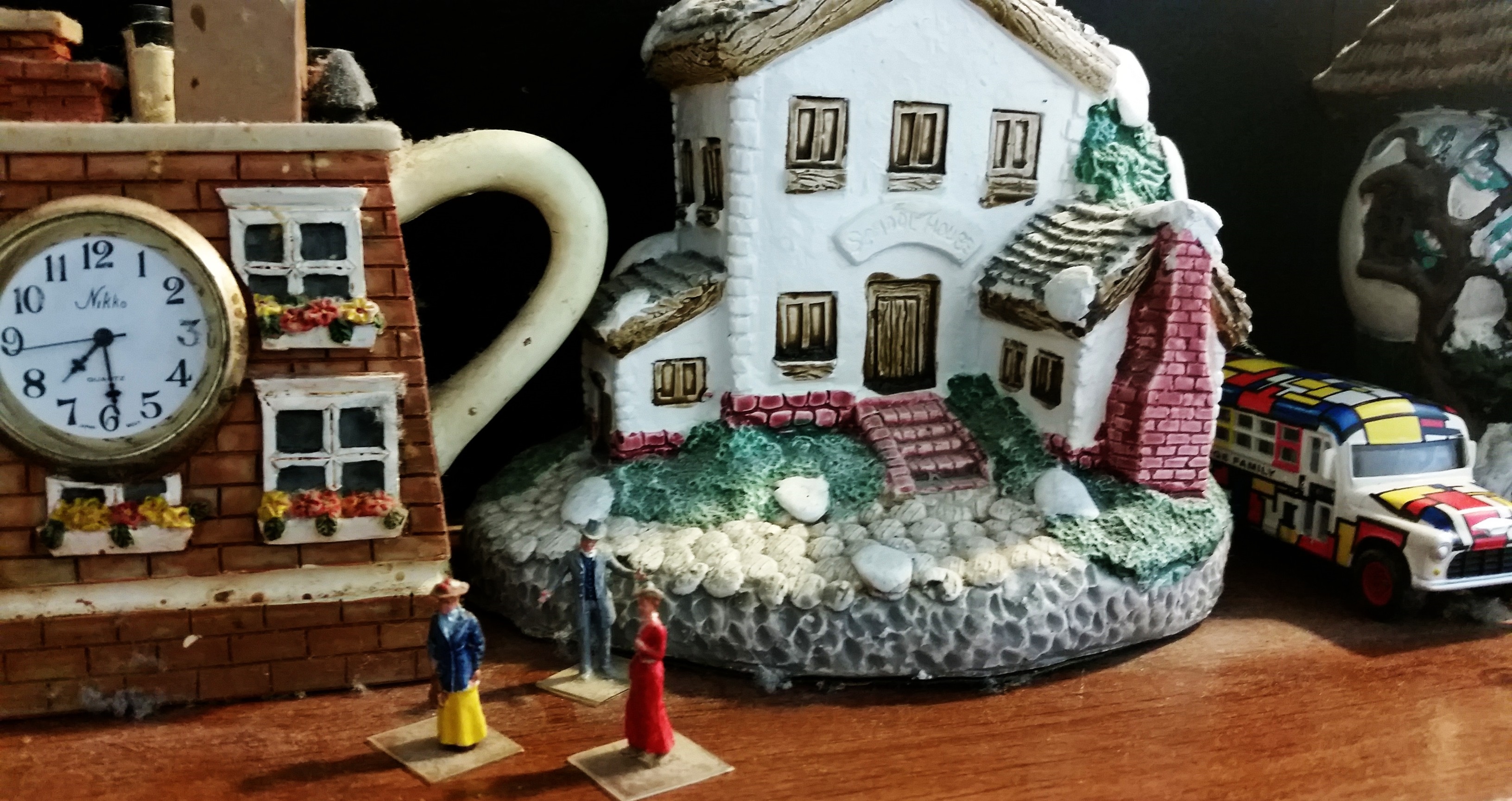
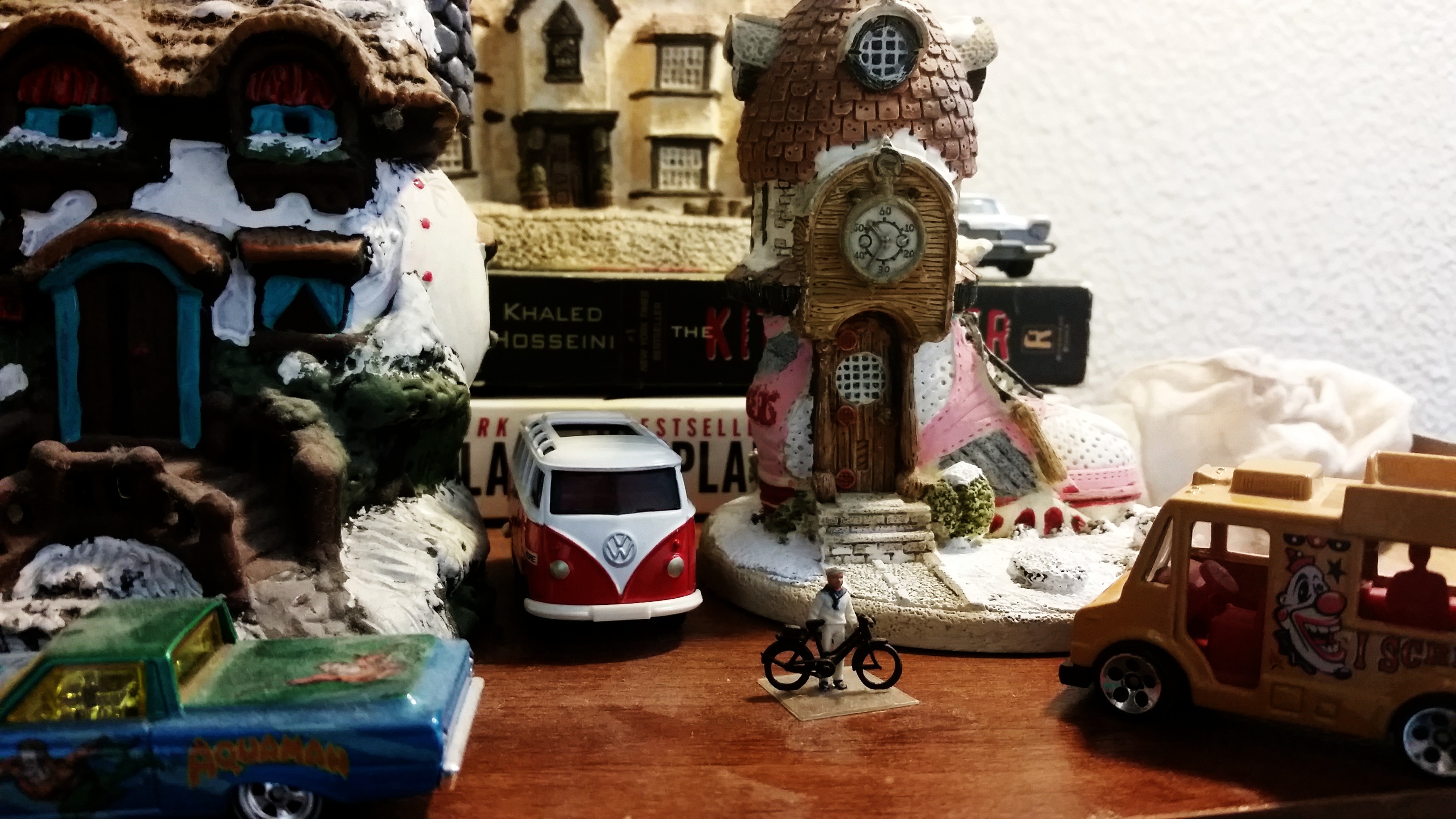
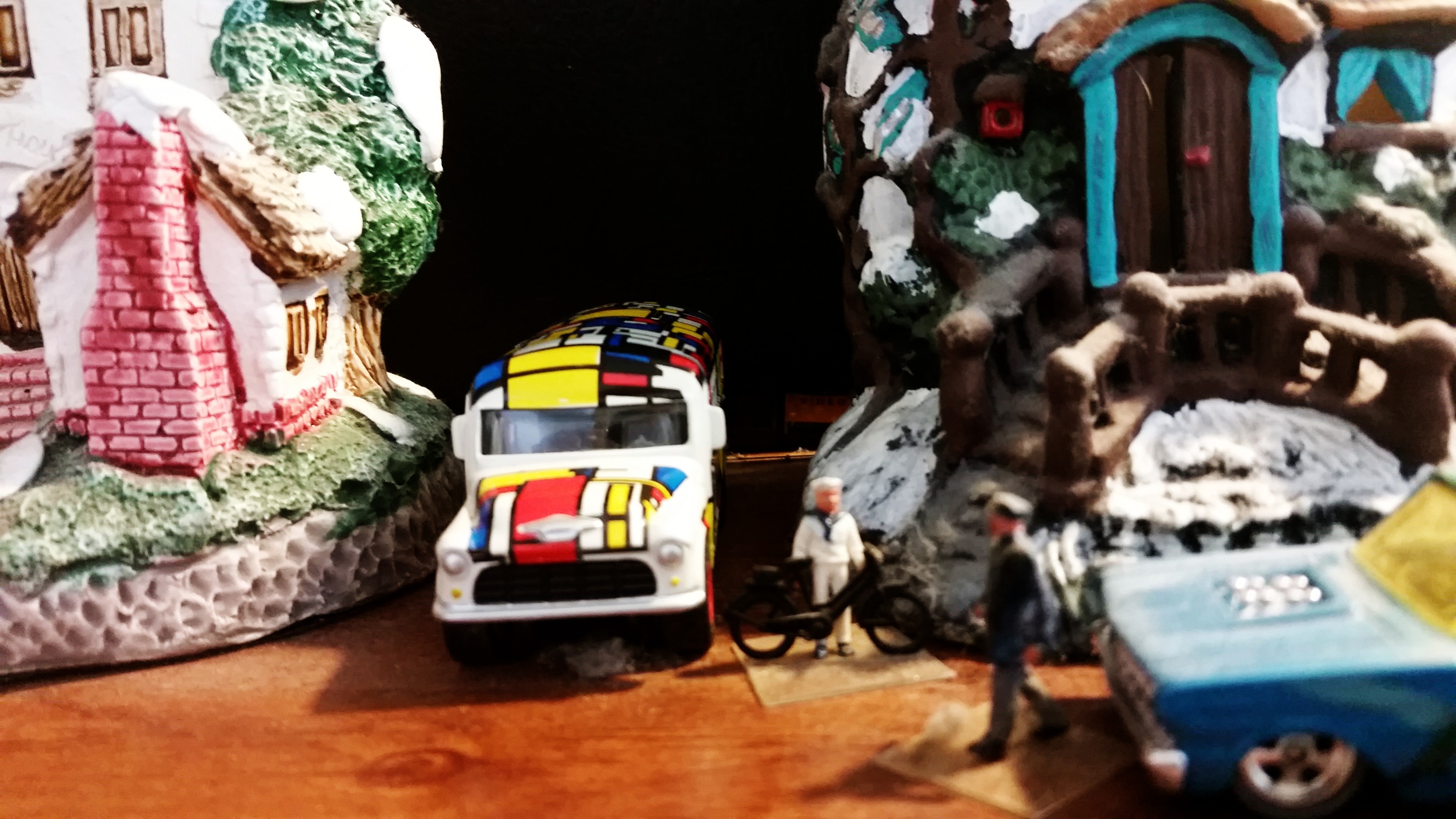 Here’s a view of the front of that same TV bus as it sits between Miss Wortle’s place and Eggbert Egghead’s Egg House. Dabney Egghead is the boy in the sailor suit showing off his brand new velocipede.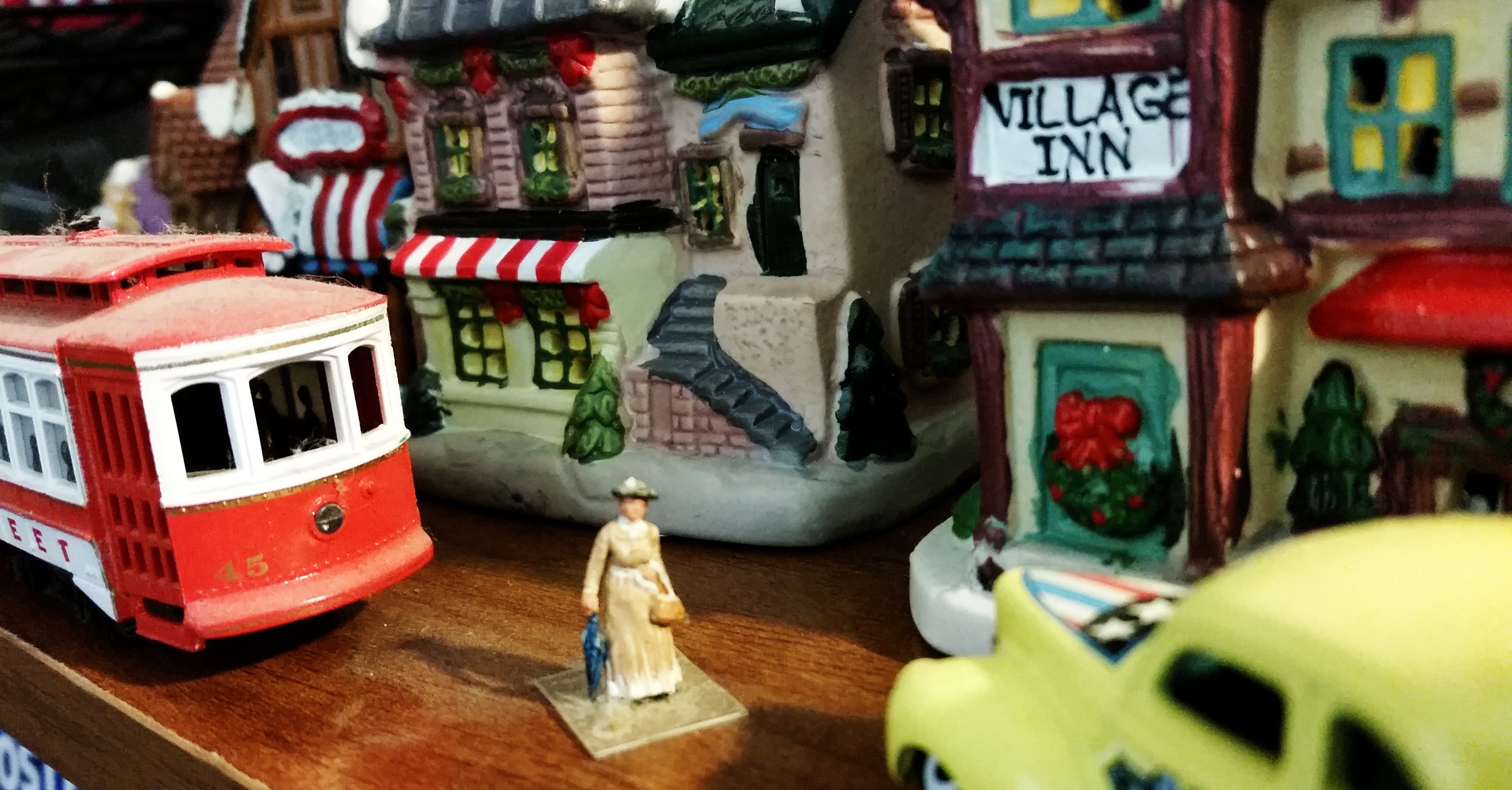






Reading Other Writers
Nobody who wants to be a writer gets by with just writing and never reading anything by anybody else. It is too easy to devolve into some kind of human mushroom that way, thinking only thoughts a mushroom could think, all fungus-like and having no chlorophyll of their own. You never learn to decode other people and other people’s thinking if you don’t read other people’s thoughts crystallized in writing.
And not every other writer is Robert Frost. Or even Jack Frost who thinks he’s Gene Kelly. There has to be some interpretation, some digging for understanding. What did that writer mean when she said political correctness was like a tongue disease? And what does it mean when a commenting troll calls me a nekkid poofter? Is that how he spells “exceptional genius”? I think it is. Trolls are not smart.
I know people have to make an effort to understand me. When I write, I am writing under the delusion that I can produce literary quality off the top of my head. In fact, I can barely produce hair off the top of my head, and it is gray when I do it. See what I did there? It is the kind of joke a surrealist makes, pretending the idiomatic expression you use is to be taken literally when it doesn’t literally make sense. That kind of nonsense is what my readers have to put up with, and probably also the reason why most of them just look at the pictures. If you have to think too hard when you read, your brain could over-heat and your hair could catch fire. I like that kind of purple paisley prose that folds back in on itself and makes you think in curlicues. But most people don’t. Most people don’t have fire-proof hair like I do.
Sometimes, it doesn’t even take a word to make the point. For instance, why, in the picture, is Fluttershy trying to drink out of the toilet in the dollhouse bathroom? For that matter, why does a doll house even need a bathroom? Applejack doesn’t even fit in that yellow bathtub. I know. I tried to stuff her in there for this picture. And, as you read this, doesn’t this paragraph tell you a lot about me that you probably didn’t even want to know?
When I am reading the writing of others, I am looking for a cornucopia of things. I want to not only understand their ideas, I want to detect the limping footprints across the murder scene of their paragraphs and come to know the deeper things about them as well. I spent years decoding and trying to understand the writing of preliterate kids in my middle school English classes in order to be able to teach them to write better. And I learned that no writer is a bad writer as long as they are using readable words. I also learned that very few writers are James Joyce or Marcel Proust. Thank God for that! And given enough time I can read anything by anybody and learn something from it. I read a lot. And it may not always make me a better writer to read it, but it always has value. It is always worth doing.
1 Comment
Filed under commentary, education, goofy thoughts, humor, irony, photo paffoonies, photos, reading, strange and wonderful ideas about life, surrealism, teaching, wordplay, writing, writing teacher
Tagged as creative-writing, reading for writing, writing, writing advice, writing-community, writing-tips