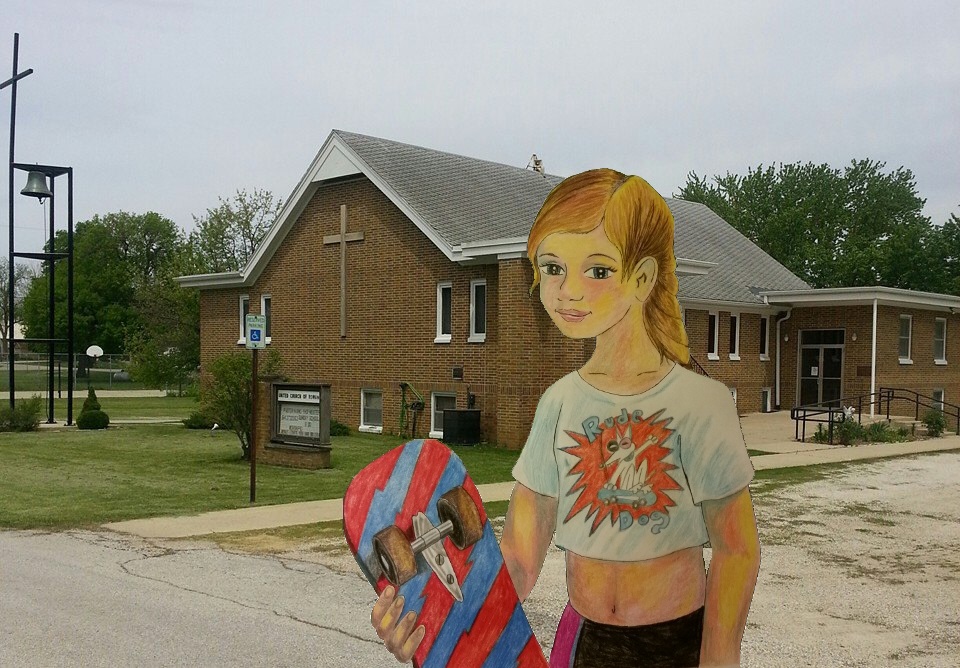
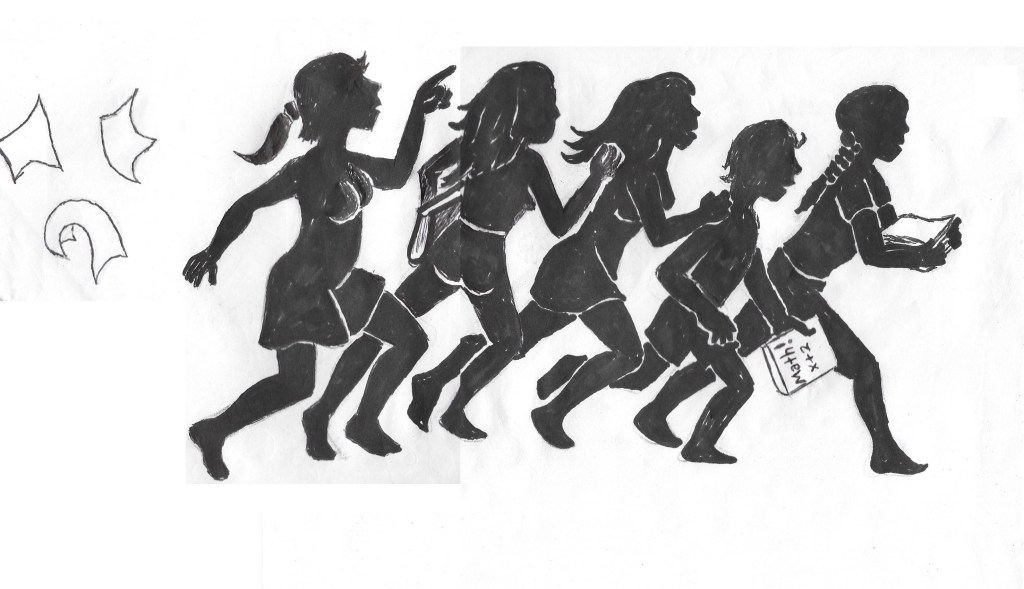
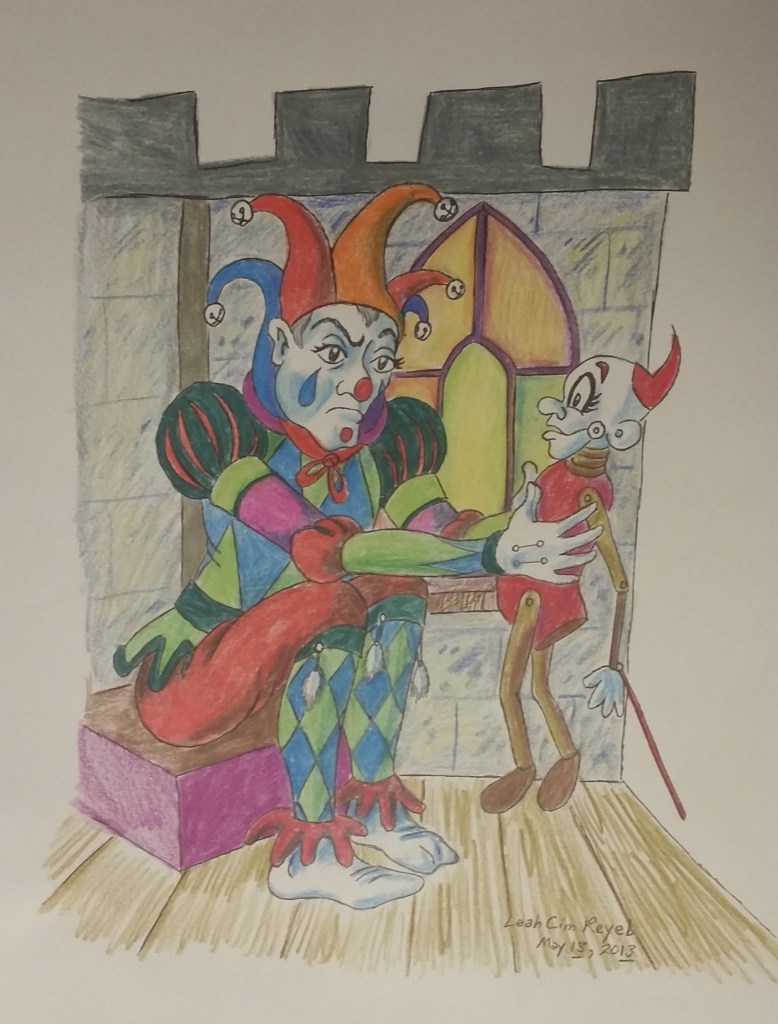
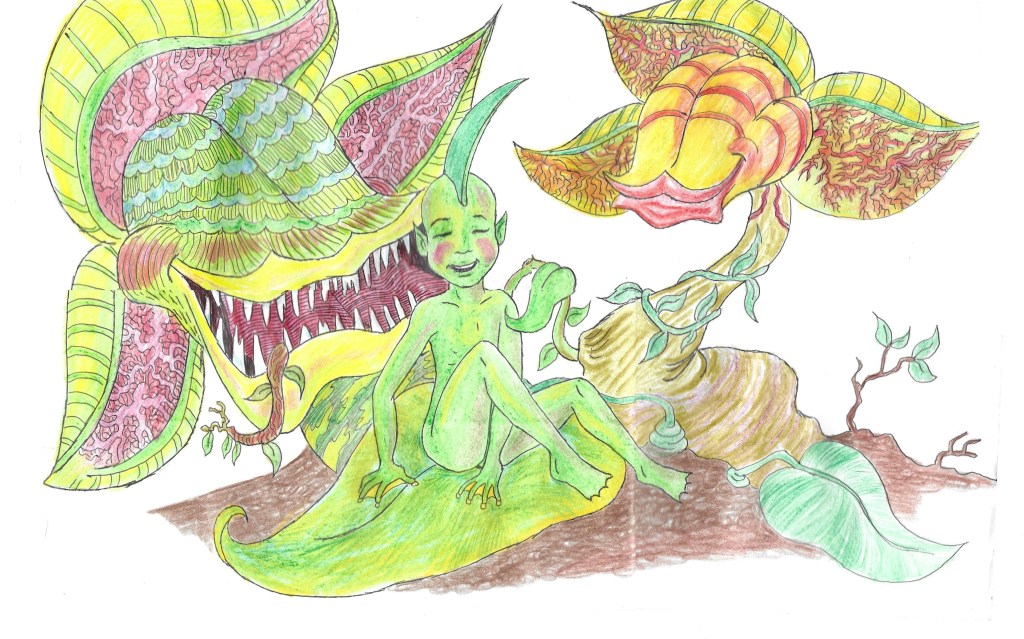
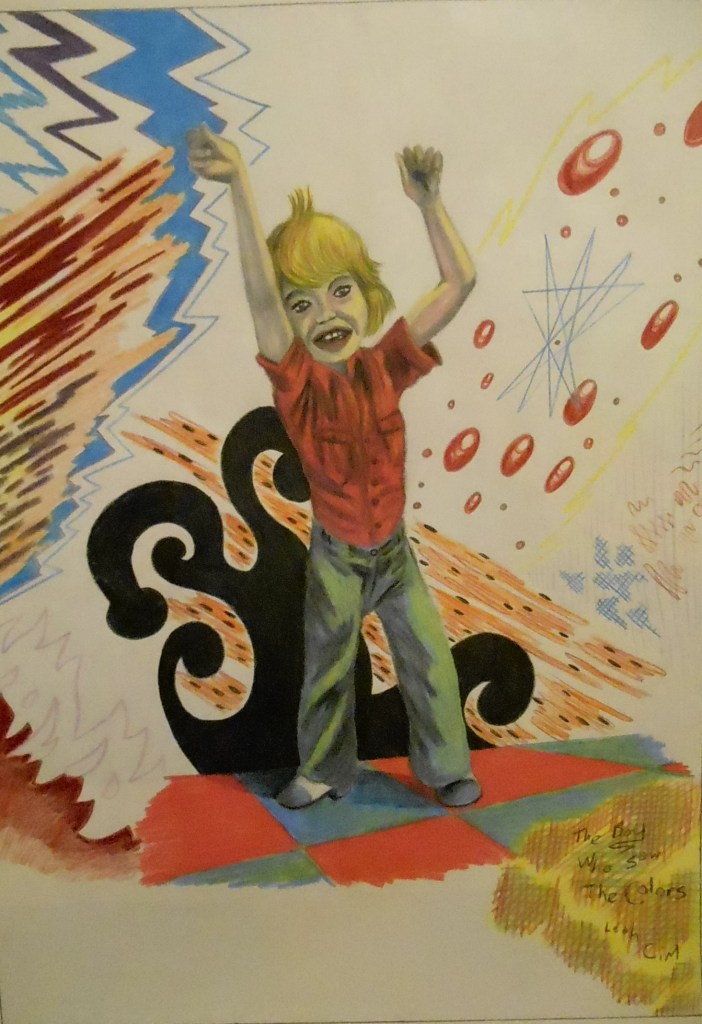
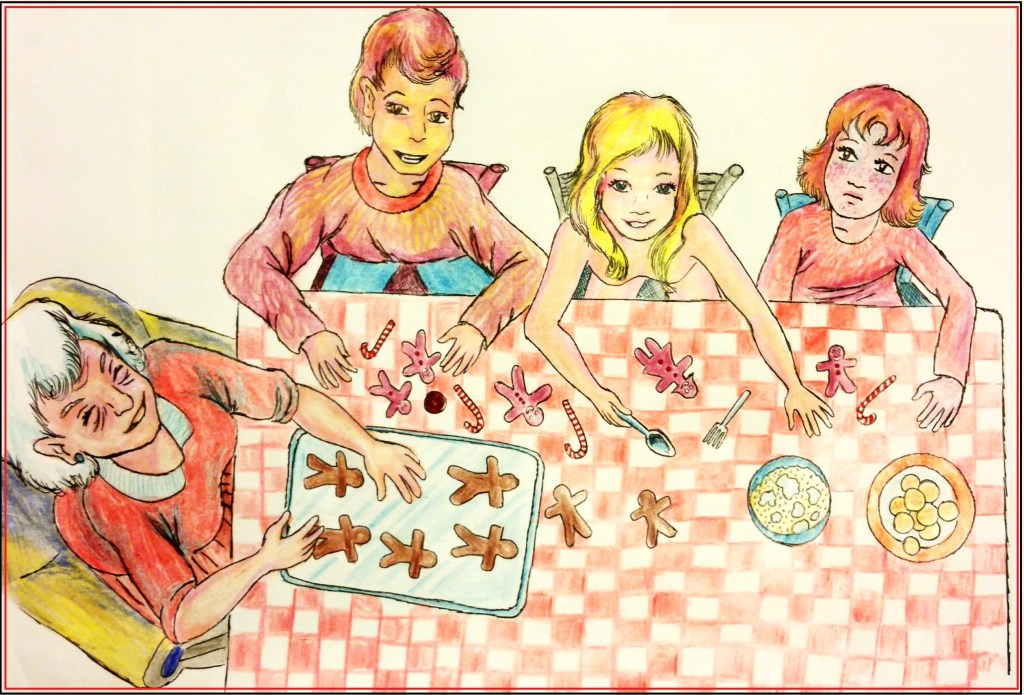
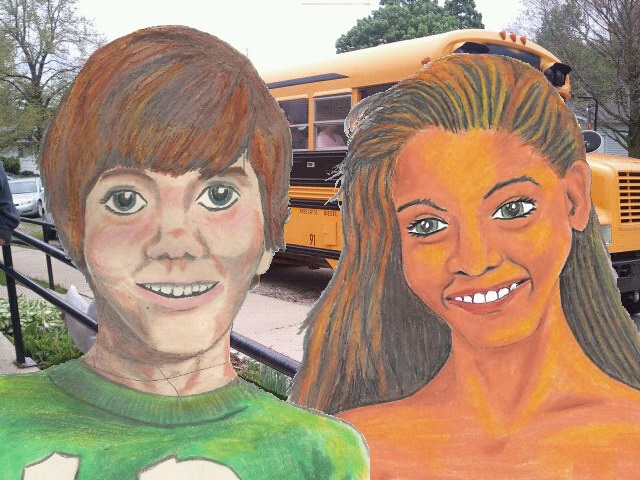
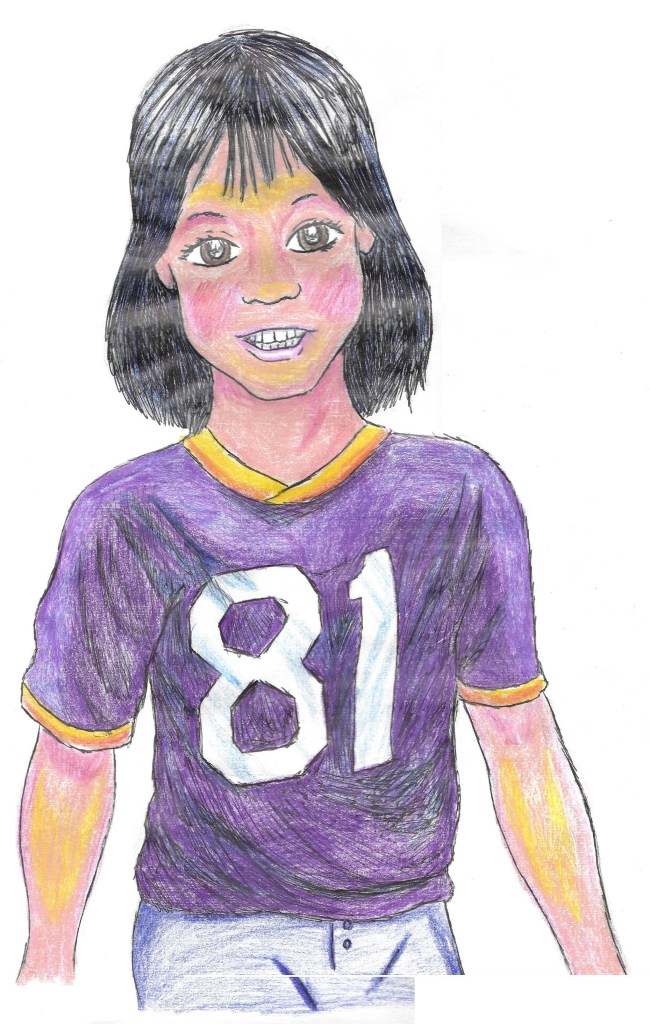
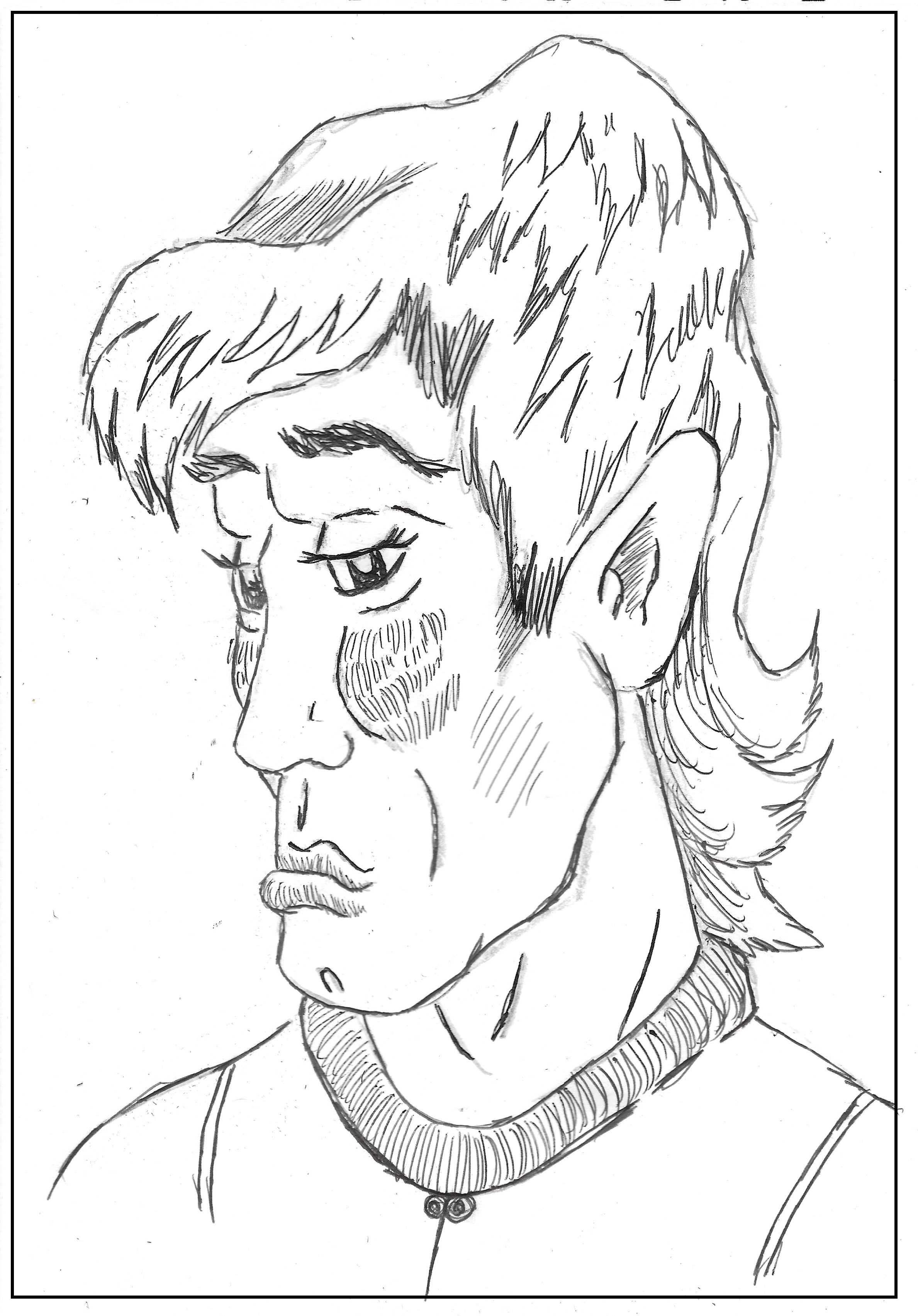
Sometimes the creative brain gets a little too hot and needs time to cool. That means I need a meaningless filler post to maintain my every-day posting. So, I give you a picture of Mike Murphy carrying his girlfriend, Blueberry Bates’ books home from the bus stop on a country road in Iowa. And, of course, they happen to meet an alien named George Jetson, whose father named him after a character on his favorite Earther TV show from the 60’s. It is a strange thing to have your brain over-heat from too many creative neurons firing at the same time. But it can lead to notions of intergalactic peace and cultural exchange… or racist comments like, “Tellerons have heads that look like giant boogers!” But I should be able think more rationally tomorrow. I hope that turns out to be a good thing.
As the group continued to ride the roosters, little Schtinker could not stop talking. Poppy talked to him as soothingly as possible, hoping to calm him and quiet him.
“We is headed to badness!” insisted Schtinker.
“You should say, We are headed for trouble,” corrected Poppy.
“We are headed for trouble. That knight don’t care bout ennybuddy but his own self.”
“You mean, That knight doesn’t care about anybody but himself.”
“See there? You know it yourself!” said the exasperated Schtinker.
“You know,” said Flute leaning over from his rooster saddle to look Schtinker squarely in the eyes, “This kid is learning to speak better almost instantly.”
“This kid can thinks bedder dan he ever does before. Troll thinking comes hard and slow. But my mind is getting faster da more I uses it.”
“Let’s make for that abandoned barn over there. We need to study this polymorphed little phenomenon a little bit closer.” Flute pointed at the huge rotting structure that had once been the kind of fortress for cows that Slow Ones called a barn.
“But it is urgent that we get to Castle Cornucopia fast,” warned Tod.
“I have an idea that we may benefit more by what Poppy has learned to do with her magic than any sword swings or fireballs we could add to the battle to come.” Flute grinned as he spurred Tannehauser towards the run-down old barn.
“You is no knowing what you is doing, Prinz-guy. Dat barn be da home of Gobbuluns!” warned Schtinker.
“Yes, I know. But tell me, Stinky, do you really want to become a Troll again? Or would rather stay a Sylph boy?”
Schtinker got suddenly wide-eyed and serious. “You mean I can be dis permanent-like?”
“He can, can’t he, Poppy?” Flute asked.
“I would have to make a difficult spell translation to turn him back into a Troll, and I like him better like this.” PoppenSparkle smiled at the wiggly former Troll.
Schtinker gave her a hug for the sheer joy she had apparently filled his little Sylph body with.
Once inside the old barn Flute made the group dismount and gather in a circle amidst the old tractor-tire ruts on the barn’s dried mud floor.
“Poppy, I need to cast a rather invasive spell on you to measure things in your mind. You will have to disrobe for me to do it,” Flute said. He was not asking for permission.
“Sure. I prefer to be naked.” Poppy had no trouble slipping off the bikini-like armor that protected her from mind spells. Her butterfly wings magically unfurled.
Flute pulled a scroll out of his pouch attached to his loincloth. “Messen Sie die Metriken in ihrem Kopf. Finschole!” Sparks flew out of his fingertips and embedded themselves in her forehead. Poppy’s field of vision turned into multicolored clouds.
“Aha! It’s just as I thought. Her polymorph spell not only reshapes the body, it boosts the intelligence in the parts of the brain of the subject that serve the principles of light. It’s a mix of changing the shape and changing darkness into light.”
“So, what does that mean?” asked Tod.
“Let me test the boy to make certain of it.” Flute cast the same spell on young Schtinker.
“Just as I thought. We can turn Gobbuluns of various sorts into Sylphs, Elves, or Brownies simply by turning their inherent darkness into light.”
“Weez doan no wut you iz talkin’, but weez tanks you for bringin’ us chickie meatz an Fairy bodeez to eats!”
Four Gobbuluns gathered together atop a rotting hay bale with mushrooms growing on it. They were armed with spears that were basically sharpened sticks.
Prinz Flute looked them over humorlessly, then broke into a huge smile. “Poppy, I think we may have just found some recruits for the upcoming battle. Can you morph them the same way you did Schtinker? Please?”
Poppy leaned into the spell and enveloped the three Wartoles and one Cyclopes in her spell cloud.
The Gobbuluns didn’t even have time to scream. The cloud dispersed leaving behind three Sylph warriors with iron-tipped spears and one Elf with an Elven bow and quiver of arrows.
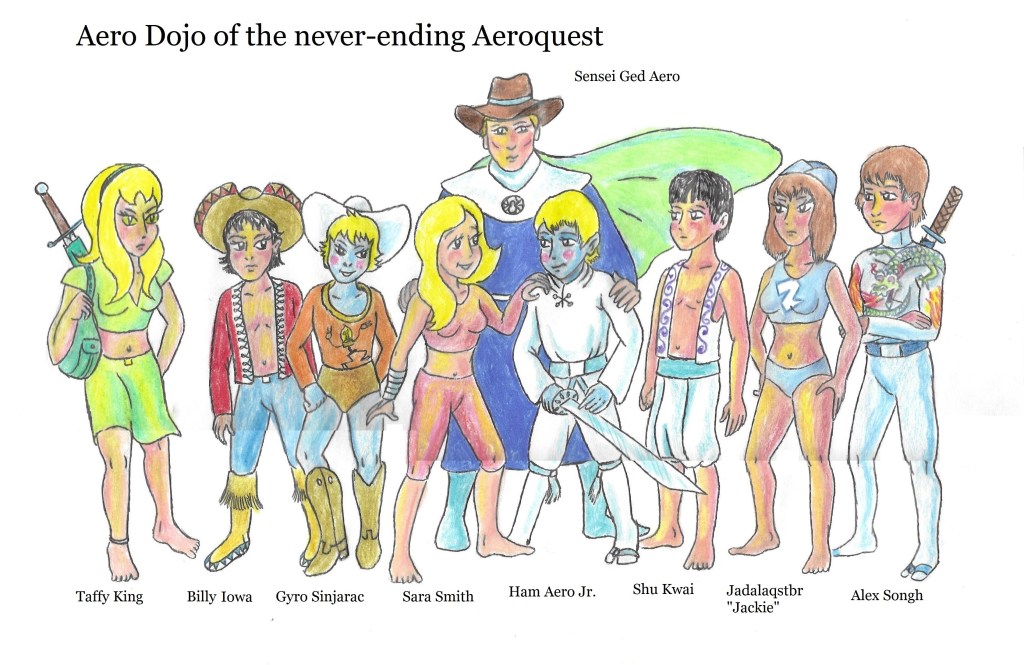
I was originally planning to have AeroQuest 4 published by now and AeroQuest 5 well underway as my regular novel-writing segment on Tuesdays. The manuscript for 4 is written and formatted, awaiting only a final edit. And half of 5 is already written. It is only the expanded first part of this manuscript that has yet to be written.
But since finishing the manuscript for 4, all I have managed to do is work on other projects. I have added nothing to it since February.
My Fairy stories have taken over my writing time.
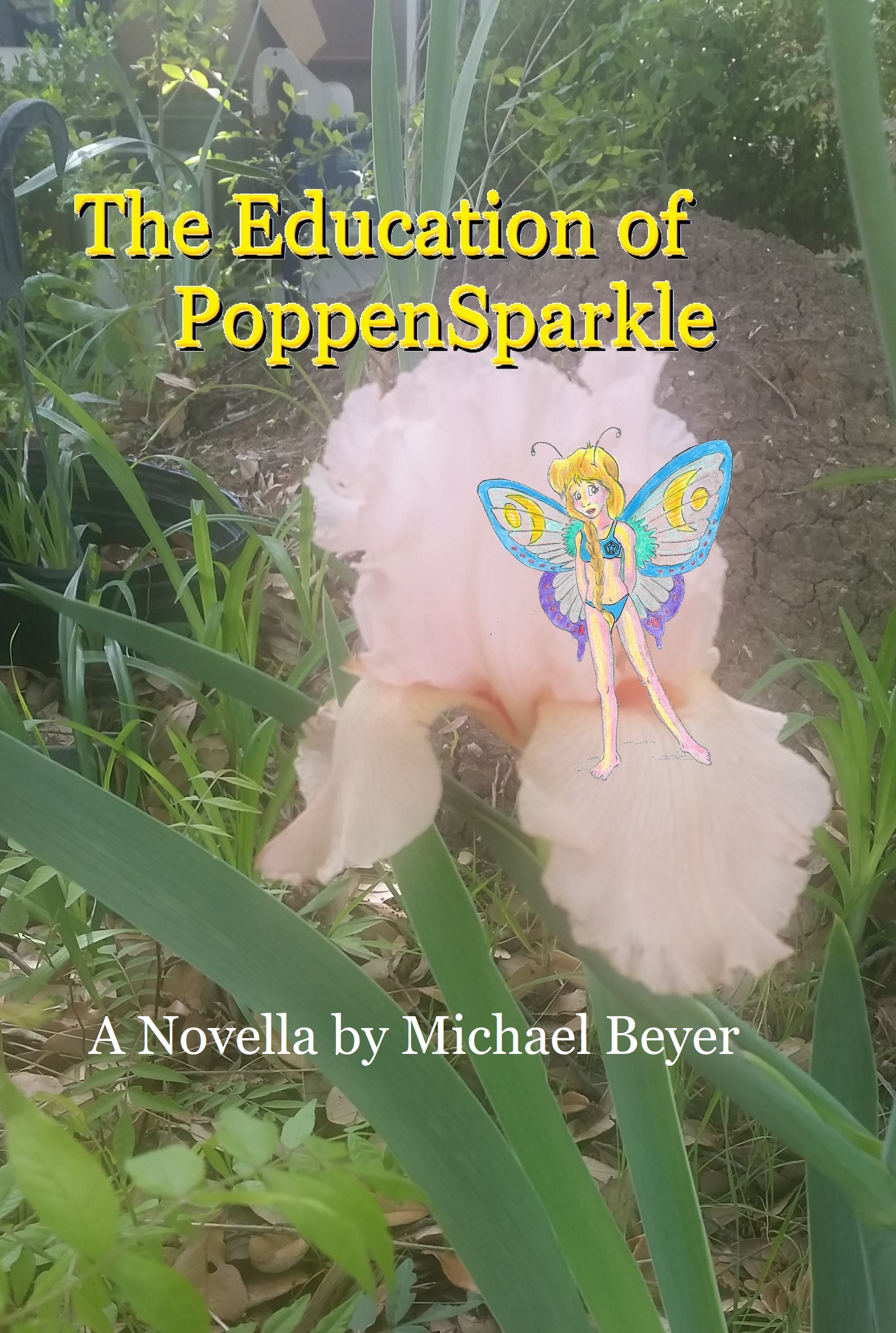
The Education of PoppenSparkle has taken over the Tuesday slot in my supposedly structured blogging week. I am enjoying writing it, yet, it is only happening on Mondays every week. The last-minute nature of that writing style is producing a lot of adrenalin and obsession with deadlines, but it is also draining the creativity out of writing time every other day of the week. I haven’t failed to post something for my daily blog, but even the writing I do get done lacks the luster of older posts.
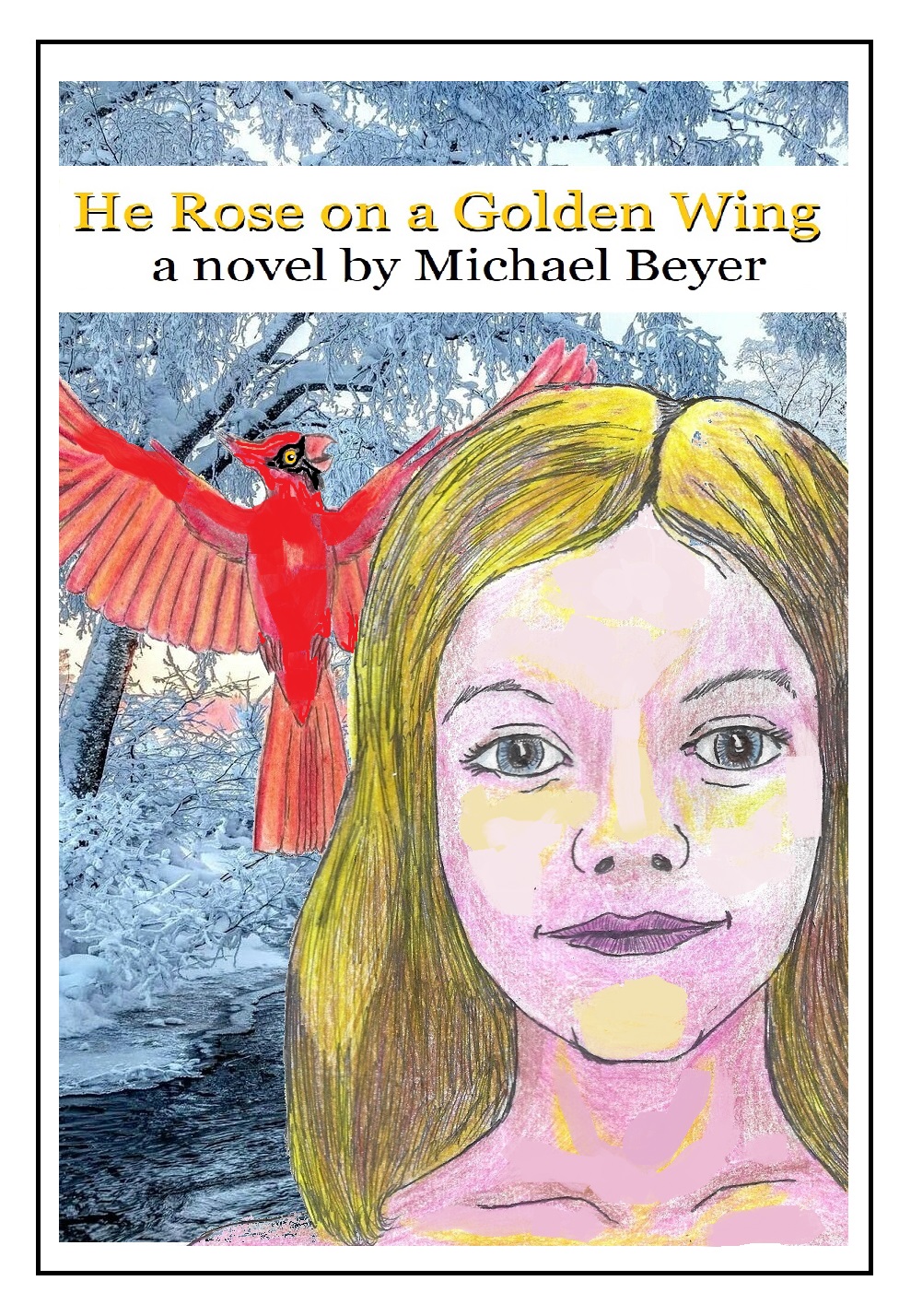
I need to get back to writing on my main work-in-progress, He Rose on a Golden Wing. That book continues to grow and get more complicated as it marinates in the creative juice of my overly juicy mind.
So, there it is, me writing about something I was not supposed to write about on this Memorial Day. I am not suffering from writer’s block, for I am writing every day. But I am suffering from doldrums with the sailboat of progress not having any wind in my sails. How do I get the wind back? I will find a way.
It is a Biblical question. After Cain killed Abel, God came asking for Abel’s whereabouts. And Cain stupidly answered, “I do not know. Am I my brother’s keeper?”
Stupid Cain! Did he not know that God already knew the answer?
And stupid God. Why did he ask a question to which he already knew the answer? And why did he ask stupid Cain whom he must’ve already known was stupid?
But the answer to the question in this bit of Biblical moral mythology is supposed to be, “Yes, Cain. You are your brother’s keeper.”
So, why am I, a confirmed Christian Existentialist (an atheist who believes in God), trying to tell you something from a Biblical story?
Well, the matter is simple. As I will very likely die soon from Coronavirus (which I am not yet infected with, but, you know, the kindness of fate…), I am trying like heck to impart what little wisdom I have gathered in my life so that I may leave something behind me that has worth.
This current pandemic is itself a demonstration of the truth behind the claim that I am my brother’s keeper.
I wear a mask everywhere I go now because a mask protects not only me but it also protects others from me. After all, I have no access to testing. I may have the virus and just not know it. Then my exhalations would contain droplets of water that have viruses swimming in it. The mask, combined with six feet of distance, keeps my exhalations from reaching the lungs of uninfected others, and potentially slaying them as Cain did to Abel.
It is because of Texan prejudices against mask-wearing and social distancing that I know I will probably be infected before this pandemic is over. And my diabetes, blood pressure problems, and previous difficulty with bronchitis and COPD insure that I am not part of the 80 percent of people who will survive the virus. I will get pneumonia and die.
When I suggest, however, that we should each take on the responsibility for the safety and well-being of others, I do not mean that we should become a zoo-keeper, and keep them all safely in cages (the Senator Cruz method of keeping Mexican immigrants safe). You cannot presume to control the thoughts and behaviors of others. You must only adopt the way of love and brotherhood. You put the interests and needs of others before your own. You lead by example, not by decree.
Before you start complaining in the comments about how stupid I am in this essay because I blaspheme against God, and at the same time don’t see people for how they really are, remember that I used to be a school teacher. You don’t do that job because you want to be rich and powerful. You do that job for love of others… specifically, other people’s children. And it is true that everybody has their bad points. Everybody is thoughtless, or wicked, or deeply troubled at times. But everyone also has qualities about them that make them beautiful, or kind, or noble, or selfless, or… well, the list of good things I have seen and nurtured in other people’s children is far longer and more profound than the bad things. No matter who they are, no matter what color or culture or religion they are, my brothers and sisters and their children have worth.
So, here I am, declaring that I am, most definitely, my brother’s keeper. (And unlike Cain, I did not kill him. He and his wife live along the Texas coast, near Houston. And they are not in a cage.)
And here is the question most critical to my survival…
Eating pencils when you are supposed to be writing something isn’t a recommended learning strategy, but is more useful in South Texas than having blue hair.
When I was a rookie teacher in the Spring of 1982, I had to take two busloads of eighth graders nearly a hundred miles to see the State Capitol in Austin for their annual 8th Grade Field Trip.
If you don’t see the potential for disaster in that, well, you are in for a tougher life going forward than the one I am about to complain about.
Anyway, it was an extra-warm sunny Texas day and we had an endless-hours journey in an un-air-conditioned bus with sixty kids and four teachers per bus. And I was the new teacher filled with sizzling rage from enduring eight months and fourteen days worth of get-the-new-teacher tricks by fourteen-and-fifteen-and-sixteen-year-old kids (I didn’t have to rage at the eighteen-year-olds on the field trip because the same things that kept them in the eighth grade until they were eligible for Medicare were the things that disqualified them from going on the field trip). And because the principal was convinced that you could prevent death by throwing things on a bus by having a teacher sitting near the perpetrator, or the potential target, the teachers had to spread out and sit with the kids. Of course, our bus had 59 perpetrators and one potential target (Tomasso, the kid nobody could stand). And the coaches got to sit by the vatos locos most likely to fling metal and hard food. I, of course, got Tomasso.
So, I sat for five hours on the way up to Austin practicing trying to kill apple-core tossers with my best teacher’s stink-eye while ducking gum wads, wrapper balls, and half-eaten Rice-Krispies Treats. And I was also listening to Tomasso’s endless weird questions and comments about penguins that made him the popular target. I got extra practice recognizing bad words in Spanish and resisting the urge to call them “pendejos” in return.
And we got to Austin tired, sweaty, and hungry because it took extra time in both San Antonio and San Marcos traffic, and we missed our lunch connection in a parking lot in central Austin. The kids were mostly not hungry. They were full of chips and hot Cheetos and other salty, unhealthy snack food. Instead of hunger, they were dying of thirst. And while the History teacher in charge of the trip and the coaches were consulting maps and trying to reach the lunch connection with a walkie talkie, I spotted a herd of students going over a wall into a nearby parking garage. I followed to see them walking over the hoods of parked cars to get to a fire hose that they were using as a watering hole.
We were, of course, unable to single out any individuals for punishment. They were dying of thirst, and it was a three-hundred-degree-in-the-sunshine parking lot where we were waiting.
We got to the Capitol and walked around, bored by the tour guide, and found the one entertaining fact about the Texas Capitol Building. Governor Hogg once had two daughters named Ima and Ura. Their pictures hang in an upstairs display case. Kids laughed and called them “pendejos”. Even the white kids.
Then, the way home took an additional seven hours. All of the coaches fell asleep on the way home, and I was the only teacher awake and standing between unpopular nerds and death by de-pantsing. I was told that somewhere in the middle of the writhing masses of eighth grade arms and legs and ultra-loud voices, a shy kid the teachers all liked lost his virginity to one of the more sexually aggressive girls while the other kids close enough to see in the general darkness watched. Was it true? When he got asked in the classroom, he just grinned.
I remember a lot of “Oops!” School Stories happening on field trips. I went on more than twenty of the big trips like that one, and I only remember a handful that went smoothly. But this one stands out in my memory because it was the first. And first experiences set the standard the rest are judged by. And I tell you this because, this time of year, if things were still like they used to be, and there was no pandemic, field trips to hell like that one would be going on for first-year teachers.
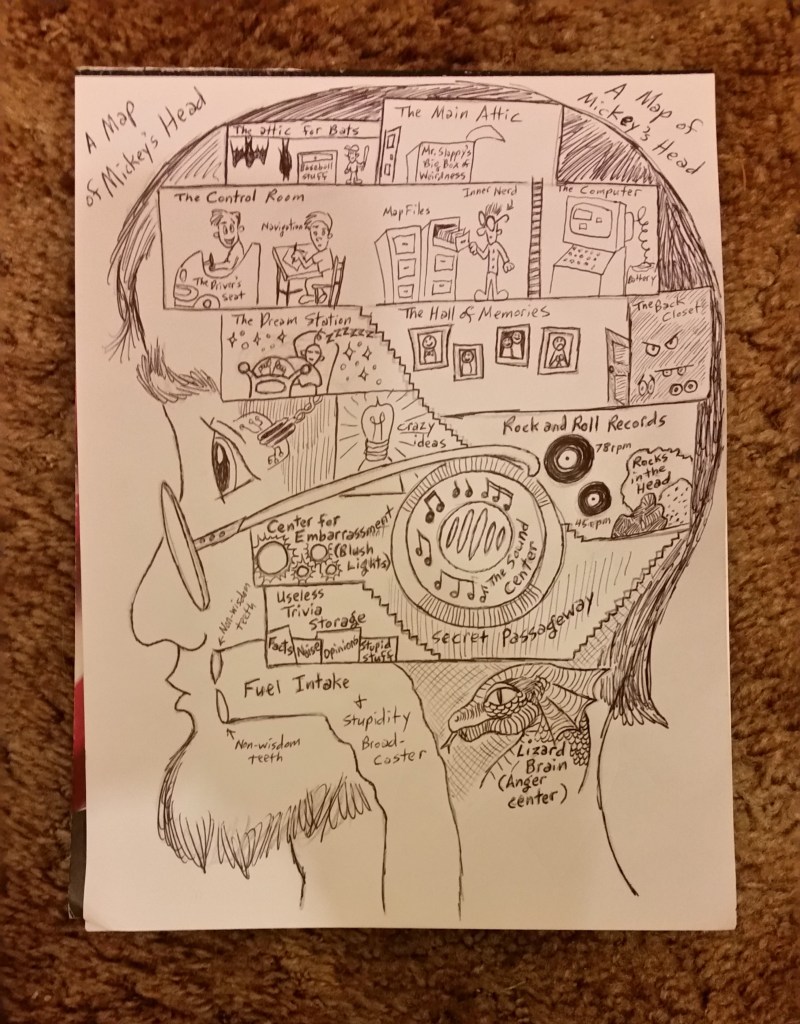
There are probably too many things on my mind today. Examine the map for yourself.
There might be a bug or two in my thinking machinery today.I tend not to look at things the way other people do. I even sign my name to my artwork backward. My friends tend to be imaginary and highly unusual.Beauty is fluid and open to opinion.Open also to interpretation.Here’s an artwork that I was looking for yesterday and didn’t find until today.
My daughter the Princess graduated on this weekend in 2020. That is probably what has my head swirling.
To be a wizard is to be wise. Look at the word origin if you don’t believe me.
wizard (n.) early 15c., “philosopher, sage,” from Middle English wys “wise” (see wise (adj.)) + -ard . Compare Lithuanian žynystė “magic,” žynys “sorcerer,” žynė “witch,” all from žinoti “to know.” (Wisely plagiarized from http://www.etymonline.com/word/wizard)
Mickey, the old fool that he is, thinks of himself as a wizard
Mickey is a wizard. He writes down foolish things like that because he knows that the beginning of wisdom is to recognize that you are no more than a fool. You can laugh, but it’s true. Some wise guy that I am paraphrasing here said so. (Probably Socrates.) So, that makes it true
Don’t believe me? Want to debate me?
Have you taken the step yet of recognizing your own foolishness?
How can you be wise if you never take the first step down the path to wisdom?
And what defines a wizard, is that a wizard writes. He must write his wisdom down. Otherwise, there are no fruits of his wisdom. I tend to write mostly strawberry wisdom. That kind of fruit is tart and sweet in season, but sours easily and spoils in hot weather and dry kitchens. Blueberry fruits are probably better. They become tarter and sweeter with dryness, kinda like good humor and subtle jokes. But enough of the fruit-metaphor nonsense. The best fruit of wisdom is the Bradbury fruit. I confess to having eaten often of Bradbury Pie. Dandelion Wine and The Illustrated Man leap to mind, but there are far more Bradbury Pies than that.
My latest published Beyer-berry Pie. (but only if you go back in time to 2020)
So, if Mickey is a wizard, and wise wizards write wisdom, then where do we get Beyer-berry Pie?
The strawberry-flavored pies are found in the My Books page of this blog, though the author’s page on Amazon is a more up-to-date list.
Recently the fool of a wizard, Mickey, planned to set up a free-promotion weekend for A Field Guide to Fauns. But because he cast a time-warp spell and leaped from 2020 to 2022, he now is offering a free copy of Sing Sad Songs until the end of May 2022. Honestly, as Mickey Books go, Sing Sad Songs is one of his very best.
The foolishness begins below..
Of course, I probably can’t sell a single copy of A Field Guide to Fauns. Potential readers will see that there are naked people in this book about nudists and automatically think that Mickey is too weird and crazy to be a good writer. But good writers like Ray Bradbury and Kurt Vonnegut can be bizarre in their writing too. (I wonder what Vonnegut-berry Pie would taste like? I must read Cat’s Cradle again, for the third time.) Probably at least blueberry-flavored, if not gooseberry.
But even failed wizards can write wizardly writing if they write with wit and, possibly, with real wisdom,
If I have any wisdom at all to share in this post about wisdom, it can be summed up like this;
Writing helps you with knowing, and knowing leads to wisdom. So take some time to write about what you know.
Writing every day makes you more coherent and easier to understand. Stringing pearls of wisdom into a necklace comes with practice.
Writing is worth doing. Everyone should do it. Even if you don’t think you can do it well.
You should read and understand other people’s wisdom too, as often as possible. You are not the only person in the world who knows stuff. And some of their stuff is better than your stuff.
The stuff you write can outlive you. So make the ghost of you that you leave behind as pretty as you can. Someone may love you for it. And you can never be sure who that someone will be.
So, there you have it. The full measure of the wacky wizard’s wisdom was written down by the wise-fool-wizard Mickey.
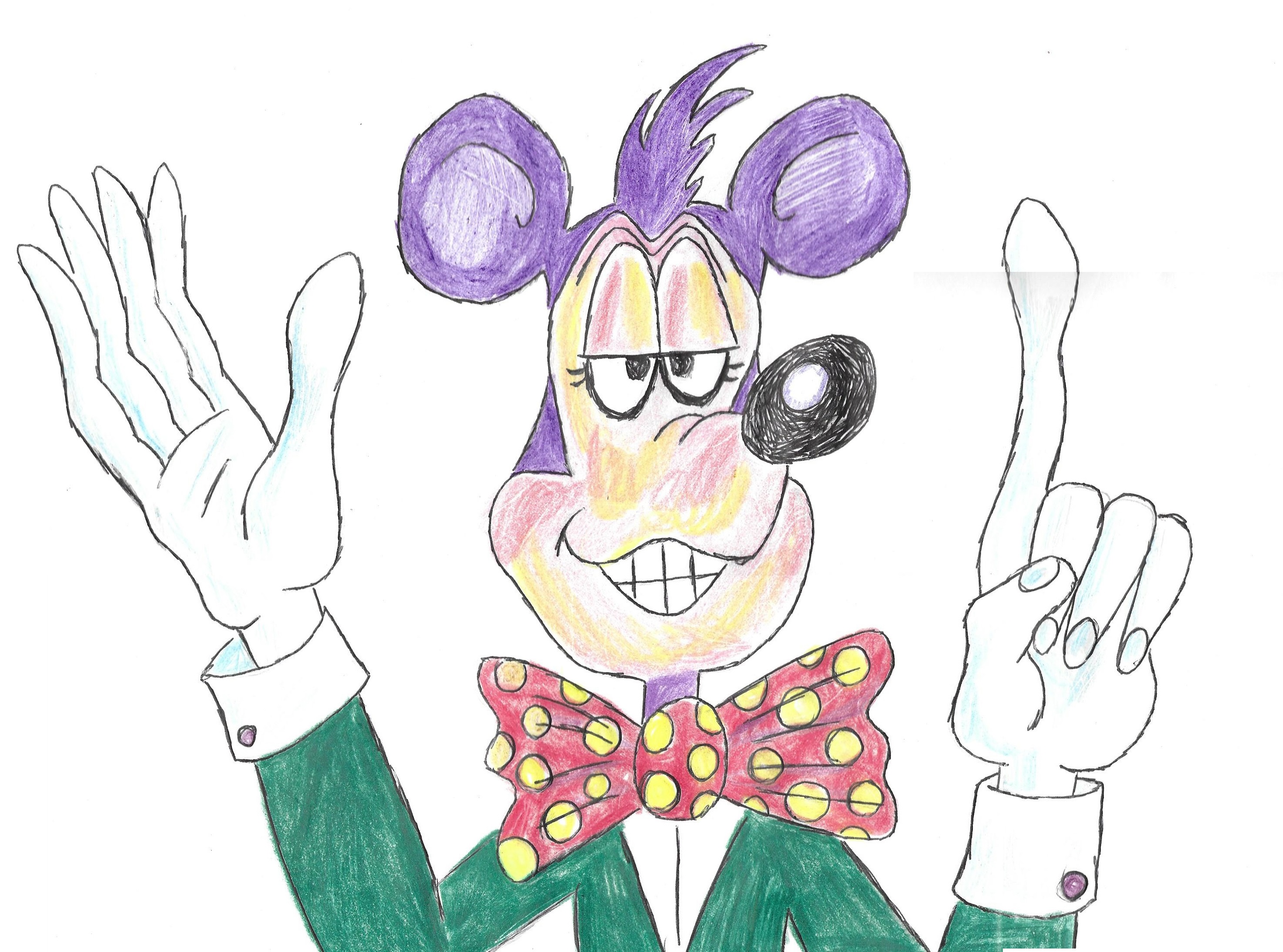
Mickey is a nickname, a cartoonist’s pen name, a wererat from Tellosia, the secret kingdom of fairies hidden in a willow tree in Rowan, Iowa, called Norwall in Mickey’s Hometown Novels.
Mickey is a cartoon mouse with purple fur who talks too much in writing and not enough in real life.
The difference between a John Green, author of The Fault in Our Stars, and a Mickey is that John Green became a recognizable personality on YouTube before becoming a published novelist. And he is younger with more opportunity to go and do what an author has to go and do to market a best-selling novel. Mickey markets worst-selling novels. But their writing styles and writing goals are remarkably similar. (Do you feel the urge to argue that point? You may have to buy and read a worst-selling novel or two to prove me wrong.)
Mickey thinks of himself as a nudist. He plans to revisit a nudist park this Saturday if his body doesn’t fail him again and prevents him from making that long drive. He essentially makes himself spiritually naked by revealing all his inner secrets and emotions by writing them all in this blog and his silly books. Some readers find that the naked people in his stories wreck their enjoyment of the books. But those readers generally have bad things in their imaginations that don’t necessarily come from the characters taking their clothes off. And not all of Mickey’s books have nudist characters in them. Most do not.
Mickey is not a real person. That is not the author’s real name.
But Mark Twain is not a real person either.
Neither is William Shakespeare. (You are welcome to argue that if you like.)
Mark Twain is on Mickey’s side about Shakespeare not being real.
Mickey believes there is real magic in the world. Of course, Mickey is pretty much crazy and claims to be a wizard. But he defines magic as, “”The use of undiscovered science or uncommon artifice by individuals who are gifted with possession of arcane and rare knowledge.”
But being fundamentally Mickey is not something I would recommend as a life course for anybody else in this world. Mickey is stuck with being Mickey in the same way that you are probably stuck being you. And we simply try to be the best Mickey or the best you that we can be because we don’t have any choice but to be the best of whatever we are stuck with being.
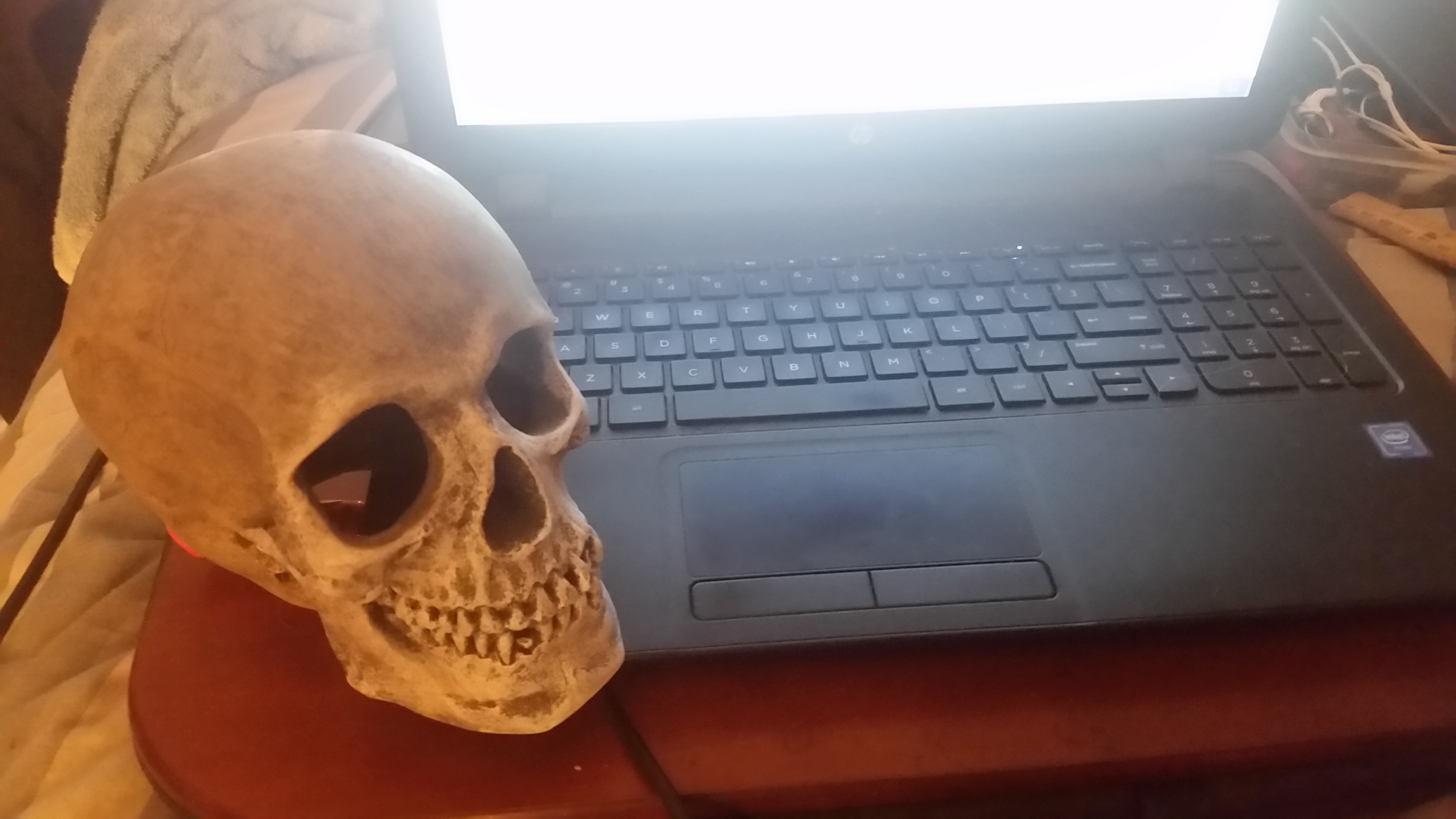
Quite often of late I begin a daily post with no ideas in my head of what the post is even going to be about. The pre-writing technique is known among English teachers and writing teachers as free-writing. But it is basically writing with a completely empty skull.
Of course, I don’t mean that literally. The skull in the picture is not mine, and the completely empty skull of which I speak is not the one in the picture. (That is really a ceramic aquarium decoration for scaring your tropical fish.)
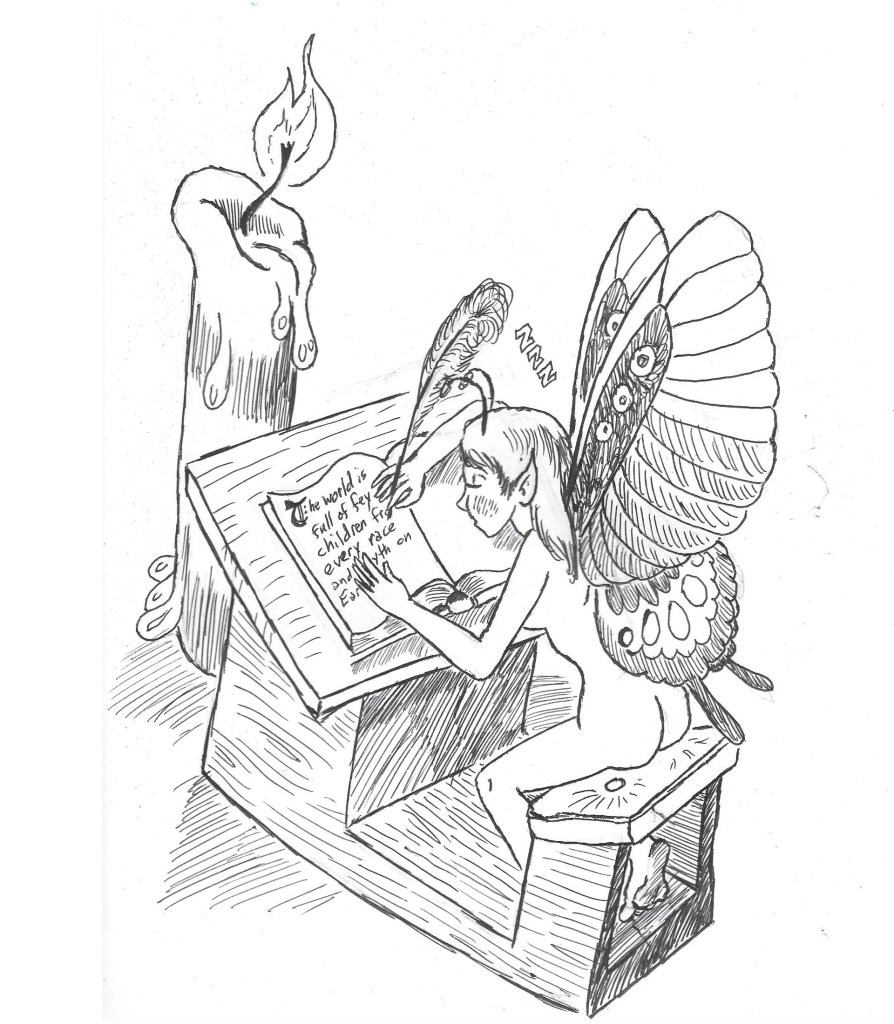
What I did was simply start an essay without any direction or plan in mind, going wherever the insanely creative part of my brain led me. So, I started with the picture of the fairy girl sleeping instead of doing her writing. That led me to the notion that she was supposed to be writing just as I was supposed to be writing, but she had an empty mind just as I had an empty mind at that moment. So, the light bulb suddenly went on over my head. And then I managed to turn it off again before gravity made it fall down on my head so that it would merely bonk my brain and not also set my old gray hair on fire. And then I wrote down the title that the jumble of associatively challenged details inspired in me, “Brain-Free Writing.”
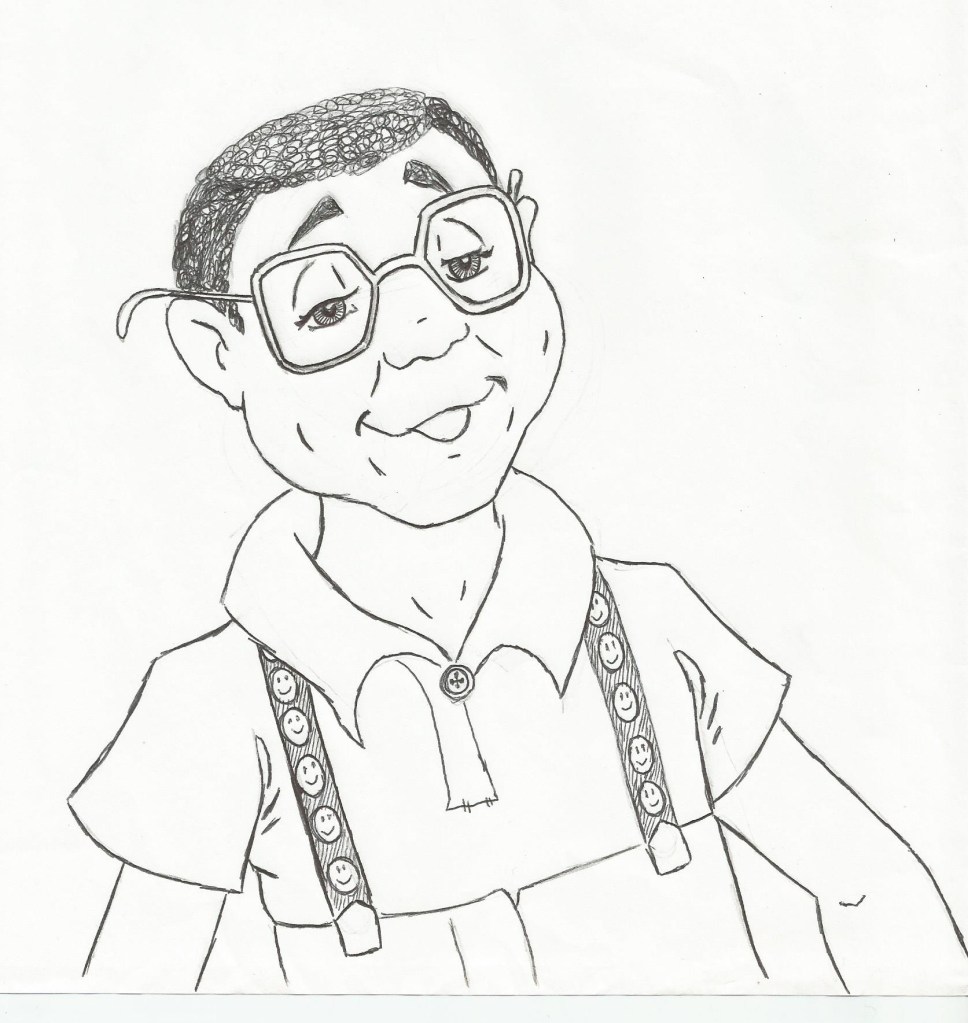
Steven Q. Urkel
So, then, when the initial surge of notions subsided, I resorted to another Paffooney picture, this time of an old TV character with obviously defective but plentiful brain activity. I selected this old drawing from my WordPress gallery because I often identify with Urkel. I am awash in a world of ideas unique to me, and incapable of smoothly integrating into polite society because of random massive brain farts and social awkwardnesses.
And the Urkel picture inspired me to do a comparison paragraph. Dilsey Murphy here is a character from my own novels who is also brainy and somewhat socially awkward. She, however, is different in her fundamental character make-up from Steve Urkel in that when she turns serious about her goals, in spite of shyness and awkwardness, she gets to the point of what she wants to accomplish, and she doesn’t mess up in the way that Urkel does. She has an underlying practicalness that Steve lacks. I am like her in many ways. In fact, it is that very practicalness that led me to start from nothing and churn out this finished essay.
When Fairies die, at least, when the good ones die, they do not leave a corpse behind. The magical energy they are made of, originating from the sun, disperses into the air, sometimes leaving tiny bones behind, but usually leaving nothing.
When the corrupted minions of the Unseely Court, the evil Fairies, die, they turn back into the mud and clay they were originally animated from.
So, a battlefield of a great Fairy battle would look exactly like the Arcanum looked as the little band of Fairies led by Flute entered into its vastness.
“The bodies of Gobbuluns are everywhere,” said Flute as he pointed out several lumps of Wartole-shaped mud and clay. There were a couple of Cyclopes-shaped mud piles as well.
“There was a huge battle here?” asked Tod.
“Obviously. First the dead Trolls, and now this.” Flute shook his head sadly.
“Did our side win?” asked Poppy.
“There’s no way to tell. If the Fey Children won, there should be living soldiers and Fairy beasts on the field. The dead have returned to the air.”
“But, Flute, perhaps the winners have already left for home. You don’t know for sure that we lost.” Tod looked extremely upset.
“We shall see. We must search the battlefield,” said Flute as he picked up a fallen banner from the Castle Cornucopia.
Glumly they continued to search the battlefield.
Suddenly, little Schtinker in Poppy’s lap became highly agitated.
“Dat killah nite!” cried the squirming boy Sylph.
“What are you talking about?”
The Sylph pointed at a silhouette on the top of a nearby knoll. It appeared to be an armored Sylph knight astride a ridinghawk. Next to him was a younger Sylph astride a pigeon.
“Hail and well met!” called the knight. “You are late to the battle, Prinz Flute.”
“Lord Lancelot! How did the battle go?”
With a short swoop, the hawk brought the famous knight near to where the roosters had stopped. To their credit, neither rooster flinched at the presence of a red-tailed hawk.
“We would’ve lost had not the yon squire known as the Rascal and I cleverly used my immortality as a Storybook to slay the remaining Gobbuluns from the air after the Legion of Cornucopia overwhelmed the Dark Lord Ebon Sneezer.”
“None other of the Cornucopians survived?” asked Tod in horror.
“The Castle Guard remains at Castle Cornucopia,” said Lord Lancelot. “All the rest are dead.”
The Rascal on his pigeon fluttered up. “Lord, we must return to the castle quickly! The Storr and Lord Toxiss will be sending a siege army there. They will be overwhelmed without us!”
The Rascal looked at Lancelot with an expression of urgency on his young, dark-eyed face. The knight looked back at him exhausted and pale.
“We go, then. Prinz Flute, we need your aid, both magical and swordical. Or our ally, King Mouse, will be lost.”
Almost immediately the hawk launched into the air.
The Rascal looked at Flute and his companions, smiled a weak, dispirited smile, and took off on the pigeon.
“We no go wid dat killah nite!” protested Schtinker. “Heem will murdah all ob us!”
“What is the urchin saying?” asked Tod.
“I think he saw Lancelot kill the other trolls and is afraid he will kill us too,” said Poppy.
“Nonsense. He’s a great knight and trusted friend.” Flute shot a disgusted glare at the child.
“Heem let alla guyz in heem armies fit furst, den heem killah alla Trollz wayne dey iz dead.”
“Is he saying that Lord Lancelot wastes the lives of his troops even though he’s immortal himself?” asked Glitter.
“Surely not. The little stinker doesn’t really know how to speak the Slow Ones’ English,” said Tod.
Poppy tried to calm Schtinker. But he was deeply agitated. And as to whether Schtinker could talk or not, she wondered at the fact that Lancelot had used the word, “swordical.”
“The situation is dire, no matter how you look at it,” said Flute. “So, we go to Castle Cornucopia immediately.”
They spurred the roosters to run to the northwest. But Poppy did not feel good about it.