Canto 37 – On To Dancer
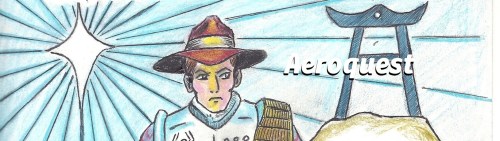
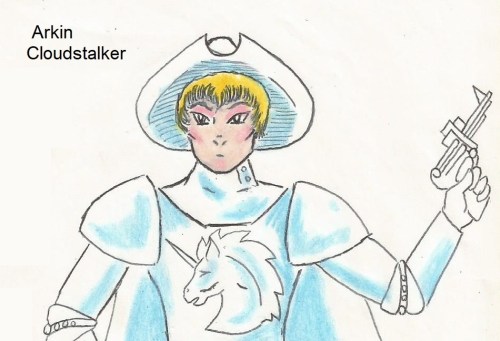
Arkin Cloudstalker was a natural-born starship captain, the way Ham Aero was a natural-born pilot. Their abilities and sensibilities meshed in ways Ham had never thought possible. Arkin took command of the mission without needing to be asked. Aboard the Leaping Shadowcat Ham had always had the say, but since he retained the captain’s cabin, he had no trouble yielding command. Arkin was berthed in Ged’s stateroom, a suitably Spartan and undecorated place. Duke Ferrari took over the Madonna’s stateroom since she moved in with Ham as his wife. The Duke was made Astrogator and Navigator since he knew the way to both Dancer, and Coventry beyond. Sinbadh was relegated to ordinary crewman and cook. Trav was still nominally the engineer. The young Lupin, Sahleck Kim, was taken on as the cabin boy. His job was to clean the air systems, wash the freshers, and generally swab the decks.
The Shadowcat had two decks, an upper deck with the control pit and bridge, computer access room, six staterooms, and three storage lockers. The lower deck had the trophy lounge in front, under the bridge, and two more staterooms. It also had a skinning room, a galley, and two large capture tanks which hadn’t had a xenomorph in them since before reaching Don’t Go Here.
Duke Ferrari stood over the Astrogator’s holo-pit on the bridge, studying the route from White Palm to Dancer. The jump would take them thirty hours over 16 parsecs and nearly exhaust all of the Shadowcat’s fuel. “Who will take care of your corsair fleet, Cloudstalker, while you’re away?”
“They take care of themselves, Duke,” he answered from the Captain’s chair. The chair itself had hardly been used the last ten years, since Ham always used the pilot’s seat. “Besides, we’re allied with Tron Blastarr now. There aren’t many pirates you can really trust, but I know my Lady Knights are safe with him. He’s a good man underneath.”
“I sensed that too,” said the Duke. He twirled the right end of his moustache between thumb and forefinger. “I know he set me free and offered to help me, but beyond my desperation, I could sense that the man is a hero.”
“He’s a bit boring at times,” offered Trav.
“Explain what you mean to the nice gentlemen, Goofy,” warned Ham. “They don’t understand your sense of humor.”
“Ach! I’m just saying, Tron never takes advantage of opportunities the way a good pirate should. That old jester just doesn’t have it in him to steal the way a pirate should.”
“Sir, I see why they call you Goofy,” said the Duke. “You are something of a cad yourself.”
“We’ll see who’s goofy when we find the relic on Dancer!”
“Remember, sir,” warned Ferrari, “this is a critical diplomatic mission intended to forge a planetary union to fight against the Imperium.”
“Oh, I haven’t forgotten. I will use what I gain from the ancient device to help fight the lizard-men of Galtorr.”
“That’s assuming you can get it out from under the nose of old Razor Conn,” laughed Arkin. “He’s a corsair that knows how to hold onto something that’s valuable.”
“I’m not afraid of the old pirate,” said Trav. “He’s just another spacesuit full of gas and hot air.”
Ham looked at Goofy hard. The dumb nut was wearing a bright yellow tie with a screw and a baseball pictured on it. It was little wonder Trav was willing to put both feet in his mouth at once.
“You will belay such talk, Mr. Dalgoda,” said Arkin. “If I am to be captain here, then you must show respect to other spacers, especially the ones I most respect.”
“Yes sir, old Jester captain, sir!” Trav saluted mockingly.
“What do we actually know about Dancer, Duke?” Arkin asked Ferrari.
“Well, Captain, it is a water world. No land masses exist anywhere. The limited civilization there dwells in undersea domes. The Blackhawk Corsairs own and operate out of a domed city called Castle Orpheum.”
“Do we have an underwater vehicle aboard?” Arkin asked Ham.
“No sir, but the Shadowcat can travel underwater herself. She’s air tight and streamlined. We can scoop up water for fuel and just extract the hydrogen from it.”
“How cool is that!” said Trav. “I bet this old girl is more rugged than any of your corsairs.”
“I have to hand it to you there, Mr. Dalgoda. No White Sword or Pinwheel I ever saw could travel in space, air, and water too.”
Ham’s breast swelled at the unexpected compliment to his space ship. Few realized how worthy a safari ship could be. It was designed to get into and out of exotic environments with both the game and the game-hunters alive. It had to be quite different from the run-of-the-mill space craft.
“I am hoping this mission goes smoothly,” said their new Captain. “A lot is at stake here. If we are going to make things work, we are going to have to be more tricky and adaptable than our enemies. That means we have to out-think the likes of Admiral Tang and the Generals of the Galtorr Imperium.”
Ham nodded in silent agreement. What he’d taken on was daunting, more daunting than merely jumping out into unknown space.