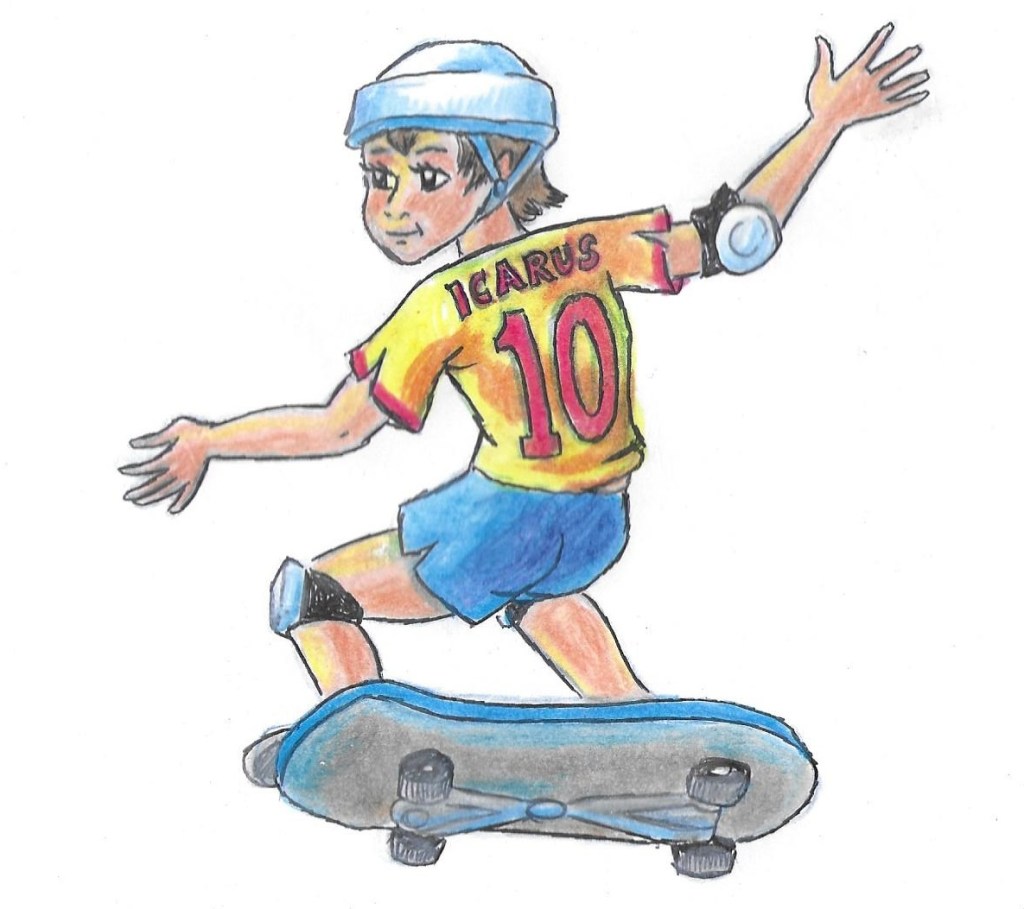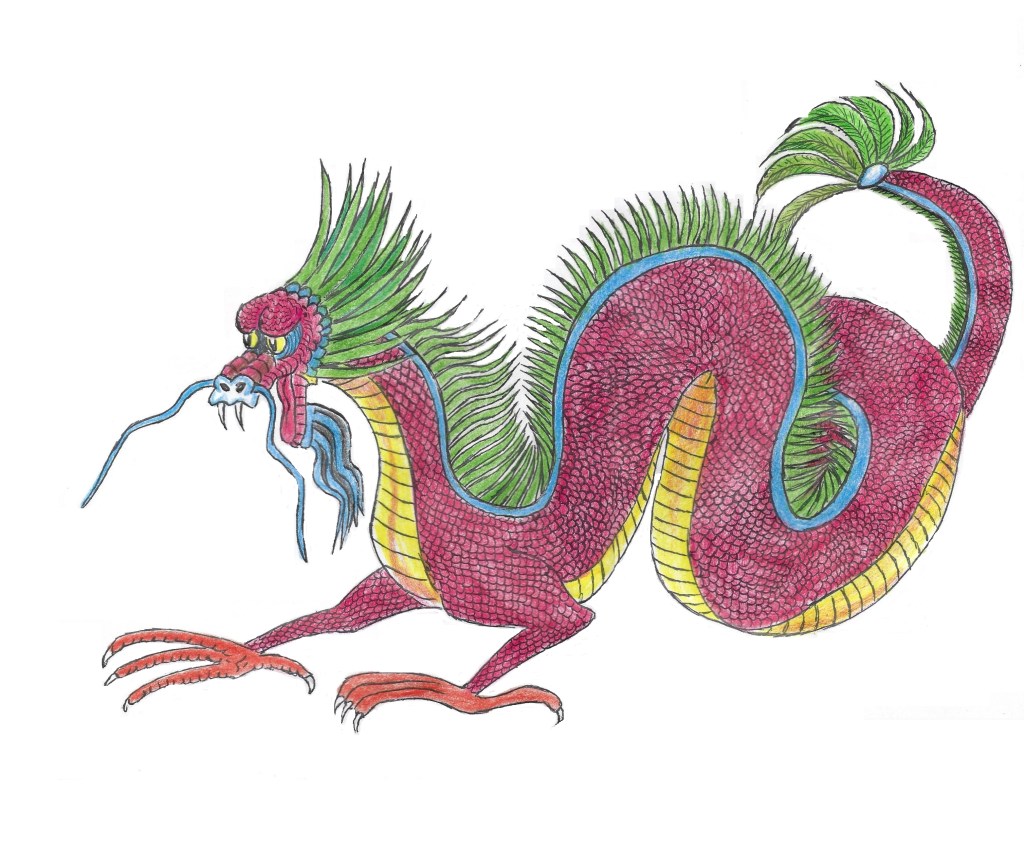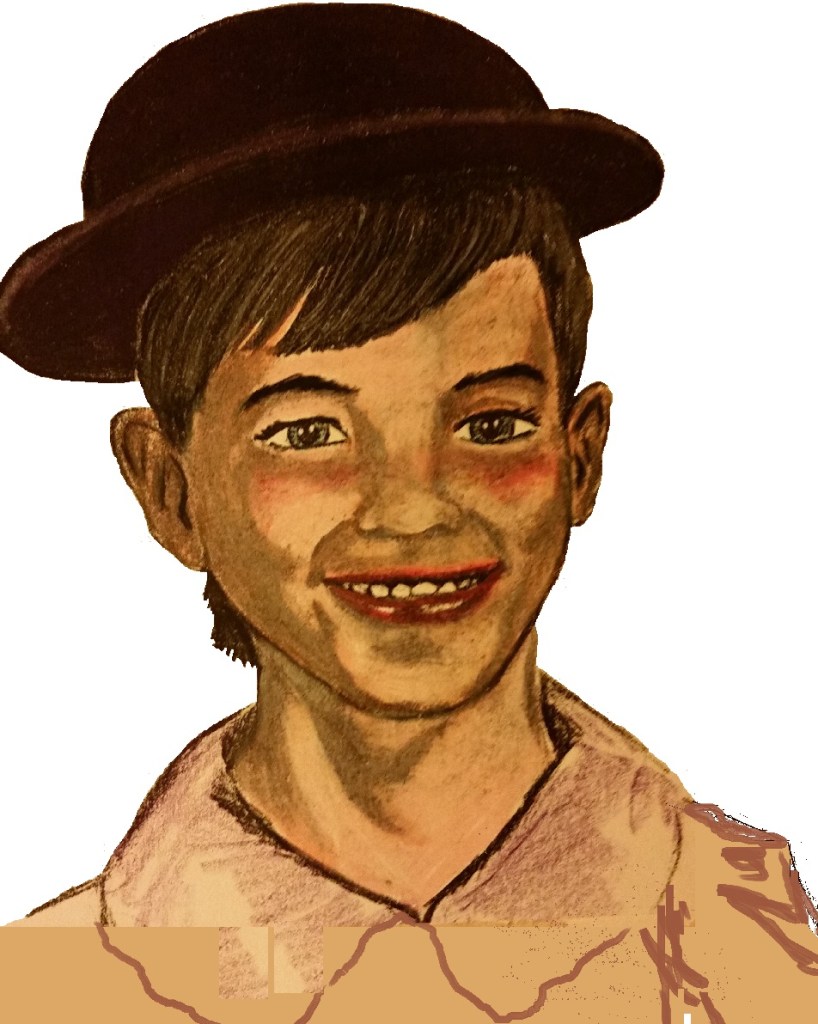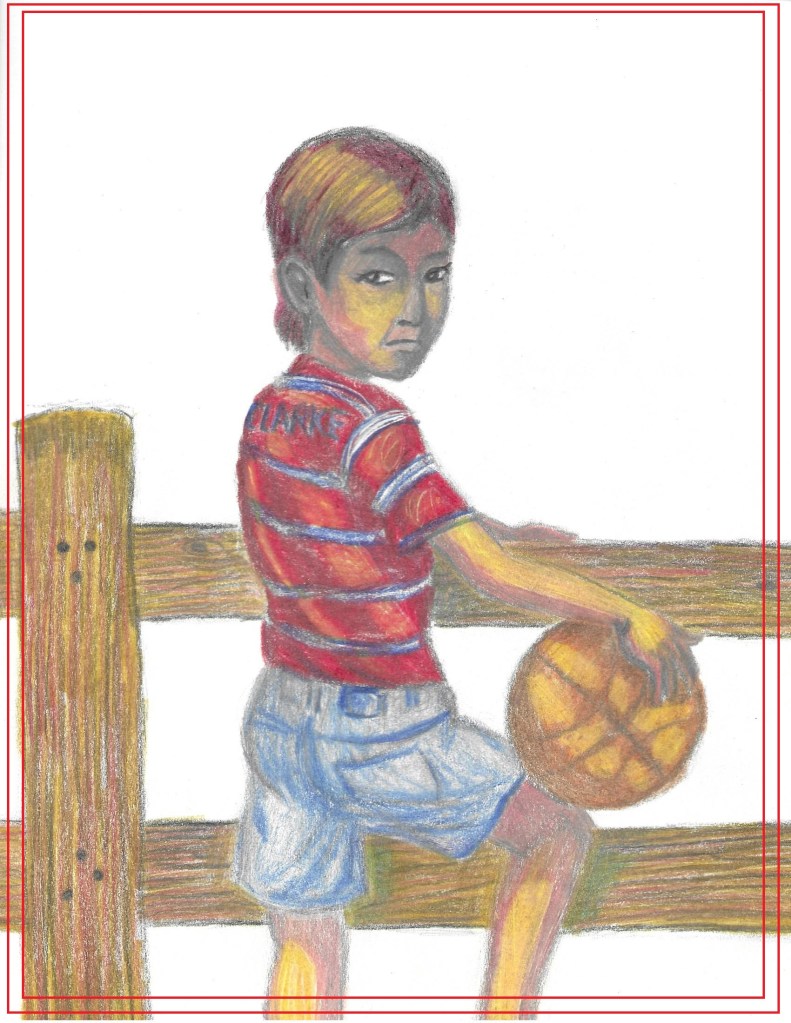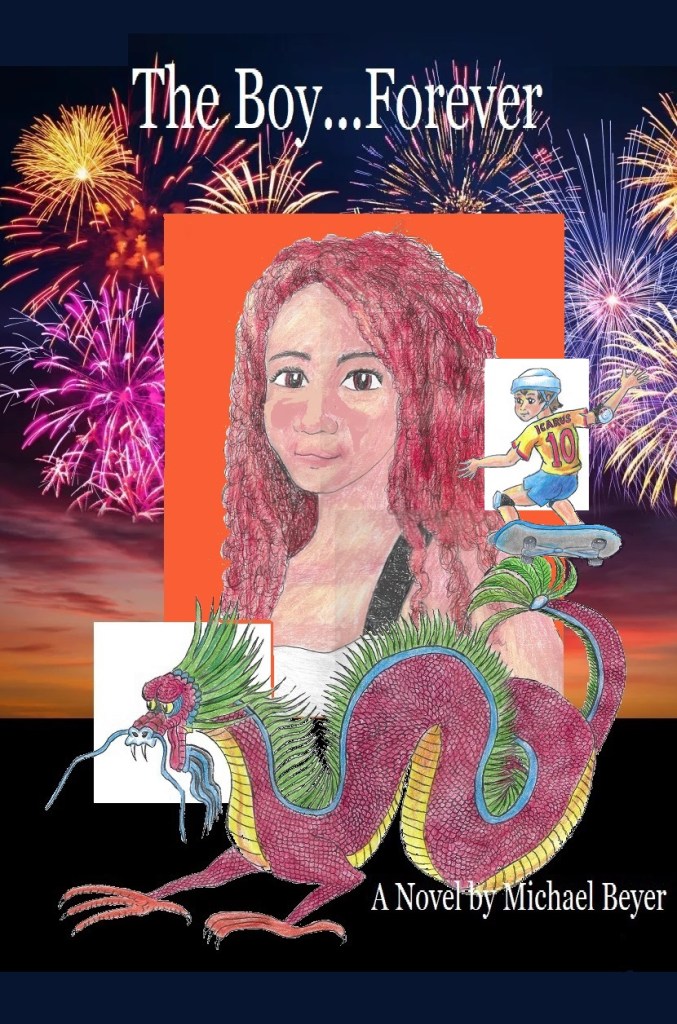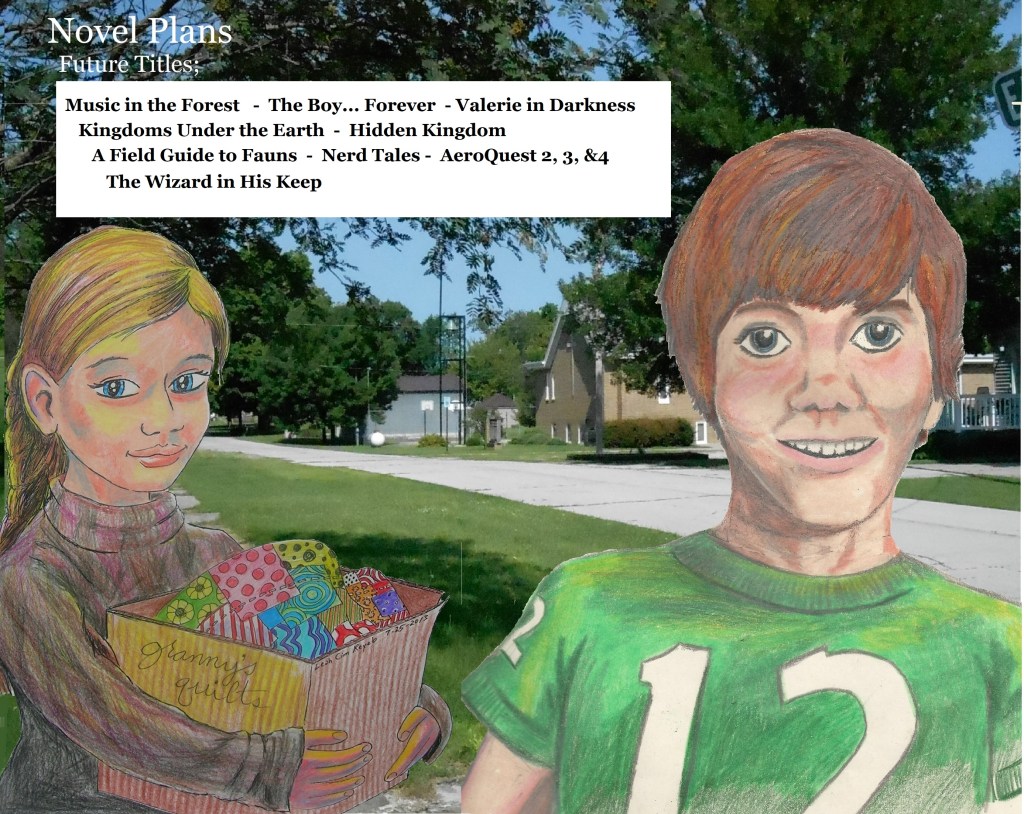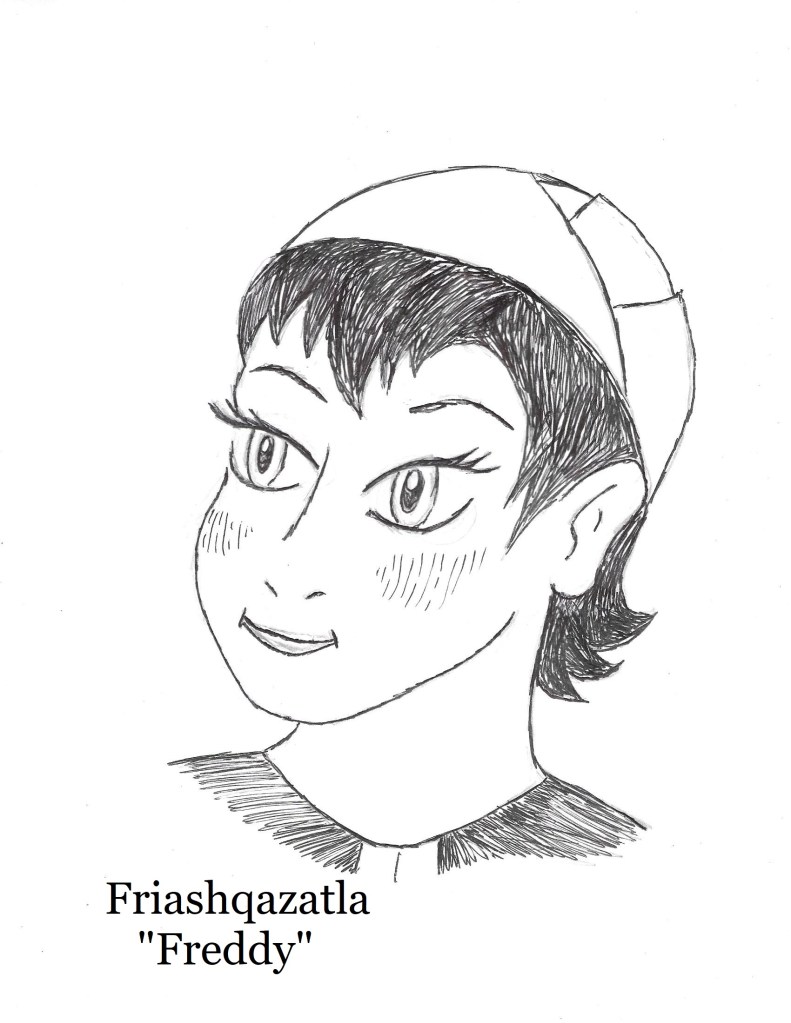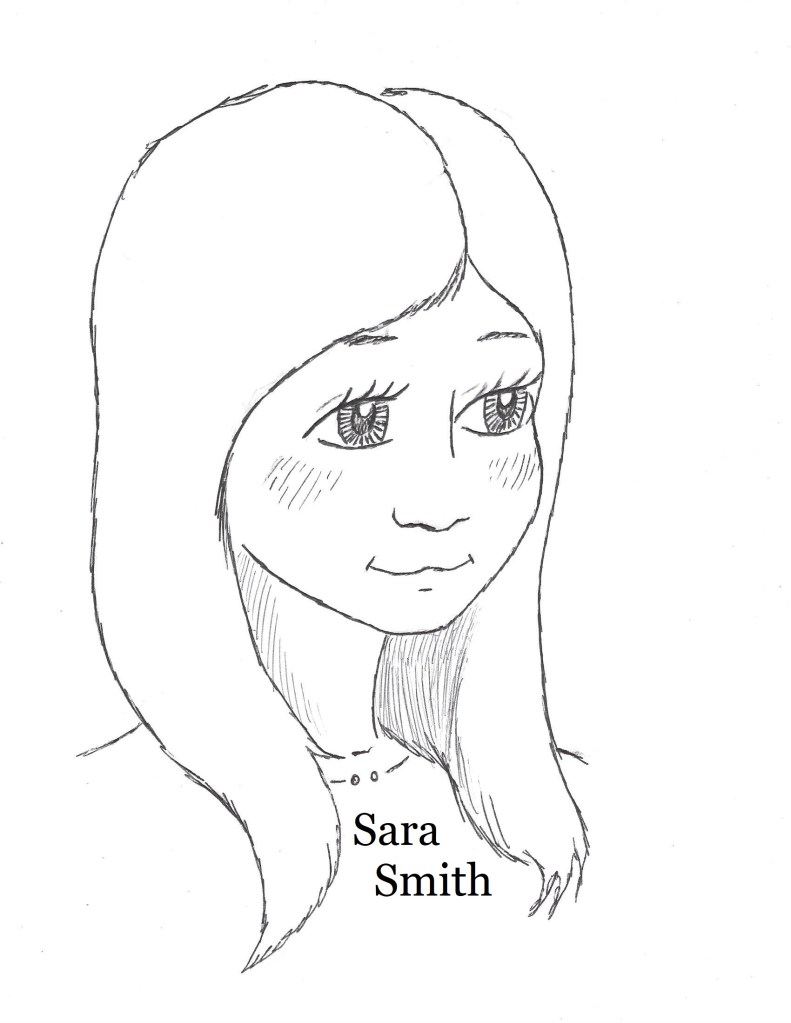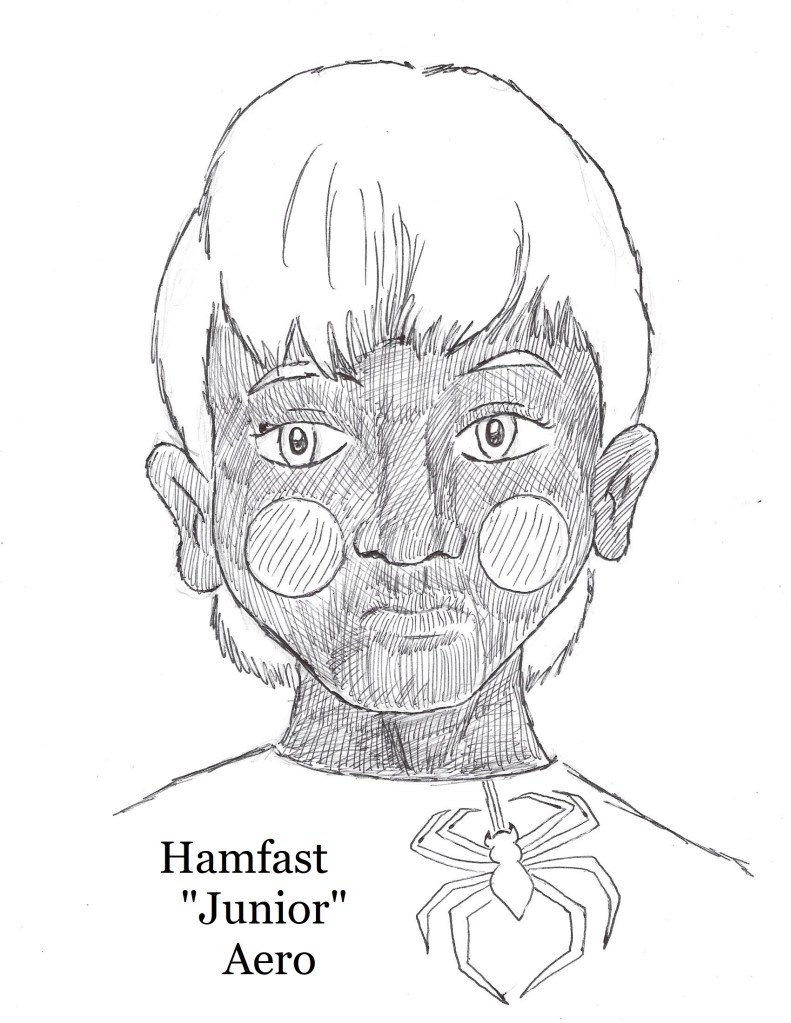
Yep, I have now finished writing and publishing twelve books. I have reached a dozen. And the fascinating thing to me about my stories is that, even though they are pure fiction, they are about my life, especially my inner creative life.
All of the books have a connection to my home town. Rowan, Iowa, is portrayed in the books as Norwall (Rowan with the letters remixed and two L’s added for Love and Laughter). The two science fiction books are connected not so much by place as by characters. Stardusters and Space Lizards begins with aliens and humans fleeing the failed invasion of Earth from the site of the defeat with Norwall residents now a part of the alien space-ship crew. AeroQuest 1 has an ancestral connection through Orben Wallace, The Bicycle-Wheel Genius. His descendant is Googol Marou, the story-teller of the AeroQuest saga.
So, here’s a picture of the 12 books in time order (more or less).
And just to make matters a bit clearer, here’s the time-ordered books with approximate times indicated;
I do have more novels to write if I am given enough time and life to do them, but they will be fit into this timeline after 1974 C.E. and before 5541 C.E. That’s only a space of about 3,400 years to fill, so I will have to work hard to squeeze it all in.
In Japanese the name Gaijin means
“foreigner” or “gringo”. It denotes a
barbarian who is too close to nature to truly ever understand the ways of the
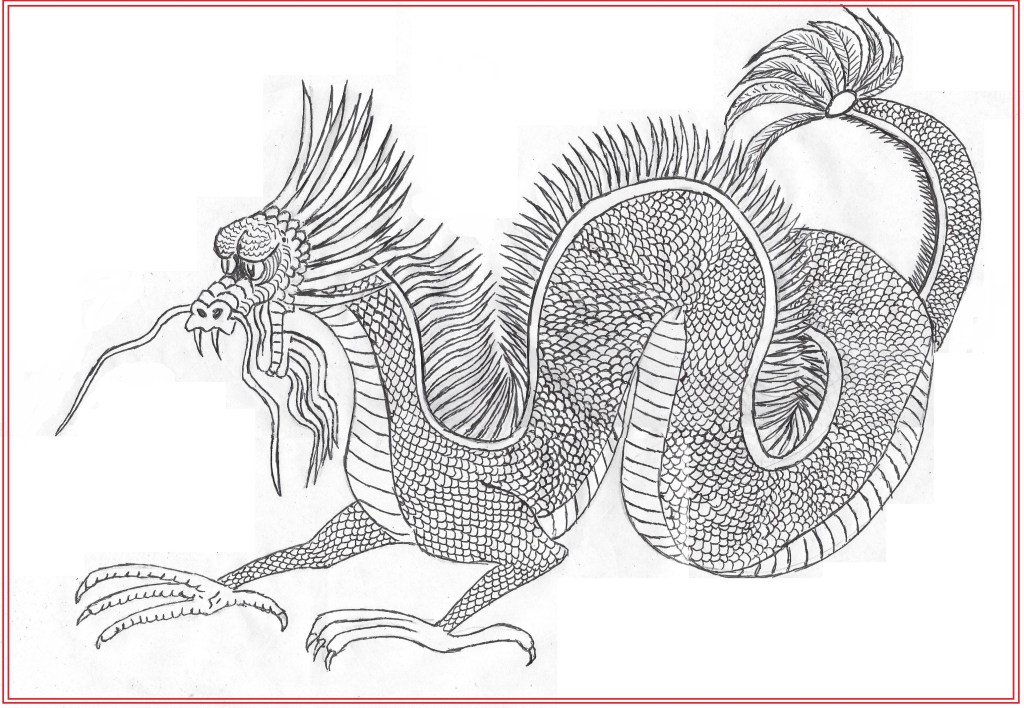
celestial culture of the dragons. It was
an appropriate name for the planet. All
who came there, even the dolphins and whales, were foreigners and off-worlders. The true culture was a secret deeply embedded
in the planet itself.
Dr. Naylund Smith was an immortal. He had lived on 17th Century Earth and been among the first explorers to leave the planet in a space craft stolen from the invading Tellerons. He had met the original Sylvani, and loved them as a people. He used his vast knowledge and medical skill to help them evolve into the people they were now. He and his young daughter, Sara, were standing outside the Celestial City of Kiro as the spacecraft Megadeath touched down on the plains outside the Dragon Wall. They watched the sleek war machine settle gracefully to the soil where no starship had been for nearly 800 years. It was with a mixture of emotions that Naylund watched it. He knew that the ship carried what his daughter needed most. He also knew that it would bring an end to the peace and unspoiled beauty of the world of Gaijin.
“Daddy, are they
bad men?” asked eight-year-old Sara. Her
blond hair fell golden and beautiful over one eye. Her little-girl body was nearly lost in the
graceful white silk kimono she wore.
“No, Sweet
One. They are good.”
“Why are you so
sad, then?”
“Because they
bring the White Spider back to us.
Things will change here. The
Gaijin I love will be no more.”
“The White Spider
from the stories? That should be
exciting, shouldn’t it?”
“Perhaps.”
The little girl
put her soft hand into the gnarled old turkey claw that was Naylund’s
hand. He was comforted by the gesture.
The starship
touched down in sight of the Dragon Gate.
The town was surrounded by an ornately carved wall that was shaped like
a dragon’s body. The only entrance was
through the Dragon Gate, the open mouth of an ornately carved Celestial
Dragon. The city was secured behind the
energy barrier created by the Sylvani Technology in the wall itself. Naylund would have to escort whoever was
inside the space ship through the Dragon Gate, because he did not wish them to
run afoul of either the Gate Guards or the ancient energies of the wall itself. Only those with proper chi, like himself,
could pass through unchallenged.
He walked out to
meet them.
The first down
the starship’s exit ramp was obviously an Earther by heritage. His skin was pink like Naylund and Sarah’s
skin, not yellow or orange like the Gaijinese.
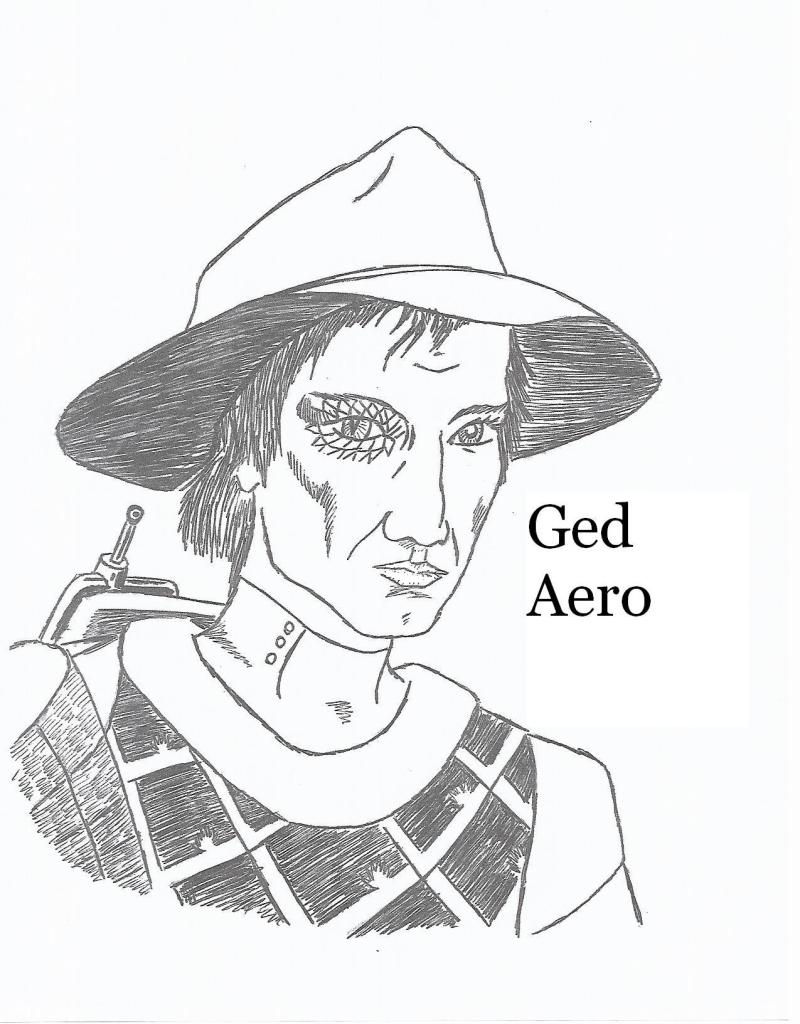
The boy that followed the man in the fedora hat, though, was a Nebulon,
blue-skinned and yellow-haired. The boy
looked Naylund directly in the eye, and revealed himself as a telepath by doing
so. Naylund was not a Psion himself, but
had come to know them because Sarah was a telepath, born of a Psion mother who
died mysteriously during the birth.
“So,” said
Naylund, extending a hand in a gesture of welcome, “welcome to the planet,
Gaijin, Honored White Spider.”
“Why do you call
me that?” asked the sharp-eyed man in the fedora hat. “I am Ged Aero. I am here because a Psion told me to
come. I don’t know you. Why do you call me by that name that I’ve
been hearing so much lately?”
“I hate to be the
one to break it to you, Ged Aero, but by stepping out of that starship, you
have fulfilled an 800-year-old prophecy.
The people here will hail you as a god reborn. You are like Jesus Christ to them. You are here to teach them, and lead them out
of their millennium of isolation.”
“Perhaps you are
mistaken. What if I am not the White Spider
you seek?”
Naylund
laughed. “Shan’s Prophecy tells how you
would speak those very words when you arrived here. The people would not follow a White Spider
that never doubted himself and acted without reserve. Those are the qualities of a Black Spider. We have too many of them all ready.”
Ged looked the
old man in the eye. Naylund could see
something there he had never seen before. This man was a different sort of Psion. He was a changer, one who could change himself,
and by doing so, change the worlds around him.
“Exactly who are
you, old man?” asked Ged.
“I am
Naylund-sensei. Naylund Charles Smith,
Doctor, Adventurer, and Scholar. I am
from Earth, but from long, long ago.
Ged-kun, I will help you in your new role as leader of this planet. I pray that you will learn to love it as I
do.”
“Naylund-sensei?”
said the little blue boy, “who is this lovely girl?”
Naylund looked at
the bright-eyed boy. He was a handsome
child with the beautiful powder-blue skin of a superior race of beings. Naylund felt attraction to him immediately,
though he had no idea yet why.
“This is my daughter,
Sara Smith. I pray that you both will
learn to love her too, just as I do.”
It
is said that life in space exists on a spider’s web of invisible star
lanes. A photon drive can propel a starship
only through certain well-defined mathematical probability arrays to a new
location in geometrically-and-gravitically-folded space. They work basically by popping in and out of
reality, though you can only precisely describe the physics of it in mathematical
terms. So, of course, there are those
who claim that if space is filled with spider webs, then God himself must be
the Great Spider who spins it all.
The Megadeath
roared into orbit around the bright blue planet that filled the life zone of a
star listed on the charts as The Old Yellow Man. It had been identified as a habitable system
before, but no one had dared to come this far beyond the Imperial Borders to
colonize before. At least, no one these
spacers knew about.
“This is a
spectacular world,” said Vince Niell.
“Yeah, man,” said
Nikki Sixx. “Like a toatally gnarly
hammertime world!”
“Wha…?” answered
Cold Death.
Ged chuckled at
the verbal density of his crew. You have
to be happy with the pick of the litter even if the dog pound only has mutts.
“What do your
sensors pick up, Cold?” Tkriashav asked Cold Death.
“Wha…?” the white-skinned
bone-man responded.
“Your instrument
panel, you thick…” grumbled Ged.
“Oh,” Death said. “Signal from the third moon of the big gas
planet, man. Like, ancient dudes put a
scout base there. Dead zone, dude. No life.”
“Other signs of
civilization?” asked Tkriashav.
“Stellar observatory
in the third orbit. Also, dead
zone. One moon around this planet. None around the planet in the first
orbit. Also, dead zones, dude.”
“What about the
planet below us?” asked Ged, beginning to grow impatient with the brain-dead
zombie stoner at the sensor panel. “Are
there people or signs of civilization on this planet?”
“Whoa… Like two
billion people. Not human, man. Humanoid, but definitely not human.” Cold death shook his green Mohawk hair-do
like a horse shakes flies off its mane.
He was definitely not human either.
“Vince? Do you think you can land safely?” asked Ged.
“Yeah, boss
man. I can put her down on a dime. I’ve never had such a sweet girl under my
control before. Yeah, baby!”
Ged ground a
frustrated fist into his temple. He knew
there was something important about this mission because of Tkriashav’s
damnable clairvoyance, but he felt he needed to know what. Was it something for his own good? Or something for the greater good that would
mean sacrificing his own life? He wanted
to be able to make those choices himself.
“Cold Death? I’m gonna hate myself for having to ask this,
but do you find any signs of a starport down there?”
“Wha…?”
“A landing
field! A flat patch! A place to put down where we don’t go
CRASH! BOOM! And blow up!”
“Oh, yeah,
man. Major city with walls, flat all
around, dude. Gnarly!”
“You see it,
Vince?” asked Ged.
“I’m swoopin’,
Daddy-o!”
“Ugh! What does that mean?” Ged looked at Xavier Tkriashav. Tkriashav merely shrugged.
The two spaceships finally locked together belly to belly in the middle of a barrel roll. Dalgoda’s fireball was tearing itself apart from inside. Flaming projectiles tore free on every side of it, sparking out in airless space. Meanwhile, Tron’s Pinwheel Corsairs were bathing the two spiraling space dancers with hot laser fire. Two of the six corsairs had a pretty decent lock on Trav’s ship and were peeling more chunks off the drive core.
“Ged!” hollered
Ham, “can you get the Goofer out of his ship before it blows?”
“I can try,” said
Ged, more to himself than to Ham. His brother was busy trying to fly the
ship in a carnival-ride maneuver.
Ged scrambled
down the hatchway ladder to the ventral docking port. The metal around
the port doorway was already glowing red from heat. With a moment of
panicky concentration, his hands grew fire-lizard scales all over them, like
gloves that appeared out of nowhere. How did he do this thing?
Well, he had to admit to himself that as a safari leader, he’d skinned more
than a few of the fire-resistant xeno-beasts in the past twenty years. He
knew the feel and look of the skin quite well. He had even tasted
fire-lizard flesh. His protected hands
could spin the locking wheel of the heated door and throw it open without
singeing his fingers off.
“Goofy? You
there?”
“Atta-boy, Ged-boy!
You’re a hero.”
Ged expected to
see the thin, eye-patched face next, but instead he found himself looking into
the beautiful blue face of a Nebulon woman.
“Who are you?”
Ged asked with open mouth.
The blue-skinned
young lady with the yellow hair just shrugged and eyed Ged like she didn’t
understand.
“She’s part of my
treasure, Ged!” called a goofy voice from somewhere behind her. “Pull her
into your ship. Not all Nebulon slave girls speak Galactic English, you
know!”
Ged pulled her
into the Leaping Shadowcat.
“Here’s more,”
called Trav.
An elfin
blue-skinned boy with bright yellow hair was held up next to be rescued.
“Another slave?”
“He’s the son of
the Nebulon Princess.”
“Your son?”
“No way!
I’m greedy, not perverted!”
Ged couldn’t
argue that. He pulled the boy in too.
“Where’d you get
the cool lizard gloves, Ged?” asked Trav as he clambered through the doorway
and eyed the scales with his one uncovered eye.
“I kinda made
them,” Ged answered sheepishly.
“Is our boy, Ham,
ready to jump out of this mess?”
“I hope so.”
“Good.”
Trav hauled a huge anti-gravitic cargo-bag into the ship after him and slammed
the portal door. “Eeyow!” he cried as he burned holes through the fingers
of his own gloves. It was fortunate the Goof always wore those stupid
white gloves. They saved him from burning flesh off his fingers.
“Ham, you can let
‘er go!” hollered Ged into his commo dot. The communicator was glued
comfortably to his throat.
They heard a rumble
as the Leaping Shadowcat released her grip on Trav Dalgoda’s nameless ball of
flame and melting hull. The rumble was followed shortly by a huge boom
and jarring shockwave.
“Ged! Get
the Goofer up here. We’ve got big problems with his corsair friends.”
Ged’s eyes
widened. “What happened that made that shock wave?”
“Goofy’s ship
exploded and took out two of the trailing corsairs.”
“Jeez!” moaned
Goofy, “I hope Maggie and Tron are all right. They’re good friends of
mine.”
“Do I read the
situation right?” asked Ged. “If they live, they are going to kill us?”
“Well, yes, but I
still love Tron like a brother.”
Ged nodded
unhappily. He wished he lived in the same alternate universe as Trav
Dalgoda.
I am a novelist. In the same way that a pianist is a pianist because he plays music on the piano, I am a novelist because I have written 12 novels and published eleven of them. I am not a professional novelist. I have made $1.75 in royalty payments for August 2019. But not being a successful writer for money does not prevent me from being a novelist.
So, don’t be surprised when I say that I have strong opinions about what a novel is and what it should be.
Yes, I have already published more than just these.
First of all, a novelist must also be an avid reader. Not merely a reader of other novels by other novelists, but of anything and everything. Essays, plays, non-fiction books about a wide array of factual things, and pseudo-factual things, and conjecture, and conspiracy theories, and poetry, and science books, and Mark Twain, and Isaac Asimov, and Charles Dickens, and Ray Bradbury, and comic books, and graphic novels, and more, and more, and more… for as long as your brain shall work. A novelist should try to read everything, because to be a good novelist, you must know everything. Certainly you must know far more than what you actually write down into novel form.
A good novelist must be good at short fiction as well. Because a novel is more than just one story. It is made up of parts. I call them Cantos. Most writers call them Chapters.
But whatever you call them, or even if you don’t give them separate titles or sections in the novel, they are like short stories in themselves. They must have their own lead sentence, their own beginning, middle, and end. They must have their own end line, or punch line, or thesis statement. And they must have, by their end, a point to make about setting, plot, character, or theme.
A novel is layer cake of little stories, each layered upon other layers, and all baked together into the same over-arching cake.
And a novel, when it is published, is never really done. Sequels, prequels, and serialization are always possible and sometimes even necessary. Rewrites and new editions are also a thing. And even in the mind of the reader, the novel never really ceases to have an effect. I still carry around A Tale of Two Cities in my head everywhere I go, and through everything I do, even when I am writing my own novels. Sidney Carton is very much alive to me, even though he dies at the end of the novel.
So, there you have it. A bunch of burbling about novels from an unsuccessful novelist. For whatever it is worth, I am truly a novelist. And I do not apologize for being that sort of low-down, despicable sort of human being.
Yesterday, in Part 1, I tried to convince you that, “You should never take too long a time writing a story” because I have written some twenty-plus-year-long novels that took me forever to write, and I am an unsuccessful writer. So, you should not do things the way I did. (Some might accuse me of trying to use a little too much irony, claiming I am a bit too obscure about what I am actually telling you that you should actually do… But, remember, I advised you not to take advice from Mickey. And you need irony in your diet anyway to avoid irony-poor tired blood.) Therefore I am going to advise you further that, “You should never make your characters too complex and interesting.”
After all, there are Mickian characters that are literally blue with red patches on their cheeks that absorb harmful gamma radiation and make those characters immune to radiation sickness from exposure in deep space. You don’t want to make readers so curious about a character that they waste time reading more and more closely to discover more about that character.
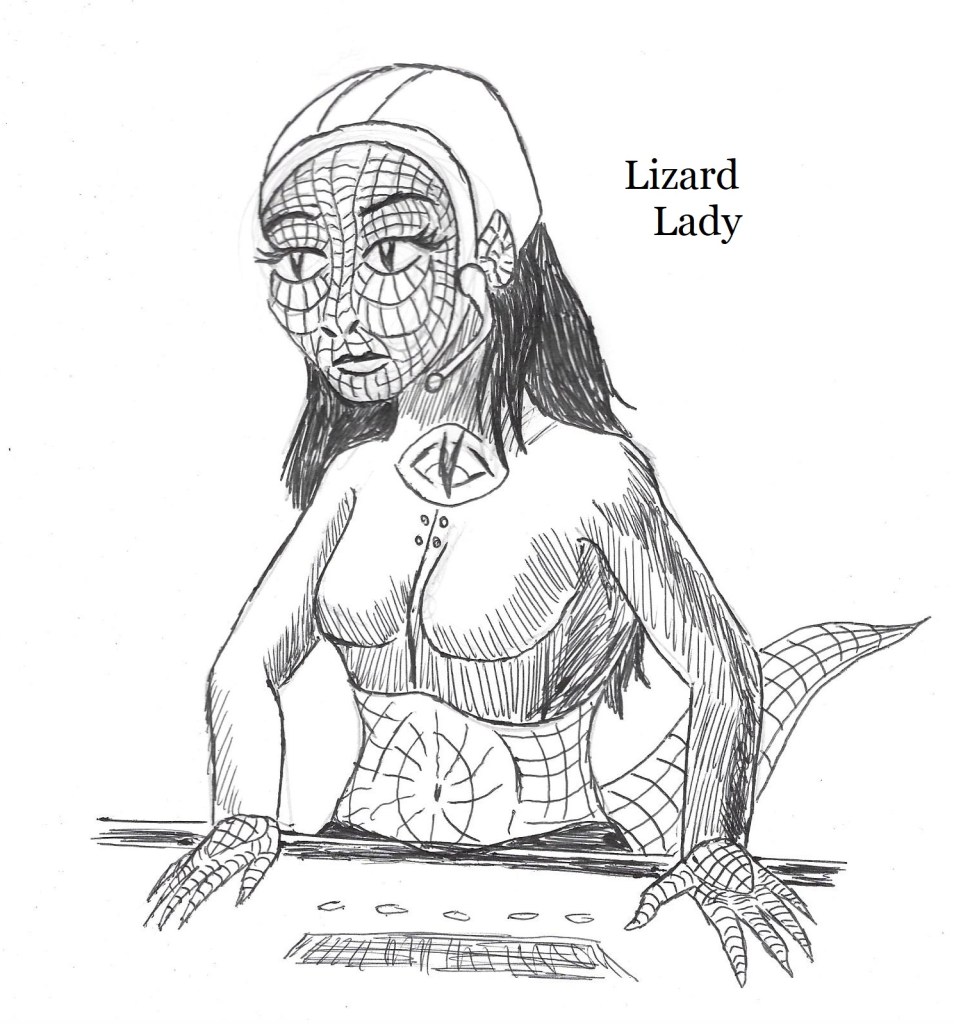
Junior Aero, the alien Nebulon boy in the AeroQuest stories is just one example. Not only is he a member of an alien race that are belittled as “Space Smurfs” and treated to racial bigotry based on skin color and not being able to speak English at first, but he is also gifted with mental “Psion powers” that allow him to telepathically read computer minds, even the sentient and intelligent ones.
And some of my characters are green with shark-like fins on their heads. They were born on Starships and orbiting artificial satellites like the one going around Barnard’s Star. They are like George Jetson here, named after his father, Xiar’s, favorite Earther cartoon show character from the 60’s. Not only is he a green-skinned amphibious humanoid life-form from a different star system, he learns a lot about himself in the adventure he has in the novel Stardusters and Space Lizards. He goes from being a narcissistic space-pilot wannabee into becoming a humble crash survivor and expedition leader who helps save an entire planet from ecological disaster. And he even gets a girlfriend out of the deal in Menolly his nestmate and fellow survivor.
Characters like that are far too interesting and developed to be good for your reputation as a serious producer of money-making fiction stories. And you certainly don’t want to waste time on developing the same characters in multiple books.
I used the character of Valerie Clarke in the book When the Captain Came Calling as an eleven-year-old protagonist who loses her father and has to rely on older kids and good friends to save herself from depression and the trash-pits of despair.
I used her again as a main character in Snow Babies where she befriends a mysterious stranger and also finds a runaway boy who makes her think seriously about life and young love, all in the middle of a deadly blizzard.
She’s also in the book Sing Sad Songs where she learns to negotiate love with a boy who also lost a parent, in fact, both parents and a twin sister, in a car crash that made him a lonely orphan. She not only has to face the loss of her own loved ones, but has to help somebody else to face the same thing, in fact, more than one other somebody.
She’s also a character in The Bicycle-Wheel Genius and Fools and Their Toys.
It is unthinkable to use a character that much and make her grow and change in so many different ways. She should be used only once in a simple and clear way. Like, maybe, Mark Twain’s use of Huckleberry Finn.
Huck, as a character was only used in the books, The Adventures of Tom Sawyer, The Adventures of Huckleberry Finn, Tom Sawyer Abroad, Tom Sawyer, Detective… and… never mind. Forget I even said anything about Huck Finn. In fact, maybe this whole post is so ironic it’s making my story-teller gears all rusty. Never-the-less, let me threaten you with a possible part three.
If you have come to my blog in hopes of gleaning some key advice about how to write novels or tell a story, then the wisest advice I can give you is, “Do not take any advice Mickey gives seriously.” He used to be a writing teacher in public schools. That is true. But he is also the writer of weird surrealistic novels full of purple paisley prose. And he is not a successful novelist like Steven King or J.K. Rowling. His writing advice is probably only worth ca-ca poo-poo.
So, let me tell you how NOT to write a novel.
Each of the novels I have written and displayed here took me more than twenty years from the moment I conceived of the idea, through plotting, rough drafts, revisions, re-plotting, expanding the story, to finally publishing them in 2017, 2018, and 2019. I developed the stories from real people, real events, and real themes that were a part of my life and added to each of the stories as time passed. So, obviously, you should never take too long a time writing a story. It is true that Snow Babies is the best novel I have ever written, and I count Sing Sad Songs, The Baby Werewolf, and When the Captain Came Calling among my best work. And I only spent one year in the writing of Aeroquest, which is, ironically, the worst thing I have ever written. So, you can see that following any advice Mickey might give you about taking your time with writing is obviously worthless. I took too long writing and publishing my best books, and that is why I will die a penniless, unknown writer.
But I admit to having even more bad advice to warn you not to take. More, I think, than I can put into this one post. So, I will Part-Two this particular essay and take up the topic again in the very near future. Or forget all about it completely. It has to be one of those.
Sometimes a good historical tale requires the right story-teller to really explain it correctly. Sorry, you are stuck with me, Professor Googol Marou. I am an astronomer and physicist, not the kind of story-teller I knew so well when the events I will try to relate to you actually happened.
I am not calling
this bit “Chapter Two” like an ordinary writer with writing sense would.
No, I am following the unscientific metaphors that Ged Aero himself always used
when telling a story. He talked about the universe as if it were a
symphony played by musical instruments that don’t make sounds. Their musical
notes are actually lights and energies, physics, if you will, or some such
nonsense as that. So, the first chapter was called a “Canto”, a section
of poetry or lyrics, intended to be sung out loud. This little
pile of narrative nonsense is primarily exposition, a part that is probably
good to know about, but it won’t kill you if you skip it. It won’t kill
the story either… hopefully. I may also use “Nocturnes” in the course of
this tale, classical movements of romance and sensual beauty. And I am looking
forward to the “Scherzos”, the short interludes of comic musicality and brief
relief from the heavier fare.
My over-all plan for this tale is to tell you how a group of teachers were able to make history and change the Galtorr Imperium of a Thousand Worlds, turning it into the New Star League, even though the stars in it were billions of years old.
Now, you might
wonder how it is that a group of teachers were able to conquer and
realign the very stars, especially since they didn’t know they were teachers at
the outset, but I swear it is true. I’m not the liar Trav Dalgoda
was. And, even though I didn’t personally witness everything I intend to
tell you, I did participate a bit. And, I was able to learn even more
through my special telescope.
Space in the era
of this history was already partially colonized by human beings who originated
on Earth. Four branches of Earthers had reached out to the stars and planets of
the Orion Spur of the Sagittarius Spiral Arm of the Milky Way Galaxy. The
Texans had created the Coreward Union of Inhabited Worlds, also known as the
Pan Galactican Union. Those fools in their plasticized cowboy hats had a
way of running roughshod over the galaxy until they met forces more determined
and self reliant than they were. I don’t apologize for Space Cowboys,
there really is no excuse for them, but they were a necessary part of the
cultural mix that preceded the New Star League.
The Japanese had
reached out to the Trailing Area of the Spur and their colonies disappeared
from known space. Many thought they had run afoul of a powerful alien
menace. In some ways, it was probably the truth. Still, the
inscrutable Space Samurai would come back to haunt us in a new
incarnation. It would prove to be the right thing at the right time.
The Southern
European Union had branched out towards the Nebulas of the Leading Edge of the
Orion Spur. There they founded an exclusive humans-only Empire called the
Classical Worlds. They were so pig-headedly convinced of their own
perfection and superiority, that they took to living everywhere as Space
Nudists, shaping the environment to accommodate the human form rather than
making any adaptations themselves. These descendants of the French,
Italians, and Greeks adopted Greco-Roman dress and culture, and I mean the
Ancient form that had served the original Greeks and Romans back on Earth, the
culture of social nudity and reverence for the naked human form. They
were very enlightened about philosophy and science, but as buck-naked people,
they had absolutely no fashion sense. They were also unusually prejudiced
towards any intelligent being that wasn’t human. They never seemed to
figure out that most humans weren’t really intelligent beings. Still, in
the long run, we needed them too. Good thing we didn’t have to look at
them often… well, unless we really wanted to.
And finally, the
Eastern European Space Initiative had made maximum use of their discovery of
the humanoid lizard Galtorrians found in the Delta Pavonis Star System on a planet
known as Galtorr Prime. They established their Imperium in the center of
the Orion Spur. Something about the Germans and Russians just naturally
dove-tailed with the lizard peoples of Galtorr. The Galtorrian lizard-men
and humans became the first genetically altered, melded race in known
space. They were able to take advantage of the many genetic similarities
between humans and reptiloids for the purposes of making the two species into
one, the Galtorrian Imperial Lizard Race. They were like humans in every
way, even mostly blond-haired and blue-eyed, but their snake-like eyes had
vertically slitted pupils. They discovered they could thrive in Earth-like
worlds and hostile Galtorr Prime-like worlds equally well. They
used their supposedly superior breeding to field vast space armies and navies
of powerful starships and began conquering their neighbors. This, of
course, included the conquest and devastation of the Earth itself.
The Galtorr
Imperium had been established almost 500 years before Ged and Ham Aero started
the Great Outworld Expansion of 5526 C.E. People would come to call the
Imperium the “Thousand Planets” because of the 1,212 inhabited worlds in the
882 stellar systems it had conquered or colonized. It was not the
securely settled Orion Spur that I am sure you enjoy now. It was
necessary to keep an active scout service even in the heavily populated center
of the Imperium. Information traveled only as fast as the fastest
starships, and one end of the Imperium rarely knew what was happening in the other
end. There had been a need for the Galtorrians to fight three Jihads and
five Unification Wars. Pirates and Privateers were everywhere.
No merchant
traveled safely. New colonies often disappeared without a murmur.
Delivering goods meant risking life and limb. Of course, some of my
best friends were pirates at one time. You shouldn’t really hold that
against them. But it is no wonder that an outworld expansion required
someone of great courage and character to step out of the general darkness.
Now, I’m sure you
are wondering, “Who are you, Professor Googol Marou, to be telling us about the
distant past over so many light years of space?” Well, that would be a
good question. I’ve been described as a “total nut-job” on many occasions.
I know what I’m talking about, though, because I’ve studied history in action
through the Marou Ancient Light Holo-Assembler Telescope (the MALHAT). It
takes the collected light from the stars and planets we see, and reassembles it
in a holo-recording that shows what happened at the moment those light
particles reflected off the event. The true genius, of course, was in
finding the quantum shape-memory in photon particles and building a
re-assembler. That means that to view the past as it was 500 years ago,
all you have to do is look at it from 500 light years away and gather 500 year
old light. This I could do from the relative safety of a space platform
or space ship. I mostly preferred a scientifically-oriented lab ship, but
also found Ham Aero’s quaint little hunting ship serviceable as well.
And, I invented this wonderful thing.
I won’t lecture
you now on the fierce repressions of the Galtorr Imperium. Most of that
goes without saying, and if you’ve heard of them at all, you know it is true.
I know you are
probably still marveling over the simple brilliance of the Marou Ancient Light
Holo-Assembler Telescope! I can’t blame you. I’m still amazed that
I invented it. It makes me have to stop in the middle of my thesis just
to marvel at myself. Wow! Aren’t I wonderful?
What I will tell
you, though, is that the Aero brothers left known space because Ged was slowly
transforming into a rare form of Psion known as a Shape-Changer. Like the
telepaths, pyros, savants, teleporters, and telekinetics who made up the usual
run of Psions, shape-changers could make use of their entire brain system in a
conscious way to control the universe around them by mind power alone.
That is not to say that they were any smarter, wiser, or more moral that the
rest of us, just unusually gifted with special brain powers.
The Imperium
hated Psions because they were so much harder to control. They actively
hunted, persecuted, and, often, even executed Psions. I, myself, am not a
Psion, but you will note in the course of this history, when I come into the
picture to play a key role, that I have a real affinity for Psions and their
way of life. So, as the story continues, please don’t doubt the veracity
and mental stability of my observations. I’m a genius, after all.
My inventions prove it.
When you look out
the portal of a space craft, especially a large portal like the main view-port
of the Leaping Shadowcat, you get a glimpse of the great orchestra of light and
silence that has been playing its music in space since the dawn of time.
The diamond-bright stars glow with an electric melody in a great sea of black,
littered with the silent notes of the Galactic Symphony written on the face of
the universe, and being conducted by God himself.
Ged Aero stared
at this silent music as he contemplated his brother’s plan. Ham Aero had
proposed the impossible. How could it be the only solution?
“You can’t deny
it any more, Ged. The Galtorr Imperium is no place for a man like you.”
“…but the
unknown, Hamfast? How can you expect to get by beyond the edges of known
space?”
“Others have done
it in the past. You know that civilization still has not absorbed even
half the worlds that Martin Faulkner visited five hundred years ago.”
“Yes,” said Ged,
pulling at the front brim of his dirty brown fedora as if to hide his eyes and
the doubt that was in them, “but he was an explorer. He knew how to live
in space without any human contact for years on end.”
“What he can do,
we can do.” Ham pushed a fall of thick yellow hair out of his eyes.
It had been far too long since he had had a haircut, but only their mother had
been allowed to do it, and she was now gone. “We have to. Prejudice
against you has reached the point that it will be fatal.”
“Okay, I know that. But I’m learning to control it. I don’t have to change all the time. I can stop it when I need to, and maybe even start it myself. I don’t know why it happens, but I think I can make it work for me instead of against me.”
“Yes, well, mutations
like yours are almost always fatal in the end. You’ll slip at the wrong
moment, and the Imperials will have your head on a platter. What did they
call your disease?”
“Lycanthropy.
Werewolf disease.”
“That’s my point
exactly. We both know it’s really something else, but the torches will
come out to burn you the next time they see you change even a little bit.”
“Unknown space,
Ham? Does it have to be unknown space?”
“Yes, Ged.
Unknown space. It’s my spaceship. The decision is ultimately mine.”
It was a
beautiful space ship. It was a safari cruiser of the Xenomorph Class, a
smooth airfoil shape with silver skin and a photon drive that could leap across
parsecs of space in practically no time. It could land on planets with
atmosphere as easily as it could glide through the electric sparkle of
space. It had a good, sturdy ground ATV and accommodations for as many as
twenty-five people.
“So how do you
plan to navigate the unknown?” Ged knew Ham was a capable starship
captain, but they had no reliable navigator. And the third member of
their minimum crew of three, the engineer, was not even aboard.
“Goofy can do
it. He’s more gifted than you believe.”
“Don’t tell me
your friend Trav Dalgoda is the engineer we’re waiting for!”
“Okay. I
won’t tell you.”
“Are you
insane? You’re going to jump out into unknown space with that Lunar Tick
as our only means to fix the ship and set our course?”
“Yeah,” said Ham,
grinning. “It doesn’t sound too smart when you put it that way. But
he is an original thinker and a good problem-solver.”
“He’s also wanted
on four planets and owes ten million Galtorrian credits to the biggest Vice
Lord in the Thousand Planets.”
“Yeah. It
was easy to talk him into jumping out with us.”
“Oh, I’m so glad
it was easy.”
The two brothers
had started calling their boyhood friend, Travis R. Dalgoda, “Goofy” when, as
an academy graduate, he started wearing an eye patch over his left eye even
though he could see through it perfectly. It didn’t hurt that he always
wore that silly Donald Duck sailor’s hat that he got on his one and only leave
on the Disney planet. He also had a thing for ties with weird pictures or
sayings on them. Trav was one of a kind.
“I guess I
understand your plan finally,” Ged said morosely to Ham. “You’re going to
bring an end to my suffering by committing suicide in deep unknown space.”
“Yeah,” said Ham
staring out the view port at the silent music of the stars, “Something like
that…”
At that moment, a
blazing piece of space junk trailing sparking debris came fluttering toward
them like a wounded sparrow.
“Oh, gawd!
Get to the co-pilot console, Ged!”
Whatever it was,
it was maneuvering, using powered flight. It was apparently seeking them
out.
“Any bets that
this burning space-ball is Goofy?” Ham asked as he strapped himself into the
pilot chair.
As if in answer,
Trav’s voice came over the ship-to-ship commo. “Ham-boy! You gotta
help me. I picked up a band of followers on my way out of system!”
“Yep. That’s
Goofy,” moaned Ged.
“I’m pickin’ up
bad guys!” shouted Ham. He flipped on the commo. “Goof? You
got six of them on your tail?”
“Oh, is that
all? My sensors are out. I figured it was more like fifty.
Pinwheel Corsairs, ain’t they?”
“Yes. I
make them to be Tron Blastarr and Maggie the Knife. What’s your beef with
them?”
“Oh, they’re
friends of mine. I helped them loot a cargo out of Mingo Downport.
They just didn’t like the ninety-ten split I left them with.”
“Typical,”
muttered Ged. “They got the ten, right?”
“Could I split it
any less fair than that?” Trav answered.
Ham launched the
Leaping Shadowcat into an arching intercept course. Ham had never done a
high-speed docking maneuver before, that Ged knew of, but the young pilot was
about to learn fast.
So, now that I have finished another novel that I have been working on for more than twenty years, I have decided to turn away from the hometown novels and take up some science fiction/humor again.
And I, of course, am not smart enough by any stretch of the imagination to avoid choosing my disastrous first novel from 2007, AeroQuest. This particular novel is spectacularly in need of a serious overhaul and re-write.
First of all, it has too large of a cast with new characters introduced in almost every Canto (what I inexplicably re-name chapters). Likewise they are interacting in too many different settings and planets and spaceships without enough individual explication of each. It screams out in agony to be divided into smaller chunks and both expanded and simplified.
The first book, Stars and Stones, will be centered on the planet Don’t Go Here. That, of course, is a bizarre world populated entirely by sentient beings who were marooned on the planet by pirates and space wolves. Even more bizarre, the populous has responded to a growing population with limited resources by adopting a caveman culture based on a lone cartoon holovid of The Flintstones.
The characters and the plot-lines will be pared down and simplified.
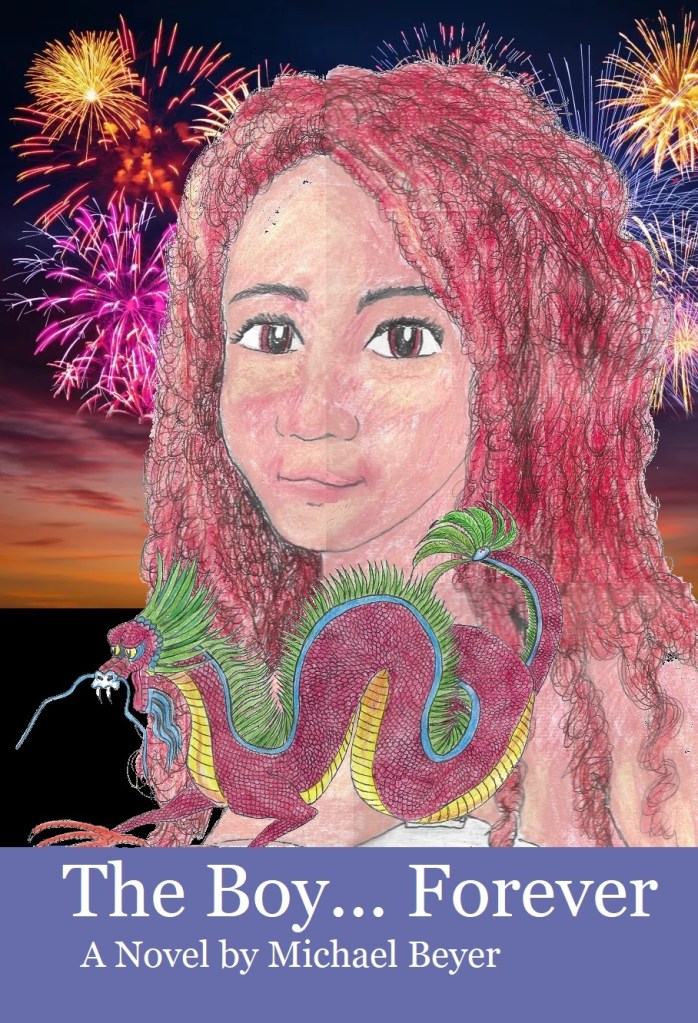
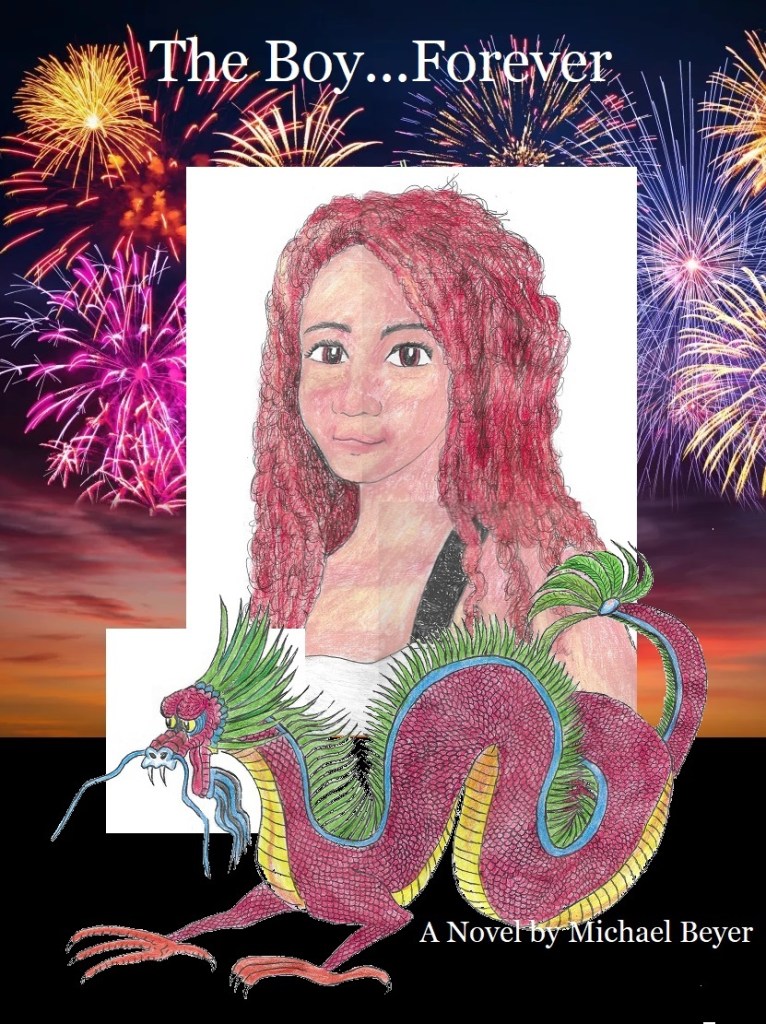
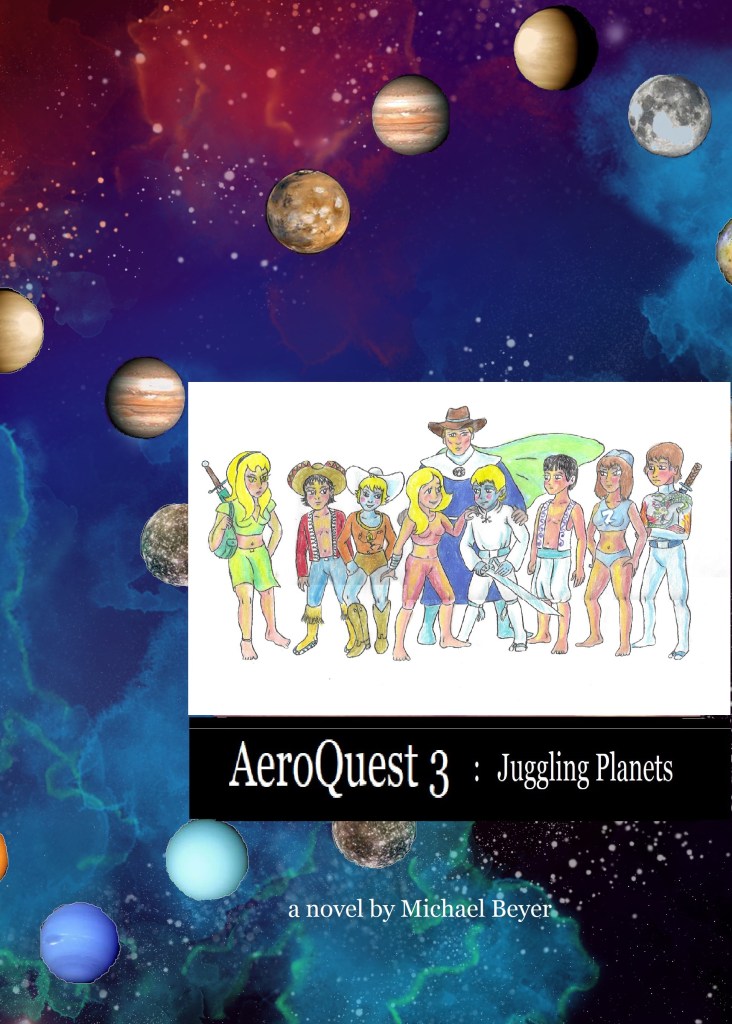
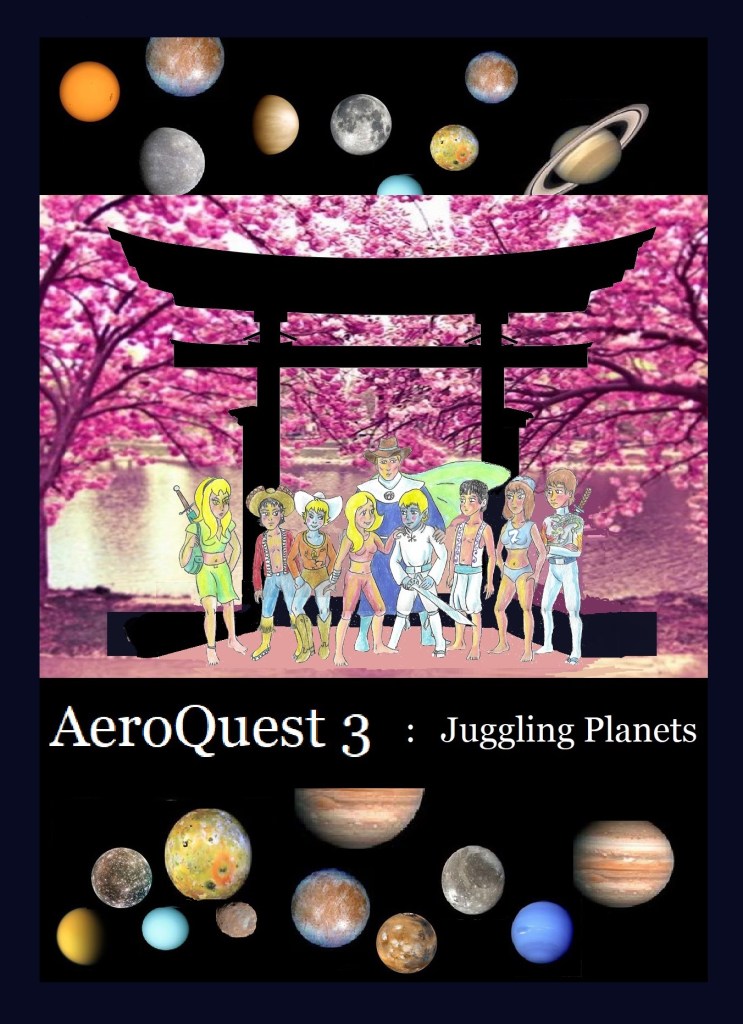
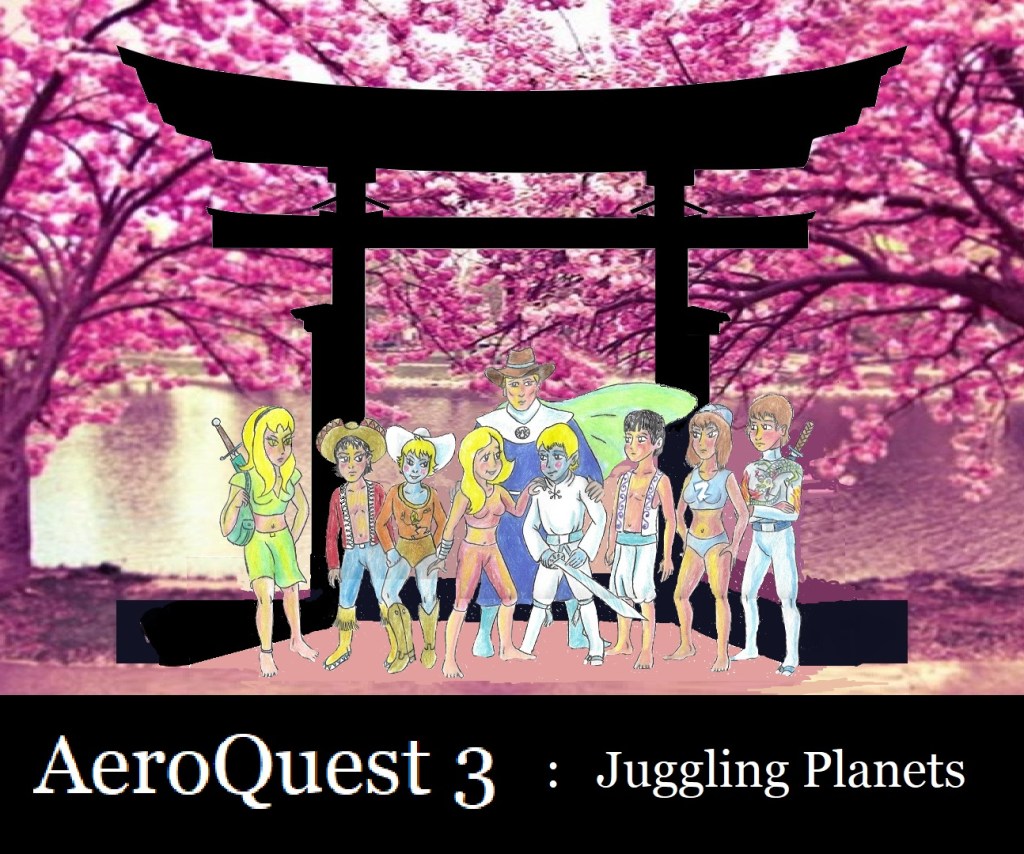
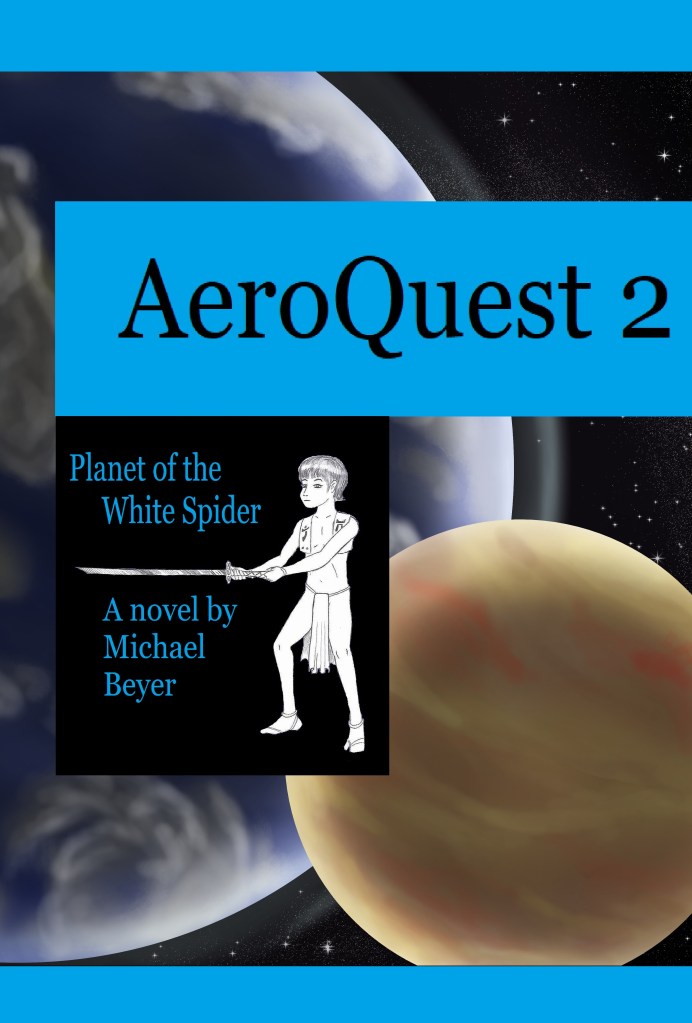
And, having done some work on AeroQuest 1 already, I also got a headstart on AeroQuest 2 by creating a cover for it.
My daughter, the Princess, created this space background for me.
So, you can clearly see that my daft plan is to re-write that simply awful book as a trilogy. A Sci-Fi trilogy? Wherever did I get a foolish idea like that?
Well, I always claimed that the original was half-inspired by Frank Herbert’s Dune trilogy, and half-inspired by Douglas Adams’ Hitchhiker’s Guide to the Galaxy. So, that should make for one seriously off-kilter mutant amalgamation of a book series.