

I just finished reading David Mitchell’s The Bone Clocks, his novel from 2014. Just, WOW! I guess this post is technically a book review… but not really. I have to talk about so much more than just the book.
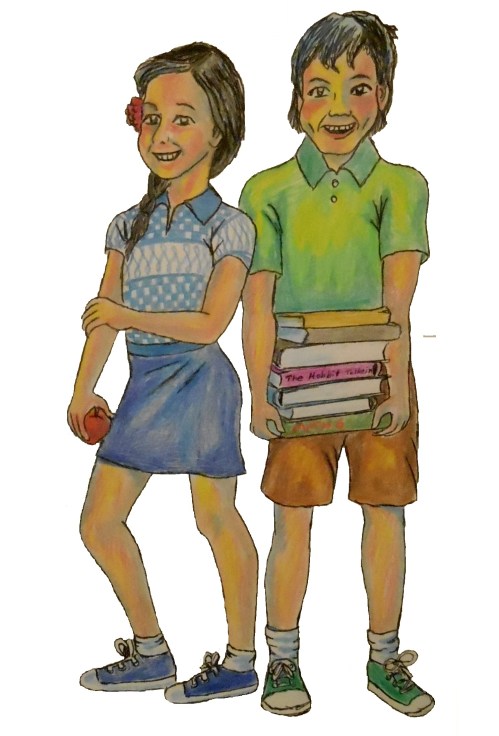
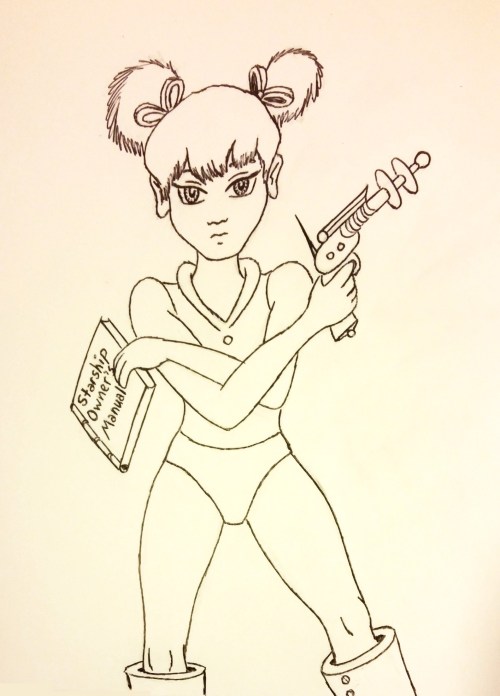
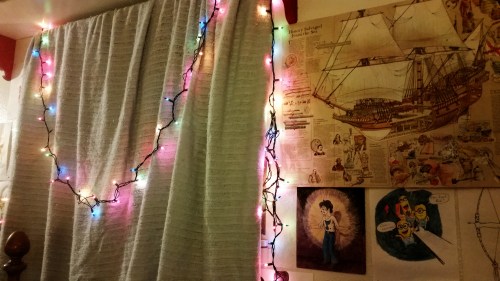
You can see in my initial illustration that I read this book to pieces. Literally. (And I was an English Major in college, so I LITERALLY know what literally means!)

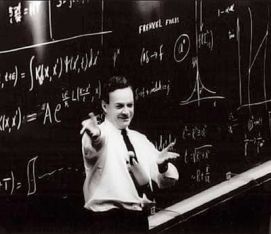
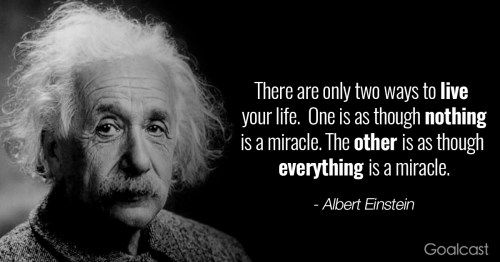
Look at this face. Can you stop looking at the beautiful eyes? I can’t.
I discovered Mitchell as a writer when I happened onto the book and movie pair of Cloud Atlas. It enthralled me. I read the book, a complex fantasy about time and connections, about as deeply and intricately as any book that I have ever read. I fell in love. It was a love as deep and wide as my love of Dickens or my love of Twain… even my love of Terry Pratchett.
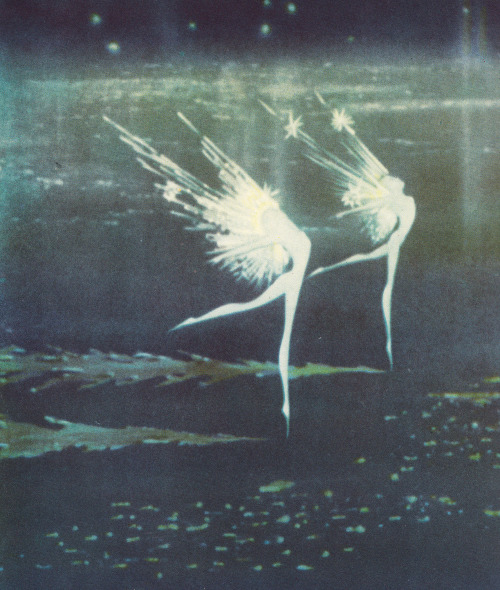
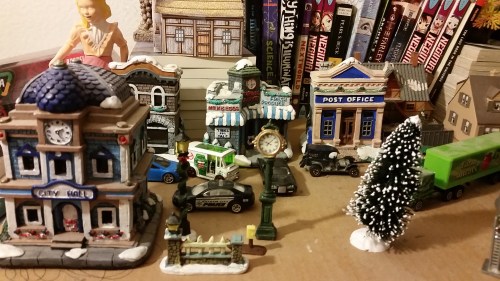
It is like the picture on the left. I can’t stop looking into it and seeing more and more. It is plotted and put together like a finely crafted jeweled timepiece.

And this new book is almost exactly like that. It is a first- person narrative in six parts with five different narrators. Holly Sykes, the central character, is the narrator of the first and last parts, in the past in the 1980’s, and in the future in 2043. The titular metaphor of the bone clocks is about the human body and how it measures time from youth to old age. And it is pictured as a clock ticking in practically all it’s forms, from a child who is snuffed out at eight years of age to horologists who have lived for a thousand years by being reincarnated with past lives intact.
Fantasy and photographic realism intertwine and filigree this book like a vast kaleidoscope of many colors, peoples, societies, and places. At one point David Mitchell even inserts himself into the narrative cleverly as the narrator of part four, Crispin Hershey, the popular English novelist struggling to stay on top of the literary world. He even indulges every writer’s fantasy and murders himself in the course of the story.
David Mitchell is the reason I have to read voraciously and write endlessly. His works seem to contain an entire universe of ideas and portraits and events and predictions and wisdoms. And he clearly shows me that his universe is not the only one that needs to be written before the world ends. Books are life, and life is in books. And when the world as we know it is indeed gone, then they will be the most important thing we ever did. Even if no one is left to read them.
And so, I read this book until it fell into pieces, its spine broken and its back cover lost. To be fair, I bought it at a used book store, and the paperback copy was obviously read by previous owners cover to cover. The pages were already dog eared with some pages having their corners turned down to show where someone left off and picked up reading before me. But that, too, is significant. I am not the only one who devoured this book and its life-sustaining stories. Know that, if you do decide to read and love this book, you are definitely not the only one. I’d lend you my copy. But… well, it’s already in pieces.












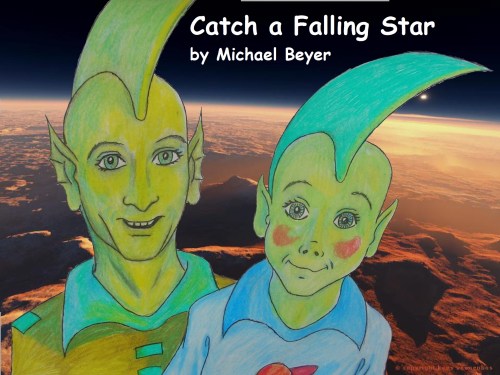

 Catch a Falling Star
Why Do You Think That? (Part Two)
In my short, sweet sixty years of life, I have probably seen more than my share of movies. I have seen classic movies, black-and-white movies, cartoon movies, Humphrey Bogart movies, epic movies, science fiction movies, PeeWee Herman movies, Disney movies, Oscar-winning movies, and endless box-office stinkers. But in all of that, one of the most undeniable threads of all is that movies make me cry. In fact they make me cry so often it is a miracle that even a drop of moisture remains in my body. I should be a dried-out husk by now.
I wept horribly during this scene. Did you?
And the thing is, people make fun of you when you cry at movies. Especially cartoon movies like Scooby Doo on Zombie Island. (But I claim I was laughing so hard it brought tears to my eyes. That’s the truth, dear sister. So stop laughing at me.) But I would like to put forth another “Why do you think that?” notion. People who cry while watching a movie are stronger and more powerful than the people who laugh at them for crying. A self-serving thesis if ever there was one.
Movies can make you cry if you have the ability to feel empathy. We all know this. Old Yeller is the story of a dog who endears himself to a prairie farm family, saves Travis’s life at one point, and then gets infected with rabies and has to be put down. Dang! No dry eyes at the end of that one. Because everyone has encountered a dog and loyal dog-love somewhere along the line. And a ten-year-old dog is an old dog. The dogs you knew as a child helped you deal with mortality because invariably, no matter how much you loved them, dogs demonstrate what it means to die. Trixie and Scamper were both hit by cars. Queenie, Grampa’s collie, died of old age. Jiggs the Boston Terrier died of heat stroke one summer. You remember the pain of loss, and the story brings it all back.
Only psychopaths don’t feel empathy to some degree. Think about how you would feel if you were watching Old Yeller and somebody you were watching with started laughing when Travis pulls the trigger on the shotgun. Now, there’s a Stephen King sort of character.
But I think I can defend having lots of empathy as a reason for crying a river of tears during Disney’s The Hunchback of Notre Dame. You see, identifying with Quasimodo as the main character, hoping for what he hopes for, feeling like a monster and completely unloved, and fearing what he fears connect you to the story in ways that completely immerses you in the experience. This is basically a monster movie.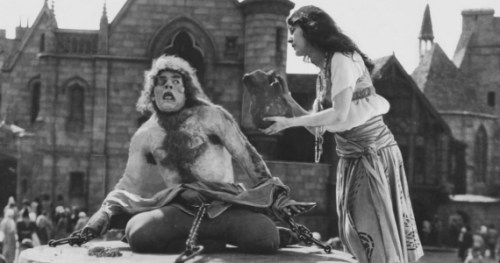
But the film puts you inside the head of the malformed man, and you realize that he is not the monster. Righteous Judge Frollo and the people who mistreat Quasimodo for his deformity of outward appearance are the real monsters. If you don’t cry a river of tears because of this story, then you have not learned the essential truth of Quasimodo. When we judge others harshly, we are really judging ourselves. In order to stop being monstrous, and be truly human, you must look inside the ugliness as Esmeralda does to see the heroic beauty inside others. Sometimes the ideas themselves are so powerful they make me weep. That’s when my sister and my wife look at me and shake their heads because tears are shooting out of me like a fountain, raining wetness two or three seats in every direction. But I believe I am a wiser man, a more resolved man, and ultimately a better man because I was not afraid to let a movie make me cry.
The music also helps to tell the story in ways that move my very soul to tears. Notice how the heroine walks the opposite way to the rest of the crowd. As they sing of what they desire, what they ask God to grant, she asks for nothing for herself. She shows empathy in every verse, asking only for help for others. And she alone walks to the light from the stained glass window. She alone is talking to God.
Yes, I am not embarrassed by the fact that movies make me cry. In fact, I should probably be proud that movies and stories and connections to other people, which they bring me, makes me feel it so deeply I cry. Maybe I am a sissy and a wimp. Maybe I deserved to be laughed at all those times for crying during the movie. But, hey, I’ll take the laughter. I am not above it. I am trying to be a humorist after all.
4 Comments
Filed under cartoon review, commentary, compassion, Disney, humor, insight, inspiration, movie review, music, philosophy, strange and wonderful ideas about life
Tagged as empathy, movies that make me cry, Old Yeller, The Hunchback of Notre Dame, Toy Story 3