Mickey intends to pontificate again… This will not be funny.
I write novels that I think of as being basically humorous. But I have had readers ask of me after reading them, “What the hell makes you think these stories are funny?”
And besides the fact that they are invoking the name of the Norse goddess of the underworld, they do have a point.
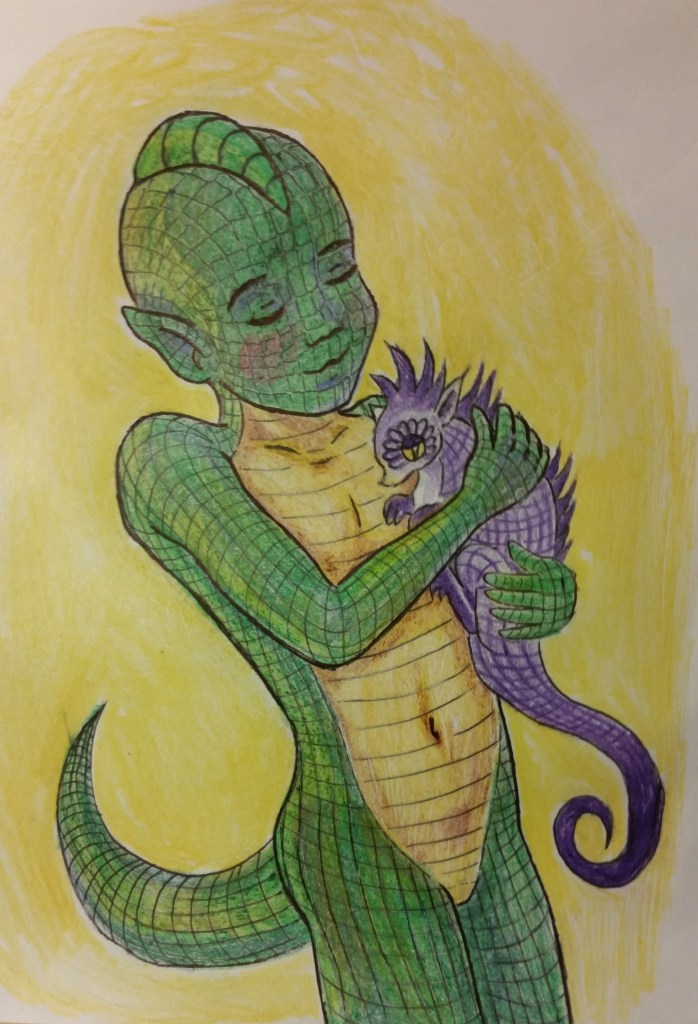
My stories have unsavory things in them. I have stories where the plot is driven by the conflicts caused by physical and emotional child abuse, a pornographer who becomes a murderer when denied the opportunity to make kiddie porn, a father abandoning his wife and daughter through suicide, fools causing others to freeze to death in a blizzard, murderous robot hit-men, space pirates that kill a quarter of the population of a high-population planet, and lizard people from outer space that eat human flesh and each other. (Of course, one could argue the last few things are dark humor created by gross exaggeration and random bizarre details.)
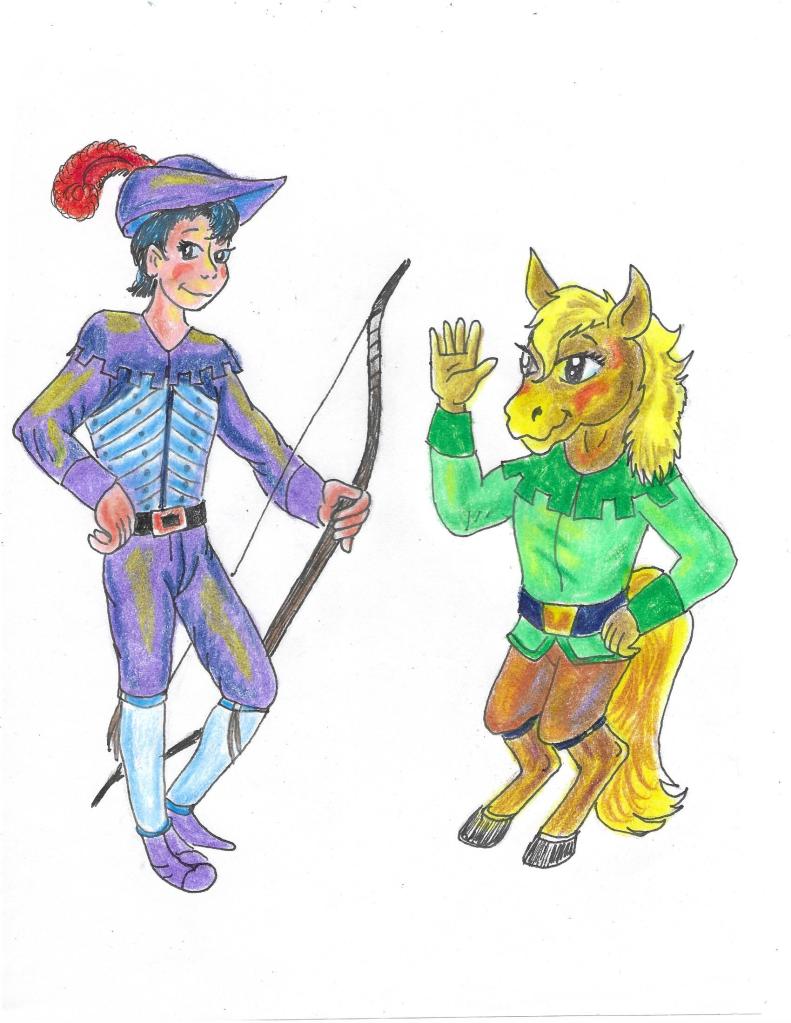
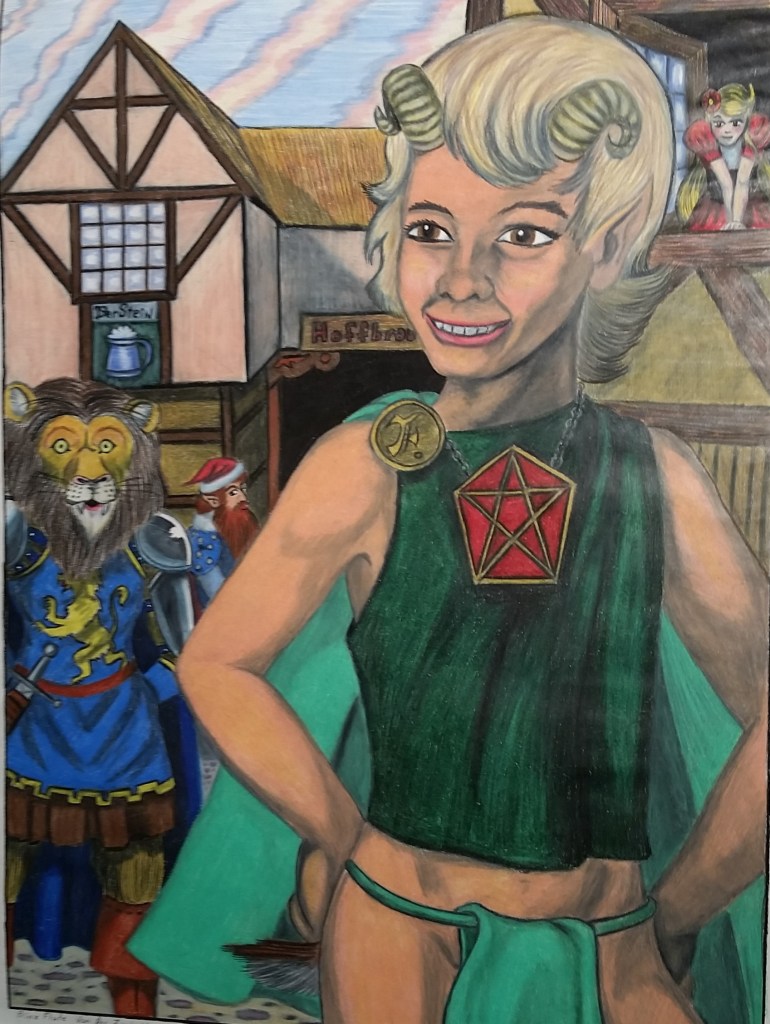
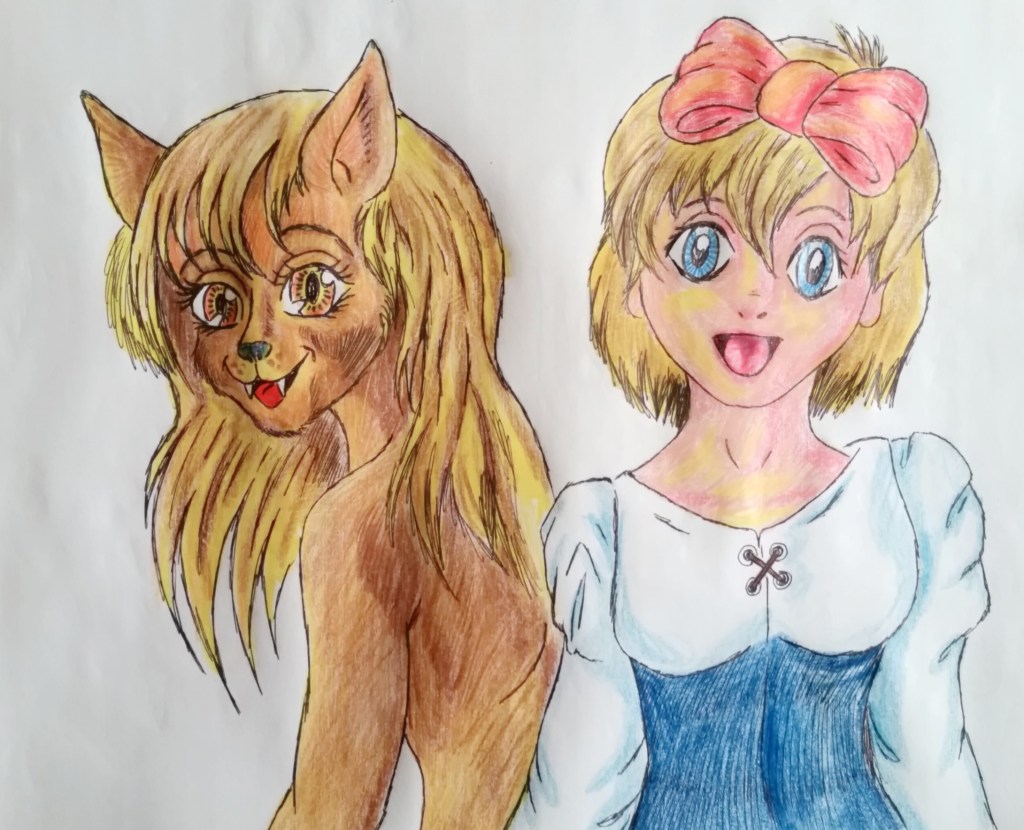
A girl who always got an “A” in English class because the teacher couldn’t be sure she wouldn’t turn into a werewolf and eat him.
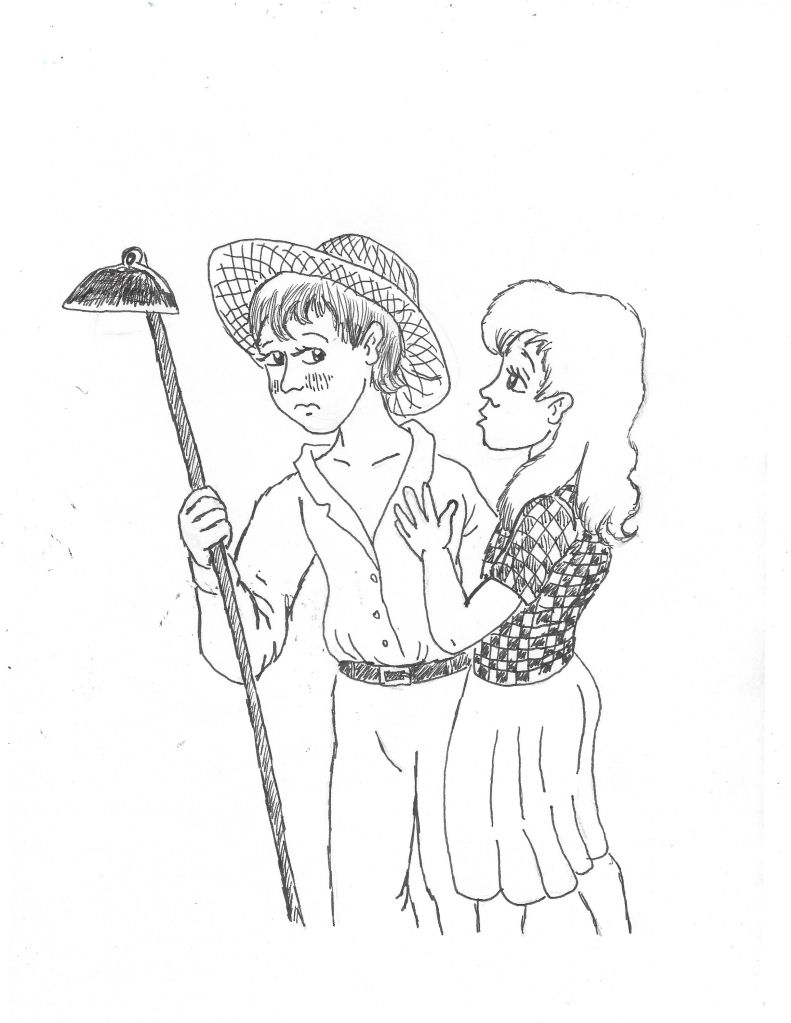
But not everything in a comedy is a laugh line. I would argue that a perfect example of a comic novel with dark things in it is The Adventures of Huckleberry Finn. That novel begins with a slave running away from a kind mistress because he is to be sold away from his family., and a boy who narrowly escapes death by the rages of his drunken father and runs away to protect not only himself, but the kind widow who took him in after the events of the previous novel, The Adventures of Tom Sawyer.
In the course of the novel Huck sees his young friend, Buck Grangerford, killed during a pointless family feud between the Grangerfords and the Shepherdsons. He comes upon the body lying in a creek, and no laughter is generated by the scene.
Further, two snaky old con men, the King and the Duke, try to steal away everything from three girls, newly orphaned, by posing as two uncles come to take them back home to England. Huck is forced to aid them as his friend Jim is held hostage and threatened with a return to slavery. There is plenty to laugh at, but not until Huck manages to do the right thing and commit the King and the Duke to their well-earned tar and feathers.
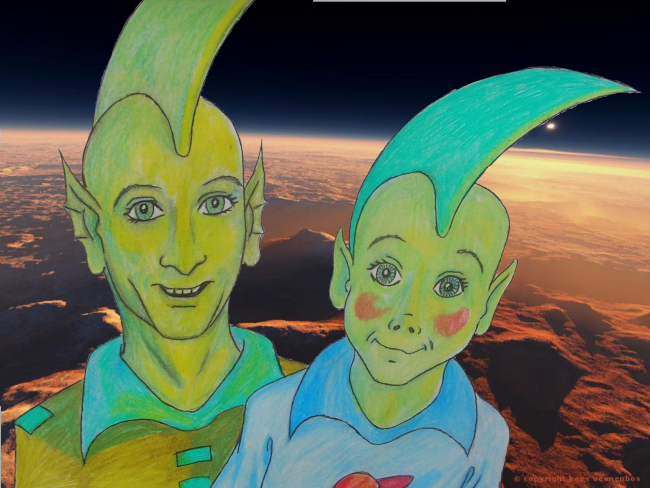
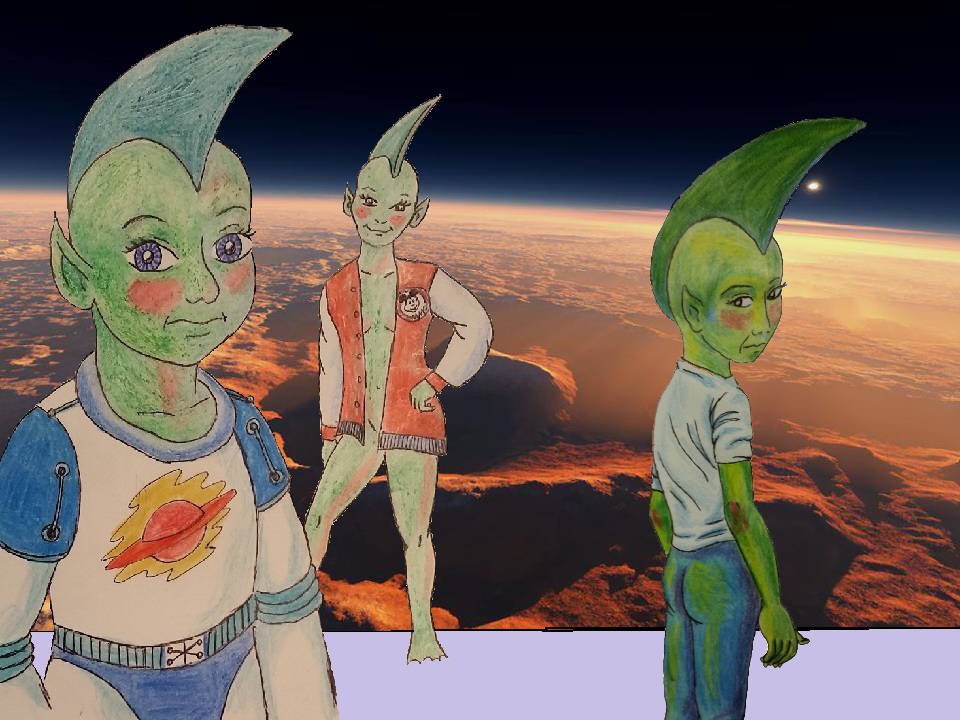
The Telleron kid-aliens who do not get cooked and eaten in Catch a Falling Star and Stardusters and Space Lizards.
Comedies, I would argue, have to have conflict, and some of the best comedies have terrible things in them that the characters you learn to love and laugh with have to overcome. It is in overcoming hard things with love and laughter that a comedy is made different than a tragedy. The comedy does not depend on the laugh lines. In fact, some of the hardest-hitting tragedies have laughter scattered throughout.
I am not trying to educate you. I am merely offering excuses for why I call my stories humor when they often horrify and upset readers. (How dare he write about naked people!!!) But if you learned something, I won’t be terribly disappointed.
I have been working on compiling good essays from this blog into book form. It is becoming a sort of obsession. The problem is, I am likely running out of time. My health is getting worse in the middle of a pandemic that is killing thousands of people just like me. I have been having problems with passing out during the midmornings repeatedly for several days in a row. I fear I may be headed towards heart failure or a stroke. And if it comes down to an ambulance ride, I can’t afford it, and I will not economically survive it. And all the intensive care units around here in North Texas are swamped with COVID patients. It is important for me to finish and publish this book of essays. It is part of me as a writer that I simply must leave behind.
“Why are essays important?” you may ask. And here’s where I would normally insert a joke answer. I try hard not to take myself too seriously. It is the only way I can deal with what has been a very serious life. And at the point in my essay book where I will insert this essay, I will not need to review what those things are that are so serious. (Being a teacher and shaping young minds. Being a sexual assault survivor. Helping teenagers to live through suicidal depressions. I know, I know, I should’ve resisted the urge to list them.)
But I have spent a lifetime teaching kids to write four-and-five-paragraph essays. And I am also a serious reader of essays. I have read and thoroughly studied Loren Eiseley’s The Invisible Pyramid, Henry David Thoreau’s Walden, Collected Essays by H.L. Mencken, selected essays by James Thurber, Life as I Find It: A Treasury of Mark Twain, Charles Lamb’s Essays of Elia, and parts of John Ruskin’s The Stones of Venice. I also thoroughly loved and used as a teacher All I Really Need to Know I Learned in Kindergarten by Robert Fulghum. So, I do not claim without reason that I do know something about how to write an essay. (Although you are welcome to disagree based on numerous bits of evidence in this goofy blog,)
At this point I am obligated to define for you what I believe an essay should be and what its potential uses are. An essay, simply put, is a pile of a fool’s best thinking put down on paper in prose rather than being distilled down into lines of poetry or embroidered and expanded with lies to make it into fiction. At its best it can open reader’s mental eyes and change societies, if not the entire world. At its worst it can incite violence, stir hatreds, and generally muck everything up. My essays land somewhere between, in the realm of mildly-amusing purple paisley prose that can really waste your time.
An essay, because it is based on truthful observations, can rip away the costumes and masks that authors put on to write fiction and make that educated fool of an author metaphorically naked in front of the reader. After blogging like this since 2013, I admit to having no real secrets left that I have not at least mentioned in my blog somewhere. I am less naked when being a sometime-nudist than I am in the sentences and paragraphs of these essays.
Now that I have thoroughly convinced you that you made a big mistake by reading this far through my essay compilation, I will reveal the fact that I have put this essay somewhere closer to the end of the book rather than near the beginning. Like all essayists, I am a fool (hopefully in the Shakespearean wise-fool sense), but I am not stupid. So I won’t laugh at you for falling for my tricks, but I can’t promise not to be at least a little bit amused. But time is short. So, on to the next essay!
Canto 107 – A Group of Space Goons is Called a Goon-o-plex
The situation on Rimbaud Memorial Outstation began with a single Space Goon, as they all almost always do. Infestations, I mean. Space Goons reproduce asexually like microscopic amoebas do, by splitting into three parts after eating something. And then each part split off from the original grows into a new Goon. First you have one. It eats a cat. Then you have three. They eat another cat, a plate of unattended Italian meatballs, and a decorative plant. Then you have nine. Six of those get into the food pantry. One finds the last living cat on the outstation. And two more eat a small gambler who lost everything playing deep-space poker and drank himself into a coma with gargleblasters. Then you quickly reach eighty-one. You get the alarming idea, right?
“Mon dieu!” cried Banzai. “They will consume everything edible on my entire station! Please, friends, you must help me round them up and herd them out an airlock.”
“But isn’t that too cruel to do to a sentient creature?” asked Dana Cole, still shivering and naked at Trav’s command.
“They are not even as smart as Goofy Dalgoda,” said Ham Aero.
“That’s right!” cried Trav “Goofy” Dalgoda. “We must space them because they are too stupid to live.”
“No, they are able to live fine in space without space suits,” I told them all, calling upon my scientific acumen and nearly omniscient memory. “They will just float happily out there with nothing to eat, at least until they collide with a planet or asteroid, or some other place with gravity.”
“Do I recall correctly when I remember that in a feeding frenzy, a hundred Space Goons start eating people… at least those made of flesh and blood?” asked Duke Ferrari, showing something more than just mild concern.
“Naw, I think that’s just a spacer myth told because Space Goons come from unknown space and not enough is known about them,” suggested Ham.
At that same moment, a Space Nudist serving girl disappeared in a goon-o-plex of a hundred and three Goons. Muffled cries were heard, followed by munching sounds, and then no more serving girl was to be seen.
“How do we get them off the outstation?” asked Banzai.
“I has some middlin’ experience with Space Goon cat-nip recipes, I has,” volunteered Sinbadh, offering his cooking skills.
“What did he say?” asked Banzai.
“He says he’ll cook up some Goon-bait to put in the airlock,” I translated. “If the smell is right, they will all follow the bait out into space and reproduce out there.”
“But Oi will needs sum special Goon grub to make it with!” announced Sinbadh.
“What do you need?” Banzai was desperate.
“Ol’ shoe-leather, some turpentine, Samothracian onions, a dash o’ me own special sauce, and all the bar soap you can muster from every fresher on the whole outstation, me buck-o!”
Swiftly the star-dog cook got to his business. Banzai kept the ravenous Space goons, now over a thousand strong, occupied by throwing them a few non-paying customers and one or two of his ugliest serving girls.
Then Sinbadh returned from the kitchen with a pot of extremely smelly stew. He ran past the Space Goons to an emergency airlock, grabbed hold of a support beam with one hand, opened the air lock with his foot, and while Space Goons, outstation staff, and customers alike were sucked out into space, threw the pot of smelly goo out too. All of the Space Goons followed it out. As Sinbadh closed the airlock again, we could see that only about fifty percent of the people in the area the Space Goons had infested were lost to the void. None of those who were in our party failed to secure themselves against being sucked out of the station into space. So, the ploy was at least slightly successful.
“How did you fools manage to survive this?” cried Sorcerer 15, standing near the concourse doorway with an angry look on his white, Synthezoid face.
“You again?” Trav cried, pulling out of his hidden super-pocket that held items in an interdimensional bubble, his latest acquisition, a brand-new super-illegal Skortch ray gun.
“I’m ready for you this time Dalgoda!” said Sorcerer, pulling out a mirror-shield.
Trav shot Sorcerer 15 in the feet. As his artificial feet disintegrated, he dropped and broke the mirror-shield.
Trav then shot him in the torso and disintegrated the rest of him.
“I hate to admit it, Trav, but your obsessions prove useful at times,” Ham said.
“You will now politely give me the illegal weapon,” said Banzai Joe. “Be careful not to accidentally put a hole in the outstation that will kill us all…”
Trav grinned. First, he pointed the weapon at Banzai’s midsection. Then he handed it carefully to the outstation’s manager. “Of course. I will get it back before I leave, though. That weapon of massive destruction belongs to me. And you owe it to me to give it back. After all, I heroically saved your entire station.”
“Yes, yes… But only when you leave. I actually owe the star-dog much, much more.”
That little soiree was not the first time I had nearly lost my life to a Space Goon infestation. And it wouldn’t be the last. But it was easily one of the fastest and most ironically amusing.
I have never been an attention-seeker. In the Elysian Fields of modern society, I have never really been the honeybee. I have always been the flower. I had a reputation in high school for being the quiet nerd who ends up surprising you immensely in speech class, at the science fair, or at the art show. I was the one they all turned to when everybody in the conversation had already had their chance to strut and pontificate and say dumb things, and they were finally ready to get the solution to the problem being discussed, or the best suggestion on where to begin to find it.
When I became the teacher of the class instead of the student, I had to make major changes. I had to go from being patient, quiet, and shy to being the fearless presenter, forceful, sharp as an imparter of knowledge, and able to be easily understood, even by the kids whom you couldn’t legally call stupid, but were less than smart, and not in a pleasant Forrest Gump sort of way.
Shyness is only ever overcome by determination and practice. The standard advice given is to picture your audience naked so that you are not intimidated by them. But if your audience is seventh graders, you have to be extra careful about that. They are metaphorically naked all the time, ready at a moment’s notice to explode out of any metaphorical clothing they have learned to wear to cover the things that they wish to keep to themselves about themselves. And while you want them to open up and talk to you, you don’t want the emotional nakedness of having them sobbing in front of the entire class, or throwing things at you in the throes of a mega-tantrum over their love-life and the resulting soap operas of betrayal and revenge. And you definitely don’t want any literal nakedness in your classroom. (Please put your sweat pants back on, Keesha. Those shorts are not within the limits of the dress code.) Calling attention to yourself and what you have to say, because you are being paid to do so, is a critical, yet tricky thing to do. You want them looking at you, and actually thinking about what you are saying (preferably without imagining you naked, which they will do at any sort of unintentional slip or accidental prompting.) The ones who ignore you are a problem that has to be remedied individually and can eat up the majority of your teaching time.
I trained myself to be fairly good at commanding the attention of the room.
But now that I am retired, things have changed. I can still command attention in the room, which I proved to myself by being a successful substitute teacher last year. But I no longer have a captive audience that I can speak to five days a week in a classroom. Now my audience is whoever happens to see this blog and is intrigued enough by the title and pictures to read my words.
Now that I am retired and only speaking to the world at large through writing, I am ignored more than ever before. Being ignored is, perhaps, the only thing I do anymore. It is the new definition of Mickey. Mickey means, “He who must be ignored. Not partially, but wholly… and with malice.”
I put my blog posts on Facebook and Twitter where I know for a fact that there are people who know me and would read them and like them if they knew that they were there. But the malevolent algorithms on those social media sites guarantee that none of my dozens of cousins, old school friends, and former students will see them. Only the single ladies from Kazakhstan and members of the Butchers Union of Cleveland see my posts. Why is this? I do not know. Facebook and Twitter ignore me when I ask.
My books, though liked by everybody who has actually read and responded to them, are lost in a vast ocean of self-published books, most of which are not very good and give a black eye to self-published authors in general. I recently got another call from I-Universe/Penguin Books publishers about Catch a Falling Star, the one book I still have with them. They are concerned that my book, which is on their Editor’s Choice list, is not performing as well as their marketing people think it should. But to promote it, I would have to pay four hundred dollars towards the marketing campaign, even though they are already subsidizing it by fifty percent. They tell me they believe in my book. But apparently not enough to pay for 100% of the promotion.
I have decided to invest in a review service that will cost me about twenty dollars a month. But my confidence is not high. The last time I paid somebody to review a book, they reviewed a book with the same title as mine from a different author. That service still owes me money.
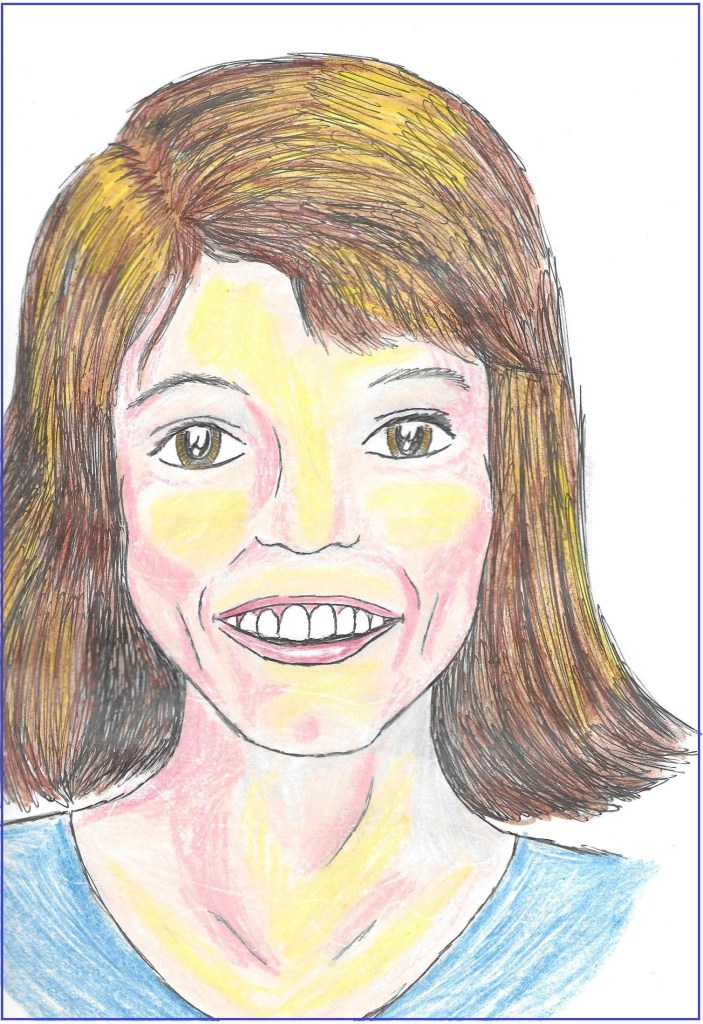
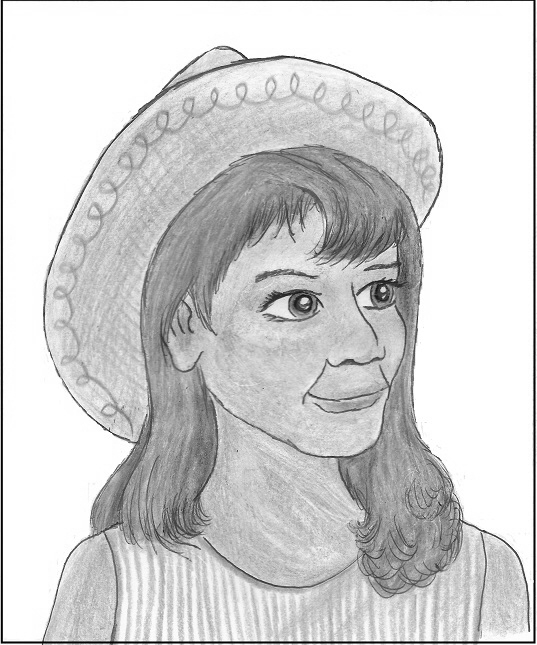
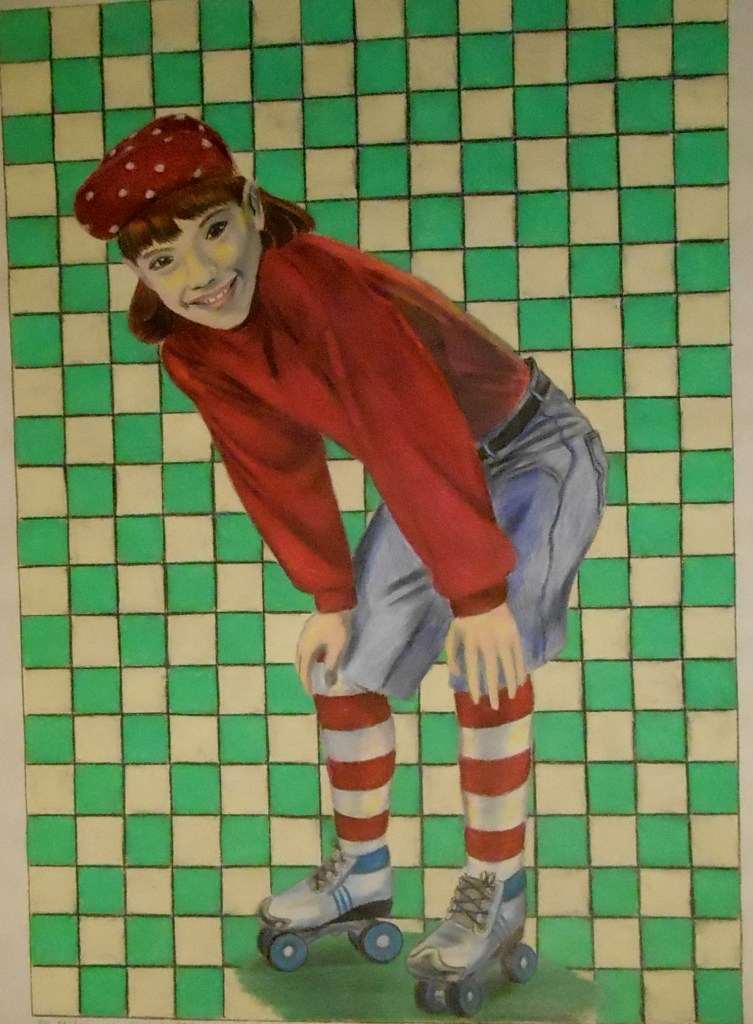
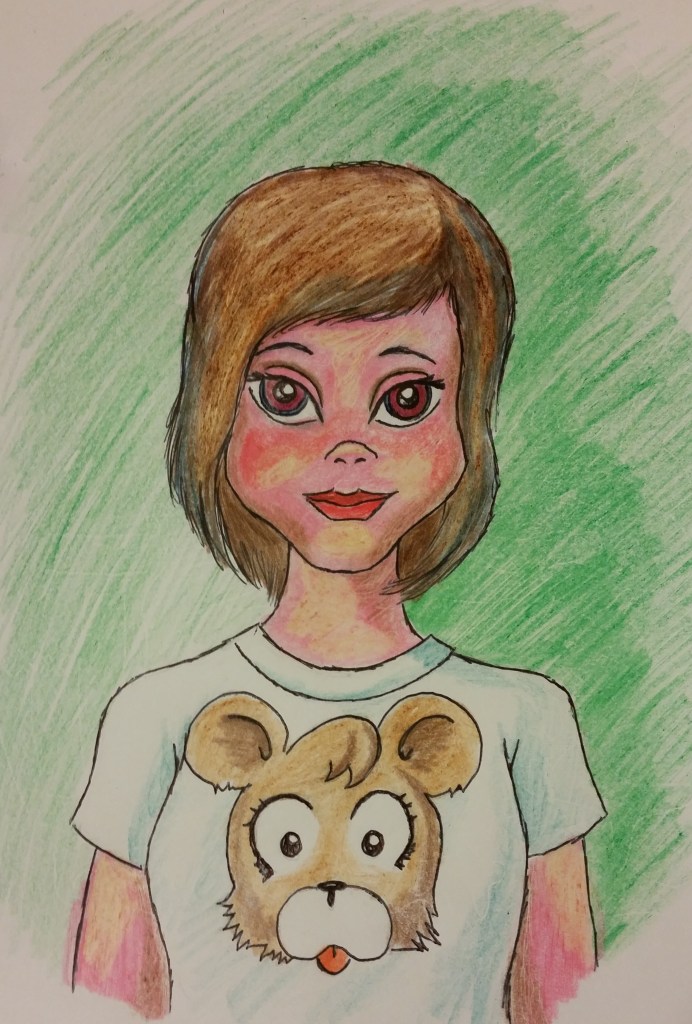
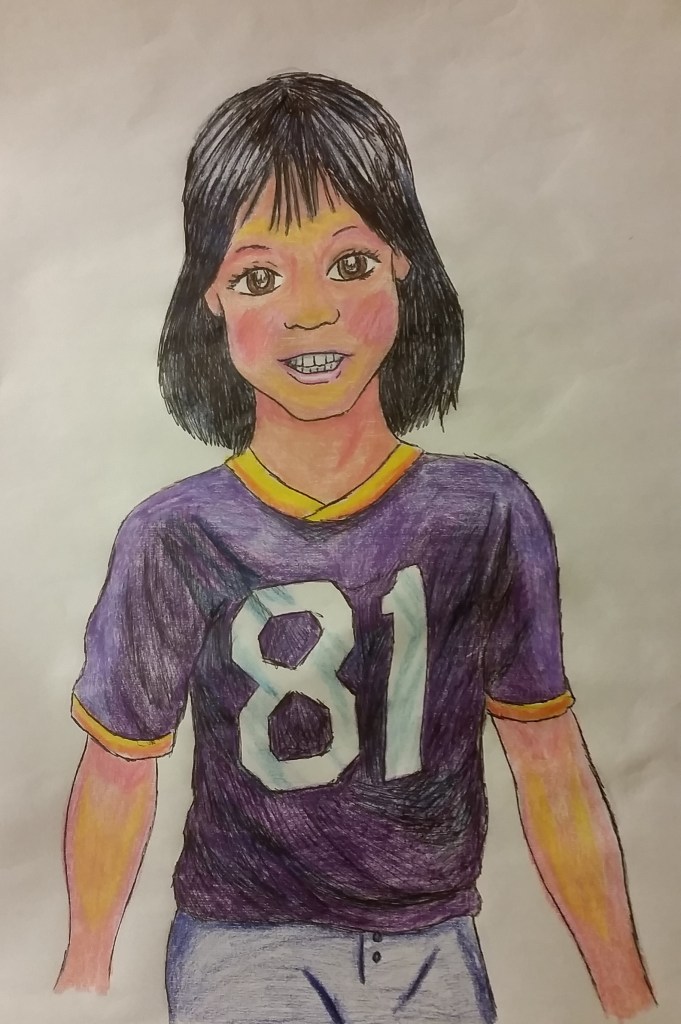
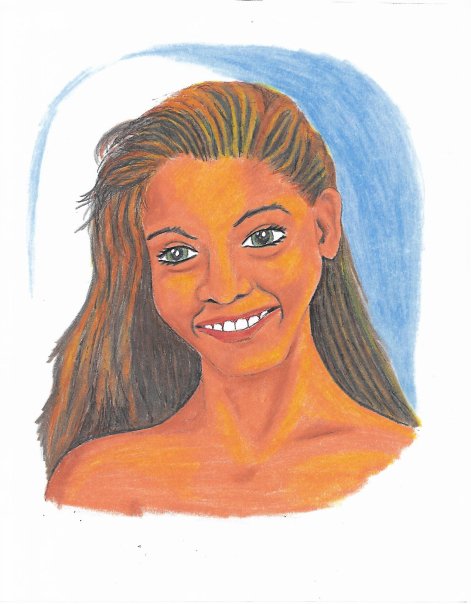
But the only reason it is a problem that I am being thoroughly ignored these days is that an author needs to be read to fulfill his purpose in life. Maybe pictures of pretty girls in this post will help. But, even if they don’t, well, I had their attention once upon a time. And since my purpose as a teacher is already fulfilled, perhaps that will be enough for one lifetime.
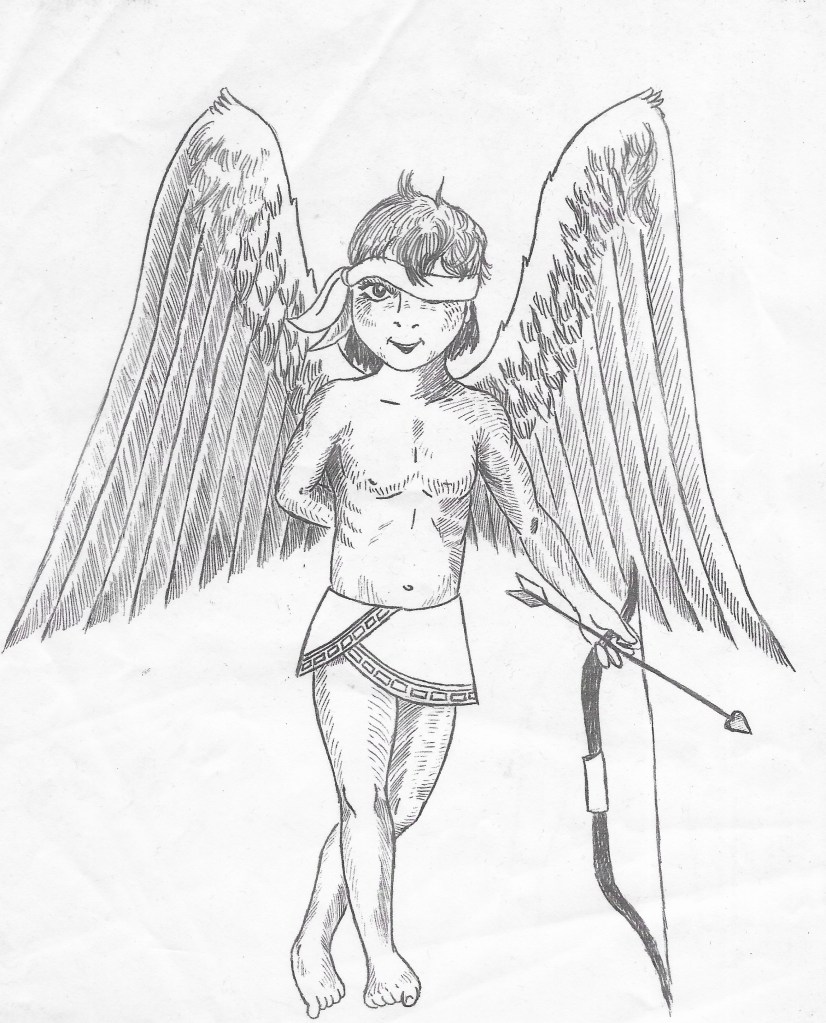
Arkin Cloudstalker had no doubt at all who was going to captain his flagship in his role as Grand Admiral. Black Fly was a beautiful woman, a sensational pilot, and, the longer they spent time together, the more they got to know each other’s beautiful souls. There was definitely some sense of a little naked baby Cupid thing fluttering around somewhere nocking arrows with Arkin’s name on them.
“So, this Apatosaurus-thing is a battleship and it will be the command center of this new dinosaur-shaped star fleet?”
“Yes, it is a high-tech Ancient construction created by the artifact known as the “Hammer of God” in the hands of a telepathic operator who is from Don’t Go Here and knows more about dinosaur shapes than space-fleet starships,” said smug little ADaB the Peri (short for Another Danged Boy #152).
“They should’ve consulted us on the engineering before they built them. We could’ve done a much better job by turning them into gigantic space kittens or something fuzzy like that,” said the female Peri, PiP (short for Pretty in Patches).
“Please don’t start arguing again,” said Arkin, heading off what he knew had to be coming. He picked up the diminutive PiP and swung her around to a position walking between Arkin and Black Fly, away from ADaB.
The crew they were walking through on the way to the bridge all seemed to be from the Bedrock culture of Don’t Go Here where everything was designed based on antique Flintstones cartoons from thousands of years ago. The men were wearing Fredsuits, orange pull-overs decorated with upside-down black triangles. The women all wore blue Bettypelts.
It was ridiculous to say the least, but when spaceships and space troops magically appear from nowhere due to Ancient relics, you couldn’t look gift-dinosaurs in the mouth.
The lift shaft took them up the neck of the Apatosaurus construct to the bridge of the ship.
On the bridge itself, blaring warning horns and intruder-alert flashers were going off, though the crew seemed even calmer than they had on the way to the bridge.
“What’s going on?” shouted Arkin, racing to the viewport.
“We have an intruder closing in on us in a tailed space-suit with a rocket pack on her back,” said a seemingly unconcerned Lieutenant in a Fredsuit.
“What are we doing about it?” demanded ADaB. In a uniform clearly marked as a Commander, the little Peri out-ranked everyone on the bridge but Admiral Cloudstalker and Captain Black Fly.
“Why, nothing, sir. That Galtorrian woman out there is our new leader. That’s the Lizard Lady.”
“But she’s a spy for the Imperium!” said Arkin.
“Not anymore. She’s the newly anointed Archbishop of the White Spider Cult.”
“Oh, crap!” said PiP, “just what we need. A religious zealot.”
“A holy crusader in the name of the White Spider,” said the junior officer, displaying his White Spider amulet.
“I know Ged Aero,” said Arkin. “He wouldn’t want to have anything to do with this kind of religious idiocy.”
“Perhaps not. But the Archbishop comes to us as the mother of the White Spider’s first-hatched son. She is coming to fulfill the prophecy of Zhan!”
“I thought it was the prophecy of Xian,” remarked another trooper.
“No, the prophecy of Shan!” insisted another.
Arkin said nothing, hoping these idiots would start a fight.
“Don’t you fools read your own prophecy? Those three are all exactly the same!” ADaB probably realized at about that very moment that he should never have said that out loud.
“Somebody who’s loyal to the New Star League needs to shoot that spy down!” ordered Admiral Cloudstalker.
The whole bridge crew turned and looked at him.
“We are all loyal to both,” said the Lieutenant angrily.
“What will we do with the Admiral?” someone asked.
“Put him in the airlock?” asked somebody else.
“Don’t you dare even think about that!” said the Lizard Lady, entering through the airlock corridor. She had her helmet off. She had the largest, shiniest White Spider amulet around her neck that Arkin had ever seen.
“Wherever you’re going with this ship, you cannot take us with you!” shouted Captain Black Fly.
“That is certainly true,” said the Lizard Lady. “These four prisoners are all mentioned in the prophecy. They must all be in the Battle of Outpost. Put two of them in each of two escape pods and shoot them slowly towards Aerobase Frieda.”
“You will not get away with this,” said Arkin.
ADaB pulled at his elbow. “Actually, Admiral, I have read all five versions of the prophecy. I think it says she does.”
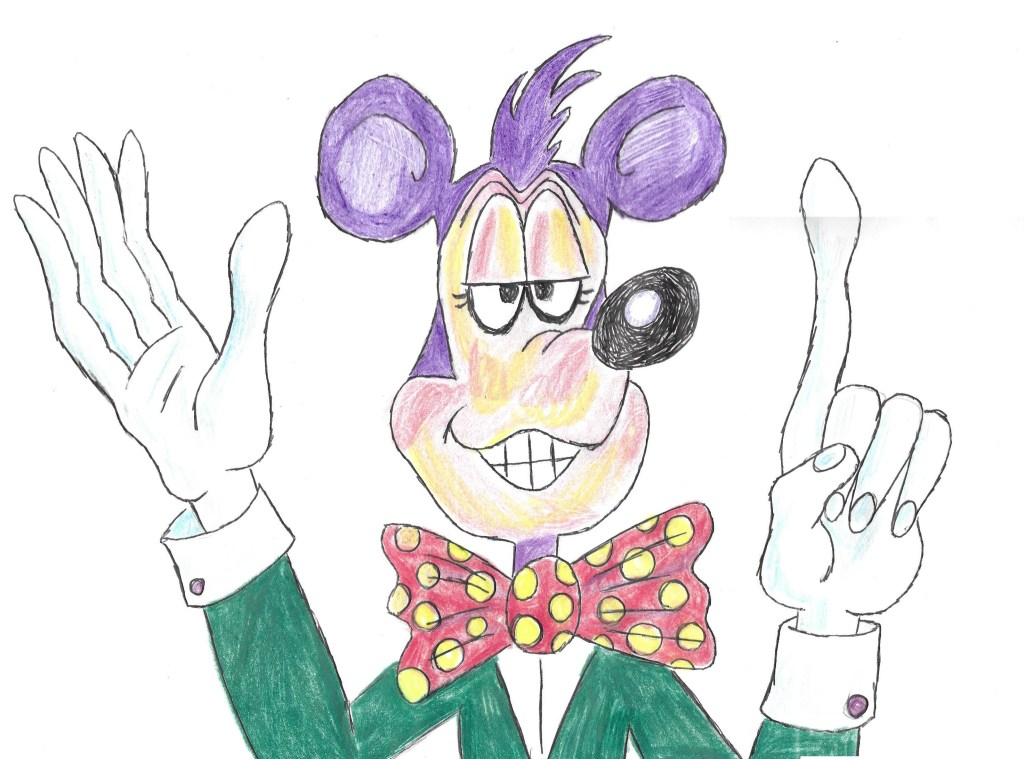
Cartoon villains take note; Super-Mickey’s secret identity is Filbert Hazelnut. I make that revelation without worry. After all, Mickey is not really me. So, if the Messmaster, Badnose the Clown, or Daniel Quilp are going to try to apply the Mickian version of Kryptonite, not laughing at the jokes, in order to slay Super-Mickey, Filbert is immune to that. I am too for that matter. If you are a school teacher who uses humor in the classroom, you soon learn that only the smartest kids actually understand the jokes, and half of them are just too cool to laugh when the teacher wants them to. (Although they will tell you years later that they still use concrete details in their writing because you said that if you routinely whack the reader in the head with verifiable concrete examples, they will be totally stunned enough to believe you know what you are writing about. That was, you must understand, a concrete detail I just whacked you with to help you remember what it is, not to make you laugh… even though it was a joke… but you are permitted to laugh if you want to.)
The basic point of this essay is Mickey is not really me. I never went by that name as a kid.
I was always called Michael, sometimes Mike (though they were usually talking about the Other Mike when anybody said Mike in school back then… circa 1963 to 1969). In high school I was given the nickname Superchicken after the Saturday Morning cartoon on the George of the Jungle Show. In college I was given the rhyming nickname Spike by my college freshman roommate because he ludicrously thought I was the opposite of a Spike, like calling a huge football player Tiny Tim, or a midget Big Bad John.
When I started teaching school, they called me Gilligan because I was thin and they wanted to pretend I was a hopeless stumbling fool (Which I was at times my first two years, just as all beginner teachers are.) My classroom became known as Gilligan’s Island on the day in third period when I made the comment, “Gilligan is lucky enough to be the only really eligible bachelor on the same island with Ginger the movie star and cute little Mary Ann. I would find out later that same day that three eighth grade girls in that very class had huge crushes on me and were fighting over which one was Mary Ann and which one was Ginger and, unsurprisingly, which one was the other girl.
And, of course, Rudolfo Hernandez tried to get everybody to call me Batman because I bought a used Ford Torino with fins on the back. But to promote the nickname, Rudy came to class wearing a Halloween Batman mask and afterwords had to learn to live with being called Battyman himself. (I wish i could take credit for calling him that first, but I am sure I did not. I distinctly remember it coming from a girl in his class that made fun of him for every stupid thing he did because she apparently adored him. I just reinforced it about a thousand times.)
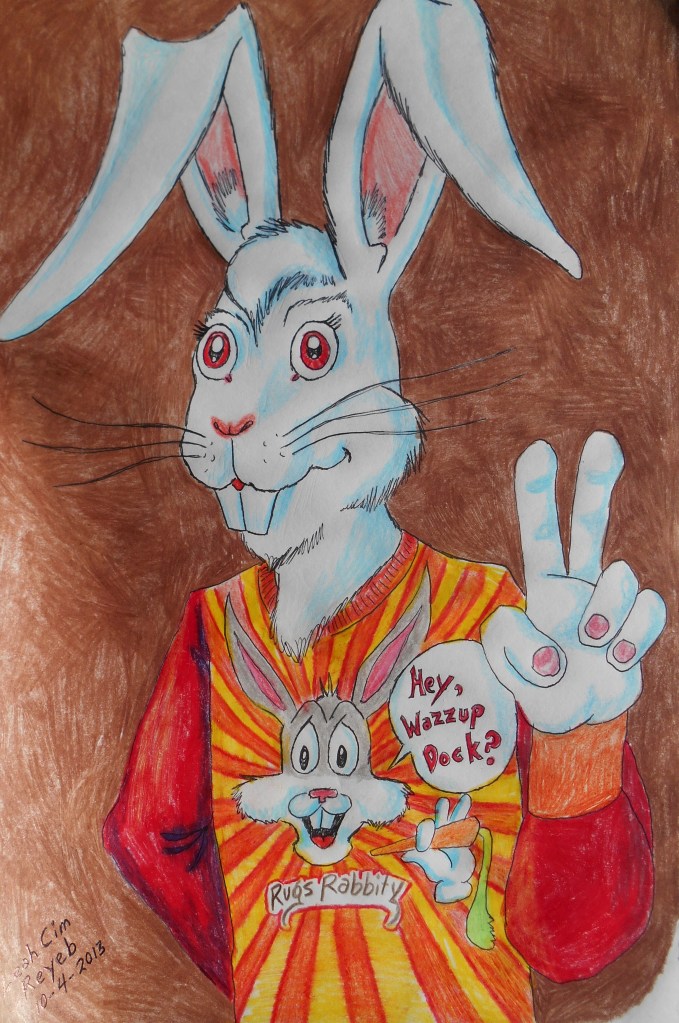
Mickey is a name that I have only ever been called by me myself. It was a name I signed some of my cartoons with (using The Little Fool, Le Petit Fou, Leah Cim Reyeb, and Dr. Seebreez on the rest.) It also became the name I use to refer to myself on this blog when I talk about myself in the third person like a crazy person.
I have given myself other pseudo-pen-names in my writing. Googol Marou, as the only first-person narrator of the AeroQuest series, speaks with my voice as the primary storyteller in the tale. In Norwall, the fictionalized version of Rowan, Iowa in most of my other books, Branch McMillan, the writer-character, is actually me. (Like Charles Dickens switched his initials to write the semi-autobiographical David Copperfield, I created that one by switching the M and the B.
Of course, the many me-characters in my fiction books are also basically me. Superchicken is me. Milt Morgan is a combination of me and the Other Mike. Brent Clarke is the football-player me combined with two other football teammates. Certain parts of Todd Niland’s story are really about things that happened to me, and things I was afraid of at his age.
In some ways Tim Kellogg and Dorin Dobbs are me too, though both of those characters are actually based on my eldest son. It is possible, I suppose, that you could consider my actual son to be a me-character too, as people do live on through their own children.
But, while Mickey might be me more than I care to admit, Super-Mickey’s secret identity is definitely Filbert Hazelnut.
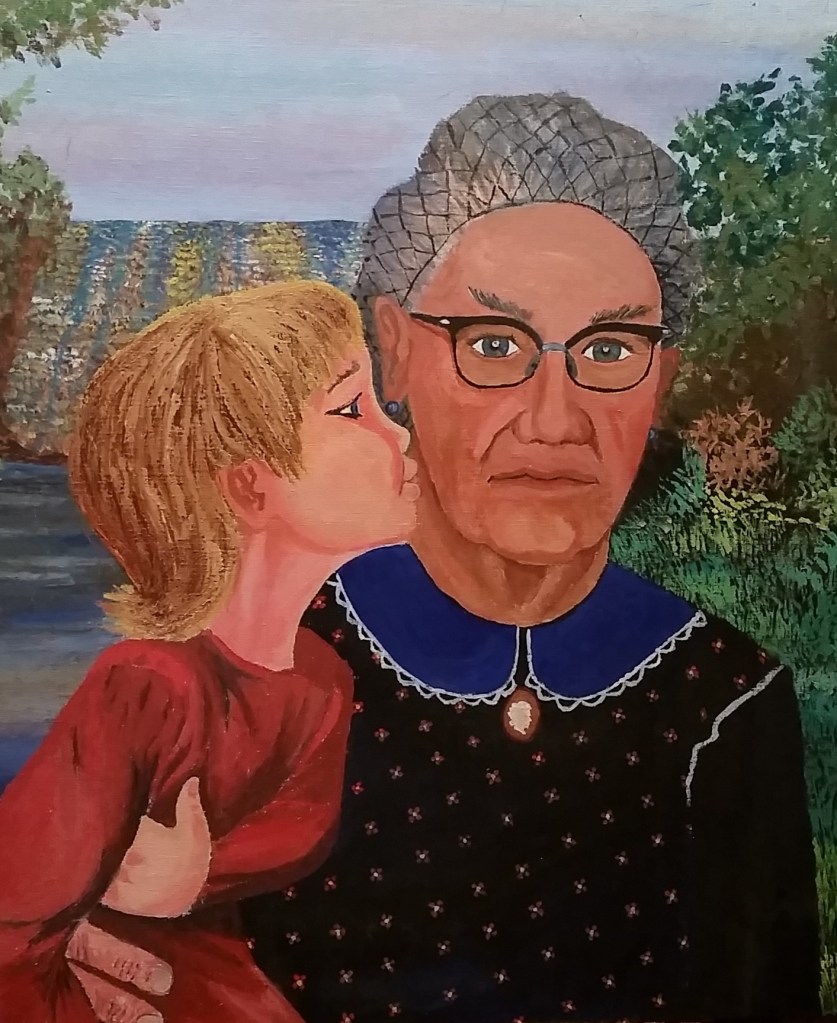
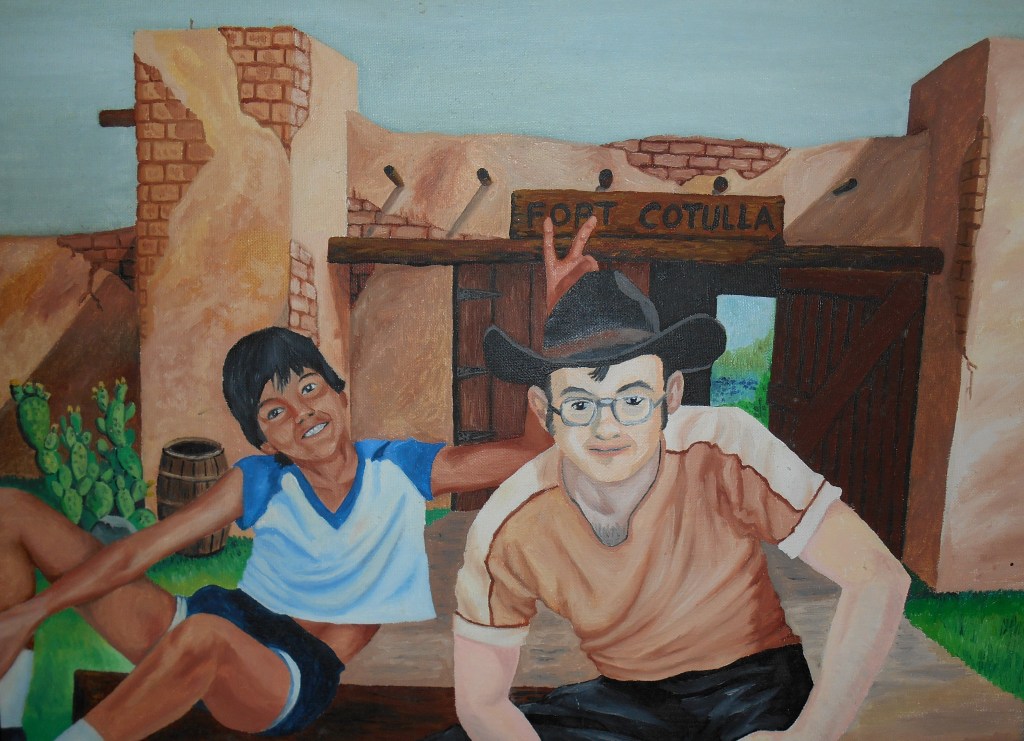
Rowan, Iowa… Not the place I was born, but the place where I got to be a stupid kid, and have the lessons of the good and god-fearing life hammered into my head hard enough to make a dent and make it stay with me for more than half a century. I got to go to grade school there. I learned to read there, especially in Miss Mennenga’s third and fourth grade class. Especially in that old copy of Treasure Island with the N.C, Wyeth illustrations in it, the one Grandma Aldrich kept in the upstairs closet in their farm house. I got to see my first naked girl there. I learned a lot of things about sex from my friends there, and none of them were true. I played 4-H softball there, and made a game-saving catch in center field… in the same game where my cousin Bob hit the game-winning home run. But those were things kids did everywhere. It didn’t make me special. There was no real magic in it.
Being a farm-kid’s kid taught me the importance of doing your chores, every day and on time. If you didn’t do them, animals could get sick, animals could die, crops could be spoiled, the chickens could get angry and petulant and peck your hands when you tried to get the eggs. Cows could get grumpy and kick the milk bucket. Cats could vow revenge if you didn’t direct a spray or two at their little faces as they lined up to watch you milk the cows. And you never knew for sure what a vengeful cat might do to you later, as cats were evil. They might jump on the keyboard during your piano recital. They might knock the turkey stuffing bowl off the top of the dryer when Mom and Grandma and several aunts were cooking Thanksgiving Dinner. And I know old black Midnight did that on purpose because he got to snatch some off the floor before it could be reached by angry aunts with brooms and dustpans. And all of it was your fault if it all led back to not doing your chores, and not doing them exactly right.
But, even though we learned responsibility and work ethic from our chores, that was not the real home-town magic either. I wasn’t technically a real farm kid. Sure, I picked up the eggs in the chicken house at Grandpa and Grandma Aldrich’s farm more than once. And I did, in fact, help with milking machines and even milking cows by hand and squirting cats in the faces at Uncle Donny’s farm. I walked beans, going up and down the rows to pull and chop weeds out of the bean fields at Uncle Larry’s farm. I drove a tractor at Great Uncle Alvin’s farm. But I didn’t have to do any of those things every single day. My mother and my father both grew up on farms. But we lived in town. So, my work ethic was probably worth only a quarter of what the work ethic of any of my friends in school was truly worth. I was a bum kid by comparison. Gary G. and Kevin K, both real farm kids and older than me, explained this to me one day behind the gymnasium with specific examples and fists.
Being a farm kid helped to forge my character. But that was really all about working hard, and nothing really to do with magic.
I truly believe the real magic to be found in Rowan, Iowa, my home town, was the fact that it was boring. It was a sleepy little town, that never had any real event… well, except maybe for a couple of monster blizzards in the 60’s and 70’s, and the Bicentennial parade and tractor pull on Main Street in 1976, and a couple of costume contests in the 1960’s held in the Fire Station where I had really worked hard on the costumes, a scarecrow one year, and an ogre the next, where I almost won a prize. But nothing that changed history or made Rowan the center of everything.
And therein lies the magic. I had to look at everything closely to find the things and strategies that would take me to the great things and places where I wanted to end up. I learned to wish upon a star from Disney movies. I learned about beauty of body and soul from the girls that I grew up with, most of them related. And I invented fantastical stories with the vivid imagination I discovered lurking in my own stupid head. I embarrassed Alicia Stewart by telling everyone that I could prove she was a Martian princess, kidnapped and brought to Earth by space pirates that only I knew how to defeat. And I learned to say funny things and make people laugh… but in ways that didn’t get me sent to the principal’s office in school. Yes, it was the magic of my own imagination. And boring Iowa farm towns made more people with magic in them than just me. John Wayne was one. Johnny Carson was one also. And have you heard of Elijah Wood? Or the painter Grant Wood? Or the actress Cloris Leachman?
Yep. We were such stuff as dreams were made on in small towns in Iowa. And that is real magic.
The criminal was led into the courtroom in chains and forced to sit in a box made of metal bars so his influence would not reach out and harm anyone by drawing their sympathy in.
“Mr. Prosecutor,” said the learned judge, “what terrible crime has the perpetrator been charged with?”
“The alleged perpetrator!” objected the defense attorney, a mousy old man who looked like a cross between Santa Clause and Robert E.Lee because of his white beard, stern face, and a twinkle in his eye.
“Shut up please, Mr. Badweather. You will have your turn to speak.” The judge banged his gavel smartly to emphasize the shut-up-ness of his overruling.
“Your honor,” said the prosecutor, “Mister Pennysnatcher Goodlaughs stands accused of being a clown.”
“The people of the State of Texas, home of the free, land of the brave, and place where cowboys can hang their hat on the antlers of a moose they shot in Canada, will prove that Mr. Goodlaughs did willfully, and with malice of forethought, commit acts of supposed humor in order to make people laugh. And we will further prove that in a time of very serious things, he intentionally made light of very serious matters and the very serious men who try to turn those serious things to their exclusive… err, sorry, I mean… everyone’s benefit.”
“Your honor,” said the defense attorney, looking like a cross between Mark Twain and Colonel Sanders, “I would like to request a new venue for this trial. My client will not get a fair trial here.”
“Sir, your stupid request is rejected on the grounds that Mr. Goodlaughs cannot get a fair trial anywhere. We are all conservatives, and are therefore incapable of having a sense of humor. Continue, Mr. Prosecutor.”
“We will show numerous instances of Mr. Goodlaughs putting paint on his face to hide his true features or assume the identity of a character not his own. He has repeatedly used false noses, large shoes, and floppy hats to exaggerate his flaws and scare young children. He repeatedly wears polka-dotted clothing to simulate terrible taste and ridiculous lack of fashion-sense. He employs pratfalls and slapstick humor in his performances, things that, if any school-age child would imitate the behavior, might lead to serious injury or even death. And he has even dared to make fun of our glorious leaders, implying that they make mistakes and may even have hurt people. That they act without thinking about anything but their own pocketbooks. In other words, this clown has knowingly made jokes in order to get people to not take things seriously.”
“Your honor, I object to this jury. I object to the fact that it is made up of fifty percent rednecks and fifty percent kangaroos! My client demands a new, more impartial jury!” cried the defense attorney, looking like a cross between Captain Kangaroo and Ronald Reagan.
“Has anybody noticed?” asked the judge, “that this attorney looks like he could influence this jury unfairly? He looks like two people who could lead the two halves of this jury to the wrong conclusion. Bailiff! Take the defense attorney out back and execute him by firing squad.”
After the entire courtroom heard the gunshots go off, the judge then turned to the prisoner.
“It seems, Mr. Goodlaughs, that the defense’s opening statement is now entirely up to you. Do you have anything to say in your own defense?
“I do, your honor. Ladies and gentlemen, kangaroos and Reagan Republicans of the jury, I submit to you that I have never actually been a circus clown, or wore face paint. Not that I wouldn’t if the opportunity presented itself. I merely claim the right to laugh at anything I think is funny… or can be made funny. Whether I am being what you call a clown, a humorist, a cartoonist, a comedian, a fool, a village idiot, or a witty fellow, I believe I have the right to make light of anything. Life is always better when you can laugh. Especially if you can laugh at yourself.”
“I’ve heard enough,” said the judge. “What say you, jury?”
“Guilty!”
“Yes. And I preemptively waive the prisoner’s right to appeal. Sir, you are guilty, and you shall be executed immediately.”
Everyone in the courtroom breathed a long-awaited sigh of relief.
The Outstation is a unique form of living arrangement. It is a sealed, self-contained environment in the middle of an empty parsec. Nothing around for many light years, no stars, no planets, no people, no nothing, and, hopefully, no black holes either. It has to be totally self-sufficient and self-sustaining.
The Rimbaud Memorial Outstation was in the middle of a whole lot of nothing, and so, it was critical that it was there to provide a little something for space travelers tired of parsec after parsec of nothing.
The crew of the Leaping Shadowcat appreciated it because it was a large gap full of nothing between the system of Farwind and the system of the planet Coventry. But they weren’t the only ones who needed something to be there in the middle of the nothing.
Shad Blackstone in his black cape and black gangster hat wearily took a seat at the table we were all sharing in Banzai Joe’s French restaurant.
“You look like you’ve been through hell, Mr. Blackstone,” Duke Ferrari said.
“You don’t know the half of it. Tang descended on Dancer with his whole Imperial fleet and two pirate bands besides.”
“Did they take the planet?” Ham asked, horrified.
“No. Their target wasn’t the planet.” The oriental man massaged his forehead with a black-gloved hand.
“What did they get?”
“The target was our defense forces. They obliterated the Blackhawk Corsairs as a fighting force.”
“Is Razor dead?” Ham asked.
“No, but he and I are the only two ship captains that still survive with intact ships. The rest are space debris. And they got the White Duke.”
“Wait a minute!” I said, breaking into the conversation. “You know the White Duke at Dancer was just a clone, don’t you?”
“Professor Marou, you didn’t know this, but he was the last clone. The real Duke died some time ago.”
I was stunned.
“Can we rescue Duke Keyser?” Ham asked naively.
“Gravely says he sacrificed himself to buy time for the rebellion. Tang won’t move on Tron and the New Star League until his mind-sucked every bit of secret information he can get out of the old clone.”
“Do we need to go warn Outpost?”
“No. That’s where Razor went. You need to complete your mission to Coventry. That’s a high population world with a manufacturing system that can turn the tide if it is on our side.”
Captain Trav Dalgoda, his ultra-nervous first officer, Dana Cole, and the Outstation’s leader, Banzai Joe came into the restaurant arguing.
“I am just saying…” said Trav too loudly for indoors, “That if I knew there were Space Nudists here, I’d have ordered my whole danged crew to get naked before I gave them shore leave!”
“It is not necessary, Messieur Goofy. Classical Worlders do understand that some people in some places must wear something. But since Rimbaud’s is completely enclosed and temperature controlled, it is only natural for people with the Divine gift of perfect human form to wear nothing in places where nothing is perfectly fine.” Banzai’s reasoning seemed sound to everyone but Goofy Dalgoda.
“You say perfect? I saw what the Space Nudists look like. Even the prettiest girls sag in some places and have spots and blemishes in some other places. Even I, a perfect male specimen, only have one eye when I’m naked.”
“Captain, you actually have two eyes. You just wear an eyepatch for no reason.” Dana looked forlorn as she reminded him yet again.
“Well, now, you see? If I were to go completely naked, I wouldn’t be perfect because I wouldn’t have the eyepatch over the eye that I am not supposed to have because I am a pirate.”
“Messieur Goofy, why should people raised as nudists need to go clothed in a completely controlled space like this. It is not in the nature of people who normally practice the social nudism. And the right is established for them because this Outstation was established by businessmen from Samothrace and New Paris. In fact… by me and my partner.”
“Don’t call me Messy-ur Goofy. Call me Captain Goofy. And why are we arguing about this? I am fully in favor of Space Nudists. The ones who are good-looking anyway.”
“You are… in favor? I thought you were arguing against it, Captain Goofy.”
“Ah, no. First Officer Cole, take off all your clothes right now so I can win this argument we are not having.”
“But, Trav…”
“Just do it, Cole. You kept wanted to get naked in the shower with me whenever I was playing with my Ancient Doomsday Bomb!”
Dana Cole reluctantly got naked while those of us waiting for our French cuisine watched, some of us amused, and some of us greatly embarrassed.
“So, Goofy, won’t you join us. We’ll order some chat vomit sur du pain grillé beurre,” said Ham with a big grin on his face.
“Oh, sounds good,” said Trav, sitting down and indicating that his naked first officer should sit next to him.
“Okay…” said Banzai Joe. “On toast… right away… as soon as we can find a cat.” He scurried off to the kitchen to avoid laughing in front of everyone.
“Only the best for your friend, eh, Ham?” I asked.
He just smiled. He was strikingly handsome whenever he smiled.
“So, you will go on to Coventry now that your man Dalgoda is here?” said Shad Blackstone.
“Yes, as soon as our mission is refueled and resupplied,” said Ham.
“And we apparently need to hurry to get back to Tron and Outpost in time,” said Duke Ferrari.
“But we may get slowed down by terrorists,” said Goofy.
“Terrorist? There are no terrorists here,” said Shad Blackstone.
“No? They let me land here. And I have an Ancient Doomsday device on board my spaceship.”
“You refer to the Tesserah?” asked Shad.
“Of course. I said it was on the space ship, didn’t I? The other doomsday device is sitting here next to me with no clothes on.”
Dana Cole turned crimson with embarrassment… pretty much all over her bare body.
At that moment we spied the first of them. A chef chased out of the kitchen a three-legged Space Goon.
“He is a little terrorist, that one. I was trying to make some chat vomit sur du pain grillé beurre which is hard enough when you have to get the chat to cooperate. That little three-legged terrorist just ate the chat. Swallowed the thing whole, it did.”
“And what’s worse, if there is one Space Goon, there will be more on the way. Especially if there are cats to eat,” said Duke Ferrari morosely.
If you are as goofy and cartoon-obsessed as me, you may remember that Popeye the sailor was known for the catchphrase, “I yam what I yam”. And if you do remember that, it will not surprise you that, when told a yam is another name for sweet potato, Popeye was furious. “It cannot be!” he argued. “I would not say I sweet potato what I sweet potato! That’s ridicumess!”
Well he has a point.
But I would like to talk today about the things that I sweet potato, and why I sweet potato those things.
First of all, I yam a humorist.
I yam this thing not because I am funny. You may think I yam funny because I say really goofy things for no apparent reason, and then keep on talking long enough to convince you that I did have a point to make, but my brain leans so far to the left that I am hardly right about anything.
And I make bad puns a lot.
You see, I have to use humor constantly to deal with all the hard things in life, because being too serious in the face of the world’s basic uncaring cruelty only leads to depression and taking a beating from life. In fact, I can think of any number of situations in my past where I avoided a beating only because I made a joke that made the bully laugh.
So, being a humorist is a survival tactic. Humor keeps you alive.
You see someone like me has to face all the pain and heartache and cruelty the world has to offer by using humor. The real reason is that, when faced with a bad situation, if the humor gland can’t empty itself of all the jokes it produces, it will begin to swell. The humor gland is located either in the brain or maybe in the behind (I am not medically qualified to tell you which it really is), and it can only swell to a certain point, and then it will explode. This is very bad thing for you, if you survive it, and certainly unpleasant for anybody nearby.
But the joke, properly launched at the target, will make somebody laugh, even if it is only the humorist himself. And laughter is the best medicine. Unless it kills you. You have to be careful not to die laughing. The angels will be offended, and the demons will all laugh too.
But I yam not only a humorist. I yam also a teacher.
I began to realize that I might be a teacher when, in graduate school to get a remedial master’s degree to help with the fact that plain English majors all starve to death, I discovered I had a talent for explaining things in simple terms. And then, immediately afterwards, I discovered I had an even greater talent for being ignored while the people I was explaining to made the mistakes they wouldn’t have made if only they had listened to me, before they failed spectacularly, and then realized how the solution I had explained would’ve made them succeed instead. There is apparently no better way to learn an important lesson.
Teaching is, of course, a pretty cool job. You tend to have the summers off. And you get paid for summer because they split the amount of money you earn for the year (which considering what a babysitter makes on average per child and per hour is far too little for the hours you put in) into twelve monthly pittances.
Of course you are expected to have a university degree (although no teacher college in the world can teach you what you really need to know in order to face that many little monsters… err, darlings… every day) and preferably some grad school, and a certification to teach in your chosen subject, and an additional certification if you are going to teach more than one subject (and ESL and Speech and Journalism, all of which I was expected to teach, are separate certifications) and you have to take hours of additional training every single year, and you have to get re-certified every five years, and… Well, you have to be basically smarter and much better-educated than Bill Gates… But the school janitor will probably be making more money per month than you do.
Anyway, it’s a job you just gotta love. I yam a teacher.
And really, there are a whole lotta yams in my basket yet that I could tell you about. I yam a Red Skelton fan. I yam sometimes a nudist (when I don’t have to put on clothes to keep myself from scratching all my psoriasis-plagued skin off). I yam also an artist (of the type known as a cartoonist). I yam pig-headed sometimes, and I yam Grumpy sometimes (so I go from being Porky to one of the Seven Dwarfs.) I yam a lotta things. And my sweet-potato basket is large.
But I can’t talk about all of my yams today. Too many yams are bad for my diabetes.
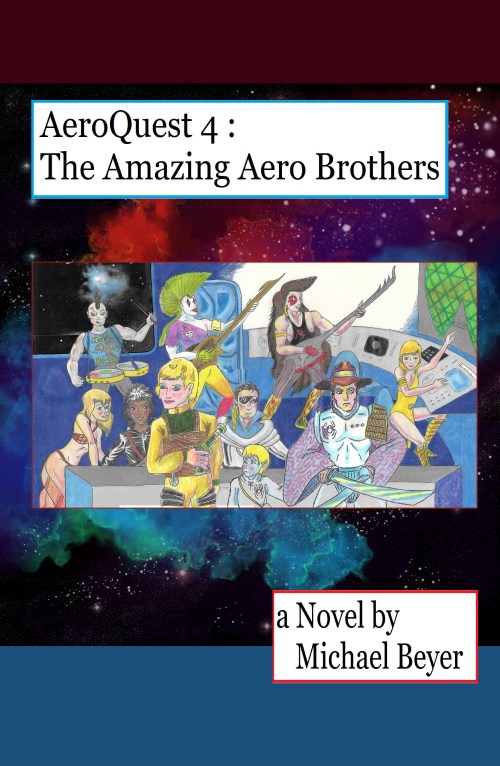
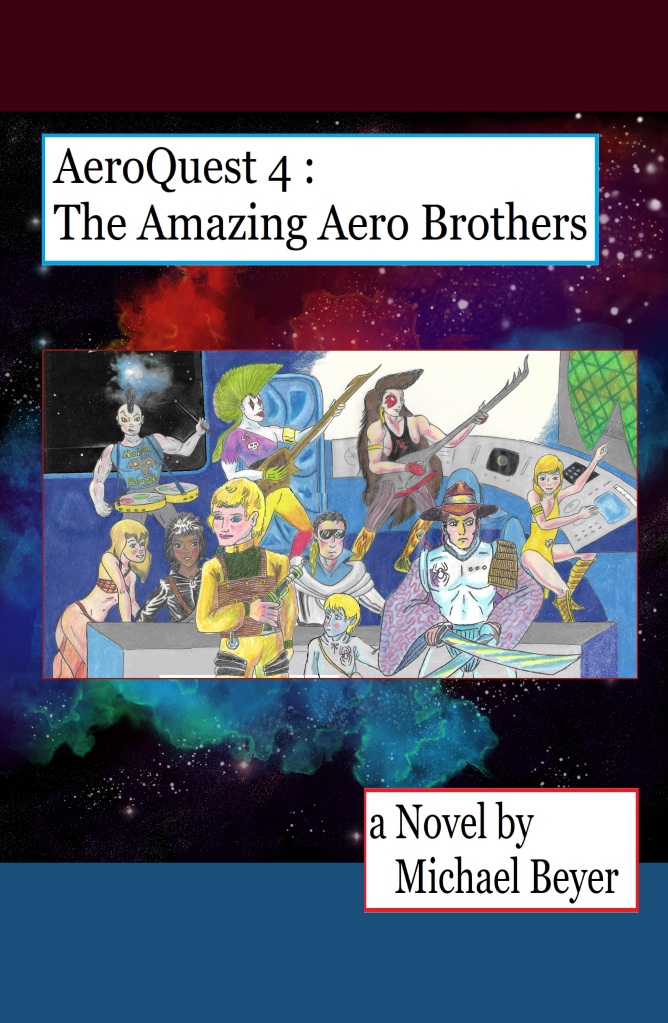
But here’s one last yam. I yam a storyteller. And I have a free Kindle e-book promotion this weekend. The book is the first in my series of AeroQuest books. It is a science fiction story with a humorous bent. And I mean, it is seriously bent in some places.
So, click on the link and get yourself a copy. It’s funny. And I will save the other sweet potatoes for another day.
The Essayist
I have been working on compiling good essays from this blog into book form. It is becoming a sort of obsession. The problem is, I am likely running out of time. My health is getting worse in the middle of a pandemic that is killing thousands of people just like me. I have been having problems with passing out during the midmornings repeatedly for several days in a row. I fear I may be headed towards heart failure or a stroke. And if it comes down to an ambulance ride, I can’t afford it, and I will not economically survive it. And all the intensive care units around here in North Texas are swamped with COVID patients. It is important for me to finish and publish this book of essays. It is part of me as a writer that I simply must leave behind.
“Why are essays important?” you may ask. And here’s where I would normally insert a joke answer. I try hard not to take myself too seriously. It is the only way I can deal with what has been a very serious life. And at the point in my essay book where I will insert this essay, I will not need to review what those things are that are so serious. (Being a teacher and shaping young minds. Being a sexual assault survivor. Helping teenagers to live through suicidal depressions. I know, I know, I should’ve resisted the urge to list them.)
But I have spent a lifetime teaching kids to write four-and-five-paragraph essays. And I am also a serious reader of essays. I have read and thoroughly studied Loren Eiseley’s The Invisible Pyramid, Henry David Thoreau’s Walden, Collected Essays by H.L. Mencken, selected essays by James Thurber, Life as I Find It: A Treasury of Mark Twain, Charles Lamb’s Essays of Elia, and parts of John Ruskin’s The Stones of Venice. I also thoroughly loved and used as a teacher All I Really Need to Know I Learned in Kindergarten by Robert Fulghum. So, I do not claim without reason that I do know something about how to write an essay. (Although you are welcome to disagree based on numerous bits of evidence in this goofy blog,)
At this point I am obligated to define for you what I believe an essay should be and what its potential uses are. An essay, simply put, is a pile of a fool’s best thinking put down on paper in prose rather than being distilled down into lines of poetry or embroidered and expanded with lies to make it into fiction. At its best it can open reader’s mental eyes and change societies, if not the entire world. At its worst it can incite violence, stir hatreds, and generally muck everything up. My essays land somewhere between, in the realm of mildly-amusing purple paisley prose that can really waste your time.
An essay, because it is based on truthful observations, can rip away the costumes and masks that authors put on to write fiction and make that educated fool of an author metaphorically naked in front of the reader. After blogging like this since 2013, I admit to having no real secrets left that I have not at least mentioned in my blog somewhere. I am less naked when being a sometime-nudist than I am in the sentences and paragraphs of these essays.
Now that I have thoroughly convinced you that you made a big mistake by reading this far through my essay compilation, I will reveal the fact that I have put this essay somewhere closer to the end of the book rather than near the beginning. Like all essayists, I am a fool (hopefully in the Shakespearean wise-fool sense), but I am not stupid. So I won’t laugh at you for falling for my tricks, but I can’t promise not to be at least a little bit amused. But time is short. So, on to the next essay!
Leave a comment
Filed under commentary, humor, insight, new projects, Paffooney, writing, writing teacher