
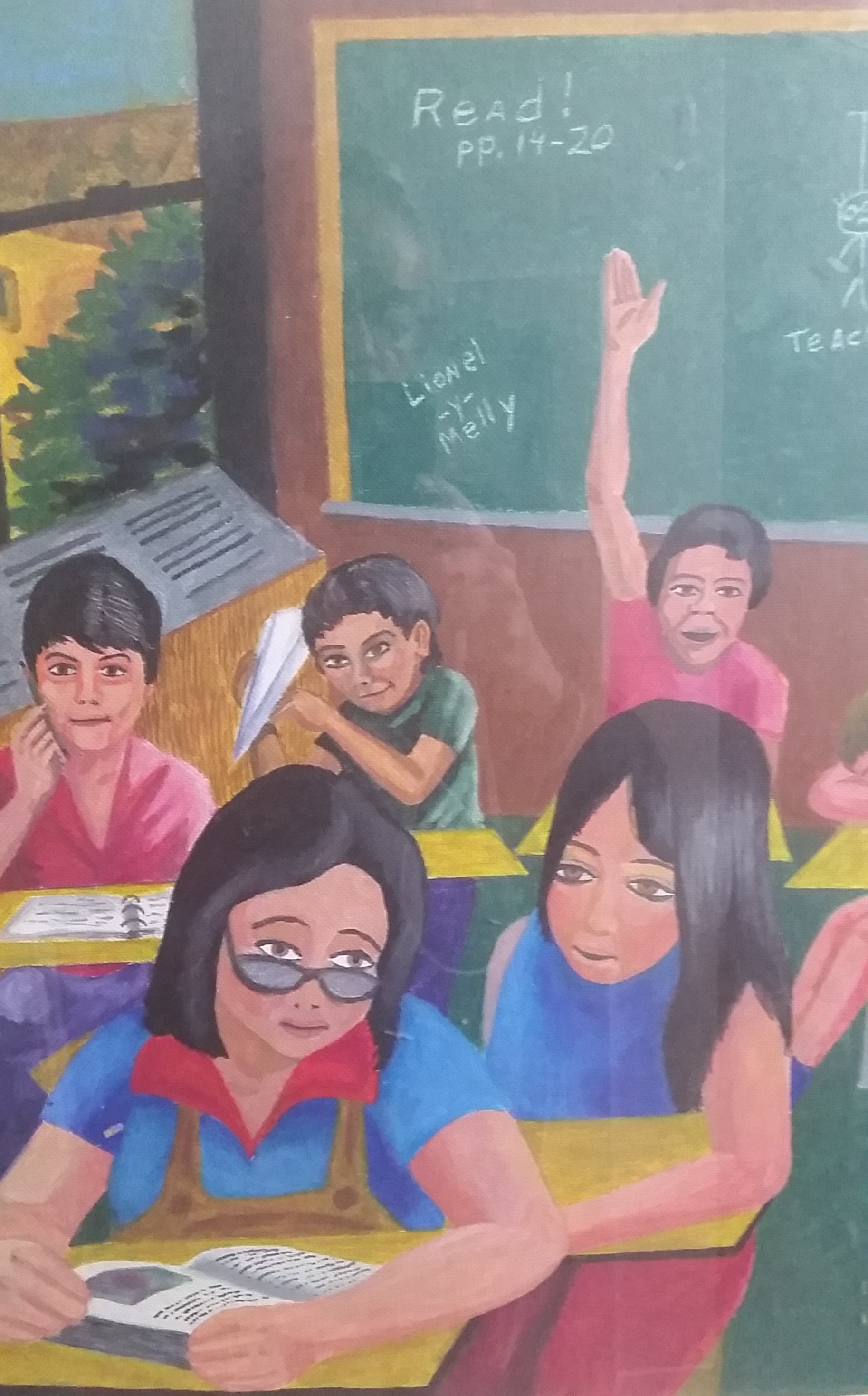
My proudest achievement of my thirty-one year years as a public school teacher was the fact that I survived my whole first year. That doesn’t sound like much to you unless you are a teacher. But it sounds even more amazing if you knew what South Texas junior high schools were like in 1981. I mean, my school, Frank Newman Junior High had practically been destroyed the year before I started teaching there by the seventh graders I would be teaching as eighth graders.
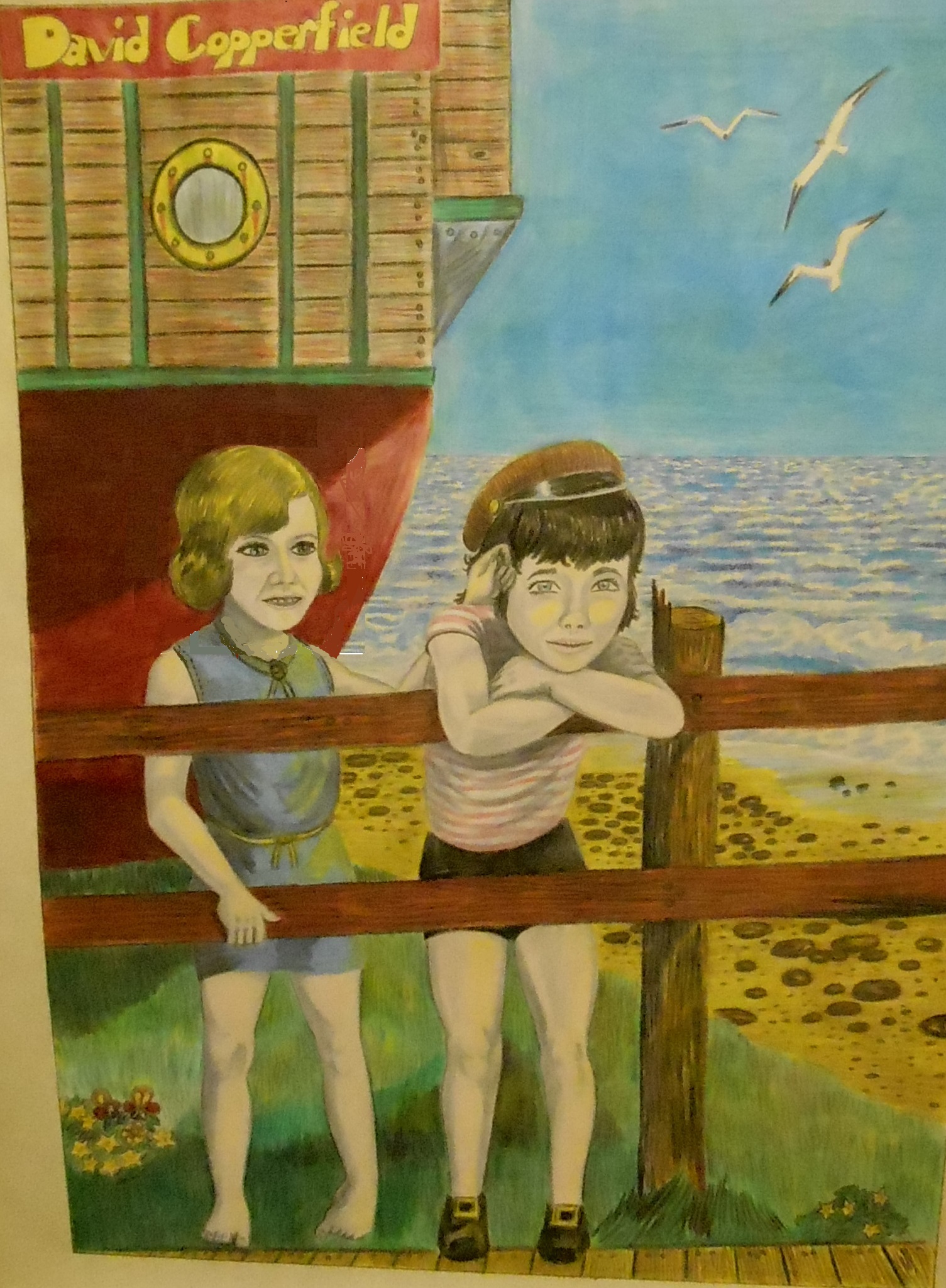
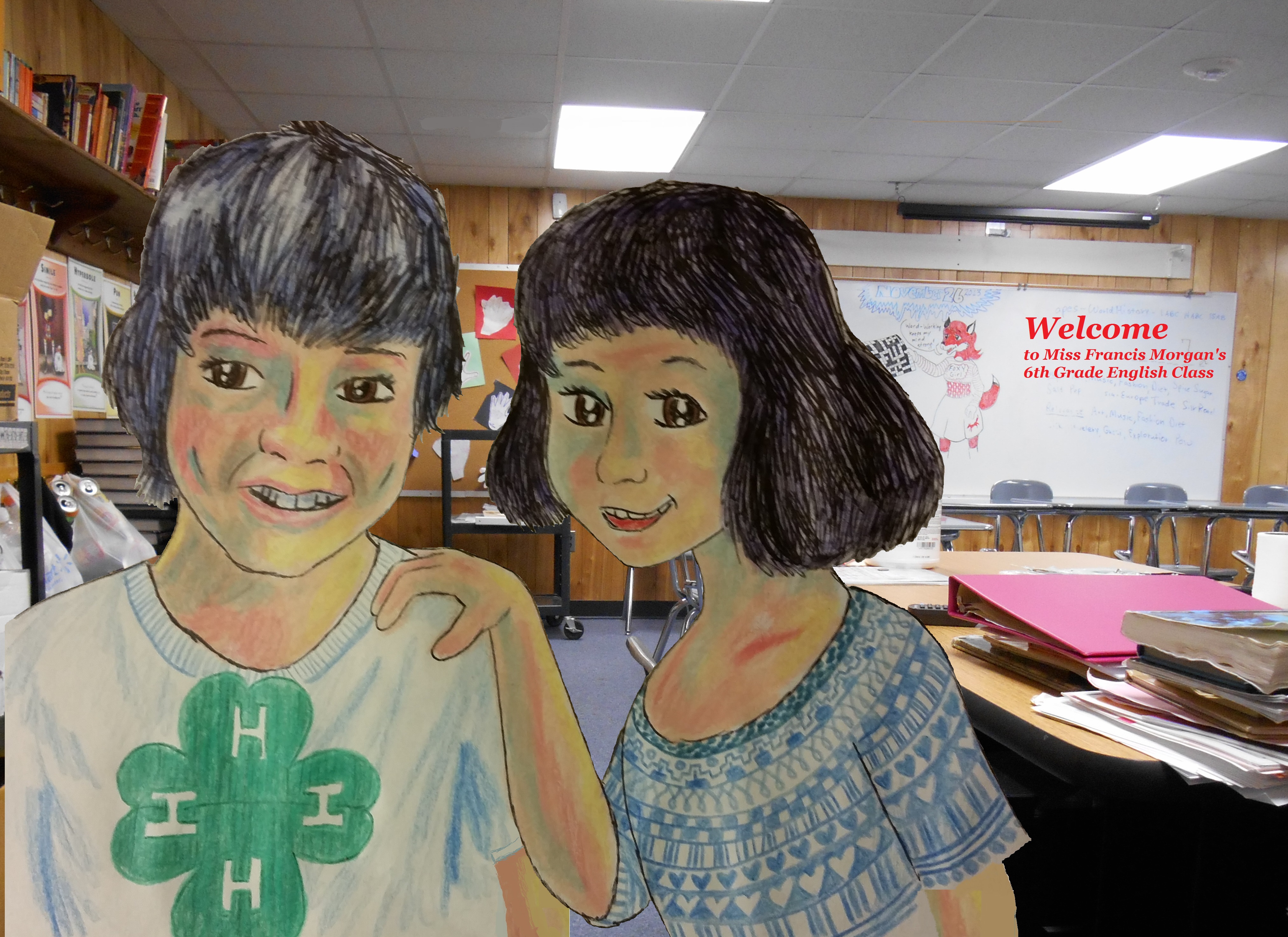
You see some of my favorites in the painting I did during my third year as a teacher. From front to back they are Dottie, Teresa, Ruben, Fabian, and Javier. Of course, in these essays about being a teacher, I usually don’t use real names to protect the privacy of my former students, both the innocent and the guilty. So, I leave it to you to decide whether, even though I love these kids, those aren’t probably their real names. Unless… they are.
But not all Texas eighth graders are loveable people. In fact, they are hard on first-year rookie teachers. Especially the ones with a Midwestern faith that they can step in and change the world with their idealistically pure and golden teaching methods. Those teachers they will try to eat alive.
I followed the seventh grade English teacher in the same classroom with the same kids. They made her scream daily, had classroom fist fights weekly, exploded firecrackers under her chair twice during the year, and made her run away to the San Antonio airport and leave teaching behind forever. As ninth graders, they made their English I teacher leave teaching forever even though she was a three-year veteran. And believe me, they tried to do the same to me.
I foiled them constantly by being an on-your-feet-all-day teacher rather than a sit-behind-the-desk-and-yell teacher like my predecessor. After I had a chance to sit during planning period, I always had to clean thumbtacks, tape, and smeared chocolate bars off the seat of my little wooden teacher chair. Paper airplanes were the least gross things that flew through the air. Boogers, spit-wads, spit-wet pieces of chalk, and brown things you had to hope were chewed chocolate flew constantly whenever you had your back turned to them. And if there was only one kid behind you and you turned on him and asked pointedly, “Who threw that?” The kid, of course, saw nothing, has no idea, you can torture him, and he still won’t know anything because you are a lousy teacher and didn’t make him learn anything.
And lessons were mostly about talking over the malevolent tongue-wigglers. They didn’t listen. Not even to each other. One kid would be talking about monster trucks that shoot fire out of their exhaust pipes while the kid next to him was talking at the same time about whether Flipper is properly called a dolphin or a porpoise, or like his older brother says, “a giant penis-fish.” And the girls behind them are actually hearing each other, but only because they are speculating which boy in the classroom has the cutest butt.
I broke up three fights by myself that year, one of which I got slugged in the back of the head by the aggressor during, teaching me to always get between them facing the aggressor and never being wrong about who the aggressor is.
They don’t let you do much teaching at all your first year. They force you to practice discipline by keeping them all seated at the same time with their books open in front of them. “I don’t do literature,” Ernie Lozano told me. Well, to be accurate, none of them actually did literature that year. But they taught me to survive long enough to learn how to actually teach them something.
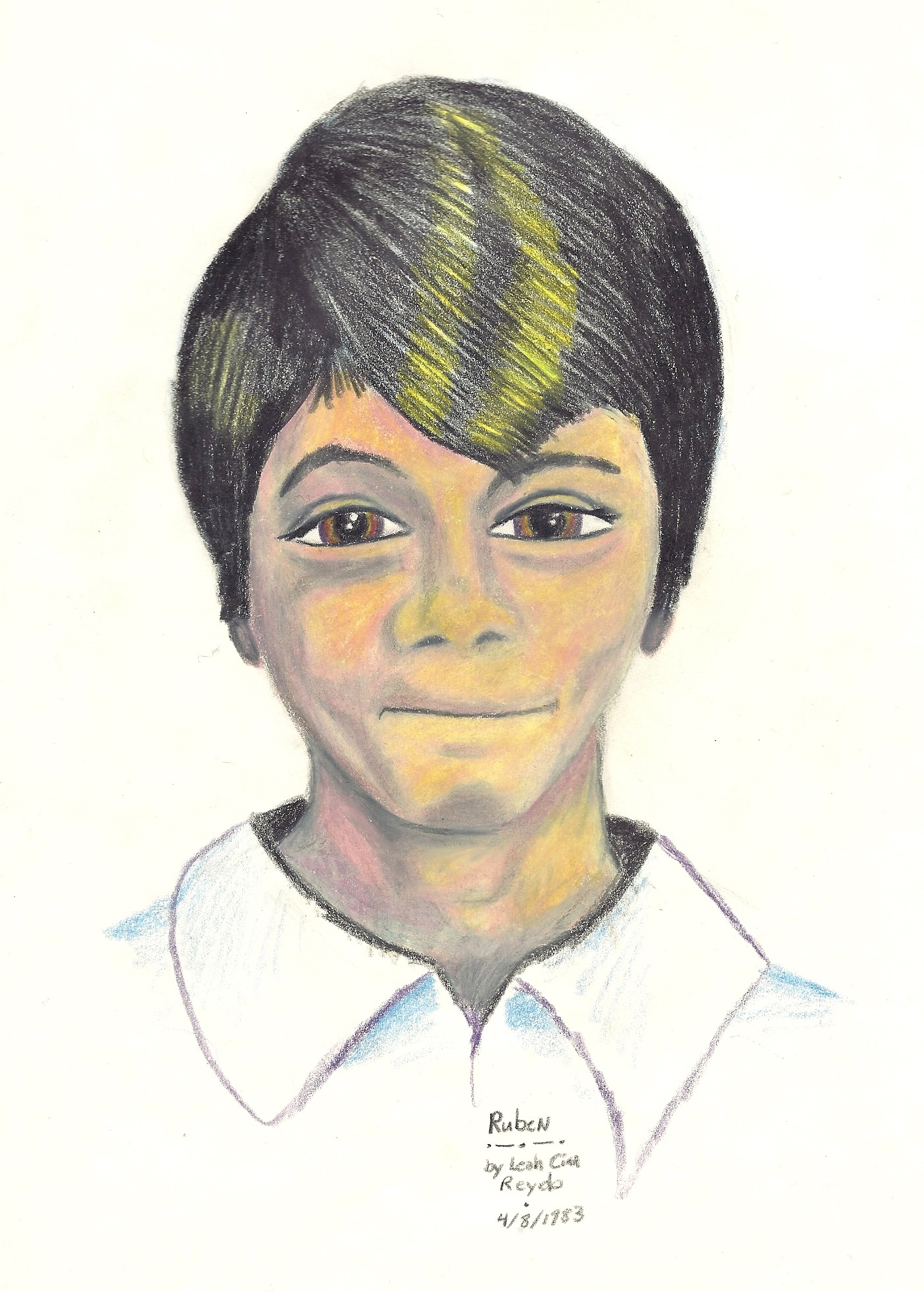
On the last day of school that year we gave them all extended time on the playground, using the outdoor basketball court to keep them occupied for long enough for a terrible school year to finally run its course. They didn’t set the school on fire that year. They didn’t break into the office that year and steal all the cash. We did well enough at keeping them under control that year that I got rehired and our principal got promoted to high school principal. I had a decision to make that year. Would I keep teaching? Or find another job? Sixty percent of all first-year teachers in Texas in 1982 quit teaching. I only earned $11,000 that year. Did I really want to continue down that dark path for another school year?
Ruben walked up to stand beside me and watch the bigger eighth graders foul each other on the basketball court. “You know, Mr. Beyer, you were my favorite teacher this year.”
“Thank you, Ruben. I needed to hear that.” I bit my lip to keep from crying.
That was when I made the decision. I stuck it out in that same school and district for the next 23 years. I became the head of the Cotulla Middle School English Department. I moved to the Dallas area for family reasons in 2004, but I would teach for eight more years in two more districts and in three more schools. But all of that is Ruben’s fault. Because that was the most important thing anyone ever said to me as a teacher. And I did hear it more than once. But he was the first.









 Catch a Falling Star
Strawberry Fields
This foolish essay about berries that mean love to me is only partly inspired by the Beatles song, “Strawberry Fields Forever.” That’s because, of course, their song was only about meditating. In the lyrics they take you to the “Strawberry Fields where nothing is real… but it’s nothing to get hung up about…” They are talking about a blissful place of no worries where we all need to go. And then staying there forever.
This, of course, I could never do. Worrying about the future is tattooed on my behavioral imperatives in the dark part of my stupid old brain. And while I often found that place of no worries, and lingered there for a bit, I found you could never really get anything done if you stayed in that state of strawberry fields forever.
But don’t get me wrong, strawberries are a critical part of every healthy mental diet.
You see, my meditations on strawberries when I was a child of eight, nine, and ten centered on the strawberry patch at Great Grandma Hinckley’s place.
She was, as I incorrectly recall, slightly older than Jesus when I was that age. By that I mean, though she seemed museum-quality ancient to me, I had derived wisdom about life, love, and laughter from her before Sunday School taught me any of those things said in Jesus’s words.
And I was given the task of mowing her lawn in the little plot of land surrounding her little, tiny house in the Northern part of Rowan where I also lived and grew and celebrated Christmas and Halloween and Easter and the 4th of July. And though I was doing it because she was so old, I never even once thought she was too old and frail to do it herself. Grandma Hinckley’s willpower was a force of nature that could even quell tornados… well, I thought so anyway when I was eight. And she gave me a dollar every time I did the lawnmowing.
But there were other things she wanted done, and other things she wanted to teach me. There was the garden out back with the strawberry patch next to it. She wanted me to help with keeping the weeds and the saw grass and the creeping Charlie from overrunning the strawberries and choking them to death. (Creeping Charlie wasn’t an evil neighbor, by the way. He was a little round-leafed weed that grew so profusely that it prevented other plants from getting any sunlight on their own leaves, causing a withering, yellowing death by sunlight deprivation. I took my trowel to them and treated them like murderers. I showed them no mercy.)
And Grandma always reminded me not to be selfish and eat the very berries I was tending in the garden. She taught me that eating green strawberries (which are actually more yellow than green, but you know what I mean) was bad because they could give you a belly ache, a fact that that I proved to myself more than once (because eight-year-olds are stupid and learn slowly.) She also taught me that it is better to wait until you have enough strawberries to make a pie, or better yet, strawberry shortcake with whipped cream. She taught me that delayed gratification was more rewarding in the long run than being greedy in the short run and spoiling everything for everybody.
She always gave me a few of the ripe strawberries every time I helped her with them, even if I had eaten a few in the garden without permission. Strawberries were the fruit of true love. I know this because it says so in the strawberry picture. Even though I probably never figured out what true love really means.
My Great Grandma Nellie Hinckley was the foundation stone that my mother’s side of the family was built on. She was the rock that held us steadily in place during the thunderstorms, and the matriarch of the entire clan of Hinckleys and Aldriches and Beyers and other cousins by the dozens and grandchildren and great grandchildren and even great great grandchildren. I painted the picture of her in 1980 when she passed away. I gave it to my Grandma Aldrich, her second-eldest daughter. It spent three decades in Grandma’s upstairs closet because looking at it made Grandma too sad to be so long without her. The great grandchild in the picture with her is now a grandmother herself (though no one who has seen this picture knows who it is supposed to be because I painted her solely from memory and got it all wrong.) But Grandma Hinckley taught me what true love means. And true love has everything to do with how you go about taking care of the strawberry patch.
Leave a comment
Filed under artwork, autobiography, commentary, family, health, humor, mental health, Paffooney, philosophy, strange and wonderful ideas about life