
Of late I have been rather obsessed with the coming darkness. Death. Ragnarok. Mass extinction of all life on Earth. My own situation as a pessimist quickly approaching the end of my own personal life has probably colored my obsession to a very large degree. And I should point out, my own prognosis is not going to change for the better. I do not have the financial power to prevent the problems I already have using modern effective healthcare. I am personally doomed. But even though the whole world seems easily as doomed by climate change, that doesn’t mean everyone shares my sad fate. There are potential solutions to the problem that only require the people who do have the financial power to fix it to decide that life on Earth has more value than their personal wealth and privilege. (Uh-oh… there’s a dependence on goodness where it seems like none actually exists.)
I often turn to science and books by very smart people to give me ideas that comfort me and give me hope. I recently did some binging on YouTube’s Answers With Joe. He does an excellent job of providing answers to things that worry me underpinned with scientific facts.
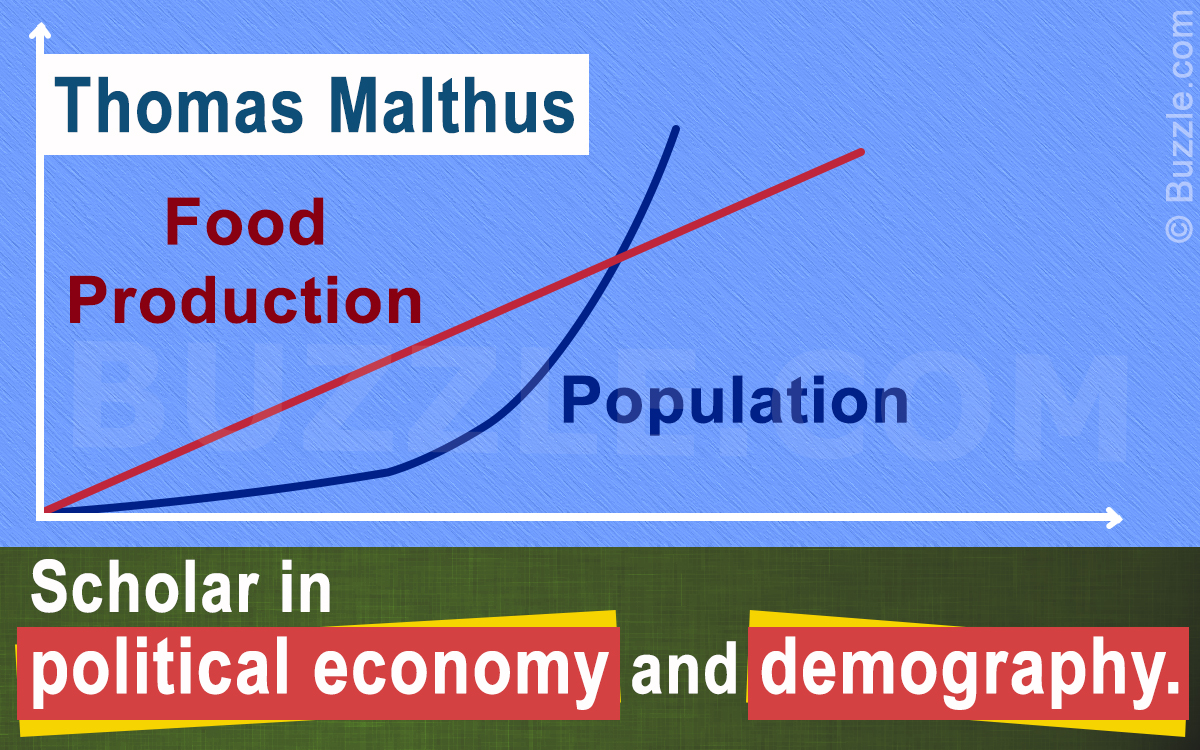

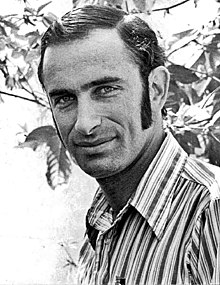
I have been worried about the environment from the times in high school science class when we learned about Paul Ehrlich and his book The Population Bomb.
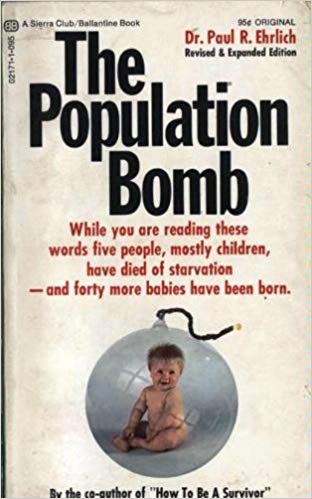
Then we were learning about how the overpopulation of the Earth and its attendant need to produce food for all those people threatened massive famine, resource scarcity, and eventual extinction for humans. It was pointed out that, at the time in the 1970s, we were using chemical fertilizers and pesticides on the fields in Iowa to increase yields that would not only pollute the water and air in Iowa, but would eventually make its way through the watershed system into the oceans where it would overstimulate the algae and create an ocean environment throughout the world devoid of oxygen, fish, and all other lifeforms. I could see the threat and the validity of the science that Ehrlich had done.
I learned, over time, that population stresses do not necessarily cause extinction events in a matter of decades. The 1980s came and went and we were not extinct, despite eight years of Ronny Ray-gun, the jelly-bean president, and massive success in increasing food production. As Joe does an excellent job of explaining in the video above which you didn’t watch, population problems proved at least partially self-correcting. Families generally slowed their growth rate as health and wealth improved and made them more productive, more intelligent, and better able to support the heavy layer of living people that now covered the Earth.
Recently I became obsessively and pessimistically concerned with the dire predictions of environmental scientist Guy McPherson. I do recognize that his work reflects the extremist point of view among climate scientists, but ;there are a number of facts that he presents that are irrefutable in the same way as the arguments of… Paul Ehrlich.
In the second video above that you also didn’t watch, Joe explains how the problem of greenhouse gasses can be undone by renewable energy, carbon capture and air-scrubbers, and the search for viable products made from CO2, helping to reverse greenhouse gasses. He also explains how chemical cooling of the atmosphere and actual planetary weather control are possible. Technology already exists to solve the climate problem. The only drawback is that somebody has to pay for it. And the people in control of that kind of financial power are all entitled low-down greedy bastards that would rather build massive survival bunkers in the Ozarks than pay for the rest of us to survive. So, there is hope, which comes not with a grain of salt, but with a giant’s saltshaker filled with rock salt. Still, it isn’t time for all of you to give up. Just me. I am the one most completely doomed.












 Catch a Falling Star
Aquarium, Terrarium, Planetarium
As a teenager I was very much into raising tropical fish in an aquarium. Having fish to watch and fuss around with is a healthy, mind-calming hobby that literally helps you learn about environmental issues. Keeping an aquarium is all about keeping fundamental forces of biology in relative balance.
Some fish are there just for beauty. The angelfish and gouramis I have pictured already are mainly that. Though you could also say that kissing fish, the pink kissing gouramis, also provide comic relief.
Keeping an aquarium is a balancing act.
.
.
.
.
If you put the wrong fish together, problems ensue. Fully grown angelfish will eat expensive guppies and neon tetras. Goldfish waste so much fish food and make so much fish poop that the tank has to be cleaned nearly every day to prevent it become a befouled cesspool of toxic filth and bacteria. Unless…
You employ bottom-feeders like the corydorus catfish or the red-tailed black shark (actually a loach, not a shark) to feed on the waste and be the janitor-fish.
A carefully balanced tank is a living work of art that grows and changes and progresses…
…Until something goes wrong. Every fish tank I ever put together eventually had a crisis that made the whole ecology crash. All the fish would die and the tank would smell bad. This would usually happen when I wasn’t there to tend it as needed, when I was away at college or on vacation. Water has to be refreshed. The water can never be allowed to cool lower than seventy degrees, even in winter. The air pump can’t break down and stop aerating the aquarium. The filter has to be clean and unclogged. And disease has to be treated.
In a way, our entire planet earth is like that too. Of course, if it was all sealed under glass, it would be a terrarium, not an aquarium. But we can identify the same sorts of threats to the ecosystem of the terrarium we live in as would be found in a tropical fish tank. Donald Trump and his Republican fat-cats are the goldfish. Global warming threatens the air and water in the tank. An asteroid could break the glass and spill the contents out. So many things could crash our carefully balanced fish tank. And there is an even greater environment out there beyond the edges of our little solar system. Does the title make sense now in a way it didn’t before? No? Oh, well, I tried.
3 Comments
Filed under autobiography, commentary, humor