
The question came up on Twitter. “What things aren’t safe to write about in a Young Adult novel?”
I have personally never questioned myself about that before. The writer asking for input was writing something science-fiction-y about a telepath using telepathy to torture someone. He was apparently worried that a younger audience would be traumatized by that.
Really? Anyone who can ask that has never spent much time talking to young readers.
I base my answer on over thirty years of trying to get kids to read things of literary quality. My very first year of teaching a male student stood up when the literature books were passed out and announced, “I don’t do literature!”
“Really, Ernie? You are going to lay that challenge before me?”
We slogged through The Adventures of Tom Sawyer that year, using and reusing 20 paperback copies of the novel purchased with my own money. Ernie maybe didn’t like it. But he did literature.
And I went on a thirty-four year quest to find out what literature kids really would do and what literature kids really needed to do.
Here’s a tiny bit of wisdom from Mickey’s small brain and comparatively large experience; Kids are not traumatized by literature in any form. Kids are traumatized by life. They need literature to cope with trauma.
Kids want to read about things that they fear. A book like Ender’s Game by Orson Scott Card has some graphic violence in it and a war against faceless aliens, but it does an excellent job of teaching how to empathize as well as fight against bullies, and it helps them grapple with the notion that the enemy is never clearly the thing that you thought it was to begin with.
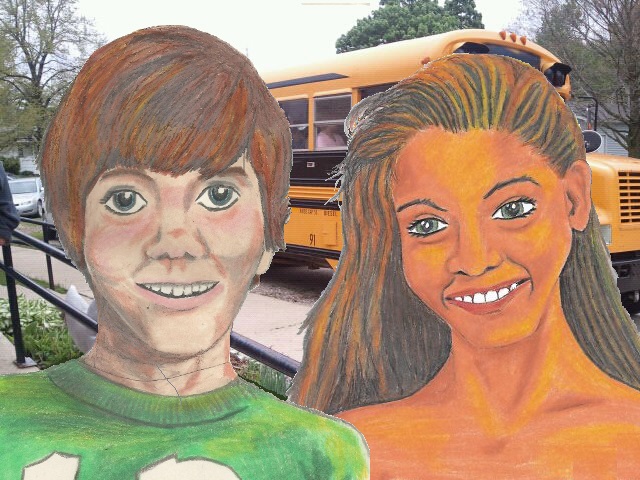
Kids want to read the truth about subjects like love and sex. They are not looking for pornography in YA novels. They get that elsewhere and know a lot more about it than I do. They want to think about what is right and how you deal with things like teen pregnancy, abortion, matters of consent vs. rape and molestation. Judy Blume started being objectively honest with kids about topics like puberty and sex back in the 60’s with books like Are You There, God? It’s Me, Margaret. and Iggie’s House.
If you are writing for young adults, middle grade and high school kids, even kids 5th Grade and below who are high-level readers, it is more important to worry about writing well and writing honestly than it is to worry about whether they can handle the topics and trauma that you wish to present. Write from the heart and write well.
I can honestly say I know these things I have said are true about young readers from having read to them, read with them, and even taught them to read. As an author, my opinion is worth diddly-squoot since I have hardly sold any books, and no kids I know have read them (except for two of my nieces, both of whom are pretty weird and nerdy just like me.)







 Catch a Falling Star
Heroes of Yesteryear (Cowboy Movies)
When I was a boy, the Western reigned supreme on both television and in the movie theaters. Part of the benefit of that was being indoctrinated with “the Cowboy Way” which was a system of high ideals and morality that no longer exists, and in fact, never did exist outside of the imaginations of little boys in the 1950’s and 1960’s. We learned that good guys wore white hats and bad guys wore black. You only won the shootout if you shot the bad guy and you didn’t draw your gun first.
Of course, the cowboys who were the “White Knights of the Great Plains” we worshiped as six-year-olds and the singing cowboys on TV were not the same ones we watched when we were more mature young men of ten to twelve. John Wayne starring in Hondo (after the book by Louis L’Amour) was more complicated than that, and we learned new things about the compromises you make in the name of survival and trying to do things the best way you can. From Jimmy Stewart and John Wayne in The Man Who Shot Liberty Valence we began to see that sometimes you shot the villain in the back from down the street to save your simple friend from the gunfight in the street when he was too naive and green to win.
Wyatt Earp at the OK Corral was the white hat we wanted desperately to be when we grew up. And then I saw on PBS in the late 60’s a documentary about the real shootout and the real compromises and consequences of the thing we once thought was so clearly good versus evil.
Wyatt went from the TV hero,
To the mostly moral man fighting what seemed like lawlessness,
To a morally ambiguous angel of death, winning on luck and guts rather than righteousness, and paying evil with vengeance while suffering the same himself from those dirty amoral cowboys, sometimes good, but mostly not.
And then along came Clint and “the Man with No Name”. More ambiguous and hard to fathom still…
Who really was The Good, the Bad, and the Ugly? What made any one of them worse than the other two? You need to listen to the music before you decide. We are all of us good, bad, and ugly at times. And all of it can be made beautiful at the end with the right theme music behind it. Did we ever learn anything of real value from cowboy movies? Of course we did. They made us who we are today. They gave us the underpinnings of our person-hood. So, why do they not make them anymore? The video essay at the end of my wordiness has answers. But basically, we grew up and didn’t need them anymore. And children and youths of today have different heroes. Heroes who are heroic without shootouts and letting the bad guy draw his gun first. Ideally, heroes who are us.
8 Comments
Filed under autobiography, commentary, cowboys, heroes, movie review, review of television, sharing from YouTube, strange and wonderful ideas about life
Tagged as cowboys, westerns