I am used to complaining about the heat. More than one summer I have endured 100 days of 100-degree-plus heat. When I lived in deep South Texas in the town of Cotulla, one summer we averaged 104 degrees.
The heat sits on you like a wool blanket that presses you down towards the surface of the frying pan. You almost wish you could set yourself completely free of clothing so that you could be as cool as possible, and at the same time get an all-over tan. (Or an all-over sunburn as the case always is with me.)
But this, of course, is Bible-belt Texas where the Baptists threaten you with eternal Hellfire if you even think about being naked.
And the heat makes for oppressive summer laziness, where you can’t seem to do anything but sit and sweat. Of course, when I was a kid, summer days were for chasing leopard frogs down on the banks of the Iowa river. Or watching the butterflies in Mrs. Stokes’ flower bed where petunias and daisies, and black-eyed Susans seemed to bloom all summer long. Or explore the Bingham Park Woods on my trusty-rusty bicycle, biking along the forest foot-paths. Nowadays, kids can sit in an airconditioned room and play video games from the time they wake up in the afternoon until four o’clock the next morning.
This summer hasn’t been quite as hot as some in the recent past. There has been rain off and on. But it is even more oppressive with the pandemic going on. And the George Floyd protests raging on as much here in Dallas as in any city. The heat and diabetes and poverty and the inability to get anything done that actually feels like progress have me depressed and moping and completely stifled… and using the word “and” too often.
It is even hard to write a blog post. My energy is gone. All I have done is dither on the WordPress site. But at least I have ticked off one more tick-box on the to-do list of a hot Texas day.
Like any Indie writer who has had enough of paying publishers to publish my work, any tiny bit of success is immediately seized upon and cherished, and immediately all goes into my head to swell the ego and make me strut like a rooster in the barnyard who doesn’t realize the next step for him is either the stew-pot or the oven.
I have read enough Indie books to realize that a vast majority of them are written by strutting roosters that, once their head is removed, still won’t realize that they are not the greatest writer since Hemingway and Faulkner. (They can’t compare themselves to Donald Barthelme, or James Thurber, or J.D. Salinger because most of them have never heard of those writers, let alone read anything like City Life, My Life and Hard Times, or Franny andZooey.) I confess… At least I know I am no Hemingway or Faulkner. But I continue to protect my delusion that I am a good writer of young adult novels.
But this week I got more sugar pills for the ego in the form of reviews and evidence that people are actually reading my books.
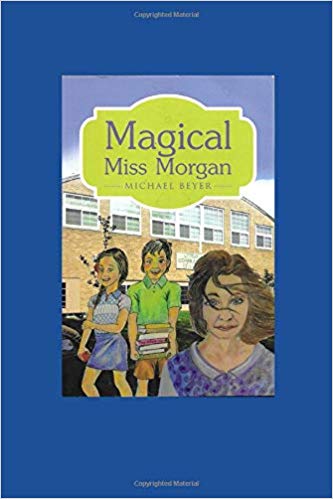
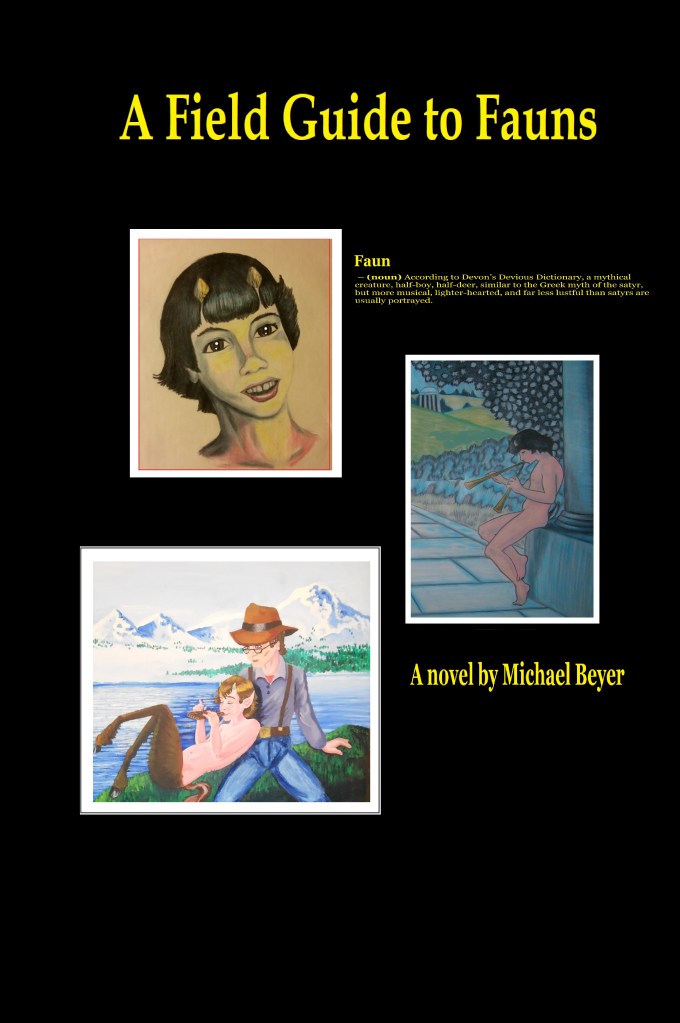
My teacher story, Magical Miss Morgan got read at least twice on Amazon Prime, one of those yielding another 4-star review. And A Field Guide to Fauns got its first review, a 5-star review, that can be seen here;http://tvhost.co.uk/april-and-may-reading
That review is written by a fellow author whose novels also contain nudist characters like the Field Guide does.
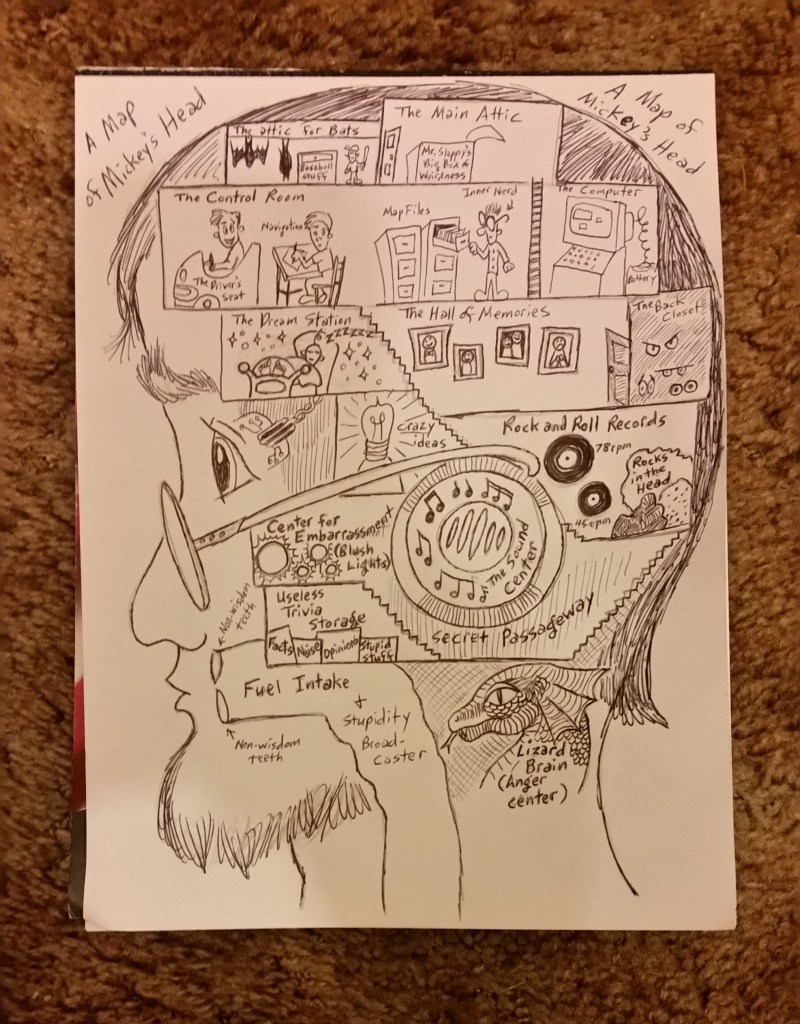
So, a little bit of success like that makes the old heart keep pumping with hope. But I am still a long way from any kind of financial proof or critical acclaim sort of proof that I am a successful writer. Any notions of success are still all in my head. And that’s where they really ought to be. After all, it is only my belief that my writing is worth doing that will cause any more of it to happen. And more of it should happen. Otherwise my head might explode. And wouldn’t that be a terrible mess?
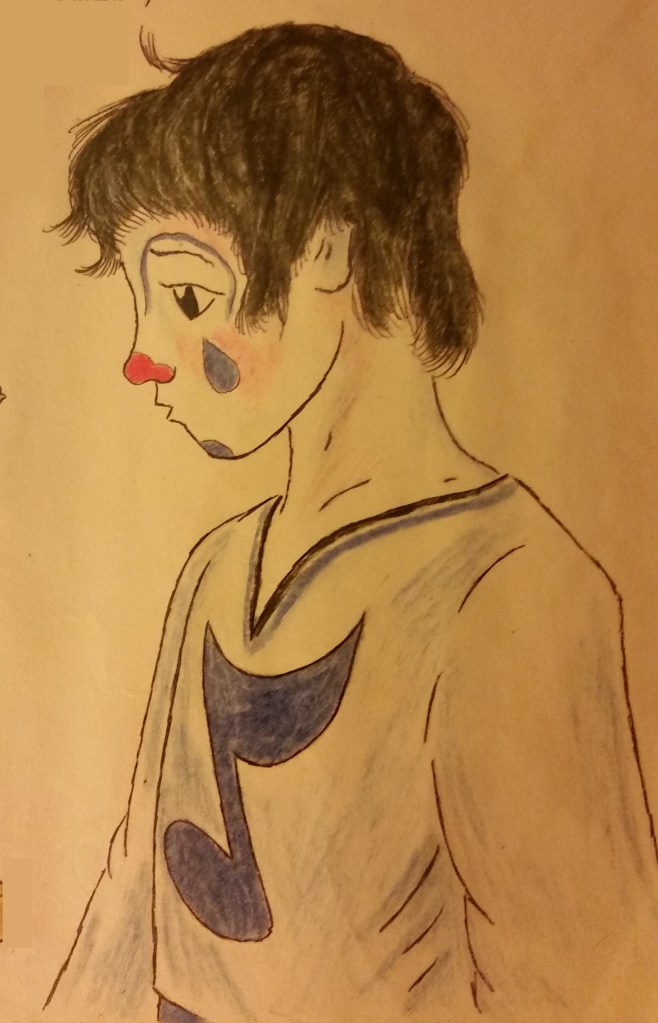
A road map to the inside of my stupid head. I’m sure there’s a bit of success in there somewhere.
I should be writing more, because 15 books is not enough to contain all of me to leave behind when I die.
I should be exercising more, because I am diabetic and arthritic, and the more I lounge and laze, the more I am not fighting back against implacable enemies.
I should be laughing more, because laughter heals the soul of the many horrendous wounds of every day.
I should be loving more, because people all around me are hurting as much as I am, and they need more of it in their lives, as do I.
I should be caring and doing more,
because the world is sick with Covid and burning from racially motivated injustices and murder. And I feel helpless in the wake of it.
I should be doing many things,
That I am not doing because my power is gone. But I try anyway. And I write bad poetry about it…
I was not able to post yesterday for a number of reasons. Not the least of which is the turmoil caused by this nation trying to come to terms with those sins of the past that come back to haunt us and hunt us in the present.
I am an old white man. I suffer from “white privilege” in ways I can’t explain to some of my white friends back in Iowa, a State that was almost entirely white when I was growing up there. (And I pray that I grew UP, not just old.)
I learned yesterday that it matters how you put in order the things that you can say on matters of race. You can’t just say, “Black lives matter” to some white people. They will angrily insist that “All lives matter.” They will then proceed to tell you that you are being a racist when you suggest that black people are somehow more important than white people. I learned that you should say instead, “All lives matter, which means black lives certainly matter too. And the debate now is about a few recent black lives that were treated like they didn’t matter, and so, their lives ended in being murdered.” You can’t give white people a reasonable-sounding way to get out of admitting that, or they will. (See, I can be a bit racist too. I sometimes have a hard time believing all white people have positive human feelings in them somewhere.)
My illustrations for this post all came from Pinterest.
It has often, in my teaching career, been a disadvantage to be a white male. Black kids don’t believe you can see them as a good person. If you have to call them down for misbehavior, the worst ones will automatically assume it is about their race and not their behavior. A good teacher needs to listen more than they talk. You have to get them to open up about what happens in their lives that makes them behave the way that they do. You have to make them understand that you actually care about them and want to help. You have to earn their trust to get their best learning behavior. And being white makes that all so much harder. Not just with Afro Americans. Hispanic kids too. Vietnamese kids too. And I promise you, if you take the time to really get to know a kid… from any race or culture… you will discover that underneath it all, there are no bad kids. You stand a very good chance of learning to love them… no matter their racial or cultural differences from you.
And as an old white man, I suffer the disadvantage of never being able to truly understand what it feels like to have to worry that, at any moment, the police might kill you with a gun, or press the life out of you with a knee on your neck… just because of the color of your skin. That is in no way a fair thing that black men, black women, and black kids have to worry about that.
I am saddened and frustrated too that I can’t do any more to correct this terrible injustice than I am doing. I can’t attend protests because of my poor health and the pandemic that will probably kill me anyway. I am too old and crippled and broke to do any more than write this essay and post things on social media that make some of my old white friends angry and ready to argue.
I feel bad. The deaths of George Floyd, Breonna Taylor, Philando Castile, and too many more diminish me, make me hurt in my heart. And all I can do about it is tell you that there needs to be more love in this world, and less hate. And I hope maybe you have a little more of it to add to the world. After all, that’s all that really matters.
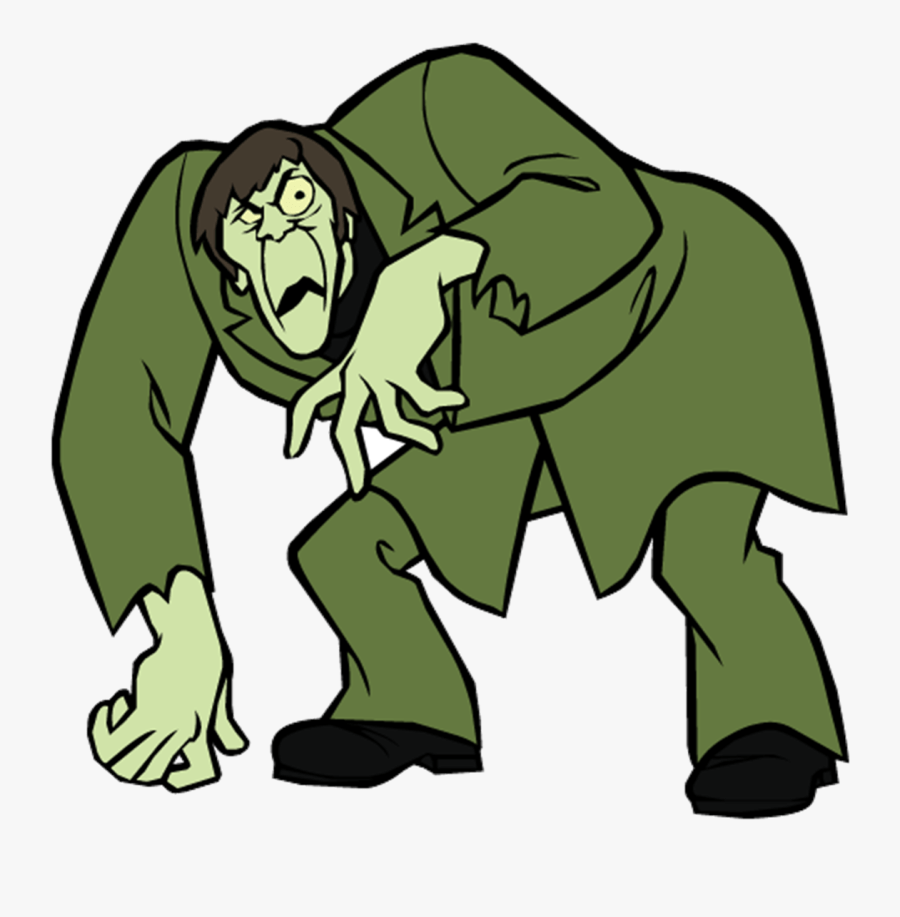
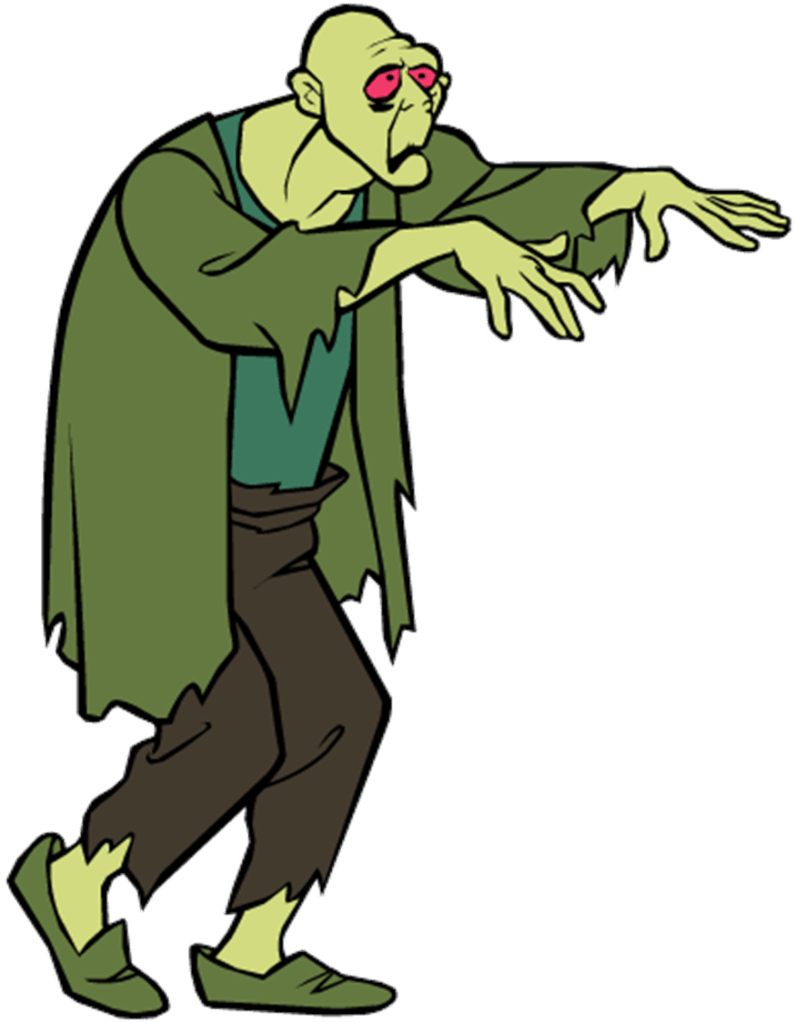
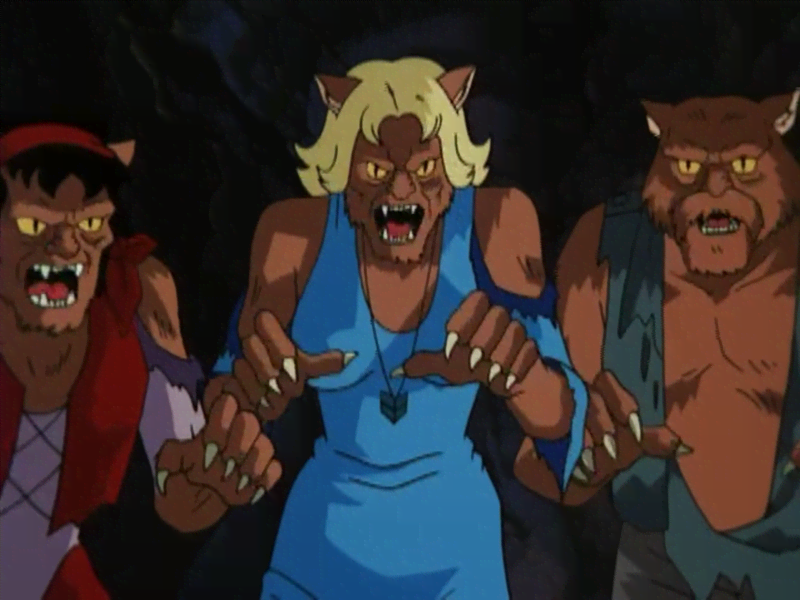
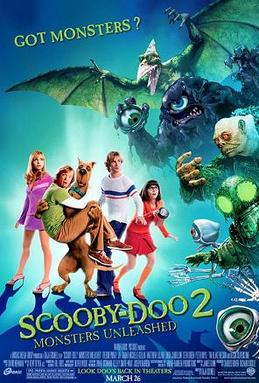
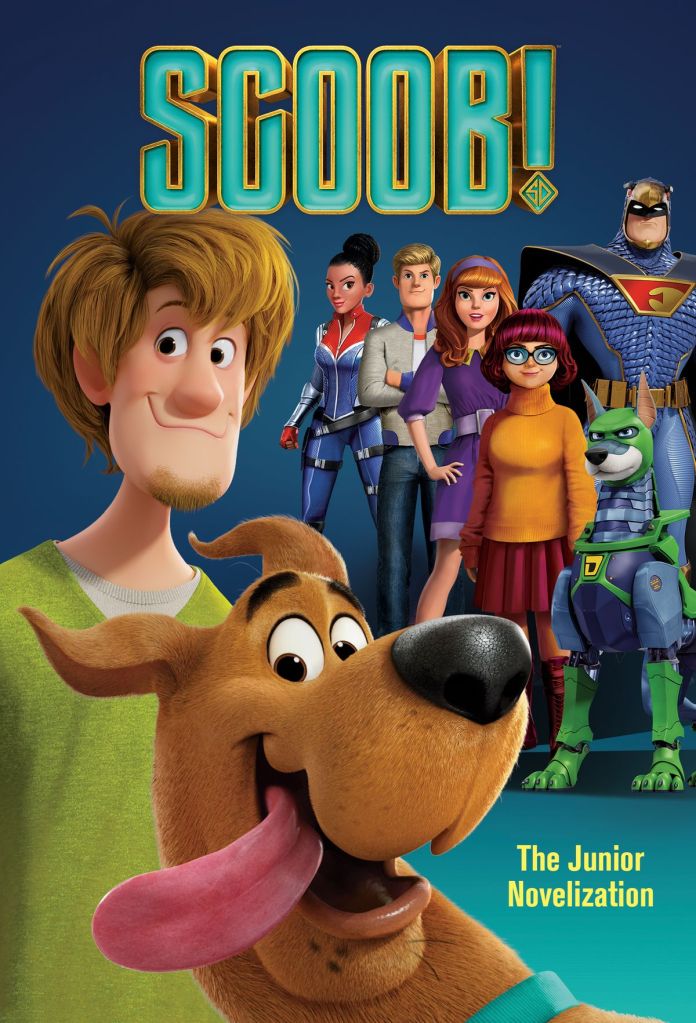
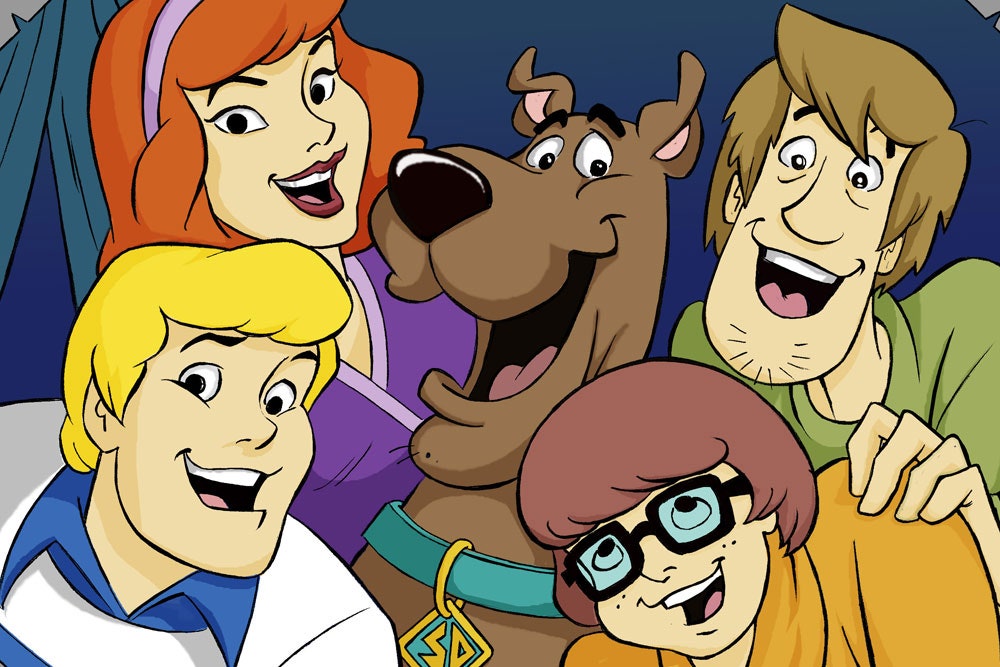
I remember when Scooby Doo, Where Are You? premiered on Saturday Morning Cartoons in 1969. I was thirteen and in the 7th grade. I had been six during the Cuban Missile Crisis of 1962, seven when Kennedy was assassinated in 1963, ten when I was sexually assaulted in 1966, and still twelve when Neil Armstrong walked on the Moon in the Summer of 1969. I was obsessed with monsters, horror comics, 20,000 Leagues Under the Sea, and the Pirates threatening Jim Hawkins in Treasure Island. I knew what fear was. And I was mad to find ways to combat the monsters I feared.
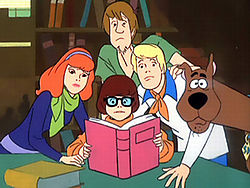
Don’t get me wrong. I was under no illusions that Fred, Daphne, Velma, Norville “Shaggy” Rogers and Scooby Doo were the answer to all my fears as viable heroes and heroines. They were goofballs, all of them, based on the characters I vaguely remembered from The Many Loves of Dobie Gillis. I was aware that Shaggy was just Maynard Krebs in cartoon form (the hippie character portrayed by Gilligan’s Island actor Bob Denver.)
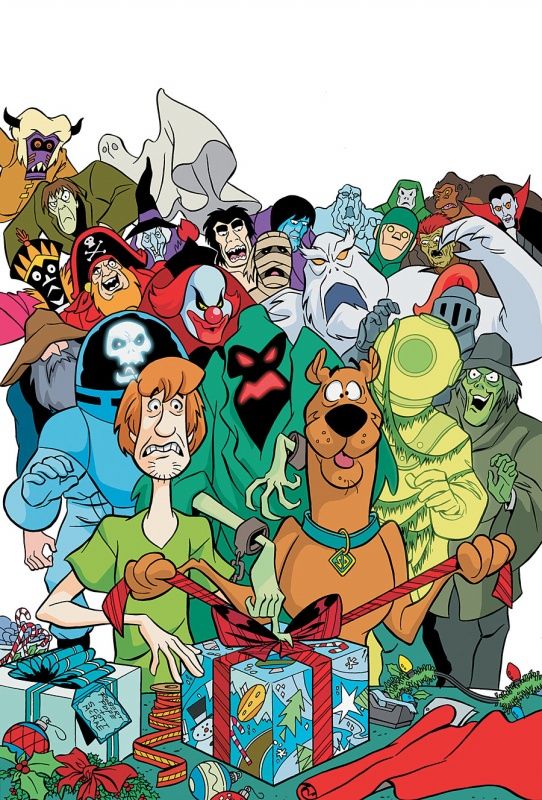
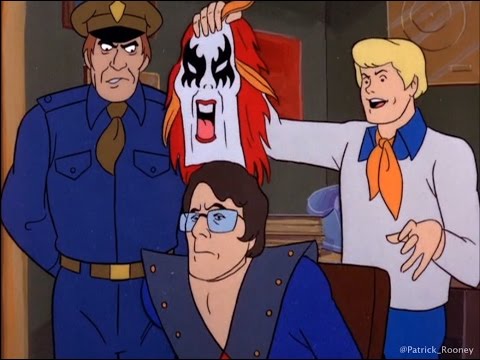
One of the critical things about the show for me was the fact that there was a rational explanation for the monsters. They were men in masks, special effects and projector tricks, or remote-controlled mechanical things.
And the way you overcame them and saved the day was by having Shaggy and Scooby act as bait, cause the traps to get sprung at the wrong time, and then fall on the villains, trapping them under the butt of the talking dog.
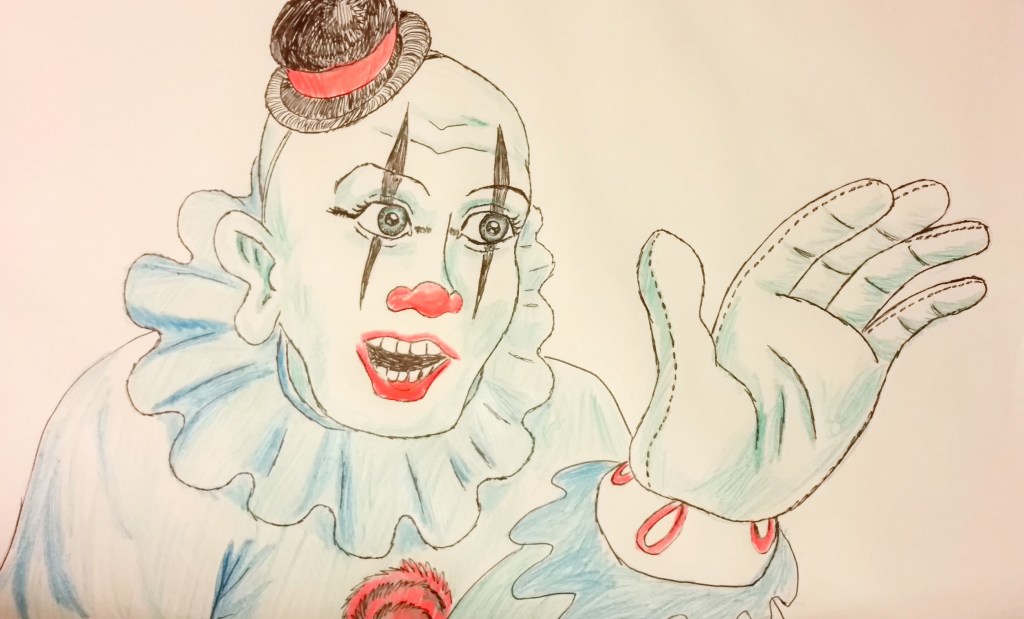
Villains and horror could be overcome by laughing at them. They were more likely to be clowns than carnivores. And even if they were carnivores, the teeth were not real.
There was a universal truth in that. Danger and horror and fear were easier to handle when you could laugh in spite of those things.
And to top it all off, those meddling kids and their stupid talking dog were with me my whole life. Those cartoons got remade and spun off so many times that my kids learned to love them as much as I did. And those four meddling kids and that talking dog are still making new stories even now.
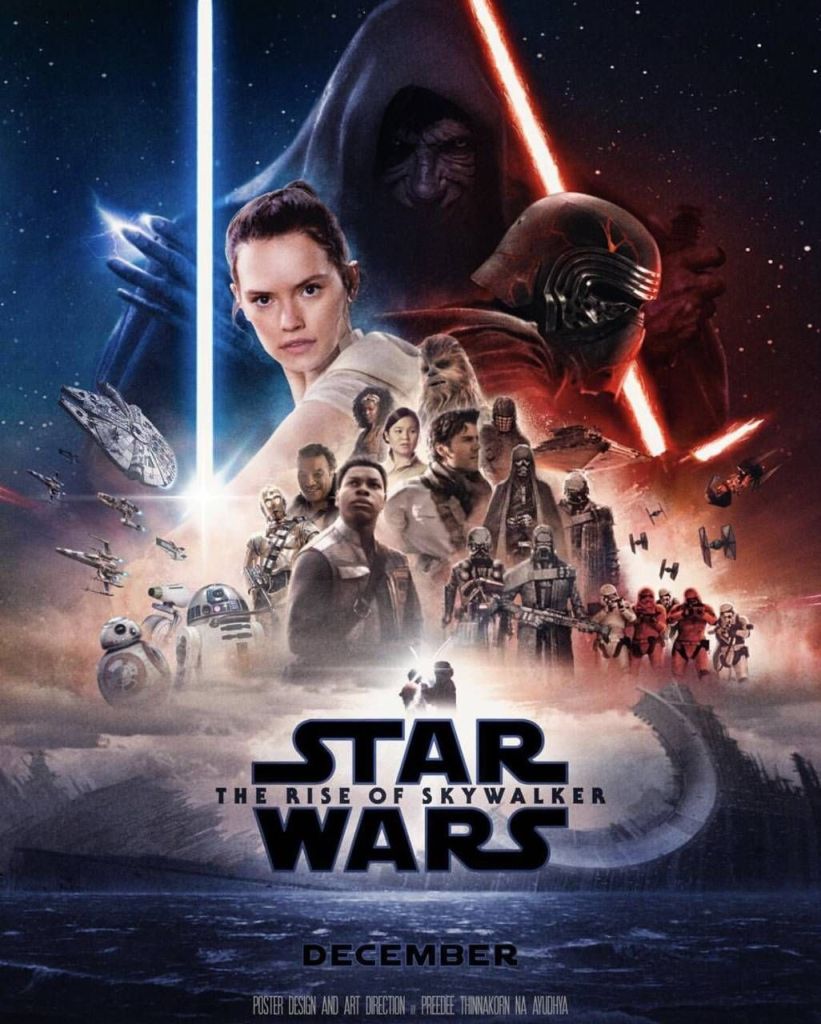
On this Star Wars Day (May the 4th be with you) I am a little perturbed that practically everything, including Star Wars, is on the fritz. My computer is on the fritz. It starts all sorts of programs and actions within programs without being prompted by a keystroke or click command. The picture I posted at the start of this essay had to be downloaded from Google twice because it downloaded the wrong selection for no reason. And then it had to be pasted into the block editor twice also because the first attempt failed to finish the transition.
Of course, for something “to be on the fritz” and be well understood, it would help if we knew the origin of the phrase. Unhelpfully, no one really knows how it was initially used. Was it a reference to something about Germans? “Fritz” was a common nickname for German soldiers in two world wars. But probably not. Germans are not always haywire.
I think it far more likely that the word is an onomatopoeia for the sound a radio makes when there is a short, it sparks, and then malfunctions, if not catches fire. That seems to me to be a much more fitting image to use for the way my computer works today with its faulty keyboard, and/or mouse pad. It also is a fitting definition for the condition our economy is in due to the pandemic.
But on this Star Wars Day, it is the most apt phrase to describe what has been done to the Star Wars Saga. Don’t get me wrong. I am an uncritical critic. I loved the Rise of Skywalker in the movie theater. The images and the action were great. But the writer in me did not appreciate how wires were crossed in the making of the latest trilogy. The resulting dumpster fire, while colorful and visually entertaining, caused the power of the story to be definitely “on the fritz”.
Character arcs were ruined. Kylo Ren went from evil secondary antagonist to big bad to heroic turn-around to… what? His character dies and disappears at the end. Why? How did he complete his arc?
Rey went from child of nobody to Jedi to possible Sith Lord to…? Where does she end up? Palpatine tells her if she kills him, his spirit will infuse her with Super Dark Side Power. She kills him anyway? Will she now try to destroy the universe in the next trilogy?
And what did Finn do besides ride a horse-thing in space?
But I’m not complaining. Even if the pandemic is going to kill me shortly, I have had a good life. I have seen all the Marvel movies so far. I taught English to well over 2,000 kids in a thirty-year teaching career. I wrote fifteen novels that I published. And no amount of sparks, fire, or fritzing is capable of changing all of that.
Farmer, truck driver, registered nurse, school teacher, and many more are professionals who deserve more respect and compensation than they ever get. The pandemic has in many ways underlined and reintroduced us to the truth of their value. Jobs like these are not often recognized as being life-or-death in nature the way fireman, policeman, doctor, and paramedic obviously are, but we are in a situation now that proves that they are.
Teachers are much more than mere babysitters. You can tell by figuring out how much you would actually owe them if you paid them the same amount per child and per hour as you do a babysitter. Some teachers have to supervise thirty children per hour for six hours per day. That works out to 180 kids per day. If you paid them only two dollars an hour for each kid, a price no competent babysitter would ever work for, they would still bring home $66,000 per year, a wage that would top any yearly wage I ever brought home by more than $10,000. And a teacher does a lot more than manage classrooms for six hours a day. I would list all those other things in this essay, but it would come out far too long for the purpose of this one paragraph.
As a teacher working with kids under the age of 18, and as a writer of YA novels for kids under 18, I have come to see the hard truth of one stark and horrifying fact. All kids face hard things in their life. Some have divorced parents. Some are abused, sexually, emotionally, psychologically, physically, or any combination, including all of those. Many kids have substance- abuse problems. Many kids battle crippling depression. Depression even kills far too many of them. Most kids live in fear of school shooters, gang shootings, bullying, beatings, and other kinds of violence that specifically targets them. I remember one boy who attended my classes while living out of a paper bag under a bridge. And despite all these terrible things, most kids turn out good and kind and capable of loving others. In fact, the hard truth is, they turn out good BECAUSE of what they have lived through. You will find this same correlation throughout human history. In truth, most of the heinous and evil villains in history come from families where they were mostly protected from hardships. They often turn to evil because the first time they face these things after having been coddled, spoiled, and protected, they are not prepared to deal with them and see themselves only as a victim, no matter how badly they react.
In this essay I have probably not told you anything you don’t already know. In fact, you probably ;agree with most of it. But times like these make you think about what hard lessons you have learned because you have endured hard things.
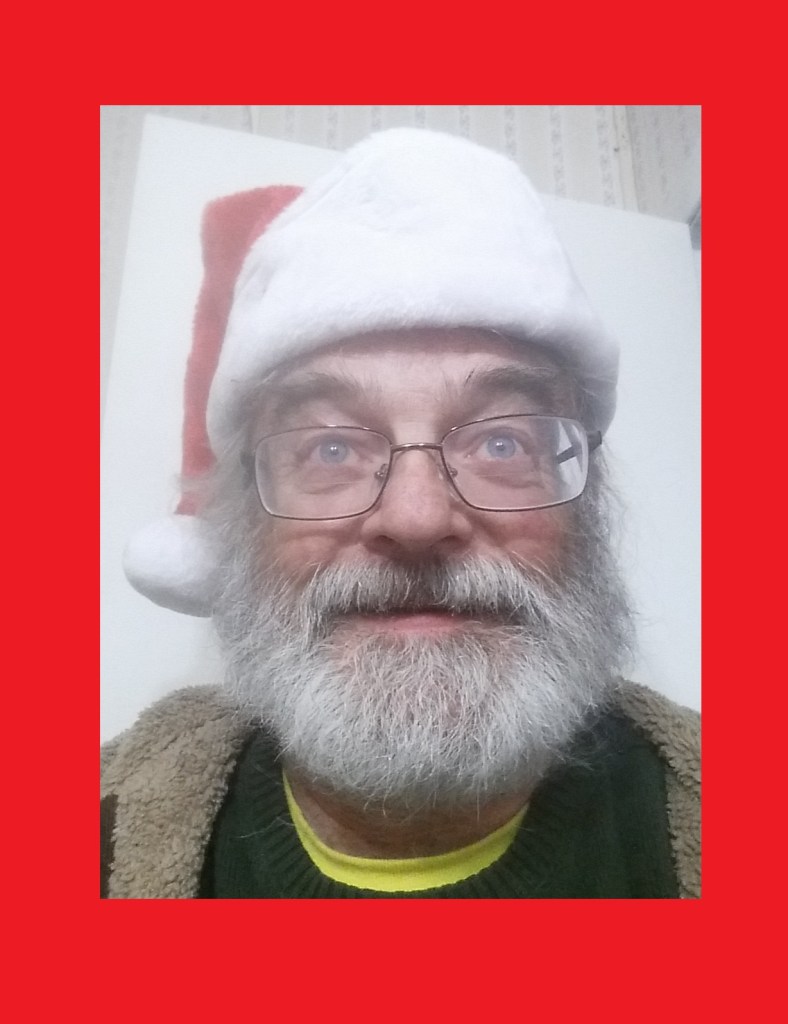
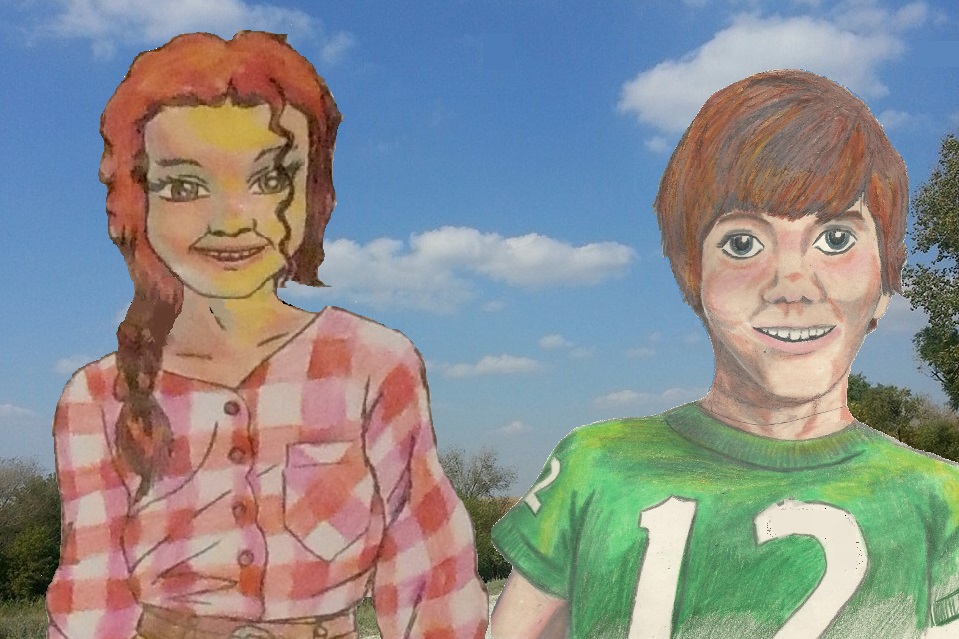
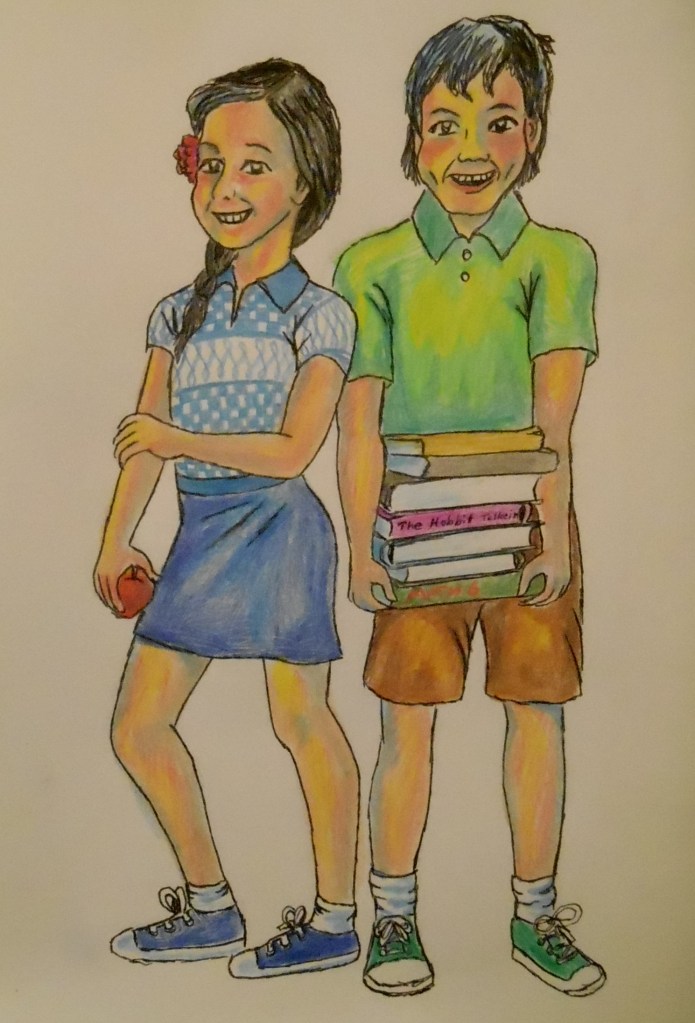
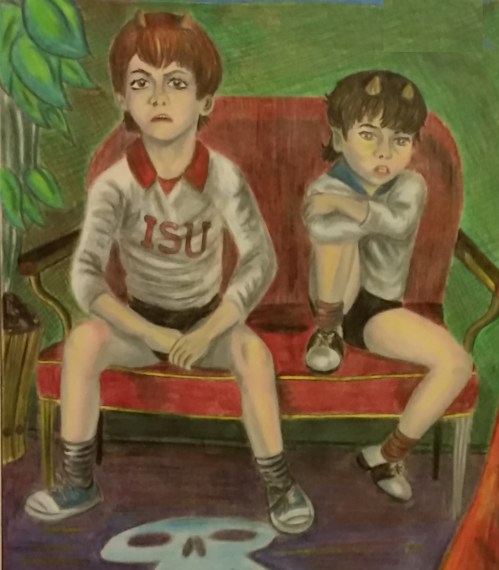
These are not my two sons. The picture was drawn fifteen and ninteen years before they were born. Yet they were my two sons in the cartoon story this picture was lifted from.
Am I literally able to fortell the future? Of course not. But as an overly-sensitive artistical type one could argue that there is evidence in my art and writings that my reality now was at least partially embedded in my consciousness many years ago.
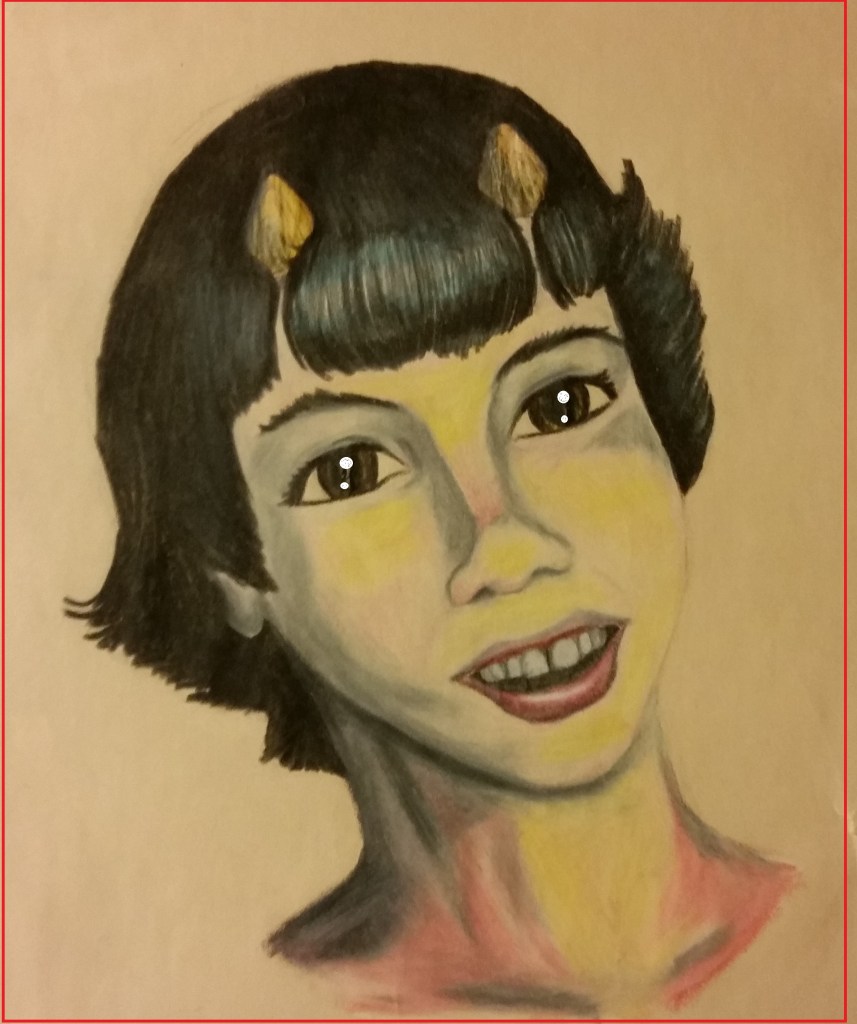
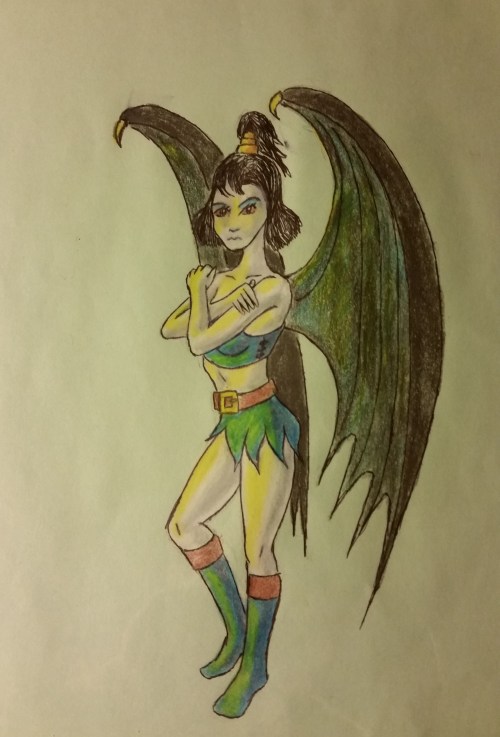
Estellia the Demoness
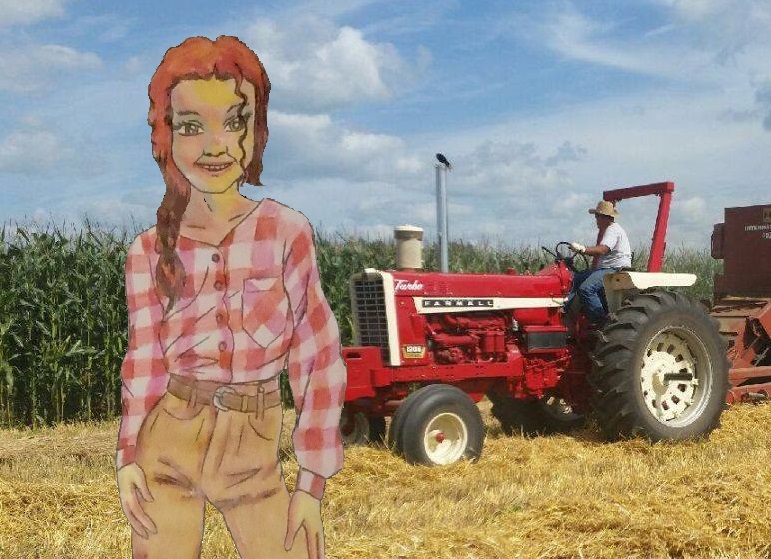
And truthfully, looking at the truth of things based on empirical evidence is what this point-of-view post is all about. We cannot always rely on the traditional concepts of good and evil as they have been taught to us. Sometimes you have to look at how the evidence stacks up properly, and just plain intuit a new way of seeing the whole picture. Yes, this is a portrait of a fifteen-year-old former student of mine. And she was definitely evil and difficult to deal with. But she went into nursing after high school. She works in the ER where her decisive ways and ferocious insistence on having things work out in her favor because that’s the way the established rules say it must be done turn into positive qualities that are probably saving lives in a Texas hospital as we speak. It is all in how you perceive the truth of a situation and then apply it.
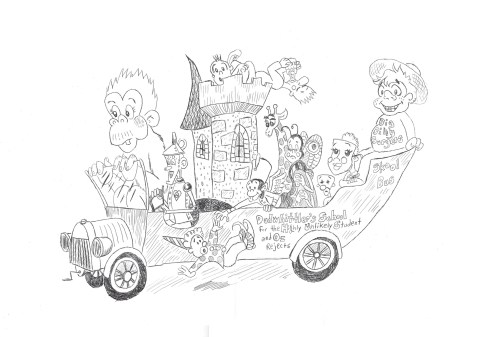
Comedy, of course, depends greatly on rearranging your point of view. If you are going to make a joke about something, you have to re-mix and un-match the details in ways that still make a sort of sense to the reader or the hearer of the joke. I have taught at schools like Dudwhittler’s. If you are a teacher, you recognize that that school bus carries not only that which is funny, but also that which is very true. The teacher driving the bus is a tin man who easily rusts and cries too much, thus rusting further, but you can see he has earned his heart, even if he has to drive the bus on top of teaching so he will have enough money to buy food.
But probably the most anticipated thing from a new perspective that you were expecting since reading the title is a new perspective on the Coronavirus shut-down and economic depression. That alternative take is simply this… the pandemic, though extremely hard and painful, is a good thing that happened at the right time.
I am willing to say this, even though the way the virus has been mishandled in this country is going to very likely be the death of me, because there are benefits that we simply don’t recognize without a thorough punch to the gut and another to loose teeth.
It is a good thing because it will make it harder for Herr Fuhrer Pumpkinhead to win the next election, and he will probably take a number of corrupt Republicans down to the bottom of the sea with him.
It is a good thing because it is proving to us that we can survive on less and still make our way out of the bad situation.
It is a good thing because kids get extra time off from school, and probably also the chance to spend more time with the people who really teach them things we need them to know… like parents, grandparents on Zoom, teachers who don’t fear distance-learning technology, and trolls on the internet (Yes, I know that last one is risky and mainly learning the hard way, but it is also true from before the virus hit).
It is a good thing because the air is cleaner. And we have proven that we can make radical adjustments when it is a matter of life and death. And the environmental crisis is actually a matter of life and death.
So, now I’ve had my twisted say about my pretzel-minded perspective. And so you can now trash it, or possibly learn to like pretzels.
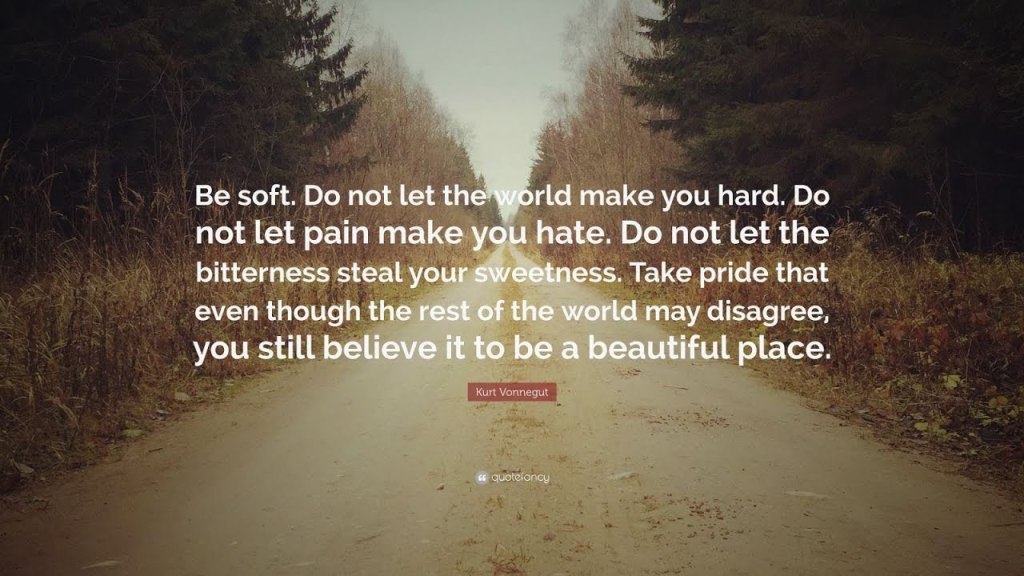
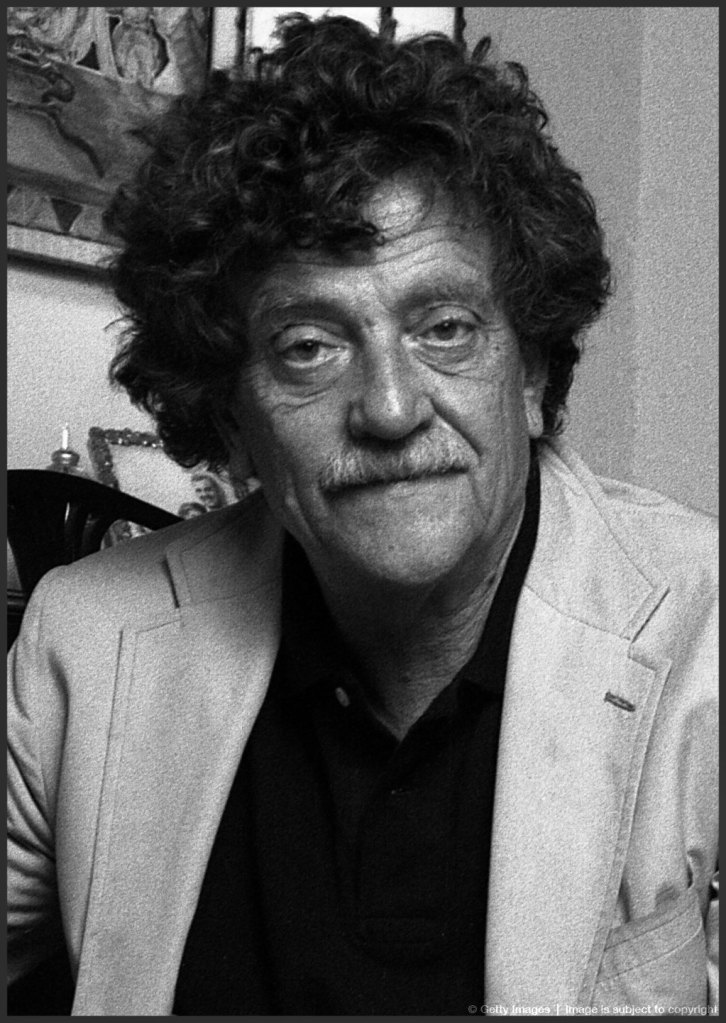
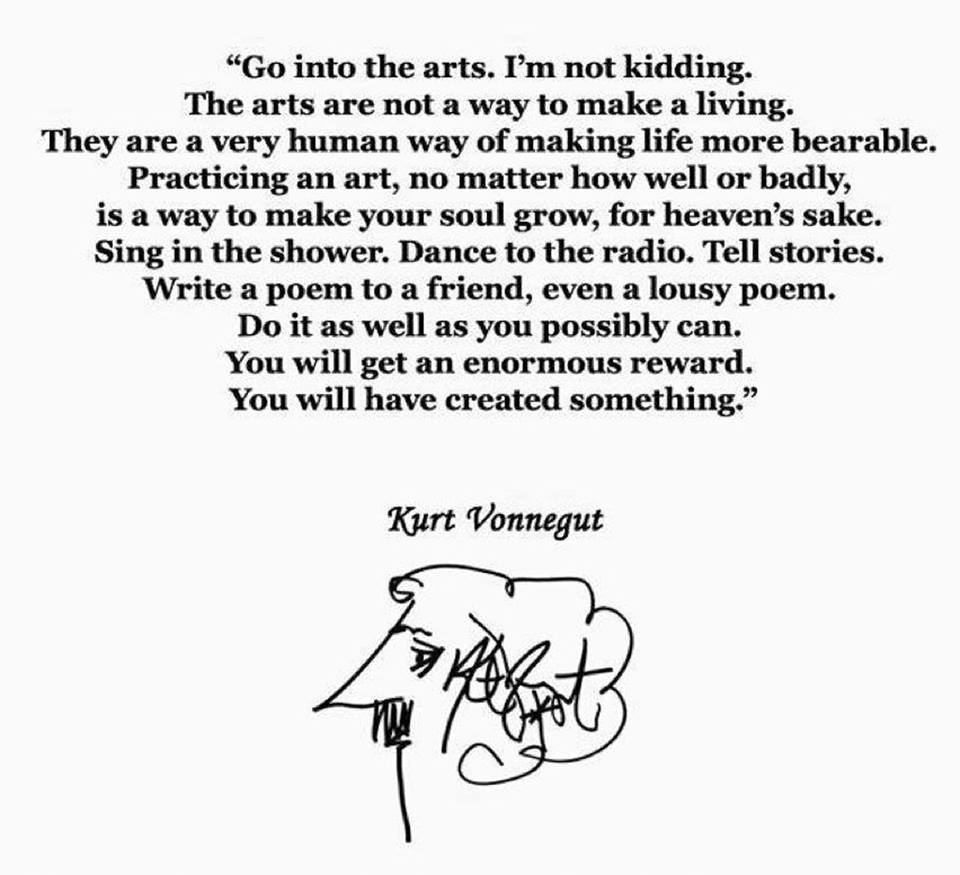
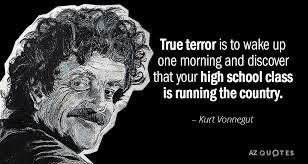
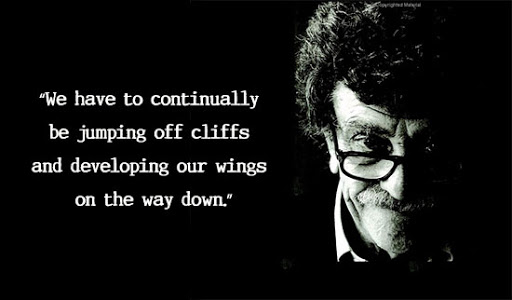
My experience of the works of Kurt Vonnegut is limited to the reading of three books; Cat’s Cradle, Breakfast of Champions, and Slaughterhouse Five. But it was enough to make me love him and use him as a shaper of my soul.
I deeply apologize for the fact that even though he only wrote 14 books and a bunch of short stories, I have not read everything I could get my hands on by Kurt. Three novels and one short story (Harrison Bergeron) is not really enough to compare to the many, many things that I have read by Mark Twain, Terry Pratchett, Louis L’Amour, and Michael Crichton. I can’t begin to count how many books of each of those four I have read and reread. But it is enough that I read those three novels and have a lifelong regret of never buying and reading Slapstick when I had the chance. Vonnegut writes black humor. The ideas are painful, and burn away flesh from your personal body of being. And at the same time, you cannot help but laugh at the pure, clean, horrifying truths his ridiculous stories reveal.
If, in the course of telling a story, you can put the sublime, the ridiculous, and the horrendous side by side, and make the reader see how they actually fit together, then you can write like Vonnegut.
Let me give you three quick and dirty book reports of the Vonnegut I have read in the order I have read them;
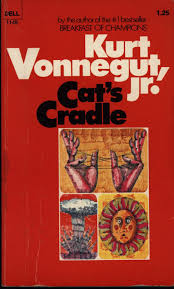
I read Cat’s Cradle in college. I was young and idealistic at the time, foolishly convinced I could be a great writer and cartoonist who could use my work to change mankind for the better.
In the book, Dr. Felix Hoenikker (a fictionalized co-creator of the atomic bomb) is obsessively re-stacking cannonballs in the town square in pursuit of a new way to align water molecules that will yield ice that does not melt at room temperature. Much as he did with the A-bomb, Hoenikker invents a world-ending science-thing without any thought for the possible consequences. The narrator of the novel is trying to write a humanizing biography of the scientist, and comes to observe the inevitable destruction of the whole world when the oceans freeze into Ice-9, the un-meltable ice crystal. Before the world ends, the narrator spends time on the fictional Carribean island of San Lorenzo where he learns the fictional religion known as Bokononism, and learns to make love to a beautiful woman by pressing bare feet together sole to sole. It is a nihilistic picture of what humans are really like more savagely bleak than any portrayal Monte Python’s Flying Circus ever did on TV.
Needless to say, my ideals were eventually shattered and my faith in the world shaken.
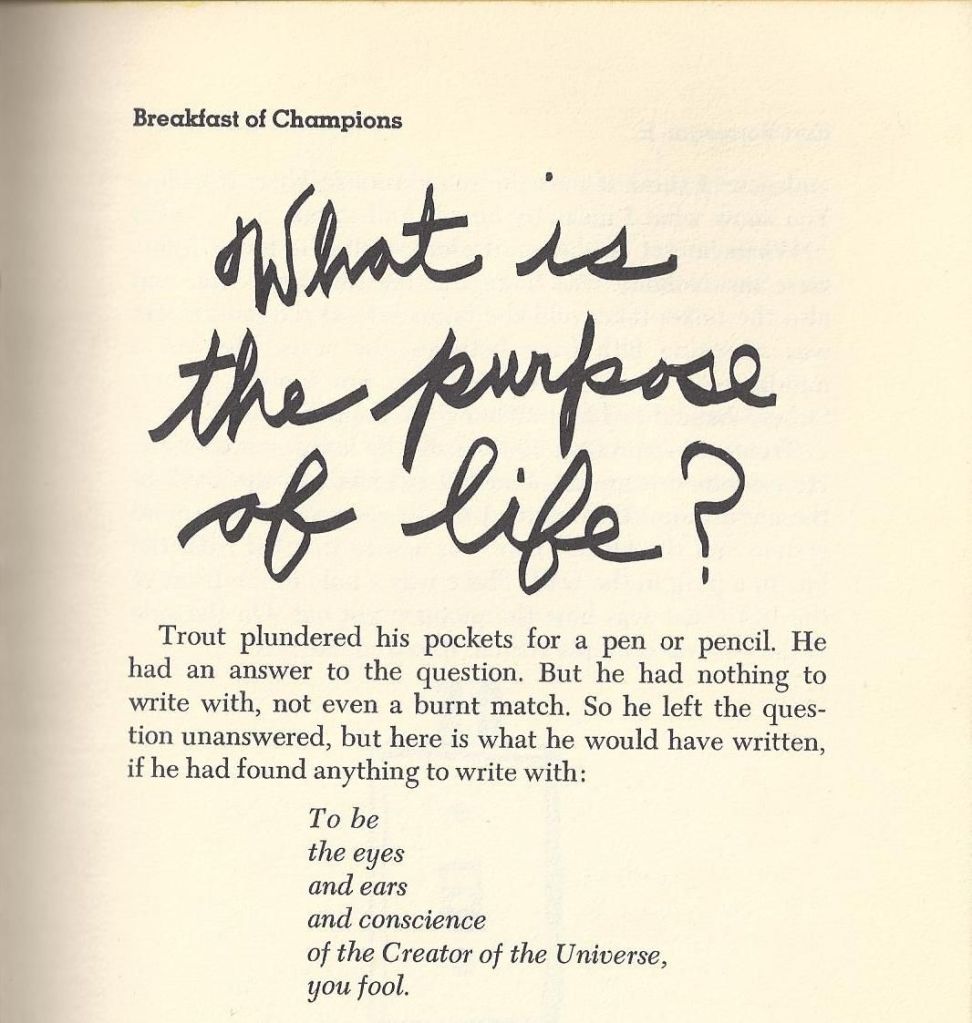
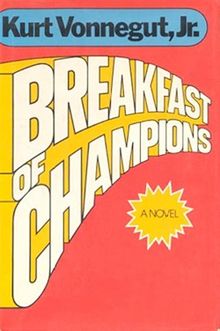
I read Breakfast of Champions after I had been teaching long enough to buy my own house, be newly married, and a father to one son. It was probably the worst time of life to be reading a book so cynical, yet true.
In this story, the author Kilgore Trout, much published but mostly unknown, is headed to Midland City to deliver a keynote address at an arts festival. Dwayne Hoover is a wealthy business man who owns a lot of Midland City real-estate. Trout gives Hoover a book (supposedly a message from the creator of the universe) to read that suggests that all people (except for the reader of the book… meaning Hoover) are machines with no free will. Hoover takes the message to heart and tries to set the machines free by breaking them, beating up his son, his lover, and nine other people before being taken into custody.
The book contains devastating themes of suicide, free will, and social and economic cruelty. It makes you sincerely reflect on your own cog-in-the-machine reality.
Slaughterhouse Five is a book I bought and read when I missed my chance to buy Slapstick and needed something to take home from HalfPrice Books to make me feel better about what I missed. (Of the five books I had intended to buy that day, none were still on the shelves in spite of the fact that they had been there the week before.) It was fortuitous. This proved to be the best novel I had ever read by Vonnegut.
Like most of his work, the story of Billy Pilgrim is a fractured mosaic of small story pieces not presented in chronological order. It details Billy’s safe, ordinary marriage to a wife who gives him two children, but it is ironically cluttered with death, accidents, being stalked by an assassin, and being kidnapped by aliens. It also details his experiences in World War II where he is captured by the Germans, held prisoner in Dresden, kept in an underground slaughterhouse, and ironically survives the fire-bombing of Dresden by the Allies. Further, it details his time as a zoo exhibit on the alien planet of Tralfamadore.
It explores the themes of depression, post-traumatic-stress disorder, and anti-war sentiment. Vonnegut himself was a prisoner of war in Dresden during the fire-bombing, so real-life experiences fill the book with gravitas that it might not otherwise possess. Whether the author was ever kidnapped by aliens or not, I cannot say.
But Kurt Vonnegut’s desire to be a writer and portray himself as a writer in the character of Kilgore Trout, and even as himself in his work, has an awful lot to do with my desire to be a writer myself. Dark, pithy wisdom is his thing. But that wisdom, having been wrung from the darkness is all the more brightly lit because of that wringing. It is hard to read, but not hard to love.













 Catch a Falling Star
Texas-Summer Hot
I am used to complaining about the heat. More than one summer I have endured 100 days of 100-degree-plus heat. When I lived in deep South Texas in the town of Cotulla, one summer we averaged 104 degrees.
The heat sits on you like a wool blanket that presses you down towards the surface of the frying pan. You almost wish you could set yourself completely free of clothing so that you could be as cool as possible, and at the same time get an all-over tan. (Or an all-over sunburn as the case always is with me.)
But this, of course, is Bible-belt Texas where the Baptists threaten you with eternal Hellfire if you even think about being naked.
And the heat makes for oppressive summer laziness, where you can’t seem to do anything but sit and sweat. Of course, when I was a kid, summer days were for chasing leopard frogs down on the banks of the Iowa river. Or watching the butterflies in Mrs. Stokes’ flower bed where petunias and daisies, and black-eyed Susans seemed to bloom all summer long. Or explore the Bingham Park Woods on my trusty-rusty bicycle, biking along the forest foot-paths. Nowadays, kids can sit in an airconditioned room and play video games from the time they wake up in the afternoon until four o’clock the next morning.
This summer hasn’t been quite as hot as some in the recent past. There has been rain off and on. But it is even more oppressive with the pandemic going on. And the George Floyd protests raging on as much here in Dallas as in any city. The heat and diabetes and poverty and the inability to get anything done that actually feels like progress have me depressed and moping and completely stifled… and using the word “and” too often.
It is even hard to write a blog post. My energy is gone. All I have done is dither on the WordPress site. But at least I have ticked off one more tick-box on the to-do list of a hot Texas day.
Leave a comment
Filed under artwork, battling depression, commentary, feeling sorry for myself, humor, Paffooney, Texas