Things are not what they seem. Life throws curve balls across the plate ninety percent of the time. Fastballs are rare. And fastballs you can hit are even rarer. But if Life is pitching, who is the batter? Does it change the metaphor and who you are rooting for if the batter is Death?
If you think this means that I am planning on dying because of the Coronavirus pandemic, well, you would be right. Of course, I am always planning for death with every dark thing that bounces down the hopscotch squares of the immediate future. That’s what it means to be a pessimist. No matter what bad thing we are talking about, it will not take ME by surprise. And if I think everything is going to kill me, sooner or later I have to be right… though, hopefully, much later.
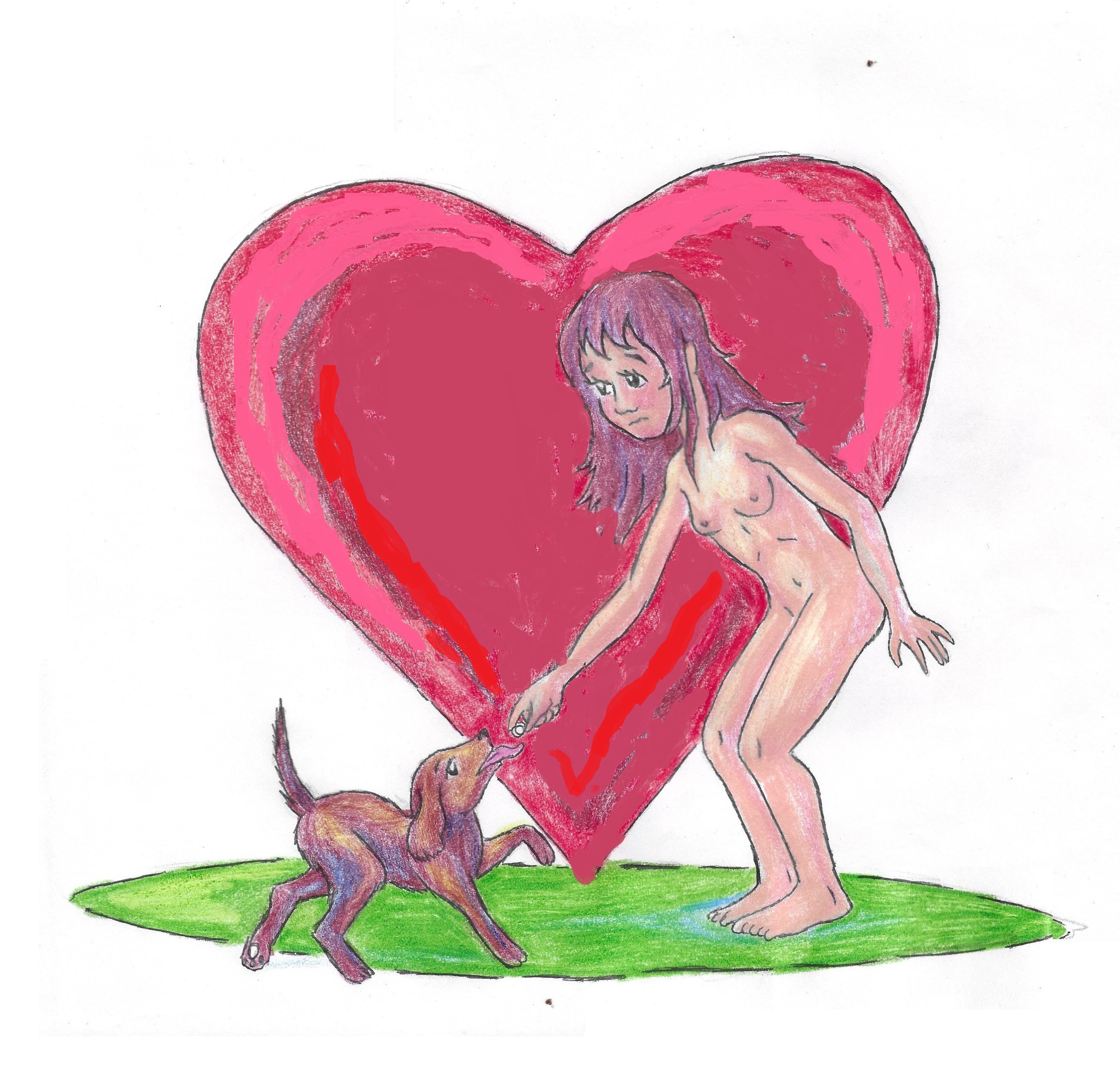
I keep seeing things that aren’t there. Childlike faces keep looking at me from the top of the stairs, but when I focus my attention there, they disappear. And I know there are no children in the house anymore since my youngest is now legally an adult. And the chimpanzee that peeked at me from behind the couch in the family room was definitely not there. I swear, it looked exactly like Roddy McDowell from the Planet of the Apes movies, whom I know for a fact to be deceased. So, obviously, it has to be Roddy McDowell’s monkey-ghost. I believe I may have mentioned before that there is a ghost dog in our house. I often catch glimpses of its tail rounding the corner ahead of me when my own dog is definitely behind me. And I am sure I shared the facts before that Parkinson’s sufferers often see partial visions of people and faces (and apparently dogs) that aren’t really there, and that my father suffers from Parkinson’s Disease. So, obviously it is my father and not me that is seeing these things… He’s just using my eyeballs to do it with.
But… and this is absolutely true even if it starts with a butt… the best way to deal with scary possibilities is to laugh at them. Jokes, satire, mockery, and ludicrous hilarity expressed in big words are the proper things to use against the fearful things you cannot change. So, this essay is nothing but a can of mixed nutz. Nutzy nuts. And fortunately, peanut allergies are one incurable and possibly fatal disease I don’t have. One of the few.
Angelfish are like the kings of the aquarium. They swim about in slow, stately fashion.
As a teenager I was very much into raising tropical fish in an aquarium. Having fish to watch and fuss around with is a healthy, mind-calming hobby that literally helps you learn about environmental issues. Keeping an aquarium is all about keeping fundamental forces of biology in relative balance.
The lovely pearl gourami is a fascinating finny friend that fills the tank with beauty and color.
Some fish are there just for beauty. The angelfish and gouramis I have pictured already are mainly that. Though you could also say that kissing fish, the pink kissing gouramis, also provide comic relief.
Kissing gouramis actually perform the kissing ritual in the tank, and I really don’t know why, but I suspect it is about courting and sex.
Goldfish are the pigs of the fresh-water tank. They are slow and rather stupid, and they eat massive quantities of fish food, so they also poop excessively.
Keeping an aquarium is a balancing act.
Albino Angelfish
Neon Tetra
.
.
.
.
a fancy Veiltail Guppy
If you put the wrong fish together, problems ensue. Fully grown angelfish will eat expensive guppies and neon tetras. Goldfish waste so much fish food and make so much fish poop that the tank has to be cleaned nearly every day to prevent it becoming a befouled cesspool of toxic filth and bacteria. Unless…
Cory Catfish
You employ bottom-feeders like the corydorus catfish or the red-tailed black shark (actually a loach, not a shark) to feed on the waste and be the janitor-fish.
A carefully balanced tank is a living work of art that grows and changes and progresses…
Red-Tailed Black Shark
…Until something goes wrong. Every fish tank I ever put together eventually had a crisis that made the whole ecology crash. All the fish would die and the tank would smell bad. This would usually happen when I wasn’t there to tend it as needed, when I was away at college or on vacation. Water has to be refreshed. The water can never be allowed to cool lower than seventy degrees, even in winter. The air pump can’t break down and stop aerating the aquarium. The filter has to be clean and unclogged. And disease has to be treated.
In a way, our entire planet earth is like that too. Of course, if it was all sealed under glass, it would be a terrarium, not an aquarium. But we can identify the same sorts of threats to the ecosystem of the terrarium we live in as would be found in a tropical fish tank. Donald Trump and his Republican fat-cats are the goldfish. Global warming threatens the air and water in the tank. An asteroid could break the glass and spill the contents out. So many things could crash our carefully balanced fish tank. And there is an even greater environment out there beyond the edges of our little solar system. Does the title make sense now in a way it didn’t before? No? Oh, well, I tried.
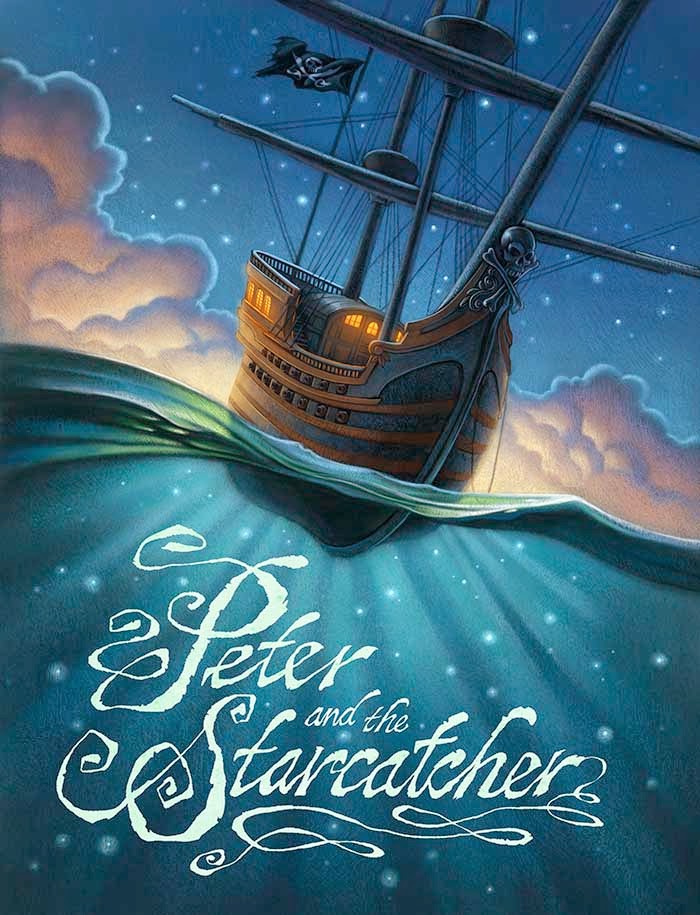
Yes, in some ways, I have Peter Pan syndrome. I have never truly grown up. But not in the ways that really matter in life.
As a writer of fiction, I put all my effort into writing young adult novels. My main characters are mostly children from roughly around eight years old to teens who are almost adults.
But it is not as G-rated as Nancy Drew. I have issues that creep in to become the monster under the bed. My childhood was not all naked innocence and sunshine.
Don’t get me wrong. I had wonderful parents. And wonderful grandparents. And the little town of Rowan, Iowa becomes the town of Norwall in all my Earthbound fiction. It was a very magical, if boring, place to grow up. I lived in town, but my uncles and grandparents lived on working farms. I knew farm life. I knew how you fed animals, trained animals, and helped them reproduce. I knew that farm animals die. And, sometimes, people die too. Even people who are important to you and you depend on.
And at the ripe old age of ten, I was sexually assaulted by an older boy. It is hard to talk about that even now, 52 years later. It wasn’t so much a sex act that I was forced to commit. It was more of a sexual-torture thing. He took his pleasure from twisting my private parts, making me hurt intensely, telling me all the while not to scream or call out for help. I think I even passed out at one point. There was no pleasure in it for me in any way. In fact, once he let me go with more threats, I promptly turned it into a repressed memory for twelve years. It turned me from an outgoing, leader-of-the-gang type kid into a miserable wallflower. It made me contemplate suicide as a teen. It led to some self harm that my parents never actually figured out, burning my lower back against the heater grate and making small burn scars on my arms and legs. It kept me from falling in love with a girl until my thirties. And it made me turn myself inside out through drawings, cartoons, and story-telling.
The Baby Werewolf
Some of the key stories I have turned into novels were created because of what happened to me, the horror at the center of my childhood. The monster in my novel, The Baby Werewolf, and the serial killer in Fools and Their Toys were both inspired by him, were both a reaction to what he did to me.
And do you know what he means to me now? I have forgiven him. He passed away a few years ago of a heart condition. I avoided him and his family from when it happened until now. I never told anyone what he did to me. I never sought any kind of revenge or justice for his act. To this day I still haven’t revealed his name to anyone, though I have been able to talk about it in this blog since he died. He has paid his price. The scales are balanced. I am healed. That is enough.
What he gave me, though, was a gift of purpose and an ability to fight the darkness with a strategy of sharing every tactic I have learned about defending myself from predators, depression, and crippling self-loathing in novel form. I shared those tactics as well during my years as a teacher and mentor to kids who had problems like mine for which my solutions sometimes also served as answers. I was able to put into thematic form the positive answers to the question every kid asks themselves somewhere along the road to adulthood, “Am I a monster because of what I have done and what has happened to me?”
The answer, of course, is, “No, I am not a monster.” But kids like me desperately need someone to tell them that and give them reasons why it is true. Fiction can do that. At least, I believe that it can.
And so, I write YA novels, novels for kids trying to become adults. And what good does that do if nobody ever reads my books? Or even this blog post which some of you who actually read my blog posts have probably given up on as too hard to read several paragraphs ago? It keeps me young. At 62 I still think like a twelve-year-old. Admittedly a wise-beyond-his-years twelve-year-old. I have never grown up in my mind where it counts. And maybe it even makes me able to fly like Peter Pan. But no jumping off roofs to find out for sure.
Concluding this meandering ridiculous rant about how you distill the meaning of your books into themes is no small task. My limiting goal was to identify one main theme for each of my books. It has to be limited because every well-written book has multiple themes of varying complexity and scope.
And then when you tie everything together as I have done with my Hometown Novels, there are themes that cross the borders from one book into the next. This essay will sum up by telling about the books I have written beyond the borders of my Hometown books.
The Wizard in his Keep
This book is unique in dozens of ways. It is an orphan-journey through a virtual-reality video game that you can actually live inside because of the full-body interface suits that get you into the game. It is science fiction because of the virtual-reality technology, but the competition within the game is set in a fantasy kingdom running on magic and super powers. And the plot is a parallel of Charles Dickens’s The Old Curiosity Shop.
This book is the conclusion to several character arcs that begin with the Hometown Novels’ very first book, Superchicken. One character’s life ends in death, but on his own terms. Another character finds the answers to his missing sister and the family she kept secret from him. And the orphans find a loving family that they never knew existed. So, one big theme is that; “You make your own happy endings by hard work, risk, and perseverance, not by magic or luck” But this is an overarching theme that covers more than one story in more than two or three other books.
The book also holds true to several other things that are true about my stories. It is a comedy with at least one character dying sometime before the story ends. It is surrealism, giving a rational grounding in realism to some rather fantastic things. And the characters who find success are empathetic types who realize that loving others is more important than loving ourselves.
A Field Guide to Fauns
An important facet of my novel-writing experience has come about through the general audience reception of my works. Specifically, nudists and naturists were attracted to my books through the nudist characters in my book Recipes for Gingerbread Children.
That is the reason this book, A Field Guide to Fauns even exists. I wrote it specifically for an audience of nudists, naturists, and people like me who have always been fascinated by nudism and were simply afraid to actually try it until we grew old, mature, and goofy enough not to care what other people think about me being a naked old man..
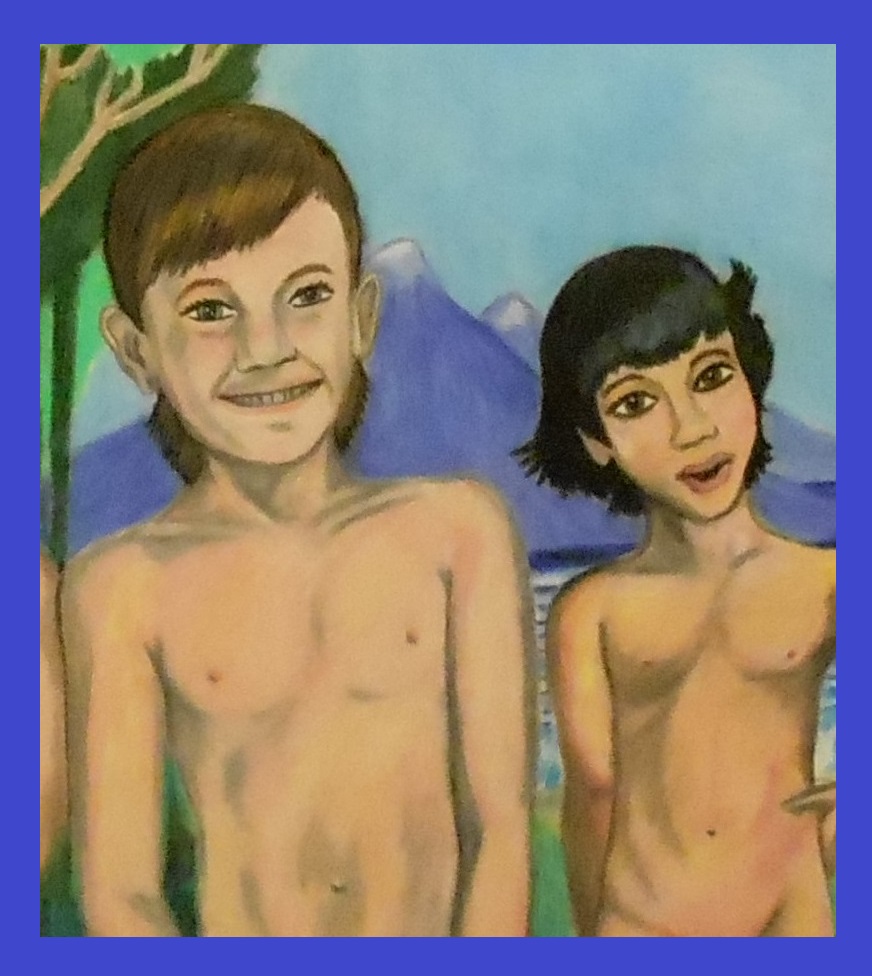
The book is about a boy named Devon who goes from a traumatic event that took him out of his divorced mother’s home and put him in his father’s house. But his father is remarried to a woman with twin daughters who are dedicated nudists, and live in a residence that is located in a South Texas nudist park. He has to recover from his trauma by becoming a nudist living a naked life himself. The theme is, “You can overcome childhood trauma if only you are open to being nakedly honest about yourself… especially being nakedly honest with yourself.”
Stardusters and Space Lizards
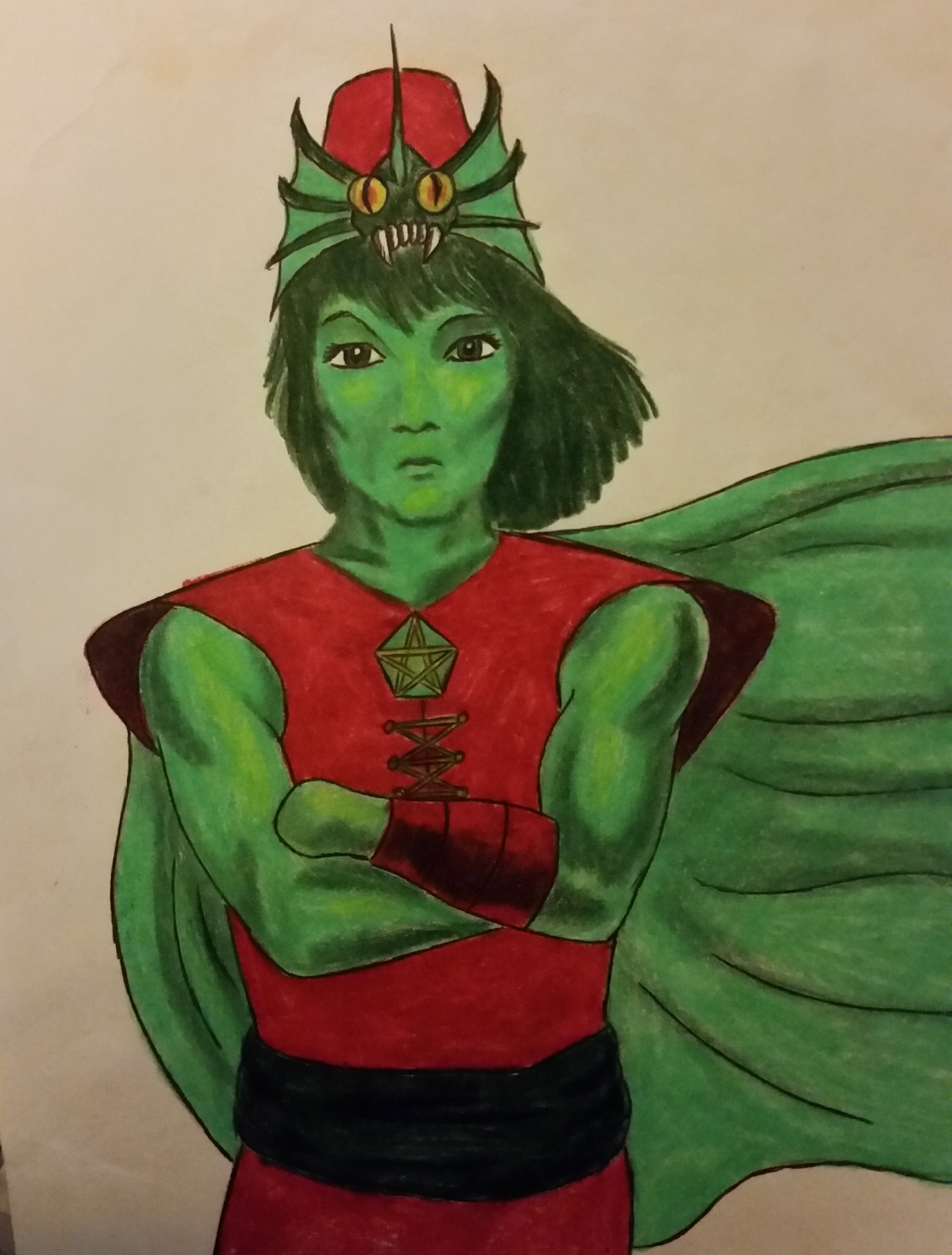
This story is one of the sequel messes written to go with Catch a Falling Star. It follows the alien characters and three of the human characters from that book out into the stars. It is basically an allegory for the climate-change crisis we face here on planet Earth. Besides the fact that this book offers the idea that inventive children can solve world-wide problems, and Texas politicians can be translated into lizard-people monsters who are actually to blame for everything, the theme of this book is really, “To solve ecological problems on a world-wide scale, we must first acknowledge that those problems are not caused by lack of understanding, but by the disregard for life that people have when they are motivated by personal gain, power, and reputation.”
Laughing Blue
This book is even harder to give a main theme to since it is a book of essays. Every entry, every single essay, has it’s own unique theme, ideally expressed in a topic sentence that states the theme.
But it is not impossible to find an over-arching theme. It is filled with short vignettes and stories about my childhood, my life as a teacher, my cartoons and bizarre sense of humor, my philosophical musings, and complaints about the things that have hurt me. It is largely autobiographical. And the main theme is basically, “When life gives you lemons, make a lemony joke of some sort because laughing is much better than crying and a better thing to do when you’re blue.”
I know, I know… purple paisley prose.
I am well aware that I have not put a theme to every single book I have written. But I think I have, in the course of 6 essays, done a fair job of puzzling together and proving my point that a novel, or even other kinds of books, need a coherent main theme, and the author should, hopefully, know what those themes are. So, the essay ends here. Mostly because I am old and cranky and tired of repeating myself endlessly.
My 1967 Captain Action Steve Canyon action figure.
I have always been a deeply devoted fan of the Sunday funnies. And one of the reasons I read the comics religiously was the work of Milt Caniff. His comic strips, Terry and the Pirates, Male Call, and Steve Canyon set a standard for the age of action comics and adventure strips.
I read his comics in the 1960’s and 1970’s and always it was Steve Canyon. But this, of course, was not his first strip. I would discover in my college years the wonders of Terry and the Pirates. When Caniff started the strip before World War II, he set it in China, but actually knew nothing about China. So he did research. He learned about people who became oriental hereditary pirate families and organizations. He learned to draw authentic Chinese settings. His comedy relief characters, Connie and the Big Stoop, were rather racist parodies of Chinamen and were among the reasons that the original strip had to mature into his later work in Steve Canyon. But perhaps the most enduring character from the strip was the mysterious pirate leader known as the Dragon Lady.
Steve Canyon is a fascinating study in the comic arts. When he left the Terry and the Pirates strip in 1946, it went on without him. It was owned by the Chicago Tribune-New York Daily News distribution syndicate, not Caniff himself. Steve Canyon would change that. He created it and owned it himself, making Caniff one of only two or three comics artists who actually owned their own creations. Canyon started out as a civilian pilot, but enlisted in the Air Force for the Korean War and would remain in the Air Force for the remainder of the strip. Some of the characters in the strip were based on real people. His long-time friend Charlie Russhon, a former photographer and Lieutenant in the Air Force who went on to be a technical adviser for James Bond films was the model for the character Charlie Vanilla, the man with the ice cream cone. Madame Lynx was based on the femme fatale spy character played by Illona Massey in the 1949 Marx Brothers’ movie Love Happy. Caniff designed Pipper the Piper after John Kennedy and Miss Mizzou after Marilyn Monroe.
I am not the only cartoonist who was taken with the work of Milt Caniff. The effects of his ground-breaking work can be seen to influence the works of comic artists like Jack Kirby, Bob Kane, John Romita Sr., and Doug Wildey. If you are anything like the comic book nut I am, than you are impressed by that list, even more so if I listed everyone he influenced. Milt Caniff was a cartoonists’ cartoonist. He was one of the founders of the National Cartoonists’ Society and served two terms as its president in 1948 and 1949. He is also a member of the Will Eisner Comic Book Hall of Fame.
Comic book artwork grabs me constantly and makes me wonder about the lives behind the pen and ink. Artists basically draw themselves. Whether you are drawing Tarzan, Buck Rogers, or Flash Gordon… when you draw them, you are drawing yourself. My first encounter with Gray Morrow was when he drew Orion in Heavy Metal Magazine (the English version of the French Metal Hurlant).
He was capable of drawing both the grotesque and the beautiful. Violent action juxtaposed with soft and romantic moments filled with subtle colors and complex emotion. I began thinking that Gray Morrow must be a complex and interesting human being. I was soon to discover his other selves. He was the artist behind the Buck Rogers strip starting in 1979. He and Marvel writer Roy Thomas co-created the muck monster Man-Thing.
He also worked on Tarzan, Flash Gordon, and The Illustrated Roger Zelazny. Unfortunately he died in 2001 at age 67. Luckily an artist puts himself into his work, and for that reason we still have Gray Morrow with us. It is a kind of immortality.
This cover from Monsters Unleashed gives you an idea of how well Gray Morrow could draw.
It is, of course, one of the most powerful, masterful, and best-known pieces of music ever written.
Mozart completed the “little serenade” in Vienna in 1787, but it wasn’t published until 1827, long after Mozart’s untimely death.
The Serenade is incorrectly translated into English as “A Little Night Music”. But this is and always has been the way I prefer to think of it. A creation of Mozart written shortly before he hopped aboard the ferryman’s boat and rode off into the eternal night. It is the artifact that proves the art of the master who even has the word “art” as a part of his name. A little music to play on after the master is gone to prove his universal connection to the great silent symphony that is everything in the universe singing silently together.
It is basically what I myself am laboring now to do. I have been dancing along the edge of the abyss of poverty, suffering, and death since I left my teaching job in 2014. I will soon be taking my own trip into night aboard the ferryman’s dreaded boat. And I feel the need to put my own art out there in novel and cartoon form before that happens.
I am not saying that I am a master on the level of a Mozart. My name is not Mickart. But I do have a “key’ in the name Mickey. And it will hopefully unlock something worthwhile for my family and all those I loved and leave behind me. And hopefully, it will provide a little night music to help soothe the next in line behind me at the ferryman’s dock.
Art on the bedroom wall, with Christmas lights being used as a night light.
Talking to a school administrator the other day about the challenges my children and I have been facing in the last year, I had one of those experiences where you get a look at your own life through someone else’s eyes. “Wow, you have really been on a difficult journey,” he said. I just nodded in response. Financial difficulties, health problems, dealing with depression… life has been tough. But you get through things like that by being centered. Meditation tricks. Things you can do to smooth out the wrinkles and keep moving forward.
I always return in the theater of my mind to a moment in childhood where I learned a critical lesson. My life has been one of learning how to build rather than destroy. It has been about creating, not criticizing.
Electric lights have come to Toonerville, helping to light the darkness.
When I was a boy, I was a serious butterfly hunter. It started when Uncle Don gave me a dead cecropia moth that he had found in the Rowan grain elevator. It was big and beautiful and perfectly preserved. Shortly thereafter, I located another cecropia in the garage behind the house, a building that had once been a wagon shed complete with horse stalls and a hay loft. I tried to catch it with my bare hands. And by the time I had hold of it, the powder on its wings was mostly gone. The wings were broken in a couple of places, and the poor bug was ruined in terms of starting a butterfly collection.
A cecropia moth
Undeterred by tragedy, I got books about butterfly collecting at the Rowan Public Library and began teaching myself how to bug hunt. I learned where to find them, and how to net them, and how to kill and mount them.
OLYMPUS DIGITAL CAMERA
I discovered that my grandfather’s horse pasture had thistle patches which were natural feeding grounds for red admiral butterflies (pictured top left) and painted lady butterflies (top right). But if you wanted to catch the rarer mourning cloak butterfly (bottom picture), you had to stake out apple trees, particularly at apple blossom time, though I caught one on the ripening apples too.
But my greatest challenge as a butterfly hunter was the tiger swallowtail butterfly. They are rare. They are tricky. And one summer I dueled with one, trying with all my might to catch him. He was in my own back yard the first time I saw him. I ran to get the butterfly net, and by the time I got back, he was flitting high in the trees out of reach. I must’ve watched him for half an hour before I finally lost sight of him. About five other times I had encounters with him in the yard or in the neighborhood. I learned the hard way that some butterflies are acrobatic flyers and can actually maneuver to avoid being caught. He frustrated me.
The tiger swallowtail was the butterfly that completed my collection, and it was finished when one of my cousins caught one and gave it to me because she knew I collected them.
But then, one day, while I was sitting on a blanket under a maple tree in the back yard with my notebooks open, writing something that I no longer even recall what I wrote, the backyard tiger swallowtail visited me again. In fact, he landed on the back of my hand. I dropped the pencil I was writing with, and slowly, carefully, I turned my hand over underneath him so that he was sitting on my palm.
I could’ve easily closed my hand upon him and captured him. But I learned the lesson long before from the cecropia that catching a butterfly by hand would destroy its delicate beauty. I would knock all the yellow and black powder off his exquisite wings. I could not catch him. But I could close my hand and crush him. I would be victorious after a summer-long losing battle.
But that moment brought an end to my butterfly hunting. I let him flutter away with the August breeze. I did not crush the butterfly. It was then that I realized what beauty there was in the world, and how fragile that beauty could be. I could not keep it alive forever. But it lasted a little big longer because I chose to let it.
So, here is the lesson that keeps me whole. Even though I had the power, I did not crush the butterfly.
Yes, I am a coot. I became a coot in 2014 when I retired. I have the hair in the ears to prove it. I sometimes forget to wear pants. The dog is learning to hide from me on days when my arthritis makes me cranky.
So I am a practicer of the ancient art of being a cranky old coot. I have opinions. I share them with others foolishly. And I am summarily told to, “Shut up, you danged old coot!” And, of course, I don’t shut up because that would be a violation of number five in the by-laws of cootism. Obnoxiousness is our only reason for still being alive.
Lately, my group of coots on Facebook (who call themselves a “pack” like wolves, but, in truth, a group of coots is called an “idiocy”) are talking about politics… very loudly salted with firmly held opinions, beliefs, and bad words in several languages. I mean, it’s texting each other on memes we disagree about, but we do it LOUDLY, like that, in all caps. We also do it in such an infuriating manner because, if no one ever bothers to tell us to “Shut the hell up!” we will begin to suspect we have actually died and gone to purgatory where we are still being obnoxious, but nobody knows we are doing it. That is rubbing coot fur in the wrong direction.
The radical right (otherwise known as coot paradise) have been cooting up a storm about school shootings and gun control of late. They have more or less turned their ire on me because, knowing I was a school teacher, they have seized on the Coot in Chief’s notion of arming teachers to protect schools. Obviously a majority of old coots agree that requiring a few “volunteer” teachers to conceal carry and learn how to handle a school shooter crisis situation with a gun instead of the way teachers are actually trained and practiced on handling such a situation, is the only economical way to defend schools from crazed lunatics with assault weapons. Of course, it is definitely more economical than hiring full time police officers to handle security because “volunteer” teachers does not mean that they are necessarily willing to do it, but rather that they are doing it without pay. And of course they shout at me things like, “Why don’t you just admit that you are too scared and unpatriotic to carry a gun as a teacher, and cowardly allow some female teacher with a big pistol to step in and do the job for you?” That is a very coot thing to say, and is hard to adequately counter, because if you try to argue using logic other than coot-logic, like the notion that since a majority of teachers in this country are female, you are asking women who are fierce enough to do the job (and I have known more than a few who would take it on no matter how hopeless their prospects) to take a handgun that the principal bought at Walmart with money from the Coke machine in the hall and face down a suicidal maniac with an assault rifle, you will not even be heard over the cacophony of coot braying and chest-thumping, let alone be understood.
And, for some reason, coots love Trump. Maybe because they feel he is truly one of them. He is older than dirt. He has an epicly bad comb-over to hide his bald spot. He says bad words very loudly in front of women, children, and everybody. He says, “Believe me,” a lot, especially when telling lies. And he’s not afraid to fart in public and blame it on the dog. I admit to insulting Trump in front of them only because I like to see coot faces fold up in extra wrinkles, and coot heads turn various shades of angry red and apoplectic purple.
So, yes. I am a coot. Not proud to be one… that I can remember, but a coot never-the-less.
You can live a thousand lifetimes if you are willing to read a thousand books.
Yes, I know that means living life vicariously through the words and descriptions of other people.
But it allows you the magic of being able to see things through the eyes of other people.
The universe is expanded in your mind with every new idea you learn from a book.
One wonders if books actually come from a naked fairy girl working by candlelight with a tiny quill pen. Of course, that one wondering such a thing is a totally crazy one.
But authors do write themselves naked. You get to see not only what is under their clothing, but what’s under their skin. You can see what’s inside their head. That’s way more than merely naked. That’s exposed to the very core of the writer’s being, more deeply than even x-rays can look.
Of course, this crazy idea is metaphorical. I don”t literally write while I am naked. At least, not all of the time.
Reading is also an immersive experience. You need to totally open yourself up to what’s in the text, playing the movie of what you read in the theater of your imagination… even if you are reading about the physics of black holes in a book by Stephen Hawking.
And reading a book connects you not only to the author, but to others who have also read the book. Both those who read and loved it, and those who read and detested it.
Of course, everything you read in a book is a lie… even if the book is not a work of fiction… even if it is a book about the physics of the black hole written by Stephen Hawking. The scientific method is how you verify truth. But it is an open-ended process. Every truth is endlessly re-verified by questions about the anomalies that are always there. And the only way to resolve the anomalies is to re-frame the truth with new facts, observations, testimonies, and further evidence built onto what is already known. In other words, truth is always relative.
But right now, the books in this world are no longer published in the same way they were from sometime shortly after the invention of the printing press to the invention of the internet and the rise of self-publishing.
Now, the books we have are written by infinite monkeys with infinite typewriters. The gate-keepers are no longer sorting out the good and great from everything else. Thus the rise of best-sellers about vampire love and sex with bondage in the style of the Marquis de Sade. But be aware too that this revelation of the publishing world comes from the typewriter of one of the monkeys. Although I do claim to be more of a rabbit-man.
And so, now you know… some of the secrets of the world of books. At least the ones known to this goofy old Book-Wizard who is actually a Little Fool.
Nutzy Nuts
Things are not what they seem. Life throws curve balls across the plate ninety percent of the time. Fastballs are rare. And fastballs you can hit are even rarer. But if Life is pitching, who is the batter? Does it change the metaphor and who you are rooting for if the batter is Death?
If you think this means that I am planning on dying because of the Coronavirus pandemic, well, you would be right. Of course, I am always planning for death with every dark thing that bounces down the hopscotch squares of the immediate future. That’s what it means to be a pessimist. No matter what bad thing we are talking about, it will not take ME by surprise. And if I think everything is going to kill me, sooner or later I have to be right… though, hopefully, much later.
I keep seeing things that aren’t there. Childlike faces keep looking at me from the top of the stairs, but when I focus my attention there, they disappear. And I know there are no children in the house anymore since my youngest is now legally an adult. And the chimpanzee that peeked at me from behind the couch in the family room was definitely not there. I swear, it looked exactly like Roddy McDowell from the Planet of the Apes movies, whom I know for a fact to be deceased. So, obviously, it has to be Roddy McDowell’s monkey-ghost. I believe I may have mentioned before that there is a ghost dog in our house. I often catch glimpses of its tail rounding the corner ahead of me when my own dog is definitely behind me. And I am sure I shared the facts before that Parkinson’s sufferers often see partial visions of people and faces (and apparently dogs) that aren’t really there, and that my father suffers from Parkinson’s Disease. So, obviously it is my father and not me that is seeing these things… He’s just using my eyeballs to do it with.
But… and this is absolutely true even if it starts with a butt… the best way to deal with scary possibilities is to laugh at them. Jokes, satire, mockery, and ludicrous hilarity expressed in big words are the proper things to use against the fearful things you cannot change. So, this essay is nothing but a can of mixed nutz. Nutzy nuts. And fortunately, peanut allergies are one incurable and possibly fatal disease I don’t have. One of the few.
Leave a comment
Filed under commentary, feeling sorry for myself, goofy thoughts, humor, Paffooney, satire, wordplay