I like to dig through old piles of artwork I have done to re-purpose things and mash things together to make weird art salad.
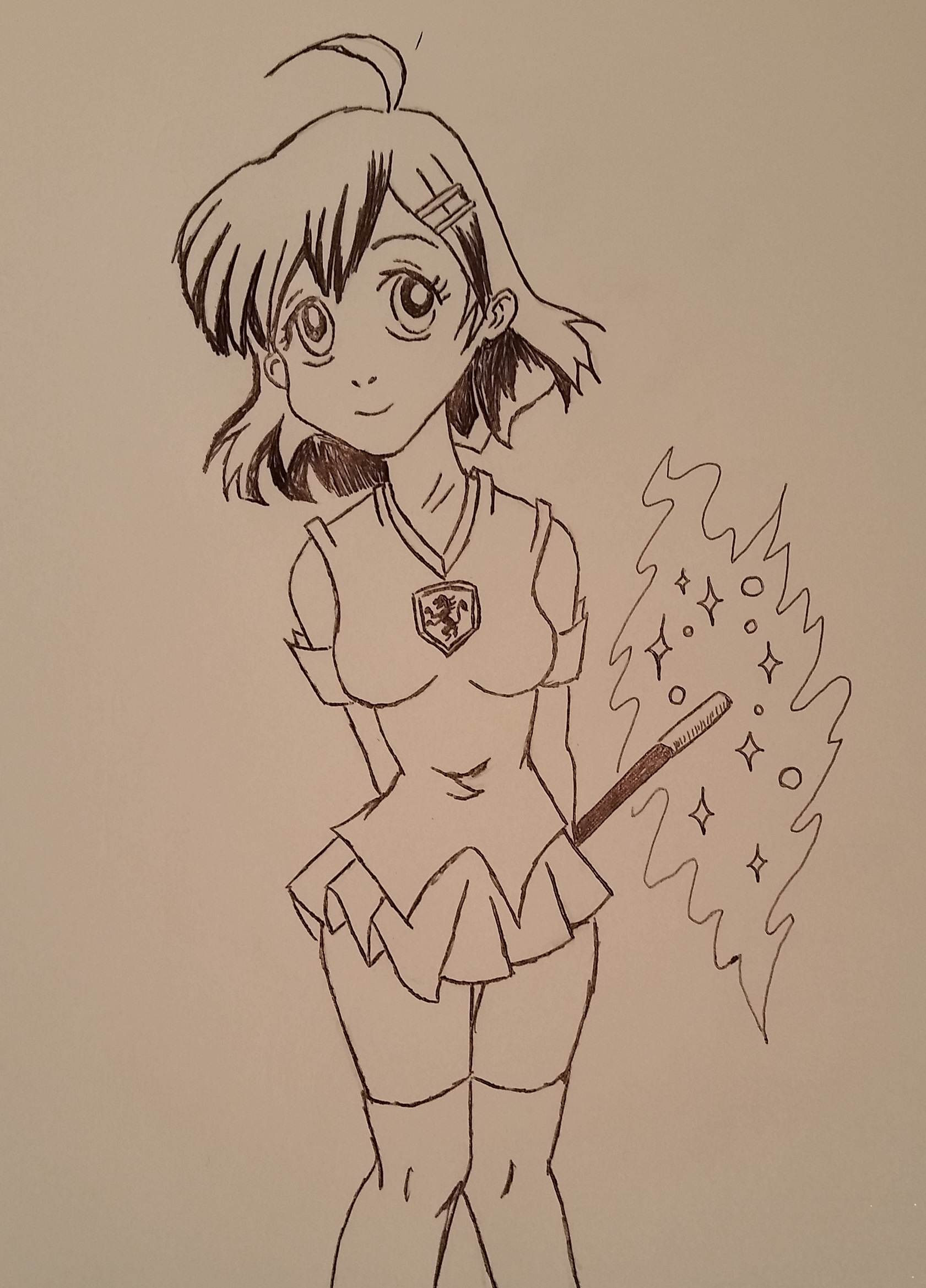
Xeribeth the Sorceress and her parrot Herkimer
I used to play a Dungeons-and-Dragons-like game called Talislanta with groups of adolescent boys, most of whom had previously been my students in middle school. It was a weird world where weird things made artistical challenges for me that taught me to be a better and more imaginative artist.
Xeribeth was a member of an almost-human race that had yellow skin and wore colorful face tattoos. She also had to be somewhat alluring to trick adolescent boys into undertaking dangerous and possibly suicidal adventures (meaning characters who only lived on paper might die and have to be re-rolled with dungeon dice.)
Zoric, being a green Cymrillian wizard, gave me numerous opportunities to create Kermit-the-frog-colored portraits. And he was a player character, so his greed and penchant for unwise actions decided on in the heat of battle (like turning himself into a fish-man while adventuring in the waterless desert) didn’t come from me.
Playing those games gave me training as a story-teller as well.
My efforts to see color with gradually worsening color-blindness led me to create eye-bashing color compositions that attempt to portray realistically things and feelings that can’t possibly be physically real. Thus I gradually became, over time, a surrealist (a juxtaposer of unlike and jarring things to deliver a visionary picture of reality) (How’s that for surrealistic gobbeldegook in definition form?)
Rabbit castles are the obvious answer
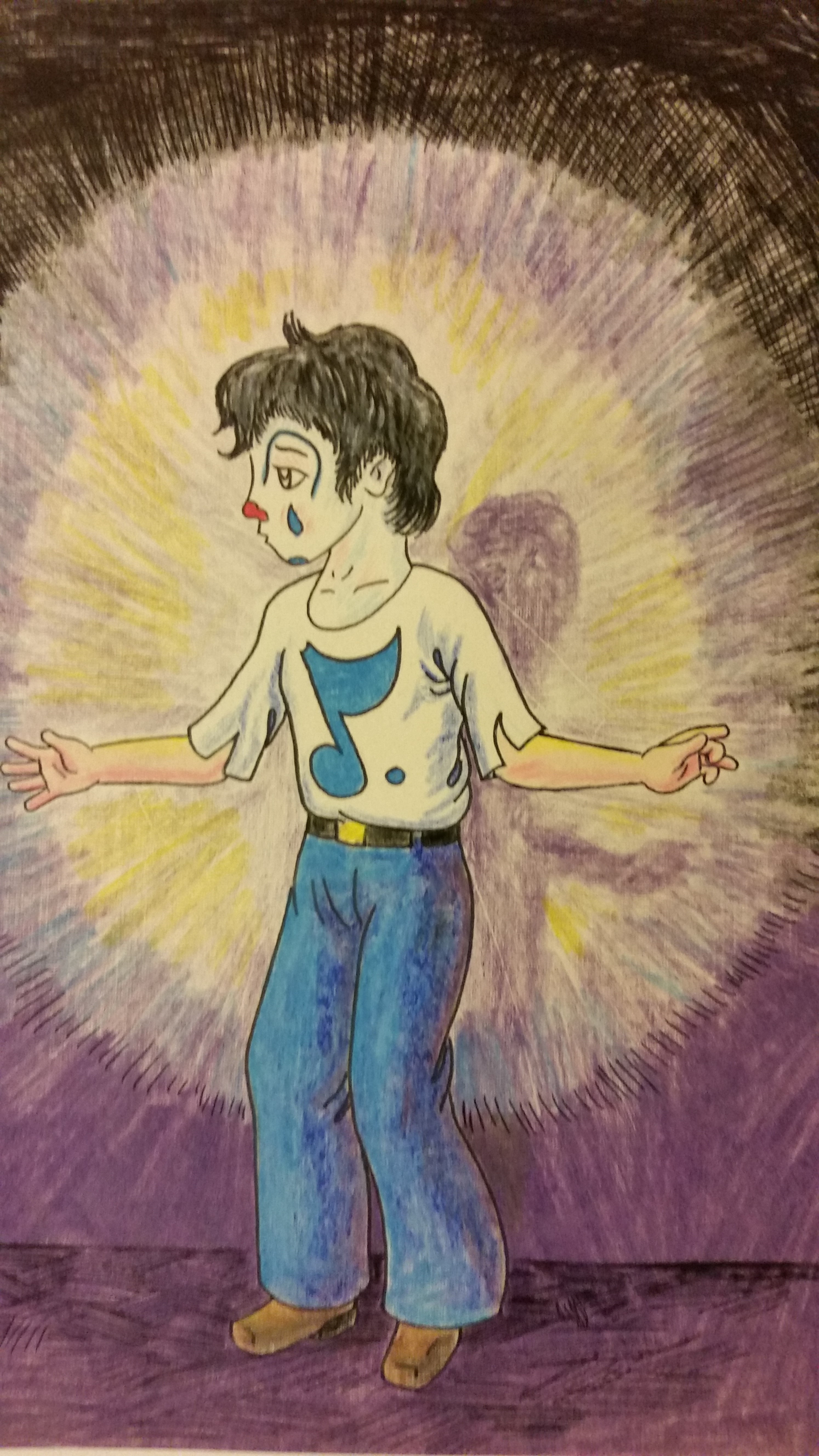
I often solve the problems of my life by drawing something and making cartoonish comments with serious consequences.
Little people and Slow Ones like us have different problems but share the same world.
Ultimately, it boils down to the fact that the world on the inside of me is decidedly different than the world on the outside of me. But I have to live in both. And I can do that by drawing my colored-pencil Paffooney stuff, posting it, and writing about it on a silly Sunday.
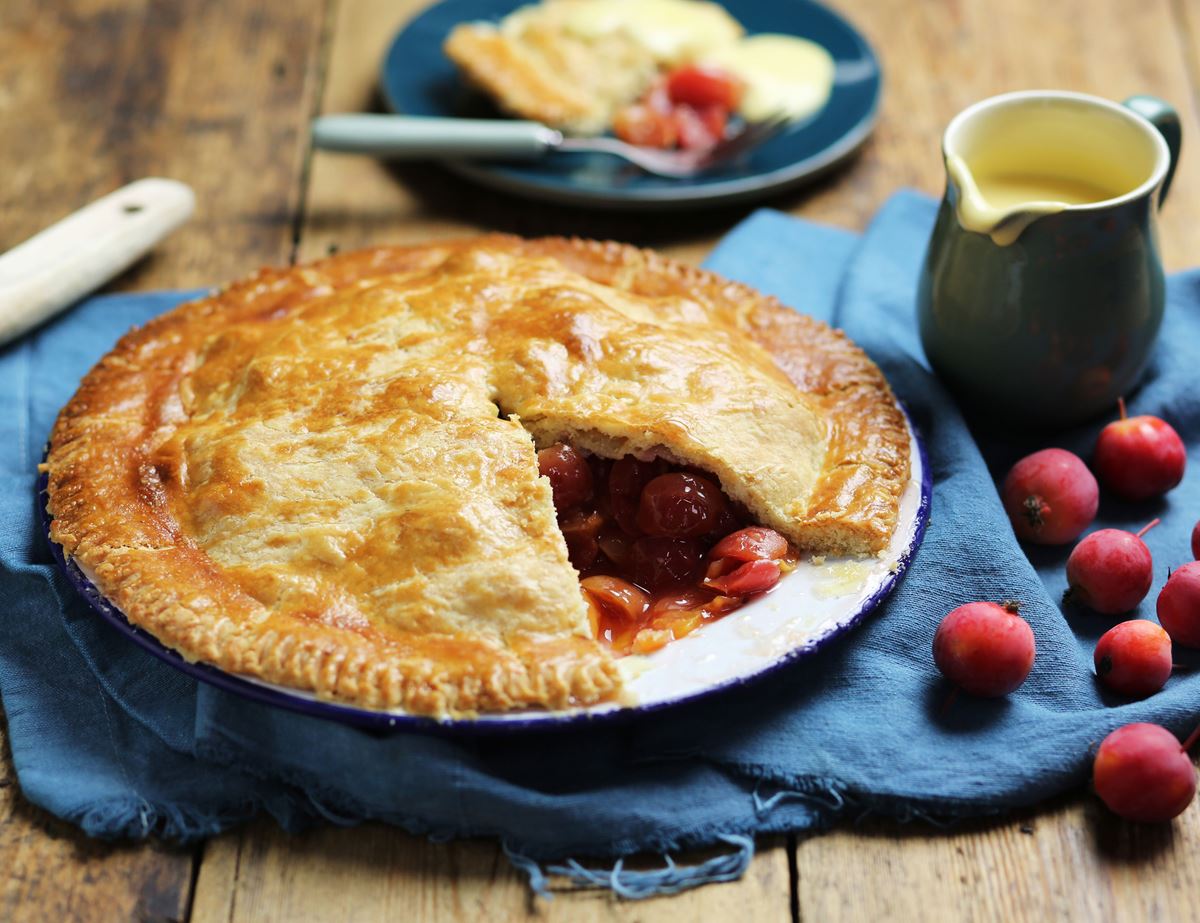
I was spending time with a certain cynical youth who likes to insult me and argue about every one of my faults as a human being, telling me that such treatment is meant to improve me to meet a standard that only he thinks I need to live up to when it occurred to me; Crab Apple has two meanings.
Crab apples (which ominously come up on Wikipedia as genus Malus) are generally mistrusted as eating apples. Alternatively known as “wild apples”, they are often bitter to the taste. Hence, the association with the chronic complainer, the dyspeptic dude, and the hen-pecky female. Crab apples are the fruits of unpleasant people-trees.
So, how does one deal with crab apples? I always tend to fall back on the homily, “When you are given any kind of fruit, make it into pie.” And yes, the links under the pictures will actually yield recipes. I know it is a metaphorical over-simplification. But, if I do not enjoy being critiqued for the hair in my ears and the werewolf hair sprouting under my eyes, or the way I say, “I’m sorry!” too much, I am going to use those fruits to make a pie of surreal comedy in a WordPress post.
I saw a guy on the highway speeding around me at well-over the speed limit, turning around to give me a look at his middle finger, probably trying to predict how many IQ points he will have left when he crashes into whatever is ahead of him that he can’t see because he’s grinning and glaring at me behind him. There’s an apple for this pie.
The impatient clerk in the tax office gives me the “Are you really that stupid” glare and attendant sigh as she suggests that I step to the side and correct the mistakes in my paperwork so she can mistreat the next person in the incredibly long line that she wants me to return to the back of. There’s another apple.
In today’s world, it really doesn’t take long to have enough apples for your pie. In fact, I am looking at a huge pie now with loads and loads of crab apples in it.
If you’ve read any of the crap that Mickey wrote about before in this goofy blog, you probably already suspect that Mickey’s mind does not work like a normal mind. The road map above is just one indicator of the weirdness of the wiring that propels Mickey on the yellow brick road to Oz and back. He just isn’t a normal thinker.
But having a few bats in the old belfry doesn’t prevent the man from having a plan. If you read all of Mickey’s hometown novels, you will discover he hasn’t written them in time order. Main characters in my 2016 novel weren’t even born yet in my 2017 books. If you look at them in chronological order rather than the order written, you will see characters growing and changing over time. A shy kid in one novel grows into a werewolf hunter in the next. A girl who loses her father to suicide in a novel not yet completed, learns how to love again in another novel.
Multiple Mickian stories are totally infected with fairies. The magic little buggers are harder to get rid of than mosquitoes and are far and away more dangerous. And there are disturbing levels of science-fiction-ness radiating through all of the stories. How dare he think like that? In undulating spirals instead of straight lines! He doesn’t even use complete sentences all the time. And they used to let that odd bird teach English to middle school kids.
But there is a method to his utter madness. He started with the simpler stories of growing up and learning about the terrors of kissing girls when you are only twelve. And then he moved on into the darker realms of dealing with death and loss of love, the tragedy of finding true love and losing it again almost as soon as you recognize its reality. Simple moves on to complex. Order is restored with imagination, only to be broken down again and then restored yet again,.
And, of course, we always listen to Mr. Gaiman. He is a powerful wizard after all. The Sandman and creator of good dreams. So Mickey will completely ignore the fact that nobody reads his books no matter what he does or says. And he will write another story.
It is called Sing Sad Songs, and it is the most complex and difficult story that Mickey has ever written. And it will be glorious. It also rips Mickey’s heart out. And I will put that ripped-out heart back in place and make Mickey keep writing it, no matter how many times I have to wash, rinse, and repeat. The continued work is called Fools and Their Toys. It solves the murder mystery begun in Sing Sad Songs. This re-post of an updated statement of goals is the very spell that will made that magic happen. So, weird little head-map in hand, here we go on the writer’s journey once again and further along the trail.
I admit it. I am prosaic. I think in sentences. I speak in paragraphs. I write in 5-paragraph essays. I should stop with the repetition of forms and the parallel structures, because that could easily be seen as poetic and defeat my argument in this post. I write prose. Simple. Direct. Declarative. But those last three are sentence fragments. Does that fit the model of prose? How about asking a question in the middle of a paragraph full of statements? Is that all simple enough to be truly prosaic?
Prose is focused on the everyday tasks of writing. It seems like the world thinks that the mechanical delivery of information in words and sentences should be boring, should be functional, should be simple and easy to understand.
I don’t mean to be pulling your reader’s mind in two directions at once, however. I need to stop confusing you with my onslaught of sentences full of contradictory and complex ideas. I should be more clear, more direct, and more to the point.
So here is my thesis, finally clearly stated; The magic of writing prose, it turns out, makes you the opposite of prosaic.
Ah, irony again! It ends up being anything but simple. You can write in simple, adjective-and-adverb-free sentences as Hemingway did, and still manage to convey deeply complicated and thoughtful ideas. One might even suggest that you can create poetic ideas in mere prose, dripping with layers of emotion, conflict, theme, and deeper implied meaning. You can also write prose in the intensely descriptive and convoluted style of a Charles Dickens with many complex sentences and pages-long paragraphs of detail, using comic juxtapositions of things, artfully revealing character development, and idiosyncratic dialogue all for comedic effect. Prose is a powerful and infinitely variable tool for creating meaning in words. Even when it is in the form of Mickian purple paisley prose that employs extra-wiggly sentence structure, pretzel-twisted ideas, and hyperbolically big words.
Simply stated; I am a writer of prose. I am too dumb about what makes something poetry to really write anything but prose. But I do know how to make a word-pile like this one that might just accidentally make you think a little more deeply about your writing… that is, if you didn’t give up on reading this three paragraphs ago. I find it useful to examine in writing how I go about writing and what I can do with it. I try to push the boundaries in directions they haven’t been pushed before. And hopefully, I learn something from every new essay I write. What I learned here is that I am prosaic. And that is not always a bad thing.
Because of weather, depression, and dealing with a wounded automobile, I have been having trouble getting writing done lately. I mean, me, the goof who writes every day and claims to never have writer’s block, is having trouble with being motivated enough the write things.
It is entirely possible that it is due to an improper diet. I mean, I haven’t been eating well this week. Having to squeeze the food budget to be able to pay all the bills this month is a part of the problem. The effect intermittent rain and heat have on my appetite could also be at least partly to blame. I stress eat, and am not always smart enough to depend on peanuts and peanut butter to get me through the problem.
I realize I need to eat protein to aid my brain, and fruits and vegetables so that my diabetes will slow itself down in the process of eating my brain. That process can make you a bit stupid.
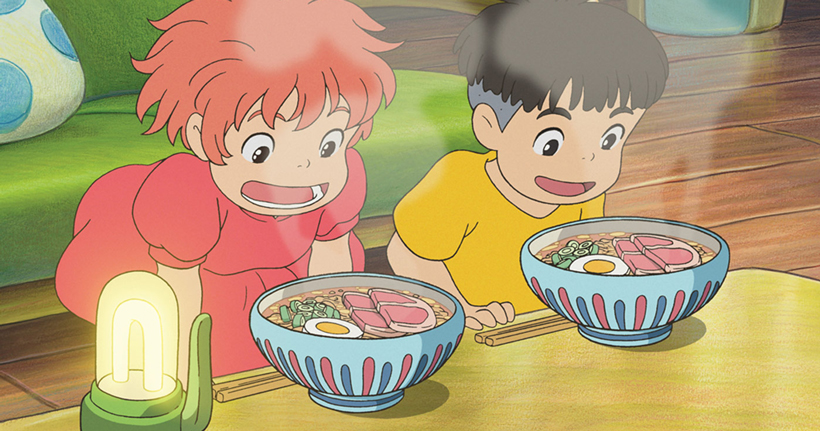
I am also quite aware that eating food that has eyeballs and mouths and occasionally cat ears is also a bad idea for dietary propriety. Especially if it can also talk to me. Do non-cartoonists also have this problem?
Eating right with Ramen noodles as seen in the movie Ponyo.
All right, I admit it. My writing problems probably don’t stem from eating cartoon food. Or eating food in a cartoon for that matter, a thing I haven’t tried in real life. But the whole cartoon food allusion has gotten me halfway to 500 words today. So it is worth something. And the real solution to the problem has been to just sit down and clack away at the keyboard, even if the only thing it yields is foofy nonsense. (And I know “foofy” isn’t even a real word, but WordPress counted it anyway.) I managed to write today simply by doing it.
In my short, sweet sixty years of life, I have probably seen more than my share of movies. I have seen classic movies, black-and-white movies, cartoon movies, Humphrey Bogart movies, epic movies, science fiction movies, PeeWee Herman movies, Disney movies, Oscar-winning movies, and endless box-office stinkers. But in all of that, one of the most undeniable threads of all is that movies make me cry. In fact they make me cry so often it is a miracle that even a drop of moisture remains in my body. I should be a dried-out husk by now.
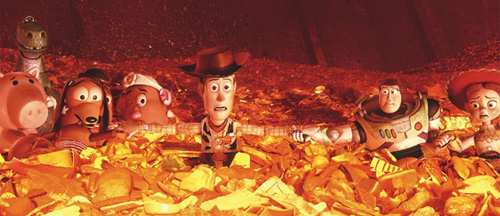
I wept horribly during this scene. Did you?
And the thing is, people make fun of you when you cry at movies. Especially cartoon movies like Scooby Doo on Zombie Island. (But I claim I was laughing so hard it brought tears to my eyes. That’s the truth, dear sister. So stop laughing at me.) But I would like to put forth another “Why do you think that?” notion. People who cry while watching a movie are stronger and more powerful than the people who laugh at them for crying. A self-serving thesis if ever there was one.
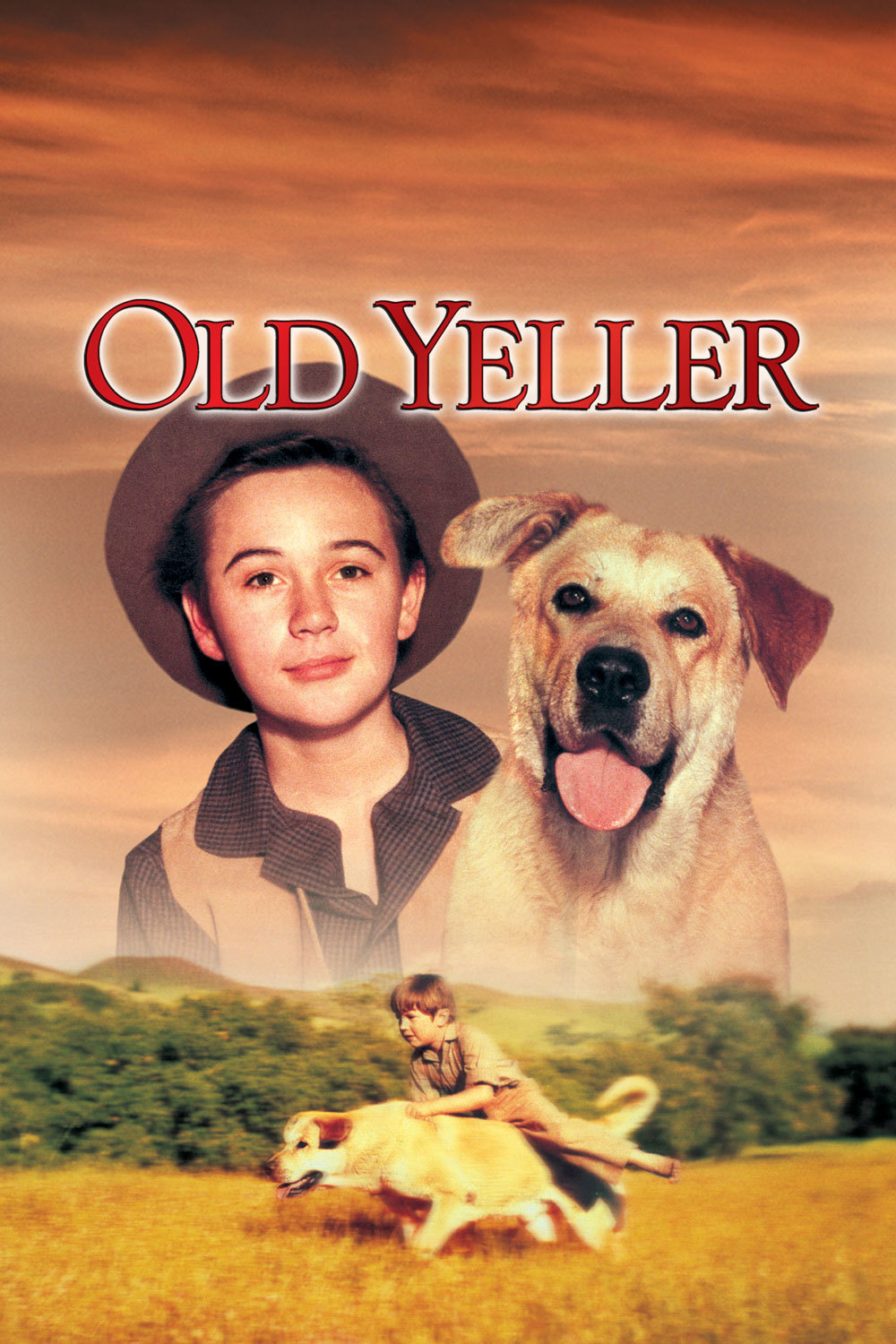
Movies can make you cry if you have the ability to feel empathy. We all know this. Old Yelleris the story of a dog who endears himself to a prairie farm family, saves Travis’s life at one point, and then gets infected with rabies and has to be put down. Dang! No dry eyes at the end of that one. Because everyone has encountered a dog and loyal dog-love somewhere along the line. And a ten-year-old dog is an old dog. The dogs you knew as a child helped you deal with mortality because invariably, no matter how much you loved them, dogs demonstrate what it means to die. Trixie and Scamper were both hit by cars. Queenie, Grampa’s collie, died of old age. Jiggs the Boston Terrier died of heat stroke one summer. You remember the pain of loss, and the story brings it all back.
Only psychopaths don’t feel empathy to some degree. Think about how you would feel if you were watching Old Yeller and somebody you were watching with started laughing when Travis pulls the trigger on the shotgun. Now, there’s a Stephen King sort of character.
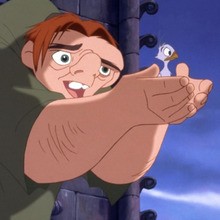
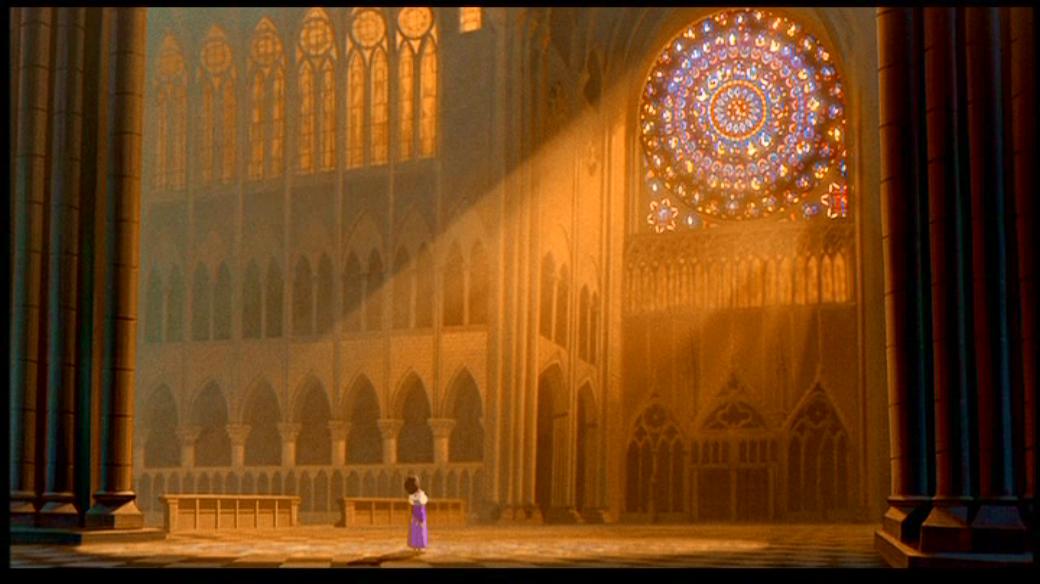
But I think I can defend having lots of empathy as a reason for crying a river of tears during Disney’s The Hunchback of Notre Dame. You see, identifying with Quasimodo as the main character, hoping for what he hopes for, feeling like a monster and completely unloved, and fearing what he fears connect you to the story in ways that completely immerses you in the experience. This is basically a monster movie.
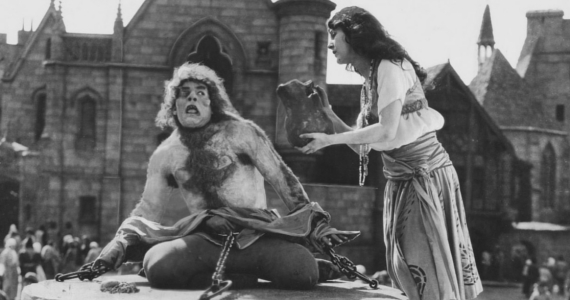
But the film puts you inside the head of the malformed man, and you realize that he is not the monster. Righteous Judge Frollo and the people who mistreat Quasimodo for his deformity of outward appearance are the real monsters. If you don’t cry a river of tears because of this story, then you have not learned the essential truth of Quasimodo. When we judge others harshly, we are really judging ourselves. In order to stop being monstrous, and be truly human, you must look inside the ugliness as Esmeralda does to see the heroic beauty inside others. Sometimes the ideas themselves are so powerful they make me weep. That’s when my sister and my wife look at me and shake their heads because tears are shooting out of me like a fountain, raining wetness two or three seats in every direction. But I believe I am a wiser man, a more resolved man, and ultimately a better man because I was not afraid to let a movie make me cry.
The music also helps to tell the story in ways that move my very soul to tears. Notice how the heroine walks the opposite way to the rest of the crowd. As they sing of what they desire, what they ask God to grant, she asks for nothing for herself. She shows empathy in every verse, asking only for help for others. And she alone walks to the light from the stained glass window. She alone is talking to God.
Yes, I am not embarrassed by the fact that movies make me cry. In fact, I should probably be proud that movies and stories and connections to other people, which they bring me, makes me feel it so deeply I cry. Maybe I am a sissy and a wimp. Maybe I deserved to be laughed at all those times for crying during the movie. But, hey, I’ll take the laughter. I am not above it. I am trying to be a humorist after all.
I threatened to write a post about Dave Barry and the writing gods apparently thought that was a very very bad idea. They have tried to prevent me from carrying out this idle threat by attacking my computer with gremlins. Now my WordPress page is shrinking practically out of sight. I can barely see what I am typing. You don’t believe me? Here’s what it looks like at the moment;
They obviously tricked me into pressing the secret shrink button on my computer, and I have no idea where to find the un-shrink features. Not only that, but my Facebook page is automatically translating everything it can into French. They really don’t want me to tell you about Dave Barry. And why do you suppose that is?
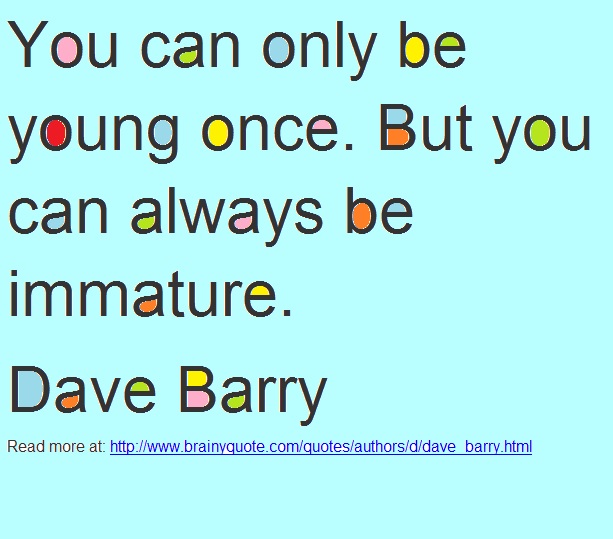
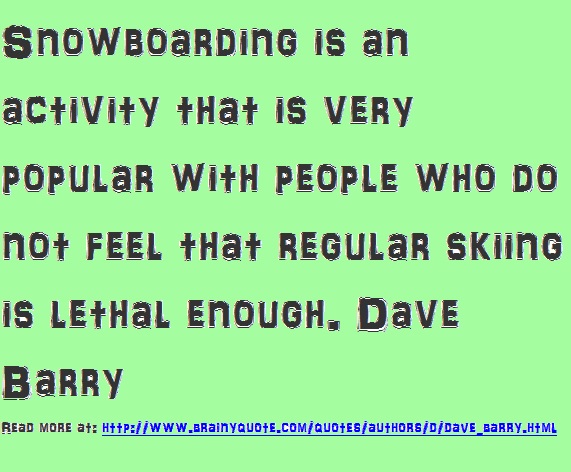
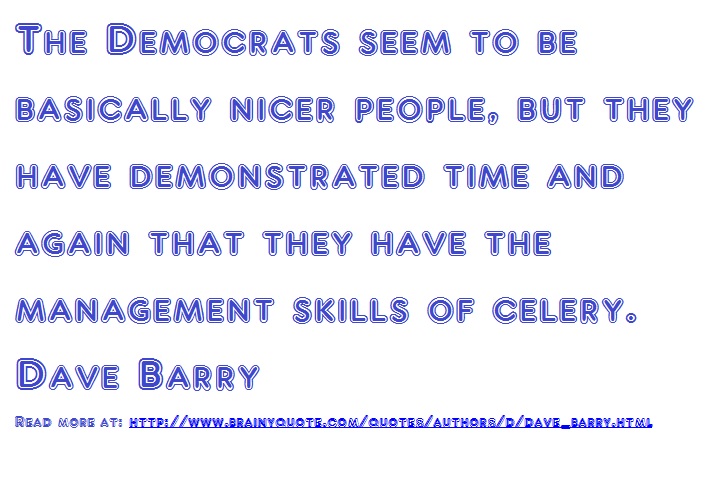
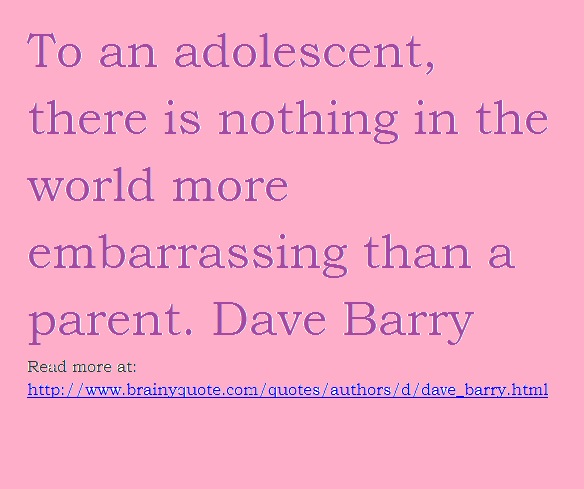
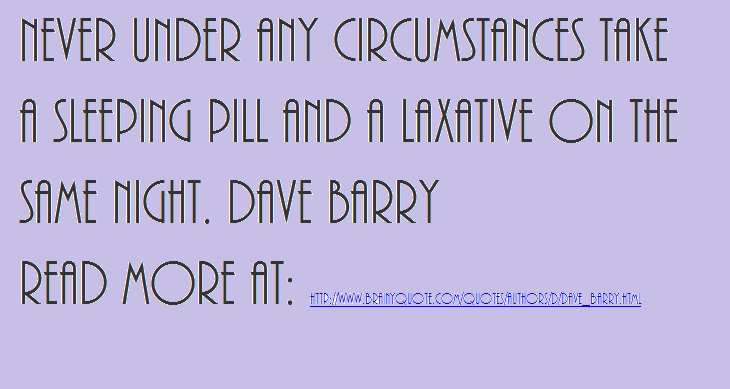
Well, Dave Barry may actually be me from a parallel dimension. He started writing for The Miami Herald in the early 80’s, at about the same time I started teaching. He retired from that in 2004 after winning a Pulitzer Prize and started writing humorous novels…. the same thing I started doing when I left the job I loved and was good at. Okay, so I am stretching the analogy to the point that all the buttons are popping off its shirt… but the point is, we are alike in some ways and I admire his work and I steal things from it whenever I possibly can. Like this post. I deeply admire the way he can say witty and pithy things. Like some of these quotes;
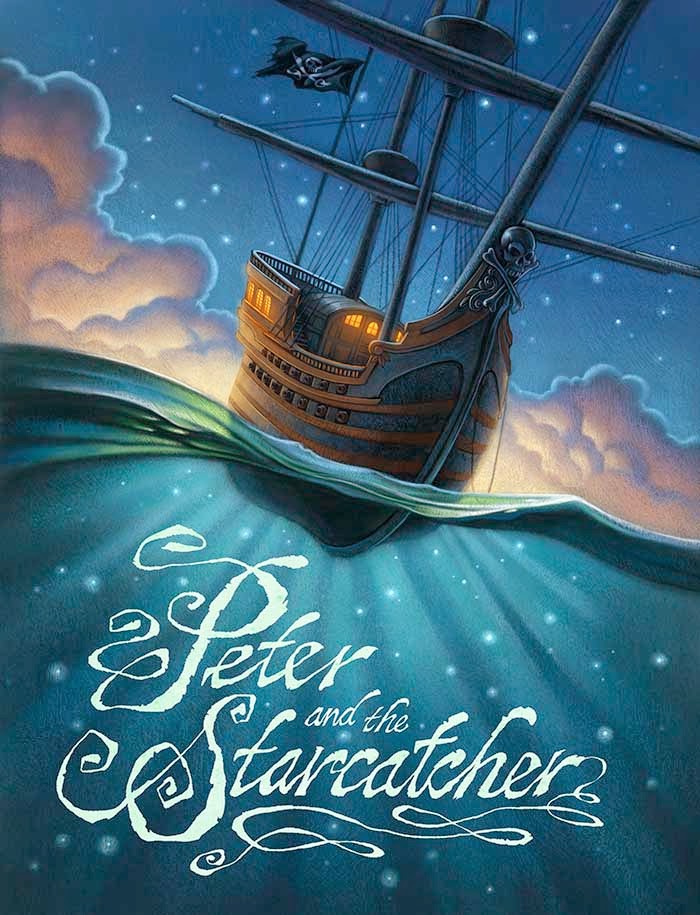
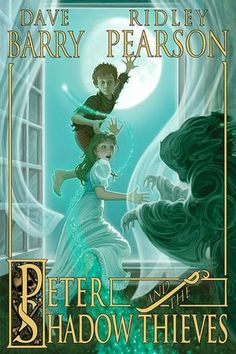
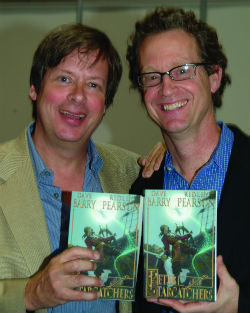
So, you see, he is very good at doing what I want to be good at. He is a humor columnist and all-around imitation Mark Twain. And I have read and loved his novels. Especially the Peter Pan things he writes with a partner.
Dave Barry and Ridley Pearson
So, I will leave this post here even though I could talk for hours about how Dave Barry makes me laugh. I have to stop. the words on the screen keep getting smaller and smaller, and my old eyes are about to fall out of my head.
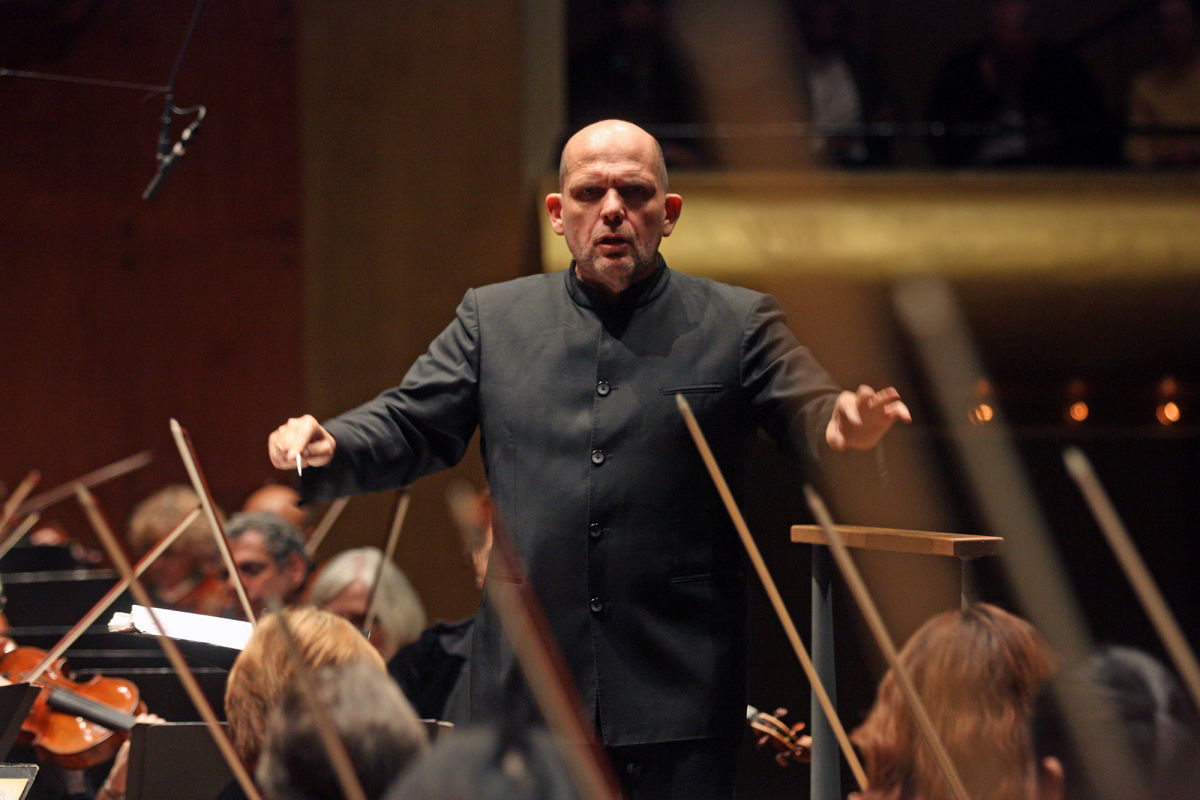
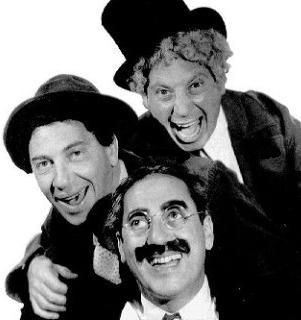
Last night my wife took us to the Dallas Symphony Orchestra for a performance of Gustav Mahler’s Das Klagende Lied (The Song of Lamentation). So, you can bet we were in for a happy night just based on the title of the piece. As you might’ve detected from the post title’s similarity to the Marx Brother’s movie A Night at the Opera, I took along my wacky mental versions of the Marx Brothers… whom I call the Snarcks Brothers. They are Scarpigo, Cinco, and Zero Snarcks. Think Groucho, Chico, and Harpo, and then my mental fartgas won’t prevent you from understanding quite as easily.
Jaap Van Zweden, conductor of the DSO, and aspiring impersonator of Grumpy from the Seven Dwarfs
Scarpigo, Cinco, and Zero Snarcs… so to speak…
Now, don’t get me wrong, I love classical music and I like Mahler okay. But his music tends to be depressing and sad. I don’t mean merely depressing and sad, but deep down at the bottom of the canyon with hill giants tossing boulders at your head in the midst of a thunderstorm symphonic sort of depressing and sad. It could really bum me out, so I was prepared to have Scarpigo lean over the balcony rail numerous times to shout “Booga-booga!” at the concert goers. And the Blues lost to the Sharks in the Stanley Cup playoffs already this past week.
Fortunately the DSO often adopts the old movie theater tactic of cartoon shorts before the feature film… the same way Pixar does for Disney now. They chose Aaron Copland’s Clarinet Concerto as the cartoon short. Now this is also supposed to be sad music, a single clarinet, a single harp, and a single piano… surrounded by violins, the gushing tears of every symphony orchestra. But it is Copland, my fourth favorite composer of all time, behind only DeBussy, Motzart, and Beethoven. As a synesthete, I can tell you that Copland’s music is always no bluer than silver, and tends to be more vermilion, rosy pink, yellow-orange and carmine red… more happy and passionate than depressing. Then too, Cinco Snarcks whispered in my ear that since I have this Van Zweden/ Grumpy thing going on already in my head, I should look carefully at the clarinet soloist. Yep, bald head, white hair and slight white beard and glasses… Doc! And the pianist, bald head and big ears… Dopey! The night would be Gustav Mahler and the Seven Dwarfs. Zero Snarcks was thinking about squeezing off a toot or three from his little horn and maybe using light cords hanging from the ceiling for an impromptu trapeze act, but he took one look at the elegant, swan-like harpist and fell too much in love to interrupt.
The main show, however, was everything I thought it was going to be, and worse. They had a translator screen hung from the cords Zero wanted to go for a swing on, that took all the incomprehensible choir-crooned lyrics and translated them from German into English. The story of Das Klagende Lied is taken from the Grimm Fairy Tale, The Bone Flute. It tells the tale of two knightly brothers, one good and one evil, who set out to win the hand of a very self-centered but beautiful queen. She can only be won by the finding of a special red flower that grows under a willow tree. The knights agree to split up and search the enchanted forest for the flower. Naturally, the good knight finds it and plucks it, putting it in the band of his hat. And just as naturally, the good knight flops down stupidly under the willow tree to take a nap. The evil brother finds his brother sleeping and sees the flower in his hat. So, like any evil knight would, he kills his brother and takes the flower.
Scarpigo’s comment on this particular story.
The evil brother then rushes off to the queen’s castle. A minstrel wanders past the willow tree, finds a gleaming leg bone, and immediately thinks, “I have to make that into a flute!” And when he does, the only song the flute will play is the lament about how the evil brother made meat pie out of his good brother and stole the flower. Then, naturally enough, the flute forces the minstrel to go play at the wedding.
I’m sure you know how it goes from there. The queen hears the bone flute’s enchanted song and flops down dead, apparently a heart-attack from shock. And if the queen dies, then the castle has to magically fall down on the new king, the minstrel. and all the wedding guests. A gruesome, terrible time is had by all.
So, I had a good time after all. Scarpigo leans over to whisper to me, “That was more fun than a barrel of monkeys smoking crack, wasn’t it?” Yes, purple, blue, blue-violet, and indigo music, and I am left depressed as hell. But when my wife asked how I liked it, I put on a happy face and said, “That’s the silliest thing I ever heard!”
Every writer, whether he or she writes fiction or non-fiction, is really writing about themselves. The product originates within the self. So, that self has to gaze into the mirror from time to time.
So, the question for today is, who, or possibly what, is Mickey?
I have been posting stuff every day for a few years now, and in that time, I have been much-visited on WordPress. Maybe not much-read, but then, you cannot actually tell if somebody read it or not. Most probably look only at the pictures. And, since I am also an artist of sorts, that can also be a good thing. Though, just like most artists, my nude studies are more popular than the pieces I value the most. But unless the looker makes a comment or leaves a “like”, you really have no idea if they read or understood any of the words I wrote. And you have no idea what they feel about the art. Maybe they just happened to click on one of my nudes while surfing for porn.
I rarely get below 50 views of something in my blog every day. The last three days were 86 views, 124 views yesterday, and 88 views already today. My blog has definitely picked up pace over the length of the coronavirus quarantine. But no definable reason seems obvious. Some of my posts are polished work, but Robin is right when he says today’s post is merely fishing with the process, which is true almost every day.
As a person I am quirky and filled with flaws, pearls of wisdom that result from clam-like dealing with flaws, strange metaphors that shine the pearls, and obsessions like the one I have with nudism that leaves me properly dressed for diving for pearls.
I have demonstrated throughout my life that I have an interest in and experience with nudism, though not the boldness to parade my naked self before the world outside of the writing that I do. I also spent most of my bachelorhood dating reading teachers and teachers’ aides, finally settling down and marrying another English teacher. I completed a thirty-one year career as an English teacher, which means I spent a lot of time teaching writing and reading to kids who were ages 12 to 18. Twenty-four of those years were spent in the middle school monkey house. And all of that led to being so mentally damaged that I wasn’t good for much beyond becoming a writer of YA novels or possibly subbing for other mentally-damaged teachers in middle schools around our house.
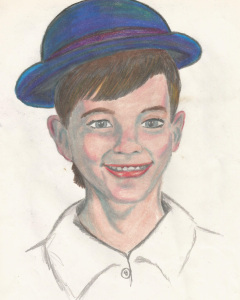
A real telling feature of what I have become is the fact that most of the characters I write about in my fiction are somehow a reflection of me. Milt Morgan, seen to the left, is illustrated here with a picture of me as a ten-year-old wearing a purple derby. Yes, I was that kind of geeky nerd.
And most of the plots are based around things that happened to me as a child, a youth, or a young teacher. Many of the events in the stories actually happened to me, though the telling and retelling of them are largely twisted around and reshaped. And I am aware of all the fairies, aliens, werewolves, and clowns that inhabit my stories. Though I would argue that they were real too in an imaginative and metaphorical way.
So, here now is a finished post of Mickey staring into the metaphorical mirror and trying in vain to define the real Michael, an impossible, but not unworthy task.
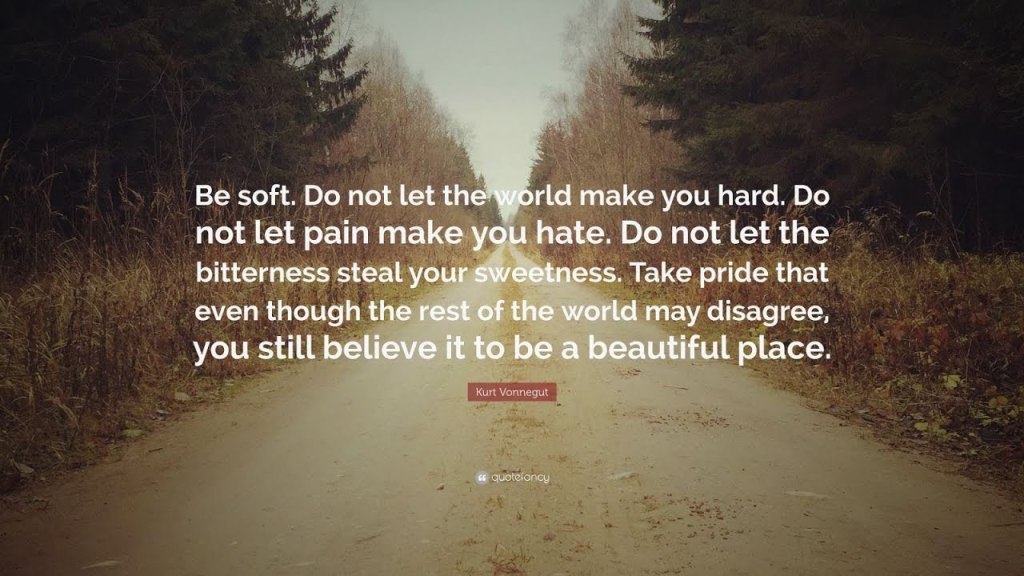
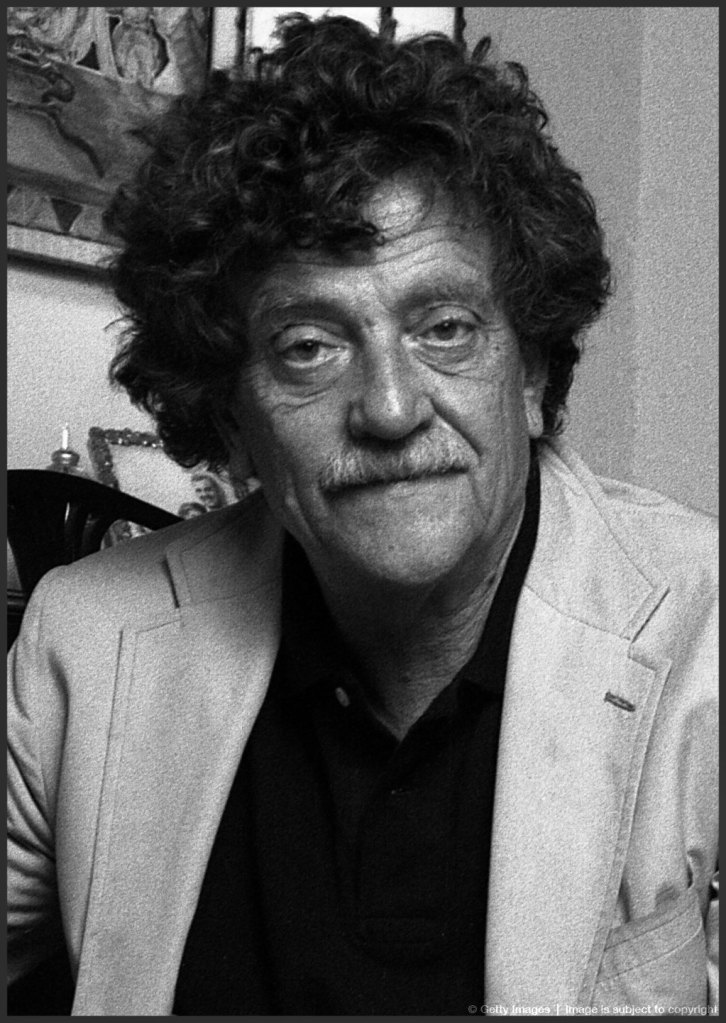
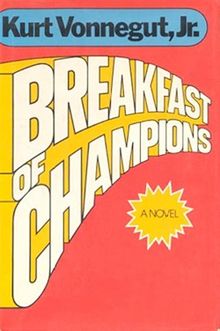
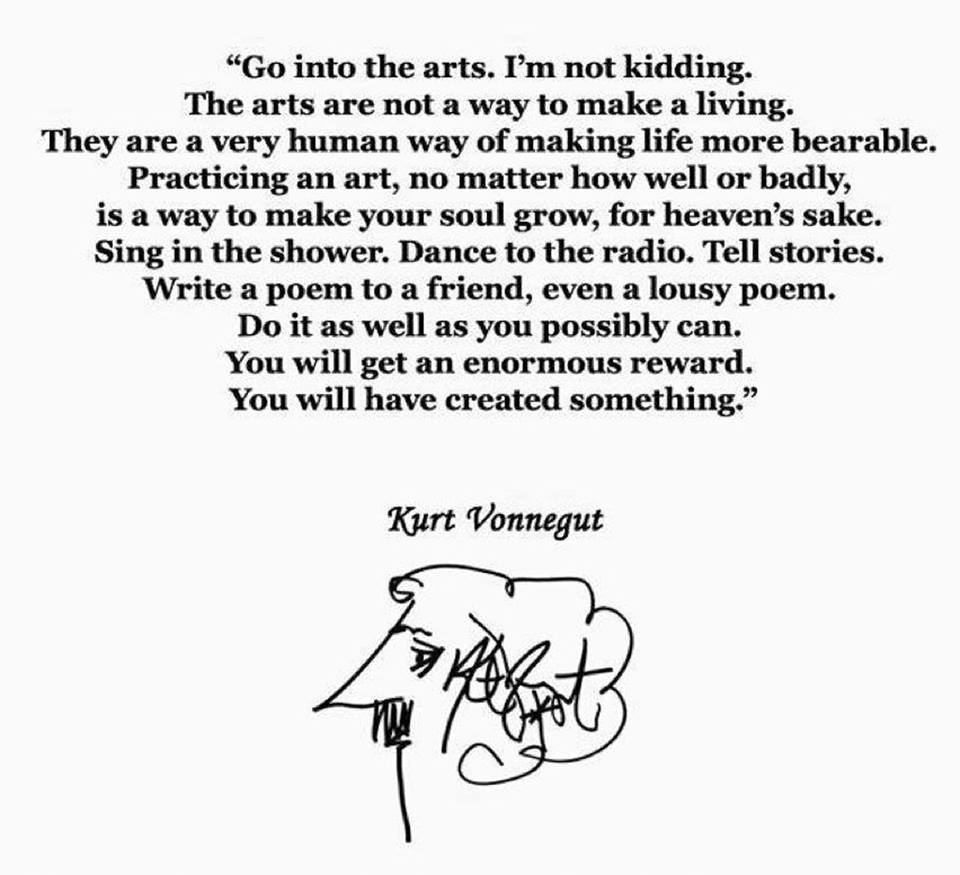
My experience of the works of Kurt Vonnegut is limited to the reading of three books; Cat’s Cradle, Breakfast of Champions, and Slaughterhouse Five. But it was enough to make me love him and use him as a shaper of my soul.
I deeply apologize for the fact that even though he only wrote 14 books and a bunch of short stories, I have not read everything I could get my hands on by Kurt. Three novels and one short story (Harrison Bergeron) is not really enough to compare to the many, many things that I have read by Mark Twain, Terry Pratchett, Louis L’Amour, and Michael Crichton. I can’t begin to count how many books of each of those four I have read and reread. But it is enough that I read those three novels and have a lifelong regret of never buying and reading Slapstick when I had the chance. Vonnegut writes black humor. The ideas are painful, and burn away flesh from your personal body of being. And at the same time, you cannot help but laugh at the pure, clean, horrifying truths his ridiculous stories reveal.
If, in the course of telling a story, you can put the sublime, the ridiculous, and the horrendous side by side, and make the reader see how they actually fit together, then you can write like Vonnegut.
Let me give you three quick and dirty book reports of the Vonnegut I have read in the order I have read them;
I read Cat’s Cradle in college. I was young and idealistic at the time, foolishly convinced I could be a great writer and cartoonist who could use my work to change mankind for the better.
In the book, Dr. Felix Hoenikker (a fictionalized co-creator of the atomic bomb) is obsessively re-stacking cannonballs in the town square in pursuit of a new way to align water molecules that will yield ice that does not melt at room temperature. Much as he did with the A-bomb, Hoenikker invents a world-ending science-thing without any thought for the possible consequences. The narrator of the novel is trying to write a humanizing biography of the scientist, and comes to observe the inevitable destruction of the whole world when the oceans freeze into Ice-9, the un-meltable ice crystal. Before the world ends, the narrator spends time on the fictional Carribean island of San Lorenzo where he learns the fictional religion known as Bokononism, and learns to make love to a beautiful woman by pressing bare feet together sole to sole. It is a nihilistic picture of what humans are really like more savagely bleak than any portrayal Monte Python’s Flying Circus ever did on TV.
Needless to say, my ideals were eventually shattered and my faith in the world shaken.
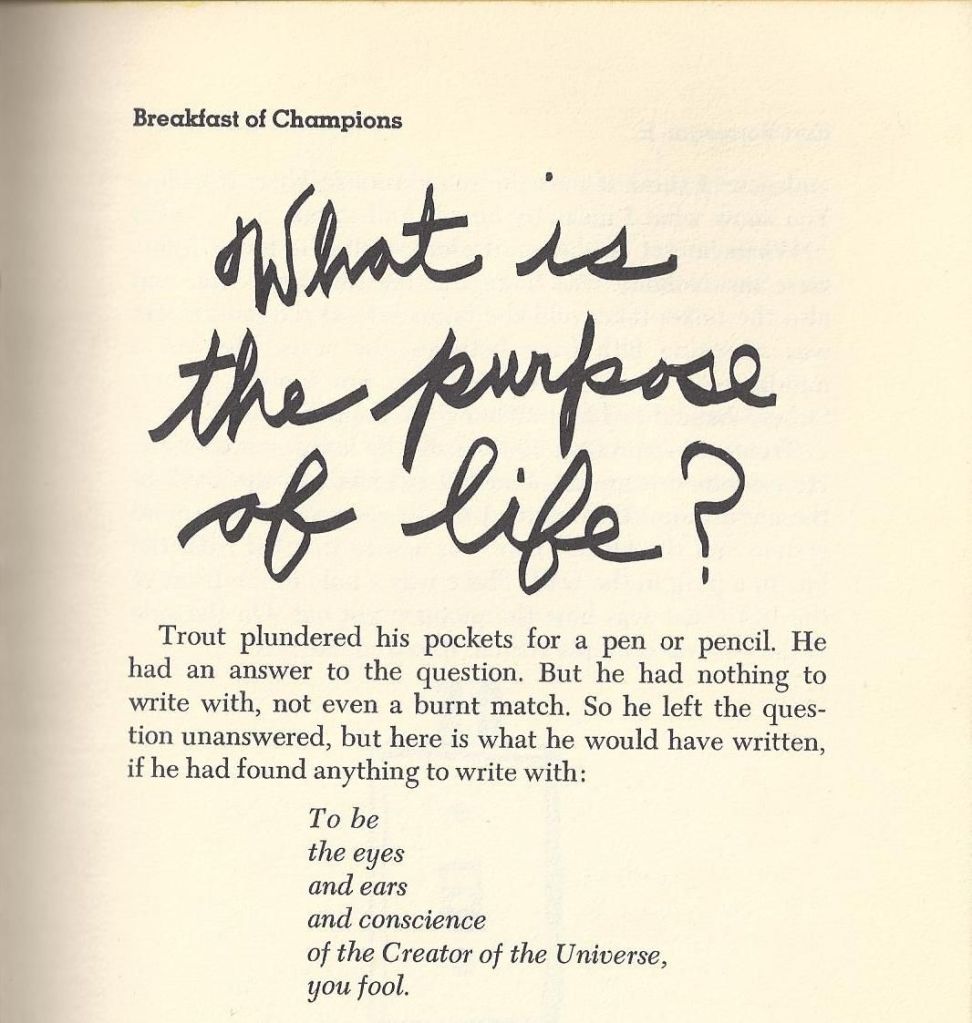
I read Breakfast of Champions after I had been teaching long enough to buy my own house, be newly married, and a father to one son. It was probably the worst time of life to be reading a book so cynical, yet true.
In this story, the author Kilgore Trout, much published but mostly unknown, is headed to Midland City to deliver a keynote address at an arts festival. Dwayne Hoover is a wealthy business man who owns a lot of Midland City real-estate. Trout gives Hoover a book (supposedly a message from the creator of the universe) to read that suggests that all people (except for the reader of the book… meaning Hoover) are machines with no free will. Hoover takes the message to heart and tries to set the machines free by breaking them, beating up his son, his lover, and nine other people before being taken into custody.
The book contains devastating themes of suicide, free will, and social and economic cruelty. It makes you sincerely reflect on your own cog-in-the-machine reality.
Slaughterhouse Five is a book I bought and read when I missed my chance to buy Slapstick and needed something to take home from HalfPrice Books to make me feel better about what I missed. (Of the five books I had intended to buy that day, none were still on the shelves in spite of the fact that they had been there the week before.) It was fortuitous. This proved to be the best novel I had ever read by Vonnegut.
Like most of his work, the story of Billy Pilgrim is a fractured mosaic of small story pieces not presented in chronological order. It details Billy’s safe, ordinary marriage to a wife who gives him two children, but it is ironically cluttered with death, accidents, being stalked by an assassin, and being kidnapped by aliens. It also details his experiences in World War II where he is captured by the Germans, held prisoner in Dresden, kept in an underground slaughterhouse, and ironically survives the fire-bombing of Dresden by the Allies. Further, it details his time as a zoo exhibit on the alien planet of Tralfamadore.
It explores the themes of depression, post-traumatic-stress disorder, and anti-war sentiment. Vonnegut himself was a prisoner of war in Dresden during the fire-bombing, so real-life experiences fill the book with gravitas that it might not otherwise possess. Whether the author was ever kidnapped by aliens or not, I cannot say.
But Kurt Vonnegut’s desire to be a writer and portray himself as a writer in the character of Kilgore Trout, and even as himself in his work, has an awful lot to do with my desire to be a writer myself. Dark, pithy wisdom is his thing. But that wisdom, having been wrung from the darkness is all the more brightly lit because of that wringing. It is hard to read, but not hard to love.







 Ah, irony again! It ends up being anything but simple. You can write in simple, adjective-and-adverb-free sentences as Hemingway did, and still manage to convey deeply complicated and thoughtful ideas. One might even suggest that you can create poetic ideas in mere prose, dripping with layers of emotion, conflict, theme, and deeper implied meaning. You can also write prose in the intensely descriptive and convoluted style of a Charles Dickens with many complex sentences and pages-long paragraphs of detail, using comic juxtapositions of things, artfully revealing character development, and idiosyncratic dialogue all for comedic effect. Prose is a powerful and infinitely variable tool for creating meaning in words. Even when it is in the form of Mickian purple paisley prose that employs extra-wiggly sentence structure, pretzel-twisted ideas, and hyperbolically big words.














 Catch a Falling Star
Sunday Silly Artistical Posts
I like to dig through old piles of artwork I have done to re-purpose things and mash things together to make weird art salad.
I used to play a Dungeons-and-Dragons-like game called Talislanta with groups of adolescent boys, most of whom had previously been my students in middle school. It was a weird world where weird things made artistical challenges for me that taught me to be a better and more imaginative artist.
Xeribeth was a member of an almost-human race that had yellow skin and wore colorful face tattoos. She also had to be somewhat alluring to trick adolescent boys into undertaking dangerous and possibly suicidal adventures (meaning characters who only lived on paper might die and have to be re-rolled with dungeon dice.)
Zoric, being a green Cymrillian wizard, gave me numerous opportunities to create Kermit-the-frog-colored portraits. And he was a player character, so his greed and penchant for unwise actions decided on in the heat of battle (like turning himself into a fish-man while adventuring in the waterless desert) didn’t come from me.
Playing those games gave me training as a story-teller as well.
My efforts to see color with gradually worsening color-blindness led me to create eye-bashing color compositions that attempt to portray realistically things and feelings that can’t possibly be physically real. Thus I gradually became, over time, a surrealist (a juxtaposer of unlike and jarring things to deliver a visionary picture of reality) (How’s that for surrealistic gobbeldegook in definition form?)
I often solve the problems of my life by drawing something and making cartoonish comments with serious consequences.
Ultimately, it boils down to the fact that the world on the inside of me is decidedly different than the world on the outside of me. But I have to live in both. And I can do that by drawing my colored-pencil Paffooney stuff, posting it, and writing about it on a silly Sunday.
1 Comment
Filed under art editing, artwork, cartoons, commentary, goofy thoughts, humor, Paffooney