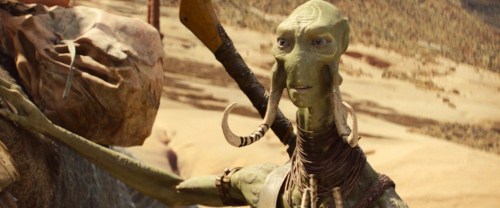
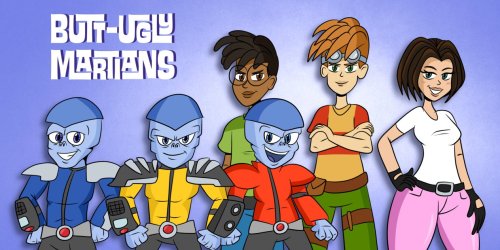
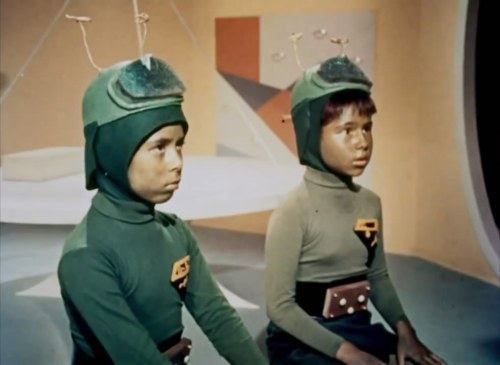
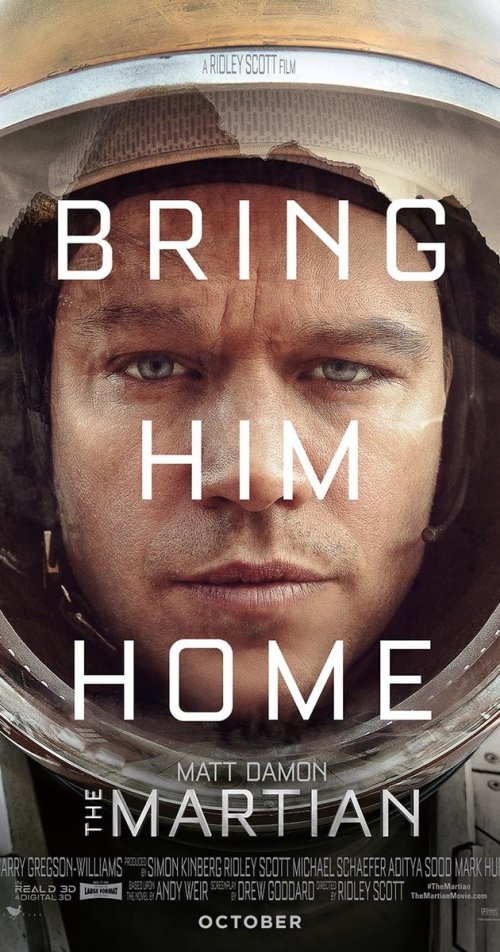
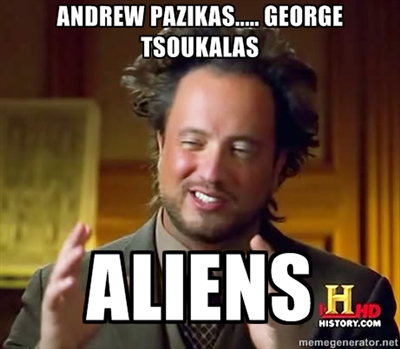
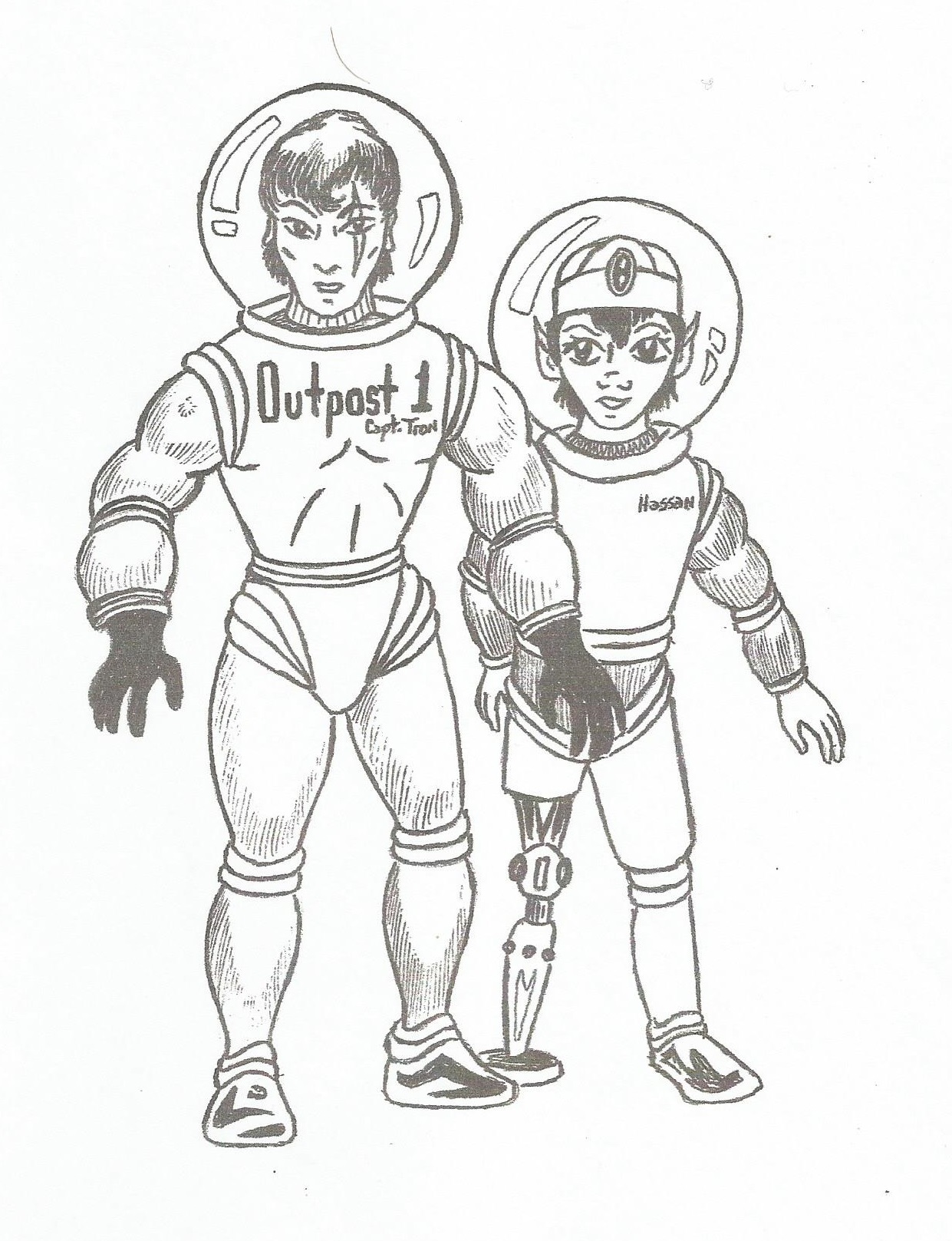
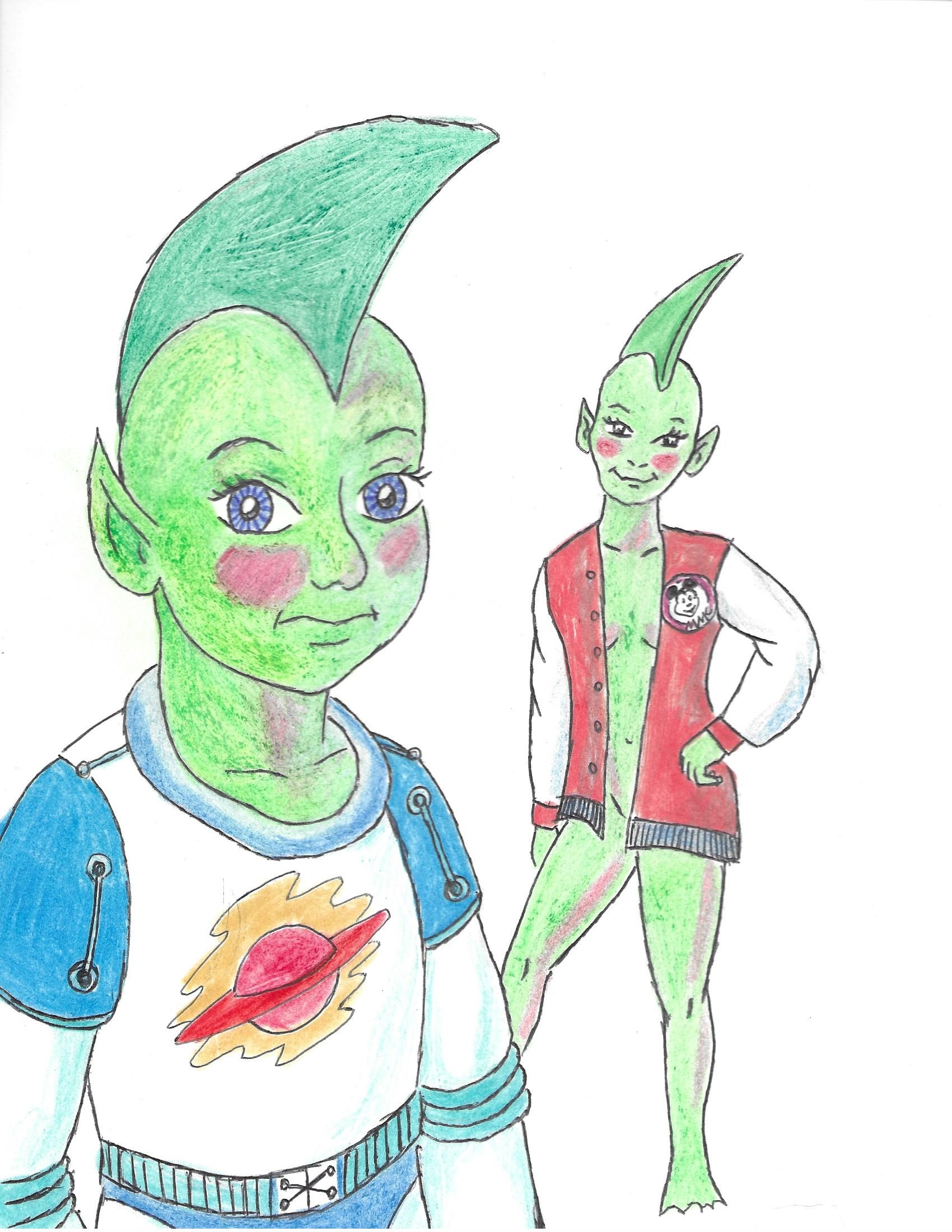
As Catch a Falling Star was a science-fictiony sort of comedy, one of the questions that I have pursued in internet research is the one I have presented here in the title of this picture-and-Paffooney-filled post. Seriously, the image search of Google’s answer to that question is enough to make you snort milk through the old nostrils as you sort through them while stupidly drinking a glass of milk. The milky nose-snorts are the reason I have not sited picture sources on this post. Cleaning the computer screen took too long. I have merely randomly snatched and pirated pictures. The only picture of a Martian presented here created by me are these two;
I admit to being surprised by my actual research into the whole question of whether or not we have ever been visited by intelligent life from the stars beyond the sky. While I have not found proof that aliens exist, I have discovered there is actual proof that the government, and NASA in particular, have covered something up. And it goes beyond Area 51 defense research. But now that I have got the attention of the NSA and the Men in Black, this post is only filled with a collage of the unreal, made-up, and mostly silly.
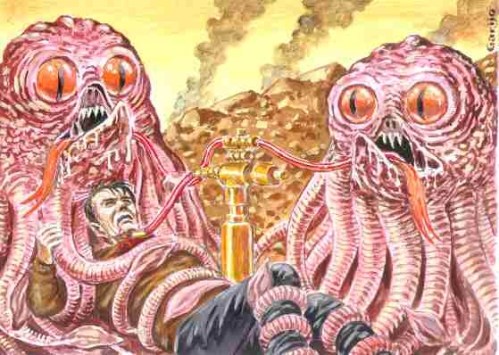
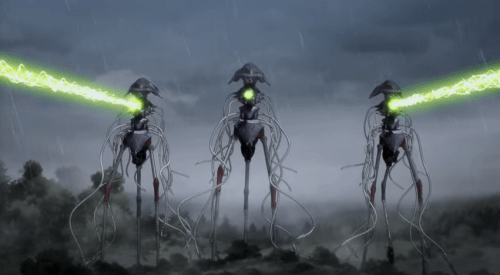
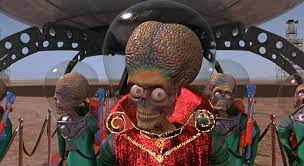
Malevolent Martians;
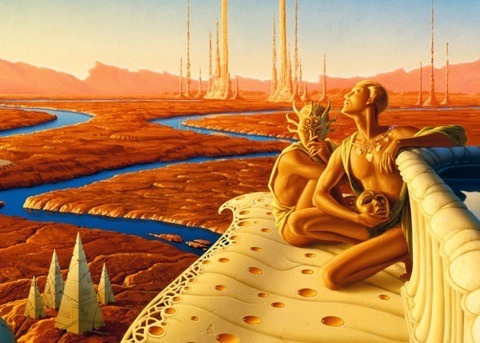
Martians Who Make the Mistake of Liking Us;
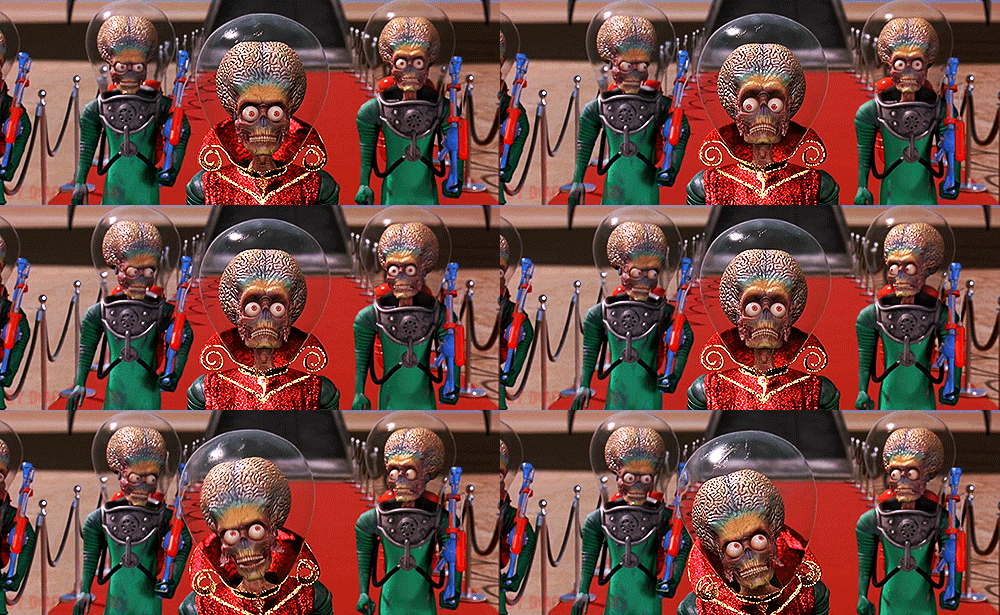
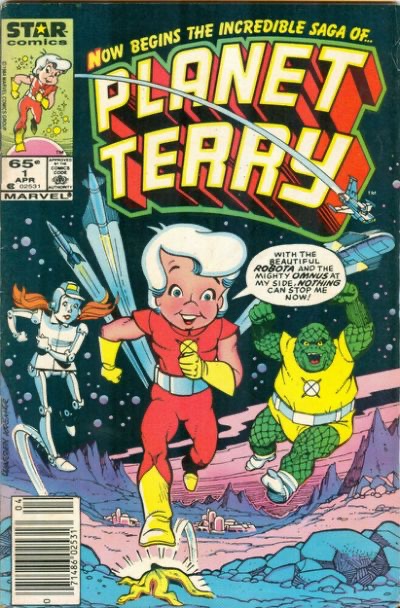
Inexplicably Goofy Martians;
Cartoon alien rendered on white background. 3D model licensed from DAZ3D.
If you read my blog more than just taking the passing flyby notice of the odd Paffooney picture, you may have noticed the fact that I have many unfortunate mental quirks basted in a flavorful sauce of vivid imagination and fatally high intelligence. I am too smart to live, most of the time, and so my mental quirk about constantly searching conspiracy information is probably a self-destructive attempt to get hold of seriously secret information that will probably get me killed. But conspiracy theories are dangerous in more than just the paranoid delusional way that somebody like Alex Jones always perceives it.
Since I already mentioned the Infowars rage-clown, let me talk a little bit about how Alex Jones is a truly dangerous force crying about sinister suppositories of conspiracy constantly… I do not follow the man. His website takes all kinds of conspiracy-type information and puts it through the grinder of his manic-orangutan persona and turns it all into a giant salad of poop and nuts covered in puree of mystery meat. The truth is sometimes in there, but all mangled and bunged-up. For instance, he claims that the Sandy Hook shooting of all those innocent children and heroic teachers was a false-flag operation by the government. He claims that no children were actually killed… the event was staged… The government is simply trying to turn public opinion against gun owners and wants to threaten Second Amendment rights. Gene Rosen, one of the people who heroically helped students fleeing from the Newtown shooting, was harassed by phone calls calling him a “government stooge”. Jones’ true believers are not smart enough to leave things like this alone. They take it upon themselves to press the matter and rub salt in the wounds. In fact, some Alex-Jones-true-believer criminal types stole the memorial for Grace McDonnell and Chase Kowalski, two seven-year-olds who died at Sandy Hook Elementary, because they didn’t actually exist… they weren’t actual children… and then they phoned those children’s parents to taunt them… all in the name of Infowars’ version of the truth.
These facts about conspiracy theories and the people involved in them make me physically ill over the fact that I am also a believer in some very prominent conspiracy theories. But unlike Alex Jones, I don’t pull things out of a Pandora’s box of paranoia and mental cesspools. I try very hard to site my sources and choose them critically. I believe that John F. Kennedy was assassinated, not by a lone gunman, and probably not by Lee Harvey Oswald at all. There was a massive conspiracy. I have dug into the roots of Oliver Stone’s movie JFK. I know who Jim Garrison is… who Guy Bannister and Cord Meyer are… I know about the mysterious history of questionable deaths of witnesses to the shooting and where the efforts at cover-up become apparent enough to know that somebody powerful was behind the whole thing. But, although I think I know who and why… there is not enough evidence to name names and try to prosecute anyone. Kennedy’s death was an important blow to the architecture of my childhood. It combined with other terrible things to take away any chance I may have had to grow up innocent and happy. Pursuing the truth will haunt me for the rest of my days.
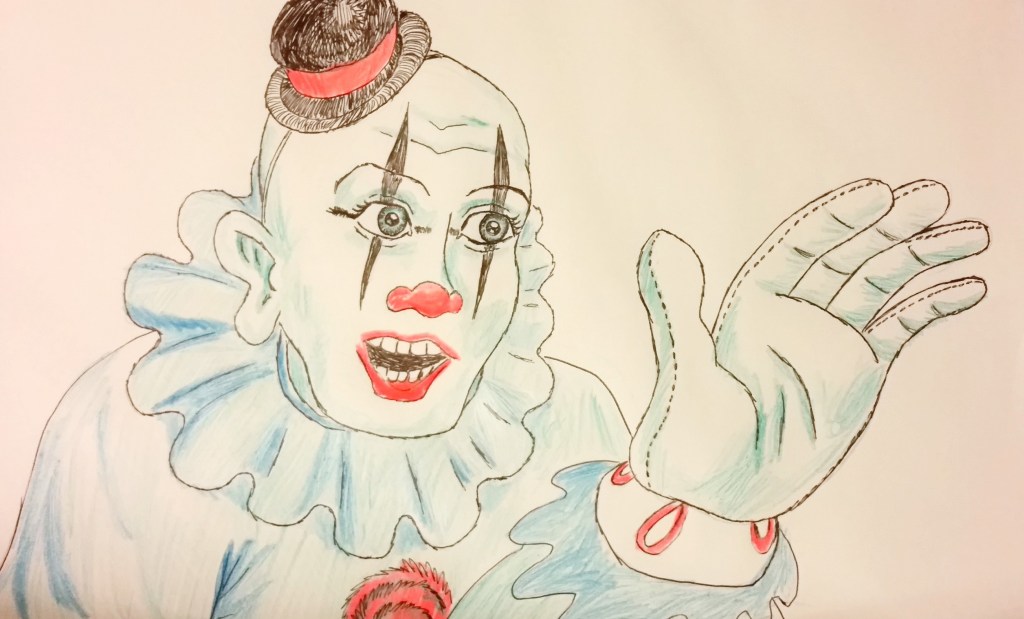
And there are other places where I want to believe. How about aliens? I wrote a comic novel or two about that. There is a source of endless comedy and clowns.
But I am a believer here also. The thing about Roswell and the numerous flying saucer incidents that have grown into an entire conspiracy subculture is that so much of it can be traced back to ingenuous and credible witnesses. Many of them not only had nothing to gain from lying, many of them lost their reputations, their careers, and sometimes even their lives because they tried to tell us truthfully what they witnessed.
I promised to back that sort of assertion up, so one of the sources of my belief is the astronaut Dr. Edgar Mitchell, the sixth man to walk on the moon. Here is a video readily available on YouTube to let you hear it in his own words.
I apologize for dumping my strange obsessions on you simply to feed monsters lurking in my silly, questioning head. I have to make sense of the world for myself, and I do it here in writing. I pulled you in with the promise of humor, and while I may have salted this essay with a bit of that, I have basically tried to convince you of my pet conspiracies. Forgive me. For as long as I keep blogging (especially when I am trying to do it every day and need things to talk about) I will continue to try these same tricks. Watch me carefully. Hold me to a standard of truth that makes me better than Alex Jones.
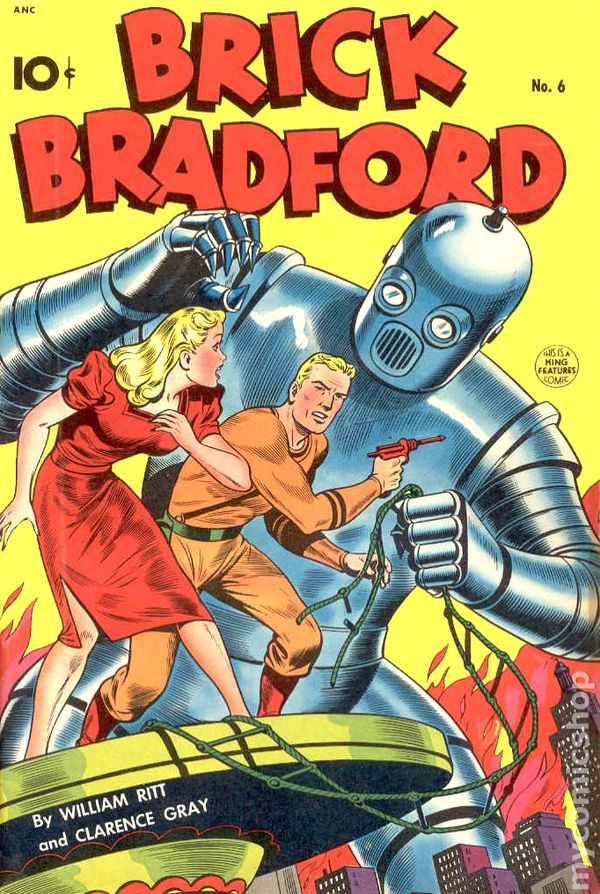
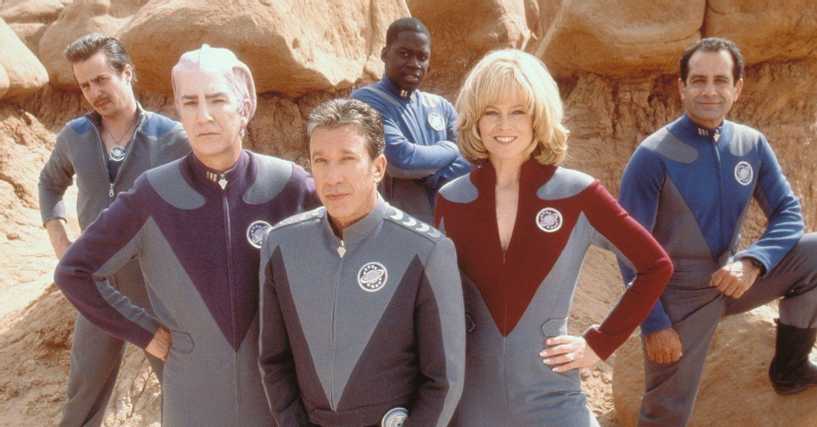
I have always cherished science fiction. Not just Jules Verne, Isaac Asimov, and Arthur C. Clarke. Not just Star Trek and Star Wars. But all of it. Buck Rodgers, Flash Gordon, Brick Bradford, Galaxy Quest, Mars Attacks, and E.T.
Space is important to me. I feel like all of mankind will be a failure as a species if they don’t start moving out amongst the stars.
It’s not just that I am ensorcelled by the magical adventures that space-travel stories mixed with a romantic view of facing existential danger with a smile and a ray-gun can provide.
I watched with wide 12-year-old eyes when Neil Armstrong stepped onto the surface of the moon for the very first time.
That was all the way back in 1969!
I am disappointed that my George-Jetson expectations of life in 2023 have not even remotely been met.
Sure, computers are great. But where are the flying cars? The fishbowl helmets for walking on the Moon? Personal jetpacks to get to school and back?
It isn’t the dreamers, it’s the doers that have let me down.
And I know we could well run the risk of meeting something out there that might want to eat us.
But are we truly alive anymore if we are afraid to risk death in the face of Space Exploration and Discovery? We are not immortal. We need to achieve things that outlast us to justify our existence.
So, come on, people! Let’s make the world over again and start building cities on Mars.
Let’s start building what we have dreamt of rather than hiding from what we fear!
My experience of the works of Kurt Vonnegut is limited to the reading of three books; Cat’s Cradle, Breakfast of Champions, and Slaughterhouse Five. But it was enough to make me love him and use him as a shaper of my soul.
I deeply apologize for the fact that even though he only wrote 14 books and a bunch of short stories, I have not read everything I could get my hands on by Kurt. Three novels and one short story (Harrison Bergeron) is not really enough to compare to the many, many things that I have read by Mark Twain, Terry Pratchett, Louis L’Amour, and Michael Crichton. I can’t begin to count how many books of each of those four I have read and reread. But it is enough that I read those three novels and have a lifelong regret of never buying and reading Slapstick when I had the chance. Vonnegut writes black humor. The ideas are painful, and burn away flesh from your personal body of being. And at the same time, you cannot help but laugh at the pure, clean, horrifying truths his ridiculous stories reveal.
If, in the course of telling a story, you can put the sublime, the ridiculous, and the horrendous side by side, and make the reader see how they actually fit together, then you can write like Vonnegut.
Let me give you three quick and dirty book reports of the Vonnegut I have read in the order I have read them;
I read Cat’s Cradle in college. I was young and idealistic at the time, foolishly convinced I could be a great writer and cartoonist who could use my work to change mankind for the better.
In the book, Dr. Felix Hoenikker (a fictionalized co-creator of the atomic bomb) is obsessively re-stacking cannonballs in the town square in pursuit of a new way to align water molecules that will yield ice that does not melt at room temperature. Much as he did with the A-bomb, Hoenikker invents a world-ending science-thing without any thought for the possible consequences. The narrator of the novel is trying to write a humanizing biography of the scientist, and comes to observe the inevitable destruction of the whole world when the oceans freeze into Ice-9, the un-meltable ice crystal. Before the world ends, the narrator spends time on the fictional Carribean island of San Lorenzo where he learns the fictional religion known as Bokononism, and learns to make love to a beautiful woman by pressing bare feet together sole to sole. It is a nihilistic picture of what humans are really like more savagely bleak than any portrayal Monte Python’s Flying Circus ever did on TV.
Needless to say, my ideals were eventually shattered and my faith in the world shaken.
I read Breakfast of Champions after I had been teaching long enough to buy my own house, be newly married, and a father to one son. It was probably the worst time of life to be reading a book so cynical, yet true.
In this story, the author Kilgore Trout, much published but mostly unknown, is headed to Midland City to deliver a keynote address at an arts festival. Dwayne Hoover is a wealthy business man who owns a lot of Midland City real-estate. Trout gives Hoover a book (supposedly a message from the creator of the universe) to read that suggests that all people (except for the reader of the book… meaning Hoover) are machines with no free will. Hoover takes the message to heart and tries to set the machines free by breaking them, beating up his son, his lover, and nine other people before being taken into custody.
The book contains devastating themes of suicide, free will, and social and economic cruelty. It makes you sincerely reflect on your own cog-in-the-machine reality.
Slaughterhouse Five is a book I bought and read when I missed my chance to buy Slapstick and needed something to take home from HalfPrice Books to make me feel better about what I missed. (Of the five books I had intended to buy that day, none were still on the shelves in spite of the fact that they had been there the week before.) It was fortuitous. This proved to be the best novel I had ever read by Vonnegut.
Like most of his work, the story of Billy Pilgrim is a fractured mosaic of small story pieces not presented in chronological order. It details Billy’s safe, ordinary marriage to a wife who gives him two children, but it is ironically cluttered with death, accidents, being stalked by an assassin, and being kidnapped by aliens. It also details his experiences in World War II where he is captured by the Germans, held prisoner in Dresden, kept in an underground slaughterhouse, and ironically survives the fire-bombing of Dresden by the Allies. Further, it details his time as a zoo exhibit on the alien planet of Tralfamadore.
It explores the themes of depression, post-traumatic-stress disorder, and anti-war sentiment. Vonnegut himself was a prisoner of war in Dresden during the fire-bombing, so real-life experiences fill the book with gravitas that it might not otherwise possess. Whether the author was ever kidnapped by aliens or not, I cannot say.
But Kurt Vonnegut’s desire to be a writer and portray himself as a writer in the character of Kilgore Trout, and even as himself in his work, has an awful lot to do with my desire to be a writer myself. Dark, pithy wisdom is his thing. But that wisdom, having been wrung from the darkness is all the more brightly lit because of that wringing. It is hard to read, but not hard to love.
Self-reflection is the bane of stupid people. Essentially, they don’t want to risk encountering evidence that they actually are stupid. It would shatter their world to learn that they are idiots and most of what they believe is true is actually wrong. This fact goes a long way towards explaining why the Republican Party in its current form even exists, let alone the actions of the current mutant Cheetos monster that pilots their agenda and hates healthcare, the Special Olympics, and Puerto Rico.
So, if I am doing a self–reflection piece today, then that proves I am not a stupid person, right? What do you mean you agree with that? Yes, I can actually hear you mentally answering my questions as you read this. And if you believe that, then you have proven that even relatively smart people like you and I are capable of stupid thinking.
I believe in some stupid things, even though I think I am not stupid.
An example of this stupidity factor is my lingering belief that I am a nudist. I mean, I am rarely ever nude any more. I keep most of me covered up constantly because when my psoriasis plaques dry out they tend to flake and itch and force me to scratch to the point of infected bloody sores.
Obviously this is not totally a photograph from the 60’s. That does not make it a total lie either, though.
I have been pretty much accepted as a member of the nudist community on Twitter. I enjoy the artful pictures of nude people they share with me. And since I did a couple of blog posts for nudist websites, there are actually completely nude pictures of me available on the internet. I can be found on Truenudists.com for one, if your eyes can stand the horror. But I have only been to a nudist park, the Bluebonnet Nudist Park in Alvord, Texas. twice as an actual nudist. I can tell you, they were very hot days even though I was not wearing clothes. I am comfortable with nudity. I am comfortable around nude people. I fully accept it all as a non-sexual thing. But am I really a nudist? Or am I only playing at it? If you follow me on Twitter, then you know I don’t retweet pictures of naked people. I engage a lot with other writers there, and most of them are not also nudists, or even open-minded about naturism. I write about nudists in some of my books, but they are not about nudism, and most of them don’t even mention it. So, what good does it do me to think I am a nudist? Well, the very idea of it does a heckuva good job of embarrassing my wife and daughter. So, I do get some crazy-old-coot satisfaction out of it. Otherwise it simply proves that rational and otherwise intelligent people can be committed to irrational ideas.
I am also of the often mocked and ridiculed opinion that not only are alien beings from other worlds real, they are capable of space travel and have been visiting us for as long as there has been an us. I did not always believe this, however. Before I wrote my novelCatch a Falling Star I believed as Carl Sagan said on the original Cosmos that it is wrong to accept things without proof, and true results are testable. My novel was about aliens who watched a lot of Earther TV and learned to speak English from watching I Love Lucy reruns, I wanted to make the aliens different from humans, but at the same time, alike with humans in the most fundamental ways that translate easily into humor and relatability. Not all of my hero-characters were Earth humans.
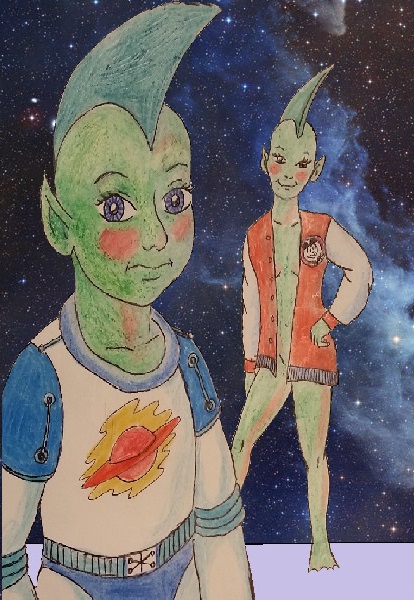
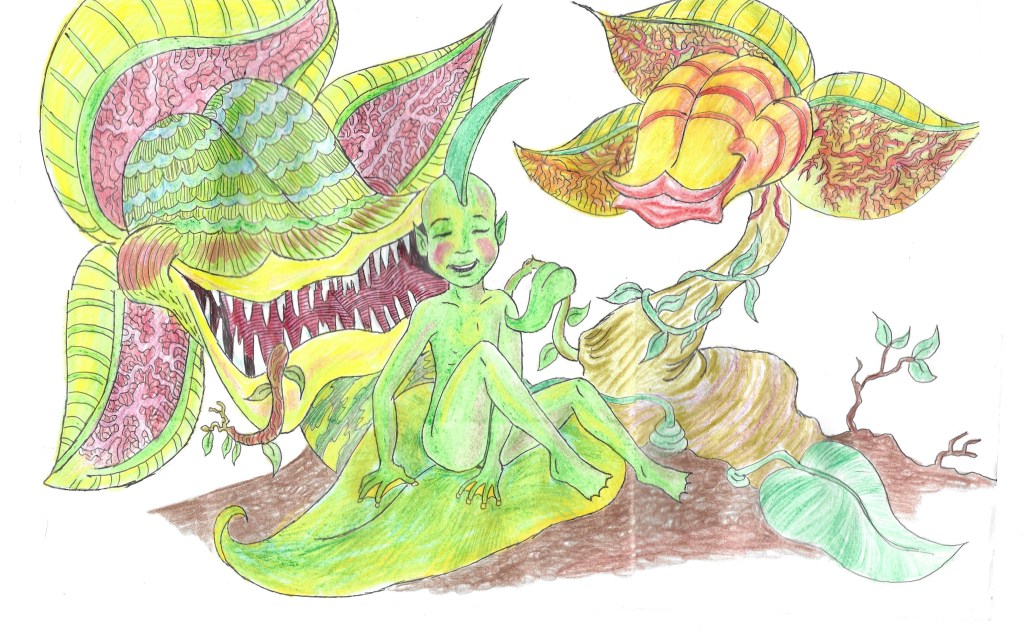
Brekka the Telleron tadpole (also a nudist) with her friend Lester the man-eating plant (who only ate her once)
As I did research on the internet (a tool I didn’t have when I originally created the story in the 1970s), I found a ton of researchers and writers and con men and MUFON and the Disclosure Project and nuclear physicists and astronauts Gordon Cooper and Edgar Mitchell who were all believers and mostly not stupid. Wow! What a huge and complicated hoax! Why would anybody believe , based on so little tangible evidence, and so much contradictory evidence, that the government’s position could possibly be right? I learned that I now believed, until significant further proof comes along, that I believe stupidly in alien visitors.
Today’s self-reflection post has now proven that I am a stupid old coot who thinks he is a nudist and an insightful conspiracy theorist. But the results of my look into the mirror have not made me upset about my stupidity. Maybe I am simply satisfied nudism is healthy and the universe is more complex than I am capable of understanding. Whatever the case, that’s enough with the mirror for today. You have to keep such dangerous weapons out of the hands of clowns.
Here’s the thing… Mickey is to the art of advertising as Cassandra in the Iliad is to prophecy.
Cassandra, you may remember from the last time you read the Iliad in the original Greek, was gifted with true prophecy. What she foresaw was destined to come true. Unfortunately, she was cursed to never be believed by any she told the prophecy to.
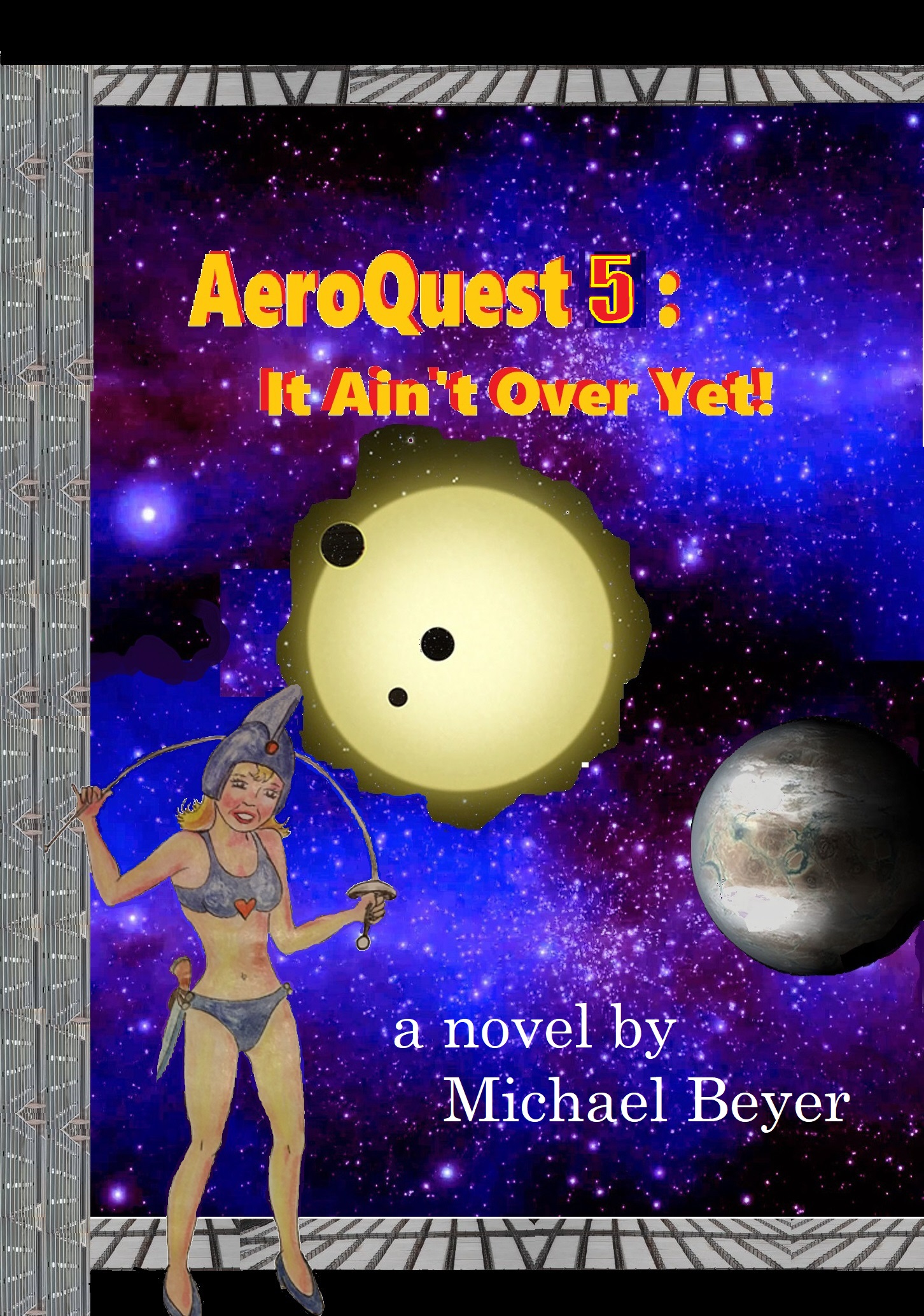
Similarly, Mickey can tell a good story, full of imaginative storylines and compelling plots and themes. But anytime he launches an ad, here, on Twitter, Facebook, or elsewhere, it will not be seen, or, if seen, not responded to.
Case in point; I worked at reformatting, illustrating, and improving the following e-book. I set it up for a free-book promotion. Only four people bought one for free, and only one was brave enough to read and review it.
So, I will try again, but for money. It’s cheap.
Of course, I know that this has been a terrible weather week for Texas, and most of the nation. Reading a book about aliens is probably not the foremost thing on people’s minds. I can usually count on Twitter nudists to give my free books a boost even when there are no nudist characters or nudist ideas in the novel. But Friday is the day when Twitter nudists usually say, “Howdy!” to each other on Twitter, and I gave away none on Friday and only one on Saturday. This book has some nudism going on at one point on the apocalyptic hellscape planet in the story, but that is mostly a matter of naked aliens and plants. So, I can’t give copies of this book away to anybody, not even to fellow nudists.
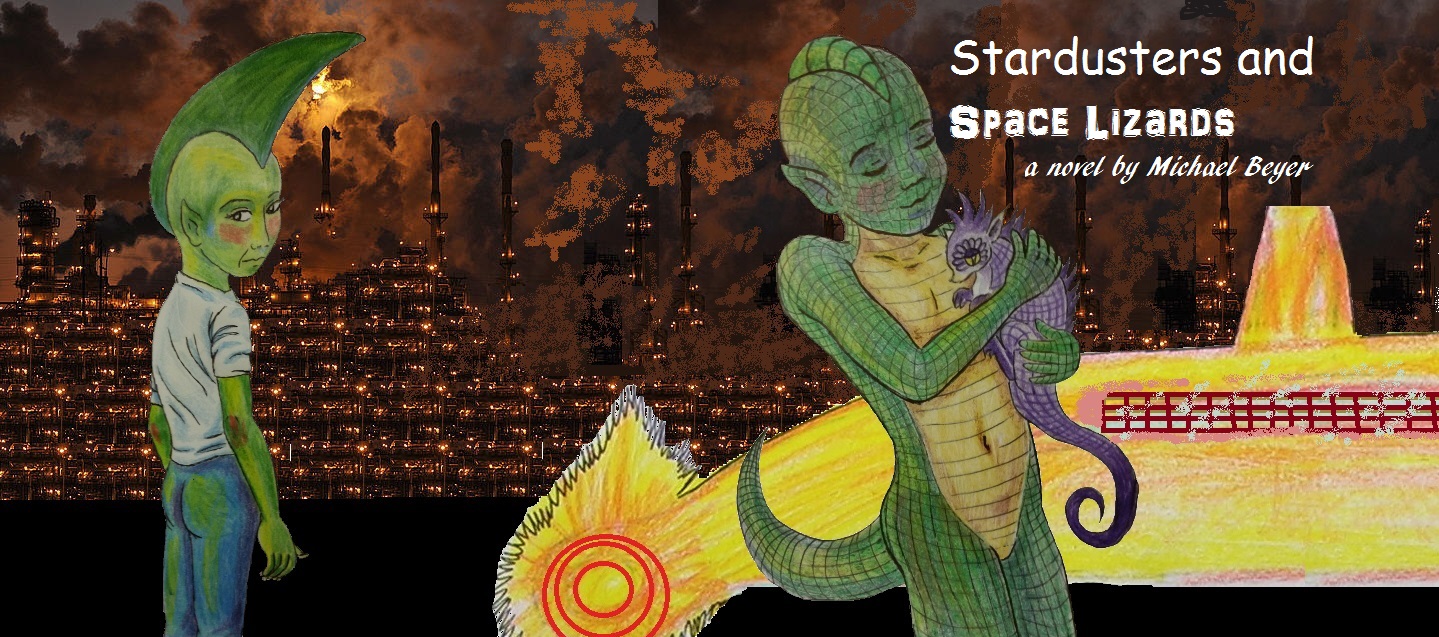
Catch a Falling Star is the book that Stardusters and Space Lizards is a sequel to.
It is the story of the Telleron invasion of the Earth, landing in a small town in Iowa, invading in invisibility cloaking devices, and failing to even be noticed by most people in town.
The e-book is $3.99 on Amazon, so it is not as good a value as the free one.
This book is about fleeing aliens arriving by accident at a dying planet. It is a planet experiencing biosphere collapse just as Earth will probably do in the near future. And the alien characters, most of them tadpoles (Telleron children) take active steps to try to save the new planet so they, too, might have a place to live.
Anyway, buy the book. It’s cheap.
But since Mickey the advertiser is like Cassandra, I have to say the opposite. Don’t buy this book. It is awful. You will not love it. You will not think all your friends need to read it too.
Now you finally get to sample a bit of my genius at historical analysis. I will lay on you one of the theories of history that I created, and which has had a profound effect on the whole debate over whether History is a Science, or merely a gathering of talking idiots and puppets of the governments who won the wars.
The theory is this; History is always about pirates. I know that statement probably alarms you, or makes you simply dismiss me as a loony, bald-headed goofball who just likes to talk and is meant to be ignored by you. Don’t be alarmed, and I am NOT a goofball.
History is never really written about the builders and creators who craft a society or a civilization. The occasional Albert Einstein, Thomas Edison, Gragg of Mars, or Googol Marou gets mentioned in a history book, but it is always the man, men, or peoples who see the civilization, want the civilization, and then either take the civilization for themselves or totally destroy the civilization who ultimately get the notice and the credit for making History happen. History is not about making something, but about taking something that is already there.
Consider how this played out in the history of the Orion Spur of the Milky Way Galaxy. It truly began with the Ancients who colonized the entire galaxy and then, for reasons unknown, totally disappeared from it, leaving only powerful and dangerous artifacts behind. They were creators and makers, so the story could never really be about them.
The story then would have to proceed to the gentle alien folk called the Sylvani. Now, they may actually be the Ancients, we have no way of knowing, but they don’t actually make History happen either. They created jump drives and interstellar travel, particle readers and material synthesizers (as well as the Skortch beams and disintegrators that can be derived from them), and anti-gravity technology. They did not colonize the stars. They had the bad sense to leave everything as they found it and live their lives in relative peace. The fools!
The amphibianoid people known as the Tellerons were the first to colonize and make an empire in the Orion Spur. These prolific frog-men of Telleri spread their form of civilization to eleven worlds. They wouldn’t have been able to do this, however, if they had never made contact with the Sylvani people while the latter were peacefully exploring the world of Telleri. The frog-men imprisoned the Sylvani explorers and forced them to yield up the all-important space travel technologies they had created. It was an act of space piracy. They basically stole all the knowledge and equipment needed to make a star empire.
Now, the Tellerons were basically fools themselves. They were ruthless explorers and conquerors but were a bit shallow in the thinking end of their gene pool. They were not adaptable and had to carefully recreate their swampy home-world environment everywhere they went. Thus, they were easily conquered themselves when they met far more adaptable races like the Galtorrians from the Delta Pavonis star system and the Earthers from the Sol system.
Words are what basically conquered the Telleron Star Empire. When they reached the Galtorrian homeworld of Galtorr Prime, they got themselves hooked on an alien cultural anomaly caused by TV broadcasts from Earth. The Galtorrians had been receiving and decoding the television signals of Earth for twenty years. A virulent black market existed there for pirated episodes of a TV show called “I Love Lucy”. Reruns of that TV show became a model for both the Galtorrians and the Tellerons who tried to conquer them.
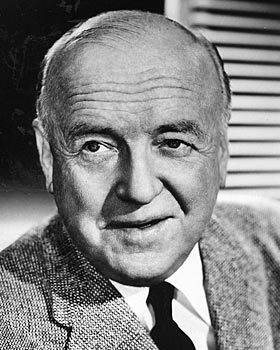
Truth be told, the Tellerons began worshipping the character of Fred Mertz being played by an actor named William Frawley. Frawley’s frog-like mouth and toad-like wit made the fin-headed frog-men think Fred Mertz was a god. The Galtorrians had already adapted the English Language from the show because it was similar in sound patterns to Galtorr-speak. It had become the language of, not only entertainment, but of commerce and diplomacy. Now, English is a twisted and demented sort of language, capable of double meanings, puns, and irony. There are no sacred rules of grammar, word-formation, or spelling, and so the language can be shaped to suit the nefarious purposes of those sinister professionals known as “writers”. Galtorrians were able to trick Tellerons with the so-called “Word of Fred Mertz” into giving them the secrets of space travel, Skortch rays, and material synthesis.
So, space travel and the Telleron Empire fell into the hands of the Galtorrians by piracy. They stole the empire from the rival alien race. They then ruthlessly expanded their new empire. Being a pirate was the thing that created the History.
Now, a very similar process also happened on Earth. Tellerons, easily tricked by Earthers, also lost control of their stolen technology when they tried to invade Earth in about the year 1990 A.D. They tried to invade using invisibility technology acquired by showing their Sylvani slaves old episodes of Star Trek with Romulans in them. The Sylvani succeeded beyond the wildest dreams of Gene Roddenberry. Of course, this backfired, because it is hard to intimidate someone you are trying to conquer with armies and weapons that cannot be seen. The Tellerons managed to lose their devices and Skortch themselves during an invasion that almost no one knew was happening. Again, the technology was pirated from them. I firmly believe that it was one of my own ancestors, a genius named Orben Wallace who reverse-engineered all the alien devices and brought the technology to Earth.
The empire of all humanoid and intelligent life forms in the Orion Spur would be taken and retaken using the stolen technologies and the stolen words of what would become known as “Galanglic,” Galactic English. So, you can see, I have brilliantly proven my theory. All History is about pirates.
William Frawley, the actor who first uttered the “Word of Fred Mertz”
Ged and his students burst through the doorway to Raylond King’s private suite. Phoenix and Rocket Rogers were both blazing in fire-form. Projectiles whirred around Shu Kwai in accelerating orbits. Jackie had brought little Freddy to join the strike team, and the dark-skinned boy was now transformed into were-cat form, half boy, half black panther. Ged himself was there as himself, waiting to see what might be needed before he transformed.
What they burst in upon was easily as disconcerting as anything they might’ve expected. Tara was dressed in luxurious purple silks and holding in her arms a tiny baby, possibly a girl. In fact, Ged immediately felt the baby’s mind probe into his head. It wasn’t just any baby. It was his daughter. Next to Tara, and clutching her right hand like a love-sick puppy, was one of the three rulers of Mingo Sector, Raylond King. King, of course, was nothing like you’d expect from the macabre rulers of a mechano-zombie world of rot warriors and ruined palaces. He wore black eye make-up to make his pale face slightly sinister, but this dark lord had an innocent-looking cherub’s face in so many ways. The horned helmet he wore on his head was in many ways more of a child’s toy than a warrior-king’s helm. He was also dressed in a purple silk robe.
“Prepare to die, King!” growled Emperor Mong from a spot safely behind Ged and his student-warriors.
“Ged!” cried Tara, confused. “You’ve come! But…”
Ged’s eyes grew immediately sad and dark.
“I am not trying to hurt her!” insisted Raylond King as two human torches, a telekinetic ninja, and a cat-child all closed in around him.
“Stop!” ordered Ged. “You don’t require assistance, do you, Tara?”
“No. Not now, I don’t. Where were you all when those Monopoly Brigade pigs were torturing me and having their way with me?” The bright mental fire of Tara’s recent pain burned into Ged’s mind with humbling accusations.
“I’m sorry, Tara. I should have come immediately.”
Ged knew she could read the self-blame and self-loathing that consumed him. Her anger softened like butter on a hot skillet. He could feel it happening, and he felt the baby responding to it too.
“Ged, you know I still love you, but…”
Ged’s mind flitted to the beautiful Lizard Lady. “I love you too, but…” he stammered.
Tara began to laugh a soft, tittery laugh. “We have been foolish,” she said. “Both of us. I want you to get to know Lord King here. He’s a very special man, and he rescued me when my life was at an end.”
Ged stepped forward and bowed to the young ruler.
“I owe you a great debt for saving Tara,” he stated simply.
Raylond King’s eyes dipped downward. He blushed delicately, like a woman. “I didn’t do it for you…”
“It’s all right,” said Ged. “She never was mine to be jealous over. I am honored to meet the one who will be her partner in life.”
King now took a turn at bowing.
“What will you do with the child?” Ged asked Tara.
“She will be yours, more than mine,” said Tara. “As soon as she is old enough to be independent of me, we will send her to you. The planet Gaijin? Is that right?”
Of course, she already knew it was right. She only asked that of Ged to be polite, sensitive to the fact that she automatically invaded the privacy of his mind every time they were both in the same room.
“I am happy for you,” said Ged sadly.
“I am happy for you, too,” said Tara, almost as wistfully.
“Waitaminnit!” cried Mong in frustration. “He’s a leader of your enemies! Kill him! I demand that you kill him now!”
“Actually,” said Ged, “He’s my new ally. He will administer this planet for us, and I will gladly turn you over to his custody.”
Emperor Mong fainted dead away. Rocket and Phoenix extinguished their fire. Shu Kwai let all his small swirling stones settle to the ground. Freddy actually began to purr.
“Thank you, Ged Aero,” said King. Ged smiled. He knew this man was the perfect choice to take care of Tara. The planet would change dramatically under his stewardship.
“Oh! Ged!” cried Tara suddenly. “I found the most terrible thought in Mong’s evil head! Your brother Ham was trapped by Admiral Tang at the battle for the planet Coventry!”
“Ham has found a way out of serious situations like that on his own in the past. I am afraid I have to depend on him to do it again. I have these responsibilities to care for… as well as a doomsday device from the Ancients to deal with.”
While the adults were talking, Jackie had sidled up near Tara where she could look at the baby.
“She’s beautiful,” Jackie said. “Can I hold her?”
Tara handed the baby to her almost without thinking. Without talking aloud she said to Ged, “You must spend some time consulting with us about the planet, the joining with the New Star League, and what to do with Mong. We will also talk about how we are going to help you complete your quest with the doomsday thing.”
“What is the baby’s name?” Jackie asked.
“Amanda King,” said Tara aloud.
“Amanda Aero-King!” declared the baby loudly in everyone’s mind.
“Let me introduce myself. I am Smiley Creaturefeature, Imperial Harlequin of the Triumvirate now present on Mingo!”
A second Harlequin also stepped through the ruined doorway. “And I am Sharpwhistle Crackplatter, his second in command.”
The two costumed cyborgs both switched on a feature of their armor simultaneously and immediately sent the entire hallway into chaos. Flashing and strobing colored lights along with barely audible sonic waves warped the senses of all the Psions the cyborgs faced, and Emperor Mong even couldn’t get his pants pulled back up.
Phoenix and Rocket both ignited their fire forms, but neither was able to see through their own flames because of the constant color-changing lights.
Jackie was unable to concentrate enough to teleport. The sonic waves kept her from using her inner eye.
Shu could pick up rocks and debris, but his telekinetic senses were fooled enough by the lights that he couldn’t accurately target anything.
Ged’s senses also were overwhelmed. But he took a moment to think, letting Smiley and Sharpwhatsit cartwheel around him and his distressed students. He didn’t particularly care what they maybe wanted to do to Mong.
Now, the Blind Kraken of Jargoon was a creature with no sense of sight or capability of hearing. It’s tentacles were guided by a superb heat-sensory organ that could identify shapes and locations of both hot and cool things And the amphibious creature had no problem being completely out of the water for long periods of time. And Ged had both hunted and eaten one more than an Earth decade ago.
“What is that blobby white thing?” Smiley said to Sharpwhatsit.
“Dunno… but it don’t look bullet-proof.”
Both Harlequins whipped out slug-throwing weapons called machine guns and filled the air with projectiles. Ged used several of his twenty tentacles to shift his writhing students out of harm’s way while his gelatinous body absorbed and digested all the slugs that hit him.
“It seems to like that!” shouted Sharpwhatsit as he did a handspring and cast the machine gun aside.
“Lasers, then?” asked Smiley.
“Lasers, yes!” answered the other clown.
The medium-laser pistols they both pulled out fired hot laser light at Ged’s shape-changing body. He not only absorbed the attacks, the extra heat energy he absorbed made his tentacles quicker.
The first catch was Smiley Creaturefeature’s right ankle. The second catch was Smiley’s gun hand. Then he poured megajoules of heat energy into Smiley’s limbs, completely melting his muscle-control circuits. He was completely immobilized though he was still alive in the way that cyborgs are alive, He was out of the battle.
“I will avenge you, Smiley,” hollered Sharpwhatsit. He cast away the laser and pulled out a vibro-sword. Each tentacle that Ged reached out with was immediately lopped off and rendered useless.
But the Electric Coil Monster of New Spain had once been hunted by Ged and his brother, and then dissected for the scientist that hired them. Ged knew it inside out.
When Sharpwhistle Crackplatter’s blade embedded itself in Ged’s coil, he sent a lightning charge of electricity coursing through the surprised dancing clown. He fell writhing to the floor, all his circuits shorting out, making him as dead as an undead cyborg can technically be.
The students, no longer incapacitated by the Harlequins, stood around Ged as he transformed back into his human form.
“I hope we don’t have to overcome any more of those things,” said Phoenix.
“You should go after the Triumvirs that have your girlfriend right now before they call up any more of those terrible monsters,” whined Mong, still sniveling.
The fight had been almost boring as the waves of rot warriors shambled forward, trying to aim their various spears, guns, and lasers, and then being disassembled by the student Psions of Ged Aero’s Dojo. Shu Kwai had been the most destructive, able to rip out electronic controls with a mere thought. Phoenix had also laid waste, melting the circuitry out of the Mechanoid-zombie army of Mong the Unmerciful. The minions of Mong had melted like margarine in a microwave. Ged had found himself in his armored cat form with nothing to actually do.
The invaders soon found themselves virtually in control of the Ruined Palace of David King. Jackie teleported back to the Celestial Dragon and picked up Gyro. The little Neulon whiz kid hooked up some software in an injector device he had pulled together by rearranging molecules with his mind. He then linked it to an uncrushed rot-warrior skull and pulled out a map of the complex through the skull’s control link to the building’s computer system.
“What’d you find there, Smurf?” Phoenix asked almost immediately.
“I am finding Emperor Mong in his suite surrounded by rot-warrior generals trying to destroy two guys called Triumvirs with an even bigger horde of rot warriors than we just polished off,” said Gyro, grinning at his own manipulative genius at controlling computers without relying on Junior’s special Psion power.
“What?” said Phoenix, frowning.
“He’s telling you he found the Emperor in his private living quarters focusing his attacks on somebody besides us,” said Shu Kwai with an icy superiority.
Phoenix frowned at the nearly naked boy in his white loincloth. Ged could feel tension building again between the two.
“Okay,” said Phoenix, “so what do we do now, Ged Sensei?”
“We go pay Mong a little visit,” Ged answered, now back in human form and dressed in the jumpsuit and fedora hat he had brought with him.
“Has he detected us?” Rocket asked Gyro.
“I don’t know for sure, but maybe not. He is in… I don’t know how to say it in Galactic English. The kapooiac.”
“I have a feeling that means the fresher… or restroom… probably,” suggested Phoenix.
“Let’s go quickly,” ordered Shu Kwai, “so we can maintain as much surprise as possible.”
Gyro led the way through bone-littered corridors. The whole place had the feel of an old black-and-white monster movie. This wasn’t surprising, since the Galtorrians had based much of their culture on the TV programs they intercepted from ancient Earth in the 1950s and 1960s. In fact, Galactic English had become the norm in the Orion Spur due to the fact that the Galtorrians worshipped the TV comedyI Love Lucy. Through artificial cobwebs and gray stonework, they wound their way down into the bowels of the palace. Finally, Gyro stopped them before a blank stone wall.
“There is a secret door here,” he said with a sweet blue smile.
“Good,” said Phoenix. “I’ll open it!”
A wall of flame swelled outward from Phoenix’s fingertips. The wall of artificial stone and plasticrete melted away before them, revealing Mong on his personal throne. It was not his throne of office, either, but rather the natural place one goes when he can no longer keep his bowels from emptying from fear.
“Eeuw! Gross!” cried Jackie, staring at the emperor with his pants down.
Mong was cringing while staring out from under his golden skullcap with the carved dragon as its crest. His Fu Manchu moustache was wet with tears of fear.
“Oh, great Ged Aero! You are the one my agents have been telling me about, aren’t you?” Mong’s voice was squeaky and timid, surprising from so sinister a caped figure, even with his pants down on his throne and toilet paper in hand. Shu Kwai, Rocket, Phoenix, and Gyro all laughed about this man they had so recently dreaded.
“Mong, I have come for her,” said Ged. “I want Tara Salongi back.”
“What? I don’t have your young lady! But you have to defend me! Protect me from those clowns and I will gladly give her back to you!”
The pitiful evil emperor was pleading in such a sniveling, groveling manner that Ged couldn’t bear it.
“Do you have her? Or don’t you? All I require from you,” said Ged, “is to lead me to Tara and then flee this planet for your pitiful life. If I don’t get her back, I will hunt you down and tear you to pieces.”
There was a large, startling crash as someone tore the fresher door on the opposite side out of the wall.
Ged’s eyes flashed with anger, an emotion that none of the students present had ever actually seen in him before. It chilled them all to the bone.
An armored clown stepped through the hole. He was obviously a cyborg, but far more sophisticated than any rot warrior they had yet encountered.
“So, Mong is not out of champions yet!” declared the Harlequin menacingly.















Vonnegut
My experience of the works of Kurt Vonnegut is limited to the reading of three books; Cat’s Cradle, Breakfast of Champions, and Slaughterhouse Five. But it was enough to make me love him and use him as a shaper of my soul.
I deeply apologize for the fact that even though he only wrote 14 books and a bunch of short stories, I have not read everything I could get my hands on by Kurt. Three novels and one short story (Harrison Bergeron) is not really enough to compare to the many, many things that I have read by Mark Twain, Terry Pratchett, Louis L’Amour, and Michael Crichton. I can’t begin to count how many books of each of those four I have read and reread. But it is enough that I read those three novels and have a lifelong regret of never buying and reading Slapstick when I had the chance. Vonnegut writes black humor. The ideas are painful, and burn away flesh from your personal body of being. And at the same time, you cannot help but laugh at the pure, clean, horrifying truths his ridiculous stories reveal.
If, in the course of telling a story, you can put the sublime, the ridiculous, and the horrendous side by side, and make the reader see how they actually fit together, then you can write like Vonnegut.
Let me give you three quick and dirty book reports of the Vonnegut I have read in the order I have read them;
I read Cat’s Cradle in college. I was young and idealistic at the time, foolishly convinced I could be a great writer and cartoonist who could use my work to change mankind for the better.
In the book, Dr. Felix Hoenikker (a fictionalized co-creator of the atomic bomb) is obsessively re-stacking cannonballs in the town square in pursuit of a new way to align water molecules that will yield ice that does not melt at room temperature. Much as he did with the A-bomb, Hoenikker invents a world-ending science-thing without any thought for the possible consequences. The narrator of the novel is trying to write a humanizing biography of the scientist, and comes to observe the inevitable destruction of the whole world when the oceans freeze into Ice-9, the un-meltable ice crystal. Before the world ends, the narrator spends time on the fictional Carribean island of San Lorenzo where he learns the fictional religion known as Bokononism, and learns to make love to a beautiful woman by pressing bare feet together sole to sole. It is a nihilistic picture of what humans are really like more savagely bleak than any portrayal Monte Python’s Flying Circus ever did on TV.
Needless to say, my ideals were eventually shattered and my faith in the world shaken.
I read Breakfast of Champions after I had been teaching long enough to buy my own house, be newly married, and a father to one son. It was probably the worst time of life to be reading a book so cynical, yet true.
In this story, the author Kilgore Trout, much published but mostly unknown, is headed to Midland City to deliver a keynote address at an arts festival. Dwayne Hoover is a wealthy business man who owns a lot of Midland City real-estate. Trout gives Hoover a book (supposedly a message from the creator of the universe) to read that suggests that all people (except for the reader of the book… meaning Hoover) are machines with no free will. Hoover takes the message to heart and tries to set the machines free by breaking them, beating up his son, his lover, and nine other people before being taken into custody.
The book contains devastating themes of suicide, free will, and social and economic cruelty. It makes you sincerely reflect on your own cog-in-the-machine reality.
Slaughterhouse Five is a book I bought and read when I missed my chance to buy Slapstick and needed something to take home from HalfPrice Books to make me feel better about what I missed. (Of the five books I had intended to buy that day, none were still on the shelves in spite of the fact that they had been there the week before.) It was fortuitous. This proved to be the best novel I had ever read by Vonnegut.
Like most of his work, the story of Billy Pilgrim is a fractured mosaic of small story pieces not presented in chronological order. It details Billy’s safe, ordinary marriage to a wife who gives him two children, but it is ironically cluttered with death, accidents, being stalked by an assassin, and being kidnapped by aliens. It also details his experiences in World War II where he is captured by the Germans, held prisoner in Dresden, kept in an underground slaughterhouse, and ironically survives the fire-bombing of Dresden by the Allies. Further, it details his time as a zoo exhibit on the alien planet of Tralfamadore.
It explores the themes of depression, post-traumatic-stress disorder, and anti-war sentiment. Vonnegut himself was a prisoner of war in Dresden during the fire-bombing, so real-life experiences fill the book with gravitas that it might not otherwise possess. Whether the author was ever kidnapped by aliens or not, I cannot say.
But Kurt Vonnegut’s desire to be a writer and portray himself as a writer in the character of Kilgore Trout, and even as himself in his work, has an awful lot to do with my desire to be a writer myself. Dark, pithy wisdom is his thing. But that wisdom, having been wrung from the darkness is all the more brightly lit because of that wringing. It is hard to read, but not hard to love.
Leave a comment
Filed under aliens, book reports, commentary, humor, reading, writing humor
Tagged as Kurt Vonnegut