
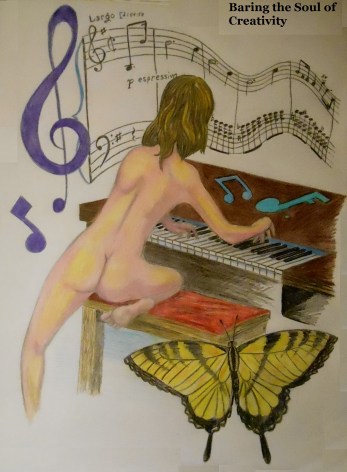
Being a writer is a life of music that happens only in your head. You hear voices constantly. They pulse rhythmically with insights and ideas that have to be written down and remembered. Otherwise the music turns clashing-cymbals dark and depressing. Monday I wrote a deeply personal thank you to the Methodist minister who saved my life when I was a boy. I posted a YouTube music video by the acapella group Pentatonix with that essay in a vain attempt to give you an idea of the music in my head when I composed that very difficult piece to give myself a measure of peace.
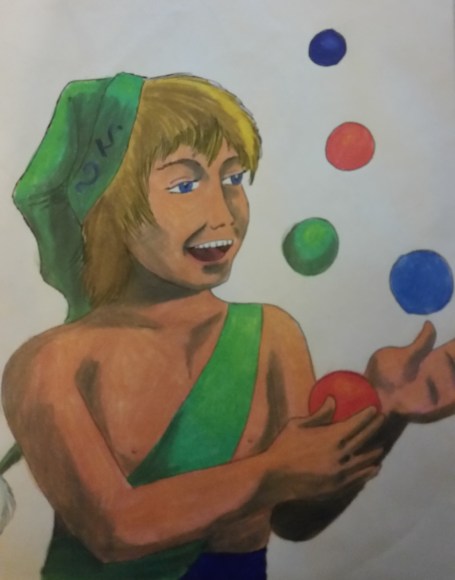
I realize that I am not writing poetry here. Poetry can so easily slip into melody and music because of rhythm and meter and rhyme. And yet, words to me are always about singing, about performing, about doing tricks with metaphor and meaning, rhythm, convoluted sentence structure, and other sneaky things that snake-oil salesman do to get you to think what you are hearing is precisely what you needed to hear. The Sonata of Silence… did you notice the alliteration of the silvery letter “S” in that title? The beat of the syllables? Da-daah-da a da-da? The way a mere suggestion of music can bring symphonic sounds to your ear of imagination as you read? The way a simple metaphor, writing is music, can be wrapped into an essay like a single refrain in a symphonic piece?
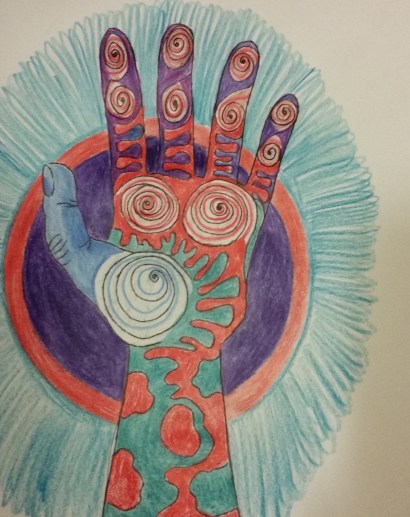
A sonata is a musical exercise in three or four movements that is basically instrumental in nature. You may have noticed that the movements are loosely defined here by the accompanying pictures, of which there are three. And it is silent only in the way that the instruments I am using themselves make no noise in the physical world. The only sounds as I type these words are the hum of an old air conditioner and the whirr of my electric fan. Yet my mind is filled with crescendos of violins and cellos, bold brass, and soft woodwinds. The voice saying these words aloud only in my head is me. Not the me you hear when I talk or the me I can hear on recordings of my own voice, but rather the me that I always hear from the inside. And the voice is not so much “saying” as “singing”.
Writing makes music. The writer can hear it. The reader can too. And whether I croon it to make you cry, or trill it to make you laugh, I am playing the instrument. And so, the final notes of the sonata are these. Be happy. Be well. And listen for the music.
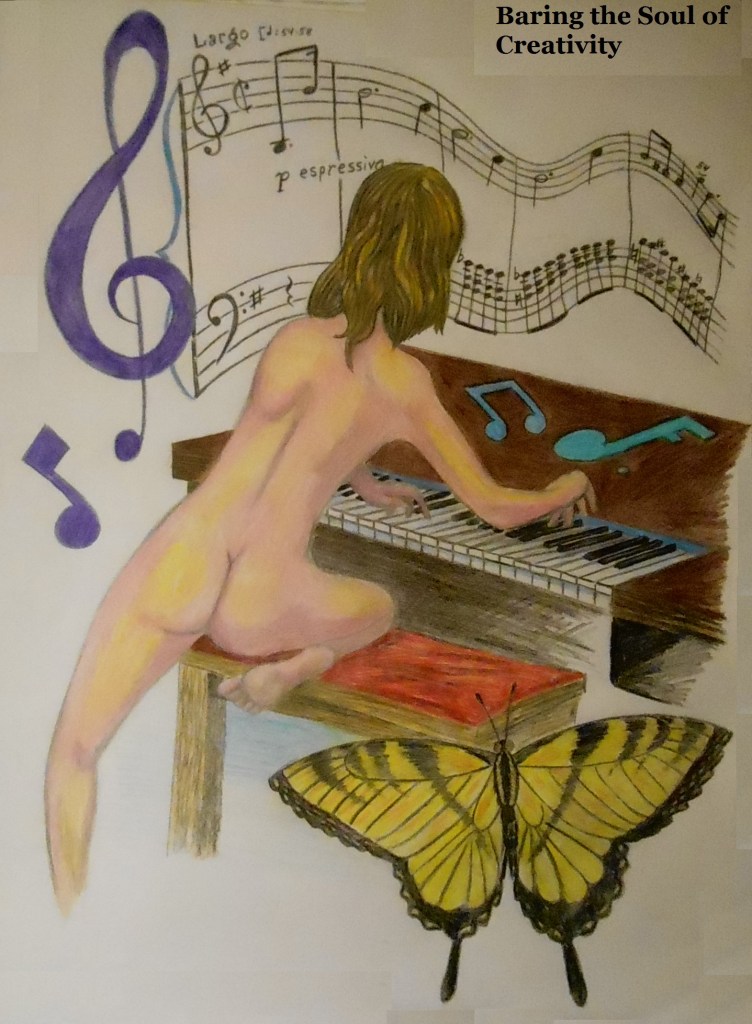

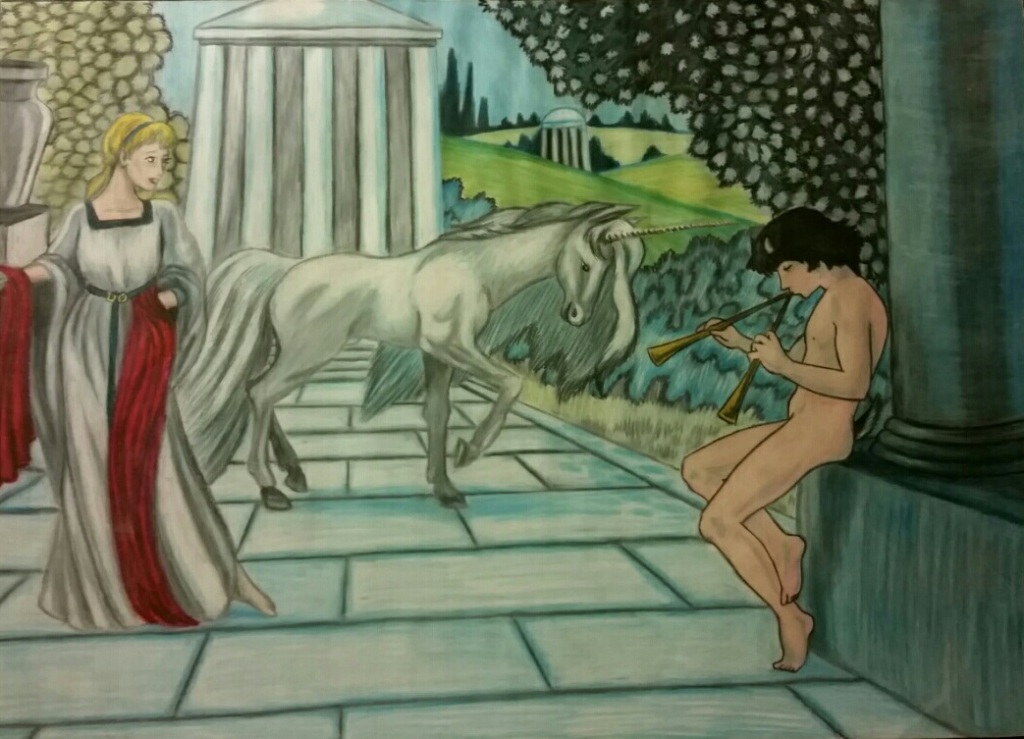
 Catch a Falling Star
The Sedentary Stradivarius
The greatest tragedy known to man is the finely-tuned instrument that is merely sitting, barely active, when instead it should be soaring to heights never seen before.
It is a real shame that so much of human endeavor is bent towards the accumulation of wealth… And when the lucky few reach the pinnacle of that wealth-acquisition, measured in billions, they choose to hoard it and salt it away for their own exclusive use rather than solve problems like poverty, hunger, ignorance, pollution, violence, and want. The act of creation, being musical, artistic, literary, or profound, is given so little value that the idea of the starving artist is an idea that exists in every head.
I fear that far too many people don’t t truly understand what value means. For life to be worth living, you have to have priorities that justify mankind’s very existence. Surely we were not created… by either God or an indifferent random universe… to merely exist like the blue-green lichen that graces the bark of a rotting stump, or to elect Donald Trump as President just so we can see smarty-pants liberal elitists chopped down by a corrupt plague of racist frogs. The tragedy lies in the knowing… or the not knowing.
Perhaps you recognize Beethoven’s 9th Symphony when you hear the Dah-Dah-Dah-Dummm! of death knocking in that familiar musical phrase. But do you recognize the pastoral beauty of the sunshine-and-rain-filled 5th Symphony? Or have you heard the sorrow and the striving of daily life in the city streets depicted in the 7th Symphony (offered above)? If not, why not? How can you listen to any of it and not hear the many underlined reasons that it is considered among the greatest music ever created? And that by a man who was mildly insane and eventually stone deaf, unable to hear his own music anywhere but in his imagination?
I have reached a point in my life that I cannot do much beyond sit and think such thoughts. I am limited in how I can move and what work I can do by my ever-more-painful arthritis, stinging me in every joint. I am also limited by lack of money in where I can go and what I can afford to do. But I refuse to be that finely-tuned instrument that does not make much in the way of music. Hence, an essay like this one today. It is me, using my words to the best of my ability, to fill the sky with hopelessly beautiful attempts at making the stars twinkle.
Leave a comment
Filed under artwork, classical music, commentary, feeling sorry for myself, insight, Paffooney, philosophy, review of music
Tagged as artistry, Beethoven