Yesterday the St. Louis Blues hockey team beat the San Jose Sharks 5 to 0 in game 5 of their best-of-seven playoff series. They are one win away from the Stanley Cup finals again for the first time since the 1960’s.
Once again Jaden Schwartz scored a 3-goal hat trick to lead the scoring. The reliable Vladimir Teresenko scored as well, while goalie Binnington scored a shut-out on the Sharks.
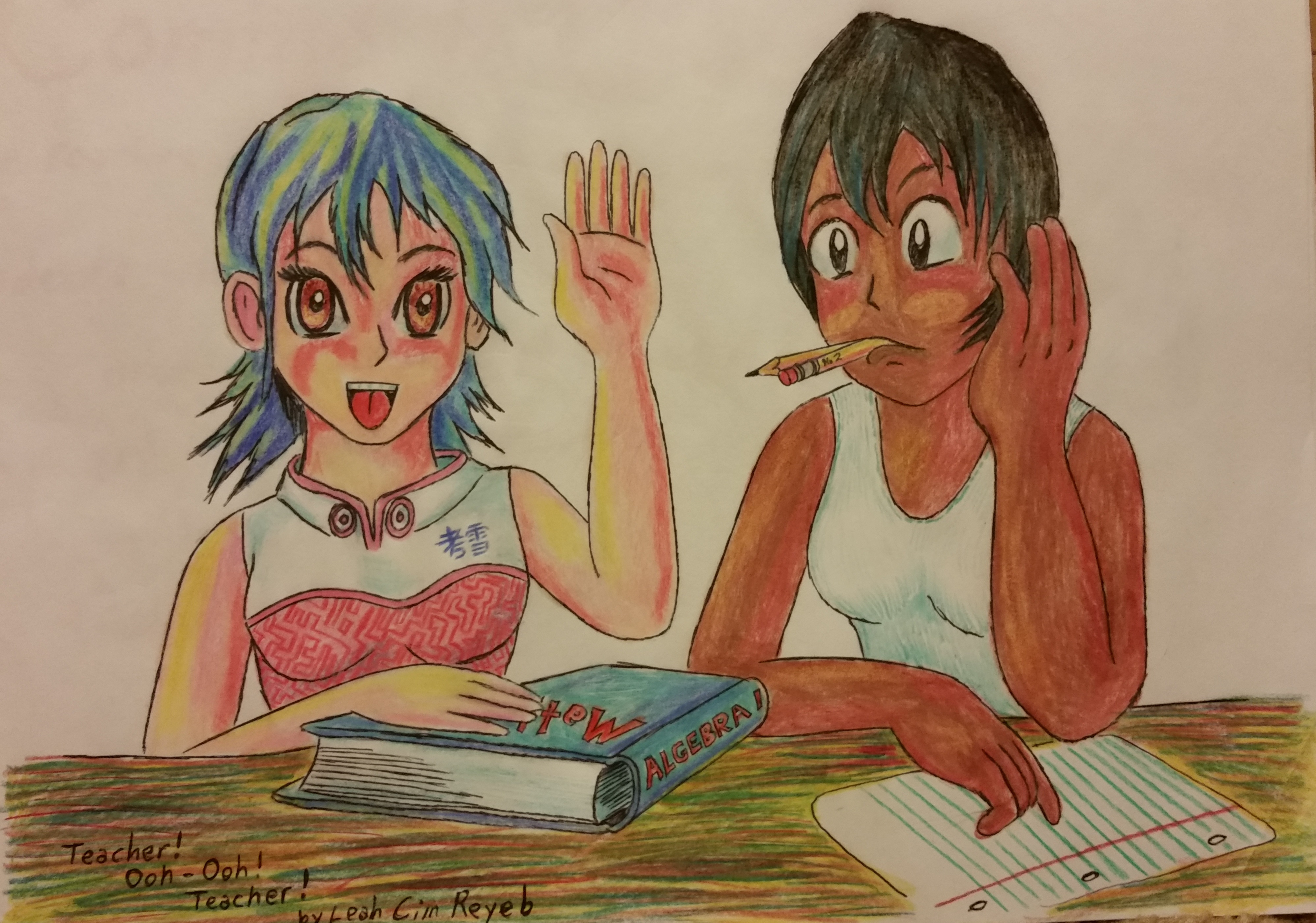
My daughter forgot her pencil case in school over the weekend. Now, for normal students, this is no really big deal. But for the Princess, like it is for me as an amateur artist, the pencil case, with her colored pencils and pens in it, is one of the most necessary things for life.
Of course, we did not have an opportunity to go back to school for her pencils and pens. So, panicky, she texted her teacher whereupon the pencil case in question was found and put aside for her until early this morning. She then stole my pens and pencils for the weekend, depriving me and causing me to be the one with the anxiety disorder and heart palpitations.
Of course, pens and pencils were always a critical issue when I was a teacher for 31 years, plus two years as a substitute teacher. Unlike the Princess, students in an English classroom NEVER have a pen or a pencil to write with. I swear, I have seen them gnaw pencils to pieces like a hungry beaver or termite. And they chew on pens to the point that there is a sudden squishy noise in their mouth and they become members of the Black Teeth Club. (Or Blue Teeth Club for the more choosy sort of student.)
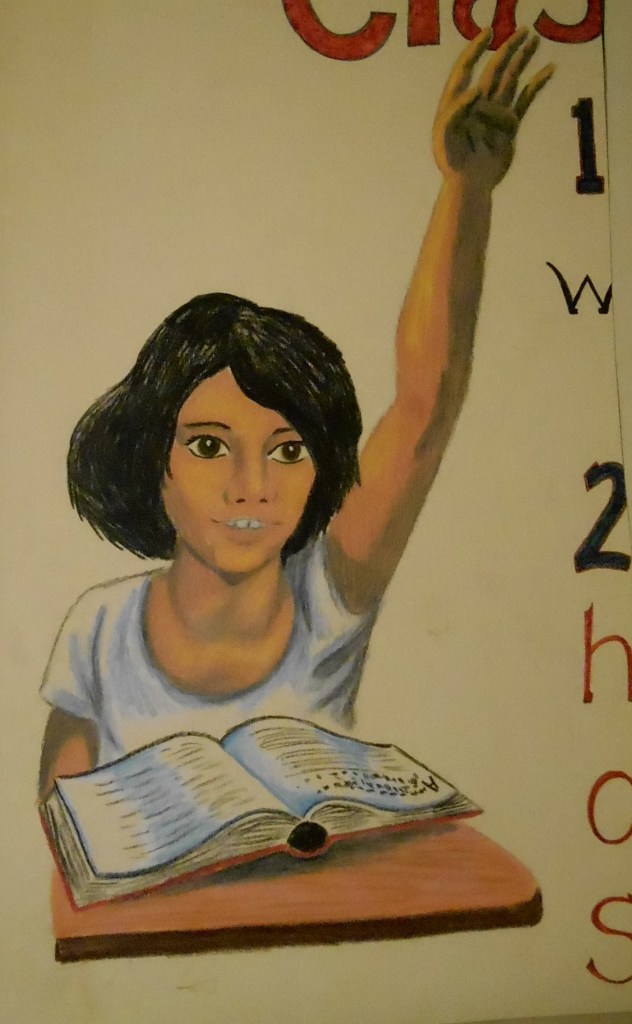
A piece of an actual classroom rules poster.
Having students in your class who actually have pencils and pens to learn with is a career-long battle. I tried providing pens for a quarter. I would by cheap bags of pens, ten for two dollars, and sell them to panicky writers and test takers with a quarter (and secretly free to some who really don’t have a quarter). I only used the pen money to buy more cheap pens. But that ran afoul of principals and school rules. A teacher can’t sell things in class without the district accountant giving approval and keeping sales tax records. Yes, the pencil pushers force teachers to give pens, pencils, and paper away for free. I finally settled -on a be-penning process of picking up leftover un-popped pens, half-eaten pencils, and the rare untouched writing instrument apparently lost the very instant the student sat down in his or her desk. These I would issue to moaning pencil-free students until the supply ran out (which it rarely ever did) at no cost to myself.
I also tried telling them repeatedly that they had to have a writing instrument, or they needed to beg, borrow, or steal one. And if they couldn’t do that, I’d tell them, “Well, you could always prick your finger and write in blood.” That was a joke I totally stopped using the instant a student did exactly what I said. A literalist, that one. And it turns out you can’t read an essay that a student writes in actual blood.
But, anyway… My daughter is safely in school now and no longer panicking because she has her precious pencil case back in her possession. And she probably will not ever make that same mistake again. (And she will probably not return my pens and pencils either.)
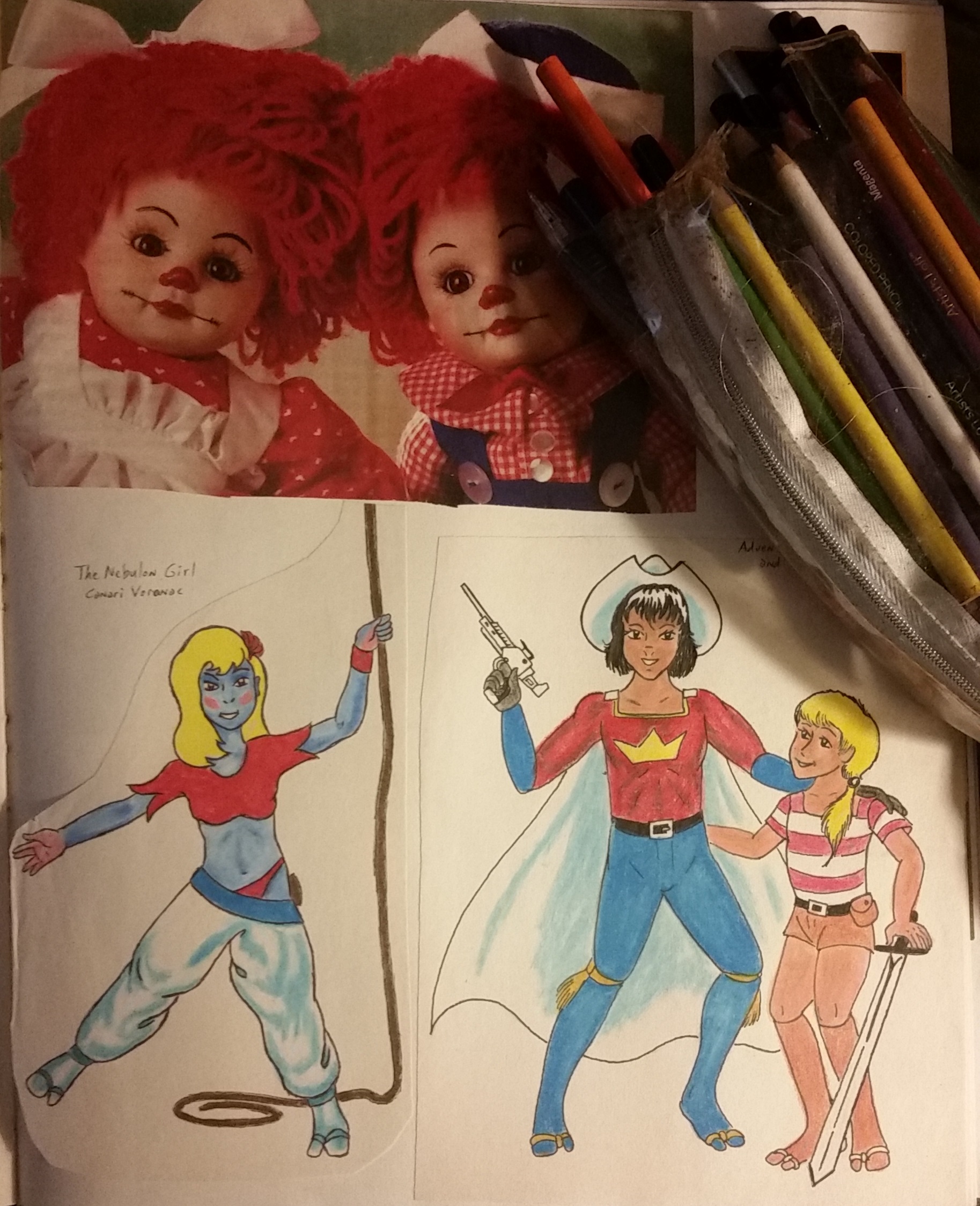
I like to dig through old piles of artwork I have done to re-purpose things and mash things together to make weird art salad.
Xeribeth the Sorceress and her parrot Herkimer
I used to play a Dungeons-and-Dragons-like game called Talislanta with groups of adolescent boys, most of whom had previously been my students in middle school. It was a weird world where weird things made artistical challenges for me that taught me to be a better and more imaginative artist.
Xeribeth was a member of an almost-human race that had yellow skin and wore colorful face tattoos. She also had to be somewhat alluring to trick adolescent boys into undertaking dangerous and possibly suicidal adventures (meaning characters who only lived on paper might die and have to be re-rolled with dungeon dice.)
Zoric, being a green Cymrillian wizard, gave me numerous opportunities to creative Kermit-the-frog-colored portraits. And he was a player character, so his greed and penchant for unwise actions decided on in the heat of battle (like turning himself into a fish-man while adventuring in the waterless desert) didn’t come from me.
Playing those games gave me training as a story-teller as well.
My efforts to see color with gradually worsening color-blindness led me to create eye-bashing color compositions that attempt to portray realistically things and feelings that can’t possibly be physically real. Thus I gradually became, over time, a surrealist (a juxtaposer of unlike and jarring things to deliver a visionary picture of reality) (How’s that for surrealistic gobbeldegook in definition form.)
Rabbit castles are the obvious answer
I often solve the problems of my life by drawing something and making cartoonish comments with serious consequences.
Little people and Slow Ones like us have different problems, but share the same world.
Ultimately, it boils down to the fact that the world on the inside of me is decidedly different than the world on the outside of me. But I have to live in both. And I can do that by drawing my colored-pencil Paffooney stuff, and posting it, and writing about it on a silly Sunday.
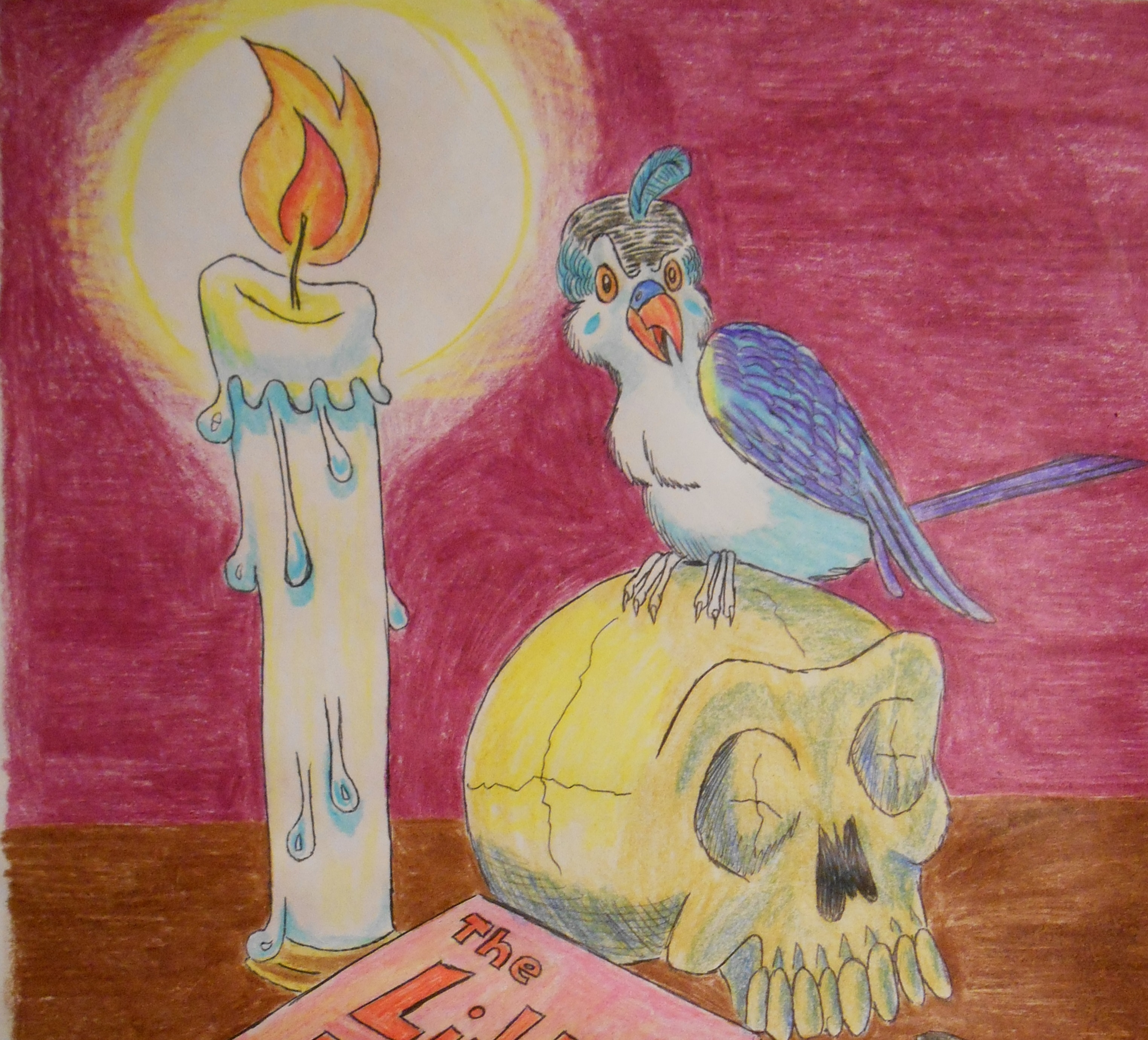
Candle-lit nightmares become stories and keep me awake late at night.
I am now closing in on the publication of The Baby Werewolf, a novel whose story began with a nightmare in 1978. It was a dream I had about being a monster. I woke up in a cold sweat and realized, to my complete horror, that I had been repressing the memory of being sexually assaulted for twelve years, the thing that almost brought me to suicide in 1973 and that I couldn’t put into words when I talked to counselors and ministers and friends who tried to keep me alive without even knowing that that was what the dark black words were about.
I don’t normally write horror stories. Yes, it is true, a character of some sort dies at the end of practically every novel I have ever written, but those are comedies. I am…
Here’s an old post about the publishing part of the writing process. This was at a time when PDMI Publishing was still a business and still planned to publish this book.
I really don’t have to put very much into this blog since most of my 500 words are already taken up with novel editing. So I will just put in a few comments on this novel that has consumed me since 2012. It is called Snow Babies
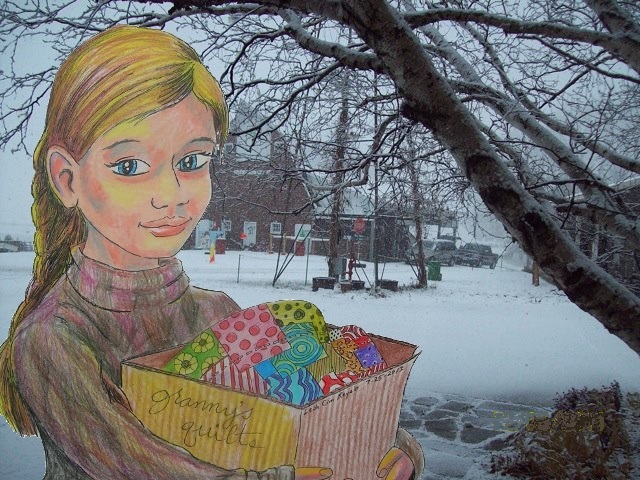
because it is basically about lost children and a blizzard that threatens to take them away completely. Now, there are fantasy creatures in the story, child-like ghost-things that come in the teeth of the blizzard to take away the souls of those who die in the cold. But the title actually refers more to the child characters in the story, Valerie Clarke (as seen above) and the four runaways from the Trailways bus. It is a story of survival during a blizzard, and survival when you have lost the ones you love. It is also a story of quilts… patchwork quilts… of…
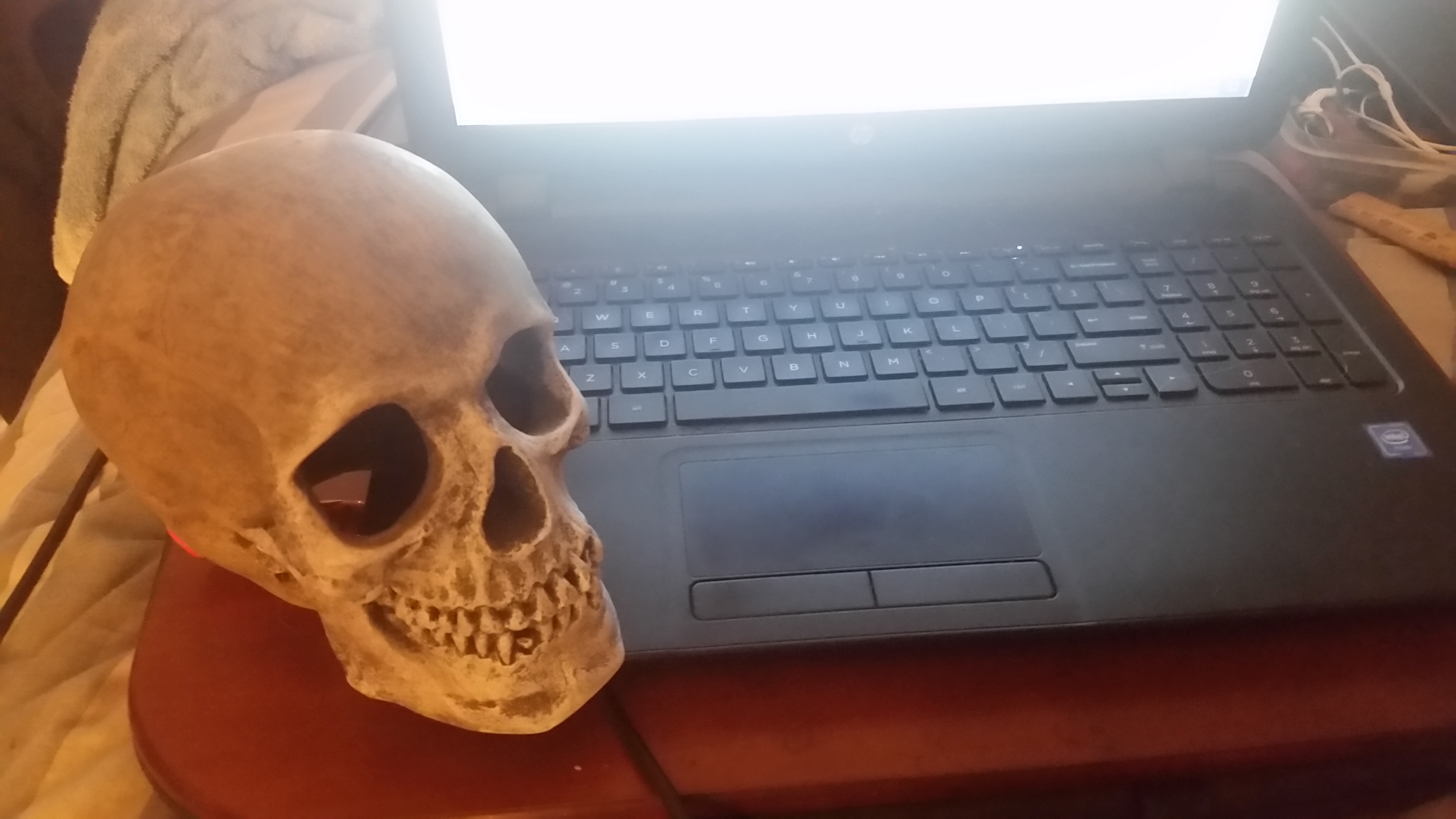
Quite often of late I begin a daily post with no ideas in my head of what the post is even going to be about. The pre-writing technique is known among English teachers and writing teachers as free-writing. But it is basically writing with a completely empty skull.
Of course, I don’t mean that literally. The skull in the picture is not mine, and the completely empty skull of which I speak is not the one in the picture. (That is really a ceramic aquarium decoration for scaring your tropical fish.)
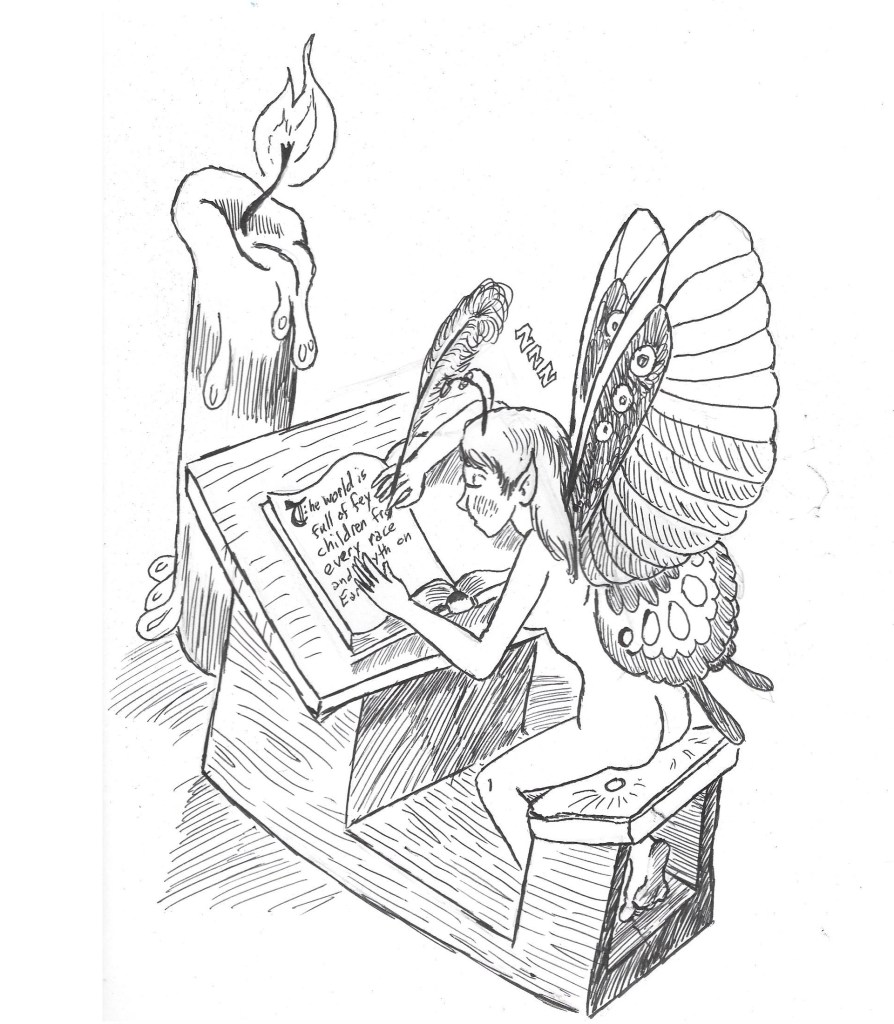
What I did was simply start an essay without any direction or plan in mind, going wherever the insanely creative part of my brain led me. So, I started with the picture of the fairy girl sleeping instead of doing her writing. That led me to the notion that she was supposed to be writing just as I was supposed to be writing, but she had an empty mind just as I had an empty mind at that moment. So, the light bulb suddenly went on over my head. And then I managed to turn it off again before gravity made it fall down on my head so that it would merely bonk my brain and not also set my old gray hair on fire. And then I wrote down the title that the jumble of associatively challenged details inspired in me, “Brain-Free Writing.”
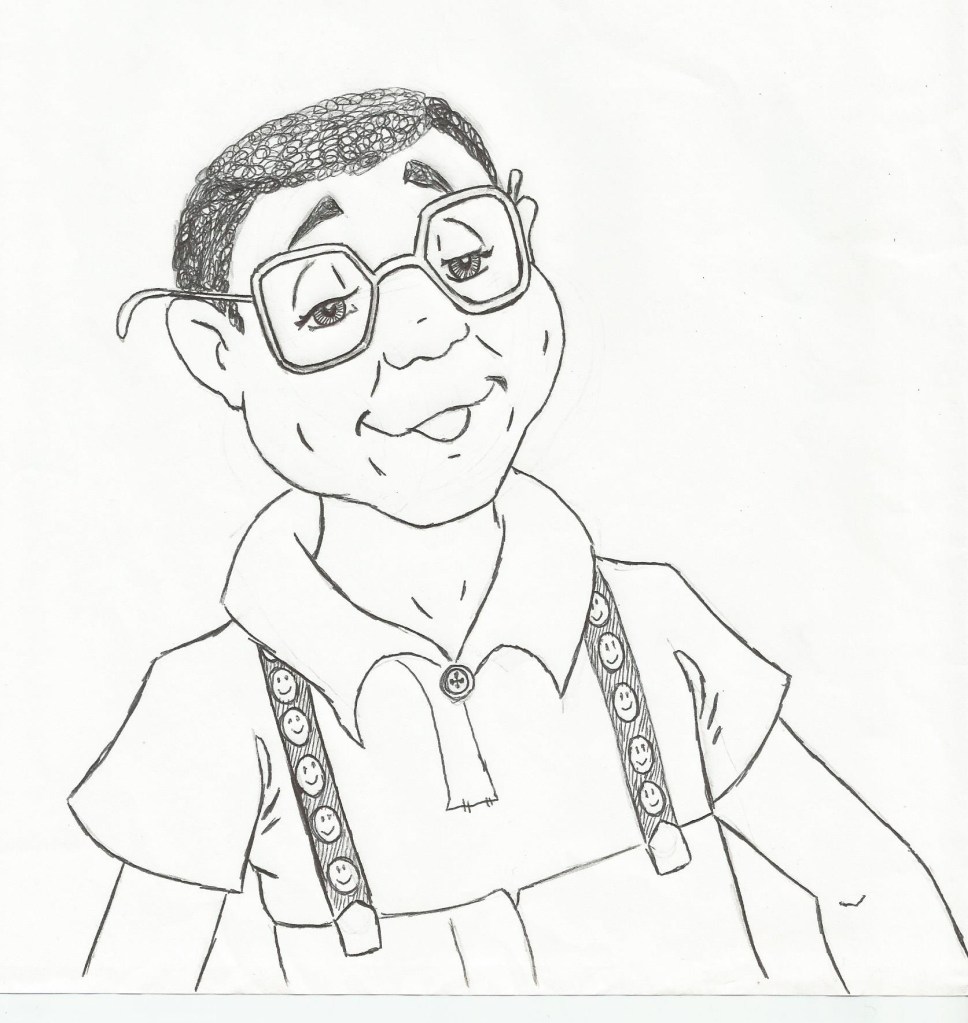
Steven Q. Urkel
So, then, when the initial surge of notions subsided, I resorted to another Paffooney picture, this time of an old TV character with obviously defective but plentiful brain activity. I selected this old drawing from my WordPress gallery because I often identify with Urkel. I am awash in a world of ideas unique to me, and incapable of smoothly integrating into polite society because of random massive brain farts and social awkwardnesses.
And the Urkel picture inspired me to do a comparison paragraph. Dilsey Murphy here is a character from my own novels who is also brainy and somewhat socially awkward. She, however, is different in her fundamental character make-up from Steve Urkel in that when she turns serious about her goals, in spite of shyness and awkwardness, she gets to the point of what she wants to accomplish, and she doesn’t mess up in the way that Urkel does. She has an underlying practicalness that Steve lacks. I am like her in many ways. In fact, it is that very practicalness that led me to start from nothing and churn out this finished essay.
I am today blessed to have my son home from the Marines, no longer on active duty. Now he will find a post-service job and make a new place for himself in the world. Meanwhile, I am too ill to do very much. And I have to stop the words of the song “Oh, Danny Boy…” from playing in my head so much… “But when ye come, and all the flowers are dying, If I am dead, as dead I well may be, You’ll come and find the place where I am lying…”
I am not dead yet. And though ill, I have to stop focusing on that part. For now, there is still life to be lived and books to be read.
Canto Nineteen – The
Log Book of the Reefer Mary Celeste
It would be two days before anything more could happen in
the quest to understand about the Captain.
Valerie finally found the time to visit Mary Philips’ house while Pidney
was also there. None of the other
Pirates proved available. Danny had a
4-H meeting to attend in the old Norwall School House, and Ray Zeffer also was
in 4-H. 4-H Club was the center of
farm-boy life in small farm towns in Iowa.
Both the boys and the girls had their own division of the club. Heart, head, hands, and health, the 4-H’s were
an international organization that encouraged youth development and prosperity
through projects and learning goals. 4-H
was to farmers what Boy Scouts were to the Army, Navy, and Marines…
indoctrination into the secret cult of the tillers of the earth. Technically, the three Pirates meeting in the
basement of the Philips’ house were supposed to be at the meeting too, at least
Pidney was. The Norwall Pirates were
also technically a 4-H softball team, so there were definite ties to things
that couldn’t be ignored for long.
Still, this secret meeting was temporarily more important.
“I’m glad creepy old Doble couldn’t come,” Pidney said. “I don’t trust him around you girls. He doesn’t go to 4-H meetings any more, but
he apparently has more important things to do with himself anyway.”
“We have to consider him a Pirate, though,” said Mary. “He is the only remaining member of the
original club.”
“Yeah, whatever.” Pid
was frowning until he looked at Valerie.
Then he smiled. “But I’m sure
glad you could come, Val.”
Valerie smiled her thanks at the big Polack. He could be kinda dense at times, but Valerie
was deeply in love with him anyway.
“I have the log book here,” Mary said, “and we can pick up
reading where we left off.”
“About the mermaid?” said Pid.
“Yes, about the mermaid.”
“Chinooki,” reminded Val.
“Let me turn to the book mark,” said Mary.
The mermaid was a miraculous creature. Kooky actually had very little trouble catching her in the nets he used for catching prawns whenever we were near the island of Tahiti. It was like she wanted to be caught for some strange reason. And we soon discovered that keeping company with Chinooki was something every man aboard desired with a passion. Her singing voice charmed the men to sleep and suggestibility. The mermaid possessed every piece of scrimshaw, every golden ornament, and every valuable jewel on board the ship in very short order.
“Chinooki likes sweet mens,” Chinooki said so often we never stopped to think that it might have a double meaning.
Chuck Jones was the first man to disappear. Kooky later told me that Chinooki told him she ate the sweet man. But she could say practically any scary and awful thing, and then sing a sweet song, and everyone would smile and think she did no wrong. The cabin boy disappeared next, and Bob Clampett swore he saw the kid’s severed foot at the bottom of the oyster stew Cookie served that same night.
“I am becoming alarmed here at this story,” said Pidney. “Is this one of those things where you read the scary story in a book and then it comes true in real life?”
“It can’t be,” said Mary.
“You know full well that Captain Noah Dettbarn was a fool and a liar
long before he ever went to sea. He has a
reputation in this little town, and the old folks all say that telling a lie is the same as telling a Noah.”
Mary continued reading aloud.
Chinooki was a favorite of every sailor aboard. She entertained us constantly with stories and songs. She could play Kooky’s ukulele, too, like a professional. She had us all dancing and singing along without being truly aware of what was going on. Crewmen kept turning up missing. Then, when Kooky started kissing her on the lips at every opportunity, I realized I needed to confront her. I think I owe Kooky for that, because if he hadn’t interrupted her songs with his kisses, I might never have returned to my senses.
“Chinooki,” I said, late one night at the aft rail, “you have to stop doing to us whatever it is that you have been doing to us.”
“Chinooki not know what you are meaning, nice Captain mans.”
“Don’t accuse her without all the facts,” Kooky said.
“The crew likes what Chinooki has been doing for us,” added Bob Clampett.
“Look around, Bob,” I said. “Where exactly is the rest of the crew?”
Bob looked all around the deck. There was a lot of nobody to count. His eyes got big and round. “Good Lord! You are right, Captain! Something is definitely wrong!”
“Ho ho! Sweet Bobs has seen through the glammer! Maybe silly Captain mans too!” said Chinooki. She then wobbled up to Bob using her fish tail to travel upright in the manner of a cobra. She put her silvery arms around his neck and gave him a big old smooch on the lips. Then she bit deeply into the side of his neck. Together they pitched backwards over the ship’s rail and fell into the ocean below. Poor Bob did not even have a chance to scream.
At that point in the story, poor Pidney was so pale, that
Mary stopped reading, apparently afraid the big Polish football hero was about
to pass out from fear.
“Don’t stop now!” Valerie insisted. “This old log book thing is getting really, really good.”
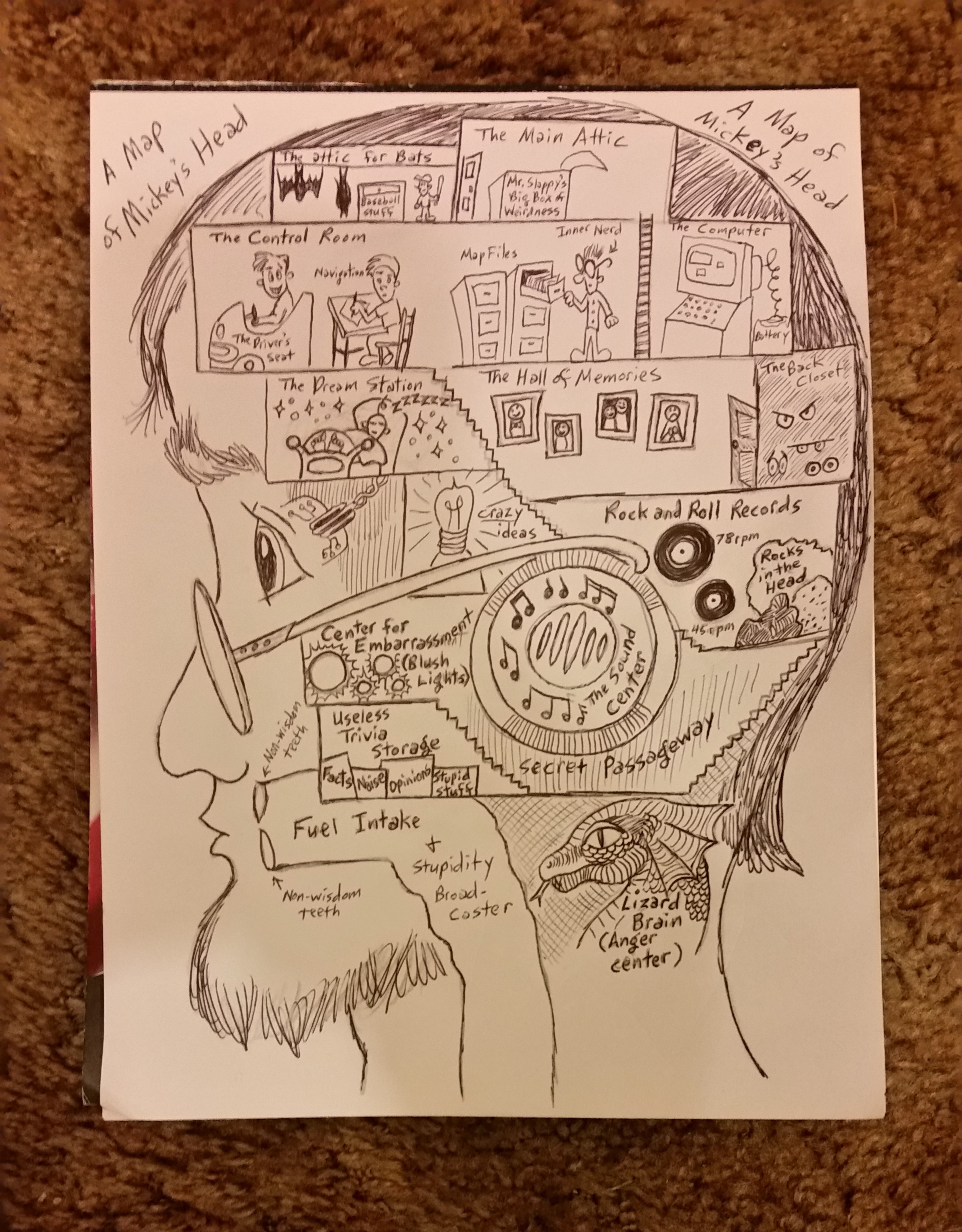
If you’ve read any of the crap that Mickey wrote about before in this goofy blog, you probably already suspect that Mickey’s mind does not work like a normal mind. The road map above is just one indicator of the weirdness of the wiring that propels Mickey on the yellow brick road to Oz and back. He just isn’t a normal thinker.
But having a few bats in the old belfry doesn’t prevent the man from having a plan. If you read all of Mickey’s hometown novels, you will discover he hasn’t written them in time order. Main characters in my 2016 novel weren’t even born yet in my 2017 books. If you look at them in chronological order rather than the order written, you will see characters growing and changing over time. A shy kid in one novel grows into a werewolf hunter in the next. A girl who…








 Catch a Falling Star
Sunday Silly Artistical Posts
I like to dig through old piles of artwork I have done to re-purpose things and mash things together to make weird art salad.
I used to play a Dungeons-and-Dragons-like game called Talislanta with groups of adolescent boys, most of whom had previously been my students in middle school. It was a weird world where weird things made artistical challenges for me that taught me to be a better and more imaginative artist.
Xeribeth was a member of an almost-human race that had yellow skin and wore colorful face tattoos. She also had to be somewhat alluring to trick adolescent boys into undertaking dangerous and possibly suicidal adventures (meaning characters who only lived on paper might die and have to be re-rolled with dungeon dice.)
Zoric, being a green Cymrillian wizard, gave me numerous opportunities to creative Kermit-the-frog-colored portraits. And he was a player character, so his greed and penchant for unwise actions decided on in the heat of battle (like turning himself into a fish-man while adventuring in the waterless desert) didn’t come from me.
Playing those games gave me training as a story-teller as well.
My efforts to see color with gradually worsening color-blindness led me to create eye-bashing color compositions that attempt to portray realistically things and feelings that can’t possibly be physically real. Thus I gradually became, over time, a surrealist (a juxtaposer of unlike and jarring things to deliver a visionary picture of reality) (How’s that for surrealistic gobbeldegook in definition form.)
I often solve the problems of my life by drawing something and making cartoonish comments with serious consequences.
Ultimately, it boils down to the fact that the world on the inside of me is decidedly different than the world on the outside of me. But I have to live in both. And I can do that by drawing my colored-pencil Paffooney stuff, and posting it, and writing about it on a silly Sunday.
Leave a comment
Filed under art editing, artwork, cartoons, commentary, goofy thoughts, humor, Paffooney