I finished reading the book Hogfather, by Terry Pratchett, while sitting in the waiting room as the dentist worked on the wires of my son’s braces in a nearby dentist’s chamber of horrors. The receptionist and secretary probably thought I was insane for incessantly chortling and making those other rude snorty noises you make when you don’t want to interrupt others with laughing, but can’t help it. What better way to wait in the cold chambers of dental anxiety than to read a funny, funny book about an assassin named Mr. Teatime who meant to slay the Hogfather, Terry Pratchett’s version of Santa Claus, by stealing children’s teeth from the tooth fairy and using them to control young minds and make them stop believing in the Hogfather, that giver of gifts on the sacred and festive Hogswatch Eve?
This story has an unusual hero. Death, that skeletal reaper of souls and talker in ALL CAPITOL LETTERS. Oh, and not just Death. His granddaughter Susan is along for the adventure. So Death puts on the red suit to make people believe in the Hogfather again while Susan tracks down the perpetrators of the tooth fairy plot.
Terry Pratchett’s Discworld novels are full of bizarre but highly developed characters who not only make you laugh, but make you think. The books can be fairly thick and full of complex ideas, and yet, the pages melt away as you read. And the people who can hear you laughing about the book will think you are absolutely crazy.
Life is screwy. God, if there is one, made it that way on purpose. You have to hand it to Him, his sense of humor is bizarre.
My 771-day streak of consecutive posts ended when, ironically, I set my posts to publish last Friday too early on Thursday evening to post on what counts as Friday according to WordPress. So, Thursday had four posts and Friday had none. That means for the second time I have put together a string of consecutive posts that lasted for more than two consecutive years. But both runs ended on a technicality that made me miss a random publishing day.
At our house the plumbing has turned into a collection of raging geysers, forcing us to have the water turned off 99.9% of the time. And I, being the only member of the family still in an upstairs bedroom, have had to cope with life that doesn’t include a working indoor toilet. I have to get by with a pee spot out in the yard by the composting bin, a plastic jug in the waterless upstairs bathroom for nighttime pee, and a daily trip to the nearest public bathroom in the Winco grocery store for the solid stuff. Daily showers evolved into weekly… then monthly… to now, probably, yearly showers.
I know you are probably thinking, “Why doesn’t the dummy just hire a plumber?”
I did.
The plumber charged me $250 dollars to re-determine with his plumbing snake (exactly like the one I bought at Home Depot and used myself unsuccessfully before I called a plumber) that the toilet couldn’t be unclogged without digging up the floor and replacing all the disintegrating 60-year-old pipes. He quoted me thousands of dollars worth of repairs I will never be able to afford until my next life, or the next life after that.
So, we have to live for a while without running water in the house. Funny one, God.
My last free-book promotion for the re-edited version of the Necromancer’s Apprentice ended its five-day run without giving away a single copy. Nobody wants to read my book, even for free.
I choose to laugh at the screwiness of my current situation. Life is a comic strip with a new joke panel every day. What better thing can I do than laugh at it all?
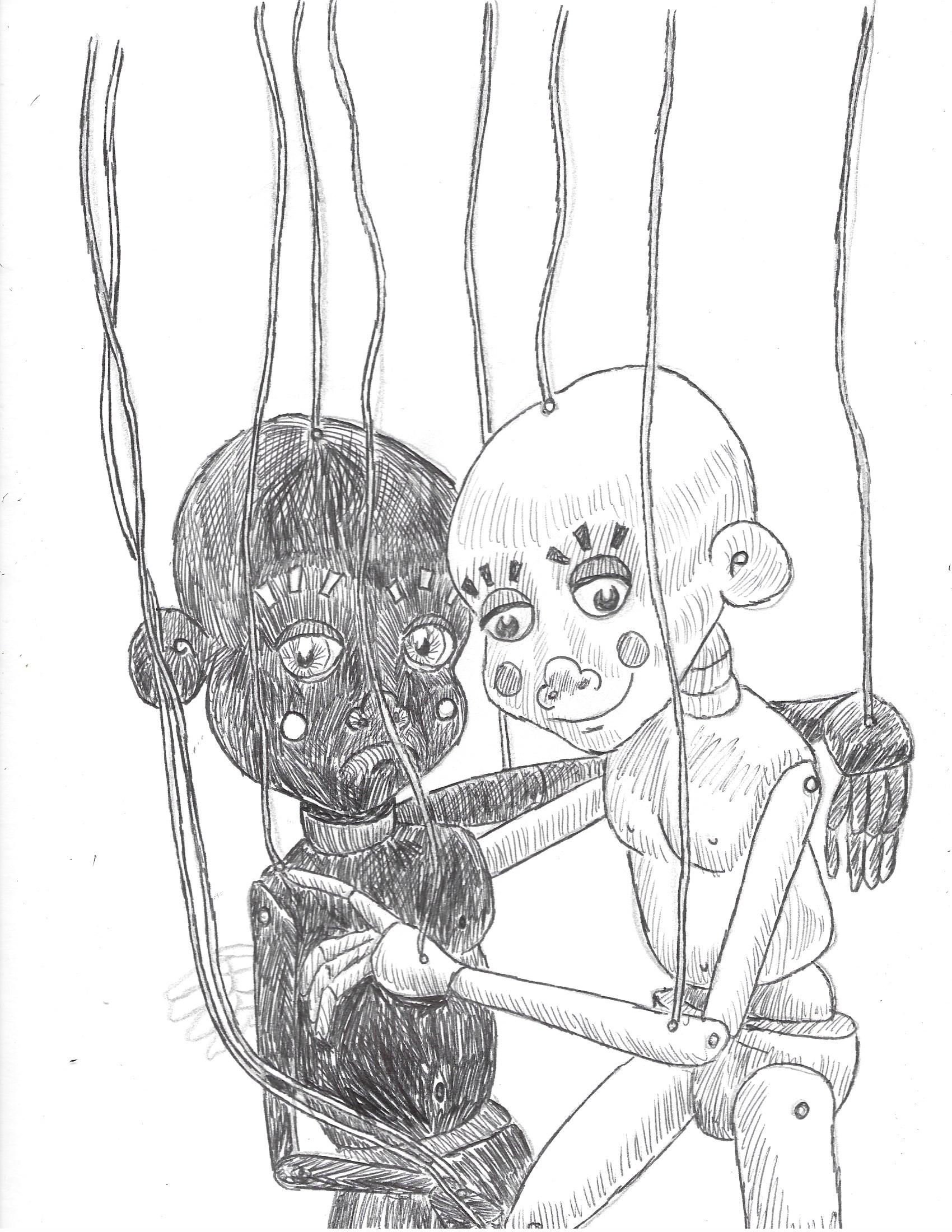
The marionette that was now Shandra and the marionette that was actually Mark were both standing on a stage made for marionettes. It was small, but ornate, with a woodland scene draped behind them.
“You are now Hansel and Gretel,” said Mr. Mephisto.
Shandra looked up at the puppeteer holding her control stick above her, and the female puppeteer holding the control stick for Mark. “And who are these dummies that seem to think they gonna make us do stuff with them strings they got attached to us?”
“Oh, they aren’t there to control the two of you. Trog and Trogina are the real puppets. They will just hold the strings to convince the audience that you two are puppets.”
“So, we can move and do whatever we want?” Shandra put her marionette hands on her hips and frowned at Mephisto while Trog moved the correct strings to fake that he was doing the controlling.
“You can go anywhere on stage as long as you are attached to the strings. If you mention something that you need in the story, it will appear on stage as if by the magic of a Troglet handing it to you or changing the scenery like a good stage manager.”
“And what if we say something that’s not on the script?” asked Mark, his voice sounding nervous with apparent stage fright.
“Oh, we are not using a script, Hansel, my boy. You will just make up the story as you go. You do basically know the story of Hansel and Gretel, right?”
“I gotta story to tell alright,” said Shandra, frowning even harder with her string-attached eyebrows.
“Good girl. That’s what we do here. Improv. And it all works out in the end one way or another.”
The theater was in a library on Webb Chapel Road. When Mr. Mephisto pulled back the curtains you could see the shelves of books, and the wooden chairs lined up in front of the puppet theater, and the space right down front that quickly filled up with snotty little brats that were younger than Shandra and Mark by a bit. Shandra grinned evilly.
Mr. Mephisto came over the speaker and said, “The Kids on Strings now present their version of Hansel and Gretel.”
“ Well, Hansel, we are kicked outta our home by an evil stepfather and have to find a way to feed our own selves.”
“Um, yeah, Gretel…” Mark answered tentatively.
“So, you know that old witch that has the house made of gingerbread and candy? The one who eats kids like us?”
“Uh, well… yes.”
“Let’s go eat her damn house. I like gingerbread, and I’m really very hungry.”
“Well, yeah. But what if the witch catches us?”
“You know how this story goes. We kill her evil backside… and her frontside too.”
The kids in the audience all laughed. The adults, however, were looking rather frowny.
The scenery changed. The Troglet dropped in the gingerbread witch house, which was actually made of cardboard and papier mache. Shandra winked at the crowd, smiled even bigger, and proceeded to chew the scenery to pieces with her wooden teeth.
Mark helped her make the house-eating scene look real as he greedily chewed up the witch’s house beside Shandra.
“Oh, no! Look out for the witch!” cried several kids in the audience. The witch puppet showed up on stage armed with what appeared to be a magic wand.
Shandra grinned at the witch as she said aloud, “Troglet, where is that goddam oven we get to bake her in?”
The oven appeared as if by magic, stage right.
The witch puppet seemed to be looking at Shandra imploringly, fear featured prominently in her bulging, round eyes.
Shandra boldly strode over to the witch, hoisted the villain over her puppet head, and gave Mark a sharp command. “Open that danged oven, so I can throw this witch in there!”
“Oh, no!” cried the witch, having already dropped her wand.
Shandra marched over and threw the puppet witch into what appeared to be a real fire. The witch broke free of her strings and started to crisp in the oven’s hot flames.
Immediately Shandra formed a new plan. She reached down and picked up the witch’s wand. She pointed it at the oven.
“I don’t want no gingerbread witch. I want to turn the witch into a statue of pure gold. Not puppet-show gold, but real, honest-to-god gold.”
The oven disappeared in a puff of smoke, leaving behind a golden statue of the witch. And, as the spotlight caused the golden statue to glitter, it appeared to be real gold.
The kids all laughed. The adults mostly applauded.
“That is real gold over there,” said Shandra, grinning at the crowd. “And I wanna use it to hire a hit man.”
“To kill somebody for real?” asked a black man in the back of the audience.
“Yes. You, any of you, know Poppa Dark?”
“The con man that maybe killed his stepdaughter?”
“That would be the one. Guilty as sin. He killed poor lovely Shandra and deserves to die. The statue, whatever the gold is worth, goes to anybody who can successfully make him dead.”
“Boy howdy, I don’t know about this!” said a white parent, grabbing her two kids from the front row.
“That is definitely not how the story goes,” someone else said.
“Won’t you all come back for our next show?” Shandra said with a grin. “It will be called How Poppa Dark Got What’s Coming to Him.”
The part of the library where the puppet show was located quickly emptied, and Mr. Mephisto drew the curtains closed.
Then the old devil man was standing in front of Shandra and Mark with a smile on his face.
“So, now you gonna punish us kids?”
“No, Shandra. That was perfect, just as it was.”
“You mean we didn’t mess up your evil little plans?”
“Of course not. That was precisely the introduction we needed in this case. Somebody will be getting the message soon.”
My 1967 Captain Action Steve Canyon action figure.
I have always been a deeply devoted fan of the Sunday funnies. And one of the reasons I read the comics religiously was the work of Milt Caniff. His comic strips, Terry and the Pirates, Male Call, and Steve Canyon set a standard for the age of action comics and adventure strips.
I read his comics in the 1960’s and 1970’s and always it was Steve Canyon. But this, of course, was not his first strip. I would discover in my college years the wonders of Terry and the Pirates. When Caniff started the strip before World War II, he set it in China, but actually knew nothing about China. So he did research. He learned about people who became oriental hereditary pirate families and organizations. He learned to draw authentic Chinese settings. His comedy relief characters, Connie and the Big Stoop, were rather racist parodies of Chinamen and were among the reasons that the original strip had to mature into his later work in Steve Canyon. But perhaps the most enduring character from the strip was the mysterious pirate leader known as the Dragon Lady.
Steve Canyon is a fascinating study in the comic arts. When he left the Terry and the Pirates strip in 1946, it went on without him. It was owned by the Chicago Tribune-New York Daily News distribution syndicate, not Caniff himself. Steve Canyon would change that. He created it and owned it himself, making Caniff one of only two or three comics artists who actually owned their own creations. Canyon started out as a civilian pilot, but enlisted in the Air Force for the Korean War and would remain in the Air Force for the remainder of the strip. Some of the characters in the strip were based on real people. His long-time friend Charlie Russhon, a former photographer and Lieutenant in the Air Force who went on to be a technical adviser for James Bond films was the model for the character Charlie Vanilla, the man with the ice cream cone. Madame Lynx was based on the femme fatale spy character played by Illona Massey in the 1949 Marx Brothers’ movie Love Happy. Caniff designed Pipper the Piper after John Kennedy and Miss Mizzou after Marilyn Monroe.
I am not the only cartoonist who was taken with the work of Milt Caniff. The effects of his ground-breaking work can be seen to influence the works of comic artists like Jack Kirby, Bob Kane, John Romita Sr., and Doug Wildey. If you are anything like the comic book nut I am, than you are impressed by that list, even more so if I listed everyone he influenced. Milt Caniff was a cartoonists’ cartoonist. He was one of the founders of the National Cartoonists’ Society and served two terms as its president in 1948 and 1949. He is also a member of the Will Eisner Comic Book Hall of Fame.
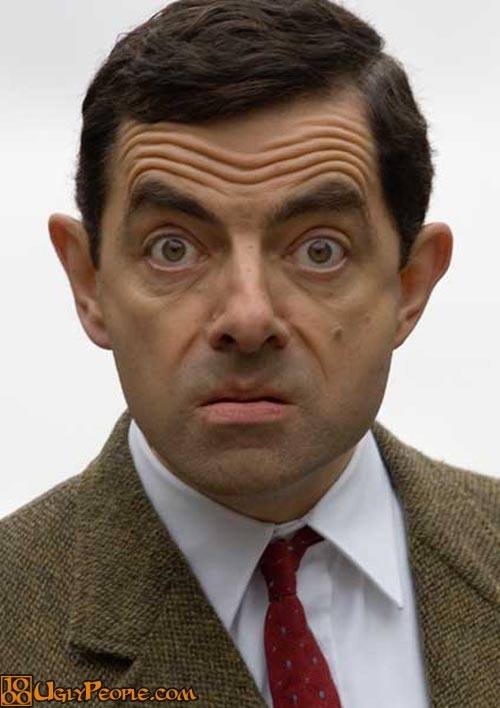
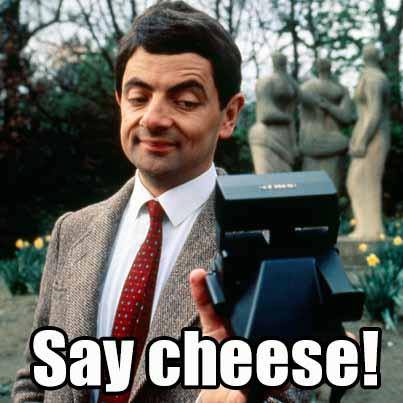
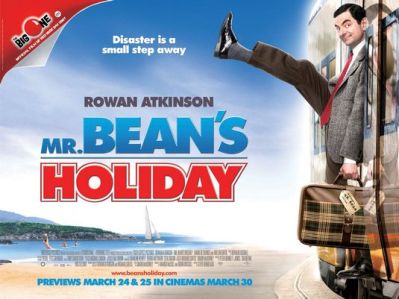
Rowan Atkinson is a genius comedian, and the character of Mr. Bean is the greatest work he has done, the best proof of his genius. As someone who works at humor and tries to get it right, I have to analyze and carefully study the work of the master. How does he do it? What does it all mean? And what can I learn from it?
Atkinson not only created the character, he co-wrote the entire television series and controls every aspect of the performance as the central character. Mr. Bean is the bumbling every-man, going through horrific troubles because of the cascade effect of simple little errors. We laugh at him because we have all been there. Tasting the hot sauce leads to a meltdown that causes chaos and disaster for the entire store. Overcoming fear of heights makes him the center of attention for the entire pool-house when can’t overcome the urge to use the diving board, and yet, can’t make himself jump off. We have all lived the nightmare of being trapped naked in the hotel hallway, locked out of our room, just when the hallway becomes crowded.
There is a certain charm to Mr. Bean. He is a childlike character, blissfully unaware of how much he doesn’t know about the complex society around him. He has a teddy bear that sleeps with him and comforts him. He lays out his supplies for the big exam, and he’s thought of practically everything he will possibly need, but basic physics fails him and makes the pencils keep rolling out of place.
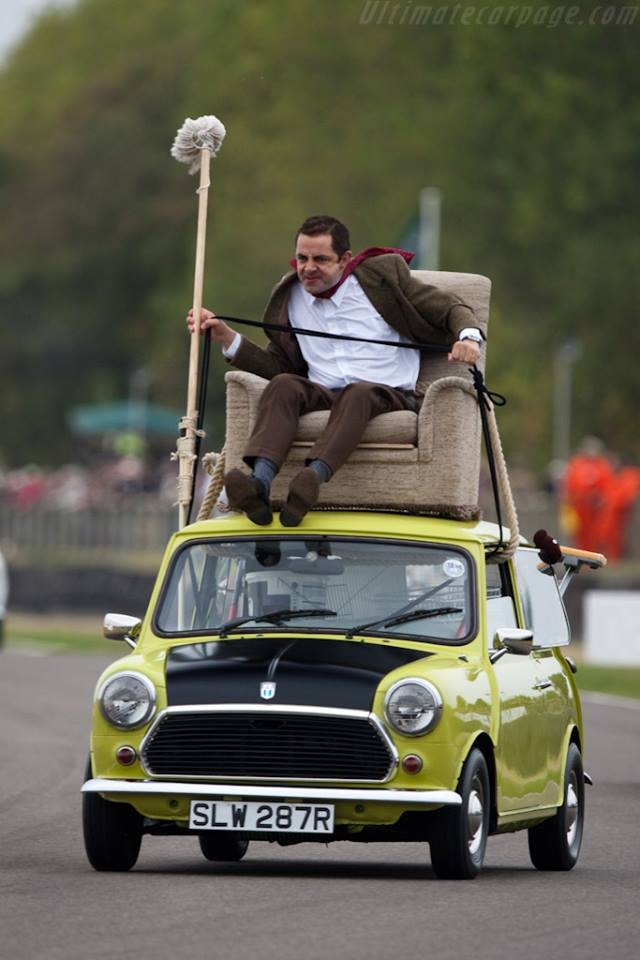
Rowan Atkinson is a master of the art form because he has such tremendous control of his rubberized goofy face and manic body. He can drive his goofy little yellow car from a sofa mounted on top. He can change clothes while driving. Just watching him shave with an electric razor is a total hoot.
This is a picture of Rowan Atkinson as Mr. Bean. It is NOT a picture of me.
It is mostly physical comedy, almost slapstick, and yet it is not the broad unfeeling poke-in-the-eye you get with the Three Stooges. Most of the real damage is done to himself, though pompous and deserving people are often near enough to get a helping of it smack in the face. A lot of it is practically pantomime, with hardly any real dialogue. Much of it, like the sword fight with the bumblebee using a butter knife, is simply silly.
The movie, Mr. Bean’s Holiday, extends the character by making him actually interact with other characters, though in his own inimitable Mr. Bean way. The limited dialogue thing is amplified by the fact that he is traveling in France and does not speak French. Still, he interacts with the boy he accidentally kidnaps, the girl who wants to be a movie star whom he helps in her quest by an accident at the Cannes Film Festival, and the movie director whom he almost kills but ends up saving his career with a hit home movie.
Mr. Bean makes the ridiculous an art form by helping us to laugh at ourselves as we are beset by all the little troubles of life that Bean magically floats through.
So, now I have told you why I love Rowan Atkinson as a comedian. He is a comedic genius. Of course, you knew that already, right?
I am posting this in the final hours of March, 2023. But WordPress counts it as being a post from April 1st. Still, 771 days in a row with at least one post.
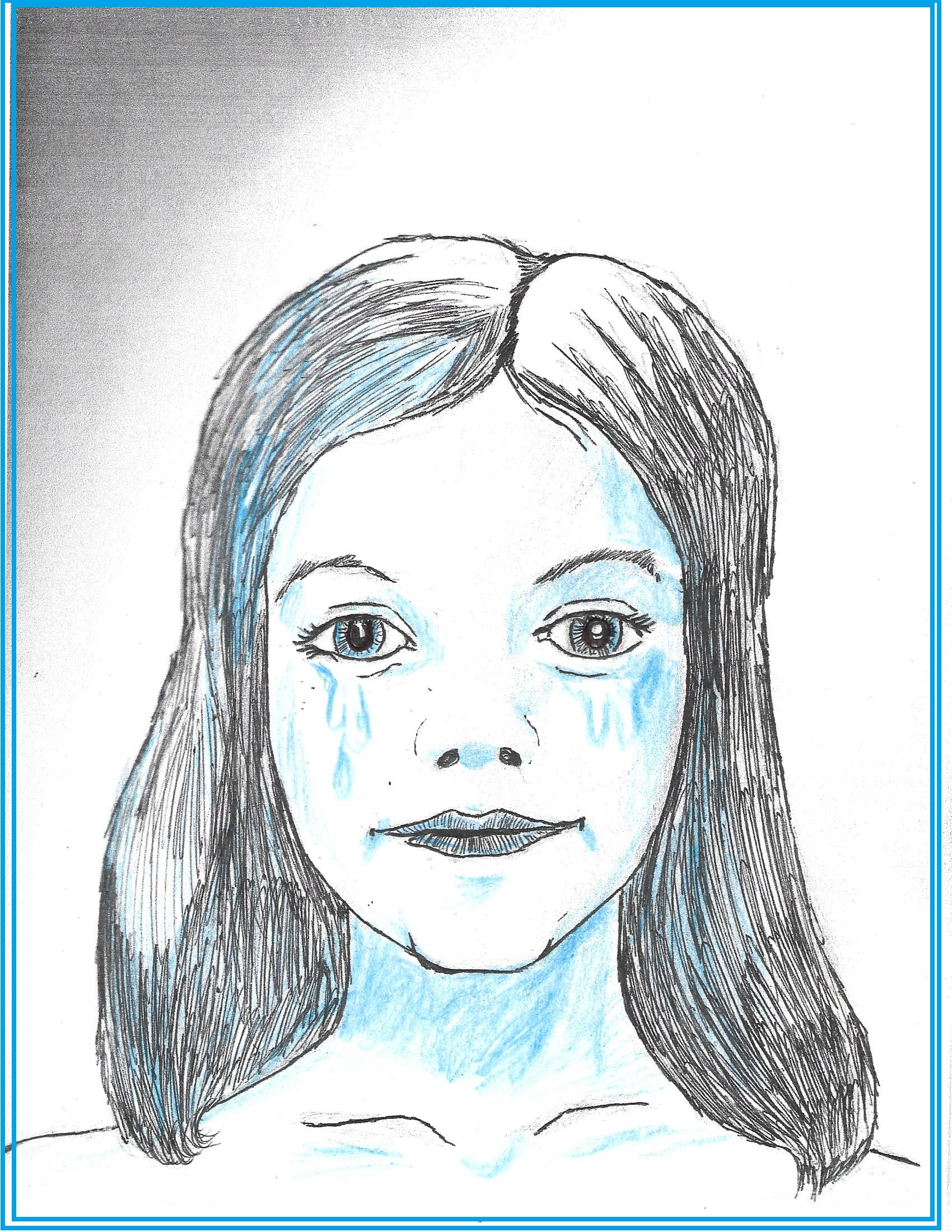
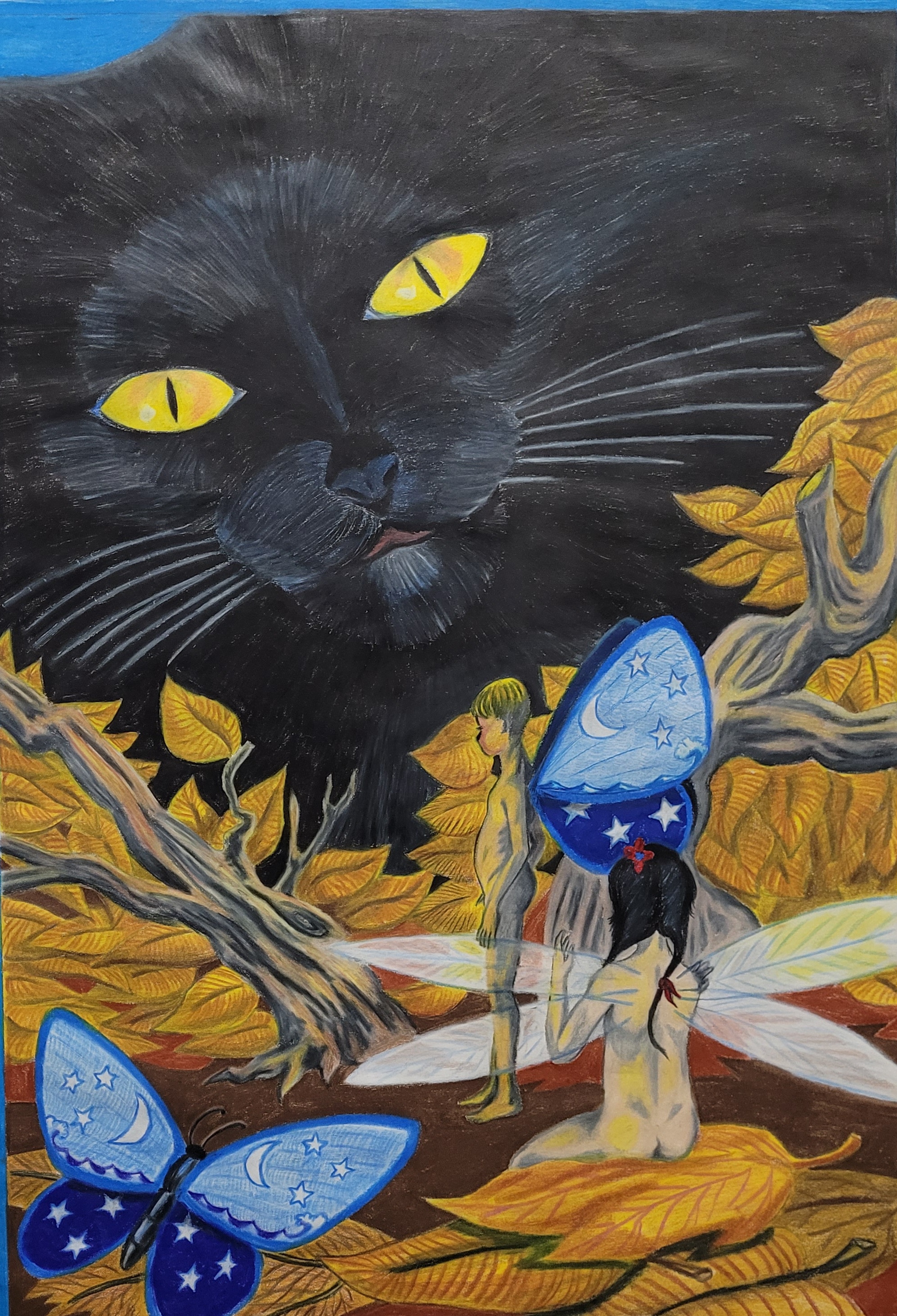
She’s a sweet little beauty, but of course, she’s not real.
The stories we tell need to be loaded with the truths and purpose and meaning of life as we see them, because… What else are we for?
What it means to never be sad, or never be afraid, or never be angry, is the same darn thing as never being happy, or never being brave, or never knowing love. Life requires balance, and an acceptance of every slice of the pie.
If you were hoping that, before the end of this post, you were going to get wisdom, or truth, or even just a good laugh… I apologize. You are stuck with Mickey-pictures and Mickeyisms.
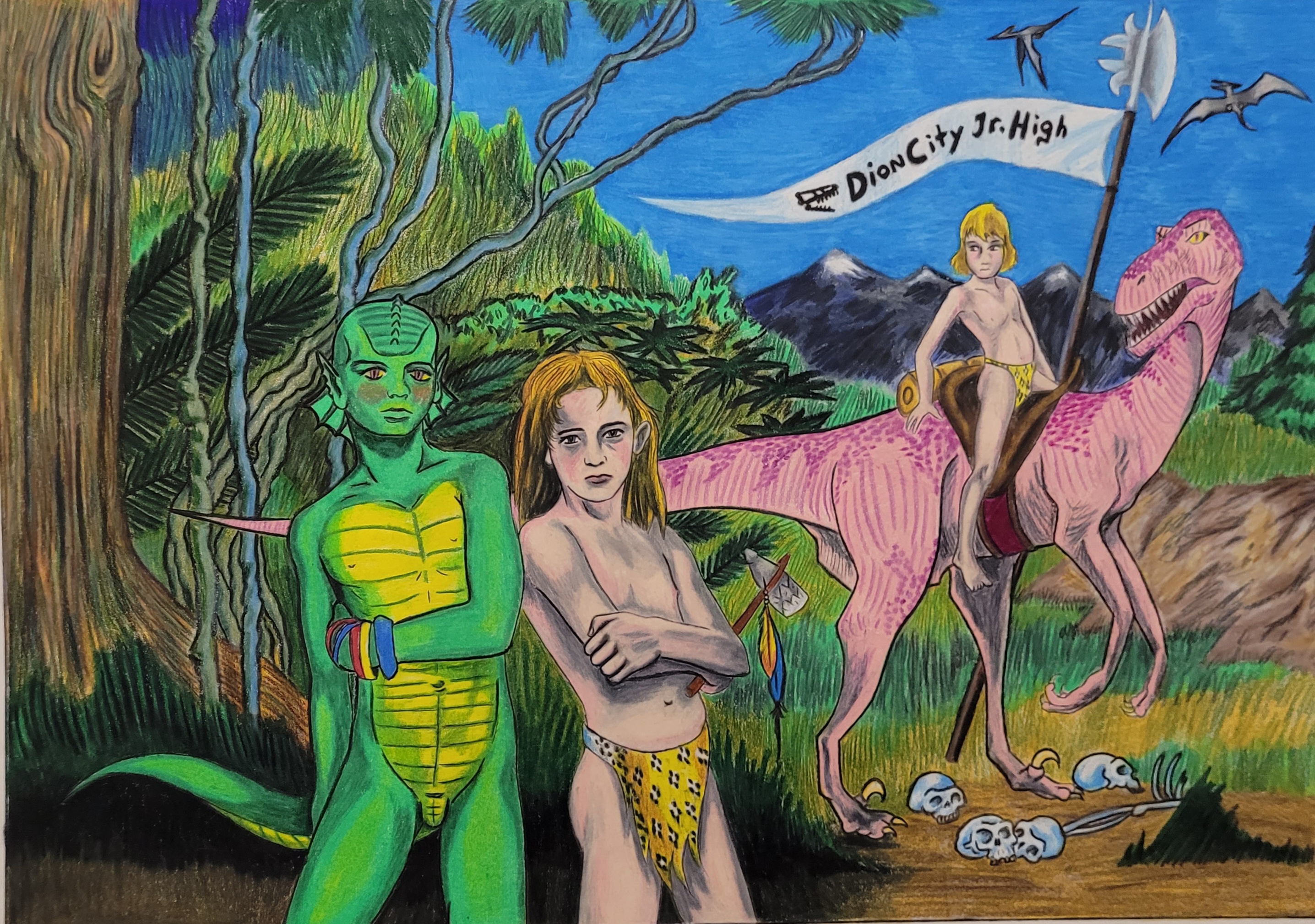
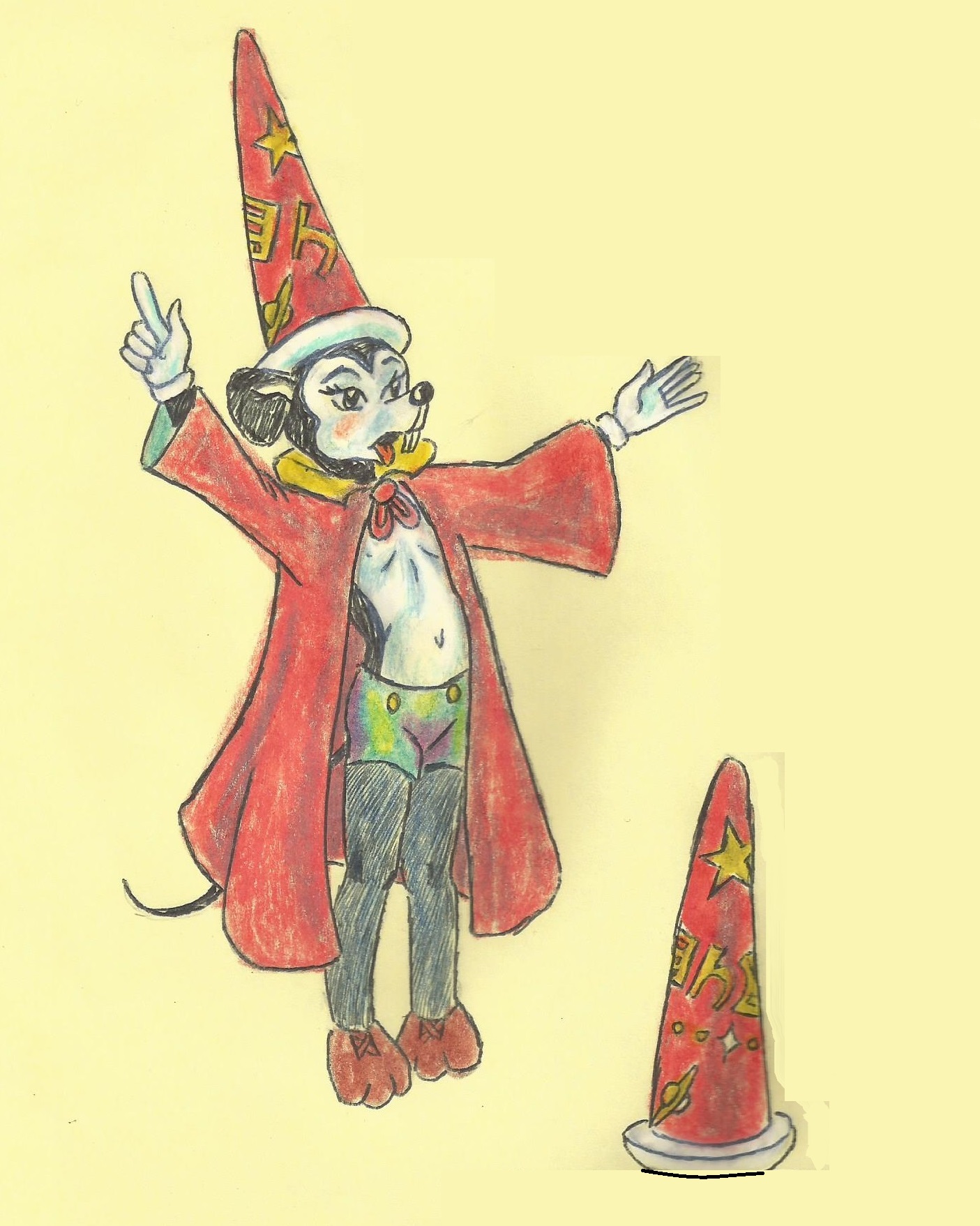
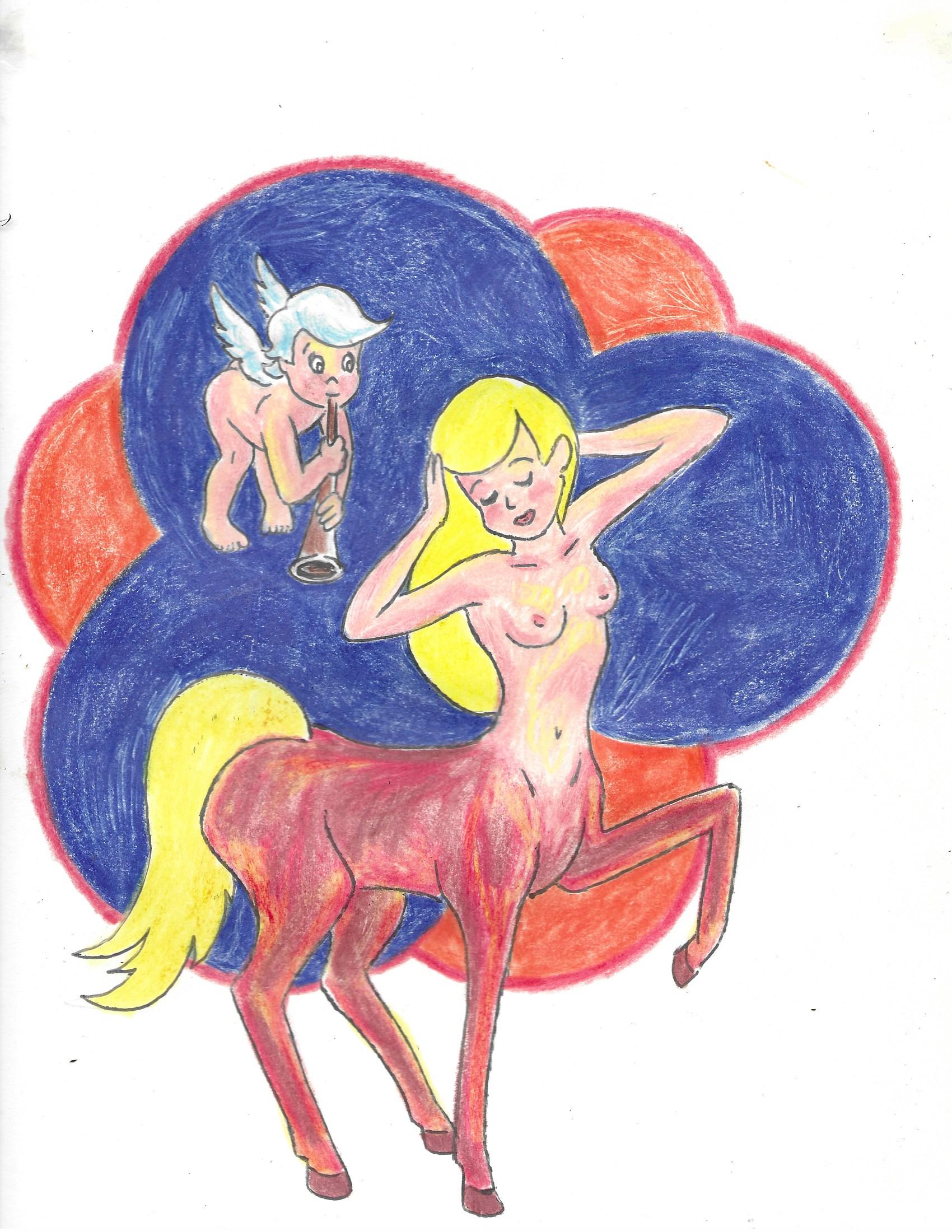
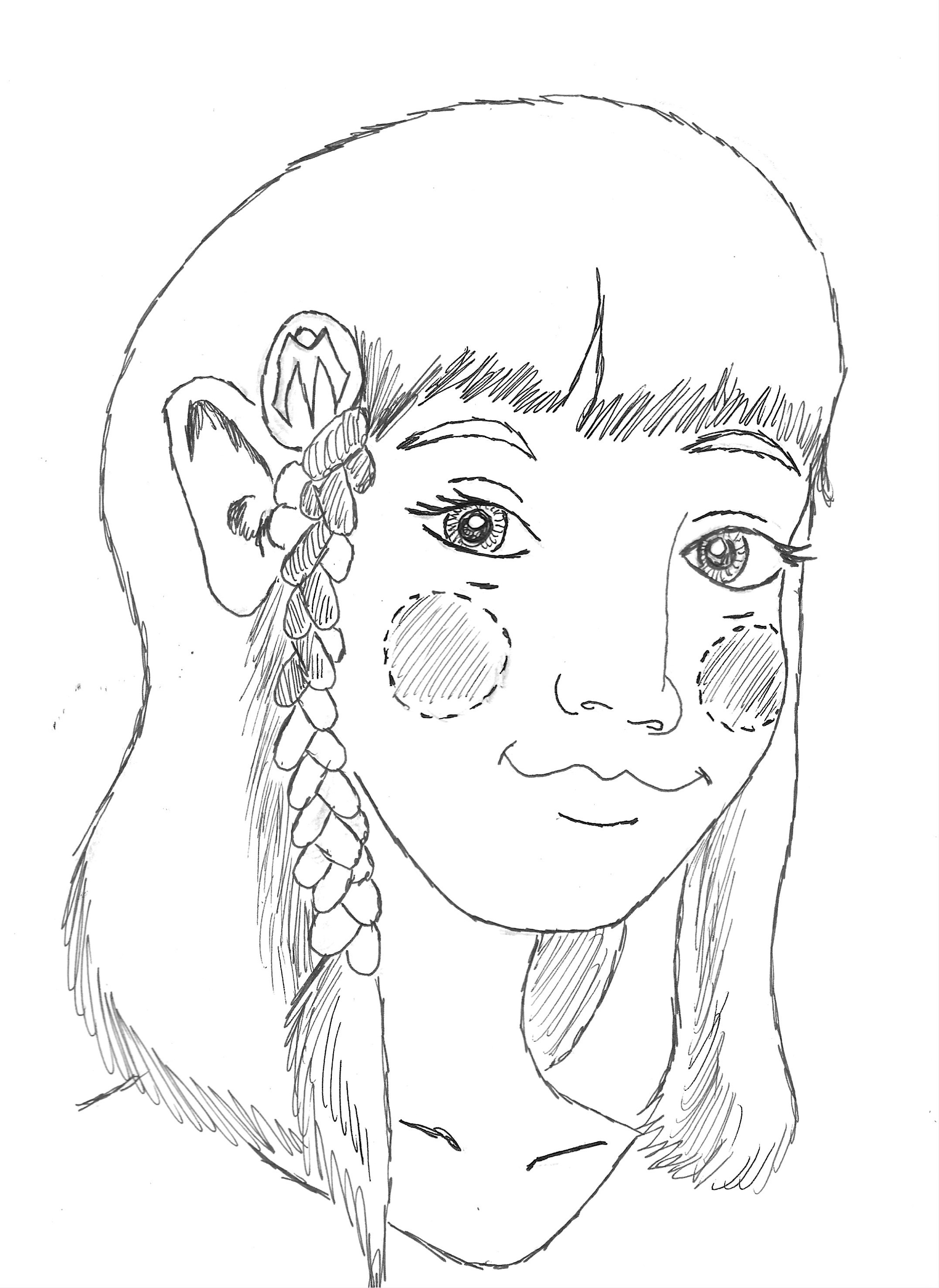
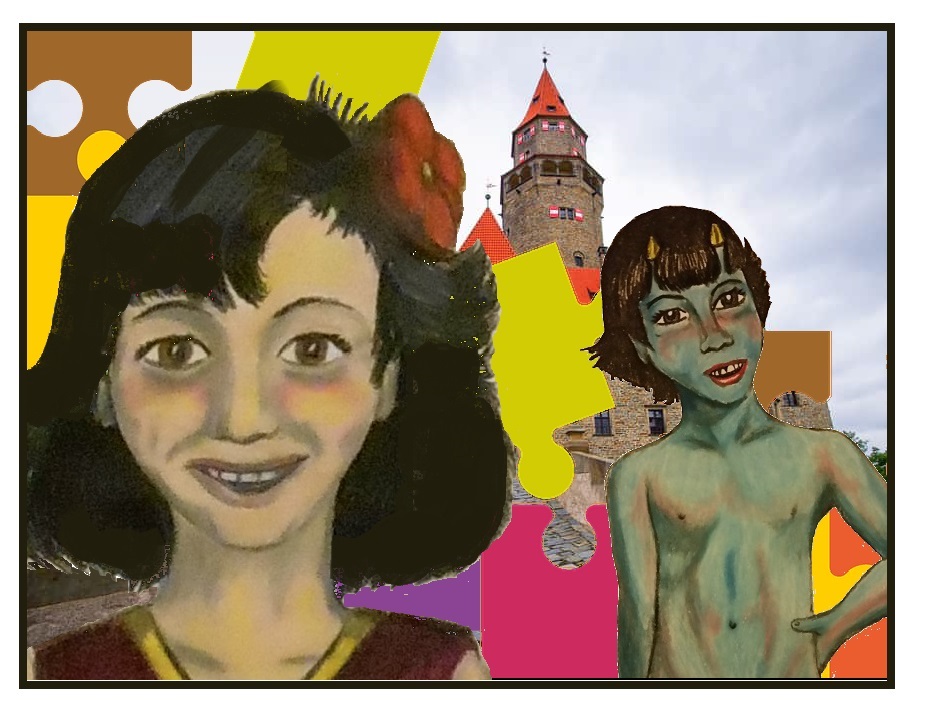
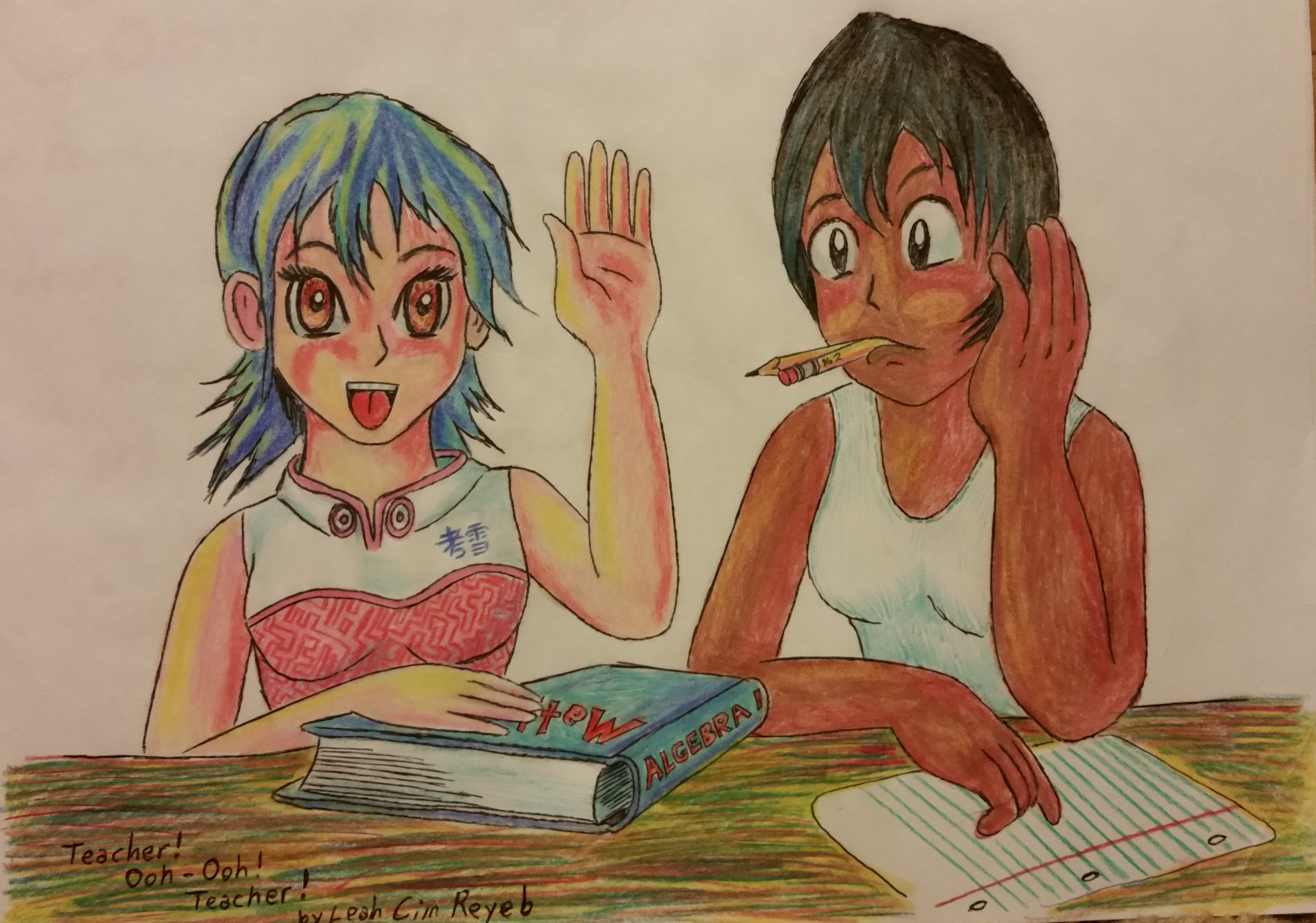
The word for it is Paffooney. I know that is not a real word. It is a Mickian word. Kinda like the word “Mickian”. It is entirely made up gibberish, made up by Mickey, and used to mean an artwork made by the hand of Mickey. So I can’t really explain it. I have to show you what it basically is.
This is a Paffooney. It is inspired by the incredibly unbelievable time in Mickey’s life when they let Mickey be a teacher in Texas. It has no other relationship to reality. Chinese girls in Texas generally do not have manga eyes and blue hair, and while Hispanic girls have been known to eat pencils, they never bring their own notebook paper to class. They always borrow. So there is the basic formula. Colored-pencil nonsense drawn by Mickey and attached somehow to a story.
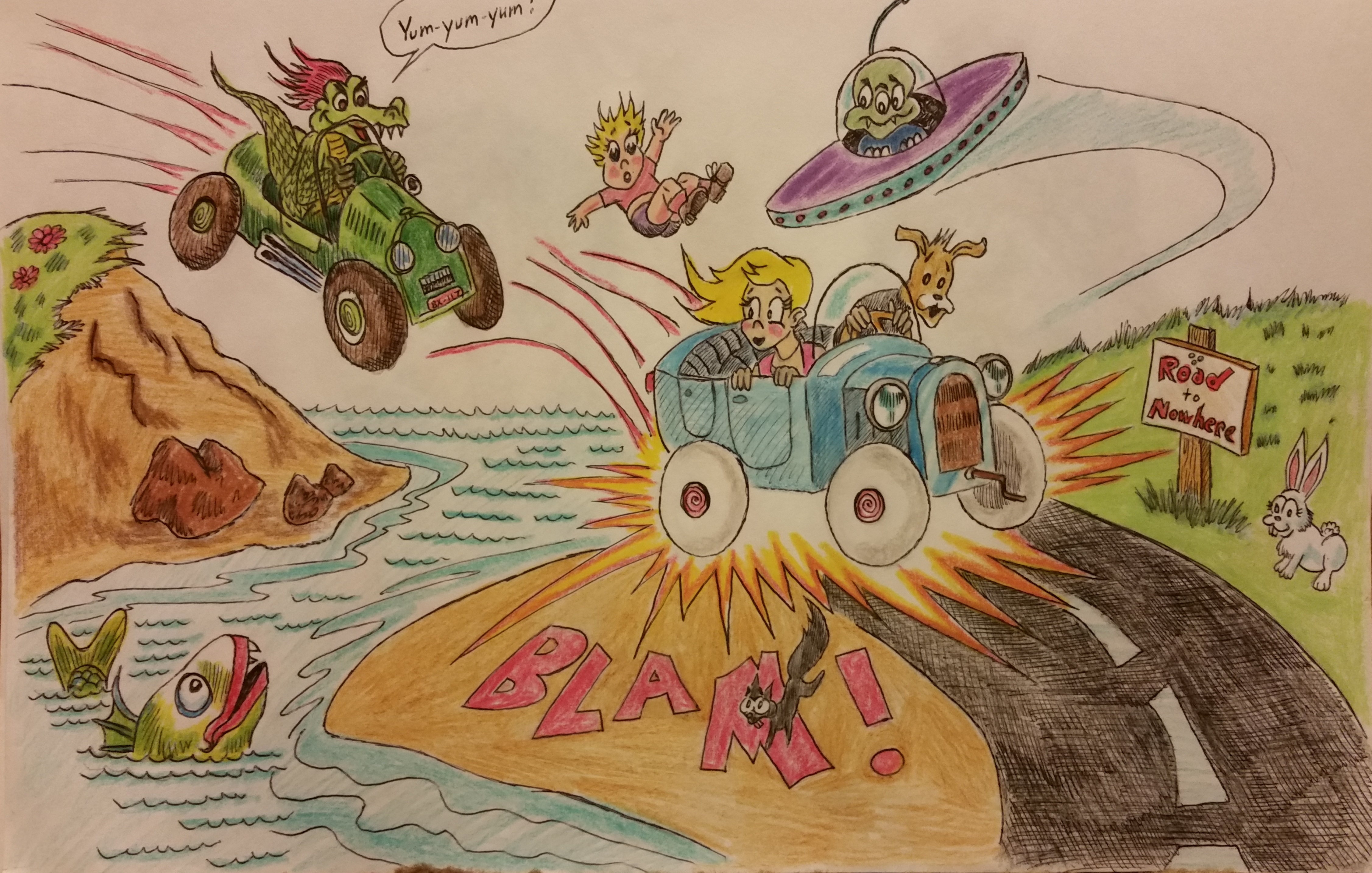
This Paffooney has a self-explanatory story embedded in it. It is obvious this is the story of an average family car trip in Texas. Notice how they demonstrate the Texas State highway motto of, “Drive friendly”.
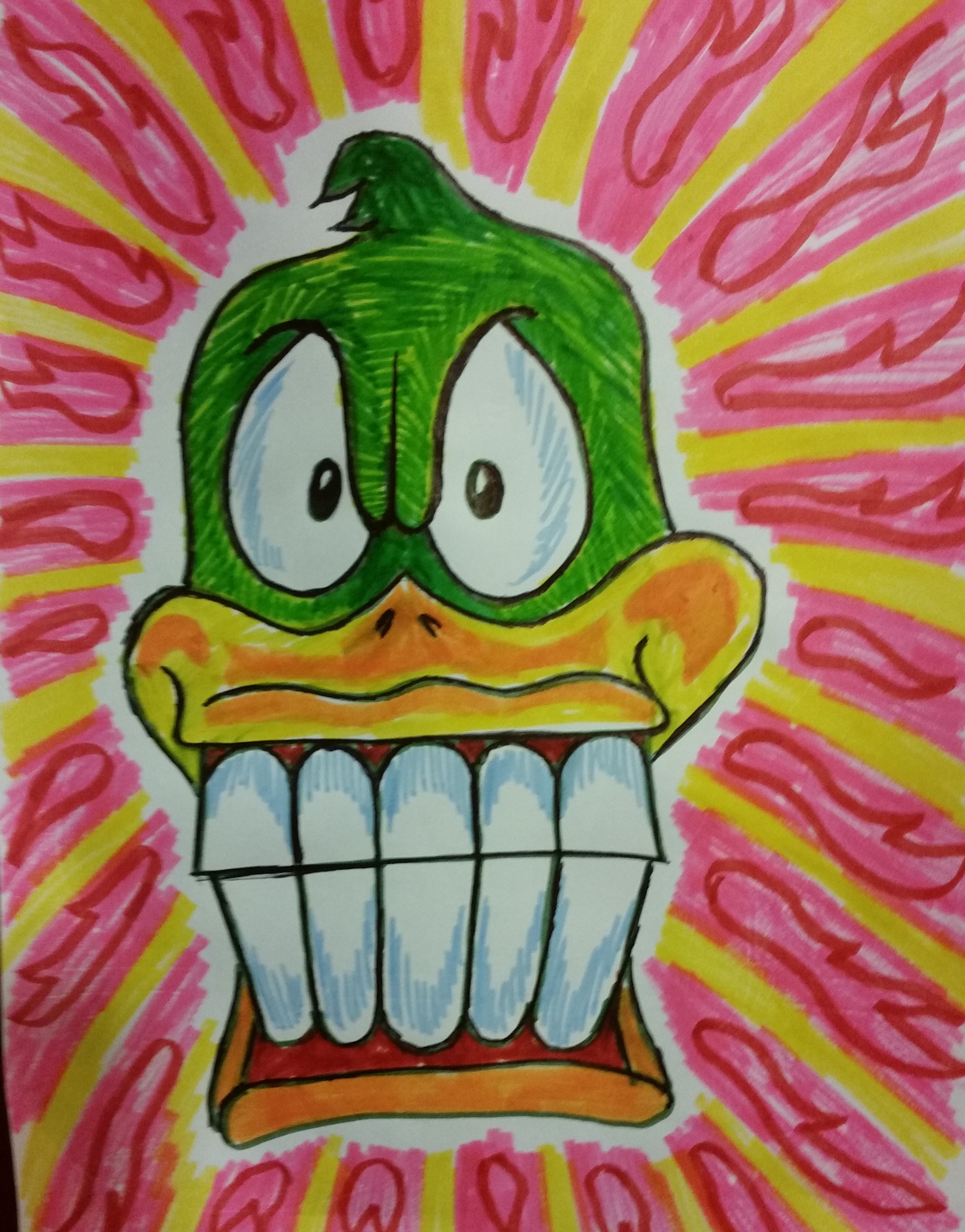
And this Paffooney is a Mickian recurring nightmare about a duck with teeth. Silly Mickey, ducks don’t have teeth in real life!
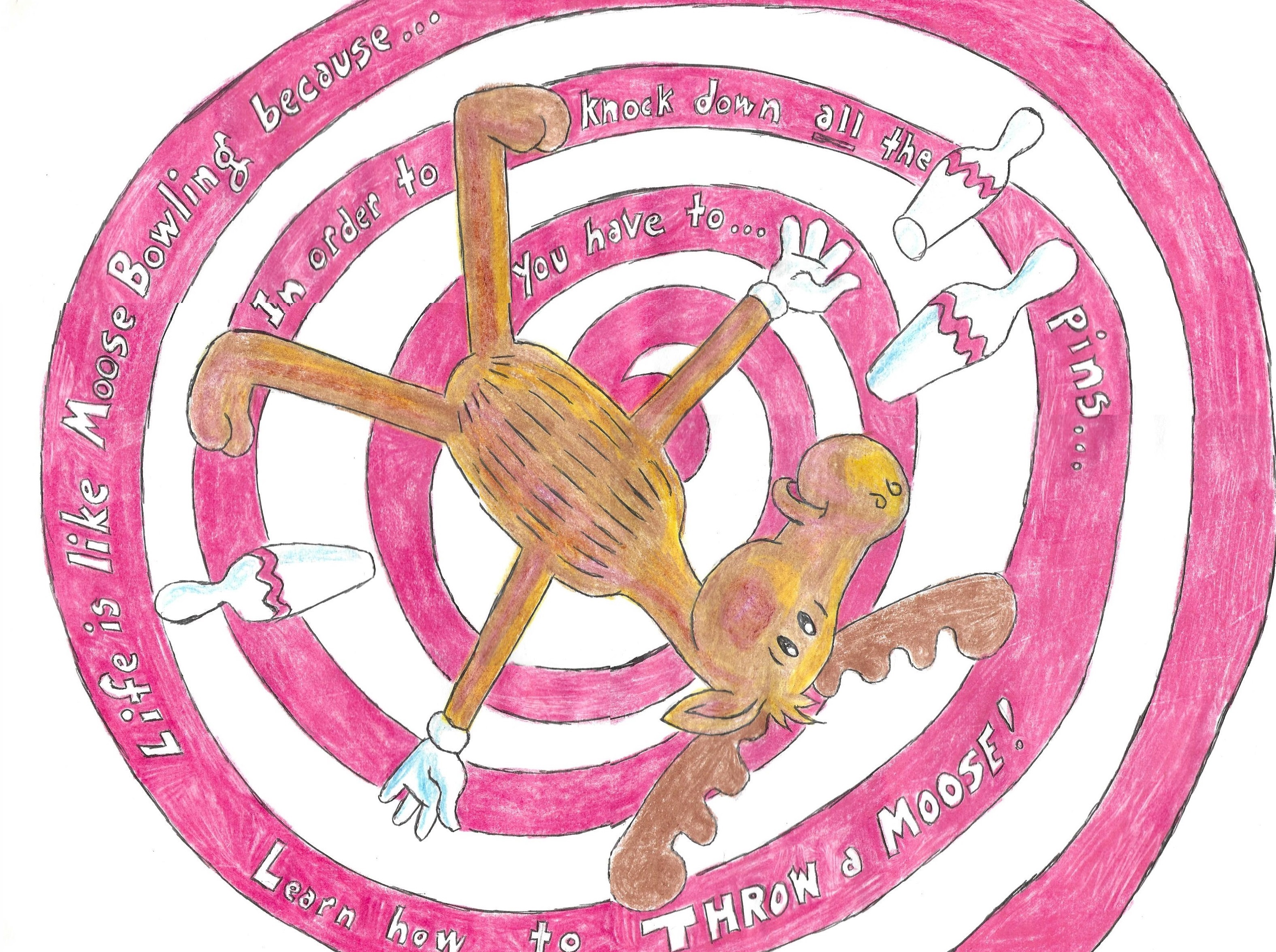
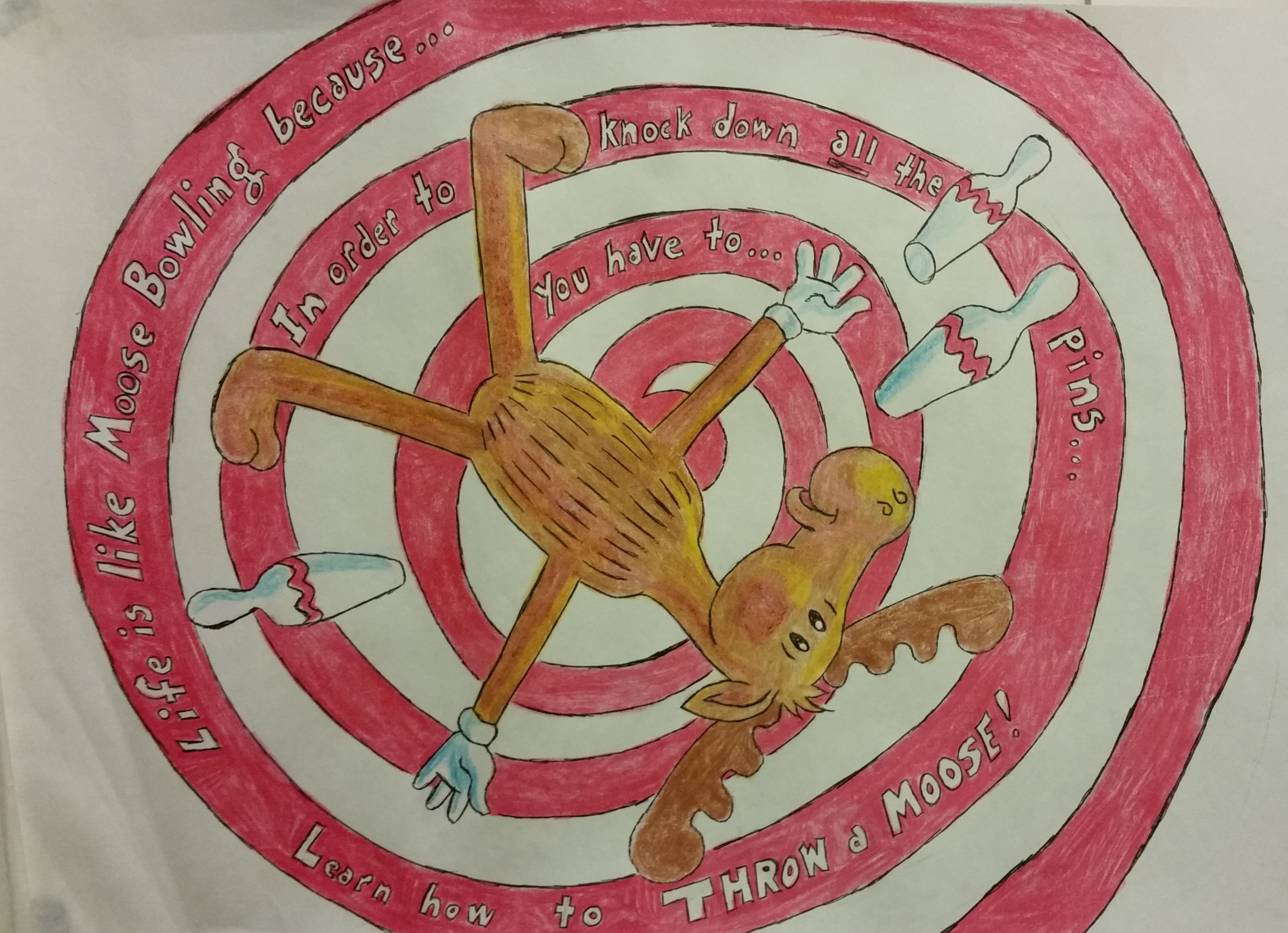
And moose bowling is a Paffooney that needs no explanation… or does it? Well, never mind. I have forgotten what it is for anyway.
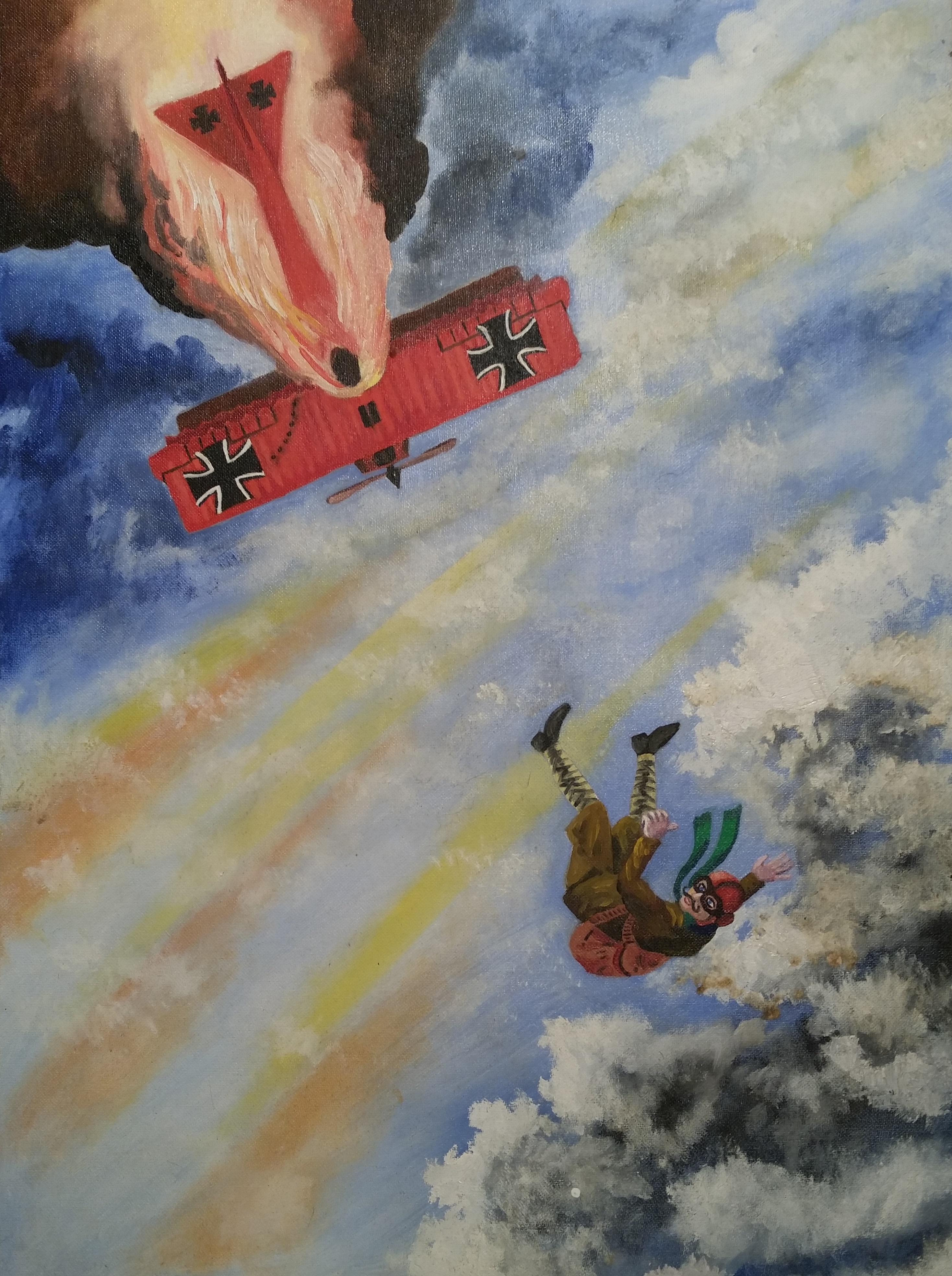
And this oil-painting Paffooney speaks volumes about a philosophy of life. See the pilot giving the viewer a thumbs up? And that isn’t a parachute on his back. They didn’t have parachutes in World War I. It is a message pouch with German war plans in it. I even painted it with a bratwurst sandwich inside for the pilot’s lunch. Don’t I do great detail work? But he will have to eat it quickly before he reaches the ground.
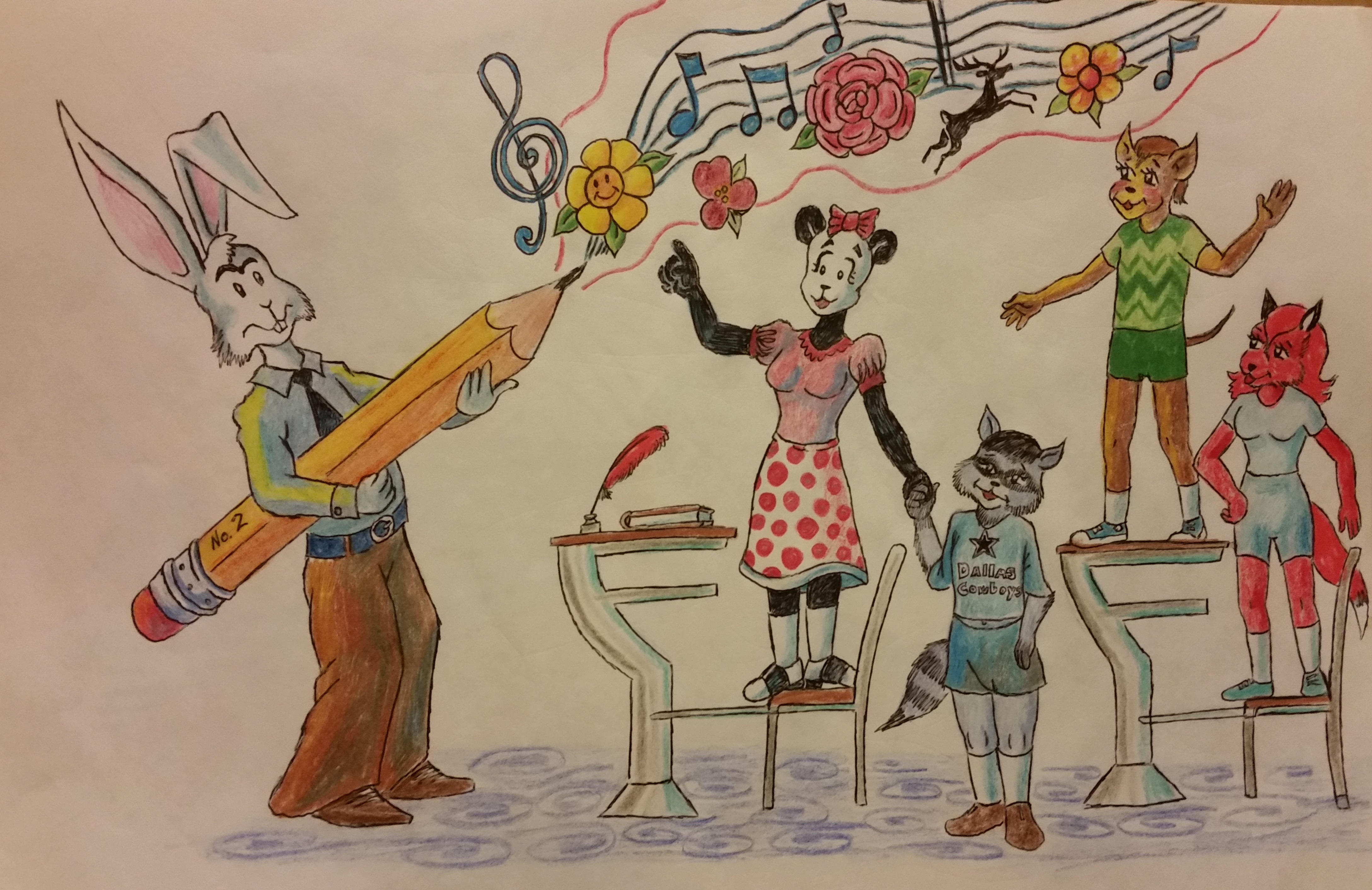
And this is me teaching an ESL class. When you teach English to non-English speakers in Texas, you get to hold the big pencil. And it helps to be a big white rabbit.
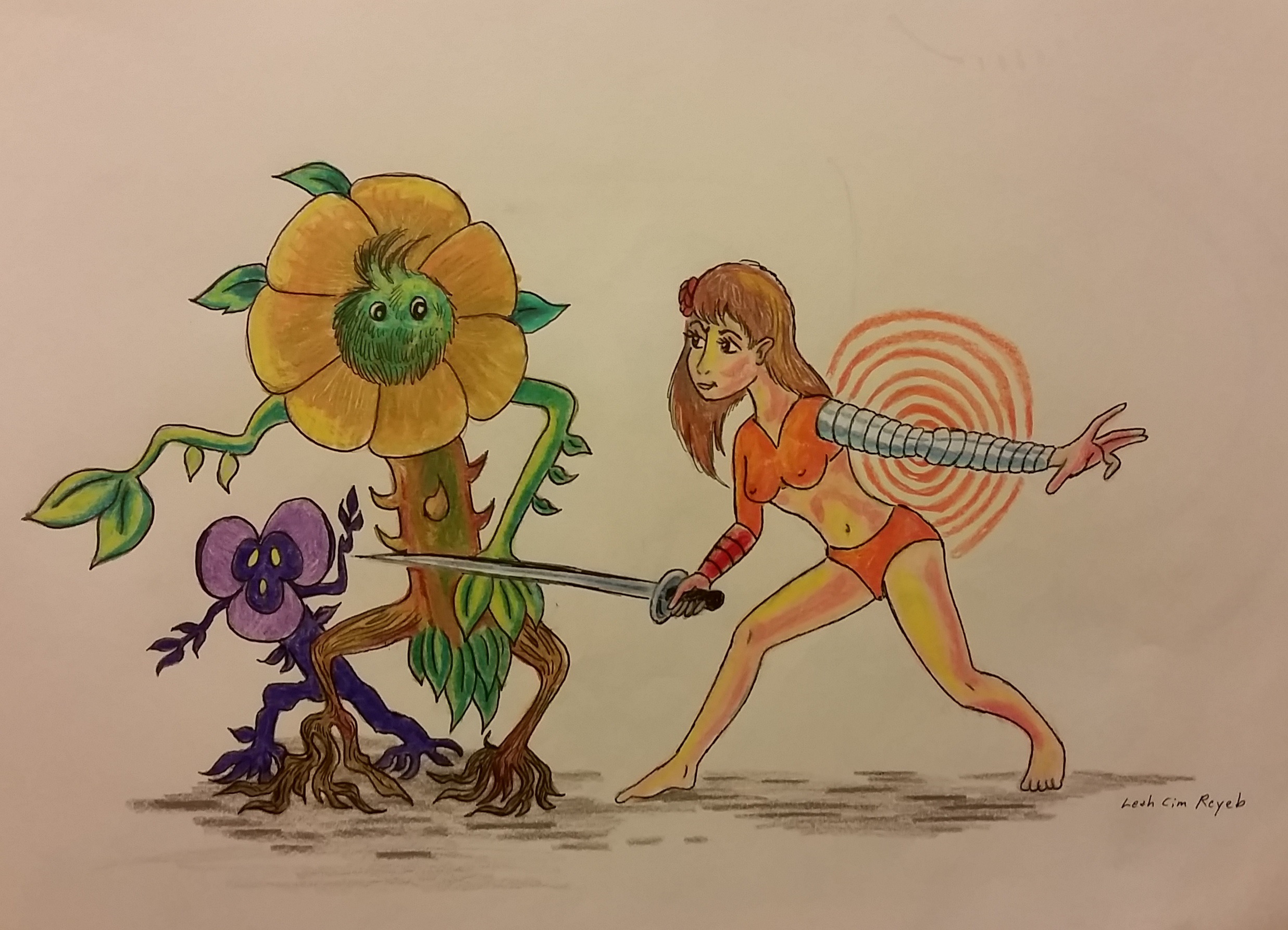
And this is a science fiction Paffooney, although the science is questionable. Don’t doubt that the flower-people of the planet Cornucopia are real, though. And Mai Ling, the psionic space ninja really can elongate her arm to get maximum thrust into her left-handed karate chops.
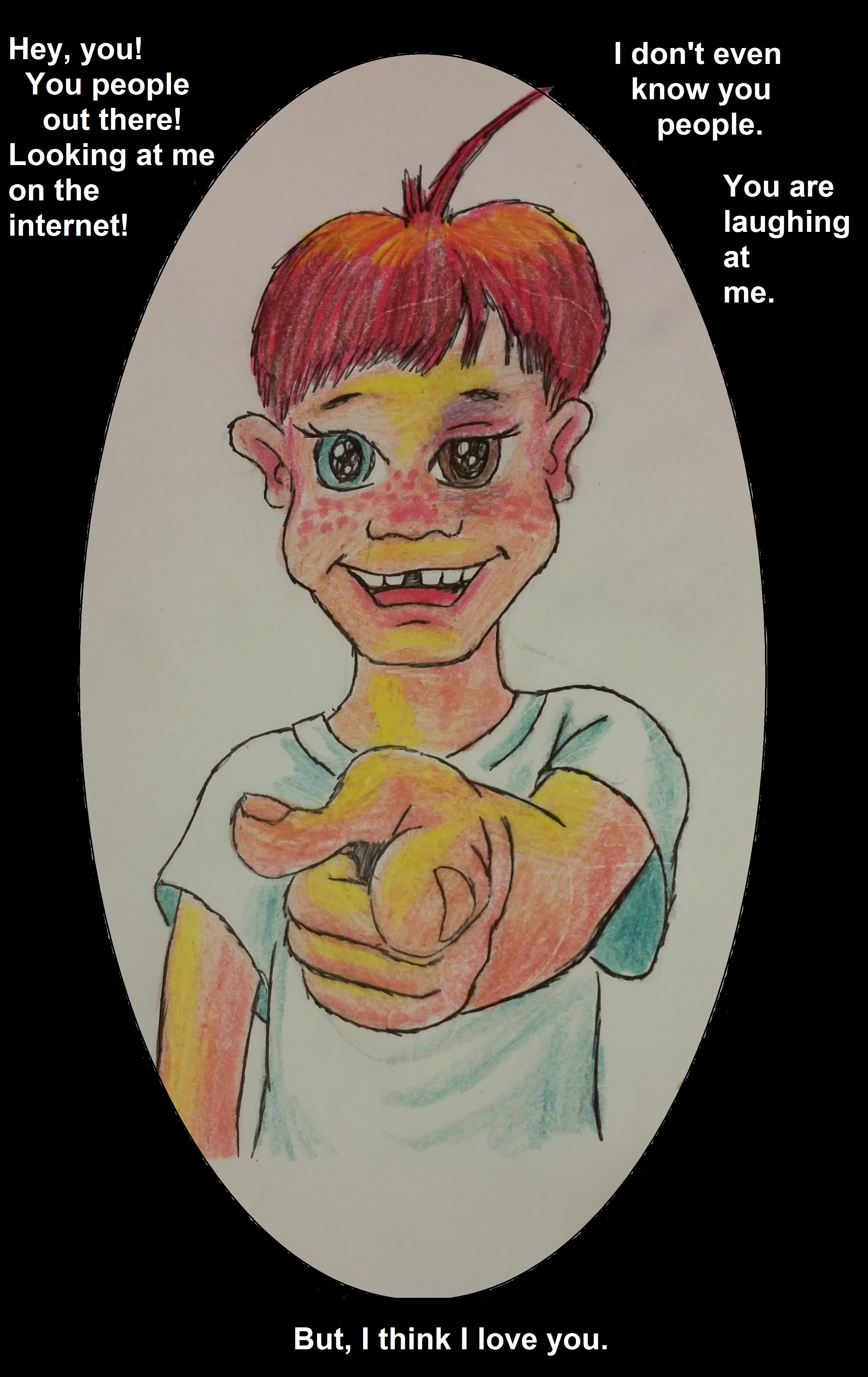
And we end for today with the Paffooney of a stupid boy. He’s not really me. Not really. And I don’t even know who gave him the black eye. So it can’t be me. So maybe he is not so stupid. You can’t say that about somebody you don’t know and is not even you.
So, now do you know what a Paffooney is? No? Me neither. But if you Google images with the words “Beyer Paffooney” you can see a lot more of them. Nobody else uses that word but little ol’ me.
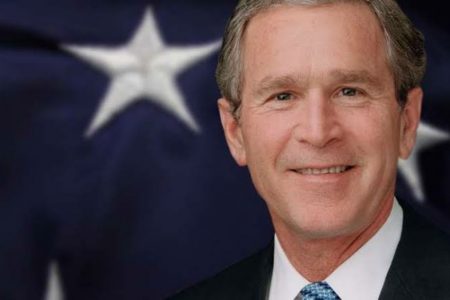
In the Republican primaries in 1980 it was Republican candidate George HW Bush who gave the old Gipper’s economic policy the accurate nickname of “Voodoo Economics.” Then when the Gipper defeated the last American President to have an administration without a war in it, that Voodoo became the things we do.
Banks became predatory, using credit card ploys to turn us into a nation of debtors where wealth defies gravity and trickles upward instead of down. To help that along, Republicans deregulated things, killed off the Savings-and-Loan industry through scandal to reduce competition. Wall Street learned to make greed good by building bubbles that allow profits to inflate them and eventually explode them. When the business moguls at the top of economic food chain went through the Great Depression (the ones who didn’t jump out of windows) they learned there are ways to turn recessions into profitable ventures for the wealthy elite. Income inequality grew fat on the raw meat of recession after recession.
And wars became a popular pastime again. Every president from Reagan onward had to manage a war they either started or inherited from their predecessor.
Gorbachev became the Premiere of the USSR. He attempted to modify Russia with Glasnost, opening up about the Russian past and the contemporary state of Russia’s economy. By opening up the ban on criticism, he caused the USSR to fall and the Cold War basically ended when they fell. Still, Republicans managed to always increase military spending, and use any excuse (in fact, making up some excuses) to declare war on somebody, especially little guys who were easy to beat up and bully. The Gipper did his happy dance and declared that Republicans had defeated evil. And stupid people gave him so much credit that two of the next three Republican Presidents got there with fewer popular votes than their opponents. And this was all okay because some voters count bigger than the rest of us.
And so the era of elections being decided by angry people and stupid people who want to punish the rest of us began.
Somehow a rodeo clown from Texas who dodged serving in combat during the Vietnam War became a war President, starting two wars, one against the wrong country. The Republicans deregulated more. Corporations cut down trees in National Forests more. They burned more coal. They fracked up the place and got more oil. And they looted and polluted more and more during the time when we could’ve done something to reverse the worst of climate change. They crashed the economy again. They made more money. They left a mess in the economy for Obama to clean up. And when he cleaned it up, they blamed him for not doing it right, and even for causing it all somehow before he took the oath of office.
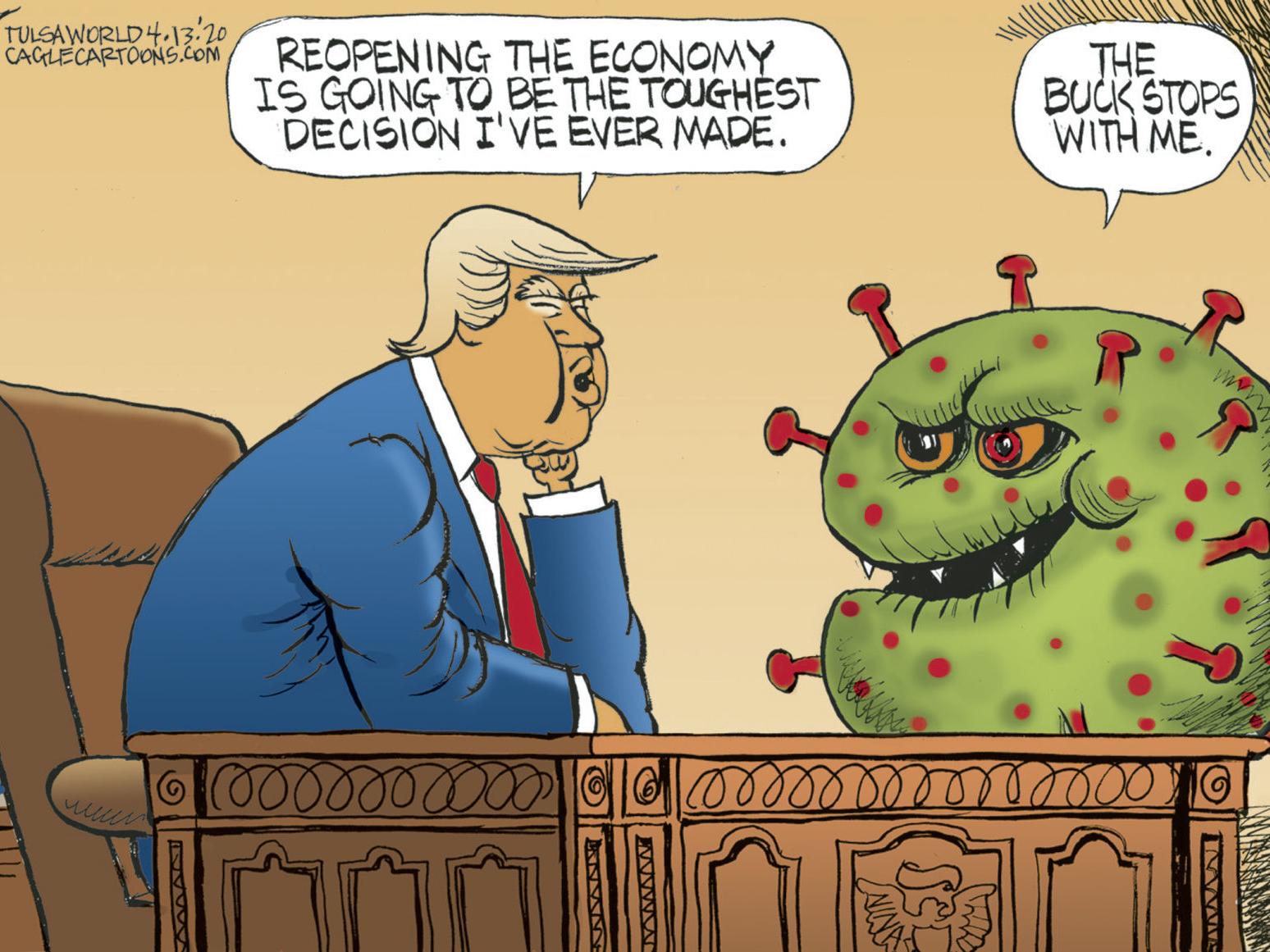
And when Obama was done, and we were hoping we could return to breathing safely in the atmosphere that was quickly overheating and being filled with doodoo smells, the angry and stupid people elected an orange guy (seen above with the green guy he tried to help destroy the world.)
And now I cannot watch the news without getting steamed, or crying over pictures of dead children in Ukraine. And all of this Voodoo doodoo is deep-rooted in the Republican poopoo, growing in horrific power and doodoo smells since the time of Ronny Ray-gun. (Why can’t Star Wars Anti-Missile Systems take out Russian missiles over Ukraine? Did we not pay enough for them?)
If you are wondering why I do less and less political humor anymore, well… It really stopped being funny.














Milt Caniff
My 1967 Captain Action Steve Canyon action figure.
I have always been a deeply devoted fan of the Sunday funnies. And one of the reasons I read the comics religiously was the work of Milt Caniff. His comic strips, Terry and the Pirates, Male Call, and Steve Canyon set a standard for the age of action comics and adventure strips.
I read his comics in the 1960’s and 1970’s and always it was Steve Canyon. But this, of course, was not his first strip. I would discover in my college years the wonders of Terry and the Pirates. When Caniff started the strip before World War II, he set it in China, but actually knew nothing about China. So he did research. He learned about people who became oriental hereditary pirate families and organizations. He learned to draw authentic Chinese settings. His comedy relief characters, Connie and the Big Stoop, were rather racist parodies of Chinamen and were among the reasons that the original strip had to mature into his later work in Steve Canyon. But perhaps the most enduring character from the strip was the mysterious pirate leader known as the Dragon Lady.
Steve Canyon is a fascinating study in the comic arts. When he left the Terry and the Pirates strip in 1946, it went on without him. It was owned by the Chicago Tribune-New York Daily News distribution syndicate, not Caniff himself. Steve Canyon would change that. He created it and owned it himself, making Caniff one of only two or three comics artists who actually owned their own creations. Canyon started out as a civilian pilot, but enlisted in the Air Force for the Korean War and would remain in the Air Force for the remainder of the strip. Some of the characters in the strip were based on real people. His long-time friend Charlie Russhon, a former photographer and Lieutenant in the Air Force who went on to be a technical adviser for James Bond films was the model for the character Charlie Vanilla, the man with the ice cream cone. Madame Lynx was based on the femme fatale spy character played by Illona Massey in the 1949 Marx Brothers’ movie Love Happy. Caniff designed Pipper the Piper after John Kennedy and Miss Mizzou after Marilyn Monroe.
I am not the only cartoonist who was taken with the work of Milt Caniff. The effects of his ground-breaking work can be seen to influence the works of comic artists like Jack Kirby, Bob Kane, John Romita Sr., and Doug Wildey. If you are anything like the comic book nut I am, than you are impressed by that list, even more so if I listed everyone he influenced. Milt Caniff was a cartoonists’ cartoonist. He was one of the founders of the National Cartoonists’ Society and served two terms as its president in 1948 and 1949. He is also a member of the Will Eisner Comic Book Hall of Fame.
Leave a comment
Filed under action figures, comic strips, commentary, inspiration
Tagged as comic art, comic strips, Milt Caniff, Steve Canyon, Terry and the Pirates