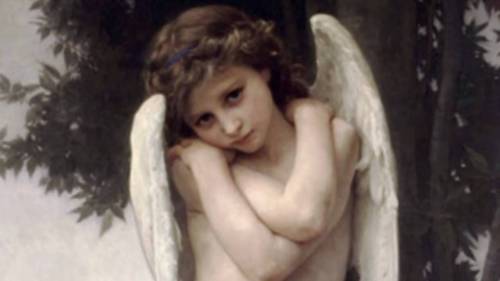
I used an AI digital assistant, an electronic stylus pen, and my Android touch screen to create these digital fairies. All of this is experimental, but all fun as a theme park.
Yeah, not gallery quality, but fun to do. I am, however doing this on a very small touch screen with a stylus operated by arthritic fingers. And I am now addicted.
I am a writer who learned to write by reading. Seriously. No, stop laughing at me. I mean it this time. I know I joke more often than not. But this is real. All the good and bad things about my life, all the pain I have endured, all the joy I have allowed to tickle me blue (I refuse to turn pink when tickled, I choose blue instead,) and all the wisdom I have gained by being battered by experience come from the same place, the library of the reading I have done and taken to heart.
Life began for me with Dr. Seuss. The Cat in the Hat and the Cat in the Hat Comes Back taught me that you have to learn hard lessons from life. If you let the cat in the door, not only will your talking goldfish end up in a teapot, but he will be unhappy and two little things will mess up your house. Oh, and if you make the added mistake of letting the cat take a bath, you will turn the snow in the entire neighborhood Pepto Bismol pink. Horrors! But I not only learned the wisdom of not repeating mistakes I have made, but I never let any cats with red-and-white top-hats into our house throughout my entire childhood. Not even the ones who could talk.
The most important lesson I learned from multiple books I read as a child, Treasure Island, Kidnapped, Robinson Crusoe, and The White Stag, was that I could experience other people’s lives through reading a good book. I was ready for most of the bad people and bullies in my youth because I had been on that ship with Jim Hawkins. I could deal with loneliness and isolation because I had been on that island with Robinson Crusoe. I could evaluate the amount of trouble I was in and make a plan to get out of it because I had been Kidnapped in the book. And I had my own white stags to follow in the forests of my planned future… and fortunately, lost the trail to become a teacher.
Of course, when you read a book, the author gives you insights into the nature of the characters in the story. You see inside the people being told about, learning that they have their own inner story that you can clearly read and learn from and even become.
And the truth of the matter is that real people have their own inner story too. Something is going on inside almost everyone. (Maybe not carrot people. I have only ever met one. But vegetables, unlike humans are simple and not filled with conflict.)
You can read real people’s stories too. If you watch them carefully with empathy as your quiet superpower, you can read the elements of conflict within them. Though never as thoroughly as you could if you were reading them in a book. You can sense their embodiment of familiar archetypes.
Reading living people in the real world is something school teachers do. Students especially are emotionally naked almost every minute of almost every class. (Not literally naked. That would be gross… and possibly illegal.) But the stories pass before your eyes constantly. It would be impossible NOT to read them.
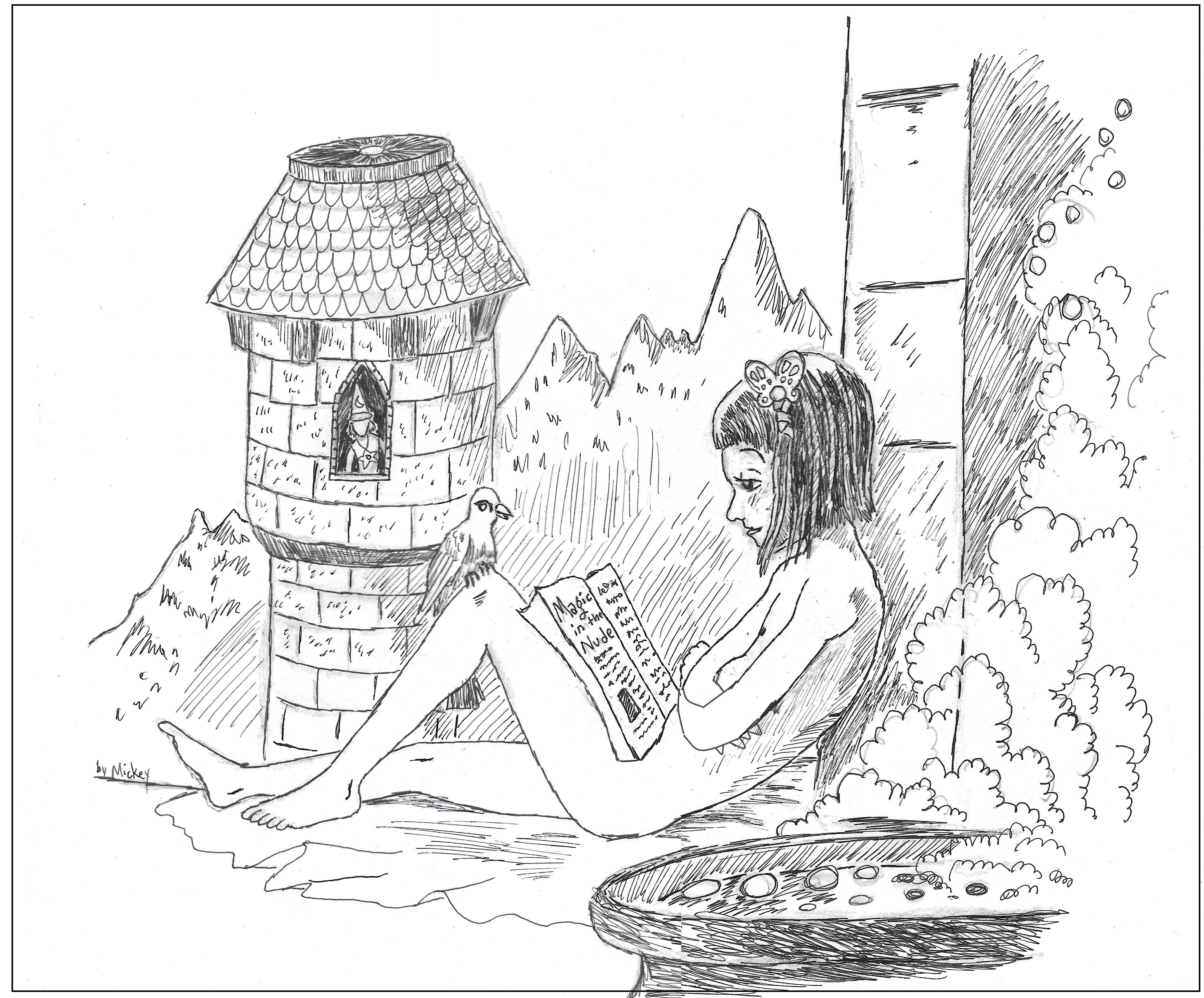
I have seen and studied in depth the writing of Ernest Hemingway, William Faulkner, Mark Twain, Michael Crichton, Terry Pratchett, and Neil Gaiman. By reading I have learned how they write. And they Write Naked. That’s the book Diane Callahan talks about in the very excellent video I linked to the start of this post.
Sometimes I write literally naked. (I know you may think that’s gross, but I have my reasons. And, besides, I am literally a nudist.) But I write emotionally naked too, as the video suggests I should. That involves writing about certain horrible words that make up what I most need to write to be authentic. Let me list a few of those.
Death – Here is a thing that everyone needs to deal with in order to reach maturity and survive growing older without going completely insane. Somewhere in life you have to make peace with the Grim Reaper. And I have haggled with the old bone-head more than a few times.
Suicide – I have been in Emergency Rooms five times with severely depressed people. I was not the one contemplating suicide. I was there to help. I have lost a second cousin, three former students, a high school classmate, and a fellow teacher to suicide. I only survived my own bout with it because of a friend on the other end of a telephone line. And, thank God, so far I have saved more depressed people who confided in me than I have lost. I can give you no names here. But I have to write about it in fiction form.
Sexual Assault – In the long run I have forgiven him, now that he is dead. But he seriously screwed up my life. And I was only ten. It only happened once, but once is enough. And some of my best fiction is linked to this emotional nakedness. I have written more than one book about it.
Depression – This killer of dreams I still deal with. Diabetes makes it worse. Thankfully it is not the deadly thing it was for Sylvia Plath that Diane talks about in her video while discussing The Bell Jar.
Loneliness – The ache of being invisible when that’s the last thing you need to be.
Fear – H.P. Lovecraft and the Bible helped me with this one. Of the two, the Bible is far more scary. But you have to face fear not to be consumed by it.
Is that a good enough list to write naked from? Let’s add feelings of inadequacy. But still the list is not complete. It will never be enough and there is not enough time left in the universe to write it all.
So, I write with awful words about terrible things. And it is apparently a key to writing well. What some of us won’t do to touch your heart with the next sentence you read! Write with real emotion. Thank you for putting up with me.
Today’s sermon is a further attempt by Mickey to say something coherent about religion. I am trying to be a humor writer, and religion is a difficult topic to commit acts of humor against. People do not take it well when you put the heat of thoughtful questions to the personal mythology that they adhere to. They are afraid it might all burn away and leave them with nothing. It is the main reason nobody plays George Carlin’s comedy albums in church. And my atheist friends and acquaintances always get upset when I slip and make a statement like, “Atheism is a religion too. After all, it is a difficult act of sincere faith to believe in nothing.”
But religion is important enough to being human that it merits some daily and, at the minimum, weekly attendance to the fundamental ideas of it. After all, what is the reason we always have had and still have some form of religion?
Religion serves an important function in the lives of human beings. It is the guiding principal that keeps us from wigging out, being self-destructive, or going on a killing spree. Religion sniffs out the borders of our behavior. It gives us a sense of where the lines are that you should not cross. Of course, by itself, religion is not enough to save us from ourselves. It only provides the warning. The girl who hears the admonition from the pastor to not have sex before getting married can still go ahead and have four children before reaching the age of eighteen. Religion does not (or rather, it should not) provide the punishment for crossing the line. It just gives us the warning about the consequences.
I like the metaphor that Joseph Campbell always used in his insightful books about mythology. He suggests that if our lives are the hardware, our shared myths are like the software that makes it operate properly.
Our religious software has to be used with caution, however. Because, just as George Carlin so often used to gleefully shout, “Religion can be stupid enough to really hurt you.” It is hard to deny the truth of that statement with things like the Westboro Baptist Church, the Spanish Inquisition, Salem Witch Trials, and the Methodist Church Ladies who saw your kid running around naked in the yard.
But there is a reason that some religious extremes are dangerous and counter to the basic purposes of religion. There is reason why more atheists are generated by the Catholics, Baptists, and other fundamentalist religions than by more tolerant sects like the Midwestern Methodists and the New-Age Crystal-wavers. Intolerance. If you are too insistent that your religious way is the only path, and all others burn in Hell, then you have taken religion too far into its own dark corners and scary, deep crevices.
There are many acceptable forms of religion that have many good things to offer. I have never been bullied by a true believer of the Buddhist faith. Christians, if they are tolerant, believe in a religion founded on love and forgiveness. Nudists are sun-worshipers who believe in positive body images, communion with nature, and freedom of self-expression. Quackatoons believe in the power of Donald-Duck cartoons to make you wise and capable of laughing at anything. Okay, I haven’t actually established that last religion in the real world. But it could happen, in the very near future. We are going to need it if Donald Trump (not Donald Duck) gets reelected in November.
But the simple point of all this is simply that… we need religion. There is a spiritual aspect to all human thinking, and especially when interacting with others. We need to keep it simple enough for even the most simple people among us to guide their lives and their children’s lives with it. And yet, we need to also be tolerant enough to suffer fools like me to think they are atheists who believe in God.
So, to put it in simple terms, “Here endeth the lesson.”
The pandemic put a crimp in my doll collecting. Not only did it take away my substitute-teacher job, and my parents… it took away both my doll-collecting funds and my ability to go to a store that sold toys. Toys-R-Us went away permanently.
But I celebrated both my survival of the pandemic and the Marvel Cinematic Universe surviving it by buying all their movie-themed action figures that only cost twenty dollars or less. The Black Panther cost $10, Dr. Strange and Wanda the Scarlet Witch came in the same box for $19.99.
I also go to Goodwill, ReSale, and other junk shops to buy discarded, broken, and abused toys that can be restored and made almost as good as new. (Although none of these required any repairs, and both Aquaman and the Flash were still in store boxes in December of 2021,)
Some of these come from the Walmart clearance aisle. You get them cheap there, often because, like the Rock playing Black Adam, their movie bombed and nobody wanted the toy but me. Or they were from a really old movie, or, like the Prince Namor figure from Wakanda Forever, they were just a character nobody wanted to buy.
And some characters get popular, then got ignored, and then became popular again recently. Hence, Batman meets Lady Bug from Miraculous.
Doll collecting is fun. And it is hard obsessive habit to kill. I know this because the pandemic tried and failed.
Yes, the universe was not formed in a big bang. It hatched from an egg. And God is the Ultimate Mallard.
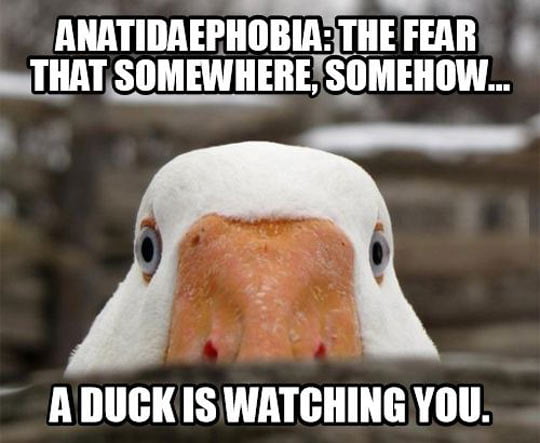
Anatidaephobia (pronounced anna-tidy-phobia) is a pervasive and irrational fear that you are being watched by a duck. A person with this rare phobia fears that somehow, somewhere a duck is watching their every move.
This phobia about being watched by a duck may seem like a strange basis for forming a new religion. But I may have had an epiphany as a child when a goose at Deer Farm Zoo stuck his neck, head, and beak of retribution out through a hole in his chicken-wire cage and nearly nipped me in my five-year-old neck. That epiphany led to recurring nightmares about being chased by a duck with large white teeth that looked like he had bad human dentures in his bill.
This I tended to interpret as a sign that I was facing a big decision about what I would attempt to do with my young life, and would do it wrong.
Ducks in the farmyard, you see, are temperamental, often impulsive, and randomly violent. They will punish you for sins you did not know you were committing.
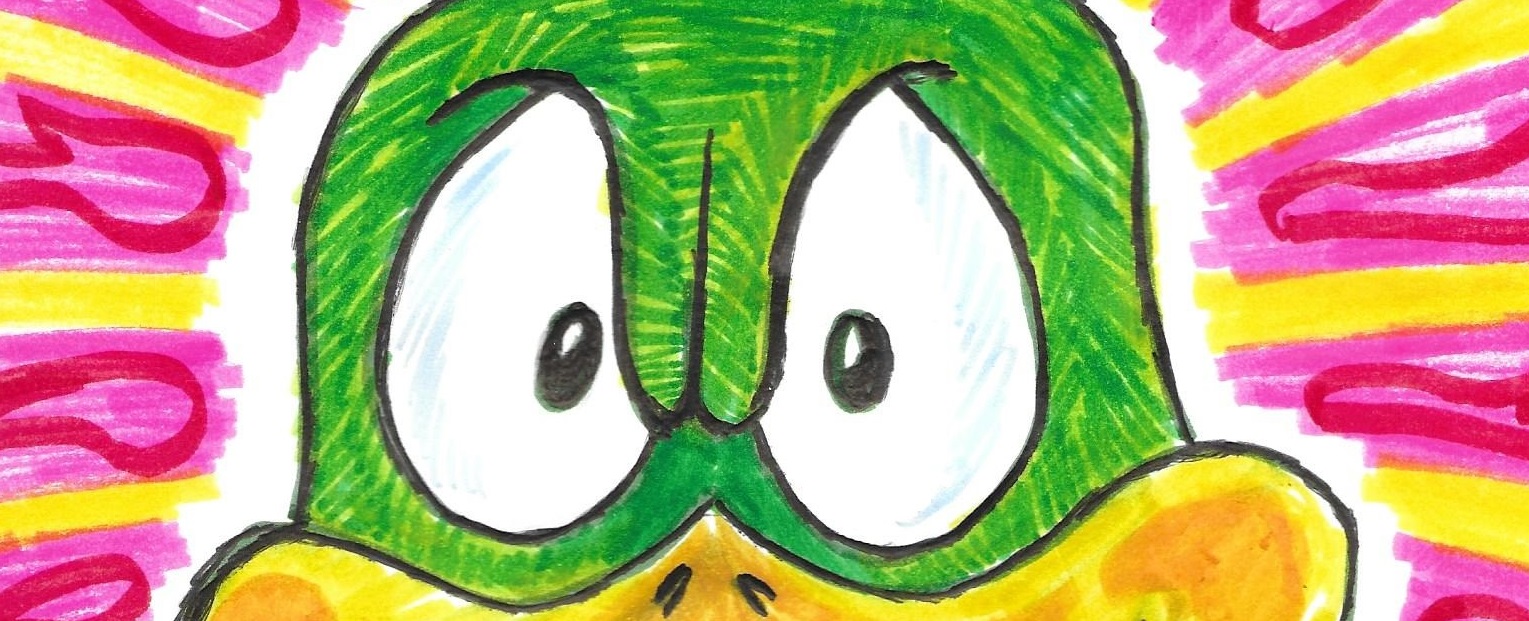
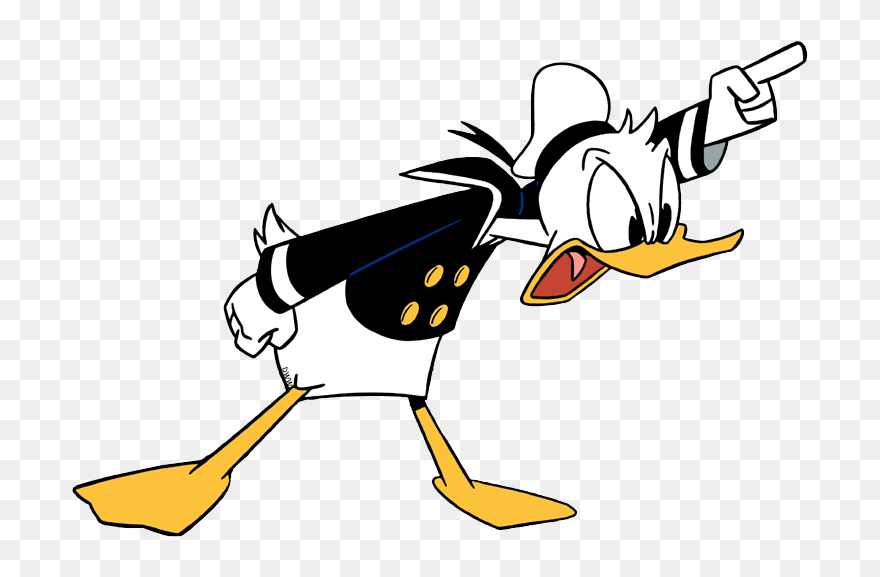
So, in this Quackatoon faith in judgmental ducks who are constantly watching our every move, thought, and deed, we should be taking Saint Donald Duck as our role-model and guide. When we see sin and wrongness in the world we are watching, we must dissolve in incoherent rage. Point your finger. Shout things that no one understands. Get the world’s attention. Confuse them completely. And get them to wonder what they did to make you so rage-filled and dangerously aggravated.
Then, hopefully, they will realize their sin and immediately mend their ways. Or at least, rearrange their feathers.
Or we can rely on the incompetent vengeful wrath of Saint Daffy Duck to see the unrighteousness in the rabbits of the world around us, posting Rabbit Season signs everywhere, and getting his duckbill blown off via the shotgun of a nearby Elmer who has been tricked into thinking ducks are rabbits.
Well, that might not be the most efficient prosecution of God’s will on Earth. But at least it will leave us laughing. And who can sin who is laughing that hard?
At this point in trying to establish this new religion, I should probably be talking about financial matters. Where you can send donations to the Church of Perpetual Quackers? Will there be t-shirts with religious slogans like, “You’re Driving Me Quackers!?” Do we still bring deviled eggs to church socials?
But I can’t talk about that right now… a duck is probably watching.
So, how do you follow up a thing like starting a new religion like Quackatoonity? Should you follow it up?
I mean, this is Art Day. And I need a theme for Art Day. How about, “Art with no ducks in it?” Well, Ducks are always watching from somewhere. So, I guess that’s a no-go.
Of course, I could always try to prove the “toon” part is real. I am a cartoonist. I do do cartoons. (Haha! He said, “doodoo!” Shows you the level of humor he will sink to.)
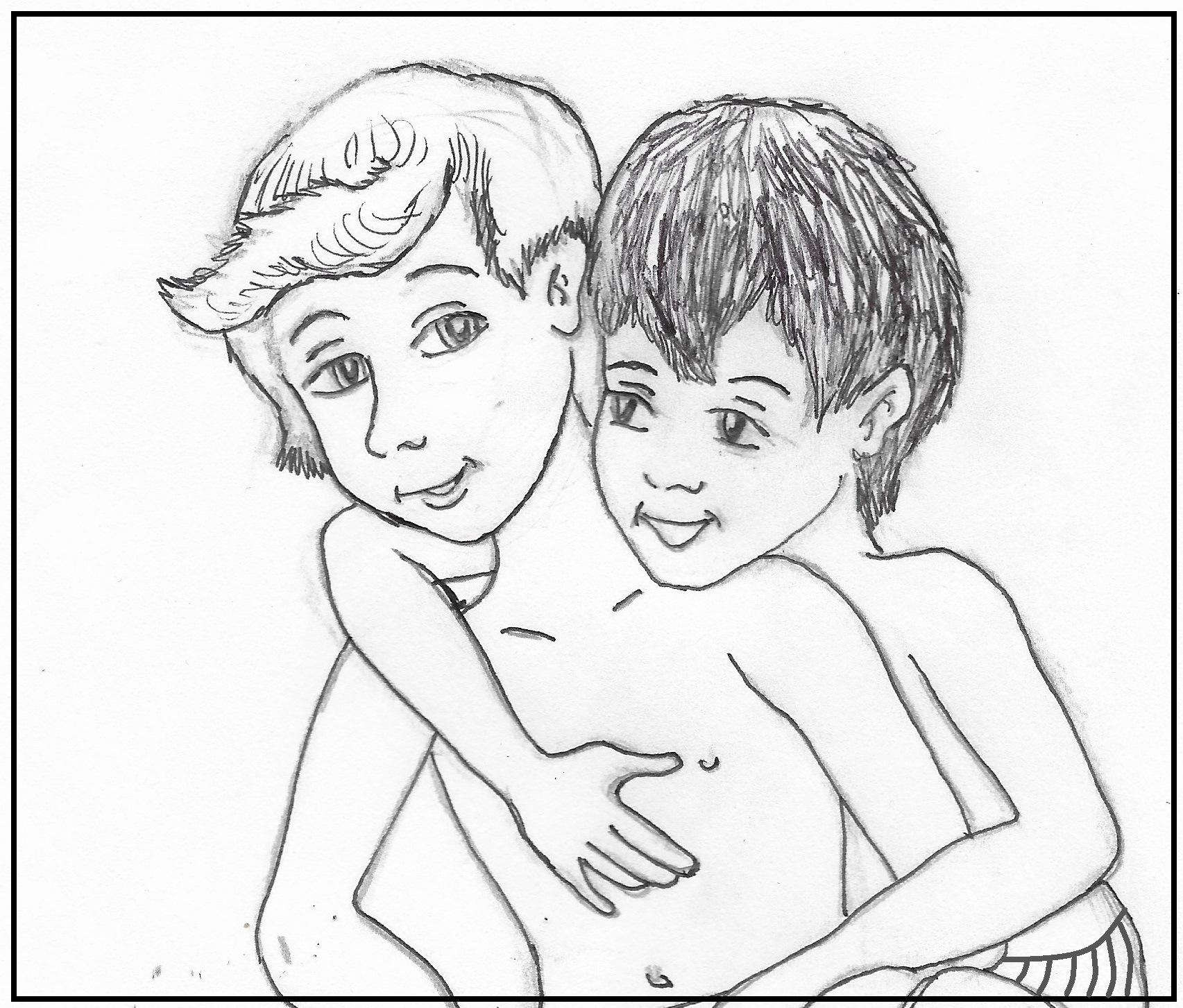
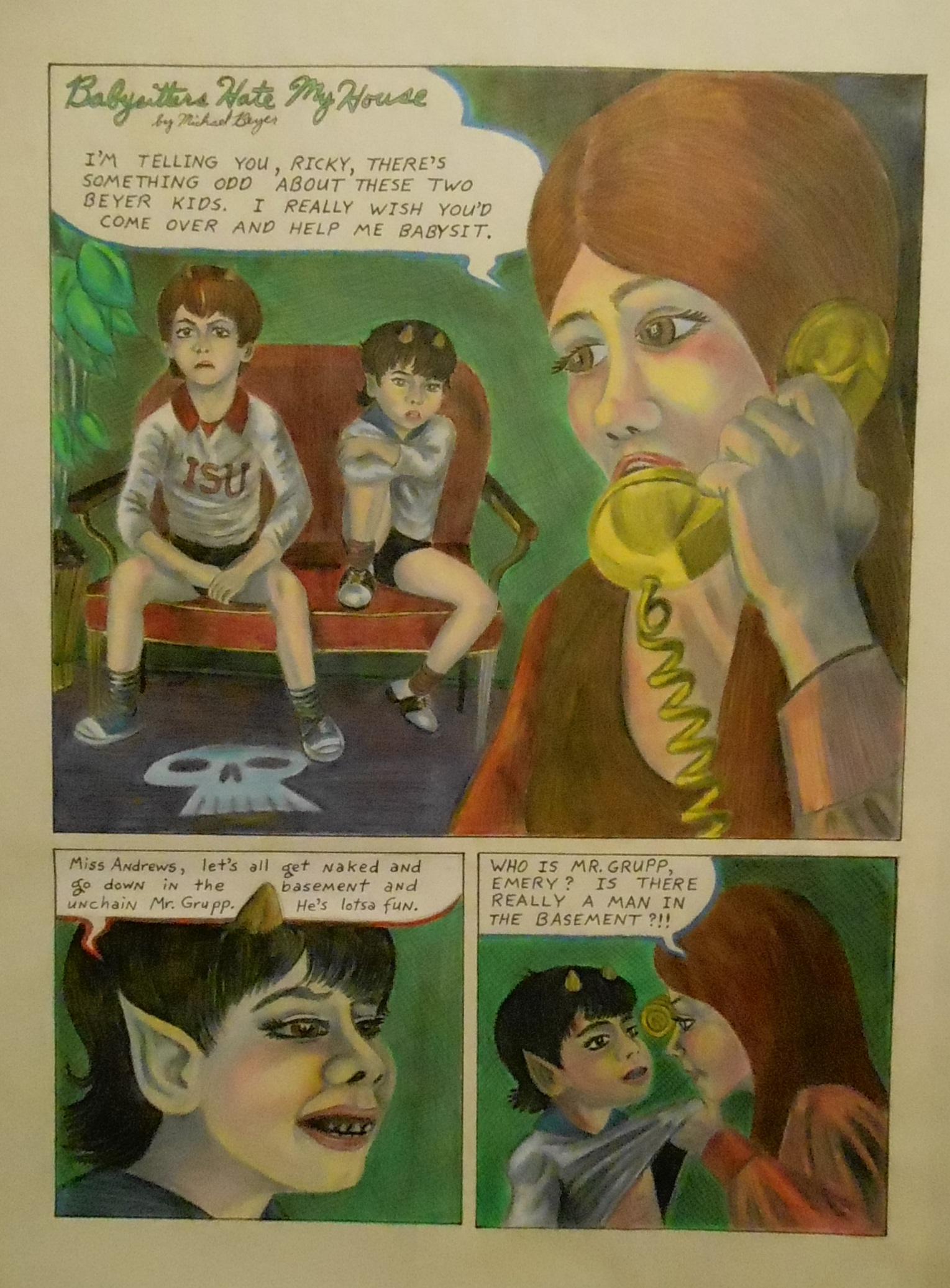
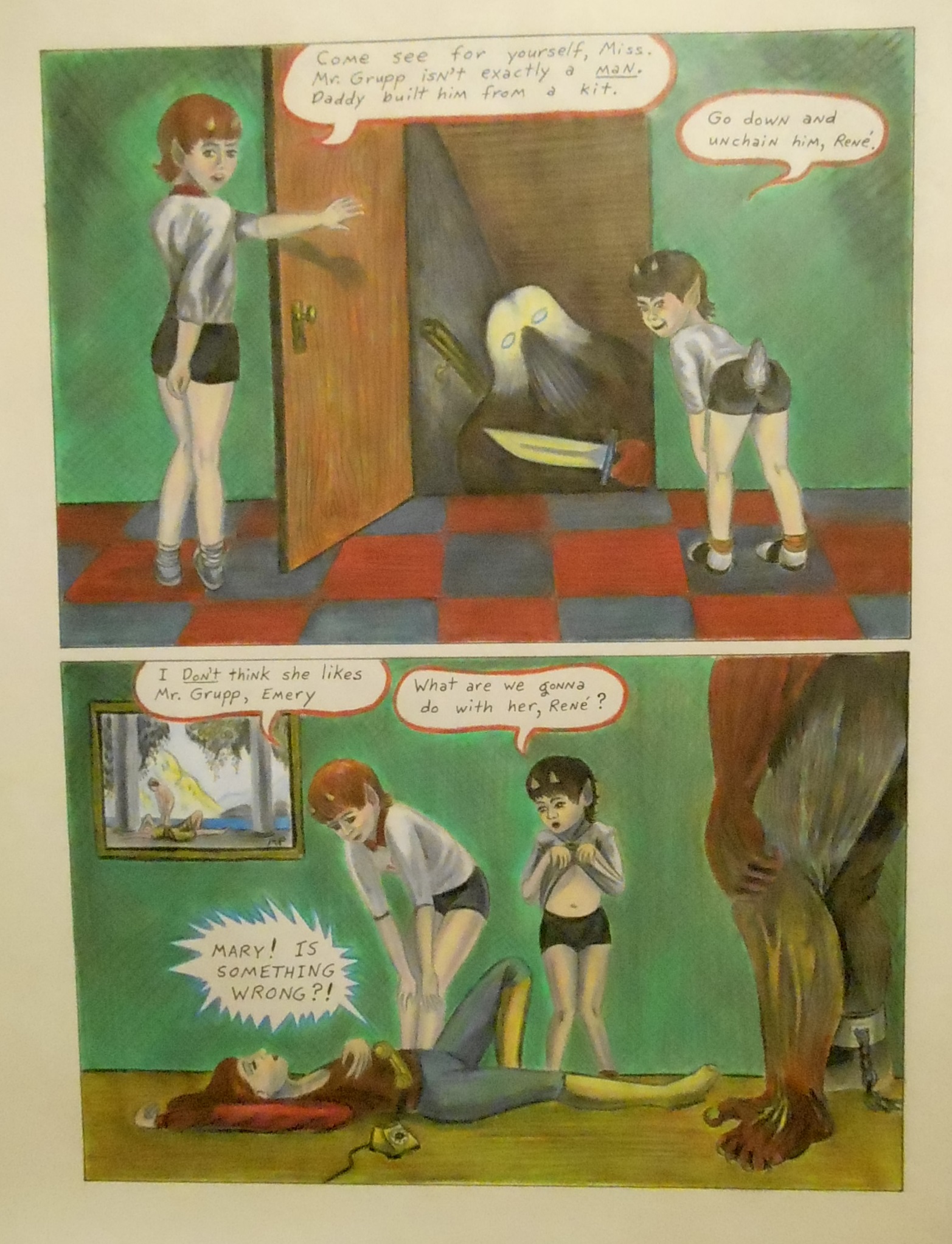
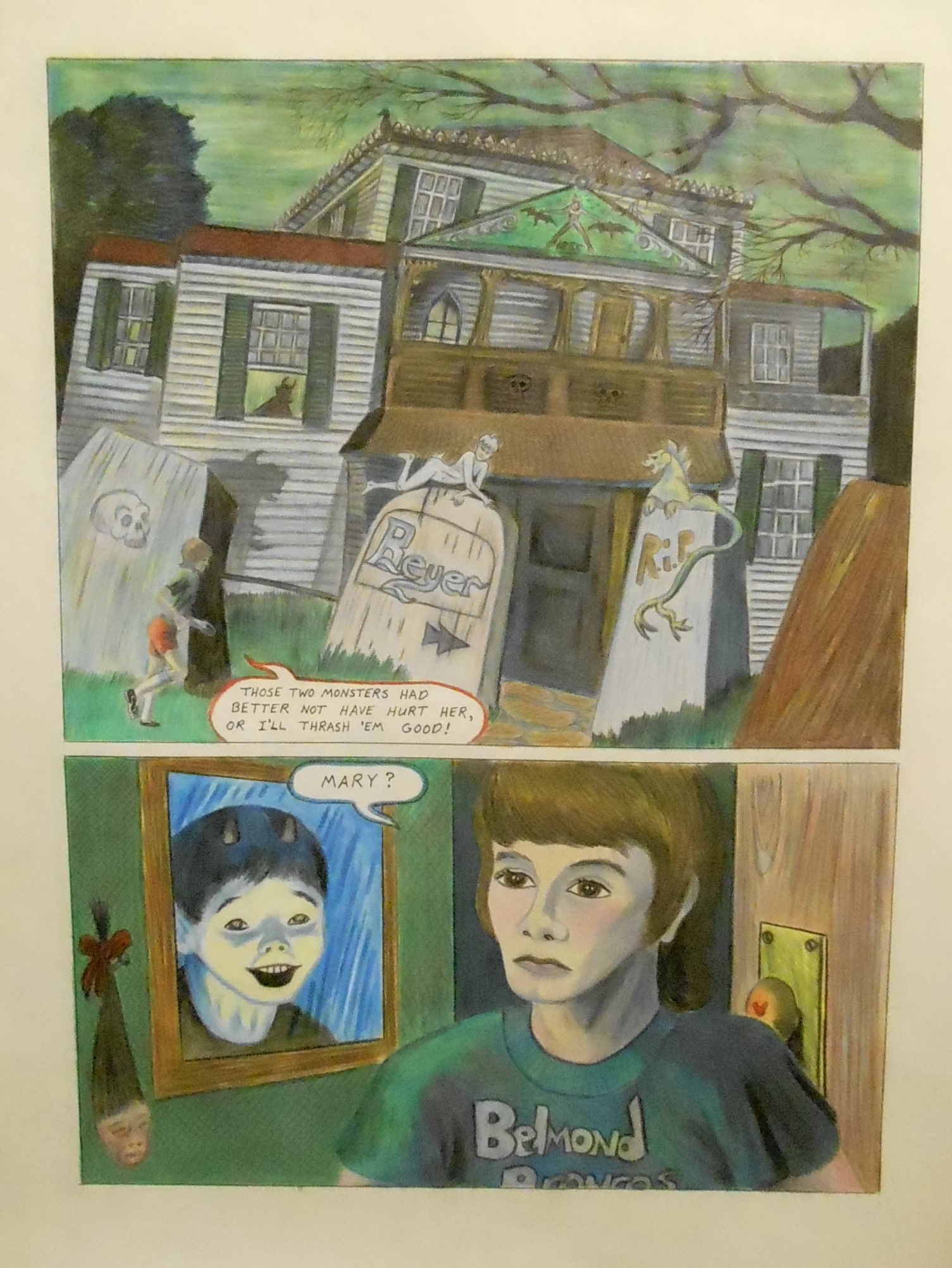
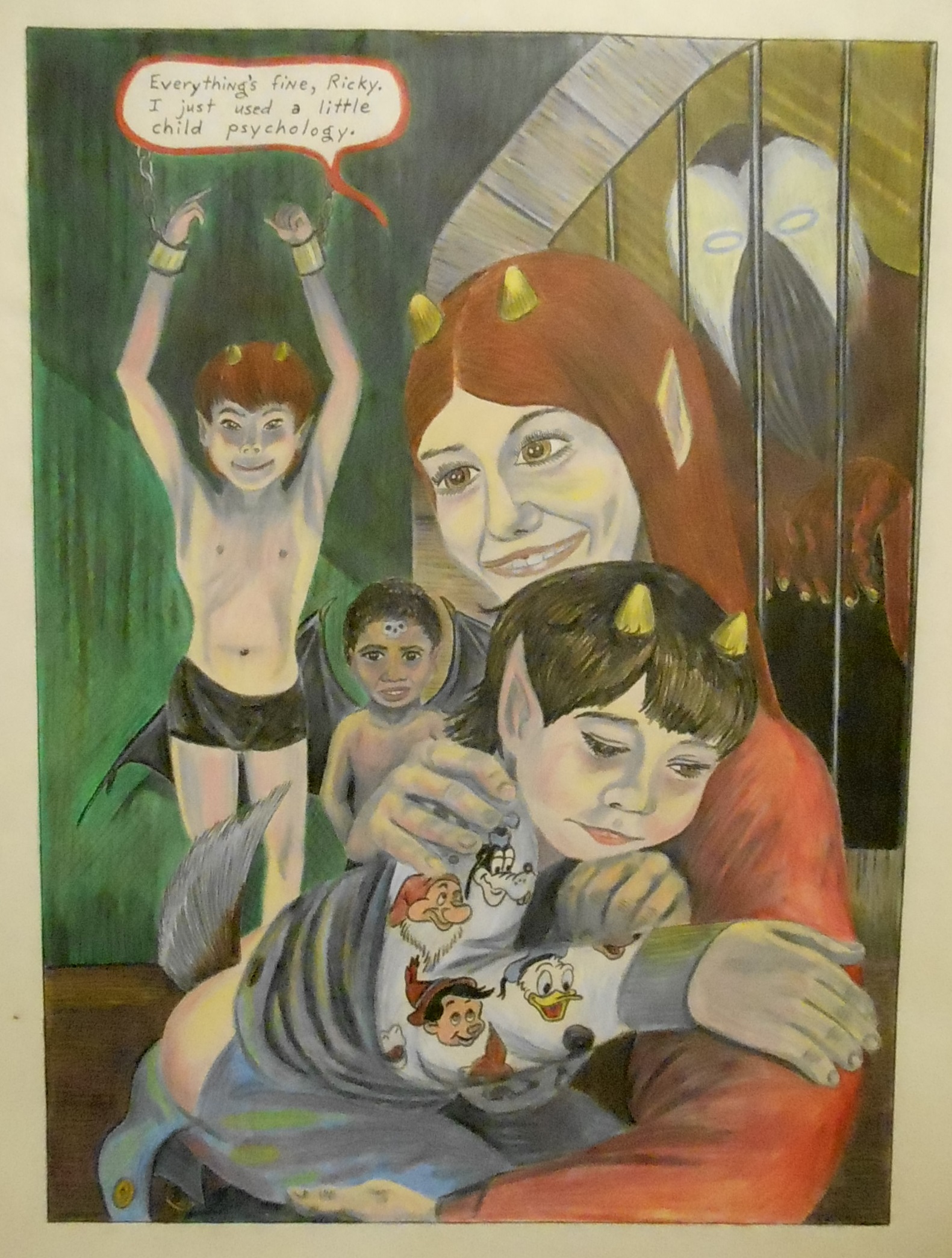
This cartoon is a bit creepy and definitely surreal. This was done more than a decade before I even met my wife. But the two boys seem to be four years apart in age, just like my real-life sons. They do not, however, have visible horns on their heads. This is supposed to be surreal, not photographic.
So, there’s a weird cartoon story for today’s Art Day post on a New Day. And nowhere in sight will you find a duck in it… OH, NO! THERE’S A DUCK IN IT!!! How does Donald do that?
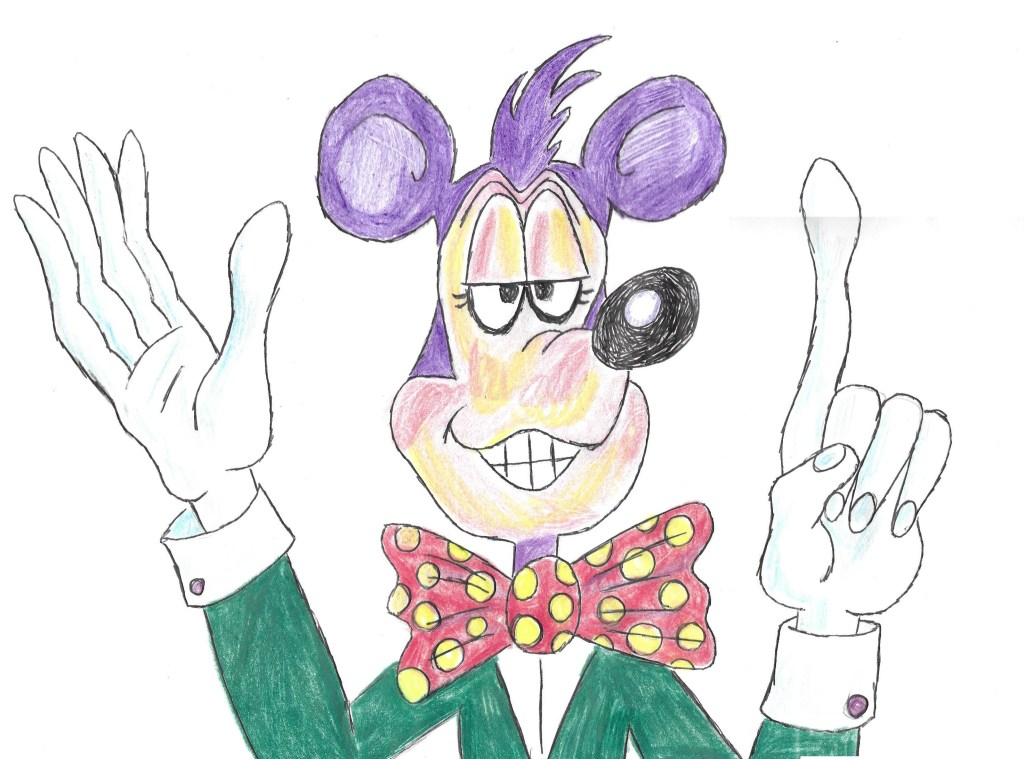
Cartoon villains take note; Super-Mickey’s secret identity is Filbert Hazelnut. I make that revelation without worry. After all, Mickey is not really me. So, if the Messmaster, Badnose the Clown, or Daniel Quilp are going to try to apply the Mickian version of Kryptonite, not laughing at the jokes, in order to slay Super-Mickey, Filbert is immune to that. I am too for that matter. If you are a school teacher who uses humor in the classroom, you soon learn that only the smartest kids actually understand the jokes, and half of them are just too cool to laugh when the teacher wants them to. (Although they will tell you years later that they still use concrete details in their writing because you said that if you routinely whack the reader in the head with verifiable concrete examples, they will be totally stunned enough to believe you know what you are writing about. That was, you must understand, a concrete detail I just whacked you with to help you remember what it is, not to make you laugh… even though it was a joke… but you are permitted to laugh if you want to.)
The basic point of this essay is Mickey is not really me. I never went by that name as a kid.
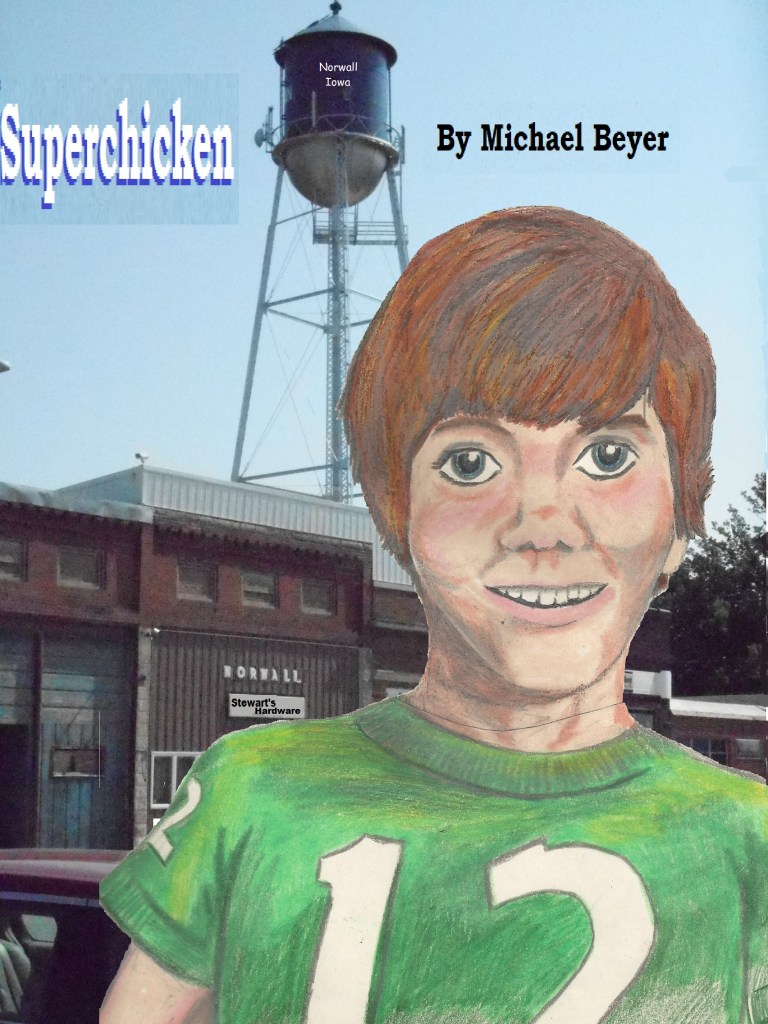
I was always called Michael, sometimes Mike (though they were usually talking about the Other Mike when anybody said Mike in school back then… circa 1963 to 1969). In high school I was given the nickname Superchicken after the Saturday Morning cartoon on the George of the Jungle Show. In college I was given the rhyming nickname Spike by my college freshman roommate because he ludicrously thought I was the opposite of a Spike, like calling a huge football player Tiny Tim, or a midget Big Bad John.
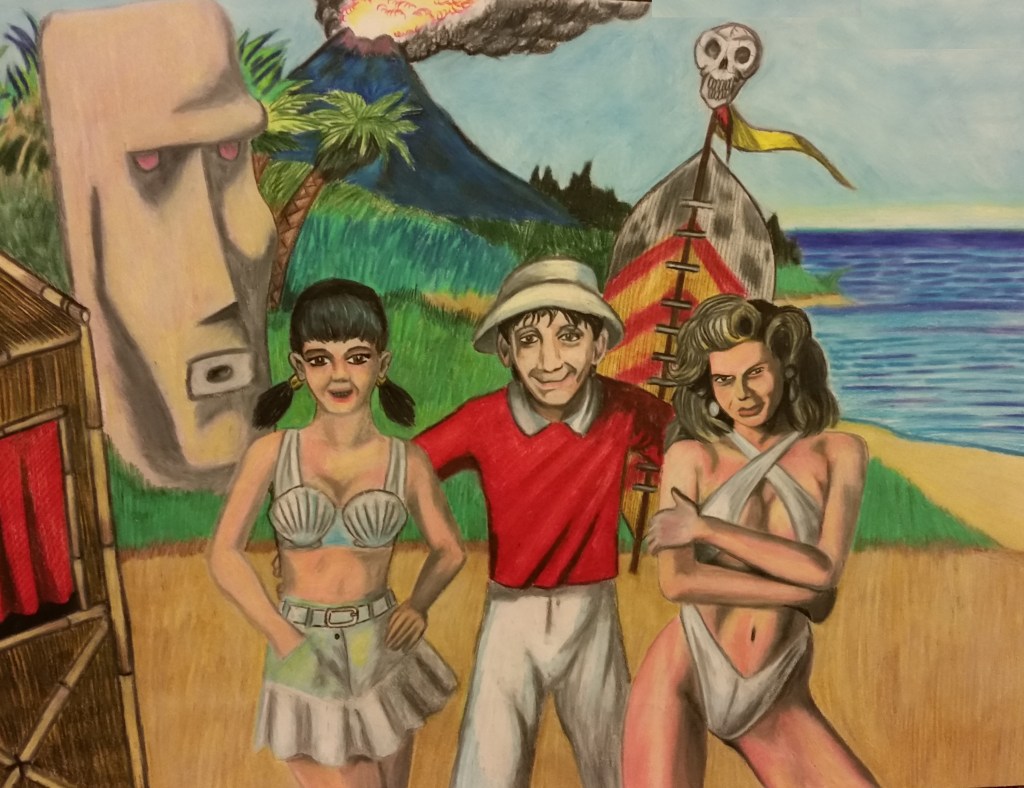
When I started teaching school, they called me Gilligan because I was thin and they wanted to pretend I was a hopeless stumbling fool (Which I was at times my first two years, just as all beginner teachers are.) My classroom became known as Gilligan’s Island on the day in third period when I made the comment, “Gilligan is lucky enough to be the only really eligible bachelor on the same island with Ginger the movie star and cute little Mary Ann. I would find out later that same day that three eighth grade girls in that very class had huge crushes on me and were fighting over which one was Mary Ann and which one was Ginger and, unsurprisingly, which one was the other girl.
And, of course, Rudolfo Hernandez tried to get everybody to call me Batman because I bought a used Ford Torino with fins on the back. But to promote the nickname, Rudy came to class wearing a Halloween Batman mask and afterwords had to learn to live with being called Battyman himself. (I wish i could take credit for calling him that first, but I am sure I did not. I distinctly remember it coming from a girl in his class that made fun of him for every stupid thing he did because she apparently adored him. I just reinforced it about a thousand times.)
Mickey is a name that I have only ever been called by me myself. It was a name I signed some of my cartoons with (using The Little Fool, Le Petit Fou, Leah Cim Reyeb, and Dr. Seebreez on the rest.) It also became the name I use to refer to myself on this blog when I talk about myself in the third person like a crazy person.
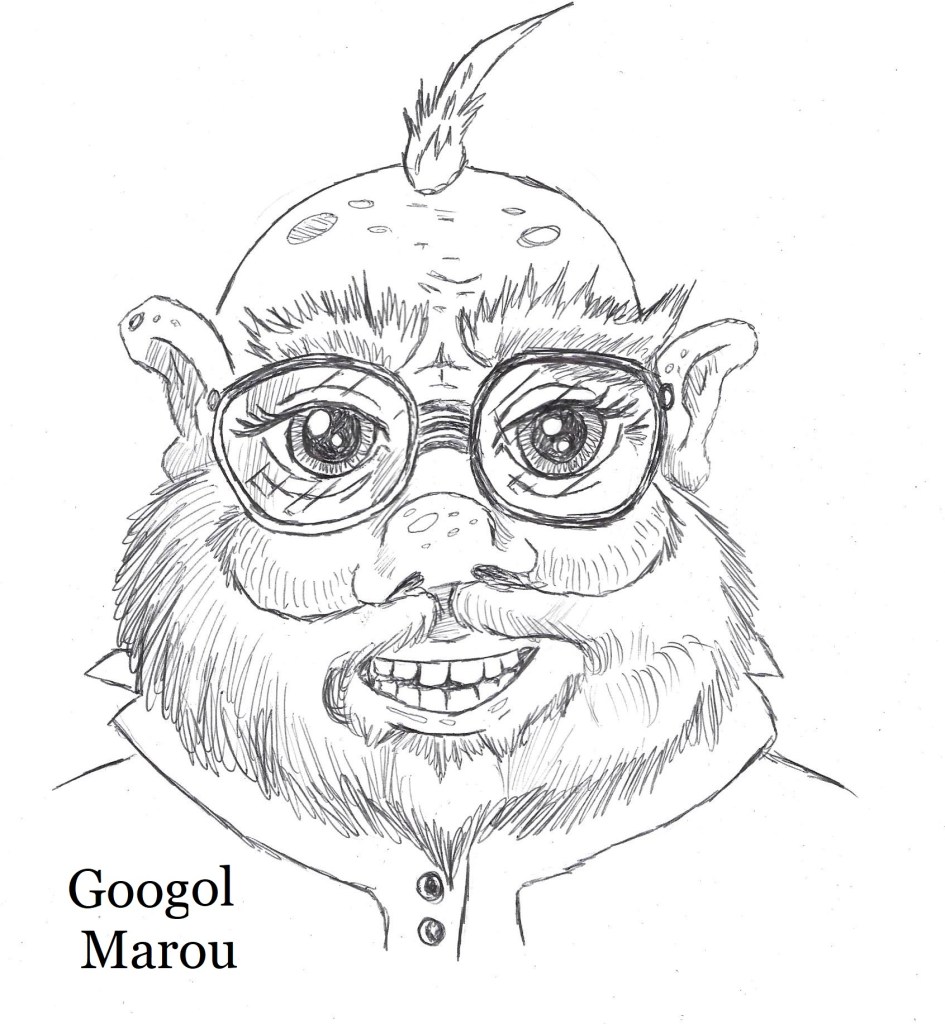
I have given myself other pseudo-pen-names in my writing. Googol Marou, as the only first-person narrator of the AeroQuest series, speaks with my voice as the primary storyteller in the tale. In Norwall, the fictionalized version of Rowan, Iowa in most of my other books, Branch McMillan, the writer-character, is actually me. (Like Charles Dickens switched his initials to write the semi-autobiographical David Copperfield, I created that one by switching the M and the B.
Of course, the many me-characters in my fiction books are also basically me. Superchicken is me. Milt Morgan is a combination of me and the Other Mike. Brent Clarke is the football-player me combined with two other football teammates. Certain parts of Todd Niland’s story are really about things that happened to me, and things I was afraid of at his age.
In some ways Tim Kellogg and Dorin Dobbs are me too, though both of those characters are actually based on my eldest son. It is possible, I suppose, that you could consider my actual son to be a me-character too, as people do live on through their own children.
But, while Mickey might be me more than I care to admit, Super-Mickey’s secret identity is definitely Filbert Hazelnut.
Yes, I’d have to say I am enjoying digital art. This portrait is nominally supposed to be Jenna Ortega. Of course, I did not make it look like her, even with an AI tool trying to help.
Here’s a digital update of “The Leap.” Do you remember what it looked like in colored pencil?
Remember Shannon who danced with me?
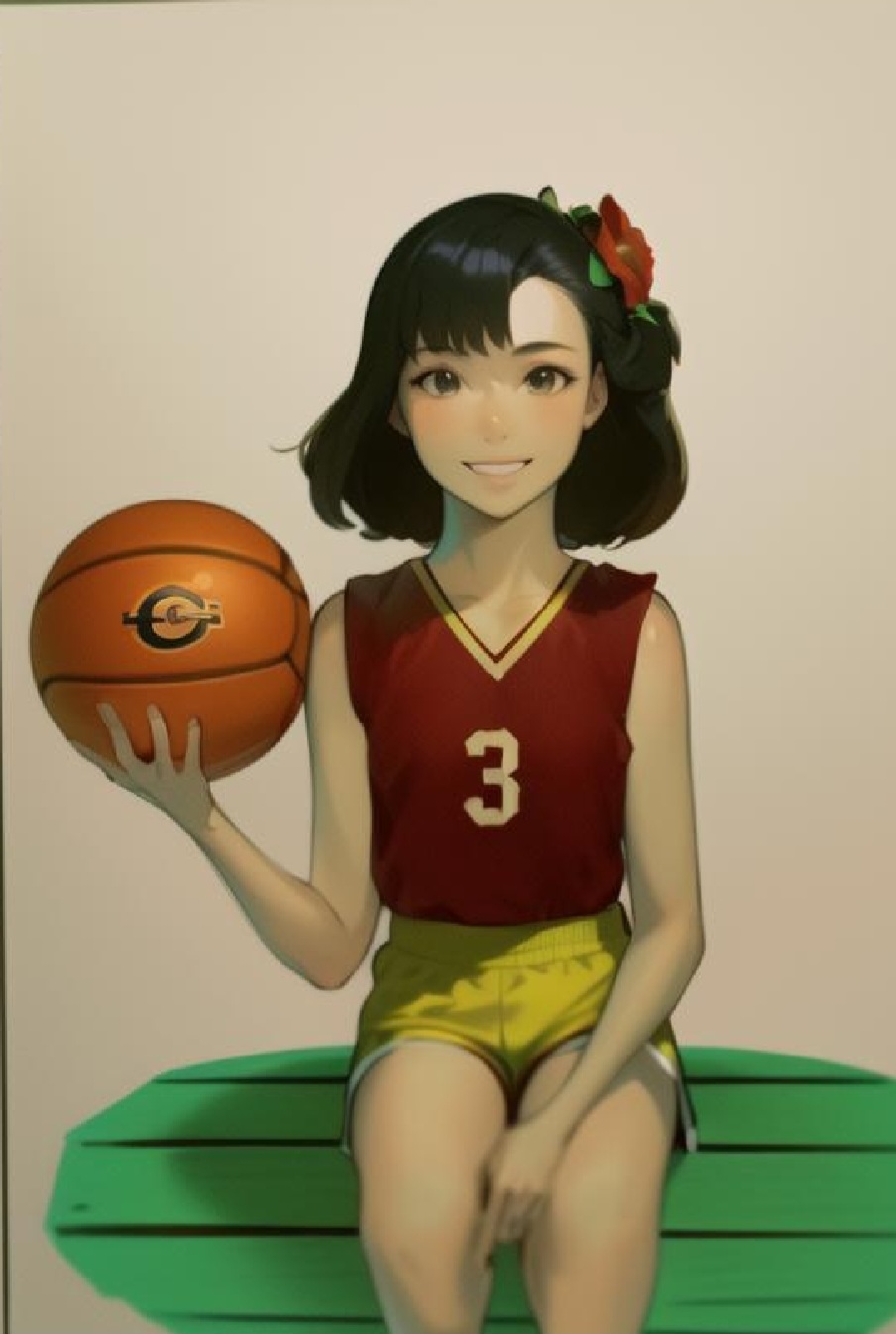
And “Basketball Player #3?
And KlownTown’s noble Piewhacker Police Department?
Rowan, Iowa… Not the place I was born, but the place where I got to be a stupid kid, and have the lessons of the good and god-fearing life hammered into my head hard enough to make a dent and make it stay with me for more than half a century. I got to go to grade school there. I learned to read there, especially in Miss Mennenga’s third and fourth grade class. Especially in that old copy of Treasure Island with the N.C, Wyeth illustrations in it, the one Grandma Aldrich kept in the upstairs closet in their farm house. I got to see my first naked girl there. I learned a lot of things about sex from my friends there, and none of them were true. I played 4-H softball there, and made a game-saving catch in center field… in the same game where my cousin Bob hit the game-winning home run. But those were things kids did everywhere. It didn’t make me special. There was no real magic in it.
Being a farm-kid’s kid taught me the importance of doing your chores, every day and on time. If you didn’t do them, animals could get sick, animals could die, crops could be spoiled, the chickens could get angry and petulant and peck your hands when you tried to get the eggs. Cows could get grumpy and kick the milk bucket. Cats could vow revenge if you didn’t direct a spray or two at their little faces as they lined up to watch you milk the cows. And you never knew for sure what a vengeful cat might do to you later, as cats were evil. They might jump on the keyboard during your piano recital. They might knock the turkey stuffing bowl off the top of the dryer when Mom and Grandma and several aunts were cooking Thanksgiving Dinner. And I know old black Midnight did that on purpose because he got to snatch some off the floor before it could be reached by angry aunts with brooms and dustpans. And all of it was your fault if it all led back to not doing your chores, and not doing them exactly right.
But, even though we learned responsibility and work ethic from our chores, that was not the real home-town magic either. I wasn’t technically a real farm kid. Sure, I picked up the eggs in the chicken house at Grandpa and Grandma Aldrich’s farm more than once. And I did, in fact, help with milking machines and even milking cows by hand and squirting cats in the faces at Uncle Donny’s farm. I walked beans, going up and down the rows to pull and chop weeds out of the bean fields at Uncle Larry’s farm. I drove a tractor at Great Uncle Alvin’s farm. But I didn’t have to do any of those things every single day. My mother and my father both grew up on farms. But we lived in town. So, my work ethic was probably worth only a quarter of what the work ethic of any of my friends in school was truly worth. I was a bum kid by comparison. Gary G. and Kevin K, both real farm kids and older than me, explained this to me one day behind the gymnasium with specific examples and fists.
Being a farm kid helped to forge my character. But that was really all about working hard, and nothing really to do with magic.
I truly believe the real magic to be found in Rowan, Iowa, my home town, was the fact that it was boring. It was a sleepy little town, that never had any real event… well, except maybe for a couple of monster blizzards in the 60’s and 70’s, and the Bicentennial parade and tractor pull on Main Street in 1976, and a couple of costume contests in the 1960’s held in the Fire Station where I had really worked hard on the costumes, a scarecrow one year, and an ogre the next, where I almost won a prize. But nothing that changed history or made Rowan the center of everything.
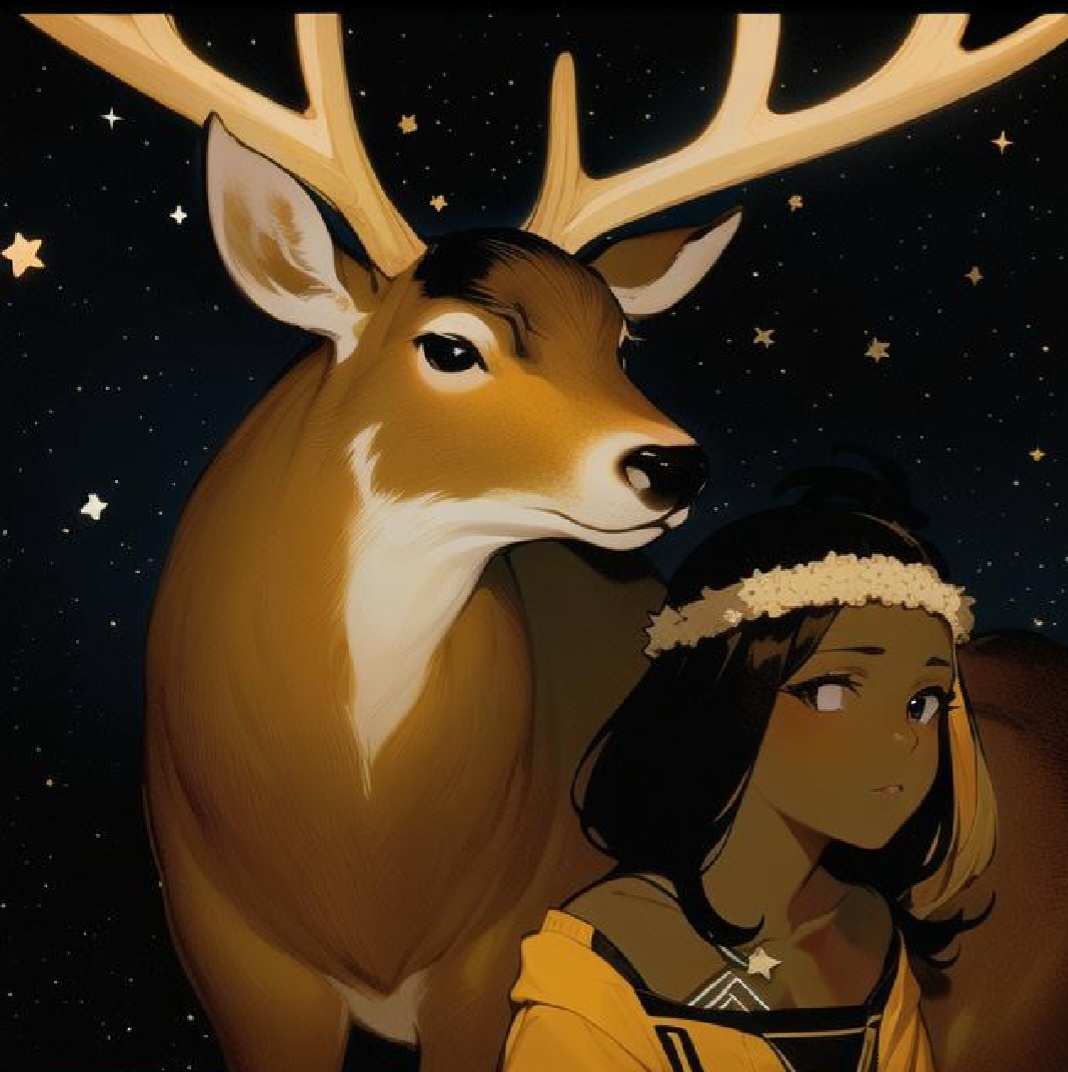
And therein lies the magic. I had to look at everything closely to find the things and strategies that would take me to the great things and places where I wanted to end up. I learned to wish upon a star from Disney movies. I learned about beauty of body and soul from the girls that I grew up with, most of them related. And I invented fantastical stories with the vivid imagination I discovered lurking in my own stupid head. I embarrassed Alicia Stewart by telling everyone that I could prove she was a Martian princess, kidnapped and brought to Earth by space pirates that only I knew how to defeat. And I learned to say funny things and make people laugh… but in ways that didn’t get me sent to the principal’s office in school. Yes, it was the magic of my own imagination. And boring Iowa farm towns made more people with magic in them than just me. John Wayne was one. Johnny Carson was one also. And have you heard of Elijah Wood? Or the painter Grant Wood? Or the actress Cloris Leachman?
Yep. We were such stuff as dreams were made on in small towns in Iowa. And that is real magic.
















 Catch a Falling Star
The Real Magic in that Old Home Town
Rowan, Iowa… Not the place I was born, but the place where I got to be a stupid kid, and have the lessons of the good and god-fearing life hammered into my head hard enough to make a dent and make it stay with me for more than half a century. I got to go to grade school there. I learned to read there, especially in Miss Mennenga’s third and fourth grade class. Especially in that old copy of Treasure Island with the N.C, Wyeth illustrations in it, the one Grandma Aldrich kept in the upstairs closet in their farm house. I got to see my first naked girl there. I learned a lot of things about sex from my friends there, and none of them were true. I played 4-H softball there, and made a game-saving catch in center field… in the same game where my cousin Bob hit the game-winning home run. But those were things kids did everywhere. It didn’t make me special. There was no real magic in it.
Being a farm-kid’s kid taught me the importance of doing your chores, every day and on time. If you didn’t do them, animals could get sick, animals could die, crops could be spoiled, the chickens could get angry and petulant and peck your hands when you tried to get the eggs. Cows could get grumpy and kick the milk bucket. Cats could vow revenge if you didn’t direct a spray or two at their little faces as they lined up to watch you milk the cows. And you never knew for sure what a vengeful cat might do to you later, as cats were evil. They might jump on the keyboard during your piano recital. They might knock the turkey stuffing bowl off the top of the dryer when Mom and Grandma and several aunts were cooking Thanksgiving Dinner. And I know old black Midnight did that on purpose because he got to snatch some off the floor before it could be reached by angry aunts with brooms and dustpans. And all of it was your fault if it all led back to not doing your chores, and not doing them exactly right.
But, even though we learned responsibility and work ethic from our chores, that was not the real home-town magic either. I wasn’t technically a real farm kid. Sure, I picked up the eggs in the chicken house at Grandpa and Grandma Aldrich’s farm more than once. And I did, in fact, help with milking machines and even milking cows by hand and squirting cats in the faces at Uncle Donny’s farm. I walked beans, going up and down the rows to pull and chop weeds out of the bean fields at Uncle Larry’s farm. I drove a tractor at Great Uncle Alvin’s farm. But I didn’t have to do any of those things every single day. My mother and my father both grew up on farms. But we lived in town. So, my work ethic was probably worth only a quarter of what the work ethic of any of my friends in school was truly worth. I was a bum kid by comparison. Gary G. and Kevin K, both real farm kids and older than me, explained this to me one day behind the gymnasium with specific examples and fists.
Being a farm kid helped to forge my character. But that was really all about working hard, and nothing really to do with magic.
I truly believe the real magic to be found in Rowan, Iowa, my home town, was the fact that it was boring. It was a sleepy little town, that never had any real event… well, except maybe for a couple of monster blizzards in the 60’s and 70’s, and the Bicentennial parade and tractor pull on Main Street in 1976, and a couple of costume contests in the 1960’s held in the Fire Station where I had really worked hard on the costumes, a scarecrow one year, and an ogre the next, where I almost won a prize. But nothing that changed history or made Rowan the center of everything.
And therein lies the magic. I had to look at everything closely to find the things and strategies that would take me to the great things and places where I wanted to end up. I learned to wish upon a star from Disney movies. I learned about beauty of body and soul from the girls that I grew up with, most of them related. And I invented fantastical stories with the vivid imagination I discovered lurking in my own stupid head. I embarrassed Alicia Stewart by telling everyone that I could prove she was a Martian princess, kidnapped and brought to Earth by space pirates that only I knew how to defeat. And I learned to say funny things and make people laugh… but in ways that didn’t get me sent to the principal’s office in school. Yes, it was the magic of my own imagination. And boring Iowa farm towns made more people with magic in them than just me. John Wayne was one. Johnny Carson was one also. And have you heard of Elijah Wood? Or the painter Grant Wood? Or the actress Cloris Leachman?
Yep. We were such stuff as dreams were made on in small towns in Iowa. And that is real magic.
Leave a comment
Filed under autobiography, commentary, dreaming, farm boy, farming, foolishness, goofy thoughts, humor, magic, Paffooney