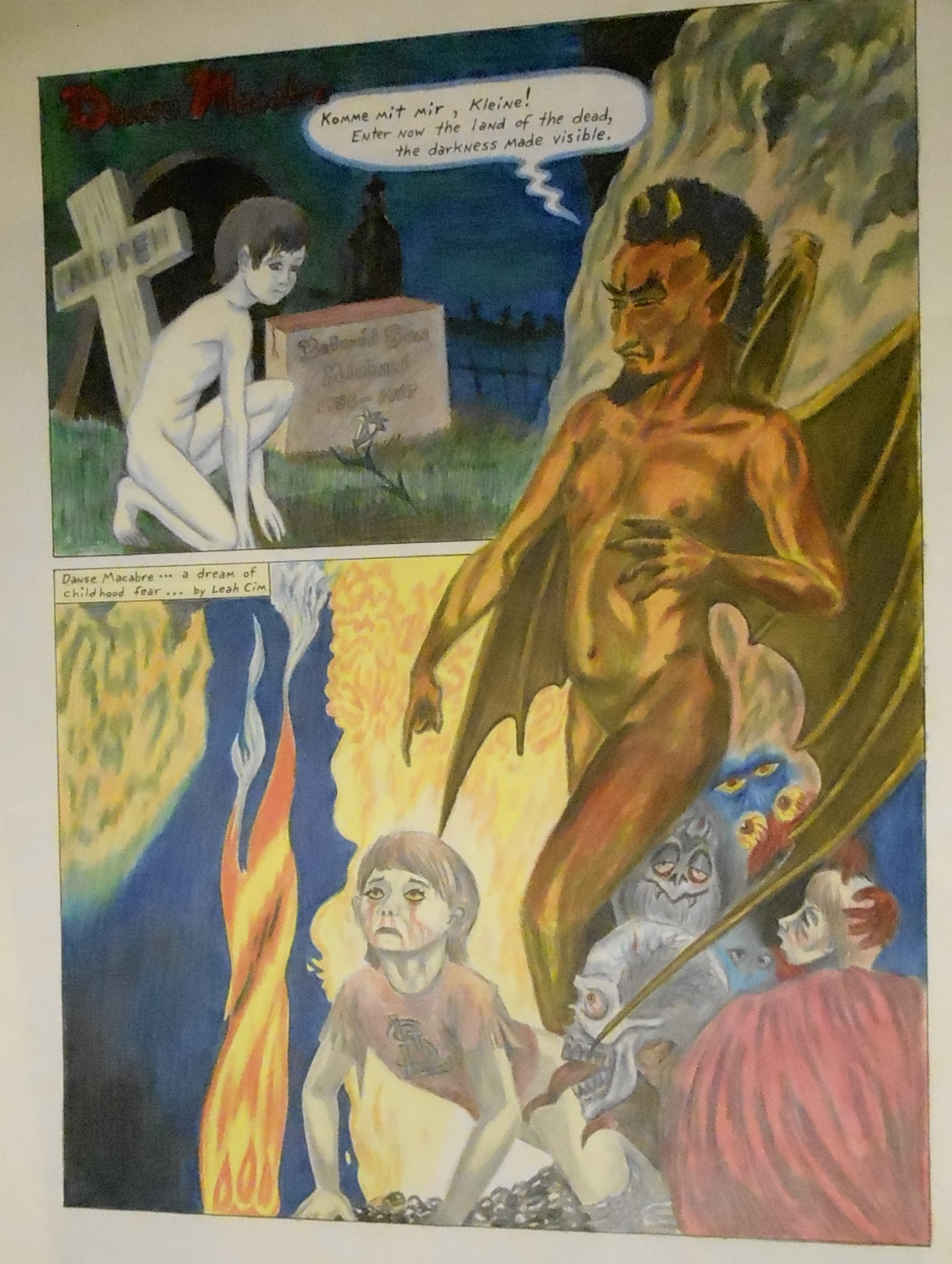
Walt Whitman

He was born in 1819, to Quaker parents in the Long Island part of the State of New York. He was not just any man. He was a common man. He was every man. This is the thing he taught us in his masterwork, the poem he took a lifetime to write, his Leaves of Grass.

In 1978 I took a college course in American Literature that included Ralph Waldo Emerson, the Transcendentalists, Henry David Thoreau, and the premiere poet of the movement, Walt Whitman. He then spoke to me through his poetry in Leaves of Grass and taught me the fundamentals of everything.

Yes, Transcendentalism is the beginning point of my personal philosophical journey in life. Transcendental philosophy grew out of the Unitarian religion where all people are basically good, a point that appealed to my heart directly. Not that there are no bad or evil people, but these come about by the corruption thrust upon them by institutions and organizations controlled by those previously corrupted. People in their self-reliant, natural form represent the goodness inherent in creation.

In many ways, Walt Whitman, in his innovative free verse, becomes the voice of the transcendent experience. If you look seriously at his poems like “Song of Myself”, “I Sing the Body Electric”, and his elegy for President Lincoln, “O, Captain, My Captain!” you see that he was a strong advocate of self-reliance, a celebrator of sensuality and the physical pleasures of life, and he reveals a deep love of the goodness evident in human beings like Lincoln who illustrate the heights of goodness we can reach.

So, what is Walt Whitman doing in the middle of an essay basically about being a nudist or naturist?

One factor he has in common with the naturists and nudists whose activities are generally illegal outside of private places is in the reception he gets from the culture in general and the institutions that prop it up.

Walt discussed enjoying life and sexuality in ways that were labeled by screaming critics and keepers of the public standards of what “You better by God well believe!” as scandalous, pornographic, and evil. Of course, he was either a homosexual or a bisexual man in a time when those things were considered highly illegal and punishable by law. He probably, just as Henry David Thoreau did at Walden Pond, bathed naked in lakes, ponds, and rivers outdoors. This was not an uncommon thing in a time before indoor plumbing was common. But the morally upright and accusation-ready multitudes would’ve much preferred that this man exhibited more piety and far less naked skin in his life. And his poetry was so… so… sensual and exhilarating to read about in a time when morals were more likely bound up in tons of religious restrictions and practices preferred by clergy because they made you more pure… and less… that!

And what matters most about the poetry of Walt Whitman is what you find there about the transcendental experience.

Ralph Waldo Emerson called the experience, “Spots in time.” That moment in which you stand centered amidst the natural world, finding in it what is transcendent, what connects your soul to the soul of the universe. In those moments, whether you experience that spot in time while naked or not, you begin to understand that everything is one thing. It is all connected. You can find God when the butterfly lands on the back of your hand… or when the cardinal sings at you from a high branch in the elm tree. There is no way to explain it better than that. You will not truly understand until you transcend reality for yourself. I get there by naked meditation. Your path may well be different. But you have to go there, at least once.

More than that, when you return to a book-lined world of libraries and thoughts of men whose lives are long since complete you should read Leaves of Grass. And Walden, Henry David Thoreau’s book about living the simple life living in the natural world. And while you’re reading, don’t forget the essays of Ralph Waldo Emerson, and Charles Lamb. You do not have to invent the world for yourself. There are others whose thoughts and words proceed you. But do not take my word for it. Or their words either. Think and choose what you read for yourself. No one has the right to do the thinking for you.

Leave a comment

Filed under Uncategorized

Love ‘Em While You Got ‘Em

Renfatootie Paffenboingey does not really look like this.

My wife is an immigrant from the Philippines, come to this country in 1993 to be a Texas public school teacher. Like the other members of the Filipino colonization of the United States, she came here with family. And more are coming every year. You go to a family gathering and meet cousins by the dozens, friends from this country, and friends from that country, and their relatives, and lots and lots of kids… that must belong to somebody somewhere.

They get together and talk, tell jokes, eat, talk some more, sing karaoke, mostly off key, tell stories about the Philippines in English, and stories about the Philippines in Tagalog, and stories about the Philippines in Kapampangan, and even stories about the Philippines in Ilocano (but nobody listens to him anyway… He’s from the North) and sing more karaoke, and definitely take a group photo while eating and talking.

And one time at one of these family gatherings, while others were singing karaoke, somebody put a baby girl in my lap. She was Renfatootie Paffenboingey. (Obviously not her real name… even in Kapampangan.) She was the daughter of my wife’s cousin and her Greek husband. She was only about a month old then. My own daughter had not yet been born. She was, in fact, not even certain to be a daughter at that point in the pregnancy.

“You need to get used to holding one of those,” Renfatootie’s mother told me.

And then the sweet little thing looked at me and smiled (though she was not old enough to focus her eyes and what she did was probably more gas bubble than smile.) I am told that you are not supposed to fall in love with other people’s children, so I didn’t. Or I did and just lied about it afterwords.

There were several other times that baby Ren was put in my lap. I rocked her to sleep and sang softly to her more than once at family gatherings and picnics and barbecues and… they do a lot of eating in Filipino families.

As Ren got older they began to call her “Tweety” because of the big forehead and big eyes and the Tweety-bird grin she always wore. I didn’t see her often, and talked to her even less. I really thought she didn’t know who I was. She was not my kid. She smiled at me a lot, but she smiled at everybody.

This is not Renfatootie in her bathing suit either. This is an alien girl in her scaly skin.

Then one day we were at a picnic in New Braunfels where the families were all taking advantage of the cold spring water in the creek in the park on hot South Texas day. I was talked into putting on swim trunks and getting in the water with my kids and all the other kids. Renfatootie had a squirt gun. She was about ten then. And as malevolent as a ten-year-old is made by God to be. Every opportunity she found she used to squirt me directly in the face. And then she giggled and ducked the splashes of my weakly attempted revenge. It almost got to the point of being more irritating than cute.

Later I had put clothes back on and most everyone was settled into eating and talking and taking group photos while eating for the rest of the afternoon. Renfatootie “Tweety” Paffenboingey came after me soaking wet from her most recent dip in the cold water.

“Michael! Give me a hug!” she commanded, throwing her arms out wide for me. I took hold. And the wet little thing soaked my clothes in chilled water as she gave me such a squeeze that my eyes nearly popped out of my head.

“You did that just to get me wet again,” I said, with a smile rather than anger.

“Nah. You gotta love ’em while you got ’em. I don’t get to love you near enough.”

I was not the only one she pulled the wet-hug trick on that day. But she left me admiring her philosophy of life in a big way. I may not seize the opportunity as much as she does. But I have resolved to try.

It’s been a few years since I saw her last. She’s a big girl now. Graduated from high school and everything. But remembering her brings a smile to my face even now.

Leave a comment

Filed under autobiography, family, finding love, happiness, humor, Paffooney

Andre Norton, Sci-Fi Royalty

It began for me in 1977 with this wrap-around cover illustration. I knew there were a lot of this guy’s books on the shelves of the college bookstore along with works by Robert E. Howard, Roger Zelazney, and Theodore Sturgeon. And I knew this guy had also written paperback books under the name “Andrew North”, a name I had seen on the twenty-five cent novels in the drugstore where you could buy the really good pulp fiction novels only slightly used.

I had never before bought one of his books. And the book money I had for the fall quarter at Iowa State was supposed to all go towards the book-list given to me as a Junior-level English major. But the naked kid on the cover had a wired-up collar around his neck. And I had only recently recovered long-suppressed memories of being a victim of a sexual assault. I had to have it. I had to know what that illustration had to do with the story inside.

So, I bought a book that I judged by its cover.

And it was not the wrong thing to do.

The main character was a boy named Jony, the naked boy on the cover of the book. He is taken by alien beings as a study specimen along with his mother, the pregnant woman on the back of the wrap-around illustration. The story starts with Jony in a cage, treated like an animal. His mother, also a study specimen has been mated to a Neanderthal-like humanoid specimen who cannot speak, and she has given birth to twins, a boy, and a girl. They are kept in separate cages by their inhuman captors.

Jony manages a mass escape, taking his mother and his younger siblings with him, and releasing as many of the other study specimens as he can. Luckily they escape onto a very earth-like planet. But unluckily, the mother is in very poor health and dies soon after escaping. Jony is then responsible for his little brother and sister in a wilderness that is not empty of others. Luckily, the others they first run afoul of are the bear-like ursine aliens who share their need to not be recaptured by the zoo-keeper aliens.

It was a perfect novel for me. I identified strongly with the main character, who had been violated in a very personal way by monsters. And then had to build a new life in a world full of potential other-monsters. Andre Norton shared my pain and helped me overcome it.

But she also fooled me big-time. She was not a he.

She was a librarian and editor of pulp fiction who wrote enough sci-fi and fantasy in the 50’s, 60’s, and 70’s to finally become a full-time author.

She was already on book number 29 when she retired from being a librarian to write full time.

And I would go on to own and read several of her other books, which were good, but never quite lived up to that first one I read. Of course, that may have been because of the timing and circumstance that led me to a book that I actually needed to read. That book set me on the road to recovery from my personal darkness. And it may have sparked in me the need to eventually become a nudist. And more important than that, it may have led me to a lifelong need to teach reading.

Andre Norton was a real writer. And she made me one too. Though I never knew who she really was until after I bought that book because of the picture on the cover. And I never got around to properly thanking her for all of that… Until this very moment.

Leave a comment

Filed under aliens, autobiography, book review, science fiction, strange and wonderful ideas about life

Naked Bookery

The climate crisis and Texas super-heatwave have me sitting in my favorite writing spot naked but still sweating like a hog being chased by a Tyger. No matter how the high heat slows me and torments me in spite of my window-unit air conditioner going full blast with my fan sitting on the other side to push the cool air back across my spotty old nudist hide, I intend to keep on writing stories and committing acts of highly suspicious bookery. (Bookery- noun- a crime of tomfoolery committed in manuscript form with the evil intent of publication and corrupting readers of all ages.)

This naked bookery that I am confessing to goes back years to a time when all of my novels were still in the form of handwritten notes, cartoons, illustrations, and plot summaries. I can point to those twin girls who may have been real nudists, or possibly only lying teenagers who liked to watch their goofy young English teacher turn shades of maroon and chartreuse with embarrassment as they described nude beaches in detail, discussed their personal enjoyment of being naked in their journal entries, and speculated to their girlfriends about what Mickey looked like naked, though only making sure that he overheard their “private” conversations, never saying anything openly enough to get sent to the office for psychologically torturing their teacher.

The first novel to get the naked bookery treatment was the story that would become Superchicken. It was originally the story of a boy and a dog he found after a car wreck involving elderly dog owners. To get a measure of revenge on the nudist twins, Mickey put Sherry and Shelly Cobble into the story. They would invite Edward-Andrew, the boy nicknamed Superchicken, to go camping with them. They gave his parents pamphlets about the nudist campground called the Sunshine Club, but Edward’s father never opened the envelope to look at it… until he was already several days into the nude camping adventure. I turned the story into a comedy about growing up as a boy and learning about girls.

Well, I didn’t get it published for a few years after I finished it. It began as an idea in 1977. I added the twins in 1986. I finally published it after I published Catch a Falling Star, Snow Babies, and Stardusters and Space Lizards. That would be the year 2016

And, of course, nobody in the world was reading my books… or even knew that they existed. So, I decided to amuse myself by writing another Cobble-Sisters story using plot threads drawn from Superchicken involving the old German lady, Grandma Gretel Stein. She was a Holocaust survivor based on the sweet old Holocaust survivor that lived in our town in Iowa in the 60s and 70s. This book was intimately connected to the stories told in the following book, The Baby Werewolf, which happens at the same time as Recipes for Gingerbread Children.

Sherry Cobble was a main character, the third narrator, in the story of Torrie Brownfield, the boy with hypertrichosis pictured on the cover. Todd Niland, the first narrator, starts out that storytelling about how he found and befriended Torrie who was hidden away because he looked like a werewolf. I had fun with this horror-story comedy. Fun was the main reason for writing it.

But while I was publishing the werewolf story, real nudists and naturists found the Recipes book and fell in love with it, led by Ted Bun, an author of nudist stories who regularly promotes all kinds of books, but especially books that have nudists in them. Suddenly I began to have readers.

And I would then write one more Hometown Novel that featured the Cobble Sisters again. Sherry was again featured in this epistolary novel where Sherry contributes journal pages to the various letters, detective notes, school writing projects, and letters to cousins that make up this book. It is the story of Icarus Jones, a young boy cursed with immortality while stuck in a preteen body. And it is also the story of the ancient undead Chinese Dragon that seeks to kill him by stealing his immortality. Sherry is still a nudist in this book and again tries to get all her friends to be nudists too.

And as it seemed that nudism was gradually taking over all of my storytelling in novels, I decided to write one mainly about nudists and nudism.

Before I began the writing of this book, A Field Guide to Fauns, I determined to take up Radasha’s challenge. Ra, you may remember, although you probably won’t, is my imaginary faun friend who talks to me constantly about my love life and my ability to connect to the world completely.

“You tell,’em, Sharpie. I challenged you to do one thing you were terrified of before you died. One that scared you so bad you couldn’t imagine yourself doing it.”

“But I had done that already, Ra. That’s why I got married in 1995.”

“Yes, but I challenged you again in 2017. Don’t you remember?”

“You mean the thing about assassinating Donald Trump?”

“No! You could never do something like that. I mean the nudist thing.”

“Yes, you challenged me to become a real nudist and be naked in places where other naked people would see me.”

“And how did you do that, Sharpie?”

“Well, I signed up to write an article for a nudist website about my first time at a nudist park. And then I went for a day visit to Bluebonnet Nudist Park in Alvord, Texas. I then bought a membership in the AANR (American Association for Nude Recreation, Southwest Region.) I intended to go to Bluebonnet enough to become a member, but the Covid pandemic got in the way. I went back there for a second time on Memorial-Day-Weekend Saturday. I really enjoyed that day visit.”

“That was mostly well done, Sharpie. You are sorta an official nudist.”

“Thanks for pushing me into it, Ra.”

“You have to thank those twins you once taught too. They had a lot to do with the nudist thing, didn’t they?”

“Yes, I guess they did. Do I really want to thank them, though?”

“YES, YOU DO!”

“Okay. Thank you, ladies. My act of committing naked bookery is all your fault.”

Leave a comment

Filed under Uncategorized

Peanut Gallery… Re-purposed Art

One thing that I, as an artist of limited ability, appreciate about the digital age, is that I can get lots of mileage out of old works of art, and even new works of art, by cutting and pasting, photo-shopping, and re-using elements of the drawings done once… but turned into many by digital means.

Brent Clarke, farm boy and the farm.
Valerie, Denny, and Tommy at Christmas time during the blizzard.
Snow Babies in the snow,,,
Gyro the Nebulon and Billy on the rocket sled
Brekka and Menolly as unofficial members of the Mickey Mouse Club.
A self-portrait of me in the 1960’s.
Imaginary ESL students… well, they didn’t look like this in real life.
The imagination can range farther afield when digital magic allows the artist to take the ballgame to any sort of arena.

And the process can take you home again, no matter how far away and how long ago home has become.

Leave a comment

Filed under artwork, illustrations, imagination, Paffooney

Still Playfully Playing with AI and Digital Art

Leave a comment

Filed under Uncategorized

The World is a B-Movie

Yes, I am saying the world I live in is a low-budget commercial movie made without literary or artistic pretensions. You know, the kind where movie makers learn their craft, taking big risks with smaller consequences, and making the world of their picture reflect their heart rather than the producer’s lust for money.

Mostly what I am talking about are the movies I remember from late-night Saturday TV in black and white (regardless of whether or not the movie was made in Technicolor) and the less-risky as well as more-likely-good Saturday matinees on Channel 3. Movies made in the 1950s, 1960s, and early 1970s. They were perfect, of course, for the forbidden Midnight Movie on the show called Gravesend Manor. I had to sneak downstairs to watch it on Saturday nights with the volume turned way down low. (Not that Mom and Dad didn’t know. Well, maybe they didn’t know how many of those I watched completely naked… maybe.)

I watched this one when I was twelve, late night on an October Saturday. I had a bed-sheet with me to pull over my head at the scariest parts. Frankenstein was a crashed astronaut brought back to life by the magic of space radiation. He was uglier than sin, but still the hero of the movie, saving the Earth from invading guys in gorilla suits and scary masks (none of which looked like the movie poster.)

This one, starring James Whitmore, a really good B-Movie actor, was about giant ants coming up from the sewers and the underground to eat the city.

I would end up watching it again twenty years later when I was wearing clothes and not alone in the dark house lit only by a black-and-white TV screen.

I realized on the second viewing that it was actually a pretty good movie in spite of cheesy special effects. And I realized too that I had learned from James Whitmore’s hero character that, in times of crisis, you have to run towards the trouble rather than away from it, a thing that I used several times in my teaching career with fights and tornadoes and even rattlesnakes visiting the school campus looking to eat a seventh-grader or something (though it was a bad idea for the snake even if it had been successful.)

This one, of course, taught me that monsters liked to carry off pretty girls in bikinis. And not just on the poster, either. But it was the hero that got the girl, not the monster. This movie taught me that it sucks to be the monster. Though it also taught me that it was a good movie to take your pajamas off for and watch naked when you are thirteen.

But not all B-movies had to be watched late night on Saturdays. This movie was one of the first ones that I got to go to the movie theater to see by myself. (My sisters and little brother were still too young and got nightmares too easily to see such a movie.) It came out when I was in my teens and Mom and Dad began thinking of me as an adult once… or even possibly twice in a month.

And not all B-movies were monster movies, gangster movies, and westerns. Some, like a lot of Danny Kaye’s movies, were movies my Dad and my grandparents were more than happy to watch with me. I saw this one in both black-and-white and color. And I learned from this that it was okay to take advantage of happy accidents, like a case of mistaken identity, and using your wits, your creative singing ability, and your inexplicable good luck to win the day for everybody but the bad guys armed only with your good sense of humor.

And some of the best movies I have ever seen, judging by what I learned about movies as literature from Professor Loring Silet in his Modern Film Class at Iowa State University, are by their nature B-movies.

I am using movie posters in this blog post only from movies I have personally seen. (And I admit that not all of them are strictly “good” movies according to Professor Silet, but I like them all.)

Feel free to tell me in the comments if you have seen any of these movies yourself. I am open to all opinions, comments, and confessions.

This one is based on Shakespeare’s The Tempest.
I saw this one in college. You had to be 18 at the time to even buy a ticket.
I actually think that this is one of the best movies ever made. It will always make my own personal top-ten list.

I live in a B-movie world. The production values around me are not the top-dollar ones. But the stories are entertaining. The real-life heroes still run towards the problem. And it still sucks to be the monster. But it has always been worth the price of the ticket. And during my time on Earth here, even in 2020, I plan on staying till the end of the picture. I go nowhere until I see the Best Boy’s name in the end credits. And maybe not even then.

Leave a comment

Filed under art criticism, heroes, humor, monsters, movie review, strange and wonderful ideas about life, TV as literature, TV review

One Key Idea

The World is a Factory for Making Misery…

…but you do not have to work there.

You have no power over anything the world at large can do to you….

…but you have control over how you respond to what it does.

It is basically what Jesus meant by turning the other cheek. If you live by a policy of an eye for an eye, you are participating in making the whole world blind. Seeking and exacting revenge doesn’t harm the one who wronged you as much as it harms you yourself. You will never find happiness and fulfillment by punishing anyone else, no matter what they have done.

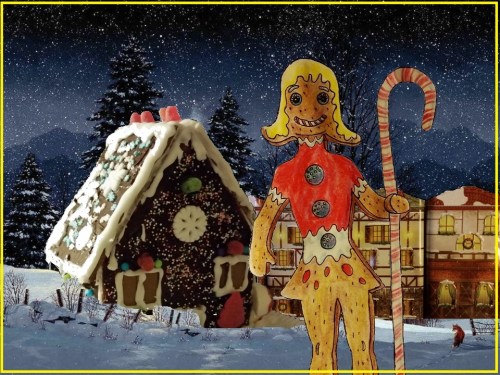
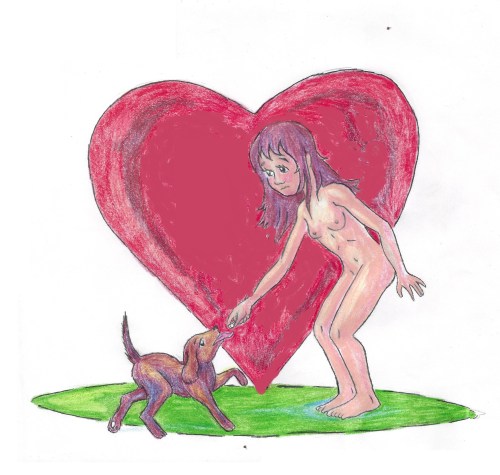
Like the girl with the puppy and the giant gingerbread cookie-heart, you have nothing, you own and control nothing, and you are basically naked no matter how many clothes you wear.

You only get love by giving love. And you have to be aware that not every time you give love away do you get love back in return. The world is a factory for making misery… and the production line is filled with bitter goods. It is always better not to help them make those products. Try not to need or buy those products. Instead, invest your love and care in something hand-made, something given life from your own heart and your own imagination.

None of this wisdom is my own, and you may have heard all of it elsewhere…

…just as I did. But probably, just like me, you will have to relearn it all the hard way.

Life should make you cry a little…

…but make you smile and laugh a lot.

Every life ends in death…

…but that doesn’t mean life isn’t precious and entirely worth living.

So, don’t give in to despair and lose hope…

…because the world puts the negative things in the large type…

...but that doesn’t mean that’s what you most need to read and take to heart!

2 Comments

Filed under wisdom

How NOT to Tell a Story – Part Two

Yesterday, in Part 1, I tried to convince you that, “You should never take too long a time writing a story” because I have written some twenty-plus-year-long novels that took me forever to write, and I am an unsuccessful writer. So, you should not do things the way I did. (Some might accuse me of trying to use a little too much irony, claiming I am a bit too obscure about what I am actually telling you that you should actually do… But, remember, I advised you not to take advice from Mickey. And you need irony in your diet anyway to avoid irony-poor tired blood.) Therefore I am going to advise you further that, “You should never make your characters too complex and interesting.”

After all, there are Mickian characters that are literally blue with red patches on their cheeks that absorb harmful gamma radiation and make those characters immune to radiation sickness from exposure in deep space. You don’t want to make readers so curious about a character that they waste time reading more and more closely to discover more about that character.

Junior Aero, the alien Nebulon boy in the AeroQuest stories is just one example. Not only is he a member of an alien race that are belittled as “Space Smurfs” and treated to racial bigotry based on skin color and not being able to speak English at first, but he is also gifted with mental “Psion powers” that allow him to telepathically read computer minds, even the sentient and intelligent ones.

And some of my characters are green with shark-like fins on their heads. They were born on Starships and orbiting artificial satellites like the one going around Barnard’s Star. They are like George Jetson here, named after his father, Xiar’s, favorite Earther cartoon show character from the 60’s. Not only is he a green-skinned amphibious humanoid life-form from a different star system, he learns a lot about himself in the adventure he has in the novel Stardusters and Space Lizards. He goes from being a narcissistic space-pilot wannabee into becoming a humble crash survivor and expedition leader who helps save an entire planet from ecological disaster. And he even gets a girlfriend out of the deal in Menolly his nestmate and fellow survivor.

Characters like that are far too interesting and developed to be good for your reputation as a serious producer of money-making fiction stories. And you certainly don’t want to waste time on developing the same characters in multiple books.

I used the character of Valerie Clarke in the book When the Captain Came Calling as an eleven-year-old protagonist who loses her father and has to rely on older kids and good friends to save herself from depression and the trash-pits of despair.

I used her again as a main character in Snow Babies where she befriends a mysterious stranger and also finds a runaway boy who makes her think seriously about life and young love, all in the middle of a deadly blizzard.

She’s also in the book Sing Sad Songs where she learns to negotiate love with a boy who also lost a parent, in fact, both parents and a twin sister, in a car crash that made him a lonely orphan. She not only has to face the loss of her own loved ones, but has to help somebody else to face the same thing, in fact, more than one other somebody.

She’s also a character in The Bicycle-Wheel Genius and Fools and Their Toys.

It is unthinkable to use a character that much and make her grow and change in so many different ways. She should be used only once in a simple and clear way. Like, maybe, Mark Twain’s use of Huckleberry Finn.

Huck, as a character was only used in the books, The Adventures of Tom Sawyer, The Adventures of Huckleberry Finn, Tom Sawyer Abroad, Tom Sawyer, Detective… and… never mind. Forget I even said anything about Huck Finn. In fact, maybe this whole post is so ironic it’s making my story-teller gears all rusty. Never-the-less, let me threaten you with a possible part three.

Leave a comment

Filed under characters, goofiness, humor, NOVEL WRITING, Paffooney, writing teacher

How NOT to Tell a Story

If you have come to my blog in hopes of gleaning some key advice about how to write novels or tell a story, then the wisest advice I can give you is, “Do not take any advice Mickey gives seriously.” He used to be a writing teacher in public schools. That is true. But he is also the writer of weird surrealistic novels full of purple paisley prose. And he is not a successful novelist like Steven King or J.K. Rowling. His writing advice is probably only worth ca-ca poo-poo.

So, let me tell you how NOT to write a novel.

Each of the novels I have written and displayed here took me more than twenty years from the moment I conceived of the idea, through plotting, rough drafts, revisions, re-plotting, expanding the story, to finally publishing them in 2017, 2018, and 2019. I developed the stories from real people, real events, and real themes that were a part of my life and added to each of the stories as time passed. So, obviously, you should never take too long a time writing a story. It is true that Snow Babies is the best novel I have ever written, and I count Sing Sad Songs, The Baby Werewolf, and When the Captain Came Calling among my best work. And I only spent one year in the writing of Aeroquest, which is, ironically, the worst thing I have ever written. So, you can see that following any advice Mickey might give you about taking your time with writing is obviously worthless. I took too long writing and publishing my best books, and that is why I will die a penniless, unknown writer.

But I admit to having even more bad advice to warn you not to take. More, I think, than I can put into this one post. So, I will Part-Two this particular essay and take up the topic again in the very near future. Or forget all about it completely. It has to be one of those.

Leave a comment

Filed under feeling sorry for myself, humor, NOVEL WRITING, Paffooney, surrealism, writing teacher