
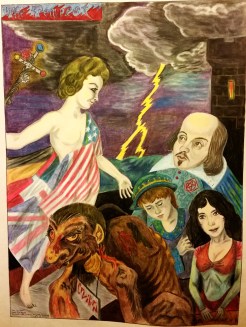
I am, unfortunately, a dedicated conspiracy theorist. No, not the braying, unintelligent kind like Alex Jones who has an unhinged and hidden agenda. More the Indiana Jones kind, seeking the truth no matter where it leads, but always relying on research, science, and creative methods of re-framing the facts in order to reveal truths that other people don’t see even when the answers are right in front of them.
An example of this is my firm belief that everything we think we know about the man known as William Shakespeare is based on an ages-old deception and is basically an unrevealed lie.
Of course, I am not the only literature-obsessed kook who has ever taken up this notion of someone else having written the great works of Shakespeare. I share the opinion with Ralph Waldo Emerson, Nathaniel Hawthorn, Walt Whitman, Prime Minister Benjamin Disraeli, Charles Dickens, Actor Derek Jacobi, and the great Mark Twain (also not the writer’s real name) .

It is very possible the standard details of the life of William Shakespeare have been fudged just a bit… or maybe quite a lot.
The biggest question that I can see when looking at the man we pretend is the actual author of the plays, is why doesn’t this man look like an author? As brought out in the video, the only example we have of the author’s own handwriting are six signatures from legal documents, three of which come from his last will and testament. And if the name is really William Shakespeare, then the Stratford man misspelled his own name. He wrote it as Shakspere or Shaksper. And the handwriting is atrocious, nothing like the carefully practice signature I sometimes put on my own handwritten work. How does that happen? I have seen signatures by many other authors, both famous and obscure, and nowhere do I see such careless script as what is allegedly the signature of the greatest and most acclaimed writer who ever lived.
The accepted life story of Shaksper doesn’t bear up under scrutiny either. In spite of being a wealthy businessman and mayor, his father can be seen to be provably illiterate, relying on associates and underlings to write the paperwork involved in his business and mayoral rule. There is no proof in the form of enrollment lists or written record of Shaksper having ever enrolled at or attended the school that supposedly taught Stratfordian youths to read and write. His wife and children and grandchildren were also provably illiterate. What other writer has such a lack of effect on his own family?
And Shaksper’s will details everything he owned and left to others at his death. Nowhere is there a mention of plays, manuscripts, poetry, or even books. The greatest author who ever lived owned no books at all? He was provably wealthy enough to buy books, and public libraries did not exist back then. How then did he demonstrate such knowledge of Ovid’s Metamorphosis, as well as the functioning of royal courts both in England and abroad? How did he get so many details right about places in Italy and Europe which he had never visited or seen with his own eyes? Something is definitely missing.
It is true that everything mentioned is merely circumstantial evidence. And yet, if all circumstantial evidence leans in only one direction, then isn’t the conclusion probably sound?
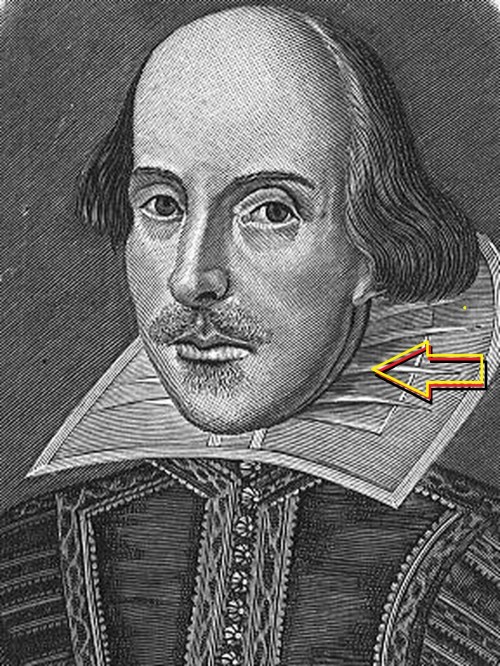
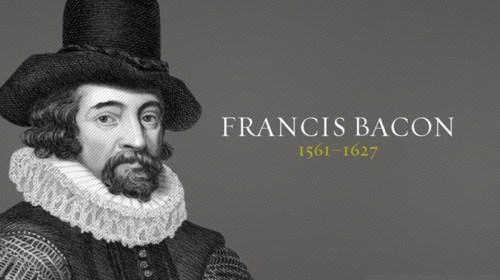
Do you not see the lines of the mask in this portrait?
But if Shaksper, the Stratford man, did not write the masterful literary works he has been given credit for, then who did? And why did he let the credit go to someone else?
Ah, I am betting you are beginning to smell a multi-part essay brewing. I mean to tell you who I think is under the mask, who it was I believe actually wrote under the pen name of William Shakespeare.










 Catch a Falling Star
Winsor McCay
One work of comic strip art stands alone as having earned the artist, Winsor McCay, a full-fledged exhibition at the Metropolitan Museum of Art in New York City. Little Nemo in Slumberland is a one-of-a-kind achievement in fantasy art.
Winsor McCay lived from his birth in Michigan in 1869 to his finale in Brooklyn in 1934. In that time he created volumes full of his fine-art pages of full-page color newspaper cartoons, most in the four-color process.
As a boy, he pursued art from very early on, before he was twenty creating paintings turned into advertising and circus posters. He spent his early manhood doing amazingly detailed half-page political cartoons built around the editorials of Arthur Brisbane, He then became a staff artist for the Cincinnati Times Star Newspaper, illustrating fires, accidents, meetings, and notable events. He worked in the newspaper business with American artists like Winslow Homer and Frederick Remington who also developed their art skills through newspaper illustration. He moved into newspaper comics with numerous series strips that included Dreams of the Rarebit Fiend and Little Nemo in Slumberland. And he followed that massive amount of work up by becoming the “Father of the Animated Cartoon” with Gertie the Dinosaur, with whom he toured the US giving public performances as illustrated in the silent film below;
The truly amazing thing about his great volume of work was the intricate detail of every single panel and page. It represents a fantastic amount of work hours poured into the creation of art with an intense love of drawing. You can see in the many pages of Little Nemo how great he was as a draftsman, doing architectural renderings that rivaled any gifted architect. His fantasy artwork rendered the totally unbelievable and the creatively absurd in ways that made them completely believable.
I bought my copy of Nostalgia Press’s Little Nemo collection in the middle 70’s and have studied it more than the Bible in the intervening years. Winsor McCay taught me many art tricks and design flourishes that I still copy and steal to this very day.
No amount of negative criticism could ever change my faith in the talents of McCay. But since I have never seen a harsh word written against him, I have to think that problem will never come up.
My only regret is that the wonders of Winsor McCay, being over a hundred years old, will not be appreciated by a more modern generation to whom these glorious cartoon artworks are not generally available.
Leave a comment
Filed under art my Grandpa loved, artists I admire, artwork, book review, cartoon review, cartoons, comic strips, commentary
Tagged as Little Nemo in Slumberland, Winsor McCay