The only advice I am actually qualified to give here is… don’t take any blogging advice from me as worth more than diddly-squoot.
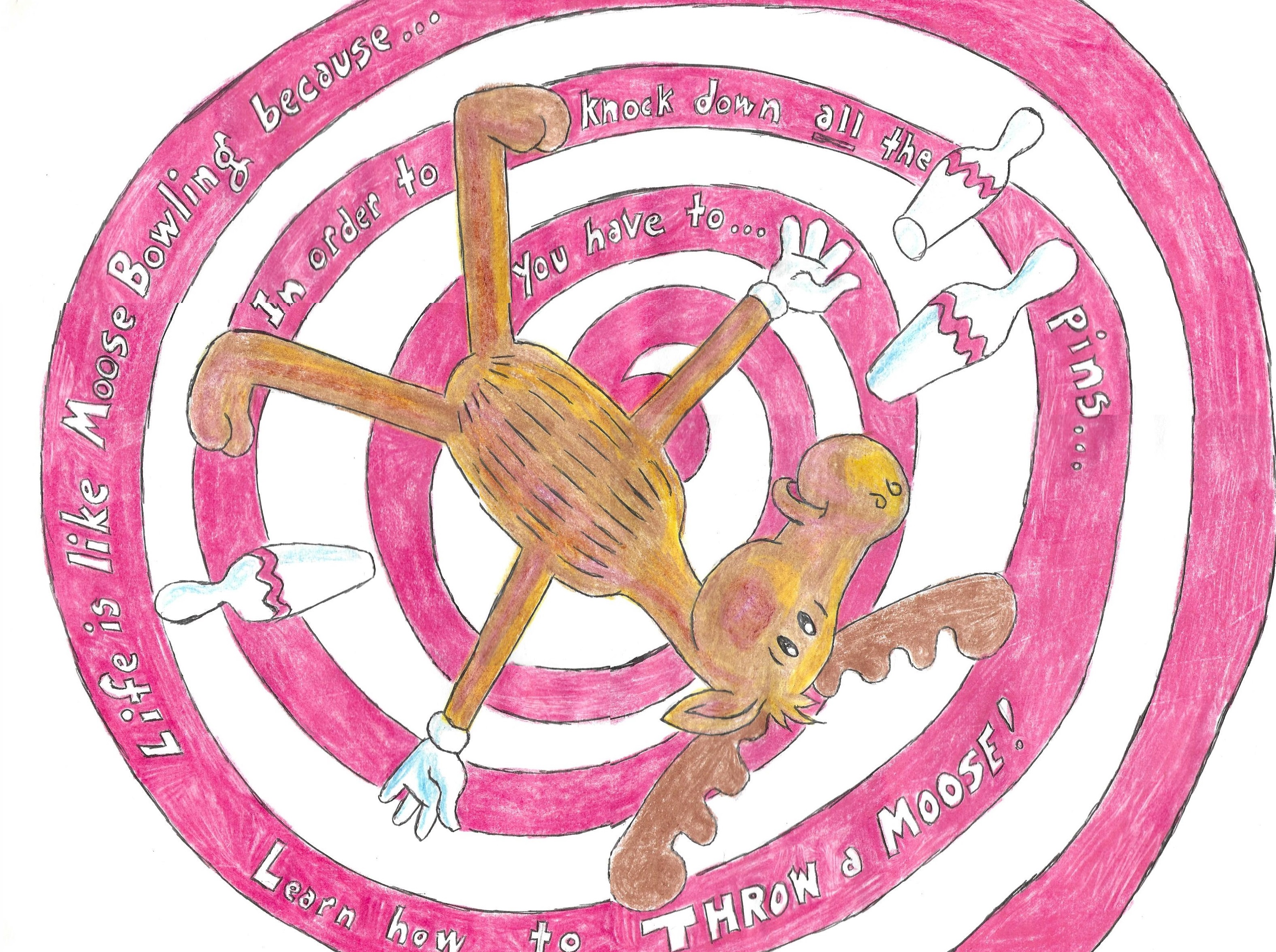
Life is like moose bowling because… In order to knock down all the pins, you have to learn how to throw a moose.
That being said, my blog views are gradually going up year after year. I am followed by readers all over the world, and some of them actually read my blog regularly, rather than just looking at the pictures and occasionally hitting the like button.
I have not yet, however, learned to throw the moose. I started this blog in order to promote my published writing. I now have seven published books available on Amazon. I made $2.60 in royalties during 2018 so far. So, as a marketing ploy, it has been a total failure.
But as a tool in my writing life, here are some things I definitely count as benefits;
Writing a blog post every day makes the ideas flow more easily and does away with any threat of writer’s block.
Writing every day is practice and it makes me a better writer.
I have learned how to engage with an actual audience.
I am able to try out various writing ideas without worrying about success or failure.
So, all of these things add value and keep me at this blogging thing which didn’t exist in my early life when I was planning for becoming a writer when I left teaching.
If you are tempted to make the huge mistake of following my advice and emulating me, I would warn you, I do not make a living as a writer, and I never will. I am a writer in the same way I am a diabetic. I can’t help it. I wouldn’t change it even if it were possible. I have a body of work that I intend to continue to build on until I am no more. The creation of it is a necessity of my existence. And I certainly don’t regret a single syllable, though what happens to it when I am gone is not important to me in any way that matters. I hope my children will keep it as a legacy, but I only do it because it shapes the story of my life.
And so, I continue to throw meese (or mooses… or moosi… or whatever the hell the funniest plural of “moose” is) and continue not to knock down any pins.
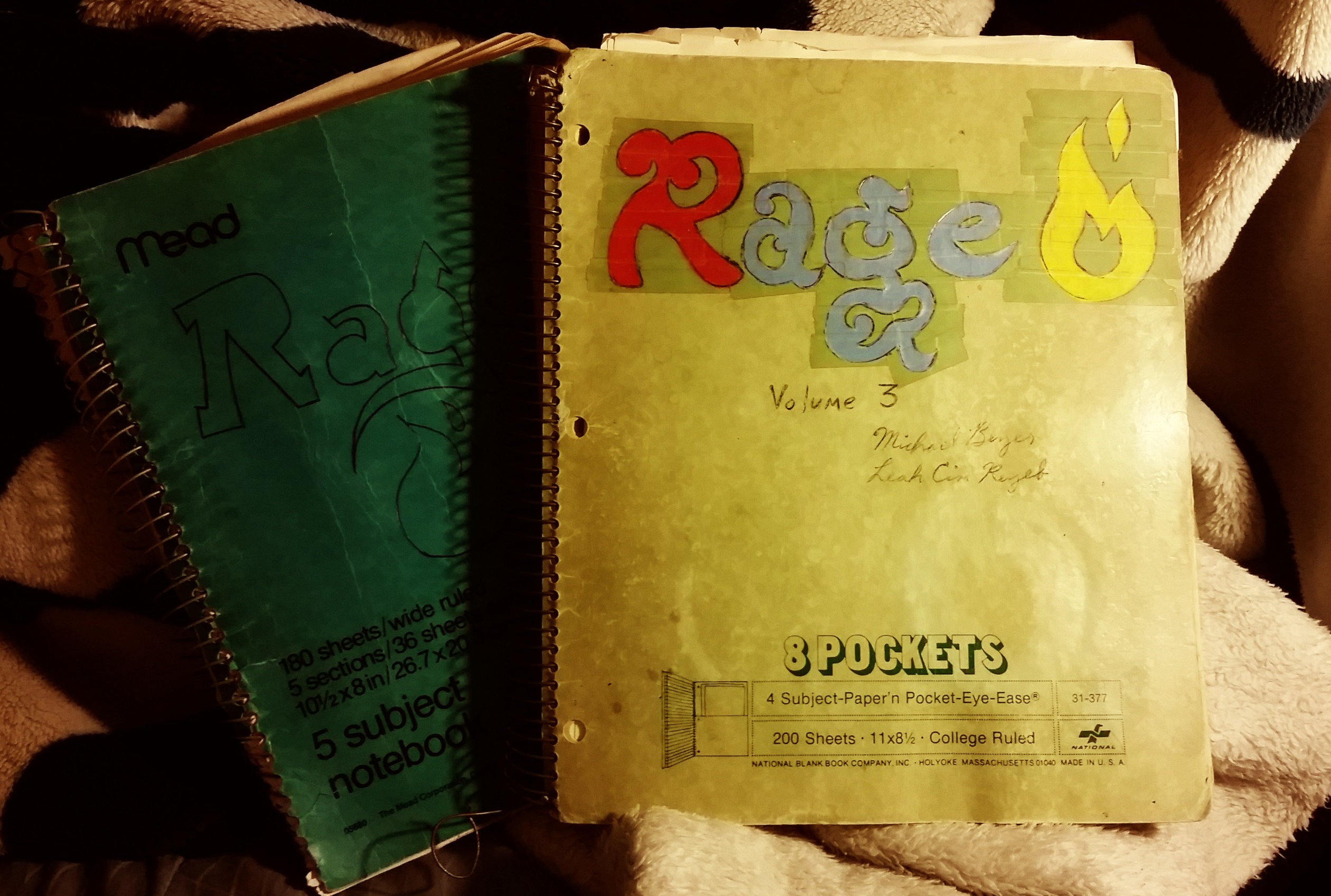
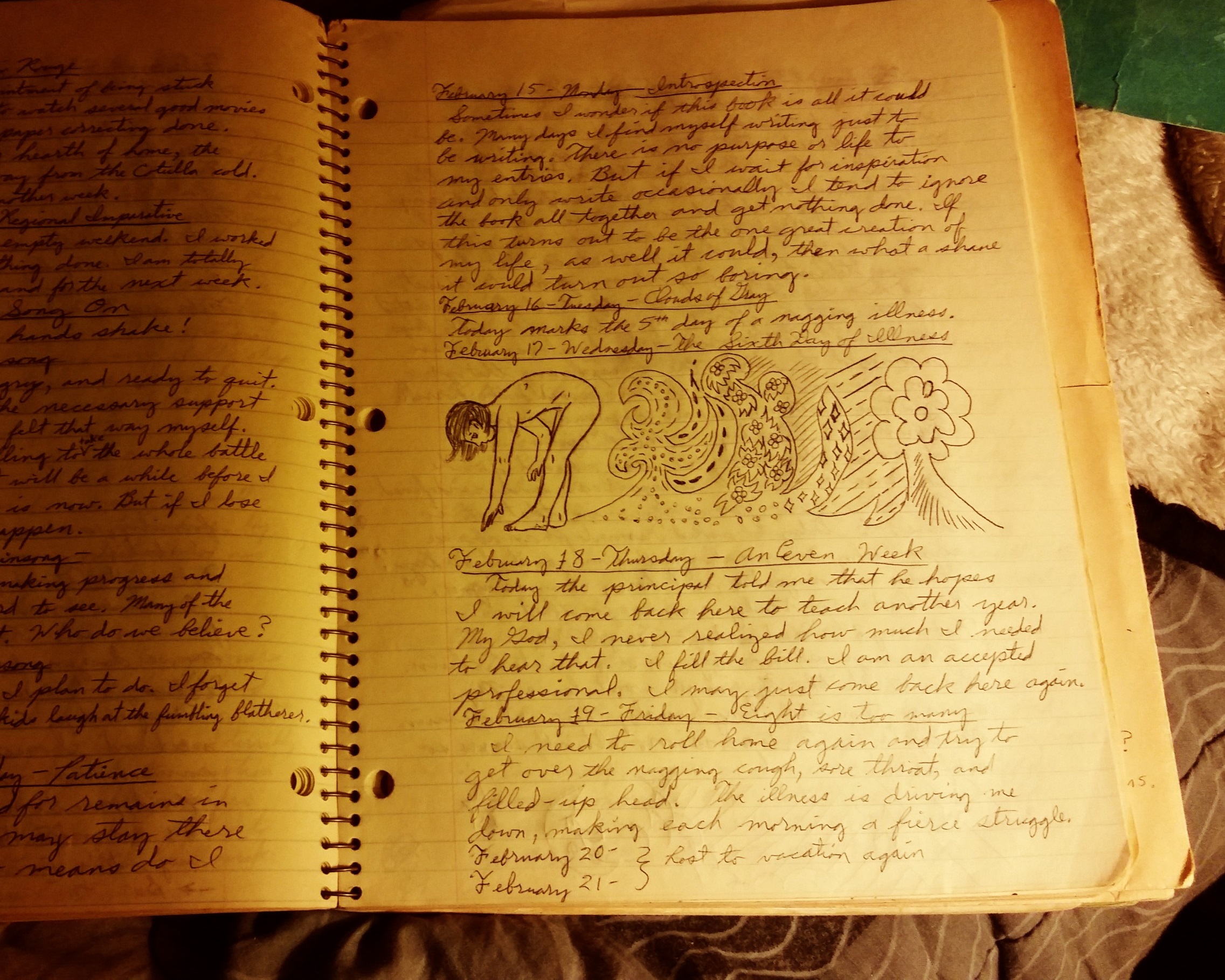
These are volumes 3&4 of my daily journal that I have kept since the 1980’s.
Writing every single day is something I have been doing since 1975, my senior year in high school. It is why I claim to be a writer, even though I have never made enough money at it to even begin to think of myself as a professional writer. I kept a journal/diary/series of notebooks that I filled with junk I wrote and doodles in the margins up until the middle 90’s when I began to put all my noodling into computer files instead of notebooks. I have literally millions of words piled in piles of notebooks and filling my hard drive to the point of “insufficient memory” errors on my laptop. I am now 66 years old and have been writing every day for 48 years.
There are days in the past where I only wrote a word, or a sentence or two. But there were a lot of words besides the words in my journal. I started my first novel in college. I completed it the summer before my first teaching job in 1981. I put it the closet, never to be thought of again, except when I needed a good cringe and cry at how terrible a writer I once was. I have been starting, stopping, percolating, piecing together, and eventually completing novel projects ever since… each one goofier and more wit-wacky than the last. So I have a closet full of those too.
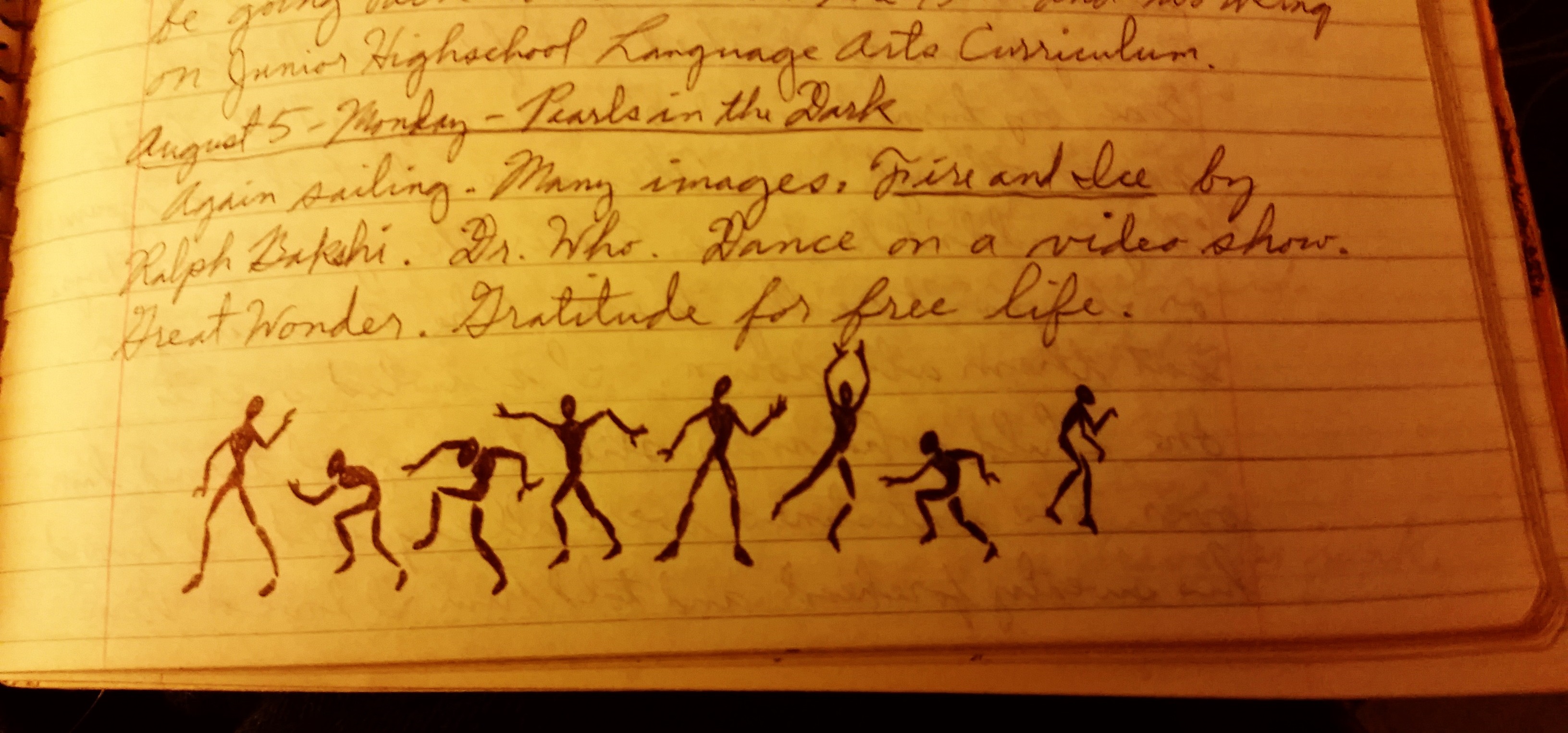
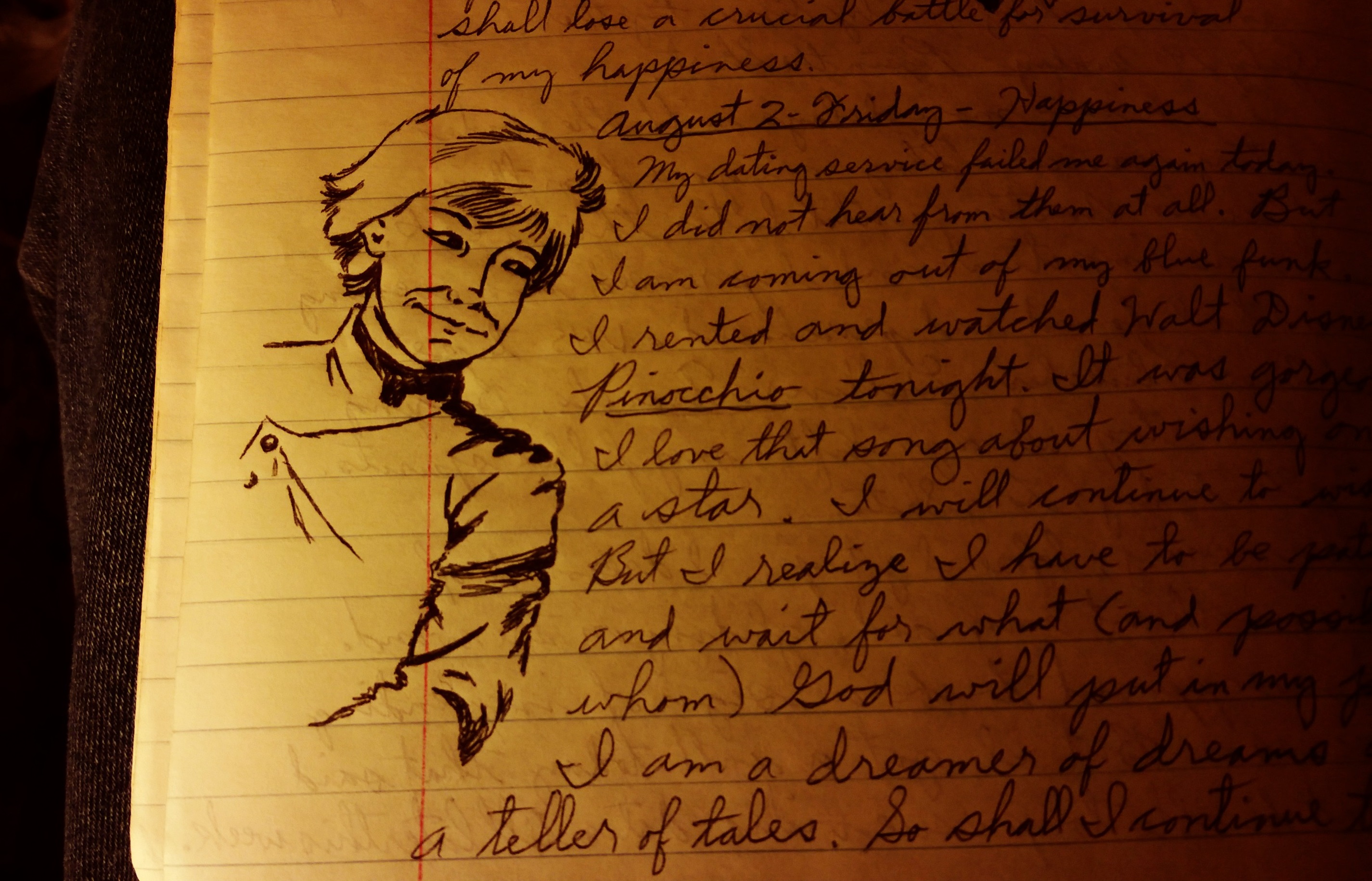
It would be wrong of me to suggest that my journals are only for words. As a cartoon-boy-wannabee I doodle everywhere in margins and corners and parts of pages. Sometimes the doodle is an afterthought. Sometimes it precedes the paragraph. Sometimes it is directly connected to the words and their meaning.
Sometimes the work of art is the main thing itself.
But always, the habit of writing down words and ideas every single day takes precedence over every other part of my day. That’s the main reason I am stupid enough to think of myself as a writer even though I don’t make a living by writing.
But I did put my words into my profession too. As a teacher of writing, I wrote with and to my students. I did that for 31 years as a classroom teacher, and two years as a substitute. I required them each to keep a daily journal (though they only got graded for the ones they wrote in class, and then only for reaching the amount of words assigned). We shared the writing aloud in class, making only positive comments. I wrote every assignment I gave them, including the journal entries. They got to see and hear what I could write, and it often inspired them or gave them a structure to hang their own ideas upon. And often they liked what I wrote and were surprised by it almost as much as I liked and was surprised by theirs. Being a writer was never a total waste of time and effort.
So am I telling you that if you want to be writer you have to write every day too? If I have to tell you that… you have totally missed the point.
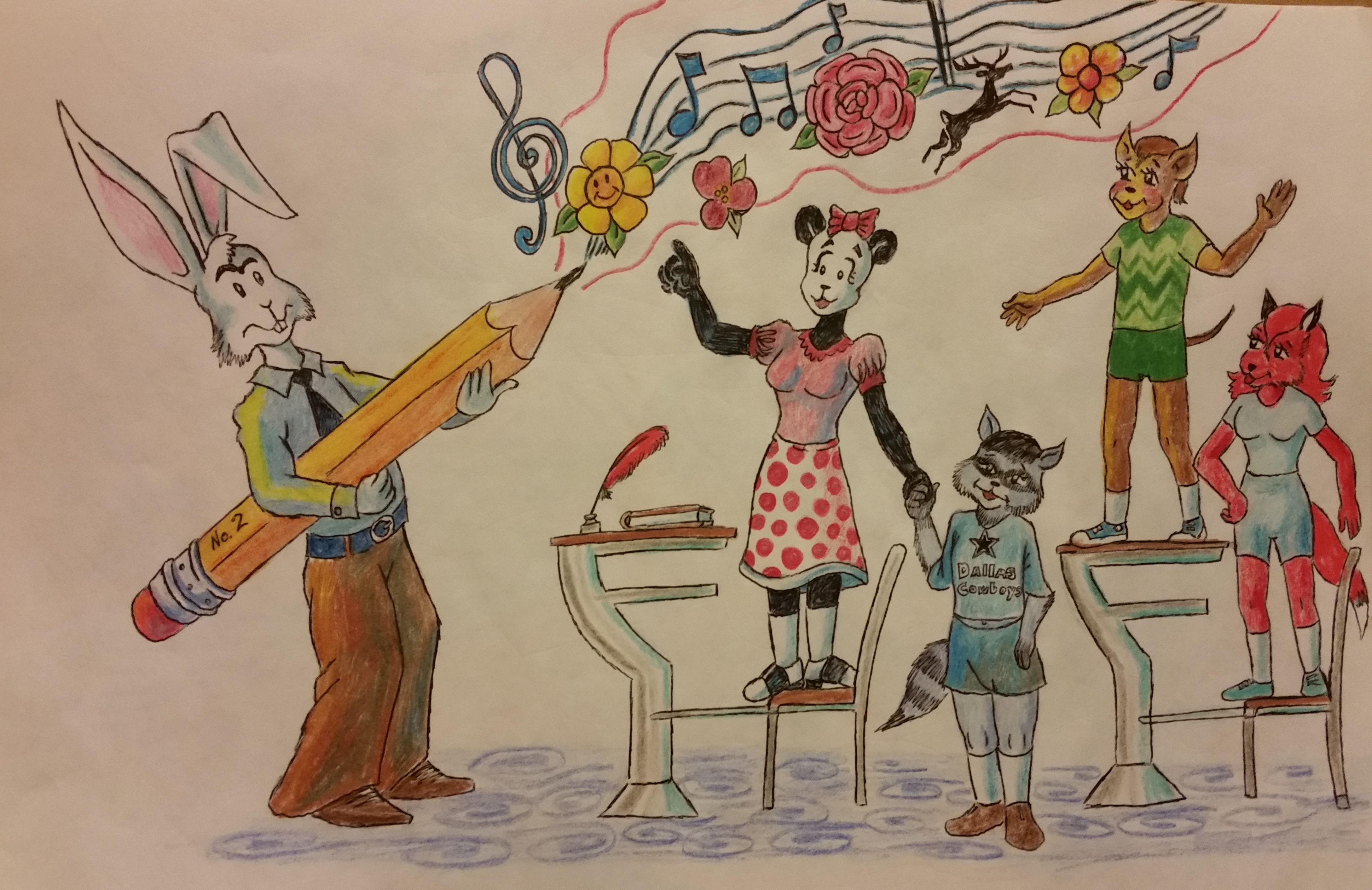
The guy holding the big pencil used to be me. I know you are thinking, “But, Mickey, you are not a rabbit!” Well, that’s true, but it is also true that the whole thing is a metaphor, and metaphorically I was always Reluctant Rabbit, pedagogue… teacher… the holder of the big pencil. It is a writing teacher thing. The best way to teach kids to write is to have them write. And the best way to show them what you mean when you tell them to write is to write yourself. You learn to read better by reading a lot. You learn to write better by writing a lot, reading what you wrote, and reading what other people wrote, especially if those other people were holding the big pencil in front of the class.
I was recently reminded by people who know me that once I held the big pencil in the front of the class. They both asked me, “Really? You were a teacher?”
I suppose it ishard to believe when once you’ve gotten to know me, at least a little bit. I don’t strike people as the sour-faced, anal-retentive English-teacher type. I smile and laugh too much for that. They can’t believe that someone like me could ever teach.
But over the years, I got rather good at holding the big pencil. I learned, first of all, that anyone can be a good teacher. You only have to be competent in the subject area you are trying to teach, and open to learning something new about teaching every single day for the rest of your life.
Here’s something you have to learn about teaching to be any good at it; Discipline is not about making kids behave. You can shout, stamp your feet, and hit them with a ruler and you will never get them to do what you want to them do. It has to be about limiting the choices they have for what they will do. Yes, one of those choices is to be removed from the classroom to go have fun sitting in the uncomfortable chair next to the assistant principal in charge of discipline’s desk, but the good teacher knows you should emphasize that they can either sit like a lump and imitate a rock, or they can participate in the activities presented. And in my classroom, activities led to jokes and laughing and trying new stuff… some of it hard, but most of it easy. Kids don’t end up having a hard time making the right choice.
Here’s something else you absolutely have to learn to be any good at it; You have to like kids. Not just the well-behaved teacher-pleasers, but also the class clown who’s too smart to sit still for stuff he already knows, the shrinking violet who is a wonderfully complex well of deep thoughts who is only a little bit too scared to actually speak in class and share her thoughts, and the dark snarky demon who is quietly plotting the next outburst that will make your life a living hell so he or she can spend time with their old and dear friend, the chair in the assistant principal’s office. If you don’t like them, you can’t teach them, and driving dynamite trucks in war zones is an easier job. It pays better too.
I often try to picture Donald Trump teaching English to seventh graders. What a slapstick comedy that would be. The man doesn’t know anything. He is always angry. And he hates everybody except his daughter Ivanka. My fourth period class wouldn’t merely eat him alive, they would skeletonize him faster than a school of piranhas could ever hope to match. And it might be entertaining to watch (assuming it was metaphorical, not literal).
And I sincerely wish I could hold the big pencil in front of class again. It was the act that defined who I was and what purpose I had in life. But it isn’t gone since I was forced by ill health to retire. I held the big pencil for over two thousand students in the course of thirty-one years. And I will always hold the big pencil in their memories of it. It is a sort of immortality for teachers.
When learning to write, you have to learn the rules. And then you start writing, and you learn that you have to break all the rules to do it well. But what do I know? You have to be pretty desperate to get your writing advice from a Mickey. After all, it’s not like Mickey was a writing teacher for over thirty years… oh, wait a minute… yes, he was.
Okay, so I decided to write today about the K.I.S.S. rule of writing. That’s right, Keep It Simple, Stupid. Other writing teachers tell me it should be, Keep It Simple, Sweetie, because you can’t say “stupid” to a kid. Okay, that’s mostly true. But I use “stupid” when I use the rule myself. I’m talking to Mickey after all.
So, I better stop “bird-walking” in the middle of this essay, because “bird-walking”, drifting off topic for no purpose, is the opposite of keeping it simple.
I try to write posts of no more than 500 words. I write an introduction that says something stupid or inane that speaks to the theme I want to talk about. Then I pile in a few sentences that talk more about the theme and do a good job of irritating the reader to the point that they can’t wait to get to the conclusion. Finally I finish up with a really pithy and wonderful bit of wisdom to tie a knot in the bow of my essay. I save that bit for the end as a sort of revenge for all the readers who don’t read all the way to the end, even on a short post like this one. Of course, I could be wrong about how wonderful and pithy it is. What does “pithy” even mean? It can be like the soup in the bottom of the chili pot, thicker and spicier than what came before… or possibly overcooked with burned beans.
That was another bit of “bird-walking”, wasn’t it? See, you have to break the rules to make it work better.
So, in order to keep it simple, I guess I need to end here for today. Simple can be the same thing as short, but more often you are trying to achieve “simple and elegant” and pack a lot of meaning and resonance into a few lines. And I, of course, am totally incapable of doing that with my purple paisley prose. And there’s the knot in that bow.
Yesterday, in Part 1, I tried to convince you that, “You should never take too long a time writing a story” because I have written some twenty-plus-year-long novels that took me forever to write, and I am an unsuccessful writer. So, you should not do things the way I did. (Some might accuse me of trying to use a little too much irony, claiming I am a bit too obscure about what I am actually telling you that you should actually do… But, remember, I advised you not to take advice from Mickey. And you need irony in your diet anyway to avoid irony-poor tired blood.) Therefore I am going to advise you further that, “You should never make your characters too complex and interesting.”
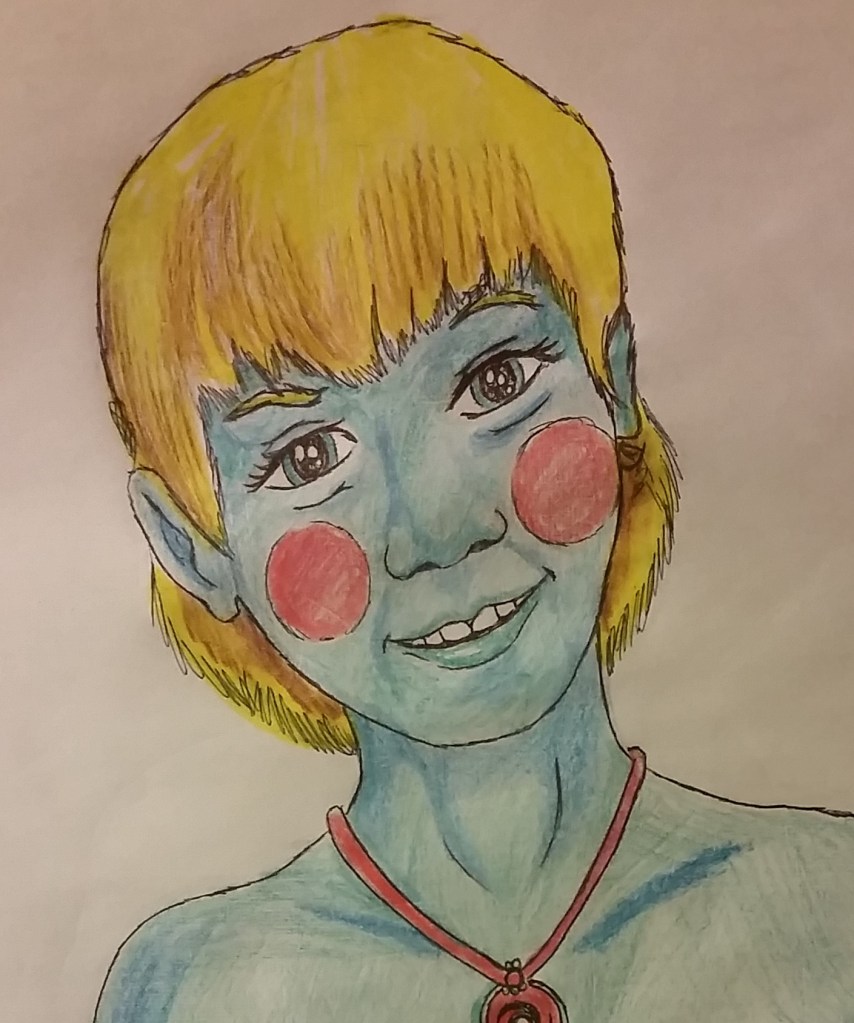
After all, there are Mickian characters that are literally blue with red patches on their cheeks that absorb harmful gamma radiation and make those characters immune to radiation sickness from exposure in deep space. You don’t want to make readers so curious about a character that they waste time reading more and more closely to discover more about that character.
Junior Aero, the alien Nebulon boy in the AeroQuest stories is just one example. Not only is he a member of an alien race that are belittled as “Space Smurfs” and treated to racial bigotry based on skin color and not being able to speak English at first, but he is also gifted with mental “Psion powers” that allow him to telepathically read computer minds, even the sentient and intelligent ones.
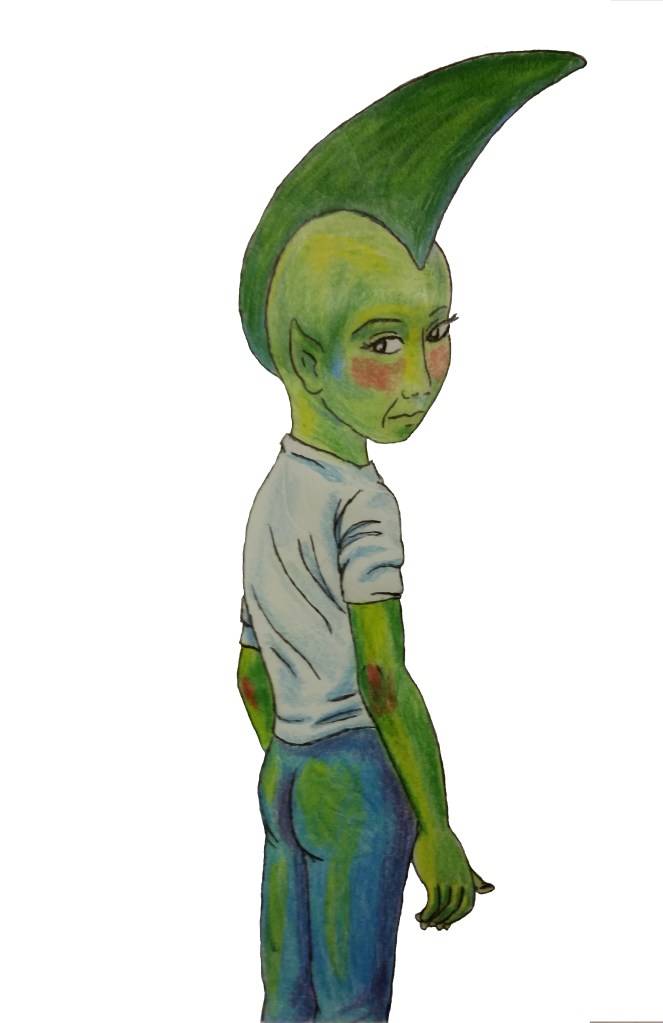
And some of my characters are green with shark-like fins on their heads. They were born on Starships and orbiting artificial satellites like the one going around Barnard’s Star. They are like George Jetson here, named after his father, Xiar’s, favorite Earther cartoon show character from the 60’s. Not only is he a green-skinned amphibious humanoid life-form from a different star system, he learns a lot about himself in the adventure he has in the novel Stardusters and Space Lizards. He goes from being a narcissistic space-pilot wannabee into becoming a humble crash survivor and expedition leader who helps save an entire planet from ecological disaster. And he even gets a girlfriend out of the deal in Menolly his nestmate and fellow survivor.
Characters like that are far too interesting and developed to be good for your reputation as a serious producer of money-making fiction stories. And you certainly don’t want to waste time on developing the same characters in multiple books.
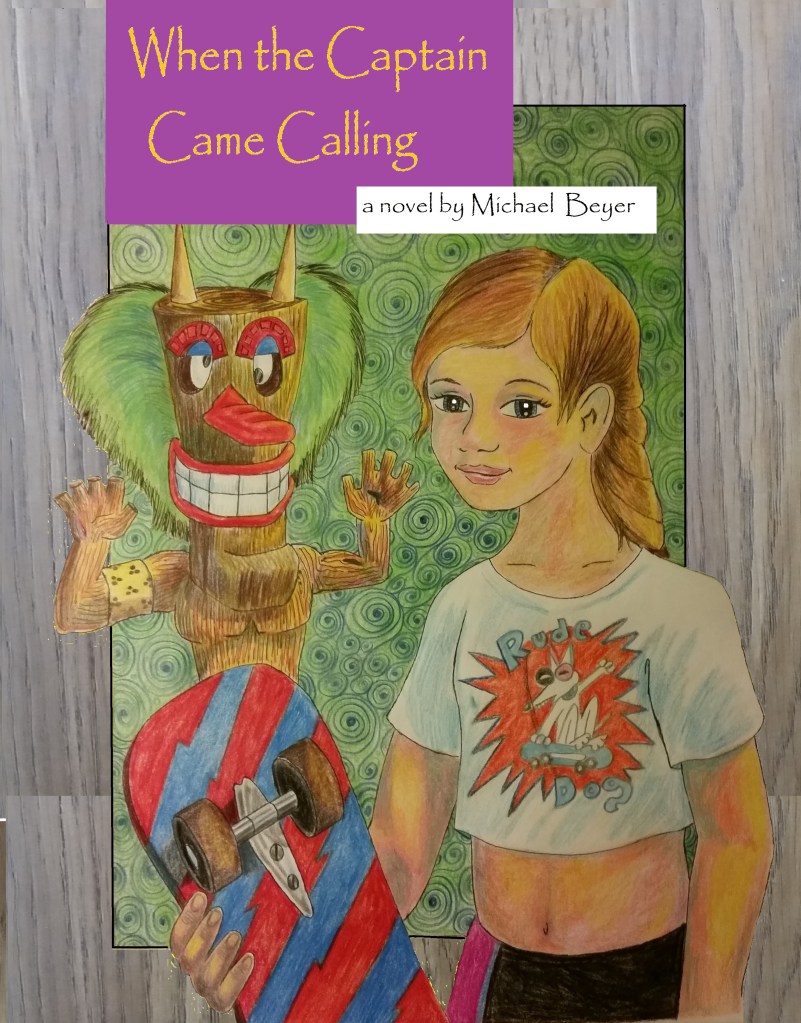
I used the character of Valerie Clarke in the book When the Captain Came Calling as an eleven-year-old protagonist who loses her father and has to rely on older kids and good friends to save herself from depression and the trash-pits of despair.
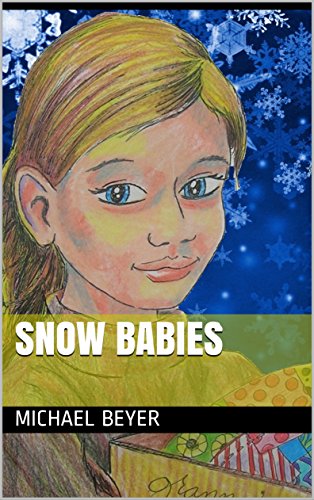
I used her again as a main character in Snow Babies where she befriends a mysterious stranger and also finds a runaway boy who makes her think seriously about life and young love, all in the middle of a deadly blizzard.
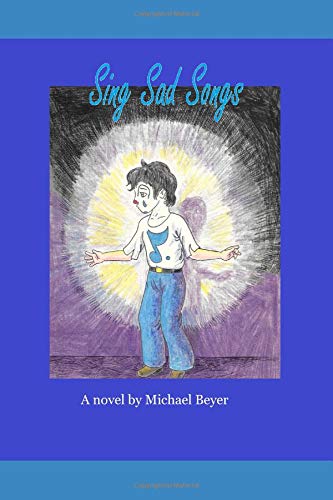
She’s also in the book Sing Sad Songs where she learns to negotiate love with a boy who also lost a parent, in fact, both parents and a twin sister, in a car crash that made him a lonely orphan. She not only has to face the loss of her own loved ones, but has to help somebody else to face the same thing, in fact, more than one other somebody.
She’s also a character in The Bicycle-Wheel Genius and Fools and Their Toys.
It is unthinkable to use a character that much and make her grow and change in so many different ways. She should be used only once in a simple and clear way. Like, maybe, Mark Twain’s use of Huckleberry Finn.
Huck, as a character was only used in the books, The Adventures of Tom Sawyer, The Adventures of Huckleberry Finn, Tom Sawyer Abroad, Tom Sawyer, Detective… and… never mind. Forget I even said anything about Huck Finn. In fact, maybe this whole post is so ironic it’s making my story-teller gears all rusty. Never-the-less, let me threaten you with a possible part three.
If you have come to my blog in hopes of gleaning some key advice about how to write novels or tell a story, then the wisest advice I can give you is, “Do not take any advice Mickey gives seriously.” He used to be a writing teacher in public schools. That is true. But he is also the writer of weird surrealistic novels full of purple paisley prose. And he is not a successful novelist like Steven King or J.K. Rowling. His writing advice is probably only worth ca-ca poo-poo.
So, let me tell you how NOT to write a novel.
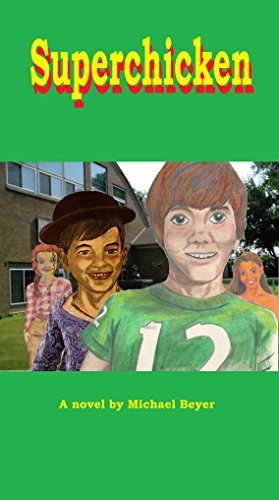
Each of the novels I have written and displayed here took me more than twenty years from the moment I conceived of the idea, through plotting, rough drafts, revisions, re-plotting, expanding the story, to finally publishing them in 2017, 2018, and 2019. I developed the stories from real people, real events, and real themes that were a part of my life and added to each of the stories as time passed. So, obviously, you should never take too long a time writing a story. It is true that Snow Babies is the best novel I have ever written, and I count Sing Sad Songs, The Baby Werewolf, and When the Captain Came Calling among my best work. And I only spent one year in the writing of Aeroquest, which is, ironically, the worst thing I have ever written. So, you can see that following any advice Mickey might give you about taking your time with writing is obviously worthless. I took too long writing and publishing my best books, and that is why I will die a penniless, unknown writer.
But I admit to having even more bad advice to warn you not to take. More, I think, than I can put into this one post. So, I will Part-Two this particular essay and take up the topic again in the very near future. Or forget all about it completely. It has to be one of those.
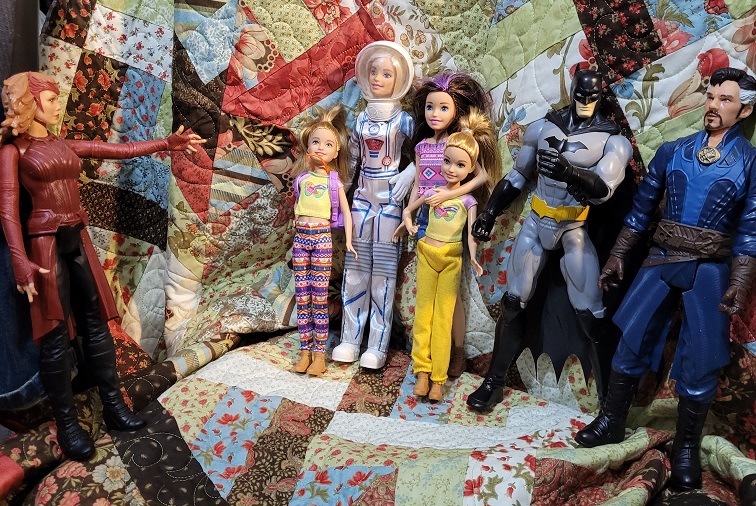
After five years of bankruptcy, I have finally started collecting dolls again. These are purchases since my debt was put to rest.
As a writer, I am often asked what kind of audience I think I am writing for. “Who, Mickey, is going to read your silly fantasy stories?”
To be perfectly clear… I started out as a writer intending to be a YA novelist, writing for more mature middle school and high school readers, probably more female than male. But any good YA writer writes stories that appeal to the adult, even if it is only the adult part of teenagers. Books like To Kill a Mockingbird, The Giver, The Hunger Games, and Ender’s Game are well known because of the adult readers who read, love, and praise those stories. I’m not saying you can’t intentionally write for a young adult audience. But I am saying you can’t write down to those readers, or you will certainly offend and lose them before the end of your story. You have to understand that they are becoming adults.
Uh, oh! I forgot that there is also a doll of Wanda, the Scarlet Witch. Now she wants to murder everyone with magic. Is Batman immune since he comes from DC rather than Marvel? Does Marvel Magic work on DC heroes?
But you can’t please all readers. Two readers who left devastating reviews on two of my books basically over-reacted to what I wrote, and let me have it with both barrels of their “Save-the-world-from-icky-Mickey” crusades. One thought Sing Sad Songs was reprehensible and evil because two of the characters, young Valerie, and Francois, the boy from France, experience sexual attraction to each other, and then both have to deal with the emotions it causes by talking about it with friends and families. The reviewer insisted that children should not talk or think about sex in a story. That was a moral violation according to her, even though no actual sex scene occurs in the story beyond a French kiss. The other lady reviewer objected to depictions of the nudist Cobble sisters in The Baby Werewolf. She claimed that the depiction of the girls, particularly Sherry, was entirely too “creepy” even though the book is a horror comedy and built on creepiness in the central conflict. Authors apparently have to have a thick skin, as every kook and prude is entitled to their own opinion.
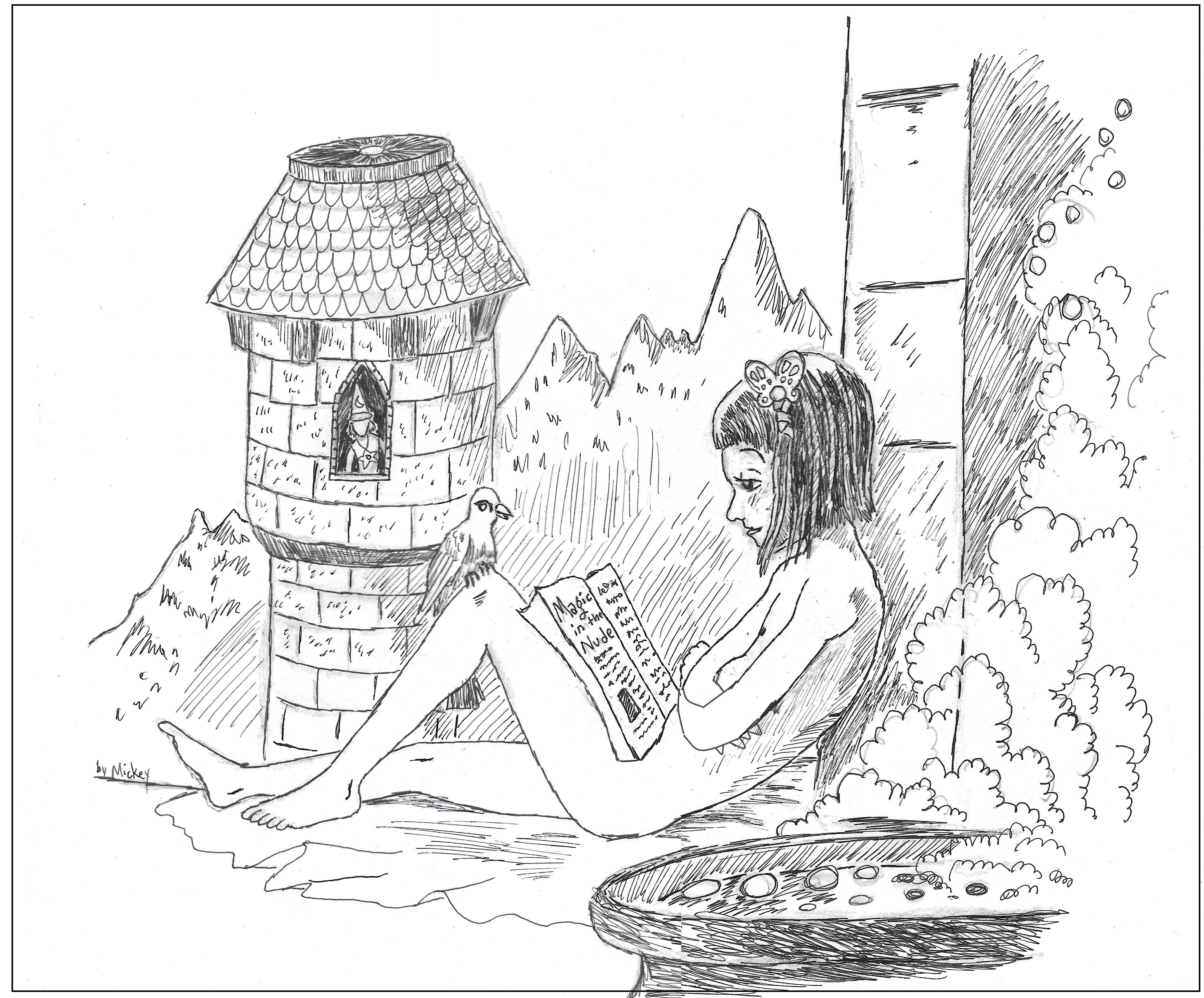
On the positive side, though, I have gained a lot of readers who are nudists because of the Cobble Sisters and their status as at-home-on-the-farm nudists. Particularly in the companion book of The Baby Werewolf, Recipes for Gingerbread Children. The idea of nudist characters and naked people in a story makes many potential readers turn up their noses, assuming it is something perverted or pruriently sexual. I think, though, that I have successfully depicted nudists as they actually are, having been a part of the Texas nudist community, at least on the fringes. They are definitely not perverts and sex fiends, as the girls are routinely explaining to their non-nudist friends.
But I can basically describe my personal philosophy of writing for a target audience this way;
I write with an imaginary member of my target audience reading over my shoulder. Sometimes they sock me in the back of my head for things I have written. But I am not writing for him or her. I am writing for me, the things I want to write, like to write, have to write, and need to write to live.
I am a writer who learned to write by reading. Seriously. No, stop laughing at me. I mean it this time. I know I joke more often than not. But this is real. All the good and bad things about my life, all the pain I have endured, all the joy I have allowed to tickle me blue (I refuse to turn pink when tickled, I choose blue instead,) and all the wisdom I have gained by being battered by experience come from the same place, the library of the reading I have done and taken to heart.
Life began for me with Dr. Seuss. The Cat in the Hat and the Cat in the Hat Comes Back taught me that you have to learn hard lessons from life. If you let the cat in the door, not only will your talking goldfish end up in a teapot, but he will be unhappy and two little things will mess up your house. Oh, and if you make the added mistake of letting the cat take a bath, you will turn the snow in the entire neighborhood Pepto Bismol pink. Horrors! But I not only learned the wisdom of not repeating mistakes I have made, but I never let any cats with red-and-white top-hats into our house throughout my entire childhood. Not even the ones who could talk.
The most important lesson I learned from multiple books I read as a child, Treasure Island, Kidnapped, Robinson Crusoe, and The White Stag, was that I could experience other people’s lives through reading a good book. I was ready for most of the bad people and bullies in my youth because I had been on that ship with Jim Hawkins. I could deal with loneliness and isolation because I had been on that island with Robinson Crusoe. I could evaluate the amount of trouble I was in and make a plan to get out of it because I had been Kidnapped in the book. And I had my own white stags to follow in the forests of my planned future… and fortunately, lost the trail to become a teacher.
Of course, when you read a book, the author gives you insights into the nature of the characters in the story. You see inside the people being told about, learning that they have their own inner story that you can clearly read and learn from and even become.
And the truth of the matter is that real people have their own inner story too. Something is going on inside almost everyone. (Maybe not carrot people. I have only ever met one. But vegetables, unlike humans are simple and not filled with conflict.)
You can read real people’s stories too. If you watch them carefully with empathy as your quiet superpower, you can read the elements of conflict within them. Though never as thoroughly as you could if you were reading them in a book. You can sense their embodiment of familiar archetypes.
Reading living people in the real world is something school teachers do. Students especially are emotionally naked almost every minute of almost every class. (Not literally naked. That would be gross… and possibly illegal.) But the stories pass before your eyes constantly. It would be impossible NOT to read them.
I have seen and studied in depth the writing of Ernest Hemingway, William Faulkner, Mark Twain, Michael Crichton, Terry Pratchett, and Neil Gaiman. By reading I have learned how they write. And they Write Naked. That’s the book Diane Callahan talks about in the very excellent video I linked to the start of this post.
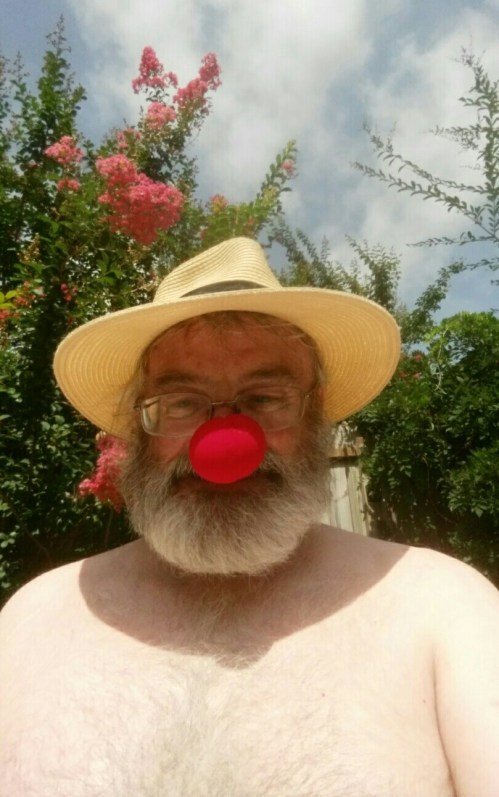
Sometimes I write literally naked. (I know you may think that’s gross, but I have my reasons. And, besides, I am literally a nudist.) But I write emotionally naked too, as the video suggests I should. That involves writing about certain horrible words that make up what I most need to write to be authentic. Let me list a few of those.
Death – Here is a thing that everyone needs to deal with in order to reach maturity and survive growing older without going completely insane. Somewhere in life you have to make peace with the Grim Reaper. And I have haggled with the old bone-head more than a few times.
Suicide – I have been in Emergency Rooms five times with severely depressed people. I was not the one contemplating suicide. I was there to help. I have lost a second cousin, three former students, a high school classmate, and a fellow teacher to suicide. I only survived my own bout with it because of a friend on the other end of a telephone line. And, thank God, so far I have saved more depressed people who confided in me than I have lost. I can give you no names here. But I have to write about it in fiction form.
Sexual Assault – In the long run I have forgiven him, now that he is dead. But he seriously screwed up my life. And I was only ten. It only happened once, but once is enough. And some of my best fiction is linked to this emotional nakedness. I have written more than one book about it.
Depression – This killer of dreams I still deal with. Diabetes makes it worse. Thankfully it is not the deadly thing it was for Sylvia Plath that Diane talks about in her video while discussing The Bell Jar.
Loneliness – The ache of being invisible when that’s the last thing you need to be.
Fear – H.P. Lovecraft and the Bible helped me with this one. Of the two, the Bible is far more scary. But you have to face fear not to be consumed by it.
Is that a good enough list to write naked from? Let’s add feelings of inadequacy. But still the list is not complete. It will never be enough and there is not enough time left in the universe to write it all.
So, I write with awful words about terrible things. And it is apparently a key to writing well. What some of us won’t do to touch your heart with nest sentence! Thank you for putting up with me.
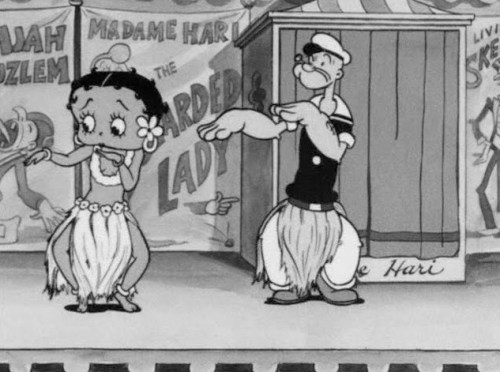
If you are as goofy and cartoon-obsessed as me, you may remember that Popeye the sailor was known for the catchphrase, “I yam what I yam”. And if you do remember that, it will not surprise you that, when told a yam is another name for sweet potato, Popeye was furious. “It cannot be!” he argued. “I would not say I sweet potato what I sweet potato! That’s ridicumess!”
Well he has a point.
But I would like to talk today about the things that I sweet potato, and why I sweet potato those things.
First of all, I yam a humorist.
I yam this thing not because I am funny. You may think I yam funny because I say really goofy things for no apparent reason, and then keep on talking long enough to convince you that I did have a point to make, but my brain leans so far to the left that I am hardly right about anything.
And I make bad puns a lot.
You see, I have to use humor constantly to deal with all the hard things in life, because being too serious in the face of the world’s basic uncaring cruelty only leads to depression and taking a beating from life. In fact, I can think of any number of situations in my past where I avoided a beating only because I made a joke that made the bully laugh.
So, being a humorist is a survival tactic. Humor keeps you alive.
You see someone like me has to face all the pain and heartache and cruelty the world has to offer by using humor. The real reason is that, when faced with a bad situation, if the humor gland can’t empty itself of all the jokes it produces, it will begin to swell. The humor gland is located either in the brain or maybe in the behind (I am not medically qualified to tell you which it really is), and it can only swell to a certain point, and then it will explode. This is very bad thing for you, if you survive it, and certainly unpleasant for anybody nearby.
But the joke, properly launched at the target, will make somebody laugh, even if it is only the humorist himself. And laughter is the best medicine. Unless it kills you. You have to be careful not to die laughing. The angels will be offended, and the demons will all laugh too.
But I yam not only a humorist. I yam also a teacher.
I began to realize that I might be a teacher when, in graduate school to get a remedial master’s degree to help with the fact that plain English majors all starve to death, I discovered I had a talent for explaining things in simple terms. And then, immediately afterwards, I discovered I had an even greater talent for being ignored while the people I was explaining to made the mistakes they wouldn’t have made if only they had listened to me, before they failed spectacularly, and then realized how the solution I had explained would’ve made them succeed instead. There is apparently no better way to learn an important lesson.
Teaching is, of course, a pretty cool job. You tend to have the summers off. And you get paid for summer because they split the amount of money you earn for the year (which considering what a babysitter makes on average per child and per hour is far too little for the hours you put in) into twelve monthly pittances.
Of course you are expected to have a university degree (although no teacher college in the world can teach you what you really need to know in order to face that many little monsters… err, darlings… every day) and preferably some grad school, and a certification to teach in your chosen subject, and an additional certification if you are going to teach more than one subject (and ESL and Speech and Journalism, all of which I was expected to teach, are separate certifications) and you have to take hours of additional training every single year, and you have to get re-certified every five years, and… Well, you have to be basically smarter and much better-educated than Bill Gates… But the school janitor will probably be making more money per month than you do.
Anyway, it’s a job you just gotta love. I yam a teacher.
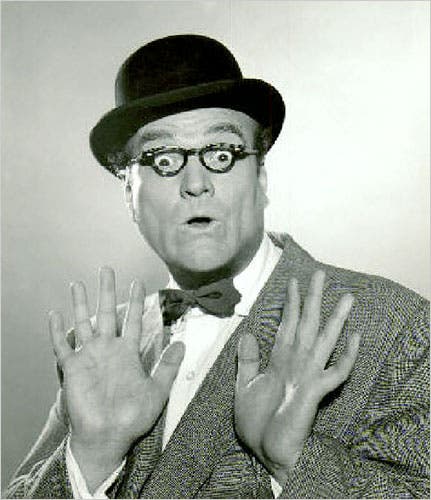
And really, there are a whole lotta yams in my basket yet that I could tell you about. I yam a Red Skelton fan. I yam sometimes a nudist (when I don’t have to put on clothes to keep myself from scratching all my psoriasis-plagued skin off). I yam also an artist (of the type known as a cartoonist). I yam pig-headed sometimes, and I yam Grumpy sometimes (so I go from being Porky to one of the Seven Dwarfs.) I yam a lotta things. And my sweet-potato basket is large.
But I can’t talk about all of my yams today. Too many yams are bad for my diabetes.
But here’s one last yam. I yam a storyteller. And I have a free Kindle e-book promotion this weekend. The book is the first in my series of AeroQuest books. It is a science fiction story with a humorous bent. And I mean, it is seriously bent in some places.
So, click on the link and get yourself a copy. It’s funny. And I will save the other sweet potatoes for another day.
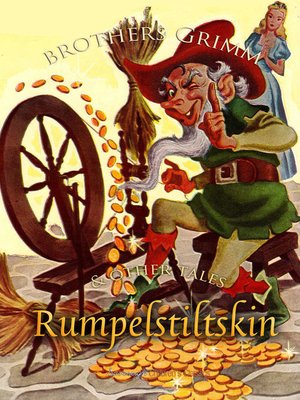
I start today with nothing in my head to write about. I guess I can say that with regularity most days of the writing week. Sundays in particular are filled with no useful ideas of any kind. But I have a certain talent for spinning. As Rumpelstiltskin had a talent for spinning straw into gold, I take the simple threads of ideas leaking out of my ears and spin them into yarns that become whole stories-full of something to say. And it is not something out of mere nothing. There is magic in spinning wheels. They take something ordinary and incomplete, and turn it into substantial threads useful for further weaving.
Of course the spinning wheel is just a metaphor here for the craft of writing. And it is a craft, requiring definable skills that go well beyond merely knowing some words and how to spell them.
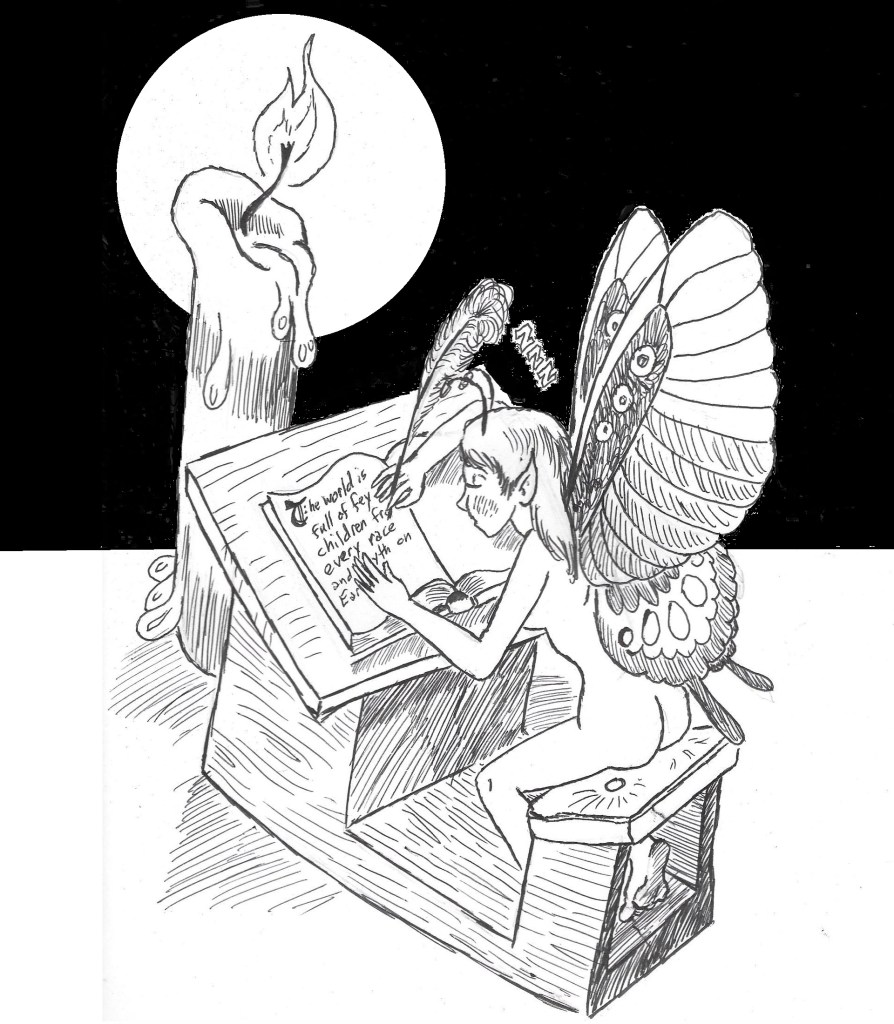
My own original illustration.
The first skill is, of course, idea generation. You have to come up with the central notion to concoct the potion. In this case today, that is, of course, the metaphor of using the writing process as a spinning wheel for turning straw into gold. But once that is wound onto the spindle, you begin to spin yarn only if you follow the correct procedure. Structuring the essay or story is the next critical skill.
Since this is a didactic essay about the writing process I opened it with a strong lead that defined the purpose of the essay and explained the central metaphor. Then I proceeded to break down the basic skills for writing an essay with orderly explanations of them, laced with distracting images to keep you from dying of boredom while reading this, a very real danger that may actually have killed a large number of the students in my writing classes over the years (although they still appeared to be alive on the outside).
My mother’s spinning wheel, used to make threads for use in porcelain doll-making, and as a prop for displaying dolls.
As I proceed through the essay, I am stopping constantly to revise and edit, makeing sure to correct errors and grammar, as well as spending fifteen minutes searching for the picture of my mother’s spinning wheel used directly above. Notice, too, I deliberately left the spelling-error typo of “making” to emphasize the idea that revising and proof-reading are two different things that often occur at the same time, though they are very different skills.
And as I reach the conclusion, it may be obvious that my spinning wheel of thought today spun out some pure gold. Or, more likely, it may have spun out useless and boring drehk. Or boring average stuff. But I used the spinning wheel correctly regardless of your opinion of the sparkle of my gold.









 Catch a Falling Star