
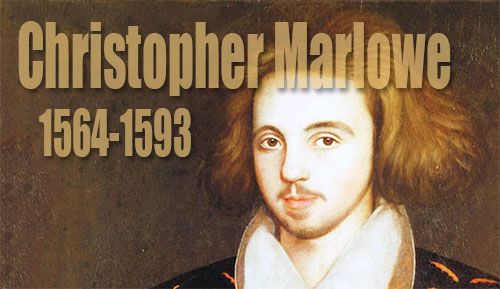
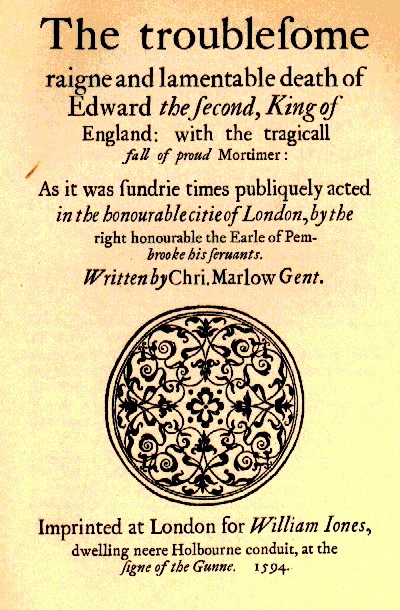
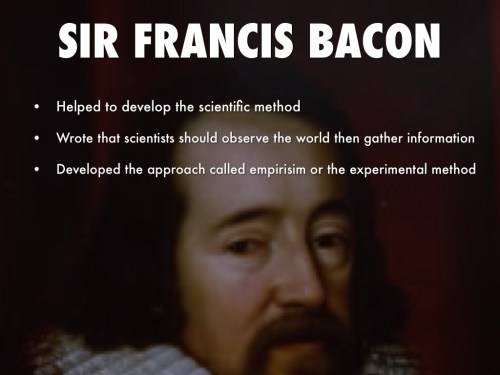
Christopher Marlowe is often sited as the real Shakespeare, a problematic assertion given that he would’ve been forced to write a number of plays after he was dead, giving new meaning to the term “ghost writer”. But I would like to add to the assertion that “Marlowe is NOT Shakespeare!” that I also believe he did not die as they claim that he did. Marlowe is a fascinating character of debauchery and misbehavior, intrigue and mystery, and undeniable genius. As a writer, he was a maverick and risk-taker, having begun the ascendance of the theatrical play as one of the heights of Elizabethan literature with his play Tamburlaine the Great, about the historical figure who rose from shepherd boy to monarch. This play, and its sequel, Tamburlaine the Great Part II, were among the very first English plays to be written in blank verse, meaning there is a very definite connection between the style of writing established by Marlowe and the later work of Shakespeare. It is probable that for a few years, Kit Marlowe was a member of the Gray’s Inn group along with Sir Francis Bacon and several other suspicious literary luminaries like Sir Walter Raleigh and possibly Ben Jonson. (I have to admit at this point that if I am wrong about the Stratford guy and he did write the plays, then he was a member of this group as well, because it was not closed to commoners, only to stupid people. The Stratford guy was in no way stupid or a villain, no matter what you may believe about the authorship question.) But here is where the link to Shakespeare’s plays and poetry both begins and ends. Yes, Kit Marlowe was a capable enough author to have written such sublime plays. He has all the individual skills to make up the whole. But if you read his masterwork, The Tragicall History of the Life and Death of Doctor Faustus, you will see that the voice, the unique literary style of the work is simply not by the same author. Although Shakespeare revisits some of the same themes that Marlowe used in his plays, his manner of development, handling of character, style of humor, and underlying conviction in the existence of God are all different and opposed to Marlowe’s. Marlowe is NOT Shakespeare. Shakespeare’s works have more in common with Bacon’s than Marlowe’s. And I have already said that, “Shakespeare is NOT Bacon… or eggs either.” And if I said it, it must be so. (Don’t throw eggs and tomatoes at your computer screen when you read this. Just call me stupid and vain in the comments like everybody else does.)
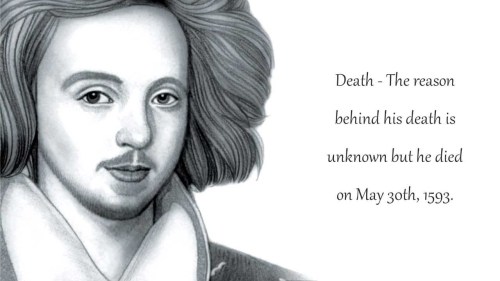
And an even more compelling reason to those of you who don’t obsess over reading Shakespeare and Marlowe and Ben Jonson is that, at the time Shakespeare’s plays were probably written, Kit Marlowe was busy either being stone cold dead, or, having faked his death, was busy being a secret agent for Queen Elizabeth.


And why would a goofball like me think that Christopher Marlowe cunningly faked his own death and went into his own thrilling quest to be like James Bond more than 300 years before Ian Fleming? Well, because I know how to read and am not generally bright enough not to believe what others have written about him and his connections to the world of spying in Elizabethan times.
These authors have brought out the fact that Marlowe’s frequent absences from college and later public obligations coincide with things like the mysterious tutor called “Morley” who tutored Arbella, niece of Mary Queen of Scots, and a potential successor to Queen Elizabeth, in 1589. He was also arrested in the Netherlands for allegedly counterfeiting coins related to the activities of seditious Catholics. He was brought back to England to be dealt with by Lord Treasurer Burghley, the closest adviser to Queen Elizabeth, and was then not so much punished as let off the hook and even rewarded monetarily. Still think he was not a spy? Well, his demise probably came about through his relationship with Lord Francis Walsingham and his friendship with Walsingham’s son. You see, Walsingham was Elizabeth’s “M”, leader of her spies and intelligence units. After Walsingham died, there was deep concern that no one was still able to protect Marlowe from possible consequences of being both a homosexual and an atheist. (Being gay was obviously not as serious a sin as atheism for which torture and death penalties lay in wait.) It was possible that rival spies and nefarious forces could kidnap Marlowe and get information out of him that the Queen needed to be kept secret.
So, when Lord Burghley tortured Marlowe’s friend and sometime roommate, Thomas Kyd, into naming Marlowe a heretic and sending men out with a warrant to arrest Marlowe, Kit’s other friend, Thomas Walsingham probably warned Marlowe. The bar fight that supposedly ended Marlowe’s life was witnessed by two friends of his, Nicholas Skeres and Robert Poley, both provably con men and professional liars. The knife that stabbed him in the forehead above his right eye was wielded by Ingram Fizer, another of Marlowe’s disreputable friends, allegedly over an unpaid debt. Fizer, of course, though he freely admitted killing Marlowe, was acquitted of the murder. And the coroner’s report is suspect. Rules of investigation were not followed, and the body was never independently identified by someone other than the three friends at the scene of the crime. And the body was hastily buried before anyone else could get a close look at it.
I am not only telling you that I believe Christopher “Kit” Marlowe was NOT Shakespeare… or eggs either (though that joke doesn’t really work here), but I believe he didn’t die the way it has been reported to us by history. And why do I believe these things? Because I think the story of Christopher Marlowe is a really great story, and it exists as a story whether it is historically true or not.








 Catch a Falling Star