Yes, I am philosophically a pessimist. I expect always that the worst outcome is the one I will have to live with. Hence, I was not as devastated by Donald Trump’s election as some who were too confident that Hilkary would win. And the climate crisis seems to be good reason to prepare for the worst that can happen. Some of it is already happening, already here.
But you really should listen to what this career futurist has to say about it.
The near future is, as documented with evidence in the video, far worse than we think it is. “Just doom, nothing else,” as Robin Williams declares. But too much pessimism at this point is the death of us. We have to keep trying. We can’t just give up.
A cheerleader who is not me.
Don’t get me wrong, I am not the right person to be elected head cheerleader on this issue. I have given in to despair and weeping on more than one occasion already. Since the election of Trump, the conservative pillaging of the Supreme Court, the roll-back of EPA guidelines and restrictions, the erosion of fundamental voting rights (soon to be followed by other rights,) the mismanagement of the economy, the Covid crisis, wildfires in the West, the insurrection after the election of Joe Biden, and more and more things that signal doom and possible Armaggedon, we have to battle the urge to lie down and die.
Here is where the optimism of the Reverand Peale is critical.
Dr. Norman Vincent Peale, also definitely not me.
If we stop trying, our loss and subsequent death is insured. It is only by continuing to fight that we will have a chance to save ourselves. And this is beginning to happen everywhere.
In 2020 we turned out against the Evil-Clown President in record numbers. We wrested the control of the government out of the hands of the corrupt elephants and put it back in the hands of the hard-working but mostly stupid jackasses. Biden’s donkey-like devotion to following through on the work that needs to be done got us through the rest of the pandemic, getting ourselves vaccinated and acclimated to life with the reality of the new deadly virus.
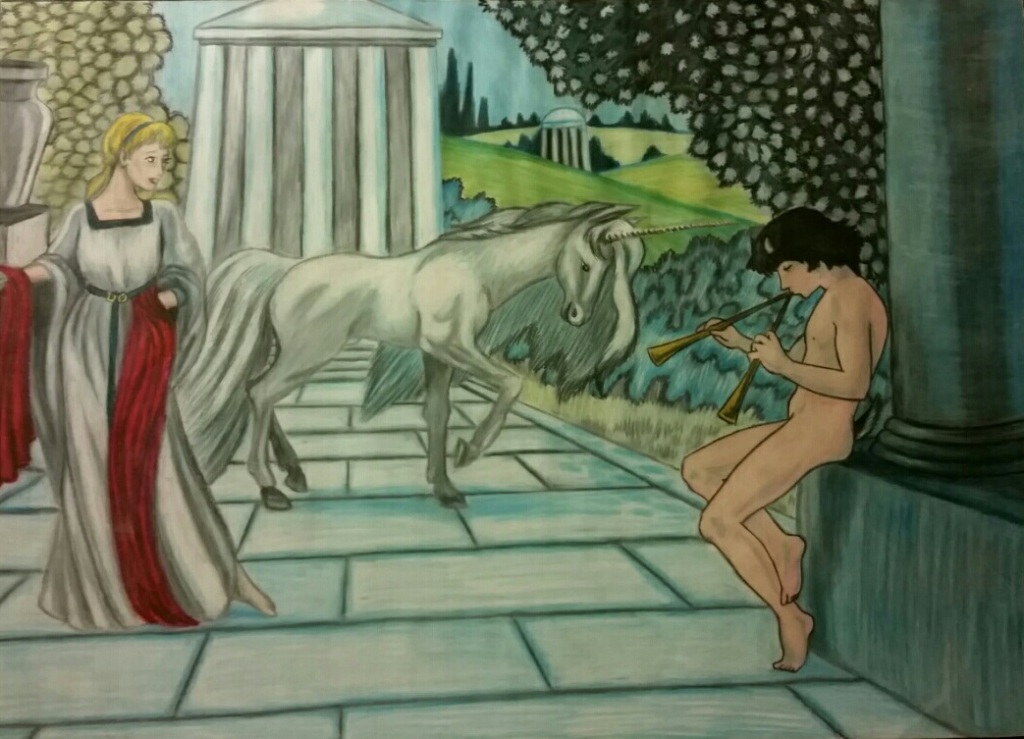
We need, like the faun, to be one with our environment.
We have tried hard and kept at it to achieve much-needed climate-control legislation. The fossil-fuel industry has made it difficult, and we nearly gave up on the Build Back Better program, but it seems through perseverance that we may have finally gotten a critical piece of that over the hurdles after all.
One thing definitely indicated is that we will need to turn out to vote in the midterm elections again this year. If we don’t, the elitist elefantiasis party will take away all our gains and punish us again, playing their golden fiddles while the world burns.
We will never have the magic we need if we don’t try to conjure it.
But despair is still not warranted here. We know what we can do to solve the problems that face us. We have done similar things before, with the Cold War, World War II, and the hole in the ozone layer in the 1980s. What’s more we have the tools we need already, and what we don’t have is quickly being developed. There are plans in the works for mountain-sized storage batteries, massive solar-power arrays, and wind farms (many of which are already built and operating.) We can rebuild and upgrade the entire power grid, not just in the USA, but for the whole world. It needs, of course, to all be weather-proofed, meteor-proofed, solar-storm-proofed, and, hopefully, greedy-Republican-idiot-proofed.
We are not beaten if we don’t give up.
And as the futurist tells us in the video you didn’t watch, pessimists prepare us for disaster, but only the optimist can make us successful in living through it to a brighter future beyond.
I was a school teacher for thirty-one years, and in spite of the immense amount of brain damage that builds up over time, especially as a middle-school teacher, I think I know what we’ve been doing wrong.
We need to take a look at an education system where things are working better than they are here.
Now, I know you probably didn’t click on the boring video about school. Heck, you probably aren’t even reading this sentence. But I can summarize it and put it in easy-to-understand words. Finland does not have to educate as many poor and disadvantaged kids as this country does. The video gives five ways that Finland does it better, but all of them boil down to the basic notion that the country is more homogeneous and uniformly middle-class than ours is. Still, we can learn things from them.
The first of the five ways that Finland does it better is a difference in government. While U.S. governmental safety-net programs blame people who need food stamps for being lazy (even though some of them work 40-hour work weeks in minimum-wage jobs), Finland gives a huge package to parents of everything they might need as soon as their child is born. As long as the child is in school, the government does many things to support the family’s efforts to educate them. Imagine what we could accomplish here if we invested some of the vast fortune we give to corporations in subsidies into educating poor black and Hispanic children instead. Children have a hard time learning in school when they come to school hungry. If we could only feed them better, the way the Fins do, we would revolutionize our classrooms.
The second point the video makes is the biggest suds-maker every time I get on my teacher’s soap box. They don’t give kids homework and they only give them one standardized test when they leave high school. I have recently covered this topic more thoroughly in a post in which I was able to ridicule Florida governor Rick “Skeletor” Scott. (Boy, did I enjoy doing that.) But I won’t go into all of that again here.
The third thing is respecting teachers. In Finland they treat teachers with the kind of respect that they give to doctors and lawyers. How cool is that? In Texas, calling someone a teacher is an epithet. If a teacher is liked or even loved by their students, administrators are encouraged to keep a closer eye on them to figure out what’s wrong. Students are supposed to hate their teachers and sit all day filling out mind-numbing test-preparation worksheets. Imagine what it could be like if teachers weren’t the scum of the earth. They might actually have students convinced that learning goes on in their classrooms.
The fourth point is that Finland does not try to cram more and more memorized details into young brains so they can spit it all back out on a test. They take students thoroughly into the subject of study, and at a slower, easier pace. They dive deep into the river of learning instead of wade through the wide and shallow parts. All questions get answered. And by that, I mean, student questions, not teacher questions. The learning is student-centered.
Finally, the video states that Finland simply has fewer social ills in their country to get in the way of good quality education. But even though the work is harder in this country, the potential is really there to go far beyond what Finland is capable of. We have a natural resource that is totally untapped in this nation. We don’t develop the minds of a majority of our children in any meaningful way. And I can tell you from having done it, you can teach a poor or disadvantaged child to think. You can give them the tools for academic, economic, and personal success. You can make them into valuable human beings. But you should never forget, they are already precious beyond measure. We just ignore and trash that inherent value. So, the information is out there about how to do a better job of educating our children. We need to follow through.
I am only going to be 65 years old for four more months. Then I will be 66… even if I croak off this mortal coil before my birthday. It is heck getting older. My eyes and memory and joints all work far less well then they did a decade ago, even a year ago, heck, even last week. They don’t tell you this when you’re young, but you don’t have to be dead to start decomposing. And that doesn’t mean un-writing this essay, though maybe that would be a good idea based on that last sentence.
It is inevitable that the longer we live, the more our aging bodies are going to gradually break down, work properly with more difficulty, and cause us pain and loss.
And as we age, our minds drift back to childhood and days long gone. We obsess about little things. Especially the little things we have lost.
The sense of adventure is mostly gone from our daily lives. Things have settled into a permanence, and the limits of fame, fortune, and future expectations have all been irreversibly set. All we can do to reclaim any of that is to reflect, to remember, and to tell stories about it.
I had a recent story idea that I have begun calling by the title The Haunted Toy Store. It is about a small-town store filled with antique toys that nobody ever buys. And the store owner is very creepy and quiet and does practically no business. People wonder how he makes a living. But there are definitely ghosts in the toy store. And in the long run, it is discovered that the true customers are the ghosts. And the toys are actually the people that are lured in, especially the children, that the ghosts play with. It is not a horror story. It is a comedy adventure. But, like any good story, there is conflict and a number of scary moments.
Why would I even consider telling a story like this? Well, because I am old. There are certain truths, certain experiences, and a lot of goofy observations that I still need to tell about my life, and pretend that somehow it all adds up to wisdom. I am growing old, walking around naked more than ever, forgetting where I put my glasses while I am still wearing them, grumbling to myself like a cereal killer (I did not misspell that, I mean killing boxes of high-fiber cereal,) and arguing with the dog about whether or not dogs can talk, or if I can trust her to write another blog post or not. I will probably be losing my mind soon. I keep forgetting which box I put it in last night when I wake up in the morning and need it again. So, I better slow down and try to do it all the right way.
The criminal was led into the courtroom in chains and forced to sit in a box made of metal bars so his influence would not reach out and harm anyone by drawing their sympathy in.
“Mr. Prosecutor,” said the learned judge, “what terrible crime has the perpetrator been charged with?”
“The alleged perpetrator!” objected the defense attorney, a mousy old man who looked like a cross between Santa Clause and Robert E.Lee because of his white beard, stern face, and a twinkle in his eye.
“Shut up please, Mr. Badweather. You will have your turn to speak.” The judge banged his gavel smartly to emphasize the shut-up-ness of his overruling.
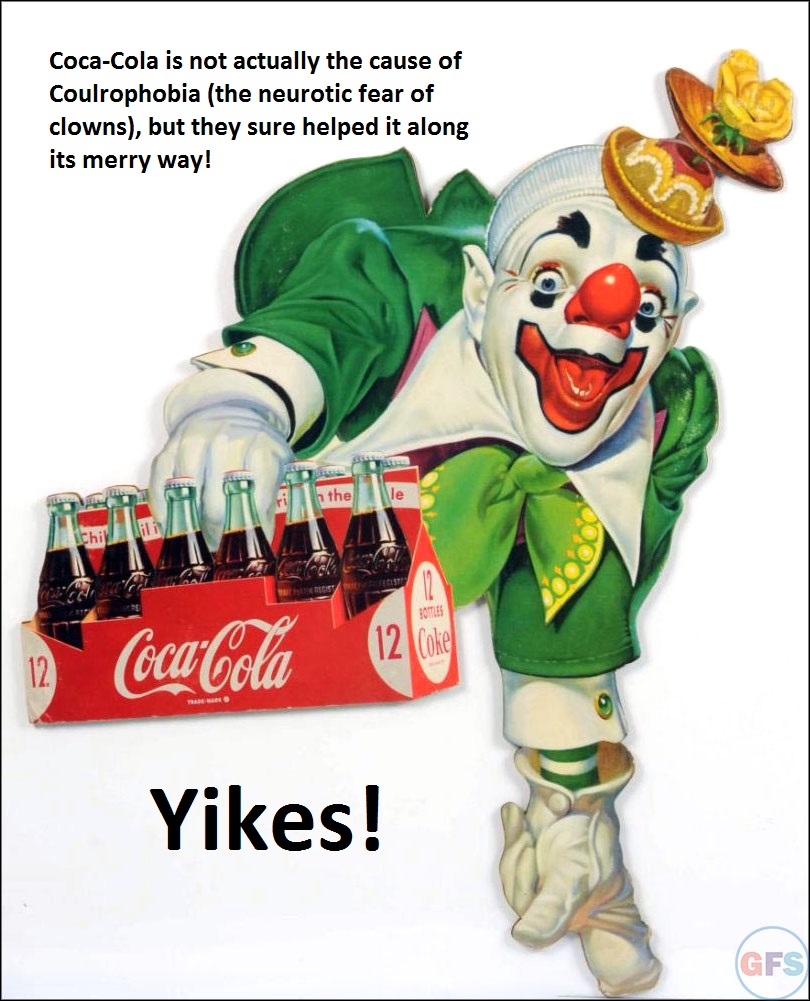
“Your honor,” said the prosecutor, “Mister Pennysnatcher Goodlaughs stands accused of being a clown.”
“The people of the State of Texas, home of the free, land of the brave, and place where cowboys can hang their hat on the antlers of a moose they shot in Canada, will prove that Mr. Goodlaughs did willfully, and with malice of forethought, commit acts of supposed humor in order to make people laugh. And we will further prove that in a time of very serious things, he intentionally made light of very serious matters and the very serious men who try to turn those serious things to their exclusive… err, sorry, I mean… everyone’s benefit.”
“Your honor,” said the defense attorney, looking like a cross between Mark Twain and Colonel Sanders, “I would like to request a new venue for this trial. My client will not get a fair trial here.”
“Sir, your stupid request is rejected on the grounds that Mr. Goodlaughs cannot get a fair trial anywhere. We are all conservatives, and are therefore incapable of having a sense of humor. Continue, Mr. Prosecutor.”
“We will show numerous instances of Mr. Goodlaughs putting paint on his face to hide his true features or assume the identity of a character not his own. He has repeatedly used false noses, large shoes, and floppy hats to exaggerate his flaws and scare young children. He repeatedly wears polka-dotted clothing to simulate terrible taste and ridiculous lack of fashion-sense. He employs pratfalls and slapstick humor in his performances, things that, if any school-age child would imitate the behavior, might lead to serious injury or even death. And he has even dared to make fun of our glorious leaders, implying that they make mistakes and may even have hurt people. That they act without thinking about anything but their own pocketbooks. In other words, this clown has knowingly made jokes in order to get people to not take things seriously.”
“Your honor, I object to this jury. I object to the fact that it is made up of fifty percent rednecks and fifty percent kangaroos! My client demands a new, more impartial jury!” cried the defense attorney, looking like a cross between Captain Kangaroo and Ronald Reagan.
“Has anybody noticed?” asked the judge, “that this attorney looks like he could influence this jury unfairly? He looks like two people who could lead the two halves of this jury to the wrong conclusion. Bailiff! Take the defense attorney out back and execute him by firing squad.”
After the entire courtroom heard the gunshots go off, the judge then turned to the prisoner.
“It seems, Mr. Goodlaughs, that the defense’s opening statement is now entirely up to you. Do you have anything to say in your own defense?
“I do, your honor. Ladies and gentlemen, kangaroos and Reagan Republicans of the jury, I submit to you that I have never actually been a circus clown, or wore face paint. Not that I wouldn’t if the opportunity presented itself. I merely claim the right to laugh at anything I think is funny… or can be made funny. Whether I am being what you call a clown, a humorist, a cartoonist, a comedian, a fool, a village idiot, or a witty fellow, I believe I have the right to make light of anything. Life is always better when you can laugh. Especially if you can laugh at yourself.”
“I’ve heard enough,” said the judge. “What say you, jury?”
“Guilty!”
“Yes. And I preemptively waive the prisoner’s right to appeal. Sir, you are guilty, and you shall be executed immediately.”
Everyone in the courtroom breathed a long-awaited sigh of relief.
It is important for your mental health and well-being in the present age to question everything. As I laid out for you in the previous Thinkology post, the world is full of mental mousetraps, and evil thinkers are anxious to do all the critical thinking for you. If they can influence what you think is true, they can control you.
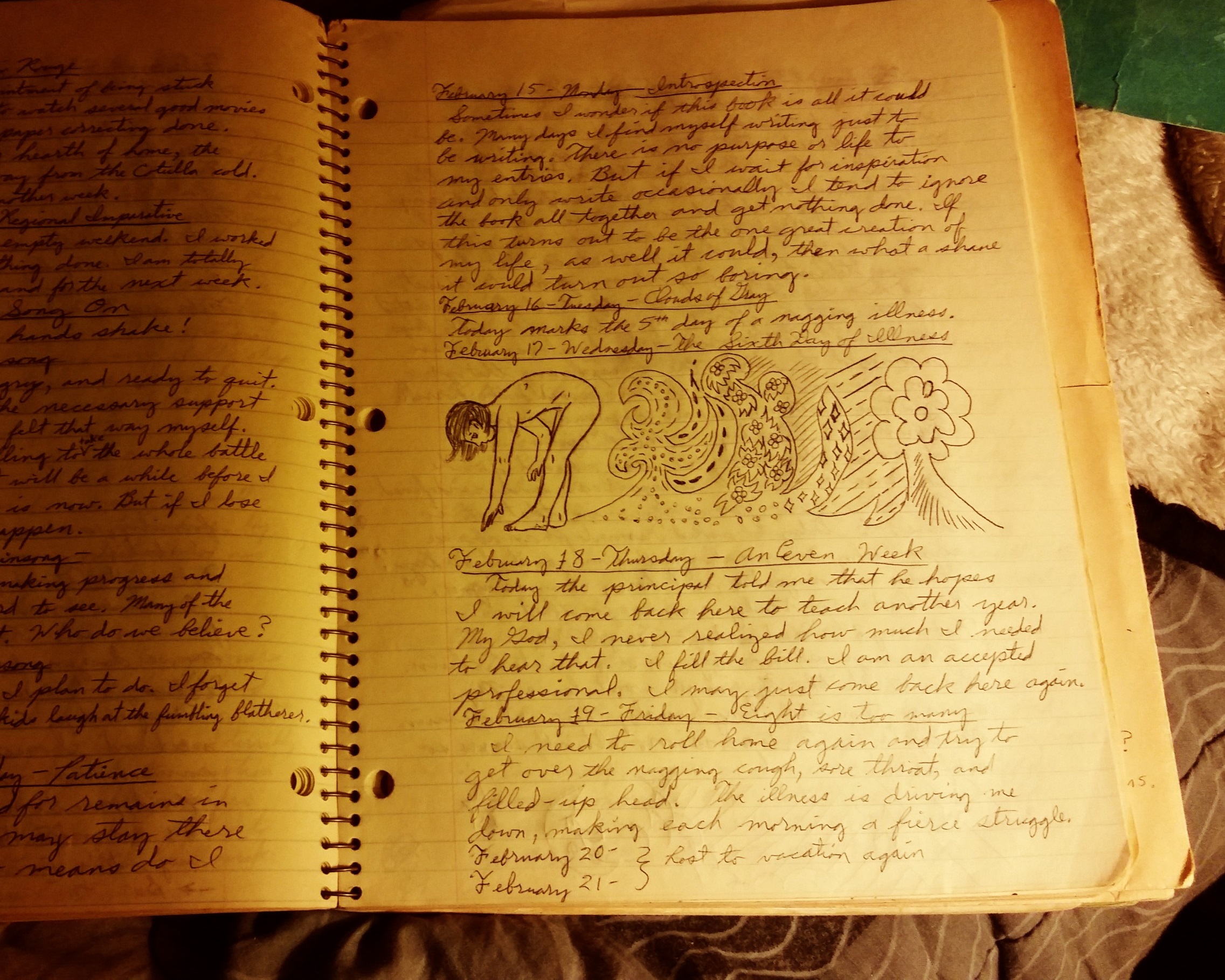
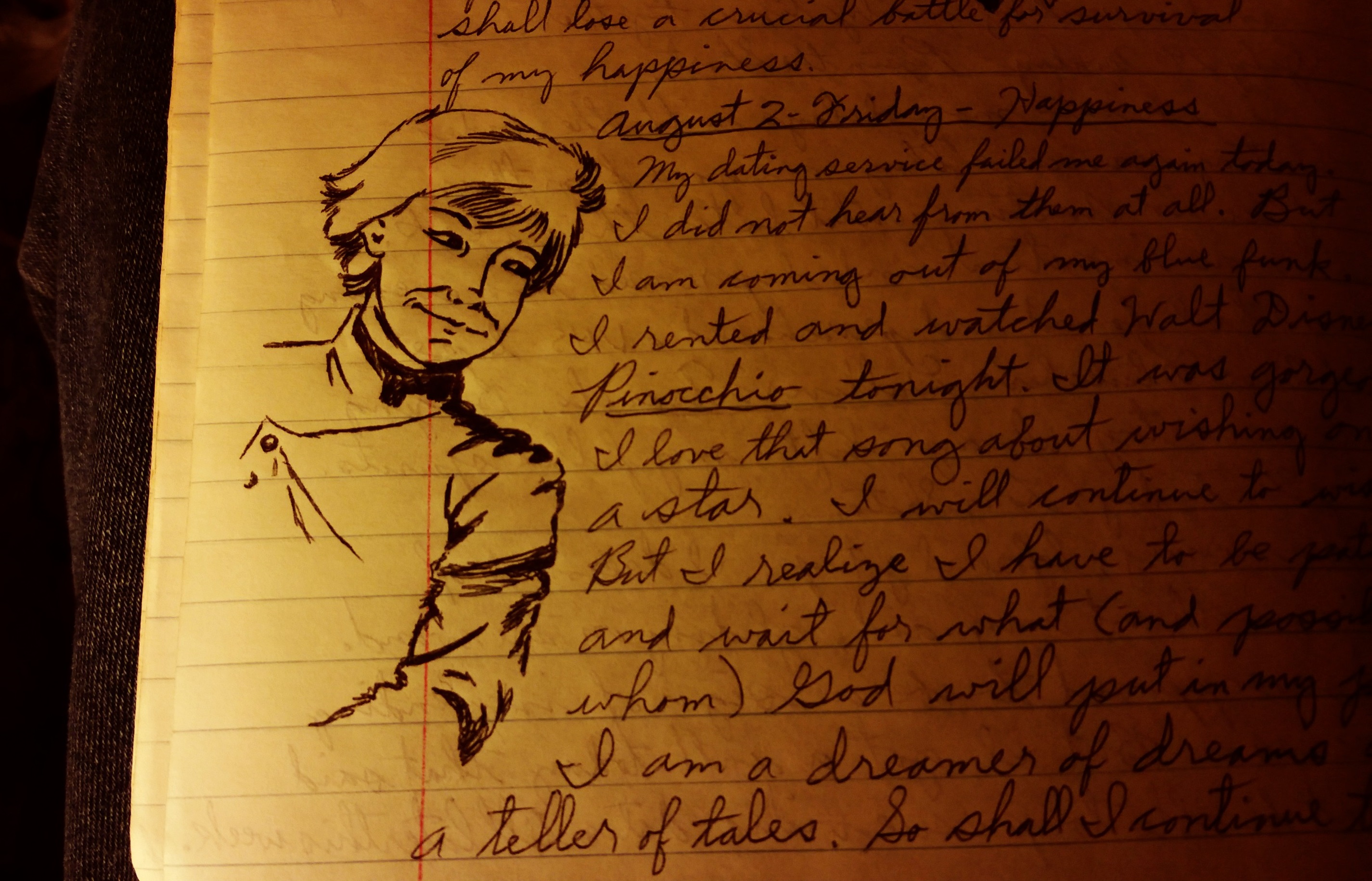
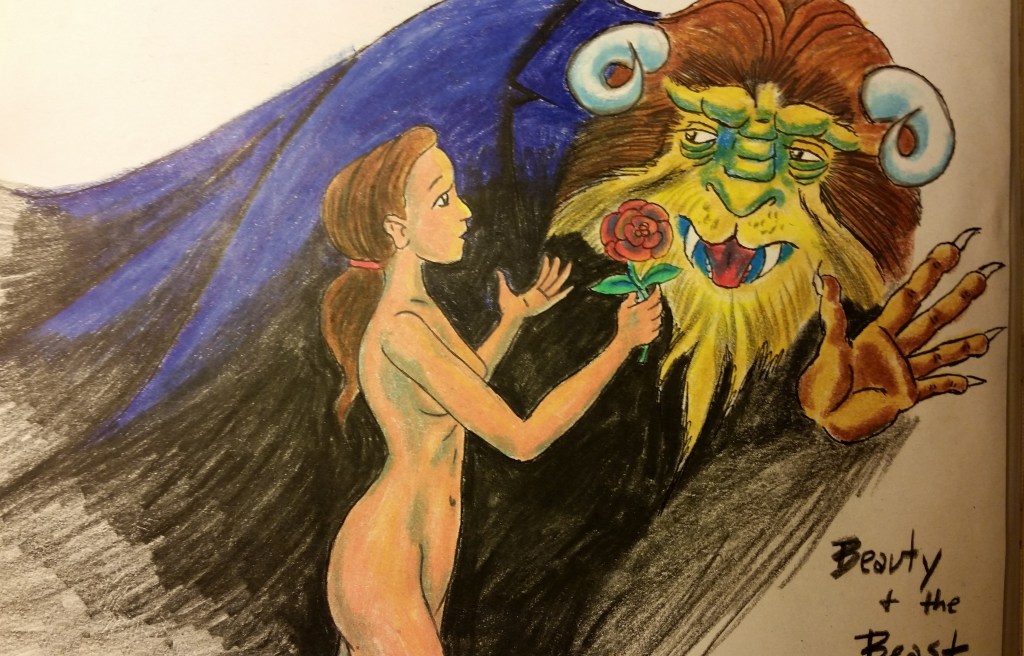
To start with, you have to look at yourself naked in the mirror. Now, I don’t mean this literally. The illustration is intended to be a metaphor for self-examination that goes deeper than how you look in your everyday dress…or tutu… or business suit… or even birthday suit if you like and are good-looking like the boy in the metaphor (after all, I have come to believe I am a nudist now, and am supposed to like the idea of birthday suits.)
What you are looking for is not how unsexy your massively fat-inflated abs are, but those things you believe that may not be completely valid (and mentally fattening.) Things that are true (not mere opinions or even supported opinions, but provably true facts) are backed up by measured, calibrated, and repeatable observations and experimental evidence. This means more than one other qualified observer has seen the same proofs as you have and agrees that it is factual. Yes, that’s the scientific method. And as a scientific way of evaluating truth, it is continually questioned and re-examined.
Any news source that you are thinking about accepting opinions from needs to be someone you can trust because they do actually vet their facts and sources. (Not the FOX news sort of vetting where it’s true because Tucker Carlson says so, but vetted through multiple reliable sources.) It helps too if your source is intelligent. Do not take the word of Louie Gohmert of Texas, Greg Gutfield of FOX News, or Mark Levin of talk radio for anything. These fools are clearly brain-damaged idiots or evil people spouting nonsense for evil reasons… or both. But also don’t take the word of Rachel Maddow, Bill Nye the Science Guy, or Niel DeGrasse Tyson without corroboration. While they are usually more intelligent, they are imperfect humans too and sometimes get things wrong. No one is perfect 100% of the time over 100% of the issues they are talking about.
Again, question everything.
Infinite monkeys with infinite typewriters could not have written all of Shakespeare’s plays.
The actor and theater owner, William Shakespeare, did not write the plays of William Shakespeare. The man could not even spell his own name successfully on public documents, left no handwritten manuscripts behind him, had no personal library, and never left England for any of the places in Italy he referenced so beautifully in his plays. Yet, there are many coherent arguments in favor of the glover’s son from Stratford written by dedicated true believers. And one cannot ultimately declare someone else the author of the plays. So, I have to admit that my belief that William Shakespeare is actually a pen name is only a supported opinion, not a fact. I choose to believe the actual writer was probably Edward DeVere, the Earl of Oxford, aided by Ben Jonson, Francis Bacon, and other Elizabethans determined to establish English Literature’s place in the world. What I choose to believe is representative of my ability to think for myself… and my ability to weather ridicule from friends, relatives, and random Shakespeare experts who leave comments poo-pooing my blog and my intelligence. I know how to think and evaluate evidence.
So, think for yourself. Question everything. Weigh the evidence with care. And don’t take my word for it. I am probably crazy. Try it for yourself and see if it works.
I know you will responId right away, “I think for myself!” After all, everyone believes this even when it is not true.
Ideally, we first learn to think from parents, grandparents, and other significant family members (actually related or not.) Not everyone is lucky like I was in that regard. Especially among poorer families that tend to fracture, be violently unhappy, and often malnourished. And also among obscenely rich families who tend to isolate themselves in self-indulgence and ignore and even disdain others. Their children tend to be raised by servants, friends, and television (or YouTube and streaming services for today’s children choking on silver spoons.) I was lucky in the family I was born into, but I have to confess to being significantly impacted by television, though I lucked out there too in that I watched the simpler, more positive TV world pre-Kennedy Assassination and pre-Vietnam War and pre-9/11. It was a time that was far less cynical and less filled with anxiety and anger.
As we grow, we are influenced too by the educational experience forced upon us by society. We are supposed to learn how to think for ourselves in school, though the opposite is actually true. In your third-grade classroom, you are supposed to learn how to add and subtract, multiply, spell correctly, read at least at a third-grade level, and understand the fundamentals of science and social studies. In truth, however, the school experience spends most of its time teaching you to be obedient. You are expected to sit at your desk in orderly rows, open your various textbooks when you are commanded to do so, study and do worksheets quietly, and generally accept that what the teacher tells you is true and should be remembered.
That, of course, is not how children learn. Children learn by doing, playing, and interacting with others, things teachers spend a lot of time punishing. I found as a teacher that you made more progress in educating kids if you do things, talk about things, and turn lessons into playing around with ideas. Basically, allowing children to be themselves, choose which direction the lesson takes, and answering the questions they ask as truthfully as I could without using bad words. These, of course, are things that most principals hate to see going on when they walk by the classroom. Schools tend to be conformity factories, getting kids to think alike, be obedient, and accept what is considered normal, making them perfect future MacDonald’s and Walmart employees.
Happy Walmart employees (a rare species in my experience) only do what their managers tell them to do. And the managers do only what the policy handbook tells them to do. And problems are solved by corporate. Nobody has to think very much.
And there are people who very much want to control what little thinking is done. If you watch news shows, especially on CNN, MSNBC, and infamously, FOX News, they give you a host talking to panels of experts, talking heads that are happy to tell you what to think.
a malevolent, manipulative monkey
CNN and MSNBC attempt to give you a panel of experts with representatives of three or four different positions. A range of people who will gladly give you opposite opinions of what to think.
FOX News gives you a panel skewed towards the radical-conservative viewpoint with “liberal” commentators present in order to mock them, or, if they are real liberals, gang up on them.
All of these are trying to do the thinking for you. A good word for that is “propaganda.” But if they are honestly providing you with a range of competing ideas for you to evaluate and choose between, they are not as toxic and dangerous as the unabashed propagandists behind the radical-conservative movement.
Conservative media is now highly organized into funneling machines which collect non-thinkers and direct them to the ideas that will make them more supportive of top-down control (in other words, fascism.) This is what allows a political group (ultra-conservative Republicans) to dominate the government and create laws and tax breaks that go against the best interests of the general public and impose an order on the country that a majority of citizens don’t want.
The following video explains how the malevolent, manipulative monkeys do what they do.
So, the next question to be dealt with is, obviously, “How do you think for yourself?” Ah, another post on another day.
While visiting in Iowa, I ran into an old high school friend at a local eatery. I remember how in high school and junior high, I played basketball on the same team with him, I listened to his exaggerations about a probably non-existent sex life, and helped him on one or two occasions to get answers on Math homework (even then the teacher in me wouldn’t let me just give him the answers, I always made him work out the answers step by step).
Now he is a judgmental and basically crabby old coot. He is a Trump supporter, hater of immigrants who take American jobs, and an unpleasant arguer of politics. And the sorest point about his intractable coot-i-ness is the fact that, as a classmate, he is the same age as me and I am, therefore, just as intractably coot-y as he is.
So, how exactly do you talk to a mean old coot?
Well, you have to begin by realizing that it is not like the dialogue in a novel or TV show. This is a real person I was talking to. So, I had to proceed by accepting that he thinks I am an idiot and anything I say and think is wrong. Not merely wrong, but “That’s un-American and will lead to a communist takeover of our beloved country!” sort of wrong. I can then laugh off numerous Neo-Nazi assertions by him, make snarky comments about his praises for the criminal president, and generally get along with him like old friends almost always do. I play my part just as furiously as he plays his, and we both enjoy the heck out of it.
We are both of us crazy old coots, likely to say just about anything to get the other one’s goat. Getting goats is apparently vital to the conversations of real people. But we have more in common than we have as differences. We don’t keep score in our world-shaking debates, nor do we count how many goats we get. And that is how you talk to real people.
As If It Weren’t Enough…
THE WISDOM OF THE LITTLE FOOL
A fool can’t really sum up all of life in a sentence.
But a fool tries.
A fool can’t really say something in immortal words.
Because a fool dies.
A fool can’t really do the job of the wise.
But never-the-less, the fool applies.
But a fool can write a really dumb poem,
And let it sit to draw some flies.
Leave a comment
Filed under commentary, foolishness, goofy thoughts, humor, insight, inspiration, photo paffoonies, poem, poetry, strange and wonderful ideas about life