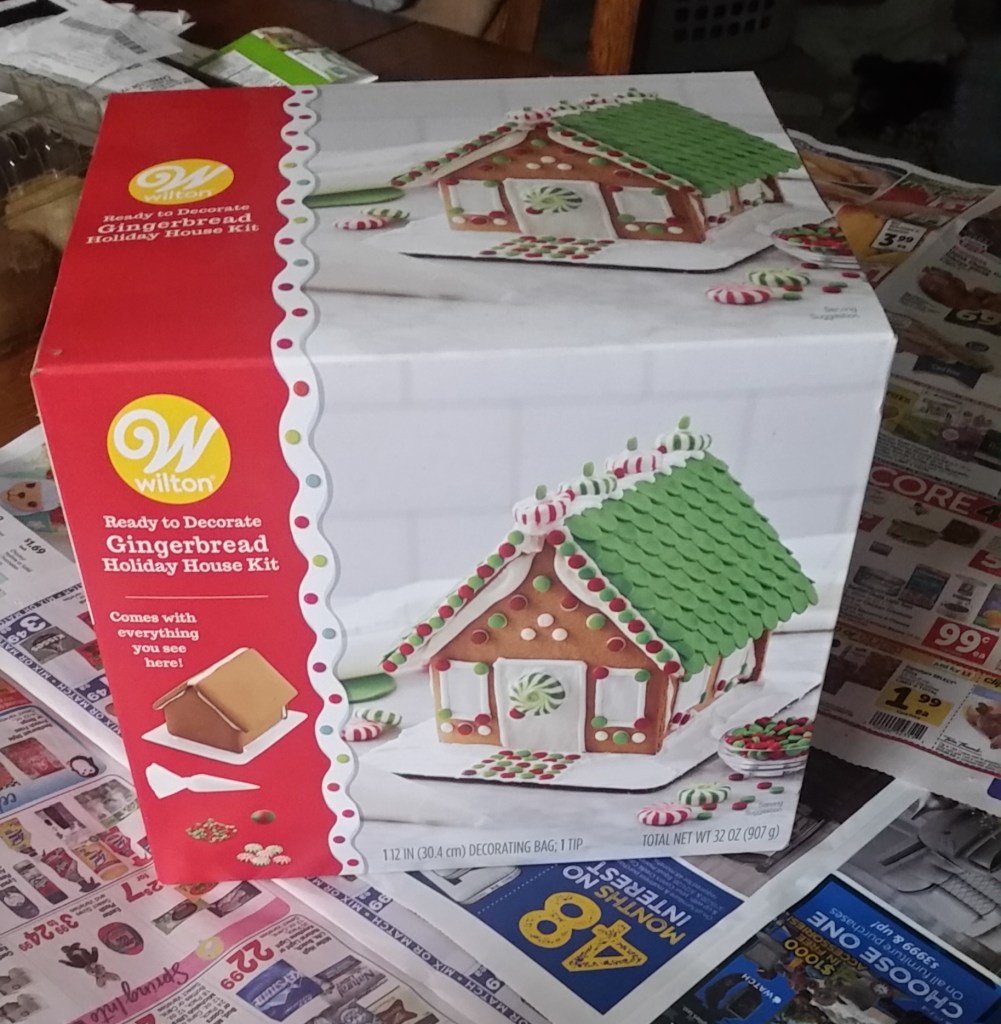
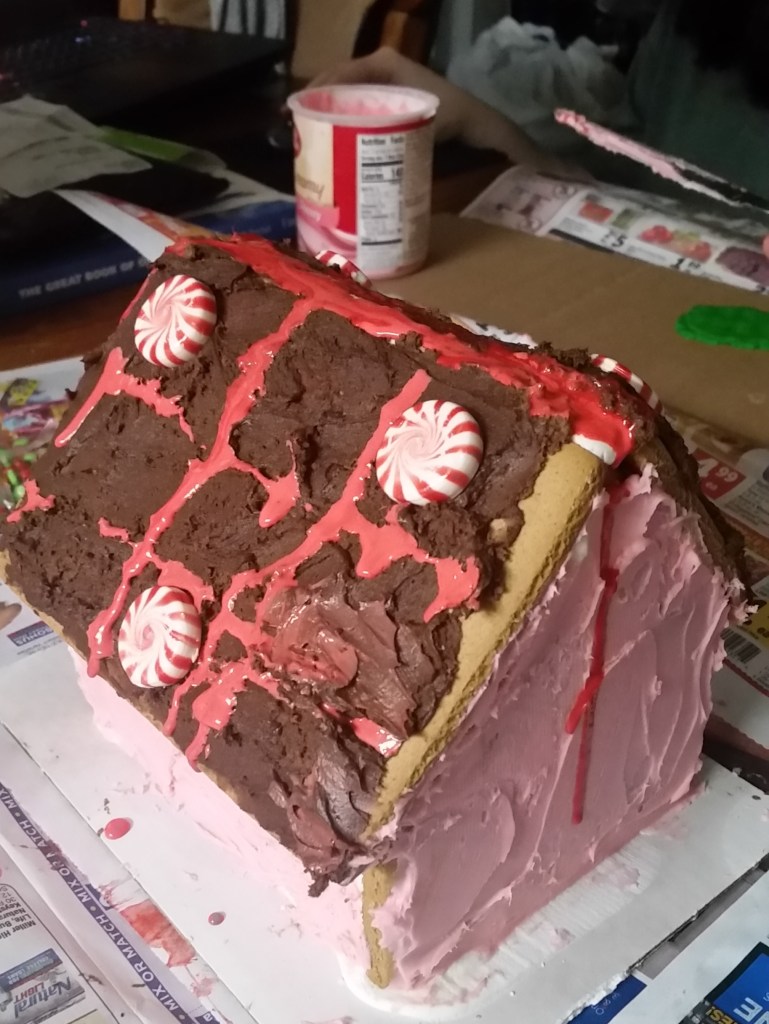
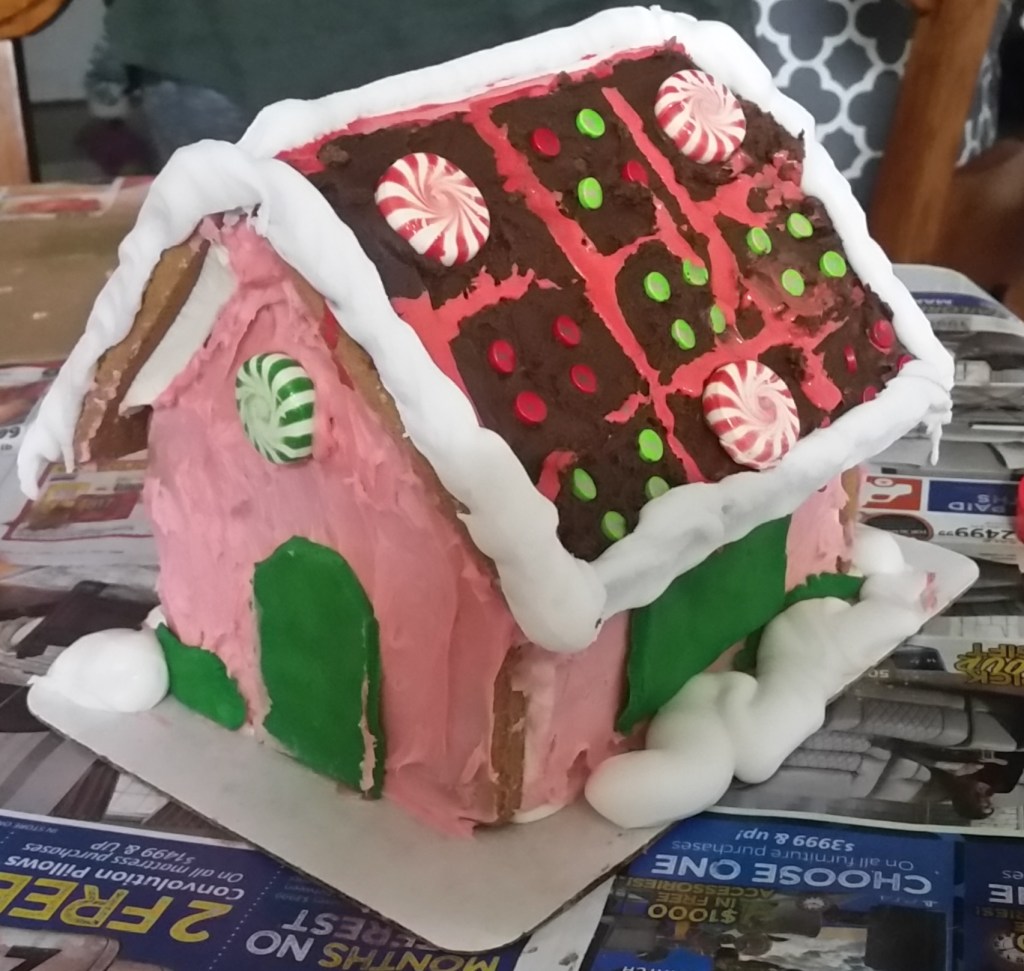
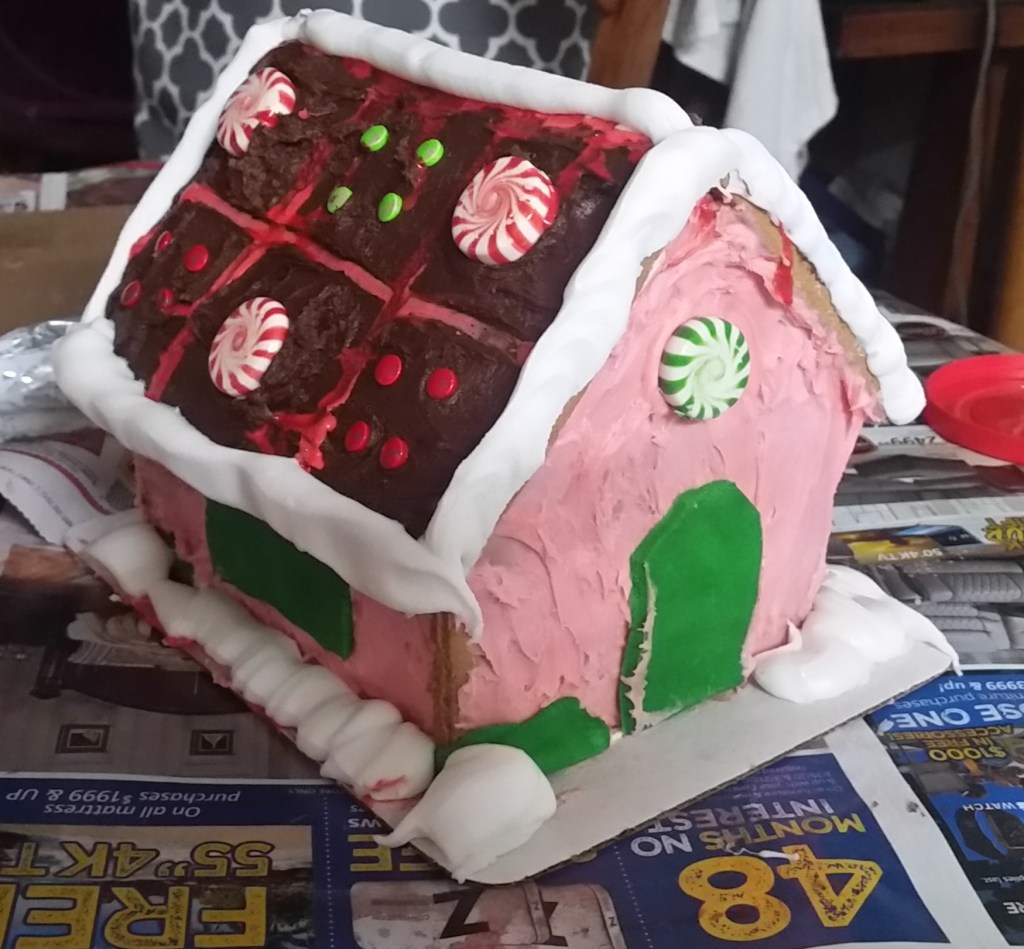
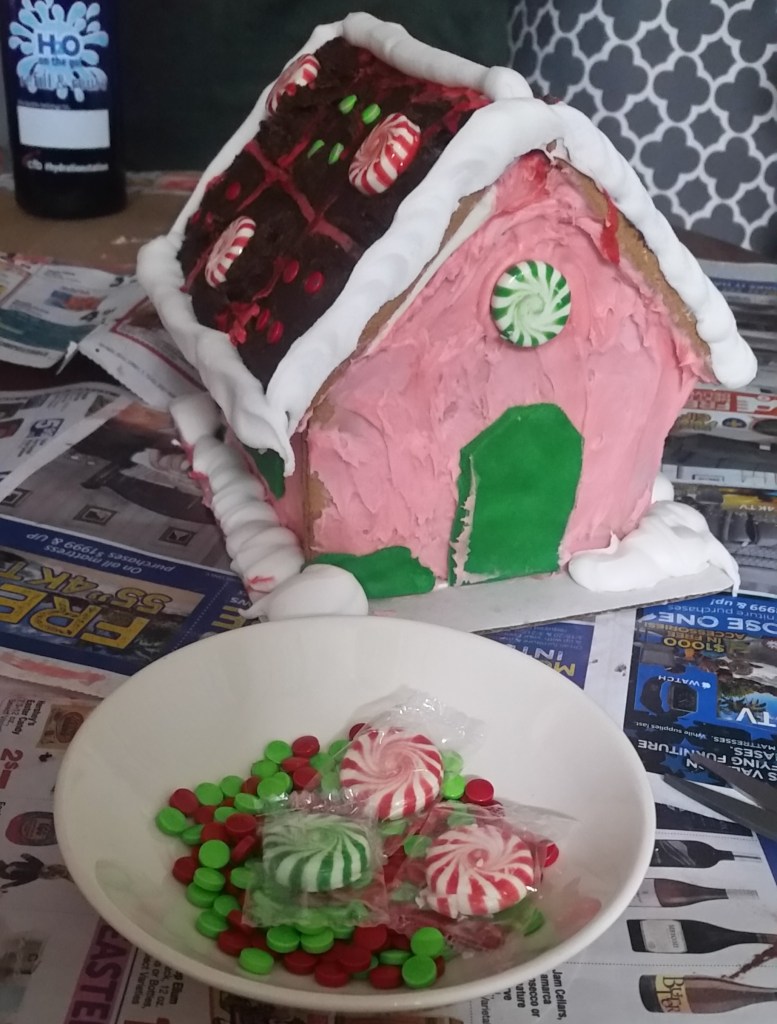
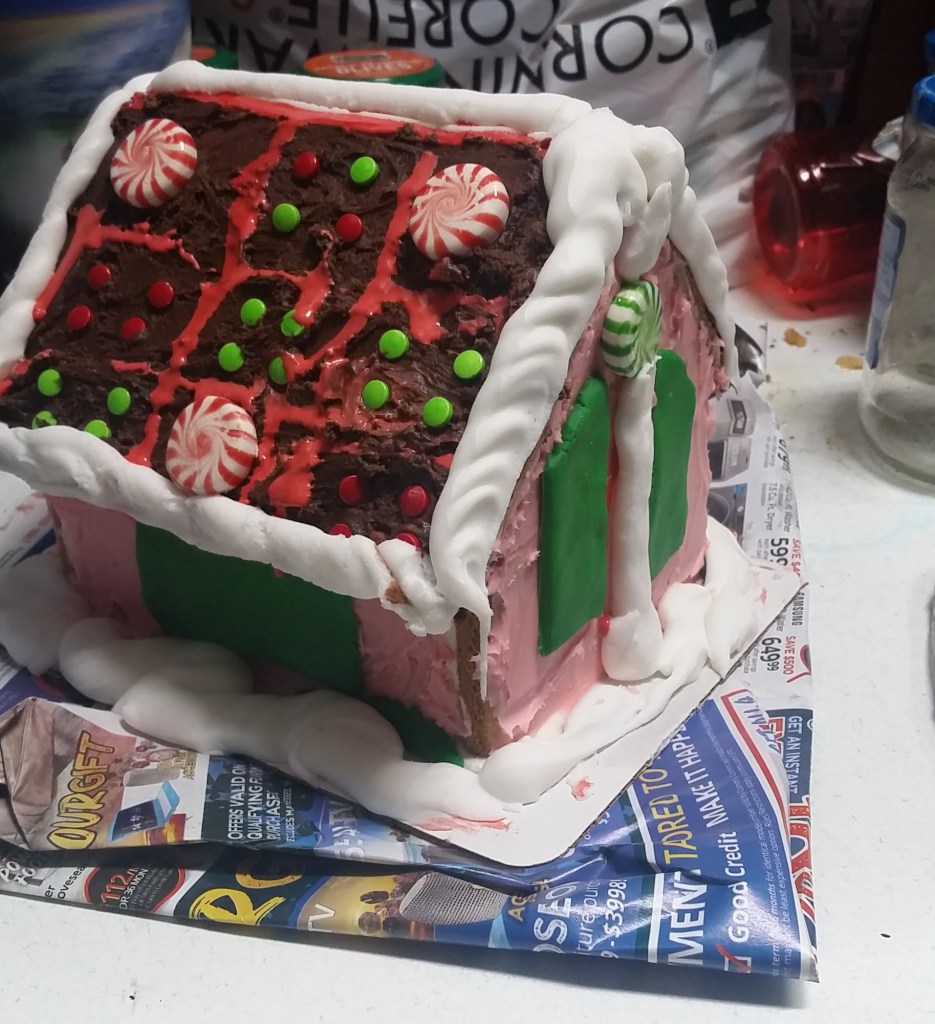
The Coronavirus Isolation has put a lot of new limitations on our lives. But, I happened to have an unused Gingerbread House kit. So, for Art Day, the Princess and I decided to put it all together with supplies we already had on hand. Here, then, is the Beyer Family Gingerbread House 2020.
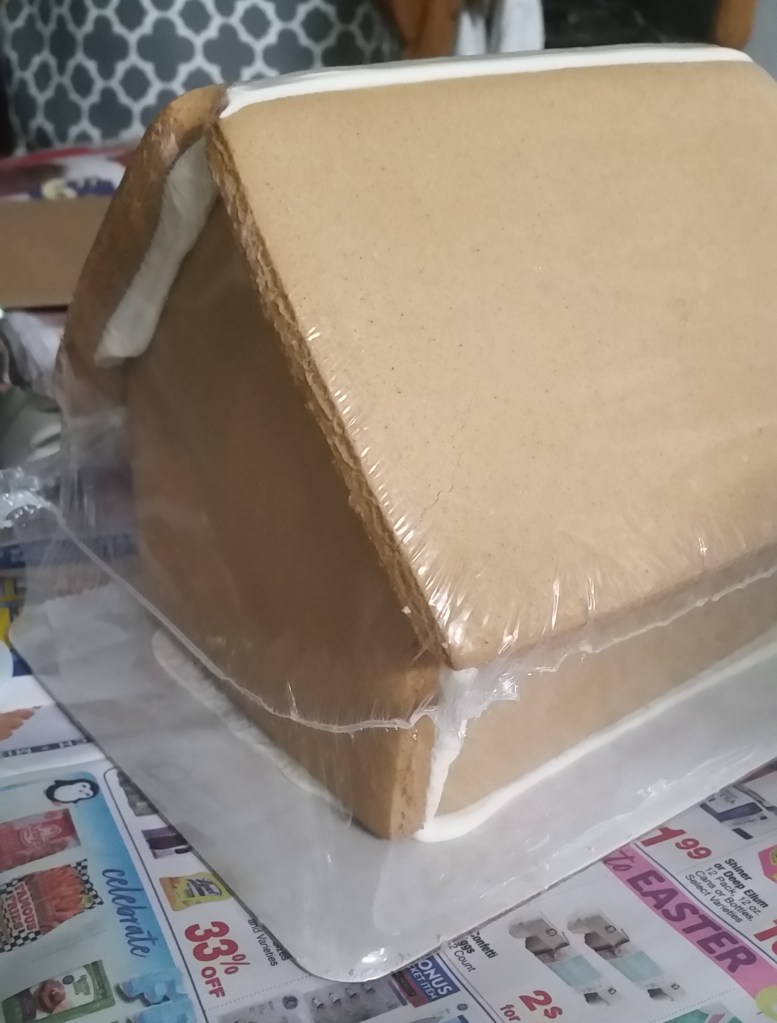
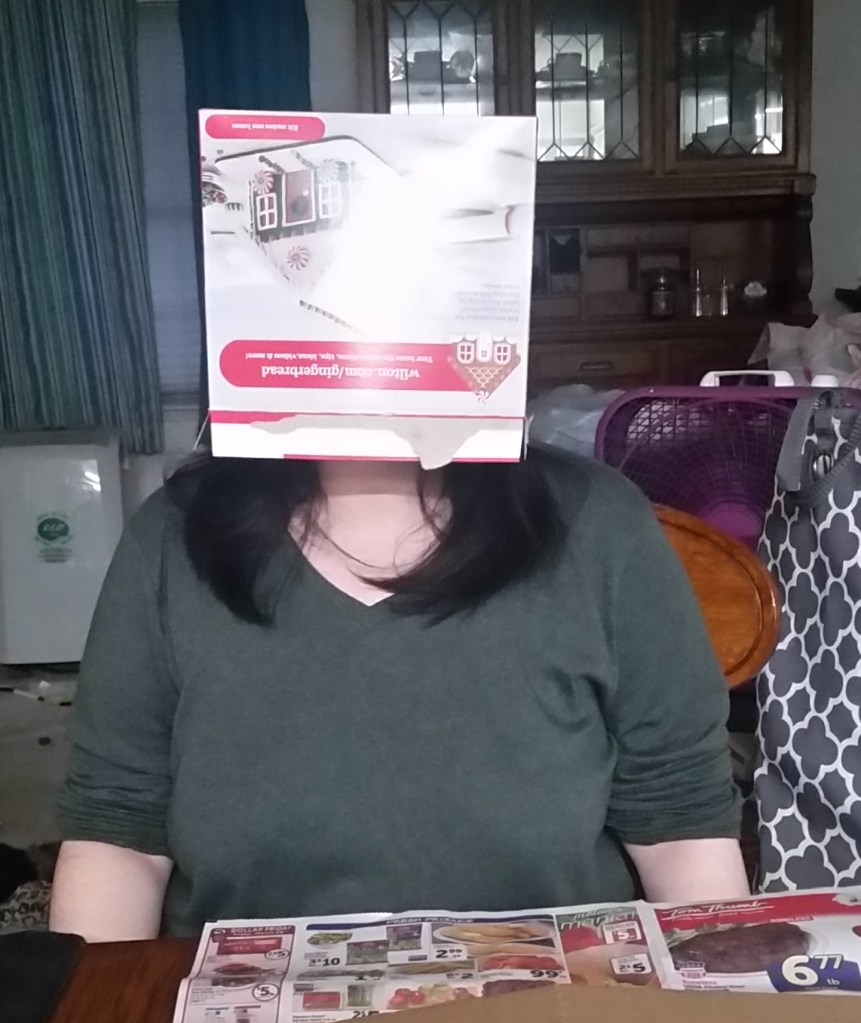
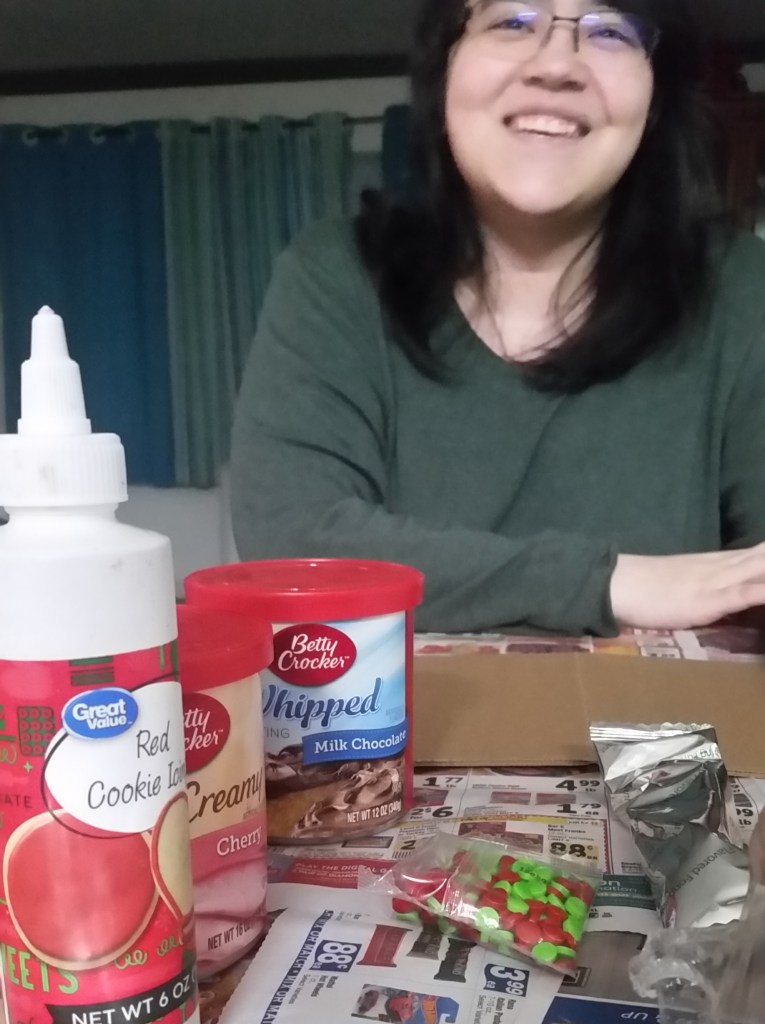
The unopened kit that was just sitting in storage.The surprise inside was that the house was already assembled with concrete-like frosting before we even opened it. This is the first Gingerbread House that we have done without having to use tape and Elmer’s Glue.The Princess decided the box did not make a good hat, but the smell inside it was worth the experiment. Most of the supplies were old and not creamy enough for easy spreading.Some of the frosting went on dry and chunky. But some of the piping frosting was the opposite, more runny than a marathon. Mmm… bad pun.
But, it wasn’t a total disaster. We can use our inherent craftiness to rescue it at least a little bit from total wicked-witch-housiness. Though I am sure Hansel and Gretel would still eat it.
And the other side was a little better.And, as always, the leftovers are edible, though not diabetes-friendly.Now, all that’s is left to do is have the artists eat the artwork in very small bites over a lot of time.
Adagio 14 – The Battle of Farwind (the Blood-red Thread)
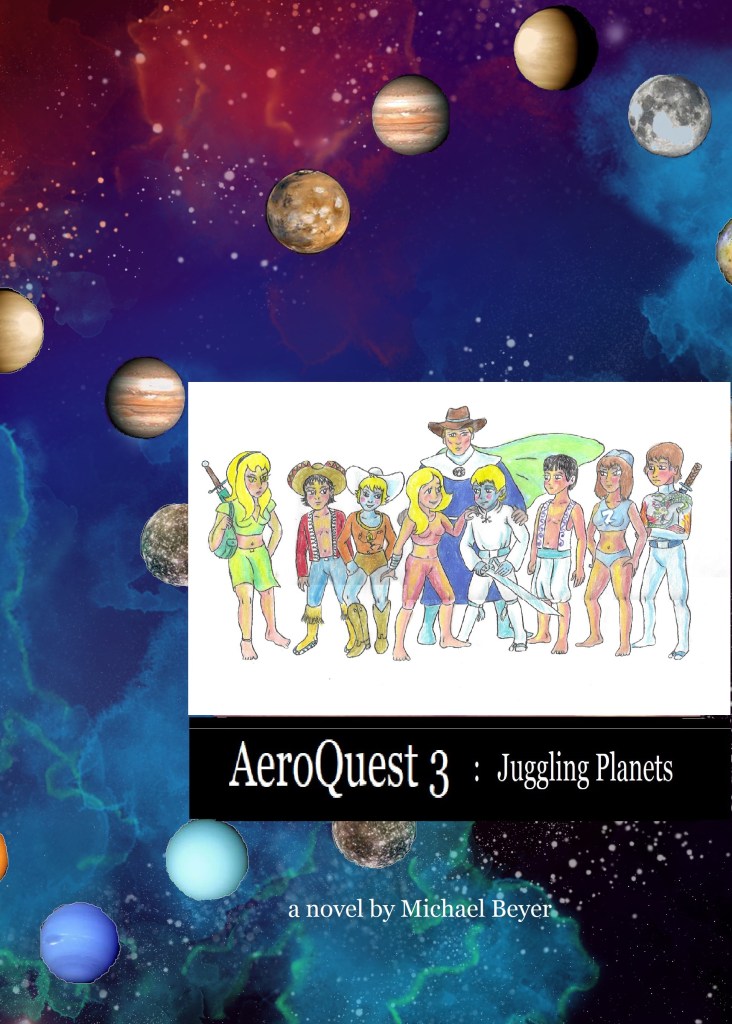
It was amazing to me how few casualties actually occurred in the capture of a planet like Farwind by a handful of commandos led by a traitor. The Battle of Farwind cost the Imperial Defense Force one traitorous commando commander, six unwilling Imperial loyalists, and fifty-two insanely-programmed Mechanoids. Our side lost no one at all. Ninety-two percent of the Imperial forces on the planet switched sides, preferring the command of the charismatic and humble Duke Han Ferrari to the iron-fisted rule of the maniacal Mechanoid Admiral Brona Tang.
Duke Ferrari quickly established a temporarily-appointed government of both like-minded intellectuals and professionals, and highly intelligent and motivated members of the political opposition. Massive elections were planned and were quickly carried out, but Ferrari rode a wave of popular acclaim into office where they would’ve made him Emperor if he chose, just as George Washington of Earth and Toakenn Ailiannaim of Samothrace had done before him. He took the office of Farwind Executive Prime, and made the popular alien entertainer William Bugbright his Executive Second. Bugbright was not a human-born entertainer of aliens, mind you, but a Kritiian, an insectoid alien, that had the head of a giant praying mantis, four chitinous arms, and could play two ukuleles at once while singing popular human songs in a particularly humorous off-key voice. It is little wonder he was the most popular living entertainer on holographic videos since the Galtorrians first discovered I Love Lucy reruns being broadcast on old-time television signals from the nearby planet Earth. Galtorrians, and even Galtorrian-human fusions, as you probably already know, love the comedy stylings of Lucille Ball and Desi Arnaz more than anything else ever used for entertainment on a thousand worlds. Incidentally, did you know that the first Galtorrians to land on Earth were surprised to learn that everything on the planet was not colored only in black and white and shades of gray? They knew about movies and television on their own, but they never actually discovered black and white. Choosing an entertainer as Executive Second was probably the canniest move that Duke Ferrari made in selecting his new rebel government. The Galtorrians and the Galtorrian-Human fusions were all enthralled and easily swayed by entertainers, especially those who could handle humor well. Teachers would never have conquered the Galtorrian Imperium if it hadn’t been for that one factor, humor, and the power of those who are funny.
So, you can see, the conquest of the planet Farwind was easily one of the most confoundingly absurd and easy conquests in recorded history. It was more amazing than Cortez conquering the Aztec civilization because Cortez lost men and had no visible sense of humor in any form that I can see, and I have been there via time machine, though only to watch from the bushes.
Canto 82 – Siege of the Seadome (the Blood-red Thread)
Ham Aero was chafing in the wrist cuffs. He’d been stripped of his yellow and blue combat armor, as had Ferrari and myself. We all lay on the hard metal floor of the seadome brig. Ham was working at the cuffs, seemingly knowing how to break free in a Houdini-esque fashion. He twisted them back and forth, rolling his knuckles over in a very interesting fashion. I have never seen such a form of double-jointedness before.
“I am supposed to execute all three of you,” the black-suited commander was saying. “I know I am supposed to, but I can’t see killing someone like you, Duke Ferrari.”
“Why don’t you let me go, then, soldier?” said Duke Ferrari in his oiliest political voice. He almost seemed sympathetic to our captor and potential executioner.
“Admiral Tang has personally ordered your immediate execution. What will I do?”
At that moment, the Commander of the commando team we came with came in with two armed guards. He still wore his armor and seemed remarkably fit compared to the wear and tear that showed on the rest of us.
“Why haven’t you killed them yet?” he asked of the Black Commander.
“I had to confirm that the orders were not a mistake,” said Blackie.
“Nonsense. You know what the Admiral wants. Just do it!”
“I called Planet Mingo Command to confirm the order before I do it. I don’t want to kill the former ruler who did the most to help my people in his lifetime.” The Black Commander took off his helmet to reveal a snake-eyed Human-Galtorrian face. He was of the fusion race that dominated the Imperium.
“What happened to your loyalty?” Duke Ferrari asked the yellow and blue Commander. “I thought you were on our side?”
“I am. I don’t want his people to claim that you made a mess of things with your little rebellion. The people idolize you, but they don’t realize what is actually good for them. A government of a space empire cannot be a democracy. You have to have order to maintain the rule over so many worlds.”
“Save me from military intellectuals!” moaned Ferrari.
“Give me the fusion gun, Commander,” said our former friend. “I will take responsibility for their deaths.”
“Ruts rowing on here?” said the metallic voice of a mechanoid mutt, possibly a Great Dane.
I looked at Ham. He had his hands free, ready to grab a gun and fight for our lives against impossible odds.
“Commander Doo!” The two commanders stiffly saluted in utter surprise. “What are your orders, sir?” said Commander Blackie.
“I rahnt rorder! Rese men are under the protection of Rord Rayrond King! Roo will not harm them!”
“What? Lord Doo! We have to kill them. They are a danger to the Imperium.”
The snake-eyed commander seemed visibly relieved. It was as if this message from the dog’s mouth was exactly what he wanted to hear.
“Will you release us, then?” asked Duke Ferrari.
“Res!” said the mechanoid dog. “Roo are free. Rord King rahnts it that way.”
“You’re a weasel,” said Blackie. His slug-thrower gave off a quick blast, piercing the traitor in the chest plate of his armor. As he slumped dead to the floor, Ham began freeing us from our cuffs. The Black Commander helped.
“We are grateful,” said Duke Ferrari. How can we repay you?”
The dog-mechanoid looked at us with artificial eyes, creepy eyes. “Roo rill rule Farwind as risely as roo took care of riss sector before. Re are all allies now.” It didn’t seem right to be set free by a mechanical talking dog, at least, not without a set of meddling kids to go with him, but I was in no mood to question our good fortune.
I have looked deeply and longingly at my own writing time and again trying to determine what is good and what is poorly done and what is the best that I have written. How does one examine what is good? What are the standards that you must meet?
I had a writing teacher who was teaching a class in fiction writing and said to us, “You write fiction to create that special bittersweet something, that je ne sais quoi, that you need in order to come to terms with reality. Everything necessary to say something that satisfies a nameless desire.” I wish I remembered his name so I could credit him with having said that wise thing. Or, at any rate, I wish I could remember the name of the wise guy that he was quoting.
So, basically I am trying to capture in prose something that I have no idea what it is, but both you and I will know it if we see it. Easy-peasy, right?
Good fiction that I have read and liked makes me feel something. If it is truly literary quality, like the novels of Charles Dickens, Terry Pratchett, and Mark Twain, it will make me both laugh and cry. Funny things balanced by things that hurt to know and make you weep for characters that you have come to love. If it is a downer kind of novel, as some very good bits of science fiction and horror fiction are, it will make you laugh a little, cry a little, and think a lot; think with dread, or despair, or even impossible hope. Steven King, George Orwell, H.P. Lovecraft, and Ray Bradbury are good examples of this.
I am grappling with how you do that. I am not fool enough to think I am some sort of literary great. I am a school teacher writing stories for school children, stories I wanted to hear when I was a kid. Stories of good versus evil, good people coming together in the face of chaos. Heroes, villains, and clowns being heroic, villainous, or foolish. And themes that both warm and chill your little blue heart.
. So, what can I do besides keep on writing and keep on trying and keep on begging people, fools, and children to try reading my writing because they will like it, even if it is the least best thing I have written?
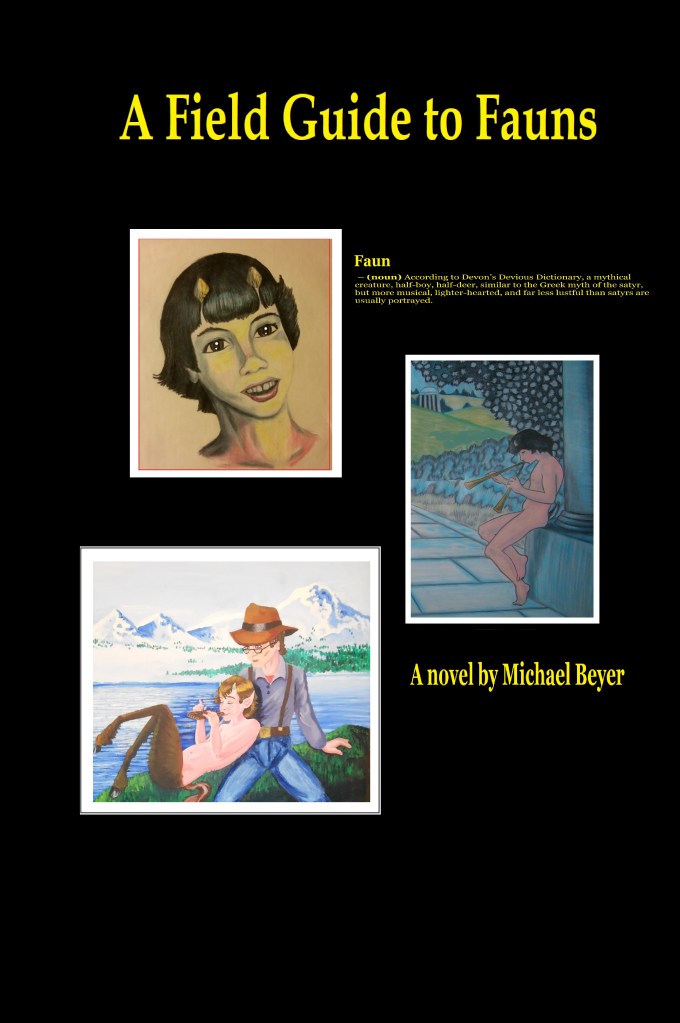
I finished a possible cover for my work in progress, A Field Guide to Fauns. It is a book about re-forming families from tragedies and divorce. It is also about suicidal thoughts and depression. And it takes place in a nudist park where the family has a permanent trailer.
This book will definitely be about some of my own experiences with these things and issues. And I hope to distill a bit of high-quality wisdom from this brewing novel. After all, when it comes to depression and battling it, I have deep scars and burned-in notions of how you overcome them. It is ironic that I know so much about fighting depression and darkness, even though it was mostly about the depression of other people, not me.
I have come to know how to stitch families together out of used and discarded parts. Hopefully not creating a new monster. And again, it is ironic that I know this mostly from other families, not ours.
The book is flowing, practically writing itself. And that is always a sign of a big idea turning itself into a great novel. I look forward to finding out what happens in each and every next chapter… or, in this case, Canto.
Nudists and naturists exist in real life, and some of them read my books!
Because I have characters in a few of my books who are nudists, based on people I have met in real life, my books have caught on with naturists, particularly naturists who write novels about naturism. Ted Bun, a naturist writer and operator of a nudist resort in France, has read and reviewed several of my books so far. You can find his reviews using the link below.
It is a good thing to have your novels read by others. And I am sorta on the edge of being a member of the nudist community on Twitter myself. Of course, my days of comfortably going nude anymore is limited by psoriasis sores, ill health, and disapproval by family members. So, I guess I can only say I am a fictional nudist myself.
I have also been successfully spending time in schools (with all my clothes on) being a successful substitute teacher. I benefited yesterday from the efforts of an excellent teacher as I successfully conducted a U.S. History class with eighth graders all day long. It is rare to have a day when you don’t actively have to stop and redirect bad behavior at least once or twice during the day. But her well-taught series of classroom procedures made my day easy. I only had to tell them I was instituting her every-day discipline plan, and the classes seemed to almost run themselves. Especially in the two LEAP classes (Advanced Placement) . Those classes were heavily populated by students who are first or second generation Indian-Americans. Perry Middle School obviously has a nearby immigrant community of people who are originally from India. And probably smart, professional people too.
I am also still working on my next novel, A Field Guide to Fauns. I am currently at 8,672 words with 32 pages and three illustrations completed. I have been working on it for almost two weeks. It is the story of a boy trying to recover from psychological abuse while trying to fit in with his father’s new family, a stepmother and two twin stepsisters who are nudists, living as full-time residents of a nudist park. I hope the Twitter nudists will love it, but I am not writing it for them. As always, it is a book I am compelled to write.
I am also losing my eyesight. I have glaucoma. Bright lights now fill my field of vision with haze and blurry spots while floaters swimming in my eyes have me repeatedly swatting at bugs that aren’t there. I continue to have symptoms of Parkinson’s Disease, including minor hallucinations. If school children I am trying to be a substitute teacher for ever find out, they will be repeatedly telling me that the misbehavior I am seeing is all a hallucination. So, finishing visual projects has a new urgency now.
My eldest son talked to friends in Oklahoma this weekend about acquiring cheap medical marijuana for my glaucoma. We shall see if I am to become a pot-head or not.
Anyway… this little essay is rather a mixed bag of ingredients, poured into a stew and loosely cooked together with poorly-written transitions. So, I now have done a pinch of this, a pound of that, and the stew must now marinate its very meat in weird broth. How do you like them apples?
Canto 81 – Mong the Miser-like (The Midnight Blue Thread)
Tara Salongi stood next to the conference table in the reception room of the main hall. She wore a diaphanous blue gown that, with its see-through fabric, was quite revealing of her newly-healed feminine form. In fact, it was the kind of dress that, if this story were a Japanese anime, it would be called fan service. But, of course, it was no more so than the fur bikini she had worn for most of her old life back on Don’t Go Here.
At that moment, Emperor Mong, who had summoned Tara, entered through the double-door entrance.
“Ah, the beautiful sorceress Tara Salongi, I believe,” said the sinister looking bald man with the goatee that came to a sharp point under his chin.
“Yes, I am here. What do you want of me?”
“I am told that Wormheart Toadsucker, Admiral Tang’s left-hand sycophant, delivered you here by giving you over to Lord Dark Doo.”
“That is correct, if I know who you are talking about.”
“But the question is, my Lady, why weren’t the admiral’s specific orders carried out?”
“What do you mean?”
“Yes… whatever do you mean, Mong?” said Raylond, appearing from behind a curtain on Tara’s right.
“Excuse me, Lord King. I do not believe it is business you were supposed to know anything about.”
“Am I not one of the ruling triumvirate of this star system with it’s multiple inhabited worlds?”
“Yes, that is so. But the Admiral…”
“Wait a moment… do you mean Admiral Tang started a business in secret that he didn’t want me or Lord Hardretter to learn anything about?”
“That is correct… er, I mean… It was a local matter from another star system that the Admiral wishes to control… for Imperial security reasons.”
“So, tell me, what is the Admiral’s specific plan involving Tara, whom I consider to be under my protection for now?”
“Um, well… Lord King, the fact is… this woman is a dangerous Psion. The Admiral captured her at great personal risk to himself.”
“I am aware that she is a Psion. But we have the proper shielding capability available to us, do we not?”
“Um, yes… but the Admiral wanted to ship her to the planet Djinnistan where Dr. Havir Bloodlust could possibly use his genetics skill to transfer her unique abilities into a suitable Mechanoid or even a controlled genetic Freak.”
“No sir. I will not have it, sir. She is under my protection. Lord Hardretter and I have discussed ways to use her here on our worlds to better life for all of us.”
“Ah, but since Lord Hardretter isn’t here now, and I have the Admiral’s proxy vote in the matter…”
“Ah, but I am here, Mong.” Smoky Hardretter, the teenage ruler of the system’s manufacturing worlds, stepped out from behind the curtain on Tara’s left.
“Lord Hardretter? Uh, are you suggesting you are siding against me and Admiral Tang with Lord King?”
“That is exactly what I am suggesting. We have use for the cooperative and lovely Psion, and two thirds of the ruling triumvirate can overrule even the Imperial Grand Admiral.”
“So, maybe you should go back to playing with your rot warriors and tin men, Emperor Mong, and leave us to the business most beneficial to the Imperium,” said Raylond King.
Mong, white in the face and obviously frustrated, stormed out of the room.
“Thank you, Lord King. And thank you too, Lord Hardretter,” said Tara.
“Think nothing of it,” they both said simultaneaously.
I have been avoiding talking about politics for more than a year even though it is a rich source of potential comedy material. The idiot-criminal President continues to bumble and blather and make money and do crimes he automatically gets away with in spite of the law. It’s easy to jape him and make jokes, but he black-heartedly continues to do things that benefit him and devastate me and the issues I care about.
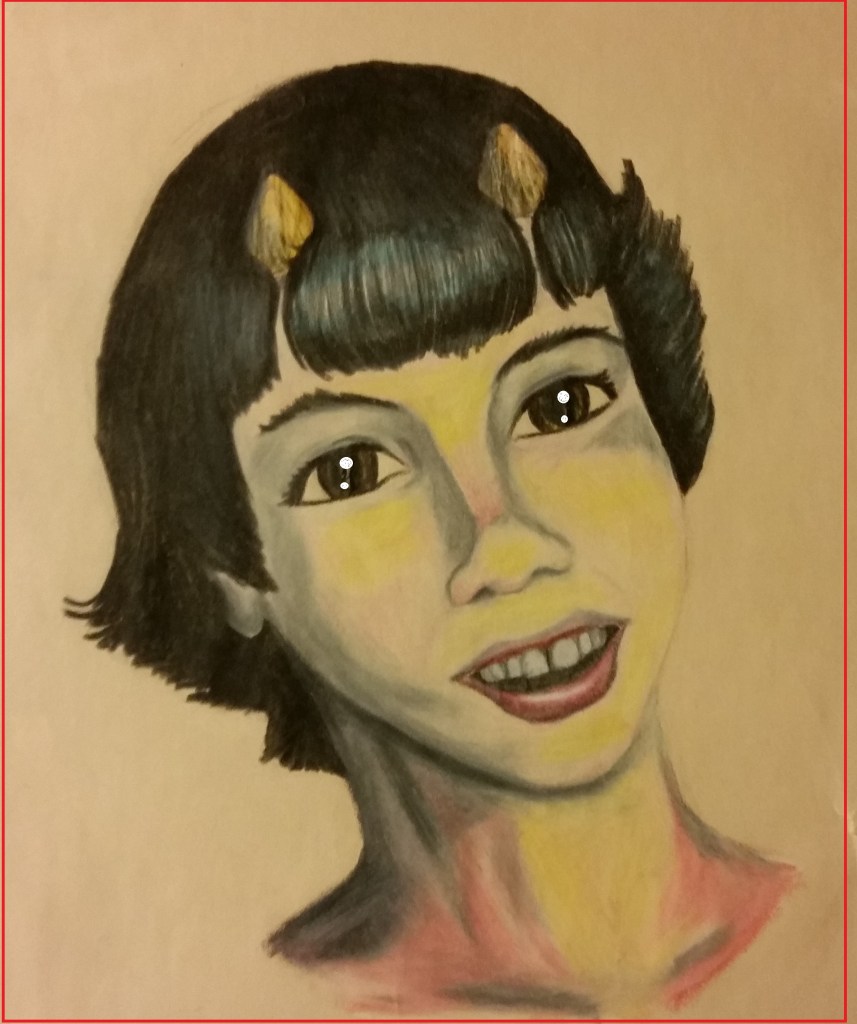
This is Skye Johnson , the newest illustration for my newest novel, A Field Guide to Fauns.
After the South Carolina primary, Bernie Sanders and Joe Biden are now clearly the two leading candidates and most likely to become the Democratic Nominee. I will vote for either one. In fact, if Bloomberg steals it by out-spending everybody else, I’ll even vote for him. Donald Trump is the death of everything I care about in life. His position on health care, the environment, education, the arts, and on and on… is poisonous to my way of life. I may not live to see him defeated in the election. But I hope to last just long enough to be able to vote against the !#$%#%%,
In the meantime, I have forced myself to go back to work in the classroom, the thing that was killing me in 2014. And I have so far avoided the flu and death while making enough money to solve my immediate financial woes. I put in an extra day this last month beyond what I reasonably thought I could survive. And I am feeling good about that, even though I am still unable to afford the health care I need, and still feel awful on a daily basis.
So, do the good things in my near future still outweigh the bad on the scales of my continued existence? I think they do.
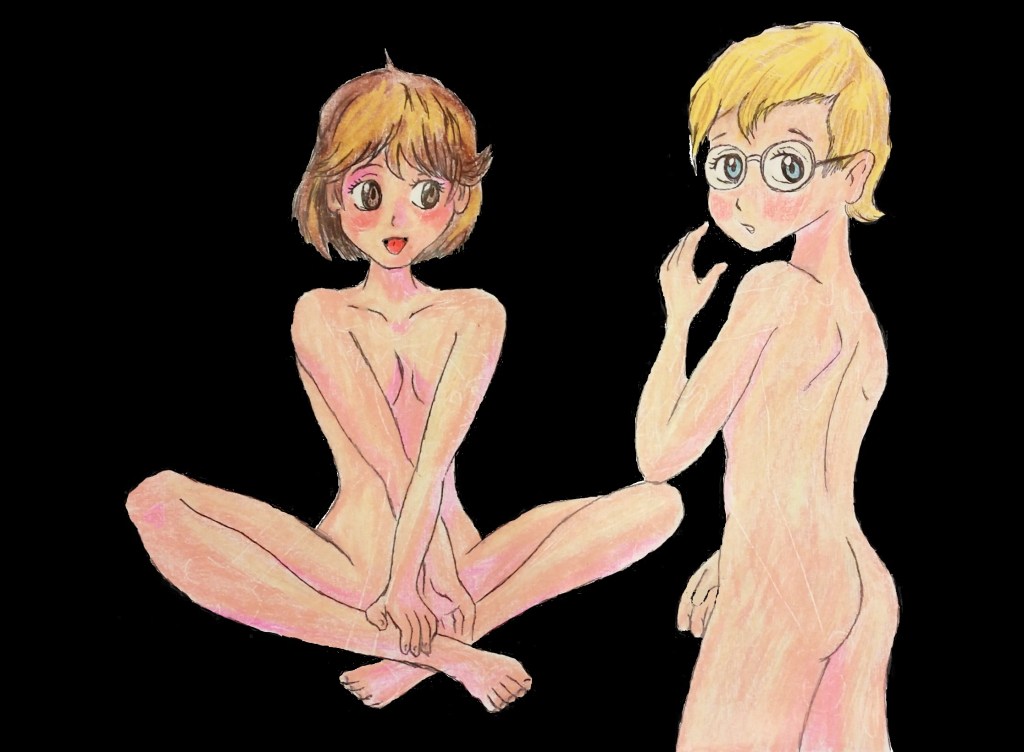
My work in progress, for which I am marshaling my ability to draw fauns, and I am using this blog post to show you illustrations for it, is about life at a nudist park where the family in the story is dealing with the after-effects of child abuse, divorce, and alienation of family members. It is about issues boiling in the stew-pot of my own personal experience. And about how love can ultimately overcome those issues.
Mandy Clarke and Mandy Clarke;s tongue.
I sincerely hope that Trump gets dumped in November. If he wins, and if I am still alive, that misfortune will seal my fate. I will not survive beyond it.
But if you can’t control your fate, and if the airplane is crashing, you might as well enjoy the ride down to the ground. I am doing a novel now that imagines life as a full-time nudist. My family will never accept it in real life, and my skin flakes off with psoriasis almost as badly as a leper, so I will never live that life. But you can do things in fiction that fly far above the limits of your real-life wings.
If I can keep up the work pace as a substitute teacher, I will actually have enough money to get by. That will be a welcome relief. And I might reach a level of life that approximates what I had before 2012… With a bunch of novels in print that didn’t exist before that year. No future fatality will overcome me. I exist here in my words. And words and pictures are my hope and dreams.
Canto 80 – Jungle Darkness and Damnthings (The Green Thread)
Running and sweating in the jungle darkness had begun to get very old.
“Climb a tree!” ordered King, pounding down the jungle path behind Hooey and Culver. The damnthing, a huge, smelly pig-dog sort of predator, was close on their heels and all three men were beginning to tire.
A large, gnarled tree loomed straight ahead. King leaped and caught its lower branches, swinging himself up into the lower branches like Johnny Weissmuller playing Tarzan on steroids. Dr. Hooey imitated him to the very best of his ability, meaning he was as graceful as a hundred pounds of chopped liver being flung through the air by a baboon that had drunk three too many cups of coffee. The good doctor managed to lodge himself on a branch just above the apex of the damnthing’s leap, though he was hanging upside down by one knee hooked over the branch.
“Help me! I’m the expendable one!” cried Willie Culver as he missed the branches and tumbled butt first into the undergrowth.
“Dang it!” swore King Killer, “I told you that we were ALL going to make it!” He leaped down from the branch that held him directly in front of Willie Culver. “You do not have permission to die right now!” he swore.
Unfortunately, directly behind King, the snorting damnthing lumbered up and came to a gum-gnashing, teeth-grinding halt so close that its spittle ran down into the back of King’s collar.
“Oh, Gawd…” prayed Willie. The pale expendable sidekick scrambled out from under King and used his fingernails to claw his way up the side of a foul-smelling babuti tree. Babutis were an exotic form of alien tree that existed on several jungle planets which sprouted gorgeous orange and yellow flowers, but smelled so bad they made your eyes water like raging rivers. The damnthing moved first to grab Willie, but the smell wrinkled its big pignose and resulted in the damnthing turning its attention to the Corsair King of Killing.
King, partly frozen in place by the vague hope that the thing’s vision was based on movement like he’d seen in an ancient Earther video about a dinosaur park, and partly winding up his interior springs for the leap of his life, slowly turned his head to stare right down the slavering gullet of the huge, nasty pig-dog thingy.
“King, old buddy, you can’t die here either, you know,” admonished Hooey from his upside-down perch.
“I’m working on it,” said King. His legs were taut with stored energy, ready to leap. He vaulted forward at the same instant that the damnthing struck with its big-piggy chompers. The beast growled. King screamed. Big pig teeth pierced the flesh of his shoulder.
“Aaargh!”
“Oh, no!”
“King! My gawd!”
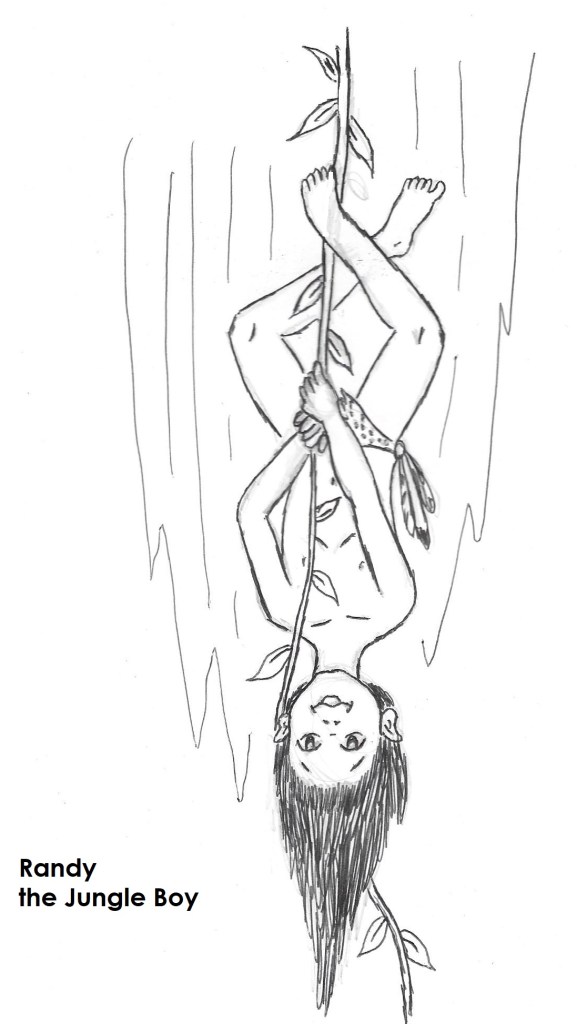
Just as it seemed that the damnthing would devour the King, a sudden flesh-colored flash came blazing out of the canopy on a sort of bungee vine. It was a relatively small boy wearing nothing but some furry animal skins tied around his delicate parts. He grabbed on to King with a grip of steel, and then the bungee pulled them both back up into the canopy, ripping King’s flesh out of the very mouth of death and dismemberment.
The damnthing, stunned in its piggy surprise, blinked twice, and abruptly walked away into the jungle.
“What was that?” asked Willie, clinging to the bark of his smelly tree.
“That would have to be Randy the Jungle Boy,” said Hooey, without missing a beat. “He’s not the only weird character we are about to meet in this jungle.”
“You knew what was going to happen?”
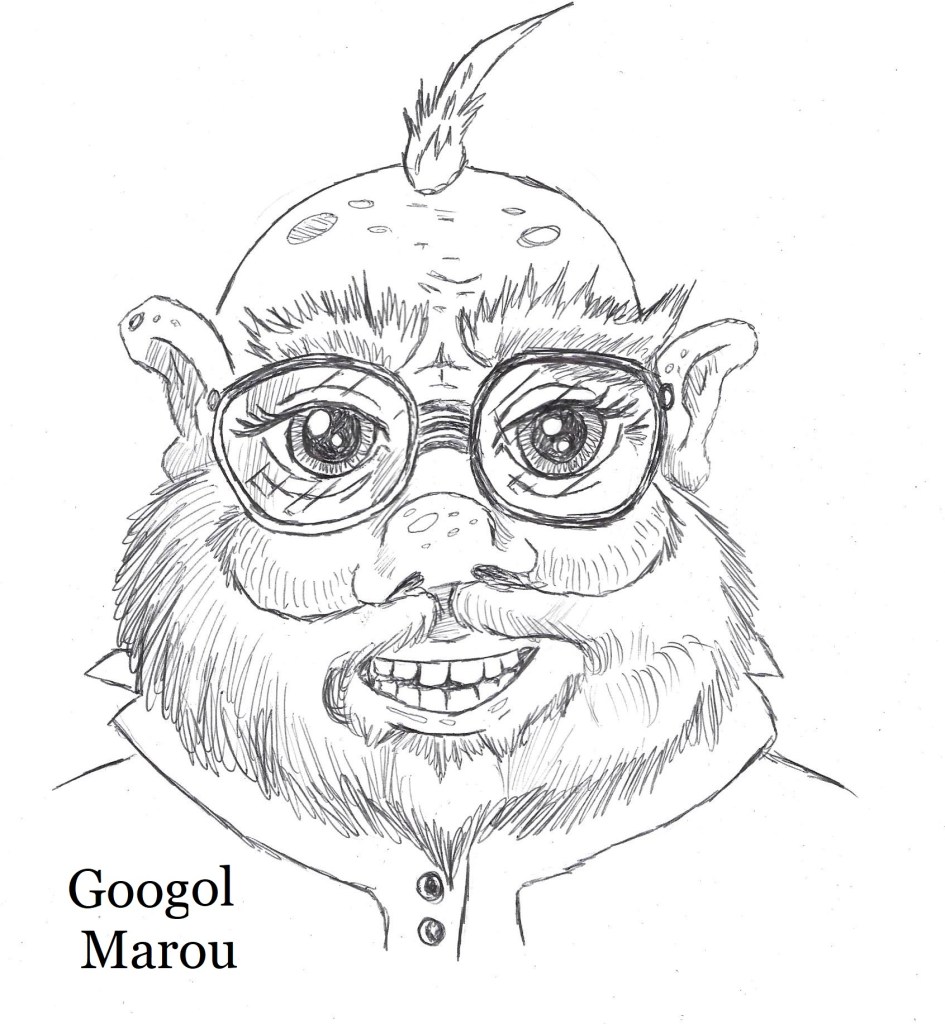
“Well, some of it. I read about it in Googol Marou’s book, which I read in the future. Of course, the timeline has been altered again, so I can’t predict anything with certainty.”
“Why? What’s changed?”
“You were supposed to be the pig-dog’s lunch. So, I guess you have to write your own destiny from here on, Willie Culver.”
Willie’s eyes grew round with sudden fearful gratitude to King Killer. And it would only take another chapter or two for his heart to actually start beating again.

 Catch a Falling Star
A Fatal Case of Hope
I have been avoiding talking about politics for more than a year even though it is a rich source of potential comedy material. The idiot-criminal President continues to bumble and blather and make money and do crimes he automatically gets away with in spite of the law. It’s easy to jape him and make jokes, but he black-heartedly continues to do things that benefit him and devastate me and the issues I care about.
After the South Carolina primary, Bernie Sanders and Joe Biden are now clearly the two leading candidates and most likely to become the Democratic Nominee. I will vote for either one. In fact, if Bloomberg steals it by out-spending everybody else, I’ll even vote for him. Donald Trump is the death of everything I care about in life. His position on health care, the environment, education, the arts, and on and on… is poisonous to my way of life. I may not live to see him defeated in the election. But I hope to last just long enough to be able to vote against the !#$%#%%,
In the meantime, I have forced myself to go back to work in the classroom, the thing that was killing me in 2014. And I have so far avoided the flu and death while making enough money to solve my immediate financial woes. I put in an extra day this last month beyond what I reasonably thought I could survive. And I am feeling good about that, even though I am still unable to afford the health care I need, and still feel awful on a daily basis.
So, do the good things in my near future still outweigh the bad on the scales of my continued existence? I think they do.
My work in progress, for which I am marshaling my ability to draw fauns, and I am using this blog post to show you illustrations for it, is about life at a nudist park where the family in the story is dealing with the after-effects of child abuse, divorce, and alienation of family members. It is about issues boiling in the stew-pot of my own personal experience. And about how love can ultimately overcome those issues.
I sincerely hope that Trump gets dumped in November. If he wins, and if I am still alive, that misfortune will seal my fate. I will not survive beyond it.
But if you can’t control your fate, and if the airplane is crashing, you might as well enjoy the ride down to the ground. I am doing a novel now that imagines life as a full-time nudist. My family will never accept it in real life, and my skin flakes off with psoriasis almost as badly as a leper, so I will never live that life. But you can do things in fiction that fly far above the limits of your real-life wings.
If I can keep up the work pace as a substitute teacher, I will actually have enough money to get by. That will be a welcome relief. And I might reach a level of life that approximates what I had before 2012… With a bunch of novels in print that didn’t exist before that year. No future fatality will overcome me. I exist here in my words. And words and pictures are my hope and dreams.
2 Comments
Filed under artwork, autobiography, commentary, humor, illustrations, NOVEL WRITING, Paffooney, strange and wonderful ideas about life
Tagged as A Field Guide to Fauns