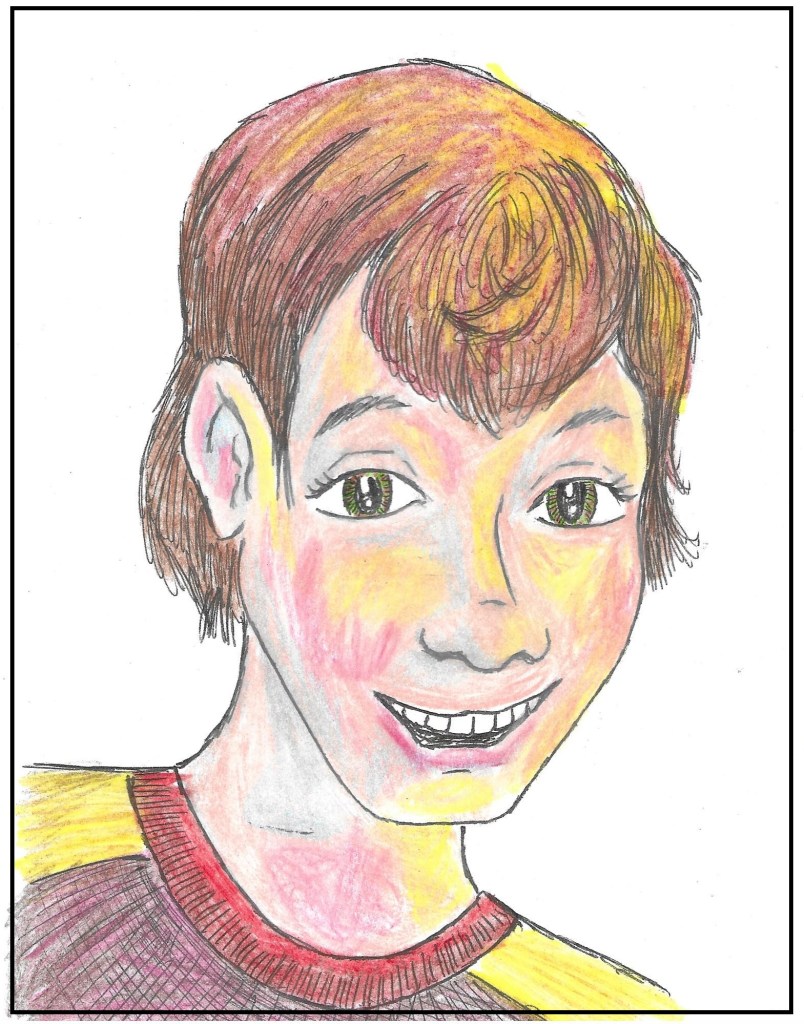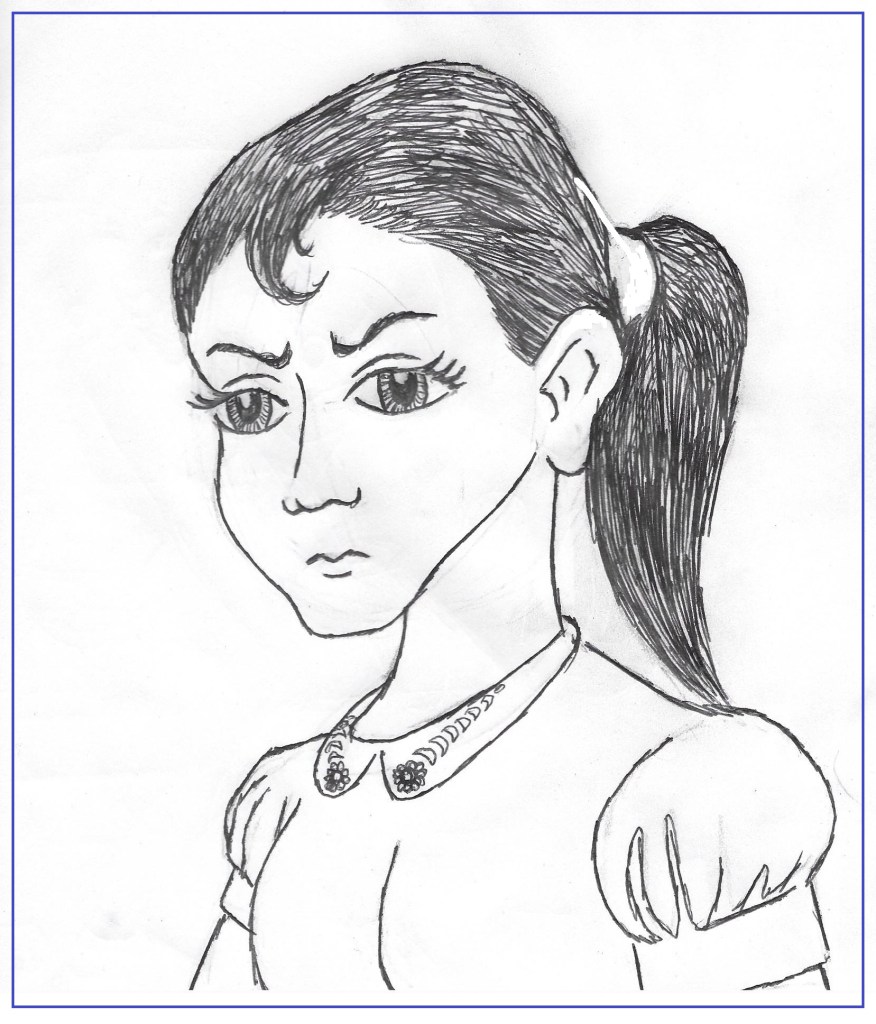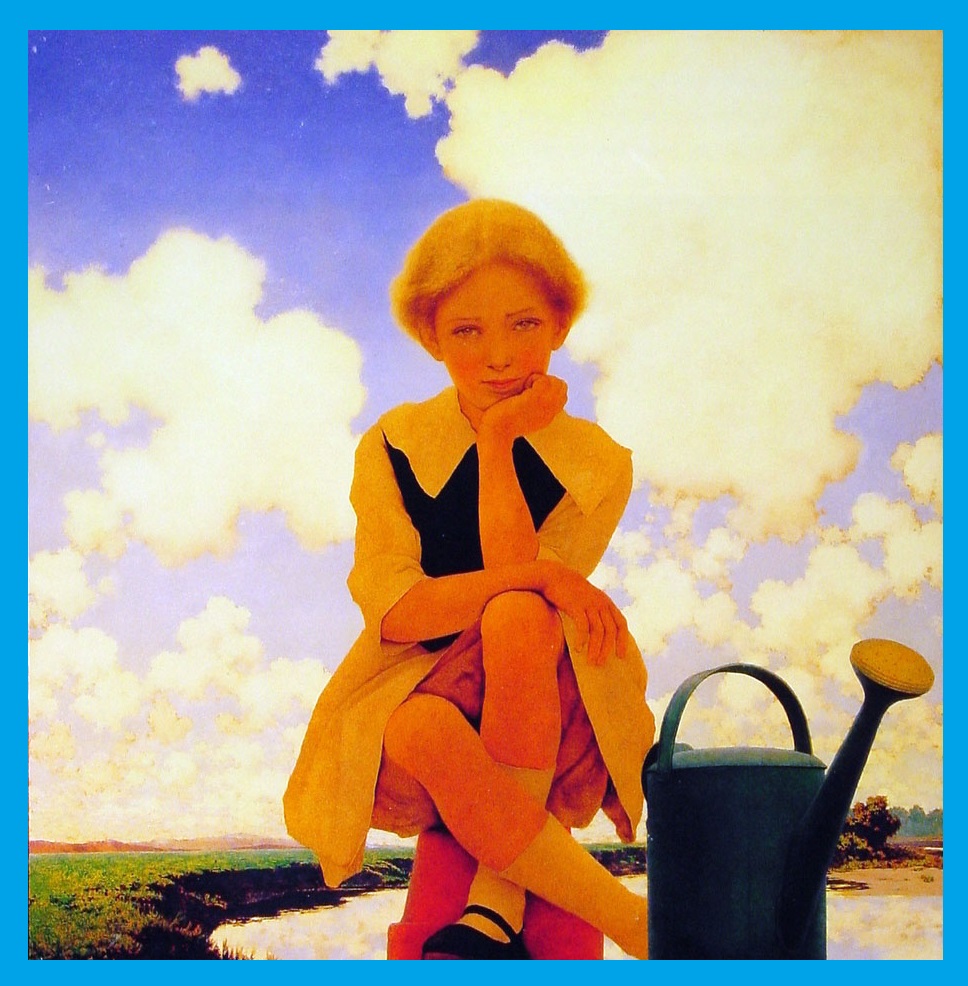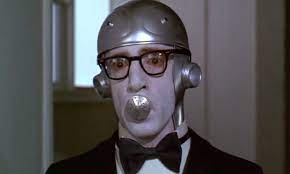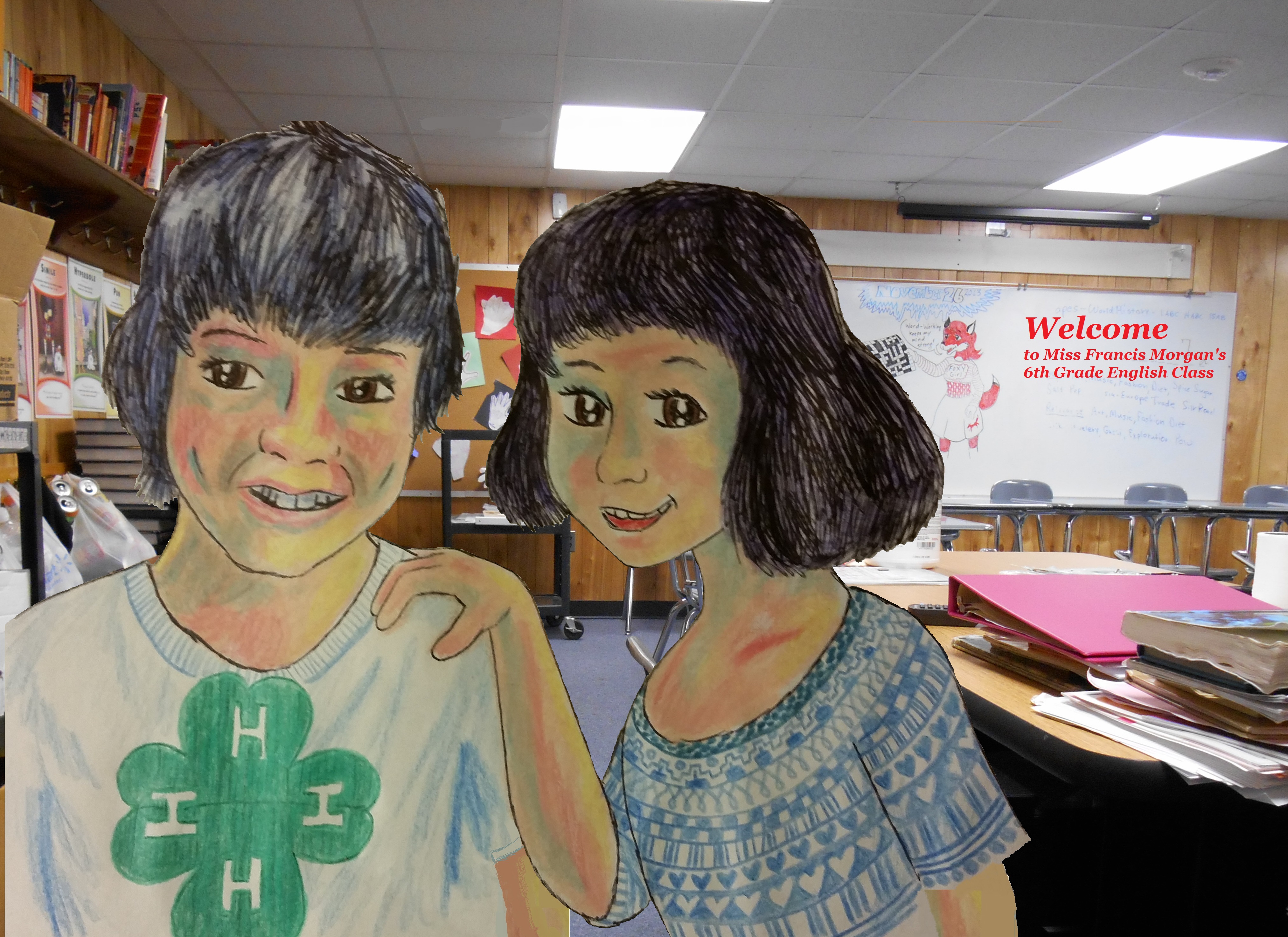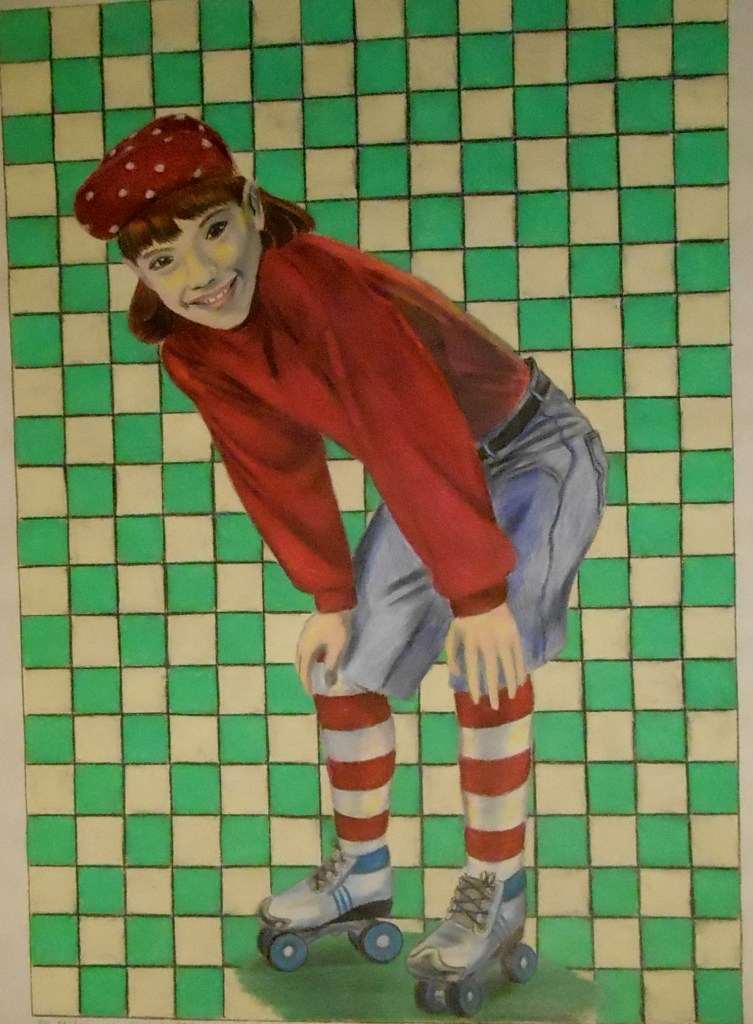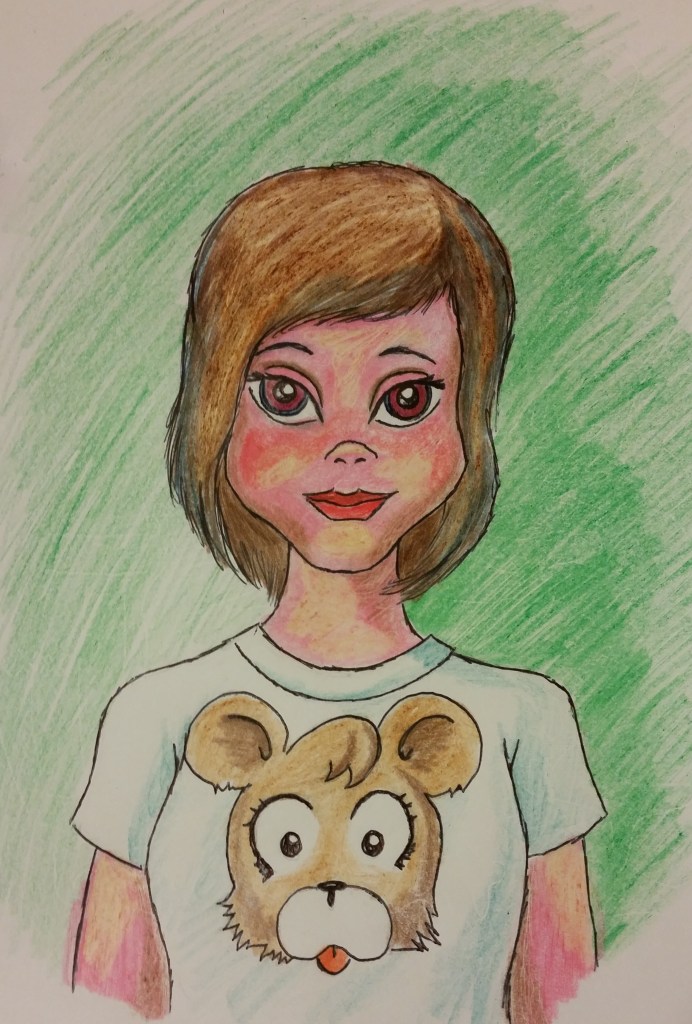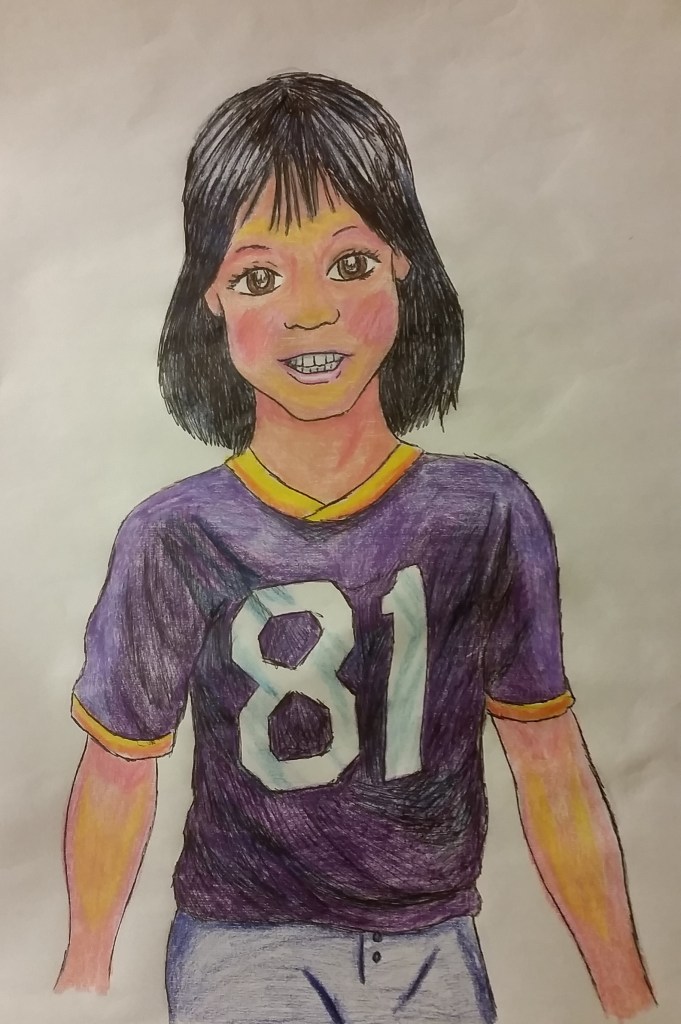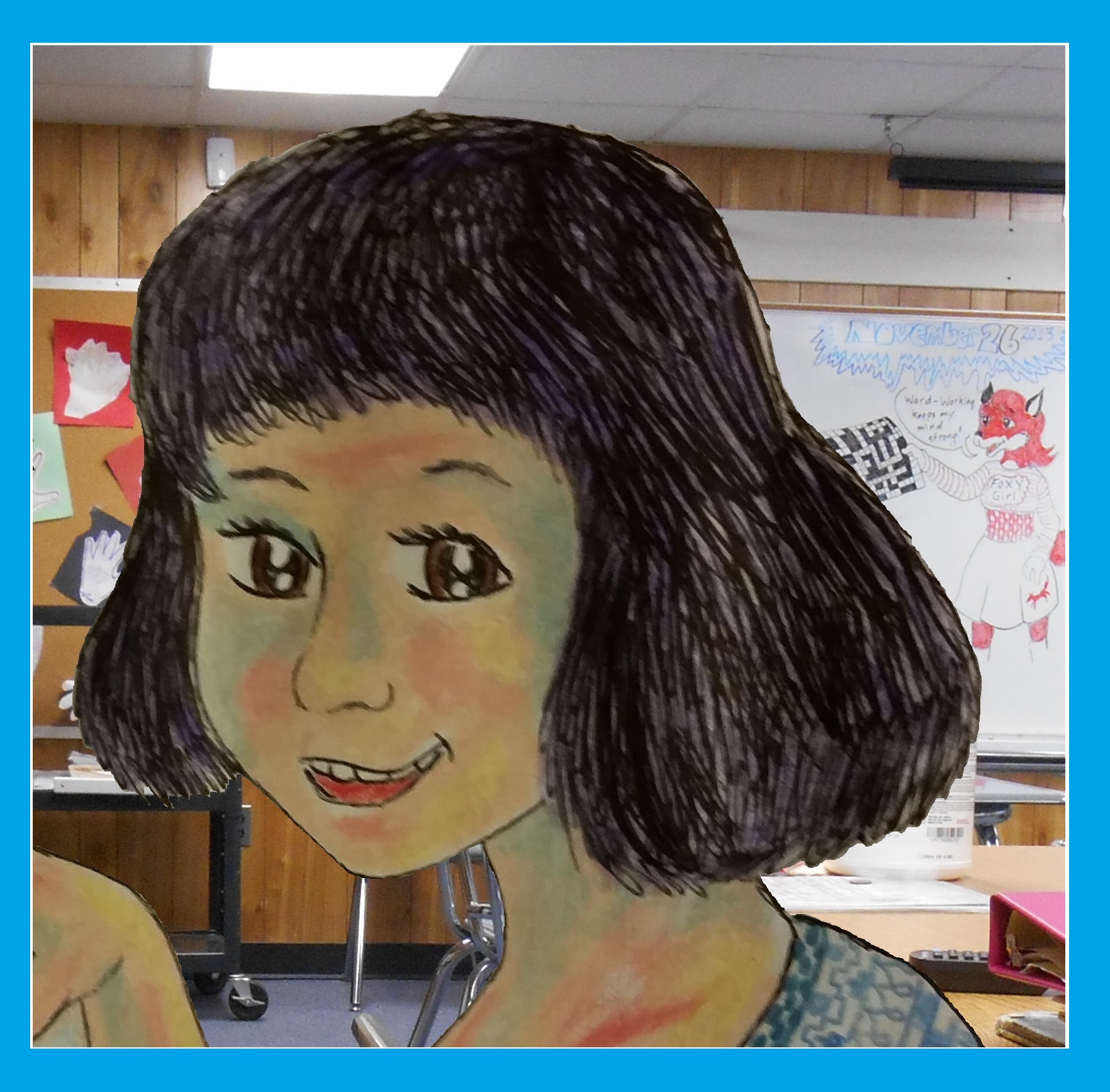
Okay, this is the essay part. That first part is a terrible poem written by me to illustrate how to make your own found poem. Of course, you should know that I was not a natural-born poet. I am among the lower percentages of America’s worst-possible poets. Right there somewhere between the poetry books of Farley Bumbletongue and the Collected Musings of Hans Poopferbrains of Snarkytown, Wisconsin.
But I take great pride in my abilities as a terrible poet. You see, what I mainly was, truly was, was an English teacher of middle school and high school kids. And found poems were an activity in the classroom intended to teach writing skills, creativity, and an appreciation of what a poem actually is.
I needed a large usable picture file cut out of Christmas catalogs, Walmart advertisements, newspapers, magazines (“What are those?” is the most common comment you would get out of today’s classrooms,) grocery-store bargain flyers, outdated calendars, and any other non-pornographic picture sources available.
I would hand out three random images pulled out of the picture file without looking at them to each student (or small groups of students) and then require them to create a poem of at least twelve lines with an optional rhyme scheme and rhythm.
I would have to remind them not to eat the pictures, even if they were pictures of food. And with middle school students I would have to have extra pictures for the next class to replace the ones they ate anyway.
I would tell them there was a time-limit, specified to be much shorter than the actual time I planned to give them, and then let them create horrible poetry. Near Vogon quality in its horribleness.
When all of this was done, we would have a good long laugh by sharing the pictures and poems, and find out who the truly wacky and perverted poets were.
Now, don’t go telling parents that we teachers are wasting their children’s precious learning time this way, but it is not a lesson I created. Simply a lesson I used at least once every year.
But the real question on my mind is, “Given three random pictures, what kind of poem would you write?” Feel free to share.
I was a school teacher for thirty-one years, and in spite of the immense amount of brain damage that builds up over time, especially as a middle-school teacher, I think I know what we’ve been doing wrong.
We need to take a look at an education system where things are working better than they are here.
Now, I know you probably didn’t click on the boring video about school. Heck, you probably aren’t even reading this sentence. But I can summarize it and put it in easy-to-understand words. Finland does not have to educate as many poor and disadvantaged kids as this country does. The video gives five ways that Finland does it better, but all of them boil down to the basic notion that the country is more homogeneous and uniformly middle-class than ours is. Still, we can learn things from them.
The first of the five ways that Finland does it better is a difference in government. While U.S. governmental safety-net programs blame people who need food stamps for being lazy (even though some of them work 40-hour work weeks in minimum-wage jobs), Finland gives a huge package to parents of everything they might need as soon as their child is born. As long as the child is in school, the government does many things to support the family’s efforts to educate them. Imagine what we could accomplish here if we invested some of the vast fortune we give to corporations in subsidies into educating poor black and Hispanic children instead. Children have a hard time learning in school when they come to school hungry. If we could only feed them better, the way the Fins do, we would revolutionize our classrooms.
The second point the video makes is the biggest suds-maker every time I get on my teacher’s soap box. They don’t give kids homework and they only give them one standardized test when they leave high school. I have recently covered this topic more thoroughly in a post in which I was able to ridicule Florida governor Rick “Skeletor” Scott. (Boy, did I enjoy doing that.) But I won’t go into all of that again here.
The third thing is respecting teachers. In Finland they treat teachers with the kind of respect that they give to doctors and lawyers. How cool is that? In Texas, calling someone a teacher is an epithet. If a teacher is liked or even loved by their students, administrators are encouraged to keep a closer eye on them to figure out what’s wrong. Students are supposed to hate their teachers and sit all day filling out mind-numbing test-preparation worksheets. Imagine what it could be like if teachers weren’t the scum of the earth. They might actually have students convinced that learning goes on in their classrooms.
The fourth point is that Finland does not try to cram more and more memorized details into young brains so they can spit it all back out on a test. They take students thoroughly into the subject of study, and at a slower, easier pace. They dive deep into the river of learning instead of wade through the wide and shallow parts. All questions get answered. And by that, I mean, student questions, not teacher questions. The learning is student-centered.
Finally, the video states that Finland simply has fewer social ills in their country to get in the way of good quality education. But even though the work is harder in this country, the potential is really there to go far beyond what Finland is capable of. We have a natural resource that is totally untapped in this nation. We don’t develop the minds of a majority of our children in any meaningful way. And I can tell you from having done it, you can teach a poor or disadvantaged child to think. You can give them the tools for academic, economic, and personal success. You can make them into valuable human beings. But you should never forget, they are already precious beyond measure. We just ignore and trash that inherent value. So, the information is out there about how to do a better job of educating our children. We need to follow through.
I have never been an attention-seeker. In the Elysian Fields of modern society, I have never really been the honeybee. I have always been the flower. I had a reputation in high school for being the quiet nerd who ends up surprising you immensely in speech class, at the science fair, or at the art show. I was the one they all turned to when everybody in the conversation had already had their chance to strut and pontificate and say dumb things, and they were finally ready to get the solution to the problem being discussed, or the best suggestion on where to begin to find it.
When I became the teacher of the class instead of the student, I had to make major changes. I had to go from being patient, quiet, and shy to being the fearless presenter, forceful, sharp as an imparter of knowledge, and able to be easily understood, even by the kids whom you couldn’t legally call stupid, but were less than smart, and not in a pleasant Forrest Gump sort of way.
Shyness is only ever overcome by determination and practice. The standard advice given is to picture your audience naked so that you are not intimidated by them. But if your audience is seventh graders, you have to be extra careful about that. They are metaphorically naked all the time, ready at a moment’s notice to explode out of any metaphorical clothing they have learned to wear to cover the things that they wish to keep to themselves about themselves. And while you want them to open up and talk to you, you don’t want the emotional nakedness of having them sobbing in front of the entire class, or throwing things at you in the throes of a mega-tantrum over their love-life and the resulting soap operas of betrayal and revenge. And you definitely don’t want any literal nakedness in your classroom. (Please put your sweat pants back on, Keesha. Those shorts are not within the limits of the dress code.) Calling attention to yourself and what you have to say, because you are being paid to do so, is a critical, yet tricky thing to do. You want them looking at you, and actually thinking about what you are saying (preferably without imagining you naked, which they will do at any sort of unintentional slip or accidental prompting.) The ones who ignore you are a problem that has to be remedied individually and can eat up the majority of your teaching time.
I trained myself to be fairly good at commanding the attention of the room.
But now that I am retired, things have changed. I can still command attention in the room, which I proved to myself by being a successful substitute teacher last year. But I no longer have a captive audience that I can speak to five days a week in a classroom. Now my audience is whoever happens to see this blog and is intrigued enough by the title and pictures to read my words.
Now that I am retired and only speaking to the world at large through writing, I am ignored more than ever before. Being ignored is, perhaps, the only thing I do anymore. It is the new definition of Mickey. Mickey means, “He who must be ignored. Not partially, but wholly… and with malice.”
I put my blog posts on Facebook and Twitter where I know for a fact that there are people who know me and would read them and like them if they knew that they were there. But the malevolent algorithms on those social media sites guarantee that none of my dozens of cousins, old school friends, and former students will see them. Only the single ladies from Kazakhstan and members of the Butchers Union of Cleveland see my posts. Why is this? I do not know. Facebook and Twitter ignore me when I ask.
My books, though liked by everybody who has actually read and responded to them, are lost in a vast ocean of self-published books, most of which are not very good and give a black eye to self-published authors in general. I recently got another call from I-Universe/Penguin Books publishers about Catch a Falling Star, the one book I still have with them. They are concerned that my book, which is on their Editor’s Choice list, is not performing as well as their marketing people think it should. But to promote it, I would have to pay four hundred dollars towards the marketing campaign, even though they are already subsidizing it by fifty percent. They tell me they believe in my book. But apparently not enough to pay for 100% of the promotion.
I have decided to invest in a review service that will cost me about twenty dollars a month. But my confidence is not high. The last time I paid somebody to review a book, they reviewed a book with the same title as mine from a different author. That service still owes me money.
But the only reason it is a problem that I am being thoroughly ignored these days is that an author needs to be read to fulfill his purpose in life. Maybe pictures of pretty girls in this post will help. But, even if they don’t, well, I had their attention once upon a time. And since my purpose as a teacher is already fulfilled, perhaps that will be enough for one lifetime.
Every writer, especially a fiction writer, has an opinion about what his or her work really means.
Of course, their readers have their own opinions of what it means. And the two different flavors of opinion, author sauce or reader ragu, rarely are the same flavor, and often work at cross purposes to spoil the whole stew. Look at how the sequel to To Kill a Mockingbird went over with readers for Harper Lee. Or how J. K. Rowling’s opinions about trans people have affected the most recent movie trilogy made from her works of fiction.
So, maybe I should clarify where I stand on certain issues before anybody threatens to make a movie from, or ban and burn any of my books.
(As if either of those things are ever going to happen.)
Trans People
In Texas now, it is generally agreed because of laws passed and pronouncements made by Fox-News-influenced Republican leaders, that trans people are 20-or-30-year-old male perverts putting on dresses and trying to get into middle school girls’ locker rooms, or worse, trying to play and win female sports with the advantages that come with testosterone and male aggressiveness.
My opinion on this issue is… you don’t get to have an opinion on this gol danged issue unless you yourself are a trans person. This is based on knowing two trans people in the entirety of my thirty-one-year teaching career. Not enough to make me qualified to open my stupid mouth about it, but more than any Texas Republican knows about it despite the large amount of foul-smelling opinion-gas they fill their speech balloons with in public.
One of these two people whose real names I will never utter was a confident and highly competent young lady whose sexual identity you could never doubt. I only knew about it because I was the teacher tasked with sitting in on her ARD meeting (a Special Education status update that she needed only because her situation qualified her as a Special Education student under the Emotionally Disturbed category.) She was at the meeting, so she knew that I knew. She would later warn me not to tell anybody, because it was no one else’s business what shape of genitals she was born with, and her hormone therapy and entire life experience made her a girl. Other teachers had leaked her secret in the past, and that was unfair to her. She was definitely a female in mind and personality. She was sweet, intelligent, witty, and capable of laughing at my classroom jokes… if they were funny. I suspect only a few if any of her classmates knew she was actually trans. She was all girl. I never told anyone. I never heard another student bad-mouth her. Although she did tell me that bad things had happened to her previously in elementary school. Nothing she was forced to endure was in any way deserved. And I am confident she is doing fine now.
The other trans student I was aware of, didn’t have it so good. I will call him a “he” because he never transitioned. But he was actually a girl. He had a penis, but it was only on the outside. His interior plumbing included a uterus, fallopian tubes, and ovaries. His hormones were, judging by what puberty did to his body and behavior, mostly feminine. But he didn’t have the other girl’s advantages of being from a wealthier, big-city family with relevant health services available to him. He was a member of a poor, Hispanic family that lived in a small rural Texas town. He was not treated as a trans person. He was considered a homosexual. And Hispanic culture in South Texas is not kind to homosexuals. He had serious mental problems. He tried to talk to me about his problems late one Saturday night. But the conversation ended when he tried to proposition me, and I rejected his advances. I was not a homosexual either. Months later I found him crying in the hallway and bashing his forehead against a metal doorpost. I got help from the Reading teacher to get him to the nurse. He wasn’t in class very often after that. He did not pass any of his classes that year. And he didn’t come to school at all the next year. I heard rumors that he went to Laredo and became a drug dealer and a prostitute. I also heard from one of his relatives that he had attempted suicide more than once. At this point, I feel sadly certain that he never got the help he needed and is probably now dead.
I have now told you everything I actually know about the subject of trans people. And I can safely say I had no measureable effect on either one. I still cry about one of them. I still feel a small bit of pride about the other one. As a teacher I loved both of them, but not the kind of love he asked me for on that late Saturday night when I probably should not have opened the door to him. But I am not entitled to have an opinion. It is not my business no matter how much I care.
One of my favorite characters that I have used in multiple stories, Blueberry Bates, is a trans girl. How realistic she is as a character is probably still up in the air. I have revealed what I know about trans people that she is based on. But I love her, just as I loved the two of them. I think people like that are worthy of love and whatever you have to invest in them to be of help to them. I do not think they need to be legislated against. Their lives are hard enough as it is.
My glitchy computer published this before I got to write the conclusion. But having opinions is a matter of glitchiness anyway. And if you find you need to cancel me for my terrible opinions, you don’t need my permission to do it. I doubt you would even think about asking anyway. I hope I have made what I think clear. These are my writer’s opinions. And it is obvious from this essay that this is probably not the last one I will inflict on you.
Sadly, the Flynn Effect is working now in reverse. If you didn’t know, for decades the collective IQ of the United States has been increasing. People have been getting smarter. Improvements in education, health care, and diet had been making it possible for each succeeding class year to score better by a significant and steady amount every year over the students of the previous year. Apparently, according to recent data analysis, it kept going up through the 40’s, 50’s, 60’s, 70’s, and the 80’s.
And then, in about 1991, people began to be born who were destined to do worse than their predecessors. People stopped getting smarter. In fact, they not only leveled out, they began to get dumber. Bummer. As a teacher who taught during that time period, I have to pause and wonder… was it my fault?
I want to be clear about my use of illustrations here. Not all of the faces I used in the collage above are actually stupid people. I am told Rowan Atkinson (who plays an idiot character named Mr. Bean) is actually a genius with a very high IQ. And some of the faces are not even from actual people. They are cartoon characters or animals or Donald Trump. And none of them actually caused the decline of IQ scores. (Although I can’t prove the actor Brendan Fraser didn’t cause it by making the movie George of the Jungle.)
Economic factors brought about by the Reagan Revolution probably caused the wheel of life to turn back towards the stupid end of the cycle. Rich people began sucking up and keeping every dollar possible, making themselves impossibly rich, and leaving the rest of us to fight over crumbs. McDonald’s, Wendy’s, and Burger King turned the poorer suburbs into virtual food deserts of no nutritional value in every major urban area. Schools across the nation have been forced to teach to tests whose main and sometimes only purpose is to prove schools undeserving of their funding so States can shift that funding towards private and for-profit schools. Starved for proper funding, it is only natural that schools turned from learning institutions into baby-sitting services and uniformity indoctrination centers. Schools now put out only average and poor students because that was the goal of education reform all along in conservative minds.
So what, exactly, should we do about it? Well, the wheel will still turn. And as all wheels do, the part that is on the bottom will return to the top, and stupid will return to bottom as it obviously has before.
The next century is rife with problems that threaten human life on Earth. Those problems, like income inequality, climate change through corporate abuse of the environment, the nuclear threat, and Donald Trump, will have to be solved by the next generation’s smart people. When they do solve all those problems, the world will be better for it… or destroyed. One of those.
And don’t mistake my meaning. Stupid people have their own value. Clowns like John Oliver, Stephen Colbert, Samantha Bee, Trevor Noah, and Seth Meyers are doing a far better job of helping us understand the issues of today than the nightly news is. There is a great deal of fun to be had in watching the cat-and-mouse game of Robert Mueller and Donald Trump (where Trump is not the mouse so much as the cheese the mouse ate to start all the slapstick brouhaha).
And people who are not particularly smart can have great value in an infinite number of other ways. Simple people may never be able to do calculus, but they can make you smile and feel loved better than some of the sharpest intellects (who often tend towards cynicism and bitterness).
The wheels of the Stupidity Cycle will continue to turn because that is the very nature of wheels. We will eventually be smart again. We can’t keep getting dumber forever (though we did elect Trump). And this is a pessimist telling you this. So if this is completely wrong and off base, remember, I am also trying to be positive about the future.
Forgive me for putting a picture of a bear-chested girl in this post.
It has been my intention for a while now to tell funny stories on Friday. Specifically, funny stories about being a teacher and dealing with kids, the thing I know best in life. But, with the things that have happened, the pandemic, the screwball gangster President and his Friday follies, ill health, and other things pressing on my mind, I have failed rather badly.
So, bear with me (pun intended) as I give it another try with a story about Hope and Beauty.
Going back to the last millennium, in the year 1996, I had one solitary class of sixth grade English while teaching mostly seventh graders in a school building that was being renovated while we were learning within it. Often to the sound of electric drills and hammering. (A new wing was being added as our junior high school of grades 7 and 8 was being magically transformed by a school grant, and the addition of 6th graders, to become a middle school.
Esperanza and Bonita were the leaders of that sixth grade class. Fourteen kids, 7 girls and 7 boys. Esperanza and Bonita were the leaders because they were the two biggest 6th graders in the whole school. Not biggest by weight, the fattest boy in 6th grade was also in that class. The most mature. Bonita was hoping to go out for boys’ football in seventh grade, because she had been told that girls had won the right in court to play football if they wished. And she loved to tackle boys. The midgets in that 6th grade class were all terrified of her. One of the midgets spent his 6th-grade days pining in the back row to sit next to her but was too afraid to ever tell her that.
You may already know that this is not Bonita. It is the character in my book The Bicycle-Wheel Genius that I turned her into.
Esperanza and Bonita were best friends, and they were also the two best students in my class. They sat side by side in the front row. They would answer every single question in class if I let them. Of course, I didn’t let them. I got as much of a laugh out of other students’ wrong answers as they did. They were merciless about every goof Sammy Sanchez made, but Sammy had a good sense of humor about it, and I swear, he made some mistakes on purpose just because he loved to hear Esperanza laughing. She was probably the prettiest girl in 6th grade and had an equally pretty laugh. (That is not, of course, Sammy’s real name. I protect students’ real names in my writing. But the double S’s in his name were paired with the word “Stupid” in real life.) I was fond of both girls. And most of the time they were fond of me too.
“You’re my favorite teacher,” Esperanza once told me. “It’s because we can really talk about stuff in your class. Not just book stuff. But real-life stuff.”
Most of the “stuff” she meant was in journal writing that they did at the beginning of class. That is where I learned that she was a virgin. And it was where I advised her that it was entirely up to her when she gave it up and to whom. I told her no boy had the right to pressure her into doing anything she didn’t want to do. I gave similar advice to the boy in question privately after school, and he was actually a bit relieved to get the advice. I know that I was overstepping boundaries to give such advice. But they both believed that nobody else would ever be told about it. I was the only one who read that journal entry, and they knew that. And I have never told it until now, a fact about which you still don’t know the real names to go with it.
That class wanted badly to have a “class party” after Spring Break when the year was winding down. I only agreed if they would turn it into a learning experience. So, Esperanza and Bonita took charge. They planned and executed the lesson; “How to make and appreciate different kinds of Mexican Food”. The two of them taught it. Bonita was in charge of discipline. Esperanza taught us about all the ingredients in her aunt’s prize-winning sopapillas. Sammy gave us a memorable and even remotely possible run-down on how Doritos were probably made. And Max, the white kid, shared his Grandma’s recipe for German chocolate cake. You can’t get better Mexican food than that. And a certain mournful midget got to sit next to Bonita while they ate cake.
Both girls were in my class for two more years after that. I had the honor of being their teacher in both the seventh and the eighth grade.
As an eighth grader, Bonita broke my heart with a story she wrote about forgiving her stepfather for beating her in the third grade. It was a beautiful story. But I was torn. Teachers, by law, have to report child abuse. But Bonita pointed out that the man no longer lived with her, and besides, the assignment was to write a fiction story. (I never told anybody but my wife about my being sexually assaulted at the age of ten at that point in my life, but it was the reason I could clearly see what was true and what was fiction.) That story made more than just me cry.
And in the end, Bonita never got a chance to play boys’ football in middle school… or high school either. The boys eventually got bigger, and she didn’t. But that was a good thing too. Bonita at linebacker… the boys would never have survived it.
I will end by letting you in on a secret. In Spanish, Esperanza means “Hope,” and Bonita means “Little Pretty One,” or even “Beauty.”
I believe myself capable of rational thought. It is that irrational and over-emotional conclusion that leads me to write a self-reflective post full of over-blown thinking about thinking like this one.
The little Midwestern town of Rowan, Iowa, the place where I grew up, is probably the center of my soul and biggest reason for why I am who I am.
I was a public school teacher for 31 years. It really seems more like 131 years for all the kids I got to know and lessons I got to teach. I have lots and lots of experience on which to draw for the drawing of conclusions about education. Here is a conclusion I drew (literally);
All kids are good kids.
I can hear the debate from the teachers’ lounge already. “What kind of an idiot thinks something as stupid as that?” “It’s true that there are a lot of good kids, but what about Psycho Melvin or Rebel Maria?” “Some kids are stupid. I have test data to prove it.”
But I not only believe all kids are good, I think all people are good, even the bad ones. I have large numbers of memories filed away of times I got to the bottom of problems with kids acting out in class. Invariably the reasons for their bad behaviors would either make me laugh, or make me cry. Edwin rammed the drinking fountain with his head because he was socially inept and starved for attention from the other kids. El Goofy could make his whole head turn bright purple on command because it made the girls squeal and laugh and he had learned to manipulate facial muscles to make it happen because he liked the result. Lucy yelled at me in front of the whole class because she was thinking about committing suicide like her mother had before her, and she needed me to stop her. (I don’t use these kids’ real names for some very good reasons, but rest assured, Lucy made it to adulthood.) (Sorry, I had to stop at this point and cry for 15 minutes again.) My experiences as a teacher have basically taught me that all people need love, and all people are worthy of love. Someone even loved Adolf Hitler.
There are really two kinds of teachers. There is the kind who teaches because they love kids and will literally sacrifice anything to benefit them. The Sandy Hook incident proved that those teachers exist in every school. There is also the kind who hate kids with a passion and believe themselves to be experts at classroom discipline. Don’t get me wrong, teachers like that mold young people into upstanding citizens or championship-winning football or basketball players on a regular basis. But they do it by polishing out the flaws in kids through punishment and rigorous efforts to remove every flaw because they actually detest the flaws in themselves that they see mirrored in students. I could never be that kind of teacher myself, but I know they are just as necessary as the other kind. After all, all people are good people, even the bad ones.
Doctor Doom really doesn’t like to be around me. Still, he’s a good person too, even though he’s fictional.
After more than 500 words worth of this nonsense, and I realize I still have a lot more to say about this goofy topic, I must draw to a close. And I know I haven’t convinced anyone of anything yet. But let me threaten you with the prospect that I will pursue this topic again sooner than you would like. I just can’t seem to stop thinking about why I think what I think, and why I am always thinking.
I used to be a classroom storyteller. As an English teacher for middle school kids, I often would give brief biographical insights into famous people we were talking about at the time. I told them about Crazy Horse of the Sioux tribe, Roger Bacon the alchemist and inventor of chemistry as a science, Mark Twain in Gold Rush California, and many other people I have found fascinating through my life as a reader and writer of English.
One bright boy in my gifted class remarked, “Mr. B, you always tell us these stories about people who did something amazing, and then you end it with they eventually died a horrible death.”
Yep. That’s about right. In its simplest form life consists of, “You are born, stuff happens, and then you die.” And it does often seem to me that true genius and great heroism are punished terribly in the end. Achilles destroys Hector, but his heel is his undoing. Socrates taught Plato, and was forced to drink poison for being too good at teaching. Custer was a vain imbecile and got what he deserved at the Battle of the Little Bighorn, but Crazy Horse, who made it happen, was pursued for the rest of his short life for it until he was finally captured and murdered. Roger Bacon contributed immensely to science by experimenting with chemicals, but because he blew up his lab too often, and because one of his students blew himself up in a duel with another student, he ended his days in prison for practicing sorcery.
But if you have listened to any of the music I have added to this post, the music of Pyotr Ilyich Tchaikovsky, then you recognized it, unless you have lived your whole life under a rock in Nomusikvetchistan. And why is that? Because even though it is all classical music written in the 1800’s, it’s basic genius and appeal is immortal. It will outlive all of us. Some of it, having been placed on a record on the Voyager space craft may get played and appreciated a million years from now in the vicinity of Betelgeuse. It will still be a work of pure genius.
And, of course, the horrible life and terrible death thing is a part of it too. Tchaikovsky’s work took an incredibly difficult path to success. He was criticized by Russians for being too Western and not Russian enough. He was criticized in the West for being too exotic and basically “too Russian”. He railed against critics and suffered horribly at their hands. Then, too, his private life was far less private than it had any right to be. He was a bachelor most of his life, except for a two year marriage of pure misery that ended in divorce. And everybody, with the possibility of Pyotr himself, knew it was because he was a homosexual. He probably did have that orientation, but in a time and a career where it was deemed an illegal abomination. So whether he ever practiced the lifestyle at great risk to himself, or he repressed it his entire life, we will never know for sure.
But the music is immortal. And by being immortal, the music makes Tchaikovsky immortal too. Despite the fact that he died tragically at the age of 53, possibly by suicide.
So, this is the great lesson of Tchaikovsky. The higher you fly, the farther you fall, and you will fall… guaranteed, but that will never make the actual flight not worth taking. Some things in life are more important than life itself. As I near the end myself, I cling to that truth daily.
It is a magic word for the Wizards in White to use, and failure to acquire it before you do what you do makes you an evil sorcerer without a soul. The word is consent.
con·sent
noun
permission for something to happen or agreement to do something. “no change may be made without the consent of all the partners” Similar: agreement, assent, concurrence, accord, permission, authorization, sanction, leave, clearance, acquiescence, acceptance, approval, seal of approval, stamp of approval. imprimatur, backing, endorsement, confirmation, support, favor, good wishes, go-ahead, thumbs up, green light, OK, approbation Opposite: dissent
verb
give permission for something to happen. “he consented to a search by a detective” Similar: agree, to assent, to allow, give permission for, sanction, accept
Hopefully, she is getting permission to draw the people she is putting in her pictures before sharing them with the world. If the person you are drawing is a real person, you have to have their consent to use their image. If I am drawing a real person, I am careful to get consent. Of course, if I am drawing out of my head, using one of those little wooden pose models, or just making it up straight out of my head, imaginary consent is pretty much superfluous. (Superfluous… a very good word. But you should look it up before you use it so that you use it correctly. Much as this article does with the word consent.)
Both of the characters in the cartoon are made up. The first lady, the pirate Zorah the Seawitch, is a re-interpretation of a George Perez comic-book character (being an altered image that looks like the original only in pose and proportions, it essentially becomes my own creation.)
The portrait at the left of Naomi, was made from a photograph given to me by the girl herself, asking me to draw her as I saw her. This was consent. I not only gave her the first original, she expressly knew that I have a blog where I have posted such pictures before.
Of course, Naomi herself told me it doesn’t look enough like her that her friends would recognize her without help. And she did not give me permission to reveal her actual name. I made the name Naomi up for the portrait, using one letter that is the same as the first letter of her last name, and I will not reveal which letter that is. Thus, I have a sort of consent for calling the portrait by the name I call it.
This young lady consented to her boyfriend about having this picture drawn before she consented to posing.
Being a naturist or nudist requires a good deal of knowledge about consent. If you carry a camera around on your phone in a nudist park or naturist club, you have to understand you don’t have consent to take pictures of anybody without express permission… or written permission if you are in any way planning to publish it or put it on the internet. You also don’t have permission to stand around and stare at other nudists, just as they don’t have automatic consent to stare at you. Or laugh at you, unless you give consent by laughing about yourself first.
But the thing that makes the word consent a powerful magic word, is when somebody realizes using a little bit of common sense (which is actually an oxymoron because sense is not common and what the common man believes is true is rarely good sense) that this word needs to be taught in sex education classes (another oxymoron because nobody can teach sex education anymore due to the fact that the average ox who votes for the school board members is a moron and never had sex education himself but has a religion that tells him that he should reject any attempts to make his kids smarter as loudly as possible.)
In my own case, as a victim of a sexual assault by an older boy at the age of ten, I did not know about consent. And neither did my attacker. I did not give any consent to having my testicles twisted at the same time I was forbidden to scream in pain. And because I did not give consent, it was a crime, even for someone who wasn’t yet legally an adult, like him. Neither of us knew that I could say no legally and he had to stop. I was too traumatized to let myself remember what he did to me for another twelve years so he got away with it completely. It would’ve helped if I had known a little bit about what he was doing to me and why. And what my rights were supposed to be. And it wouldn’t have hurt if somebody had told him that what he was doing was wrong.
Kids need to know at a really early age more than just about bees pollinating flowers and birds singing to attract a mate for some serious egg laying. They need to know about consent. And what people should not do without consent. Or even with consent if it is forced, coerced, achieved through trickery, or not valued in court because you were under-aged when he did what he did.
Teaching consent as a part of sex education is an important enough idea that I will need to come back to it again later.
This 2019-2020 school year was my first as a retired school teacher earning extra money by substitute teaching. It ended before I was ready. I not only didn’t get a chance to earn all the money I needed, I did not get the chance to see some of the kids in five different middle schools I subbed for that I had learned to like and hoped to see again before the year ended. I did put in enough time to get rehired for next year. I even got to keep my sub badge so that I can go back if the schools ever reopen again. But I despair a bit over what I have lost. My health may not be good enough to go back to the job I love so much. In fact, I don’t really expect miracles to happen that would let me survive this pandemic. If I do go back to school next fall, it is more likely to be in order to haunt the hallways than to teach again.
The last few nights I have been sleeping longer than I have at any time since I retired in 2014. And I have had vivid dreams of being a teacher in a classroom yet again. But always in schools that are only vaguely familiar and are obviously new jobs with new kids that I haven’t seen or trained before. And yet, as it always is with teaching, they are all the same classroom, all the same schools, all the same kids, just in new packages that I haven’t seen before.
One of the things that is hardest about being a substitute rather than a regular teacher is the fact that one day, one class period, is not long enough to build a relationship with every kid. You cannot get to really know them in such a short amount of time. That’s why going back to certain schools is so exhilarating because you get a chance to cover the same classes again, see the same kids, and work on being a good teacher for them in the way I used to do it for kids that were mine for an entire school year.
And I was one of those rare teachers who actually likes kids.
Many teachers never get over the difficulty of managing a classroom and doing discipline. It is for them a never-ending battle for order and quiet. They only manage it by becoming fearsome ogres or anal-retentive control freaks. Most of those only ever consider discipline to be punishing kids enough to make them mind.
Those sorts of teachers don’t believe me when I tell them that the way to do discipline is not by quashing behaviors and limiting behaviors through punishment, but by encouraging the behaviors that you want. And by leading them into the excitement of reading a good story or learning an interesting new thing.
As a sub I went into the classrooms of punishing teachers and weak-willed teachers who let students do whatever they will. Invariably you meet boys who are convinced they are stupid and doomed to fail. They suspect their parents don’t like them. And all they want to do is stop lessons from happening by being disruptive. And invariably you meet girls who think the only hope for them is to capture the right boy (without any earthly idea what the right boy will be like). And they suspect their parents don’t like them very much. And all they want to do is fix their make-up, talk about boys with other girls, and talk boys into disrupting lessons to show their manliness.
As a substitute, I also went into the classes of teachers who knew the secret and actually loved kids. They had positive posters on the wall that could be paraphrased as, “There are wonderful things to do in this life, and I believe you can do them. You should believe it too.”
And they will say to their kids things like, “Look at this wonderful thing you have done. You are really good at this. And when you do things like this, nobody can tell me you aren’t a good and wonderful person that makes the world a better place.”
Kids need to see the evidence and hear those things from their teacher. And if the teacher is giving them that, they will even behave well for the substitute with very little work on the part of the substitute.
So, I have been dreaming about being a teacher again. It is a thing that I love to do, and I fear that, because of this pandemic, I will never be able to do it again. Even as a substitute. And if that is the case, then I hope that at least one person reads this and discovers the answer to the question, “How do you become a good teacher?” Because I believe I have it right. I know it worked for me. And I think it is true even if no one ever believes me.
Why School Should Be Cool
I was a school teacher for thirty-one years, and in spite of the immense amount of brain damage that builds up over time, especially as a middle-school teacher, I think I know what we’ve been doing wrong.
We need to take a look at an education system where things are working better than they are here.
Now, I know you probably didn’t click on the boring video about school. Heck, you probably aren’t even reading this sentence. But I can summarize it and put it in easy-to-understand words. Finland does not have to educate as many poor and disadvantaged kids as this country does. The video gives five ways that Finland does it better, but all of them boil down to the basic notion that the country is more homogeneous and uniformly middle-class than ours is. Still, we can learn things from them.
The first of the five ways that Finland does it better is a difference in government. While U.S. governmental safety-net programs blame people who need food stamps for being lazy (even though some of them work 40-hour work weeks in minimum-wage jobs), Finland gives a huge package to parents of everything they might need as soon as their child is born. As long as the child is in school, the government does many things to support the family’s efforts to educate them. Imagine what we could accomplish here if we invested some of the vast fortune we give to corporations in subsidies into educating poor black and Hispanic children instead. Children have a hard time learning in school when they come to school hungry. If we could only feed them better, the way the Fins do, we would revolutionize our classrooms.
The second point the video makes is the biggest suds-maker every time I get on my teacher’s soap box. They don’t give kids homework and they only give them one standardized test when they leave high school. I have recently covered this topic more thoroughly in a post in which I was able to ridicule Florida governor Rick “Skeletor” Scott. (Boy, did I enjoy doing that.) But I won’t go into all of that again here.
The third thing is respecting teachers. In Finland they treat teachers with the kind of respect that they give to doctors and lawyers. How cool is that? In Texas, calling someone a teacher is an epithet. If a teacher is liked or even loved by their students, administrators are encouraged to keep a closer eye on them to figure out what’s wrong. Students are supposed to hate their teachers and sit all day filling out mind-numbing test-preparation worksheets. Imagine what it could be like if teachers weren’t the scum of the earth. They might actually have students convinced that learning goes on in their classrooms.
The fourth point is that Finland does not try to cram more and more memorized details into young brains so they can spit it all back out on a test. They take students thoroughly into the subject of study, and at a slower, easier pace. They dive deep into the river of learning instead of wade through the wide and shallow parts. All questions get answered. And by that, I mean, student questions, not teacher questions. The learning is student-centered.
Finally, the video states that Finland simply has fewer social ills in their country to get in the way of good quality education. But even though the work is harder in this country, the potential is really there to go far beyond what Finland is capable of. We have a natural resource that is totally untapped in this nation. We don’t develop the minds of a majority of our children in any meaningful way. And I can tell you from having done it, you can teach a poor or disadvantaged child to think. You can give them the tools for academic, economic, and personal success. You can make them into valuable human beings. But you should never forget, they are already precious beyond measure. We just ignore and trash that inherent value. So, the information is out there about how to do a better job of educating our children. We need to follow through.
Here endeth the lesson.
Leave a comment
Filed under angry rant, commentary, education, humor, insight, teaching
Tagged as education, Finland's education system, humor, lessons learned, teaching, teaching better