Category Archives: conspiracy theory

Thinkology – How to Think for Yourself

It is important for your mental health and well-being in the present age to question everything. As I laid out for you in the previous Thinkology post, the world is full of mental mousetraps, and evil thinkers are anxious to do all the critical thinking for you. If they can influence what you think is true, they can control you.

To start with, you have to look at yourself naked in the mirror. Now, I don’t mean this literally. The illustration is intended to be a metaphor for self-examination that goes deeper than how you look in your everyday dress…or tutu… or business suit… or even birthday suit if you like and are good-looking like the boy in the metaphor (after all, I have come to believe I am a nudist now, and am supposed to like the idea of birthday suits.)

What you are looking for is not how unsexy your massively fat-inflated abs are, but those things you believe that may not be completely valid (and mentally fattening.) Things that are true (not mere opinions or even supported opinions, but provably true facts) are backed up by measured, calibrated, and repeatable observations and experimental evidence. This means more than one other qualified observer has seen the same proofs as you have and agrees that it is factual. Yes, that’s the scientific method. And as a scientific way of evaluating truth, it is continually questioned and re-examined.

Any news source that you are thinking about accepting opinions from needs to be someone you can trust because they do actually vet their facts and sources. (Not the FOX news sort of vetting where it’s true because Tucker Carlson says so, but vetted through multiple reliable sources.) It helps too if your source is intelligent. Do not take the word of Louie Gohmert of Texas, Greg Gutfield of FOX News, or Mark Levin of talk radio for anything. These fools are clearly brain-damaged idiots or evil people spouting nonsense for evil reasons… or both. But also don’t take the word of Rachel Maddow, Bill Nye the Science Guy, or Niel DeGrasse Tyson without corroboration. While they are usually more intelligent, they are imperfect humans too and sometimes get things wrong. No one is perfect 100% of the time over 100% of the issues they are talking about.

Again, question everything.

Infinite monkeys with infinite typewriters could not have written all of Shakespeare’s plays.

The actor and theater owner, William Shakespeare, did not write the plays of William Shakespeare. The man could not even spell his own name successfully on public documents, left no handwritten manuscripts behind him, had no personal library, and never left England for any of the places in Italy he referenced so beautifully in his plays. Yet, there are many coherent arguments in favor of the glover’s son from Stratford written by dedicated true believers. And one cannot ultimately declare someone else the author of the plays. So, I have to admit that my belief that William Shakespeare is actually a pen name is only a supported opinion, not a fact. I choose to believe the actual writer was probably Edward DeVere, the Earl of Oxford, aided by Ben Jonson, Francis Bacon, and other Elizabethans determined to establish English Literature’s place in the world. What I choose to believe is representative of my ability to think for myself… and my ability to weather ridicule from friends, relatives, and random Shakespeare experts who leave comments poo-pooing my blog and my intelligence. I know how to think and evaluate evidence.

So, think for yourself. Question everything. Weigh the evidence with care. And don’t take my word for it. I am probably crazy. Try it for yourself and see if it works.

Leave a comment

Filed under angry rant, commentary, conspiracy theory, humor, insight, irony, metaphor, Paffooney, philosophy

The Dancing Poultry Conspiracy Theory

You’ve heard of the sinister 9-11 tale of the dancing Israelis?  Some conspiracy theories are very concerning.  You have to be concerned about whether the conspiracy theory is true and aliens from Zeta Reticuli really have been cloning Elvis, or whether the conspiracy theorist is a nut-bag like Alex Jones who simply needs to be locked up to protect him from himself.


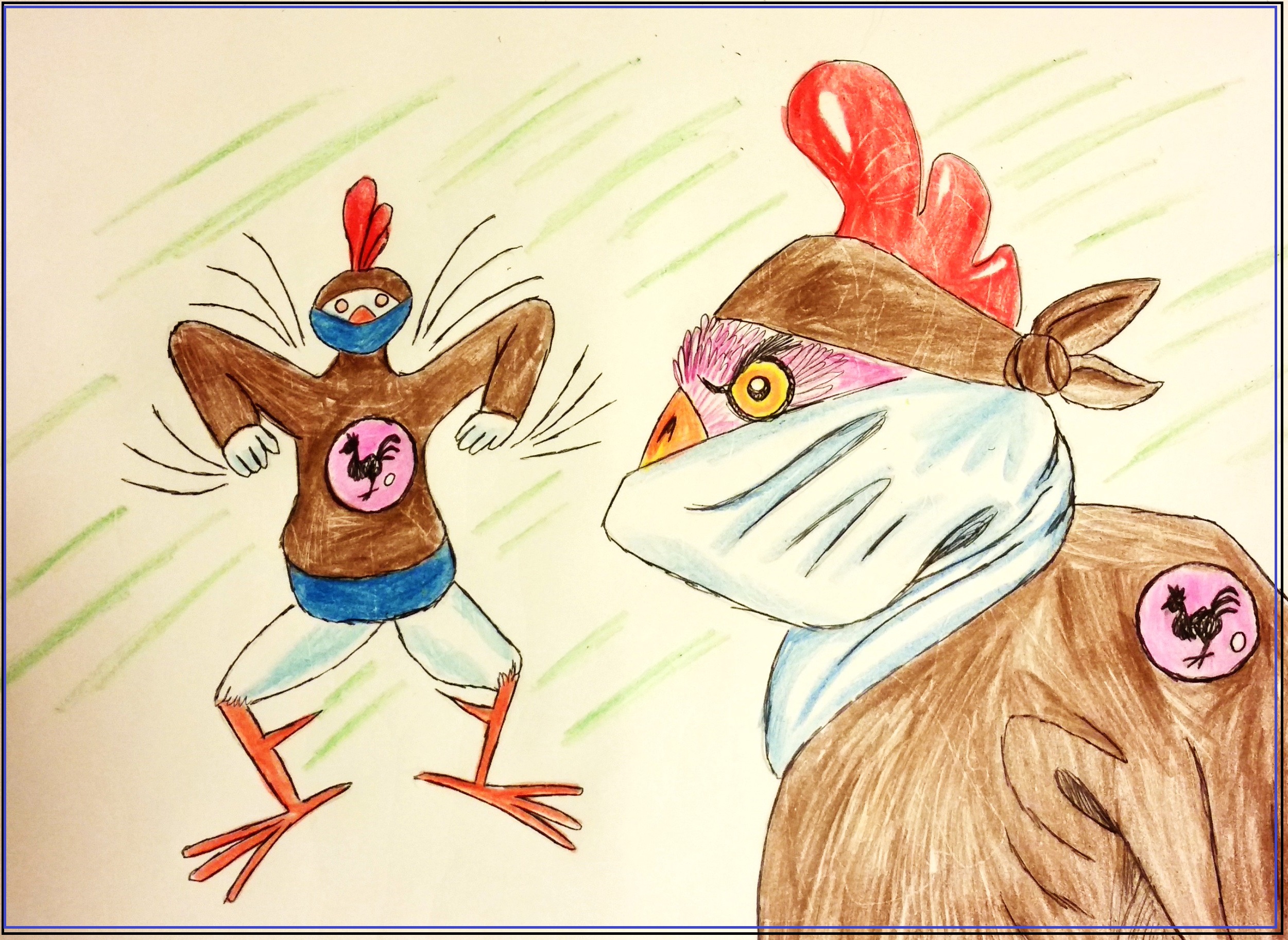
But no conspiracy theory worries me more at the moment than one about the existence of German ninjas who advance the neo-Nazi agenda by the use of the secret martial art of der Ententanz.  That’s right, they do violence to opponents (and possibly themselves) by aggressively doing the Chicken Dance. 

You really have to watch the video above to truly appreciate the perfidy of Ententanz Fu.  Notice how it starts with the pinching-fingers castanet attack, useful for grabbing the opponent’s nose or other sensitive protruding appendage.  It is followed by the flapping elbows move that can stun the enemy by its sheer ridiculous flappiness.  And then the bouncing butt attack, which can potentially paralyze the adversary by bouncing them around the room.  All of this is followed by the dancing in a circle maneuver which renders the viewer unconscious with insane levels of laughter.  Yes, the aggressive use of the chicken dance can literally make you laugh yourself to death.

c360_2017-02-17-10-38-01-138

Now, if you truly believe I am not totally serious about the dangers of ninjas doing the chicken dance in order to assassinate ordinary tax-paying citizens, I should warn you…

I mean, most people think of Ententanz Fu as merely another way German-themed tourist traps like the ones in Fredricksburg, Texas make relentless fun and ridicule targets out of clueless white people during Oktoberfest, but in reality…  Yes, it is that, but it can be so much more.  Take it from somebody who narrowly escaped from a chicken-dance-induced coma fairly recently, it is possible not only to die laughing from this dancing-poultry scourge, or be embarrassed to death, but you can also accidentally tie yourself up into a German pretzel… at which point, chickens will dip you in mustard and eat you.

So be warned.  This is a danger not even Alex Jones on InfoWars has warned you about.  (Though, if you give him enough time alone with hammers to hit himself in the head with, he may come to the same conclusions soon enough.)

Leave a comment

Filed under birds, conspiracy theory, goofiness, goofy thoughts, humor, Paffooney, sharing from YouTube

Something Creative Goes Here

Not Alone

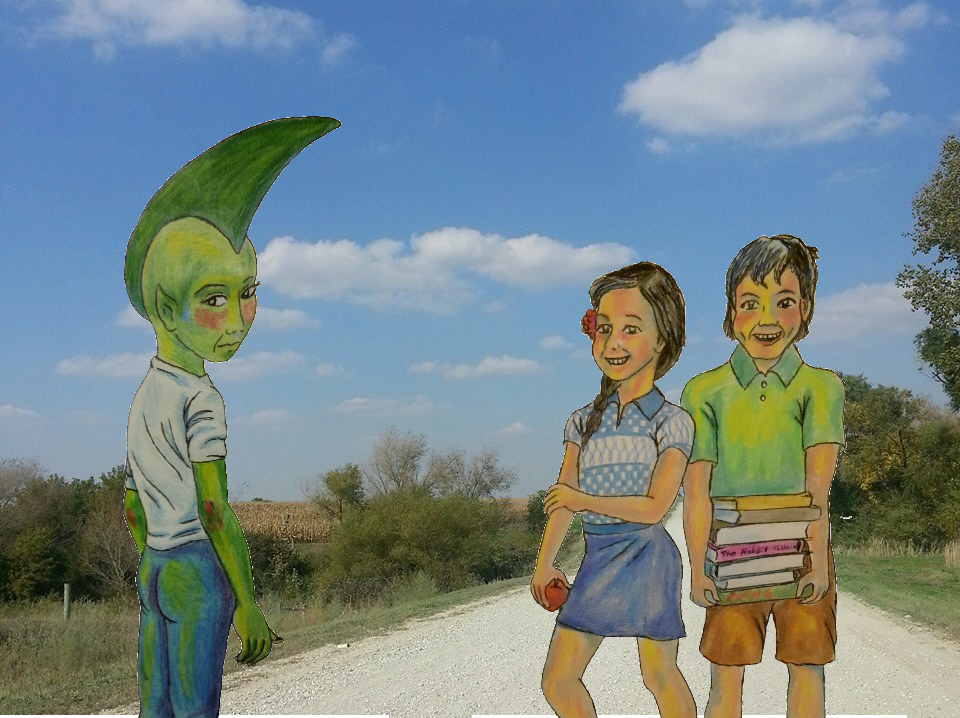
Sometimes the creative brain gets a little too hot and needs time to cool.  That means I need a meaningless filler post to maintain my every-day posting.  So, I give you a picture of Mike Murphy carrying his girlfriend, Blueberry Bates’ books home from the bus stop on a country road in Iowa.  And, of course, they happen to meet an alien named George Jetson, whose father named him after a character on his favorite Earther TV show from the 60’s.  It is a strange thing to have your brain over-heat from too many creative neurons firing at the same time.  But it can lead to notions of intergalactic peace and cultural exchange… or racist comments like, “Tellerons have heads that look like giant boogers!”  But I should be able think more rationally tomorrow.  I hope that turns out to be a good thing.

Leave a comment

Filed under aliens, artwork, blog posting, conspiracy theory, goofiness, Paffooney, self pity

The Mirror in the Clown’s Hand

Self-reflection is the bane of stupid people. Essentially, they don’t want to risk encountering evidence that they actually are stupid. It would shatter their world to learn that they are idiots and most of what they believe is true is actually wrong. This fact goes a long way towards explaining why the Republican Party in its current form even exists, let alone the actions of the current mutant Cheetos monster that pilots their agenda and hates healthcare, the Special Olympics, and Puerto Rico.

So, if I am doing a self–reflection piece today, then that proves I am not a stupid person, right? What do you mean you agree with that? Yes, I can actually hear you mentally answering my questions as you read this. And if you believe that, then you have proven that even relatively smart people like you and I are capable of stupid thinking.

I believe in some stupid things, even though I think I am not stupid.

An example of this stupidity factor is my lingering belief that I am a nudist. I mean, I am rarely ever nude any more. I keep most of me covered up constantly because when my psoriasis plaques dry out they tend to flake and itch and force me to scratch to the point of infected bloody sores.

Obviously this is not totally a photograph from the 60’s. That does not make it a total lie either, though.

I have been pretty much accepted as a member of the nudist community on Twitter. I enjoy the artful pictures of nude people they share with me. And since I did a couple of blog posts for nudist websites, there are actually completely nude pictures of me available on the internet. I can be found on Truenudists.com for one, if your eyes can stand the horror. But I have only been to a nudist park, the Bluebonnet Nudist Park in Alvord, Texas. one time as an actual nudist. I can tell you, it was a very hot day even though I was not wearing clothes. I am comfortable with nudity. I am comfortable around nude people. I fully accept it all as a non-sexual thing. But am I really a nudist? Or am I only playing at it? If you follow me on Twitter, then you know I don’t retweet pictures of naked people. I engage a lot with other writers there, and most of them are not also nudists, or even open-minded about naturism. I write about nudists in some of my books, but they are not about nudism, and most of them don’t even mention it. So, what good does it do me to think I am a nudist? Well, the very idea of it does a heckuva good job of embarrassing my wife and daughter. So, I do get some crazy-old-coot satisfaction out of it. Otherwise it simply proves that rational and otherwise intelligent people can be committed to irrational ideas.

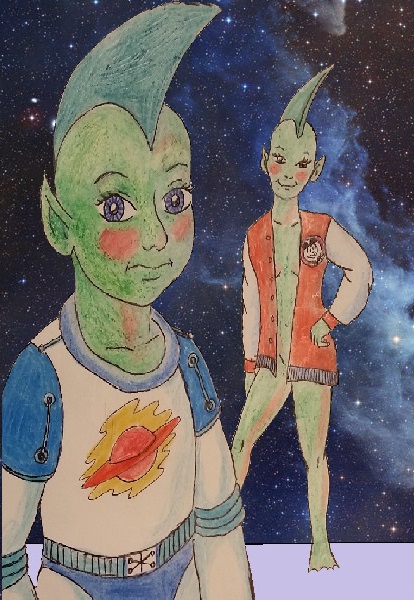
I am also of the often mocked and ridiculed opinion that not only are alien beings from other worlds real, they are capable of space travel and have been visiting us for as long as there has been an us. I did not always believe this, however. Before I wrote my novel Catch a Falling Star I believed as Carl Sagan said on the original Cosmos that it is wrong to accept things without proof, and true results are testable. My novel was about aliens who watched a lot of Earther TV and learned to speak English from watching I Love Lucy reruns, I wanted to make the aliens different from humans, but at the same time, alike with humans in the most fundamental ways that translate easily into humor and relatability. Not all of my hero-characters were Earth humans.

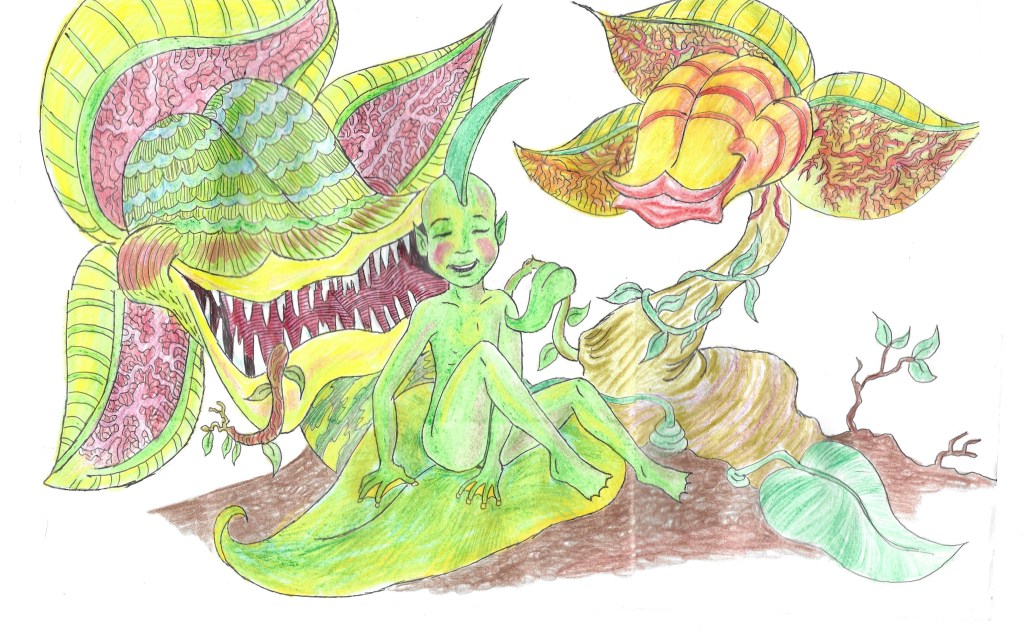
Brekka the Telleron tadpole (also a nudist) with her friend Lester the man-eating plant (who only ate her once)

As I did research on the internet (a tool I didn’t have when I originally created the story in the 1970s), I found a ton of researchers and writers and con men and MUFON and the Disclosure Project and nuclear physicists and astronauts Gordon Cooper and Edgar Mitchell who were all believers and mostly not stupid. Wow! What a huge and complicated hoax! Why would anybody believe , based on so little tangible evidence, and so much contradictory evidence, that the government’s position could possibly be right? I learned that I now believed, until significant further proof comes along, that I believe stupidly in alien visitors.

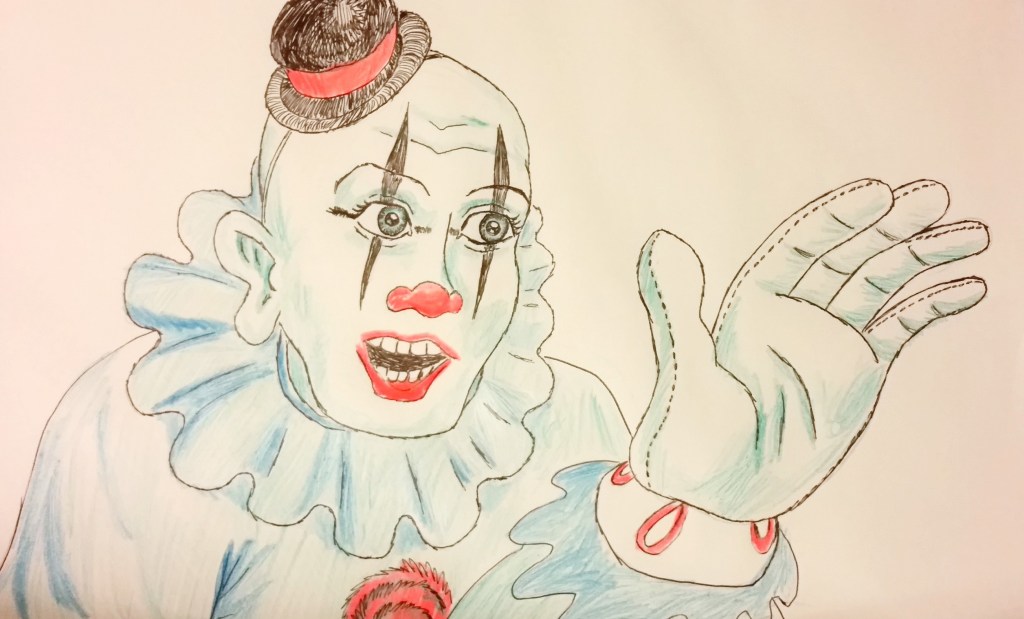
Today’s self-reflection post has now proven that I am a stupid old coot who thinks he is a nudist and an insightful conspiracy theorist. But the results of my look into the mirror have not made me upset about my stupidity. Maybe I am simply satisfied nudism is healthy and the universe is more complex than I am capable of understanding. Whatever the case, that’s enough with the mirror for today. You have to keep such dangerous weapons out of the hands of clowns.

Leave a comment

Filed under aliens, artwork, conspiracy theory, goofy thoughts, humor, nudes, Paffooney

Oxfordian Rationalizations

Yes, I am, perhaps, a bit of a fool for believing Edward de Vere, the 17th Earl of Oxford, is the writer behind the works of William Shakespeare.  How do you prove something is true when it is so obvious that someone worked really hard to keep it a secret for all this time?  Is it a betrayal of the man to go against his apparent wishes and try to out him for his incredible secret?  It is hard for me to judge.  After all, I know I am a fool.

But even if he is not Shakespeare, and just sits at the apex of a mountain of coincidences, I am fascinated by the historical character of Edward de Vere.

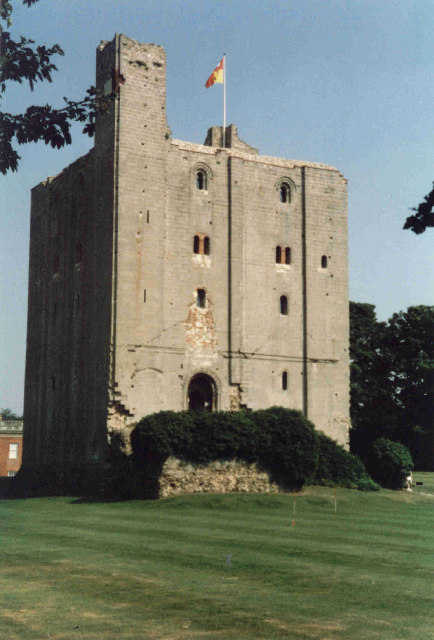
the_keep_at_castle_hedingham_-_geograph-org-uk_-_30510

The keep at Hedingham Castle, the de Vere family seat in Essex (photo by David Phillips)

He was born the only son of John de Vere, the 16th Earl of Oxford, and heir to the second oldest title among English nobility.  His father stood by Elizabeth when she was under house arrest under the reign of Bloody Mary, and went with her as a court favorite to the throne of England when she survived the ordeal.  So naturally Edward was a favorite of Elizabeth’s since childhood.  Later stories would suggest he became the Queen’s secret lover, but the rumors of the Virgin Queen’s harlotry were most likely the invention of Philip of Spain and other nobility in Catholic Europe who plotted endlessly against her because she chose to adopt her father’s protestant Anglican religion instead of returning England to Catholicism like her half-sister Mary before her.  Elizabeth’s personal integrity may not have been perfect, but the love she bore for young Edward was probably not the improper kind that the movie Anonymous by Roland Emmerich suggested.

But even though de Vere was born lucky, I would not say he was particularly lucky in life.  He was only twelve when his father (though having completed his will) died.  The result being that he was made ward to Queen Elizabeth herself.  She was not exactly the foster-mother type, however.  She sent the boy to be raised in the home of her Secretary of State and chief adviser, William Cecil (later made Lord Baron Burghley).  Meanwhile Elizabeth took possession of some of his estates in payment for the wardship and bestowed them on Robert Dudley (her childhood friend and probable one true love, though he was married to someone else).  Young Edward was a difficult student.  His tutor, the famous scholar Laurence Nowell, resigned in frustration, probably because the boy was too bright and far-reaching for the antiquarian scholar to deal with, possibly himself being a bit dumber than advertised.   Edward quickly developed a reputation for love poetry at Elizabeth’s royal court.  He was a gifted, though somewhat conflicted, prodigy.

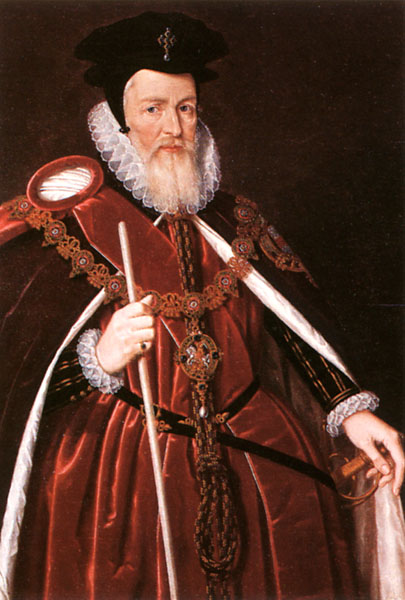
cecilwilliam1bburghley04

William Cecil, 1st Baron Burghley

And here is what I find most fascinating about his life story.  As you reread it, keeping the works of Shakespeare in mind, you begin to see Shakespeare’s source material coming to life.  Edward would end up marrying Cecil’s young daughter Anne, so that Lord Burghley was not only a man who raised him, but also his father-in-law.  But marrying off your offspring to nobility was an accepted manner of social climbing, and Cecil wasn’t entirely sure he couldn’t do better for his daughter.  And the meddlesome, lecturing, and self-righteous nature of the man comes out in Shakespearean characters like Polonius in Hamlet who spies upon the suicidal prince because he fears the effect Hamlet’s love for his daughter Ophelia might have on her reputation, causing him to spout all manner of cliches and stuffy, self-important advice.

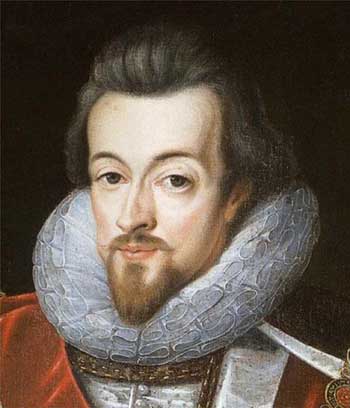
cecil

Robert Cecil, Lord Salisbury

Cecil’s son Robert, the hunchbacked boy who grows up to take over his father’s office as adviser to both Elizabeth and James I, is a crafty statesman and plotter who is the undoing of the Earl of Essex in a real-life plot against the throne of Elizabeth.  It is hard not to read about his real-life exploits without seeing the connections to Iago in Othello and the conniving hunchback Richard III.

So, once again I have overshot my target length in this essay because I get so wound up in the details of my discoveries.  There are numerous things written and published about the connections between de Vere and the Bard himself.  I have only begun to scratch the surface in this telling of it.  But I am just a fool with a humor blog.  If it interests you at all, I encourage you to go to as many of the available sources as you can possibly google.  I haven’t yet finished doing that myself.  And I do hope I haven’t told anything here that makes Shakespeare turn over in his grave (if, indeed, a grave could ever really hold him.)

Leave a comment

Filed under artists I admire, conspiracy theory, foolishness, humor, strange and wonderful ideas about life, William Shakespeare

Shakespeare Knows Fools

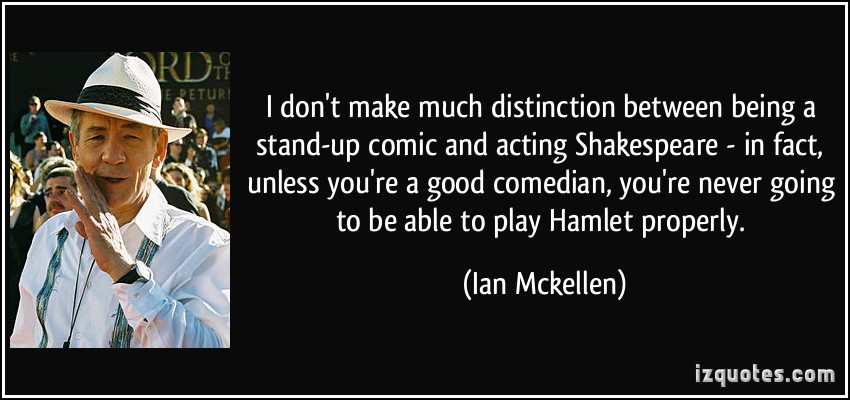
quote-i-don-t-make-much-distinction-between-being-a-stand-up-comic-and-acting-shakespeare-in-fact-ian-mckellen-124331

The fact that Shakespeare was a master of the art of creating and mocking fools does not really help decide the question of who Shakespeare really was.  A stage actor who owned a theater in Elizabethan times and apparently focused on being the bit player, the butler, the second man on the castle wall in the great plays, would certainly know enough of flim-flam, being a con man, or artfully throwing turds at kings and queens in ways that get rewarded rather than beheaded.  But a nobleman who has unpopular and unwelcome-but-probably-wise insights into the back-stabbing-goings-on of the royal court of England would equally be capable of putting the most memorable of critiques of humanity into the mouth of the fool or the clown in the great stage-play of life.  Even the most depressing and violent of the Shakespearean tragedies is enhanced and made pointed by the presence of the fool and the comic relief.  In some ways everything that Shakespeare wrote was a comedy.

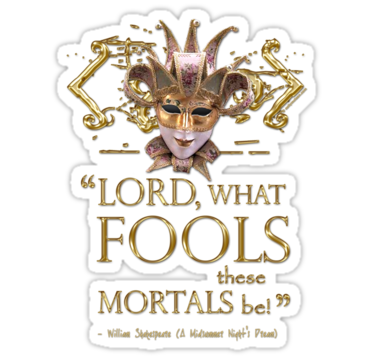
sticker375x360-u2

Whoever Shakespeare was, he shared Mark Twain’s overall assessment of “That damned human race” and often declared all men fools in the eyes of the playwright.  Puck’s observation on humanity is delivered about not only Bottom and the other poor players who carry on their vain attempts at performing Pyramus and Thisbe while Bottom magically wears the head of an ass, but also the easily fooled lovers who mistake their true loves for one another, and even the clueless mortal King Theseus of Athens.

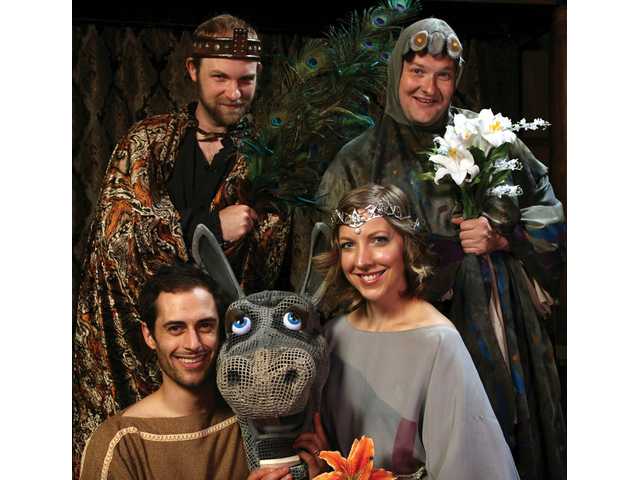
0716-go-midsummer-dream_

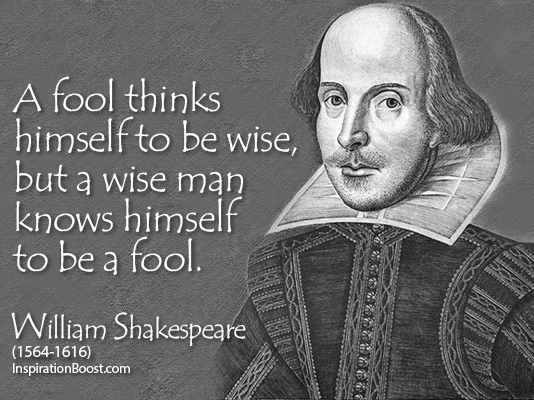
In the play within a play, Nick Bottom wants to be not only his own role, Pyramus the romantic lead, but argues that he should be Thisbe, the lion, and Pyramus all at once, making a satire of human nature and its overreaching ways that we could only pray Donald Trump will one day watch and magically understand.  In fact, Shakespeare’s entire body of work is an extended investigation of foolishness versus wisdom, and with Shakespeare, the verdict always goes to the fool.

a-fool-thinks-himself-to-be-wise-but-a-wise-man-know-himself-to-be-a-fool-william-shakespeare

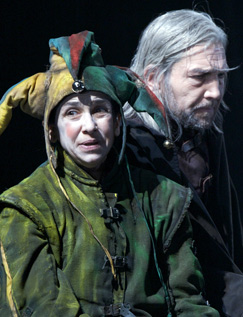
The plays of William Shakespeare are filled with fools doing foolish things… and fools being accidentally wise. (Think Jacques in As You Like It giving his famous “All the world’s a stage” soliloquy in which he elucidates the seven ages of man.)  There are fools too who prove to be wise.  (Think of the ironic advice given by the jester Touchstone in As You Like It, or the pithy commentary of King Lear’s fool).  The fools in Shakespeare’s work are not merely the comedy relief, but the main point that Shakespeare makes about humanity.

207a65d14f2a61bd4a4ef178e88609bb

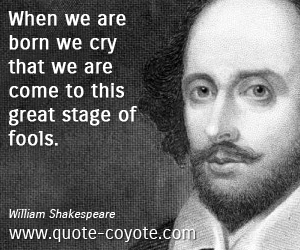
Whoever the man was who wrote the plays of Shakespeare, he was someone who had a deep understanding of the basic irony underlying all of human life.  And someone with that vital sense of the bittersweet, a philosophy of life that encompasses the highest heights and lowest depths that a soul can reach, is someone who has suffered as well as known great joy, someone who has experienced loss as often as profit, and has known real love as well as real hatred.  It is the fool that Shakespeare shakes us by the neck with to make us recognize the fool in all of us which makes the plays resonate so deeply within us.  It is watching the path of the fool unfolding that makes us shake our head and say to ourselves, “Yes, that is what life is really like.”

when-we-are-born-we-cry-that-we-are-come-to-this-great-stage-of-fools-william-shakespeare

2 Comments

Filed under clowns, comedians, conspiracy theory, foolishness, goofy thoughts, inspiration, philosophy, strange and wonderful ideas about life, William Shakespeare

The Oxford Obfuscation

queen-elizabeth-iIf you are going to entertain a completely absurd notion like, “Shakespeare wasn’t really written by Shakespeare”, then you have to have some knowledge of the times and the context within which such a profoundly counter-intuitive thing could possibly be true.  And it also helps to understand more precisely what the “writing of Shakespeare” actually means.  Now, I know it is not particularly fair to confuse you, dear reader, right before I try to dazzle you with my complicated and over-thunk lackwit conspiracy theory, but that is, after all, what obfuscation actually means.

The plays, sonnets, and other poetry of William Shakespeare reveal the mind of a genius.  Whoever wrote the works has to be a complicated man living a complicated life.  He has to be a sensitive, empathetic, highly intelligent, observant, and troubled man.  You don’t write the dark and deeply troubled suicidal tragedy of Hamlet without ever having thought of taking your own life.  You cannot portray the madness of King Lear without ever having experienced the turmoil of the mind that threatens to tear your soul apart.  And you don’t write about the complexities of love found in As You Like It or Romeo and Juliet without ever having experienced the massive thunderstorms of the mind that go along with falling in love.  And we are talking true love, not necessarily the domestic love you have for the wife you are stuck with.   You see what I did just there?  I put you into the head of the writer, and started you thinking like you yourself are Shakespeare.  As goofy a mental gymnastic exercise as that is, bear with me and keep thinking it.

At the time of Shakespeare’s ascendancy as the Bard Laureate of English Literature, England was not a safe place to be either a noble or a playwright.  Queen Elizabeth’s mother had her head cut off for bad politics even though she was married to the King of England at the time.  Lady Jane Gray, one of Elizabeth’s predecessors, lost her head when she was no more than a sixteen-year-old girl.  During Elizabeth’s reign, one of her court favorites, Robert Devereaux, Earl of Essex, attempted to seize the queen herself after a riot fomented by a performance of Shakespeare’s play, Richard II, at which eleven of Essex’s noble supporters were said to be present stirring up the emotions of the crowd.  It was a near thing for the writer of the play (about the life of a king whose reign ended in controversy about succession and which led eventually to the War of the Roses) to escape without also being caught up in the rebellion’s failure and round of executions that separated Essex from his head.  Elizabeth banned numbers of plays with religious or political content, bans that never seemed to touch the writer of Shakespeare’s plays, even when they touched on political themes.  You didn’t have to rebel against the Queen to lose your head either.  Elizabeth was trying to reinstate Anglican Protestantism against the critical tides of Catholic Europe.  You could be banished, put to death, or impressed  by force into the English Navy for being suspected of ideas that were too Catholic.  And witchcraft, or consulting with witches, as Macbeth depicts, earned you a nice warm fire in the public square to cleanse your immortal soul.

edwarddevereattribmarcusgheeraerts

Edward de Vere, 17th Earl of Oxford

So, if one were to be both a playwright and a nobleman, known to and beloved by Queen Elizabeth, might there not be good reason to write under a pseudonym?  And numerous people who write about Edward de Vere mention the fact that he wrote poetry and plays, and the plays were very popular.  Some scraps of poetry by the Earl of Oxford still exist, but whatever happened to the manuscripts of his plays?  It is a conspiracy theory so delicious, that I have to take at least one more bite.  (You understand, I try to stick to a 500-word target for these posts, and even this 600+ is really too long.  So that means there has to be an Earl of Oxford Part II at least.)

Leave a comment

Filed under conspiracy theory, foolishness, humor, politics, William Shakespeare

The Heart of Shakespeare

3a8307f6bb01311fc90478857d32e891

Despite my skepticism about the accepted wisdom in regard to the historical William Shakespeare, I do deeply love the body of work that is Shakespeare.  My most favorite play is The Tempest, the final play in the canon.  I also have read and loved As You Like It, Romeo and Juliet, Hamlet, A Midsummer Night’s Dream, The Merchant of Venice, Henry V, Richard III, Julius Caesar, Macbeth, Othello,  and King Lear.  I know that is not all of the plays, but that is probably more than most people have read.  And of course, as an English major in college, and later as a teacher, I have actually analyzed, compared, studied, and taught some of these plays.  So, the Shakespeare I know is the Shakespeare of the writer’s own mind, his communicated wit and wisdom, imagination and intellect.

shakespeare

And I do not have any disdain or disrespect to give the Stratford guy.  To say that, in the Elizabethan world, the actor son of a tradesman with only a grammar school education could not have been the mind behind the literary masterworks is foolish.  The Stratford guy owned and operated the Globe theater at a time when “the play was the thing”.  All of London society, rich and poor, gloried in the theater, and Shakespeare did for Elizabethan plays what Babe Ruth did for baseball.  He was a good enough business man to make himself a decent fortune.  Although, apparently, this world-shaking author didn’t spend any of his money on owning books, which in my experience is extremely rare among writers.  His life, bound up in an urban existence that never traveled outside of the country also somehow produced great works that were set in places in Europe, especially Italy, that described those settings in accurate detail.  As a working actor, he also apparently had the time to study law and somehow learn the inner workings of the royal courts of more than one country.  And the plots were not original.  He took existing stories that already were a part of European literature and lore and wove them into rich tapestries of human striving, laughable foibles, and a deep understanding of basic human character.  But I do have doubts that the businessman and actor from Stratford was the real writer of the plays.

I have already told you that I don’t believe Sir Francis Bacon was secretly Shakespeare.  Christopher Marlowe wasn’t either.  And I have unsuccessfully made a case against Shakspere, the Stratford guy.  So who could possibly be the real William Shakespeare?  Well, I am not going to be able to make a decent case for him in the 100 words that I have left to end this essay with.  So there has to be more to come.  (And stop screaming obscenities at the computer screen.  I am going to reveal the name before the end of this essay.  And I promise not to make my case for him in coming days too boring and horrible.)  I have to show why I believe that the true heart of Shakespeare could only have beaten within the body of Edward deVere, the Earl of Oxford.

Leave a comment

Filed under conspiracy theory, goofy thoughts, humor, strange and wonderful ideas about life, William Shakespeare

Kit Marlowe, Secret Agent

christopher_marlowe

Christopher Marlowe is often sited as the real Shakespeare, a problematic assertion given that he would’ve been forced to write a number of plays after he was dead, giving new meaning to the term “ghost writer”.  But I would like to add to the assertion that “Marlowe is NOT Shakespeare!” that I also believe he did not die as they claim that he did.  Marlowe is a fascinating character of debauchery and misbehavior, intrigue and mystery, and undeniable genius.  As a writer, he was a maverick and risk-taker, having begun the ascendance of the theatrical play as one of the heights of Elizabethan literature with his play Tamburlaine the Great, about the historical figure who rose from shepherd boy to monarch.  This play, and its sequel, Tamburlaine the Great Part II, were among the very first English plays to be written in blank verse, meaning there is a very definite connection between the style of writing established by Marlowe and the later work of Shakespeare.  It is probable that for a few years, Kit Marlowe was a member of the Gray’s Inn group along with Sir Francis Bacon and several other suspicious literary luminaries like Sir Walter Raleigh and possibly Ben Jonson.  (I have to admit at this point that if I am wrong about the Stratford guy and he did write the plays, then he was a member of this group as well, because it was not closed to commoners, only to stupid people.  The Stratford guy was in no way stupid or a villain, no matter what you may believe about the authorship question.)  But here is where the link to Shakespeare’s plays and poetry both begins and ends.  Yes, Kit Marlowe was a capable enough author to have written such sublime plays.  He has all the individual skills to make up the whole.  But if you read his masterwork, The Tragicall History of the Life and Death of Doctor Faustus, you will see that the voice, the unique literary style of the work is simply not by the same author.  Although Shakespeare revisits some of the same themes that Marlowe used in his plays, his manner of development, handling of character, style of humor, and underlying conviction in the existence of God are all different and opposed to Marlowe’s.  Marlowe is NOT Shakespeare.  Shakespeare’s works have more in common with Bacon’s than Marlowe’s.  And I have already said that, “Shakespeare is NOT Bacon… or eggs either.”  And if I said it, it must be so.  (Don’t throw eggs and tomatoes at your computer screen when you read this.  Just call me stupid and vain in the comments like everybody else does.)

maxresdefault

And an even more compelling reason to those of you who don’t obsess over reading Shakespeare and Marlowe and Ben Jonson is that, at the time Shakespeare’s plays were probably written, Kit Marlowe was busy either being stone cold dead, or, having faked his death, was busy being a secret agent for Queen Elizabeth.

And why would a goofball like me think that Christopher Marlowe cunningly faked his own death and went into his own thrilling quest to be like James Bond more than 300 years before Ian Fleming?  Well, because I know how to read and am not generally bright enough not to believe what others have written about him and his connections to the world of spying in Elizabethan times.

These authors have brought out the fact that Marlowe’s frequent absences from college and later public obligations coincide with things like the mysterious tutor called “Morley” who tutored Arbella, niece of Mary Queen of Scots, and a potential successor to Queen Elizabeth, in 1589.  He was also arrested in the Netherlands for allegedly counterfeiting coins related to the activities of seditious Catholics.  He was brought back to England to be dealt with by Lord Treasurer Burghley, the closest adviser to Queen Elizabeth, and was then not so much punished as let off the hook and even rewarded monetarily.  Still think he was not a spy?  Well, his demise probably came about through his relationship with Lord Francis Walsingham and his friendship with Walsingham’s son.  You see, Walsingham was Elizabeth’s “M”, leader of her spies and intelligence units.  After Walsingham died, there was deep concern that no one was still able to protect Marlowe from possible consequences of being both a homosexual and an atheist.  (Being gay was obviously not as serious a sin as atheism for which torture and death penalties lay in wait.)  It was possible that rival spies and nefarious forces could kidnap Marlowe and get information out of him that the Queen needed to be kept secret.

So, when Lord Burghley tortured Marlowe’s friend and sometime roommate, Thomas Kyd, into naming Marlowe a heretic and sending men out with a warrant to arrest Marlowe, Kit’s other friend, Thomas Walsingham probably warned Marlowe.  The bar fight that supposedly ended Marlowe’s life was witnessed by two friends of his, Nicholas Skeres and Robert Poley, both provably con men and professional liars.  The knife that stabbed him in the forehead above his right eye was wielded by Ingram Fizer, another of Marlowe’s disreputable friends, allegedly over an unpaid debt.  Fizer, of course, though he freely admitted killing Marlowe, was acquitted of the murder.  And the coroner’s report is suspect.  Rules of investigation were not followed, and the body was never independently identified by someone other than the three friends at the scene of the crime.  And the body was hastily buried before anyone else could get a close look at it.

edward2a

I am not only telling you that I believe Christopher “Kit” Marlowe was NOT Shakespeare… or eggs either (though that joke doesn’t really work here), but I believe he didn’t die the way it has been reported to us by history.  And why do I believe these things?  Because I think the story of Christopher Marlowe is a really great story, and it exists as a story whether it is historically true or not.

5 Comments

Filed under angry rant, artists I admire, conspiracy theory, goofy thoughts, humor, poetry, satire, telling lies, William Shakespeare

Shakespeare is NOT Bacon

3475b987-6c5d-4699-ba5d-e6008559028f

(The graphic above should say “Empiricism,” not “Empirism.”  Ir is a typo.

Yes, Sir Francis Bacon is at least as interesting and obscure as William Shakespeare.  But let me assure you, I can confidently state, “Shakespeare is NOT Bacon!”  He is not eggs either… or any other breakfast food.  Sir Francis Bacon was the breakfast, the first meal in the great Elizabethan banquet of literature, poetry, and culture.  And William Shakespeare is a more important main course, the royal dinner, as it were.  But it has to be acknowledged that Bacon was essential to the very existence of William Shakespeare.  Breakfast always comes before dinner.

t2ec16dhjgoffvtvhuebslhohksvg-60_35

In 1845 a female author by the name of Delia Bacon (nothing suspicious about that coincidence, by the way) put forward an idea that William Shakespeare’s plays were actually written by a group of men under the leadership of Sir Francis Bacon.  She thought the group intended to inculcate into English culture an advanced system of politics and philosophy which they themselves could not take credit for publicly.  She would later write a book in 1857 called The Philosophy of the Plays of Shakspere Unfolded which advanced the notion that the plays were written for Baconian purposes beyond mere theatrical entertainment.  Numerous people, including the American poet Ralph Waldo Emerson supported her in her quest to find proof, sending her to England to research the crazy conspiracy theories she founded by noting ciphers in the plays, and in the essays of Bacon, that led her to believe all she had to do was dig up the gravestone of Shaksper in the chapel at Stratford to find written proof in Bacon’s own hand that he was, in fact, the author or primary motivator of the plays of William Shakespeare.  She spent one cold and creepy night in the chapel, just her and her spade and her crow bar, along with the bones of the Stratford guy, trying to work up the courage to do a bit of grave-robbing… and failing.    It is a good story, but very poor archaeology.  She was denounced by the literary historians and establishment figures who supported the Stratford guy.  They said her scholarship was sloppy, her cipher analysis goofy and unfounded, and her conclusions more questionable than a pig in theatrical make-up.  (My words, not theirs.  English critic George Henry Townsend was entirely too stuffy and boring to simply be quoted here.)

francis-bacon-quotes-francis-bacon-quotes

Now, I, of course, strongly disagree with the Bacon lady.  As I said in the very title, “Shakespeare is NOT Bacon.”  But I do think there was merit in sniffing out old Frankie’s scent and fingerprints on the whole Shakespeare/Shaksper thing.  The Stratford guy was not Shakespeare either.  When he died in 1616 there was no public outcry at the loss of England’s most popular poet and playwright.  Even King James who was Shakespeare’s number one fan and constant audience member, didn’t mourn the passing of the actor/theater-owner/businessman from Stratford.

Francis Bacon, on the other hand, was a powerful intellect, educated in the ways of science, the law, and government in the Elizabethan age.  Bacon gathered other men of powerful intellect and accomplishment at Gray’s Inn to hold debates about things philosophical and things scientifical.  It is not unreasonable to imagine that the man who really wrote the plays attributed to Shakespeare sat at that table and participated in those debates.  And Sir Frankie had good reason to keep lots of this business a secret.  There exists evidence that though he was apparently happily married to a fourteen-year-old girl, he did a little bit of swaying toward the other gender too, a thing not too popular with the average Anglican Englishman.  He also dabbled a bit in the occult (think witches in Macbeth sort of thing).   And his essays indicate a strong correlation to the philosophies and ideals of the German Rosicrucian Movement.  In 1593 during a Roman Catholic plot against Queen Elizabeth, Frankie managed to take a position on the investigation that totally offended the old virgin queen.  He was on the outs with Liz for the rest of her difficult and anger-management-challenged life.  He did rise to prominence under her successor, James I, but never-the-less managed to die amidst total ruin and scandal.  There is a lot in Frankie’s life to indicate that he had a direct influence on the content of Shakespeare’s plays.  Some of the characters in the plays may actually be, at least in part, based on Frankie himself.  But  this guy never hung out with the Stratford guy that anyone knows of.

So, if Shakespeare is NOT Bacon, or eggs either… and the Stratford guy isn’t Shakespeare, then who is?  Come on!  You knew I had a lot more to say about this crazy conspiracy thing, right?

67489

Leave a comment

Filed under conspiracy theory, education, foolishness, goofy thoughts, humor, philosophy, strange and wonderful ideas about life, William Shakespeare