Who is really qualified to judge people? The Bible says only God makes that judgement. But who tells us what God’s judgement actually is? Especially if Nietzsche is right about God being dead?
Prudes
Not long ago I posted a short-short story about me wanting to see girls get naked while we were kite flying, and then, by verbal tricks backfiring, I ended up being the only one flying the kite while naked. I look back on that story now with laughter about my own personal foibles. But if I am completely honest, the church ladies with gray hair, wagging fingers, and tongues that are even waggier… Well, I am glad that the ones I knew as a boy are all now dead and can’t possibly read that story and shame me all over again.
And I know that I draw an awful lot of pictures and write an awful lot of stories that involve naked children. As a survivor of a traumatic sexual assault when I was ten (a thing that happened after the kite story was already in the past) there is a level of discomfort over recognizing that trend in myself. Not because I became a sexual predator of children. I clearly did not. I still am determined to prevent such things from happening in any way I can, though in retirement I no longer have access to children to talk with to find out about bad things that may be happening in their lives.
Derfentwinkle and Anneliese in my current work in progress, fairies both.
I write stories in which there are kid characters who are naked at times. Sometimes because of curiosity and developing sexuality, sometimes because of growing up in a nudist household, sometimes in their dreams, taking baths, and many other normal functions where clothing is optional. In The Baby Werewolf novel, I included a character who was trying to exploit a young nudist girl to make child pornography. He was the kind of predator I have always resolved to be against, and the book is intended to make readers aware of that kind of dangerous person and recognize where the opportunities to avoid such people lie.
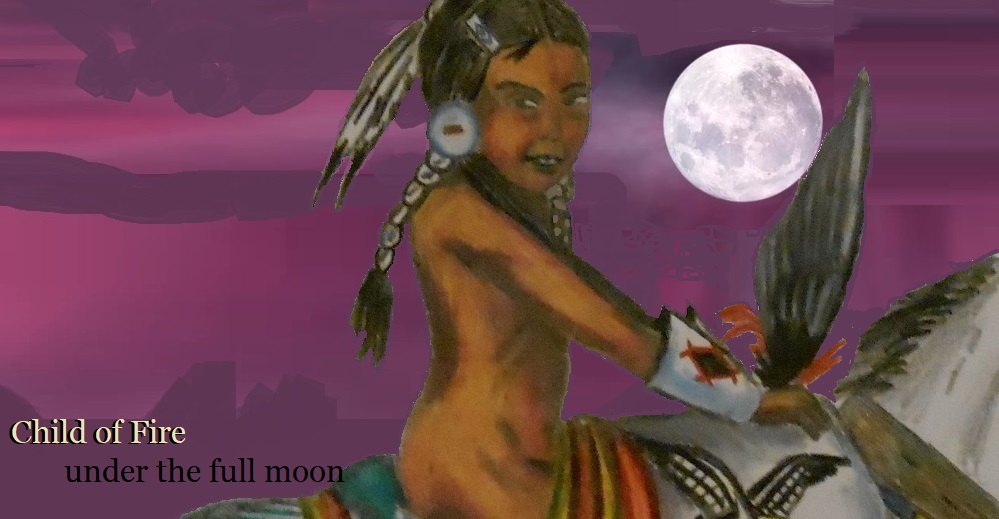
And some of the nude young characters I create like the two fairy girls depicted in the illustration from The Necromancer’s Apprentice merely represent the liberating feeling you can get from embracing your own nude self, a thing my attacker deprived me of during childhood through trauma and fear.
I, as an adult human being, fully accept readers’ rights to be critical of my work and make prudish judgements about my writing. I don’t like that one critic of The Baby Werewolf who said things about my work being creepy for the wrong reasons (it is a horror story after all) and suggesting that maybe I as the author am bad and villainous instead of feeling that way about the villain of the story. It was fiction, not my personal life story. The villain character is not me.
But prudes being prudish and judgmental can do more damage than just hurting an author’s feelings.
I have had two students that I know of who were transexual.
One was raised a boy because he was born with a penis, but in grade school was discovered to have a womb and ovaries. I didn’t know such a condition existed until I saw an episode of Marcus Welby MD in the 70’s about a young boy who had to transition because he was actually a girl. The child in my class was from a poor Hispanic family that didn’t understand the problem and couldn’t really afford to deal with it. The prudes, judgemental as always, were not kind. This he/she hermaphrodite was forced to grow up as a flamboyantly gay male even though he was capable of physically changing into a woman who could conceive a child. I followed his development for as long as I was able. I did spend one long and awkward evening talking to him/her about his/her crush on me. I could’ve gotten the prude finger-wag over that strange conference too, if anybody had bothered to care about that poor child. I certainly wasn’t going to kiss him, and I had to send him home at the end of that discussion because of what he/she wanted from me. I suspect there were other men who took advantage of him/her. But I wasn’t close enough to help him in any real way. And I lost touch soon after he/she left my class. Based on that bizarre discussion we had, I have no confidence at all that the poor child is still alive. Nobody seemed to care about this child That is the most tragic of things teachers sometimes have to deal with.
The other trans student I had in class for a year was a girl as far as she was concerned. It was not a question open for debate. She was quiet and a good student. She only had a couple of friends, but they were good friends and stood by her. At the time she was in my middle school class, she already had breasts thanks to hormone therapy. By now she has probably transitioned by surgical means. Her life was a lot easier than the boy with ovaries. But prudes in Texas abound and provide a lot of sour fruit.
I personally find it offensive that anyone would deny either of these two people the use of whatever restroom was comfortable for them.
What gives the typical prude the right to pass judgement on anyone else’s behavior? Prudes can cause repression of natural behaviors for the benefit for no one but themselves. I find prudishness to be reprehensible. But the rub is… being judgemental about that makes me a prude too.
I try never to be judgemental. I would much rather accept everyone for who they are, or who they think they are, than rely on what I think they are. And I do listen when others judge me. I have changed things in my books and drawings because of observations by others. And I take everything seriously… especially comedy.
This is actually a 2019 post from before the pandemic. The creepy poetry, however, still applies.
I am not, at this writing, feeling very spry anymore. I substituted for an ESL teacher in Irving yesterday. I enjoyed it. But the frosty cold weather took its toll on me, as did the misbehavior of clownish 11th graders. I am left exhausted and thoroughly convinced that huge high school classes averaging thirty kids in them are not something I am well enough to deal with anymore. I probably need to decide against taking any future high school sub jobs. They make me deathly tired and inspire creepy poetry about mortality in me. Anyway, it caused me to do some picture-making, and some silly poetical complaining.
I was born in a blizzard during the middle of the 1950’s. Dwight Eisenhower was President of the United States. John F. Kennedy had written the book Profiles in Courage. Elvis Presley was pushing Rock and Roll to new heights. My father was a Korean War veteran who served in the Navy aboard aircraft carriers. My mother was a registered nurse. And all of that made me a Baby Boomer, a Midwestern child of the middle class, benefiting from Roosevelt’s New Deal, and more than a decade of economic boom, and I was in many ways truly blessed.
I think the Baby Boomer generation has a lot to answer for. As a group, we have not taken our blessings for what they truly are and selfishly did not give back as much as we were given. Self-sacrifice and service were considered unintelligent things to pursue. Wealth and power were the things universally pursued. And averting climate disaster fell within our power. And we didn’t do nothing to help the problem. We actively made matters worse.
Hopefully, however, we have more than our share of people who followed the kind of path I did. I chose teaching as the way to serve my society and my country. I put in over thirty years working with kids, teaching them to read and write and helping them to transform from children into young adults. And I did it in spite of the fact that investment culture and the drive to earn massive wealth tended to make people look down on teachers. We didn’t get the respect and the monetary rewards that we actually deserved. I don’t have to feel dissatisfied with my role. But I do regret the consequences we face because of it. If you denigrate teachers and education in general, you are going to raise a generation of stupid people.
So, let me give you what little wisdom I have gained in the struggle of my 67 years on this less-than-perfect planet.
The only wisdom I can offer that I am absolutely certain of is this, I am basically a fool muddling my way through the labyrinth the best way that I can. We are all fools. And those that don’t admit that do me the favor of proving there are bigger fools than me.
The former President of the United States number 45 is a criminal. Even a fool like me can see it. He needs to be removed and the people who have enabled him need to be voted out.
He may, however, survive it. He may even win another four years. After all, the foxes have been running the hen-house for years now. And the party in charge cheats at election time.
We may have flubbed our stewardship of the planet so badly that all life on Earth will be wiped out by atmospheric changes. Fossil fuel corporations have won a Pyrrhic victory.
But even if we have no future as a species, our lives have been valuable. Every child is born good and loving and worthy of love. And even though some are too soon taught evil ways or too soon robbed of their birthright, the story of the human race is a good one. We did great things. We took serious dilemmas and solved them. We wrote good morals, and more often than not, we finished writing the sentence of our lives correctly. We had a right to be here. And even if our collective candle flame goes out, the brief time that it was shining made the universe a brighter place.
I am a pessimist by nature. I don’t expect to survive until another birthday passes. I didn’t expect to reach this one alive. If I do, I have a right to be both pleased and amazed. I can make no promises for the future. But I do know this, everything in the past was worth it.
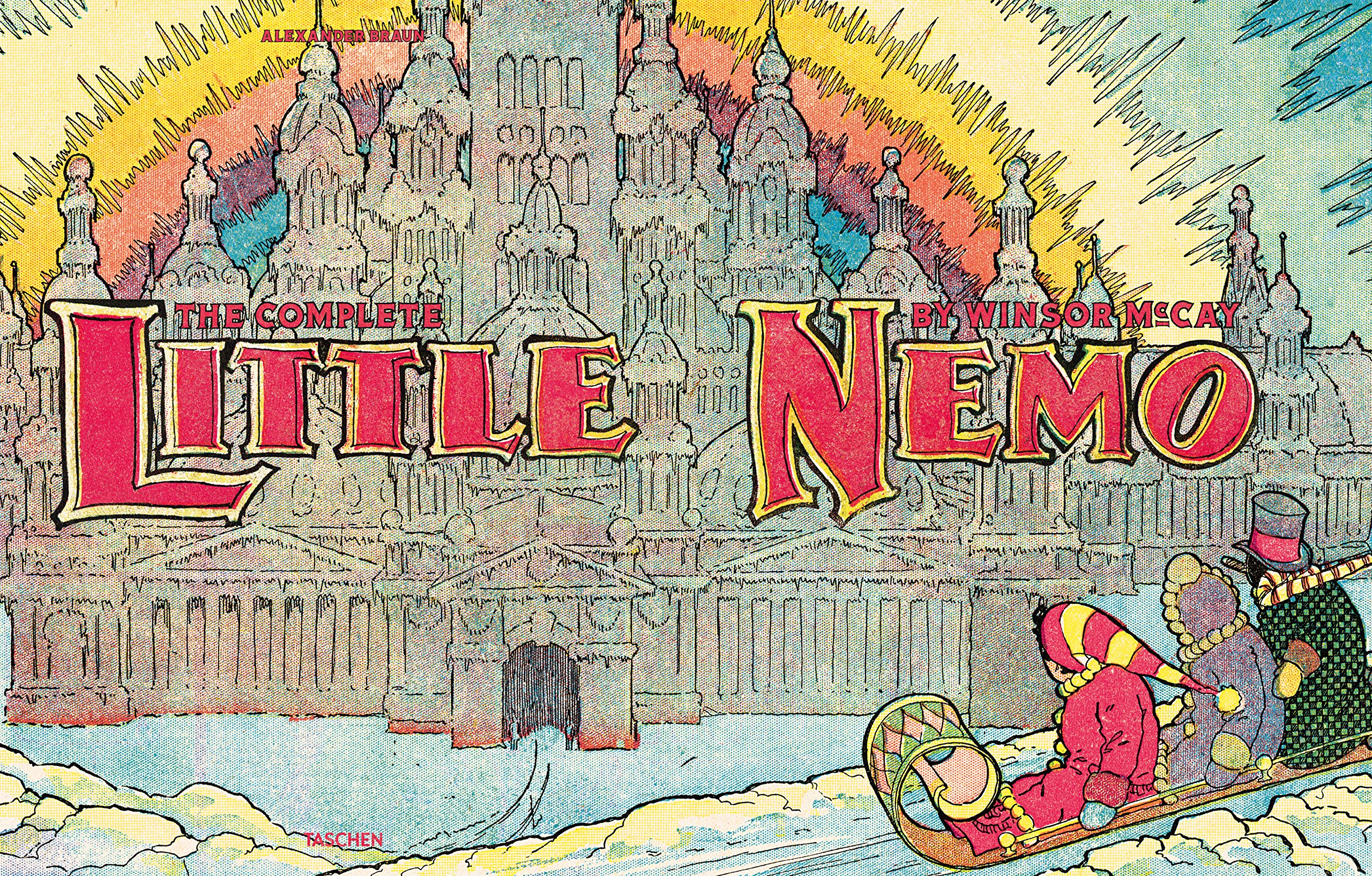
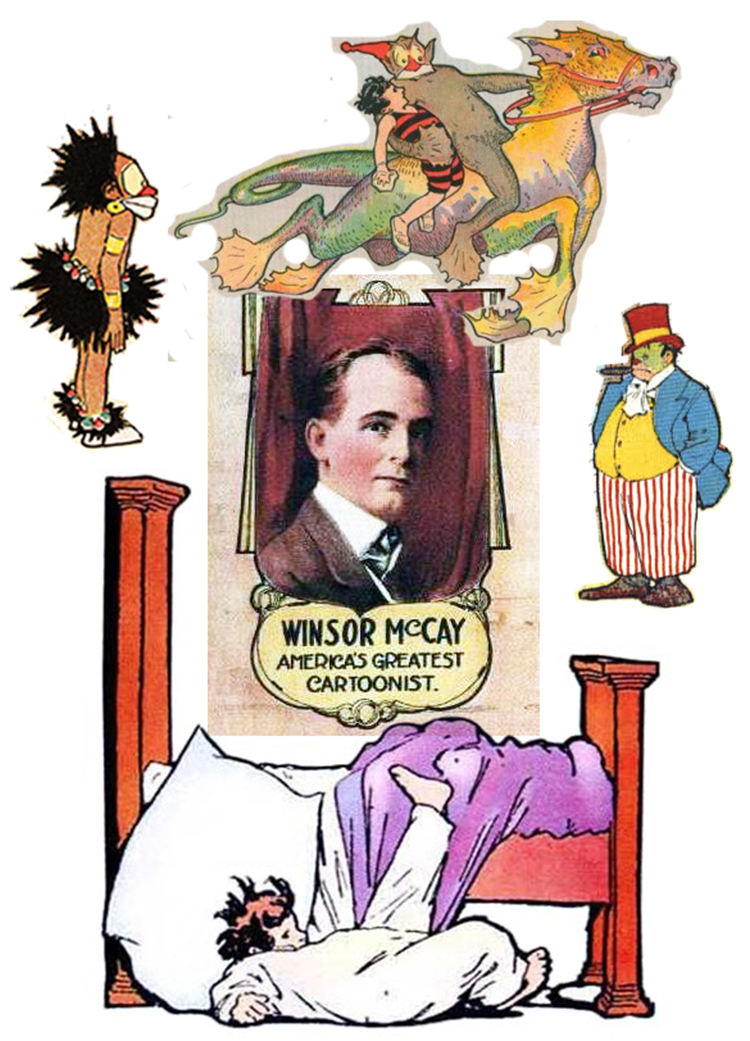
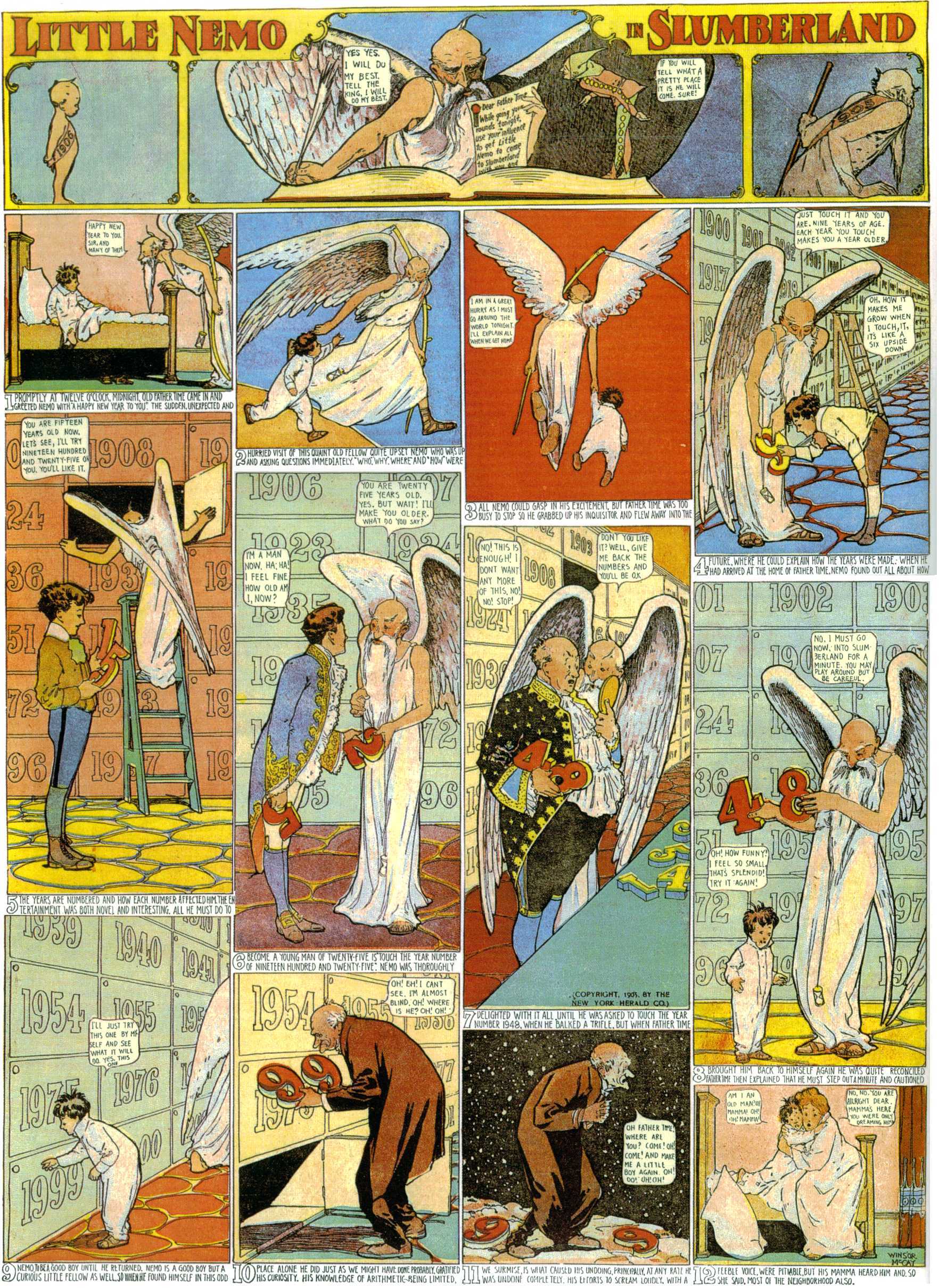
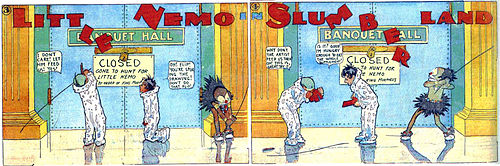
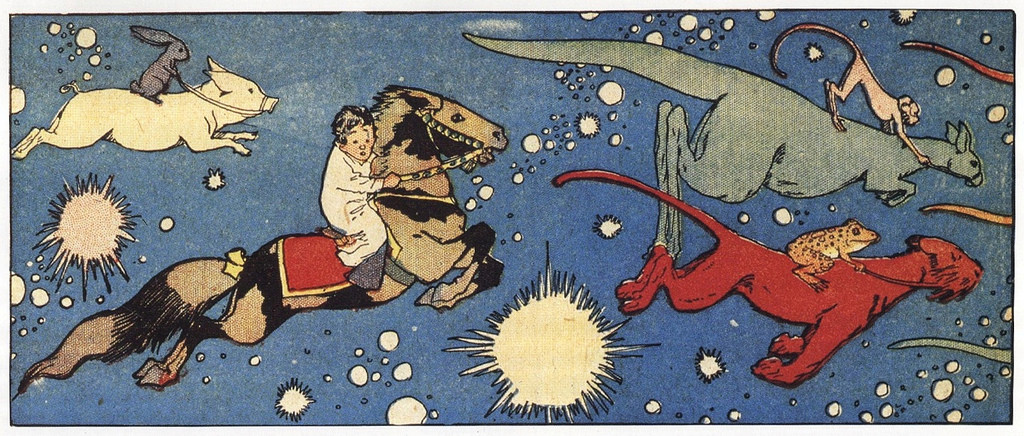
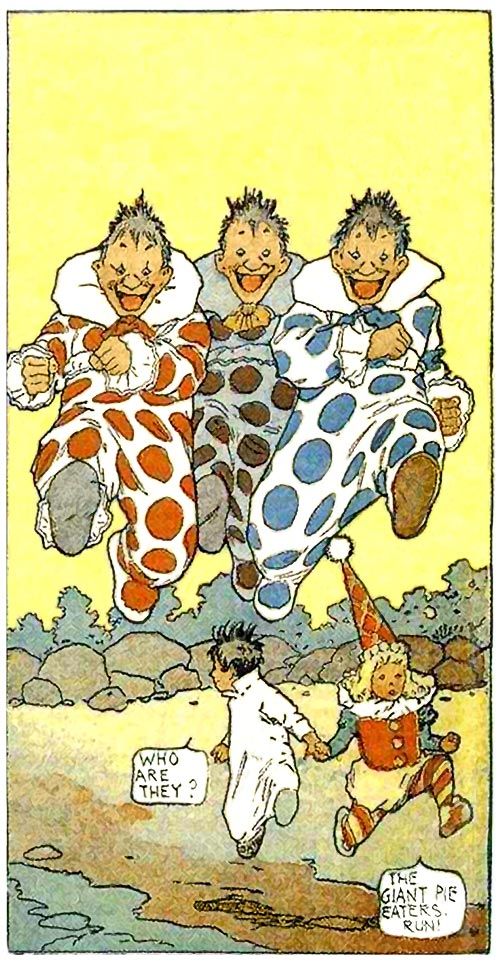
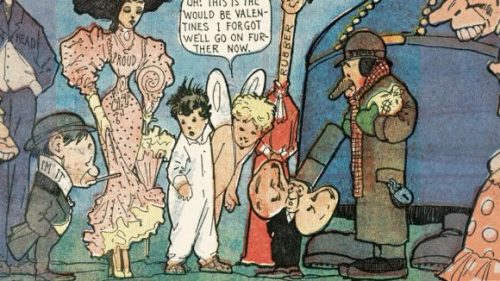
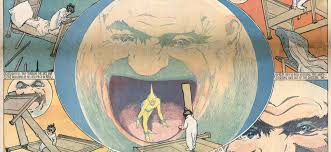
One work of comic strip art stands alone as having earned the artist, Winsor McCay, a full-fledged exhibition at the Metropolitan Museum of Art in New York City. Little Nemo in Slumberland is a one-of-a-kind achievement in fantasy art.
Winsor McCay lived from his birth in Michigan in 1869 to his finale in Brooklyn in 1934. In that time he created volumes full of his fine-art pages of full-page color newspaper cartoons, most in the four-color process.
The New Year’s page 1909
As a boy, he pursued art from very early on, before he was twenty creating paintings turned into advertising and circus posters. He spent his early manhood doing amazingly detailed half-page political cartoons built around the editorials of Arthur Brisbane, He then became a staff artist for the Cincinnati Times Star Newspaper, illustrating fires, accidents, meetings, and notable events. He worked in the newspaper business with American artists like Winslow Homer and Frederick Remington who also developed their art skills through newspaper illustration. He moved into newspaper comics with numerous series strips that included Dreams of the Rarebit Fiend and Little Nemo in Slumberland. And he followed that massive amount of work up by becoming the “Father of the Animated Cartoon” with Gertie the Dinosaur, with whom he toured the US giving public performances as illustrated in the silent film below;
The truly amazing thing about his great volume of work was the intricate detail of every single panel and page. It represents a fantastic amount of work hours poured into the creation of art with an intense love of drawing. You can see in the many pages of Little Nemo how great he was as a draftsman, doing architectural renderings that rivaled any gifted architect. His fantasy artwork rendered the totally unbelievable and the creatively absurd in ways that made them completely believable.
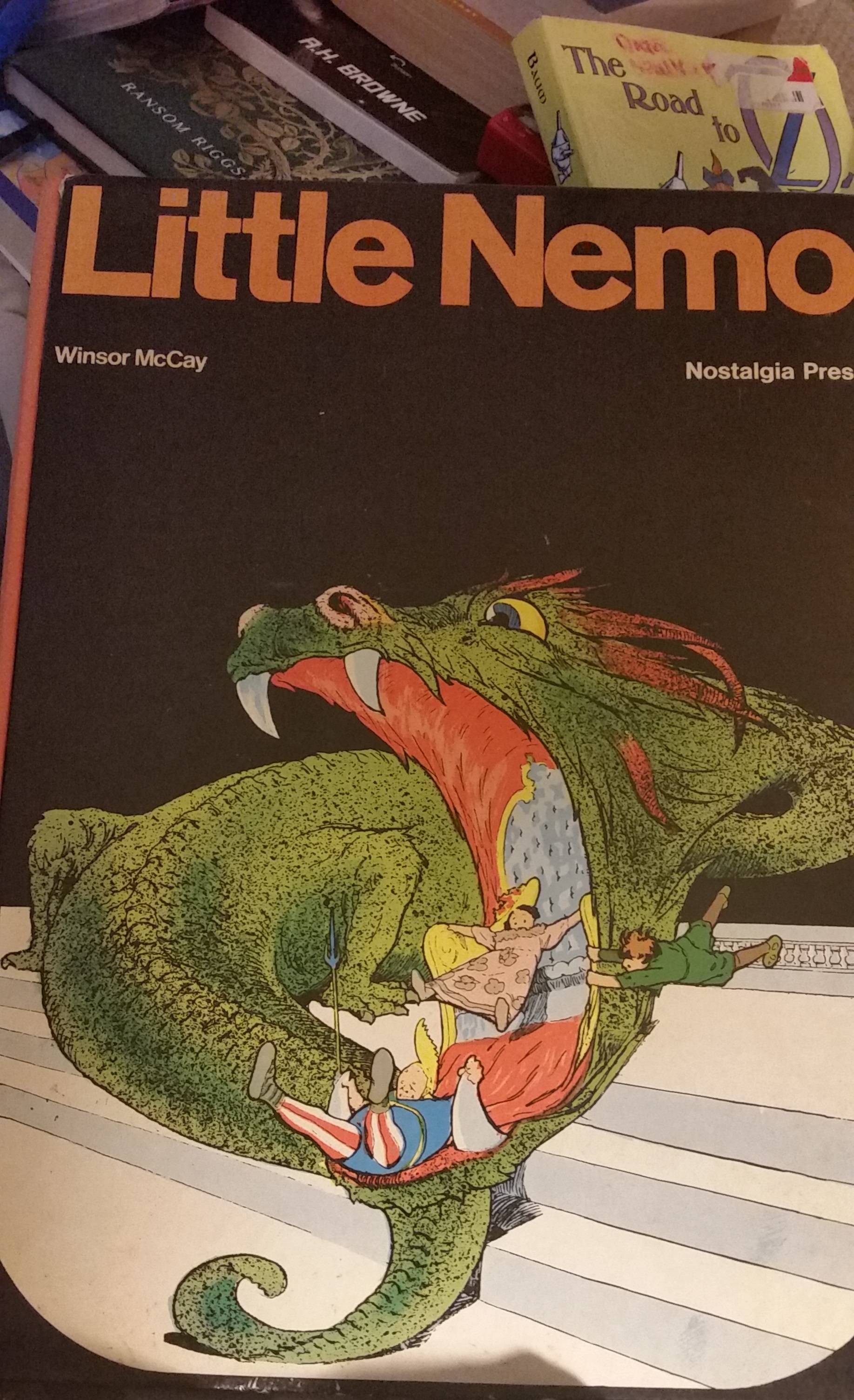
I bought my copy of Nostalgia Press’s Little Nemo collection in the middle 70’s and have studied it more than the Bible in the intervening years. Winsor McCay taught me many art tricks and design flourishes that I still copy and steal to this very day.
No amount of negative criticism could ever change my faith in the talents of McCay. But since I have never seen a harsh word written against him, I have to think that problem will never come up.
My only regret is that the wonders of Winsor McCay, being over a hundred years old, will not be appreciated by a more modern generation to whom these glorious cartoon artworks are not generally available.
Let’s begin with some stupid advice. I don’t have time to write a lot today because the Princess is ill and must go see the doctor in Plano. So the advice is; Set aside time for writing and always allow plenty of time for it. You will probably notice already that I am giving you advice that I am not taking myself this morning. So don’t follow that advice. It is stupid advice. I have given it to creative writing classes for years and thought I meant it. But looking back on real life, I realize, it has never been true for me. My best ideas, my best writing, always seem to come in the middle of the pressure-cooker of daily struggle and strife. I have battled serious illness for most of my adult life. I have the luck of a man who tried to avoid letting a black cat cross his path by crashing his bicycle at the top of a hill covered in clover with only three leaves each and then rolling down the hill, under a ladder, and crashing into a doorpost which knocks the horseshoe off the top. The horseshoe lands on my stupid head with the “U” facing downward so the luck all drains out. Bad things happen to me all the time. But it makes for good writing. Tell me you didn’t at least smile at the picture I just painted in your mind. You might’ve even been unable to suppress a chuckle. I am under time pressure and misfortune pressure and the need to rearrange my entire daily schedule. So it is the perfect time to write.
This essay, however, is about bad advice. And I am a perfect person to rely on as a resource for bad advice. I am full of it. Of course, I mean I am full of bad advice, not that other thing we think of when someone tells me I am “Full of it!” So here’s another bit of writing advice that is probably completely wrong and a bad idea to take without a grain of salt, or at least a doctor’s prescription. You should stop bird-walking in your essay and get to the damn point!
I know a lot about the subject of depression. When I was a teenager, I came very close to suicide. I experienced tidal waves of self-loathing and black-enveloping blankets of depression for reasons that I didn’t understand until I realized later in life that it all came from being a child-victim of sexual assault. Somehow I muddled through and managed to self-medicate with journal writing and fantasy-fixations, thus avoiding a potentially serious alcohol or drug problem. This is connected to my main idea, despite the fact that I am obviously not following the no bird-walking advice. You see, with depression, Bad advice can kill you. Seriously, people want to tell you to just, “Get over it! Stop moping about and get on with life. It isn’t real. You are just being lazy.”
I have been on the inside of depression and I know for a fact that not taking it seriously can be deadly. In fact, I have faced suicidal depression not only in myself, but in several former students and even my own children. I have spent time in emergency rooms, mental hospitals, and therapists offices when I wasn’t myself the depression sufferer. One of my high school classmates and one of my former students lost their battles and now are no longer among the living. (Sorry, have to take a moment for tears again.) But I learned how to help a depression sufferer. You have to talk to them and make them listen at least to the part where you say, “I have been through this myself. Don’t give in to it. You can survive if you fight back. And whatever you have to do, I will be right here for you. You can talk to me about anything. I will listen. And I won’t try to give you any advice.” Of course, after you say that to them, you do not leave them alone. You stay by them and protect them from themselves, or make sure somebody that will do the same for them stays with them. So far, that last bit of advice has worked for me. But the fight can be life-long. And it is a critical battle.
So taking advice from others is always an adventure. Red pill? Green pill? Poison pill? Which will you take? I can’t decide for you. Any advice I give you would probably just be stupid advice. You have to weigh the evidence and decide for yourself. What does this stupid essay even mean? Isn’t it just a pile of stupid advice? A concluding paragraph should tell you the answer if it can. But, I fear, there is no answer this time.
Veterans day is here again. It means something different now that my son is a Marine. It was always a solemn and somber occasion in the past. My great uncle on my father’s side died in World War II, a training accident inside a Navy gun turret. My great uncle on my mother’s side was part of the second wave on the beach in Normandy. He was injured by a German grenade and moderately disabled for the rest of his life. I never got to hear war stories. He was too damaged to ever talk about anything that happened in the war. My mother’s cousin was flying a plane in the Viet Nam Conflict. It went up, and didn’t come down again. You think of those things, and wish it could be different. You pray that it will be different for your son who is a soldier.
But when the worst that can happen comes to pass… there are no regrets. Whatever future we have is rooted in the past. Pain and suffering are difficult to manage, but when you manage them, it leaves you stronger… better as a person than you were before. So I don’t take anything for granted. I was not a warrior in this life. I was a teacher, a story-teller. And I made some mistakes along the way. I have lost some whom I cared about very deeply. Ruben, Fernando, and J.J. are all gone tragically. I will always feel I should have done more to help them when they were boys and needed help. Miraculously with the Gulf War, Afghanistan, and Iraq I have lost no former students to war, though many of mine have fought. I pray that my luck continues to hold.
But there are no regrets. And “you can listen as well as you hear”, so listen to this. I love you.
Yes, I am talking to sons and daughters, to former students, to former colleagues, to everyone I have ever known. And even if I don’t know you, never met you, even if you never get a chance to hear this message… I am talking to you also. We are all one. We all live and love and strive together, and even if we disagree to the point of war… we still belong to each other. Thank you for being you. You needed to hear that at least as much as I needed to say it.
My son is coming home on leave for Thanksgiving. I will be giving thanks.
“Mickey, why can’t you be more serious the way smart people are?”
“Well, now, my dear, I think I take humor very seriously.”
“How can you say that? You never seem to be serious for more than a few seconds in a row.”
“I can say it in a high, squeaky, falsetto voice so I sound like Mickey Mouse.”
“You know that’s not what I mean.”
“I can also burp it… well, maybe not so much since I was in junior high.”
“I distinctly remember getting in trouble in Mrs. Mennenga’s third grade class in school for pantomiming pulling my beating heart out of my chest and accidentally dropping it on the floor. She lectured me about being more studious. But I made Alicia sitting in the row beside me laugh. It was all worth it. And the teacher was right. I don’t remember anything from the lesson on adding fractions we were supposed to be doing. But I remember that laugh. It is one precious piece of the golden treasure I put in the treasure chest of memories I keep stored in my heart.”
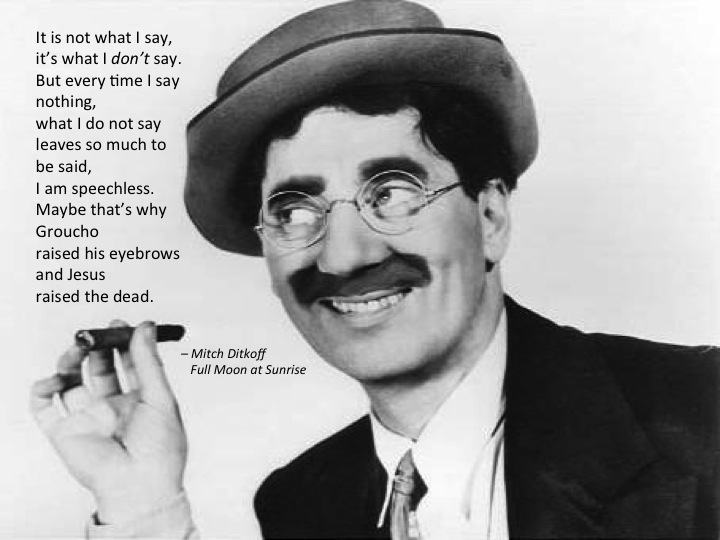
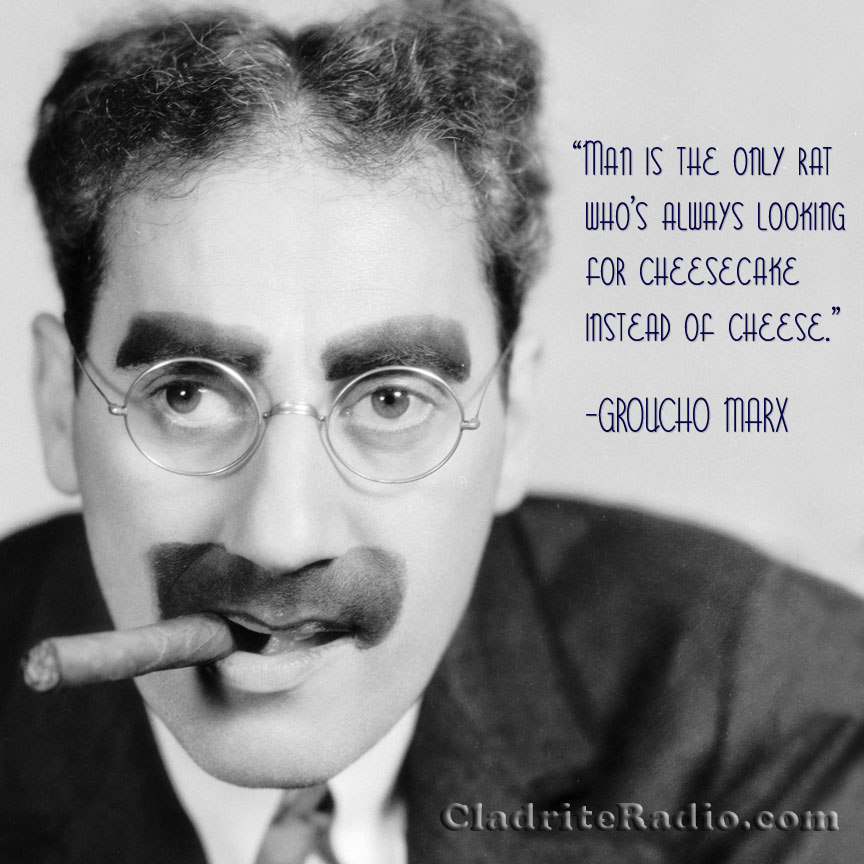
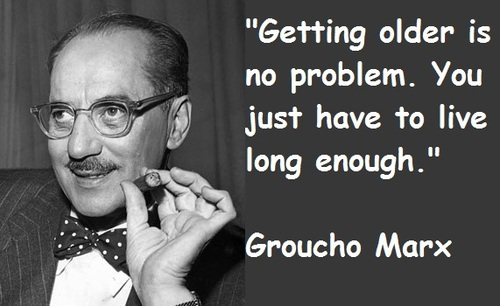
“I always listened to the words Groucho Marx was saying, even though he said them awfully fast and sneaky-like. I listened to the words. Other characters didn’t seem to listen to him. He didn’t seem to listen to them. Yet, how could he respond like he did if he really wasn’t listening? In his answers were always golden bits of wisdom. Other people laughed at his jokes when the laugh track told them to. I laughed when I understood the wisdom.”
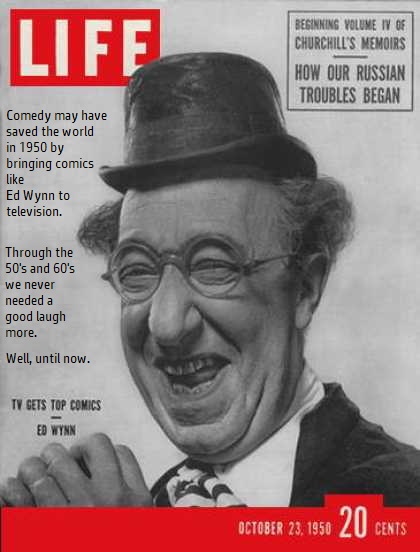
“Laughing is a way of showing understanding. Laughing is a way of making yourself feel good. Laughing is good for your brain and your heart and your soul. So, I want to laugh more. I need to laugh more. I love to laugh.”
**This is a repost of my prediction from 11/2/2016 that Trump would win the presidency in 2016, posted again because Pogo and I are concerned he is on track to do it again from prison in 2024.
Yessir, the Cubs have a chance to win their first World Series since 1908 tonight. They have not won the title since Tinker to Evers to Chance was the double-play combo of poetic proportions. They have never won in my lifetime, and I am quite old. So, there is proof positive the world is about to end.
Yes, I can even describe the mechanics of the thing. Donald Trump will be elected President of the United States thanks to Mr. Comey’s timely reveal of more scandalous emails that he has not read and chuckled about yet. You know, the ones that he couldn’t have actually read yet because they come from potential pedophile Anthony Weiner’s computer, and he had to have a separate warrant from a judge to read anything that may have to do with Hillary, even though probably none of them contain nude pictures from Hillary, and she probably didn’t even write those emails. The world had to know about that right before the election, especially members of the Republican House Committee for examining Hillary’s every boo-boo. So, the Donald will win, because nobody is doing any press conferences on the FBI investigation on his ties to the Russian government through the biggest bank in Russia. ‘Taint important, Pogo.
And once the great orange pumpkin-head is our next president, our health care will no longer be under the misguided protection of Obamacare. Instead, it will will be taken care of by “something terrific” that will make high profits for somebody, and make certain that I will never be able to pay another medical bill (since those who are deceased rarely do).
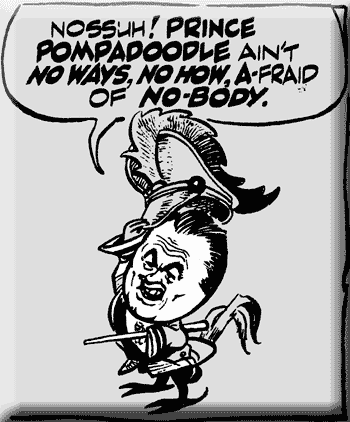
And, of course, President Pompadoodle will be able to declare that we no longer have to believe in the climate change hoax. The result being that we will soon be able to buy beachfront property in Iowa and Missouri, be able to purchase our breathable air in factory-made brick-form, and possibly grow a helpful third eye from the mutating effects of nuclear radiation.
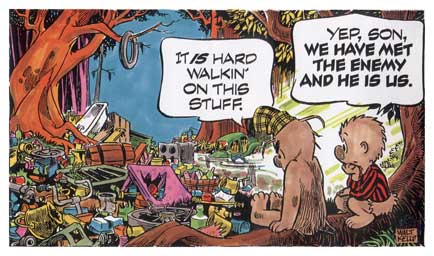
And, lastly, I would like to thank the late great Walt Kelly for illustrating today’s post. One wonders how a cartoonist can look so far ahead from the 1960’s to do such a fine job of illustrating the problems of 2016? Will miracles never cease? I mean, really, we could probably do with a few less of these industrial grade miracles made out of recycled elephant poop.
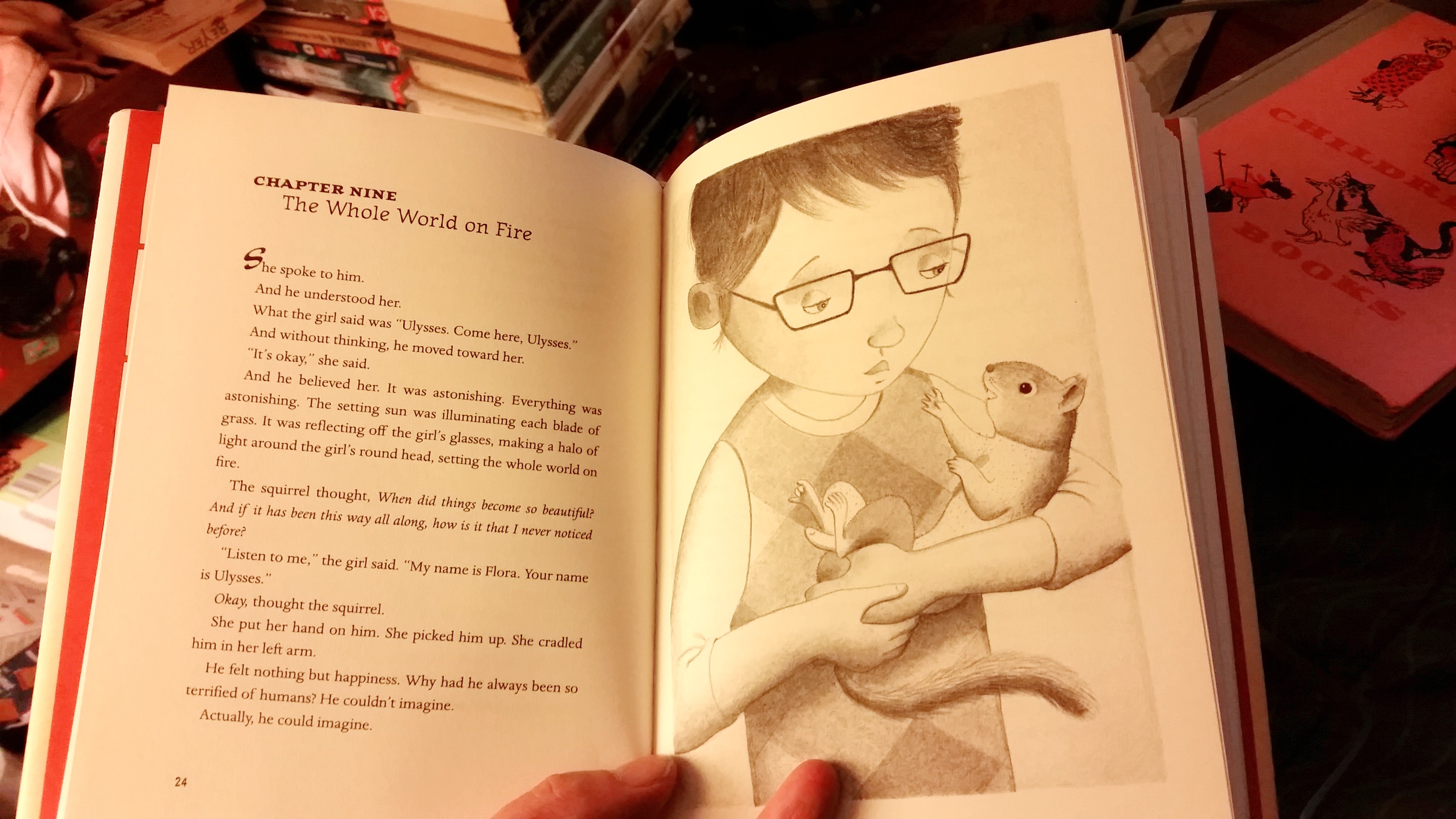
I have just finished reading a wonderful book. It is a young adult novel bordering on being a children’s book. It won the 2014 Newbery Medal for best work of children’s literature. But it is a book of so many dimensions that it totally defies categories. Librarians with butterfly nets who want to pin this book down on their library shelves will be pointlessly waving their nets at it like they believe it’s a butterfly, but it will soar away from them like an eagle.
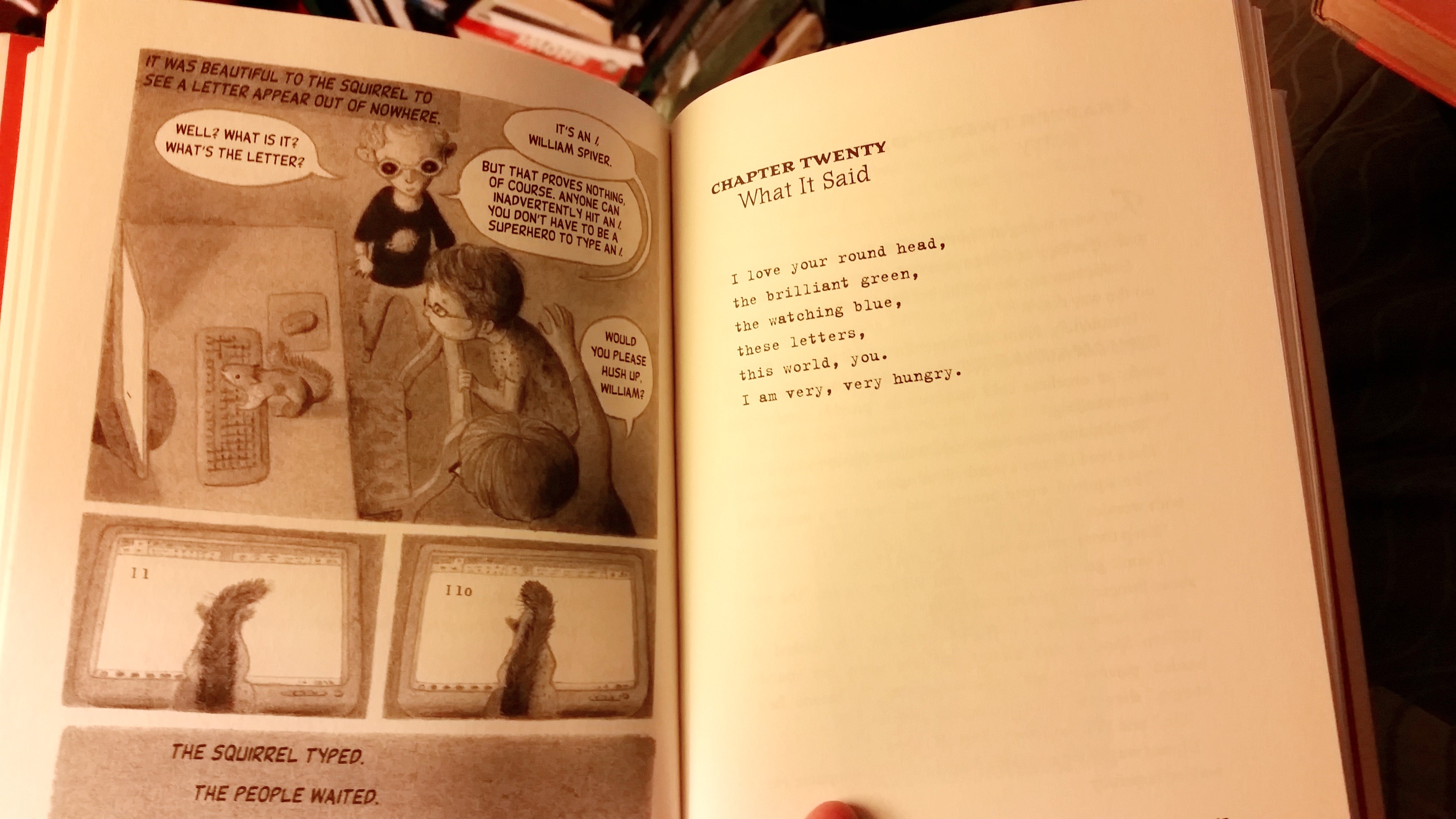
Flora & Ulysses (the Illuminated Adventures) is a combination book of many different things. G. K. Cambell’s cartoony paffoonies add to and amplify the story to the point that sometimes it becomes a graphic novel.
Flora herself is a comic-book lover and follower of the adventures of a comic-book superhero named Incandesto. Ulysses the squirrel is run over by a rogue vacuum cleaner and the accident graces him with super powers (the ability to fly and throw cats and write poetry). And Flora rescues and befriends this newly minted superhero and sets him on a path that pits him against the only super-villain available, Flora’s own mother.
At certain points, through metaphor, elegance, and supreme focus, the story itself becomes poetry. But, of course, when the poem ends with a line about the squirrel being hungry, it becomes humorous poetry, simply by the juxtaposition of the sublime with the ridiculous.
As a writer, Kate DiCamillo is a master of everything I want to be. She is as much a masterful story-teller as Mark Twain, Ernest Hemingway, or William Faulkner. But many people will be put off by the fact that she is a children’s author. They will ignore her stories because how could a children’s author affect their lives in any way? But if you are a reader who can think and feel about things in a book, she will make you laugh and make you cry and make you not afraid to die… for love of a good book.
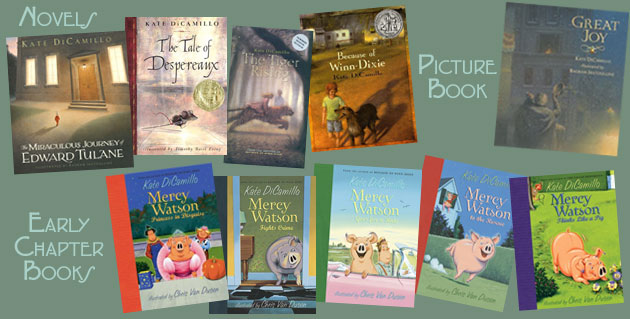
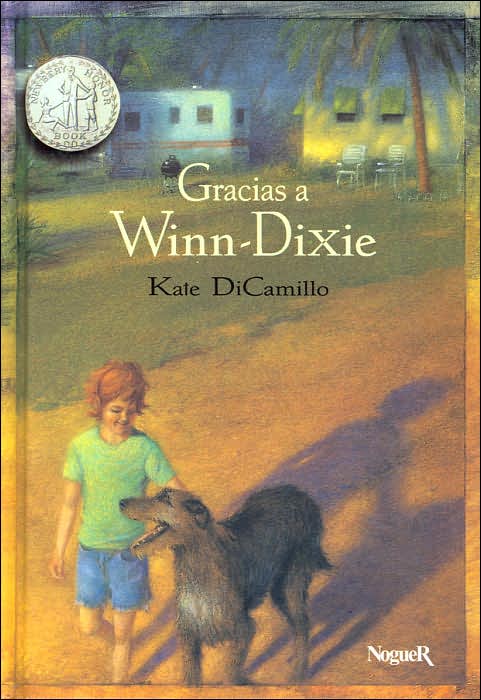
Let me also suggest a few of her other wonderful, wonderful books;
This is a repost from 2016, the beginnings of terrible times under a pumpkinhead president.
The Trumpkins and Trolls won the battle and are now busy eating their prisoners… along with the puppies and kittens for dessert. And as far as I can see, the war is over. We had a chance with the Paris Climate Accords to repair the damage to the life of this planet, even though it was a very eleventh-hour plan to avert the end of life on Earth. The Trolls and Trumpkins are peeing on that fence too, shorting it out and preventing it from saving us from being eaten by the heat-wolves of corporate polluters.
I myself wasn’t expecting to live through another decade in any case, but now, I fear the lives of my children and grandchildren will be cut short as well. You can’t poop where you eat on a regular basis and expect not to get sick and die. I predicted that the Cubs would win the World Series because they stole key talent from the Cardinals and had a young, rising club to add them to. I got that one right. I predicted that Trump would win the presidency because I know a lot of the Trump-voter kind of former middle-class white people who are seriously in financial and existential pain, and I knew who they were going to blame it on. If I am right about this last thing too, then we are all doomed.
“Jeez, Mickey! You don’t call that humor, do you?”
Well, I guess I do, because humor comes from being able to laugh at the darkness and make fun of the dumpy-lumpy lumbering bears of bad fortune that are about to eat you. We are going to have a laugh or two before the end at the expense of Trumpkins and Trolls because they make world-shaking decisions based on faith in false facts. The irony and stupidity of it all is a very laughable absurdity that will build BS mountains taller than Everest. And those mountains will collapse upon them, burying them in poop. Never mind that we will also be buried. They brought it on themselves by the choices they made. Seeing them get their comeuppance has to be worth a laugh or two.
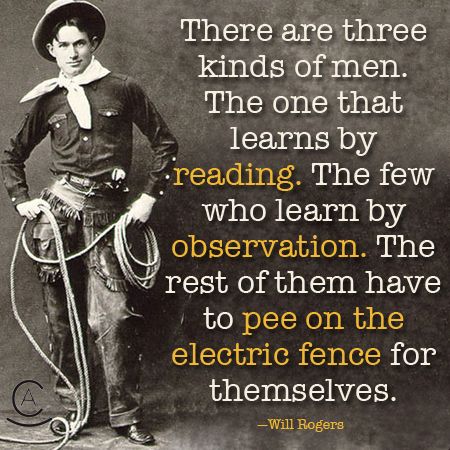
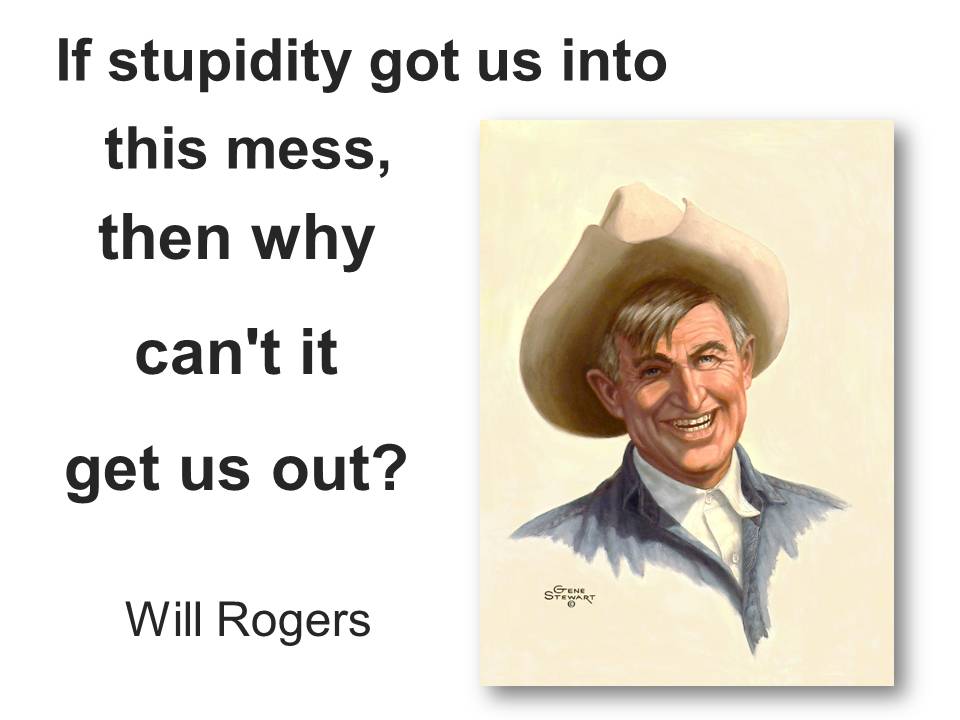
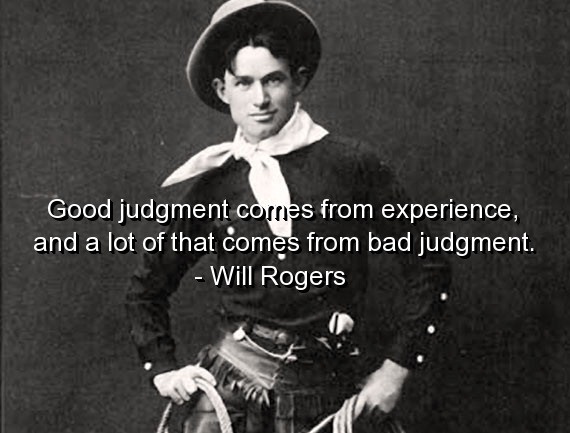
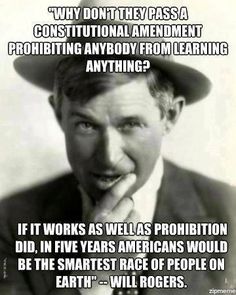
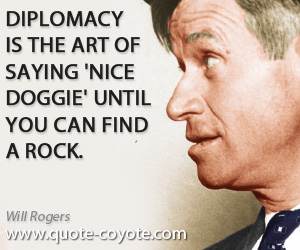
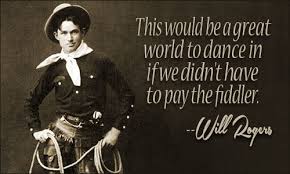
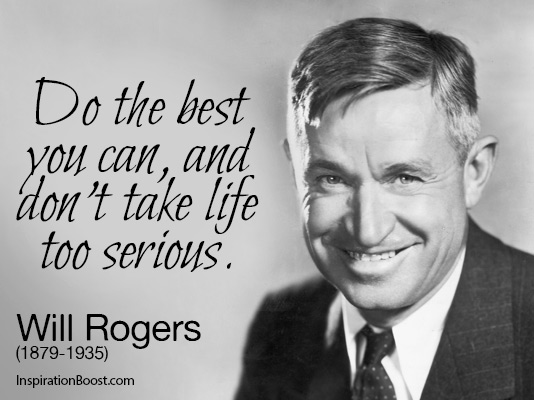
I have pretty much let Will Rogers speak to this current election result through the memes I have chosen to accompany this gloomy-doomy essay. I think it is significant that wisdom from a hundred years ago still applies so completely to the politics of today. With democracy and elections we get what we deserve… not what we want. We need to change to face the future, if we even get to have one. But the past clearly shows that we haven’t learned our lessons very well. I guess there’s nothing left to do but laugh about it… and try to love each other a little better before the bitter end.











Prudes and Prejudices (Part 2)
Who is really qualified to judge people? The Bible says only God makes that judgement. But who tells us what God’s judgement actually is? Especially if Nietzsche is right about God being dead?
Prudes
Not long ago I posted a short-short story about me wanting to see girls get naked while we were kite flying, and then, by verbal tricks backfiring, I ended up being the only one flying the kite while naked. I look back on that story now with laughter about my own personal foibles. But if I am completely honest, the church ladies with gray hair, wagging fingers, and tongues that are even waggier… Well, I am glad that the ones I knew as a boy are all now dead and can’t possibly read that story and shame me all over again.
And I know that I draw an awful lot of pictures and write an awful lot of stories that involve naked children. As a survivor of a traumatic sexual assault when I was ten (a thing that happened after the kite story was already in the past) there is a level of discomfort over recognizing that trend in myself. Not because I became a sexual predator of children. I clearly did not. I still am determined to prevent such things from happening in any way I can, though in retirement I no longer have access to children to talk with to find out about bad things that may be happening in their lives.
I write stories in which there are kid characters who are naked at times. Sometimes because of curiosity and developing sexuality, sometimes because of growing up in a nudist household, sometimes in their dreams, taking baths, and many other normal functions where clothing is optional. In The Baby Werewolf novel, I included a character who was trying to exploit a young nudist girl to make child pornography. He was the kind of predator I have always resolved to be against, and the book is intended to make readers aware of that kind of dangerous person and recognize where the opportunities to avoid such people lie.
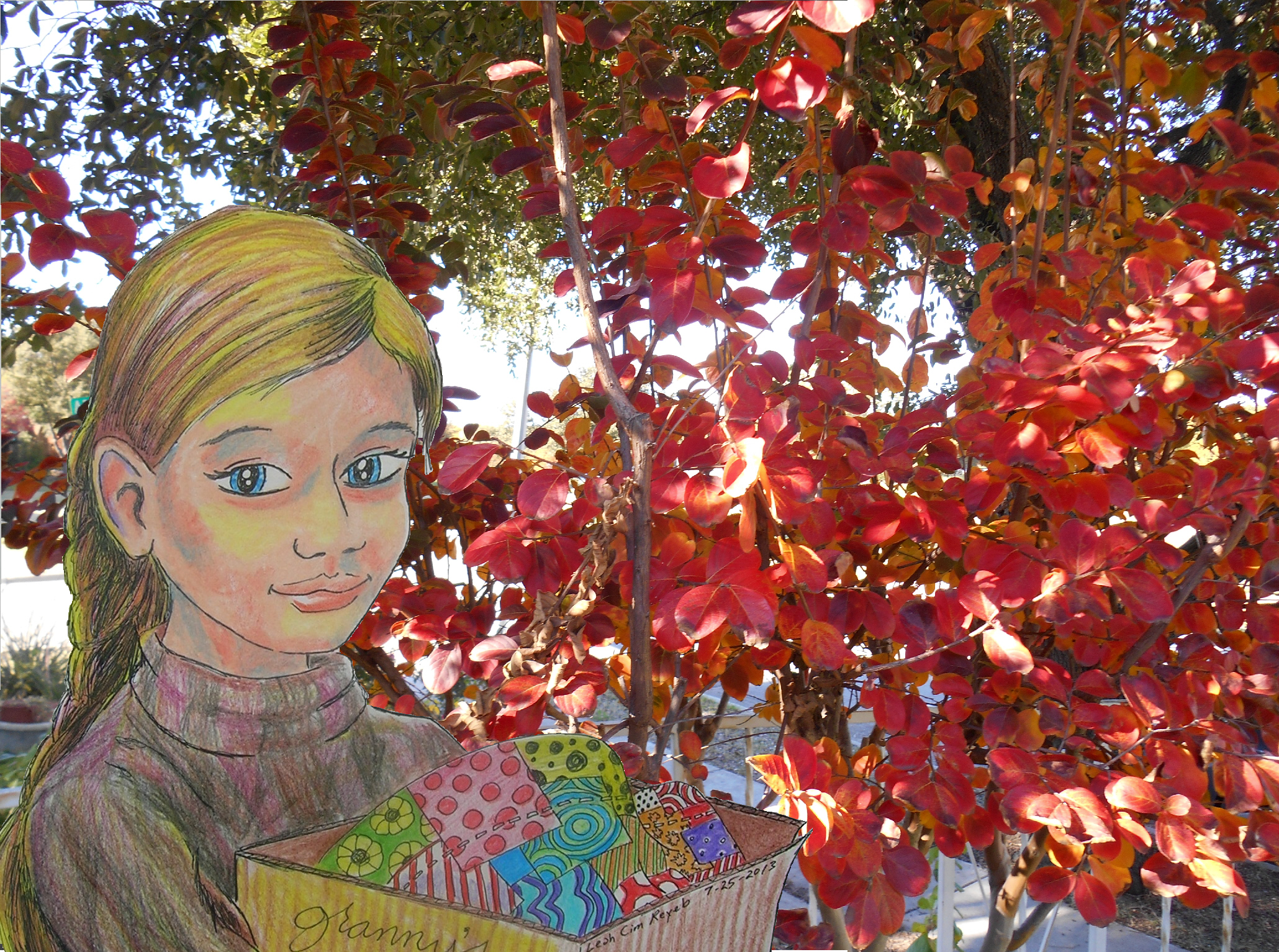
And some of the nude young characters I create like the two fairy girls depicted in the illustration from The Necromancer’s Apprentice merely represent the liberating feeling you can get from embracing your own nude self, a thing my attacker deprived me of during childhood through trauma and fear.
I, as an adult human being, fully accept readers’ rights to be critical of my work and make prudish judgements about my writing. I don’t like that one critic of The Baby Werewolf who said things about my work being creepy for the wrong reasons (it is a horror story after all) and suggesting that maybe I as the author am bad and villainous instead of feeling that way about the villain of the story. It was fiction, not my personal life story. The villain character is not me.
But prudes being prudish and judgmental can do more damage than just hurting an author’s feelings.
I have had two students that I know of who were transexual.
One was raised a boy because he was born with a penis, but in grade school was discovered to have a womb and ovaries. I didn’t know such a condition existed until I saw an episode of Marcus Welby MD in the 70’s about a young boy who had to transition because he was actually a girl. The child in my class was from a poor Hispanic family that didn’t understand the problem and couldn’t really afford to deal with it. The prudes, judgemental as always, were not kind. This he/she hermaphrodite was forced to grow up as a flamboyantly gay male even though he was capable of physically changing into a woman who could conceive a child. I followed his development for as long as I was able. I did spend one long and awkward evening talking to him/her about his/her crush on me. I could’ve gotten the prude finger-wag over that strange conference too, if anybody had bothered to care about that poor child. I certainly wasn’t going to kiss him, and I had to send him home at the end of that discussion because of what he/she wanted from me. I suspect there were other men who took advantage of him/her. But I wasn’t close enough to help him in any real way. And I lost touch soon after he/she left my class. Based on that bizarre discussion we had, I have no confidence at all that the poor child is still alive. Nobody seemed to care about this child That is the most tragic of things teachers sometimes have to deal with.
The other trans student I had in class for a year was a girl as far as she was concerned. It was not a question open for debate. She was quiet and a good student. She only had a couple of friends, but they were good friends and stood by her. At the time she was in my middle school class, she already had breasts thanks to hormone therapy. By now she has probably transitioned by surgical means. Her life was a lot easier than the boy with ovaries. But prudes in Texas abound and provide a lot of sour fruit.
I personally find it offensive that anyone would deny either of these two people the use of whatever restroom was comfortable for them.
What gives the typical prude the right to pass judgement on anyone else’s behavior? Prudes can cause repression of natural behaviors for the benefit for no one but themselves. I find prudishness to be reprehensible. But the rub is… being judgemental about that makes me a prude too.
I try never to be judgemental. I would much rather accept everyone for who they are, or who they think they are, than rely on what I think they are. And I do listen when others judge me. I have changed things in my books and drawings because of observations by others. And I take everything seriously… especially comedy.
Leave a comment
Filed under angry rant, commentary, nudes, Paffooney